
Reviewed · FLORENCE
Florence: Timed Entry to Michelangelo’s David + Audio App
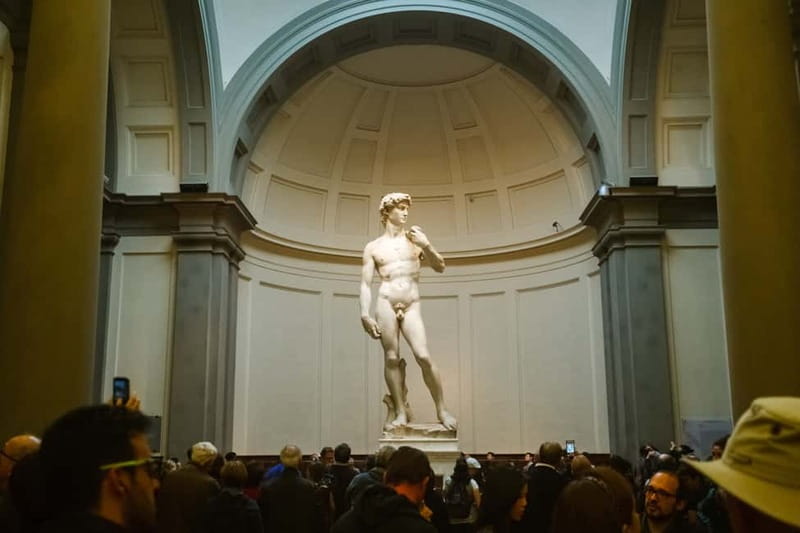
Michelangelo’s David is the reason most people come to Florence’s Accademia Gallery, and the first sight of the 5.17-meter marble figure can stop you in your tracks. This is not simply a famous statue to check off your list. David once represented Florence’s defiance of stronger rival states and the power of the Medici family, so the sculpture carries political weight as well as artistic fame.
I like the reserved entry time, which takes much of the guesswork out of visiting one of Florence’s busiest sights. I also like the short audio-guide tracks, especially for a solo visit, because you can move at your own pace and download the tour before entering.
The main drawback is the ticket exchange process. You must first find the correct red or green queue, collect a physical ticket, and arrive at the right time. The audio app can also be awkward if you do not download the content in advance or if its track numbers do not match the museum labels.
Key Points to Know Before You Book
- David is the star attraction: The statue is larger and more powerful in person than photographs suggest.
- Timed entry saves time: Prebooked visitors use the red point for groups of up to six, while groups of seven or more use the green point.
- Download the audio guide early: Wi-Fi may not be available inside, so prepare the app before you reach the gallery.
- The museum offers more than David: Look for The Prisoners, St. Matthew, Bartolini’s works, Renaissance paintings, tapestries, and historic instruments.
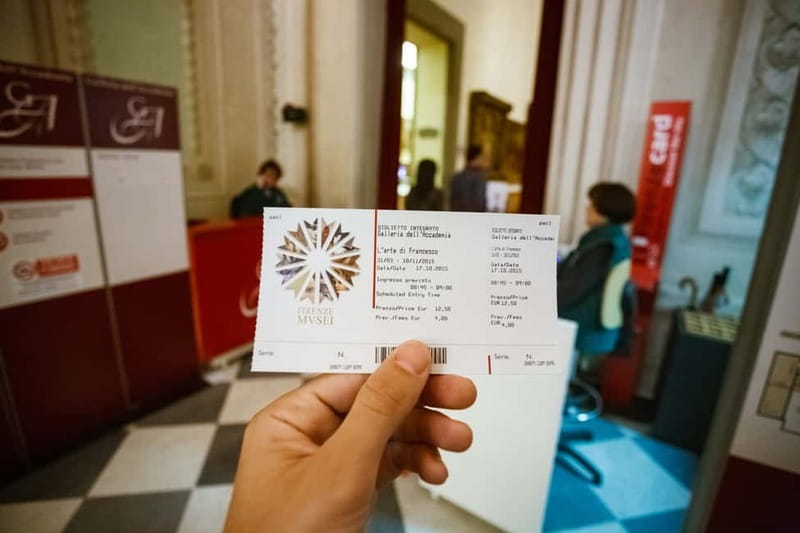
- Allow time for the ticket exchange: You can collect the entrance ticket 15 minutes before your assigned slot, but the voucher is not the final museum ticket.
- The gallery is wheelchair accessible: No live guide is included, so the visit remains self-guided and flexible.
Why David Deserves More Than a Quick Photograph
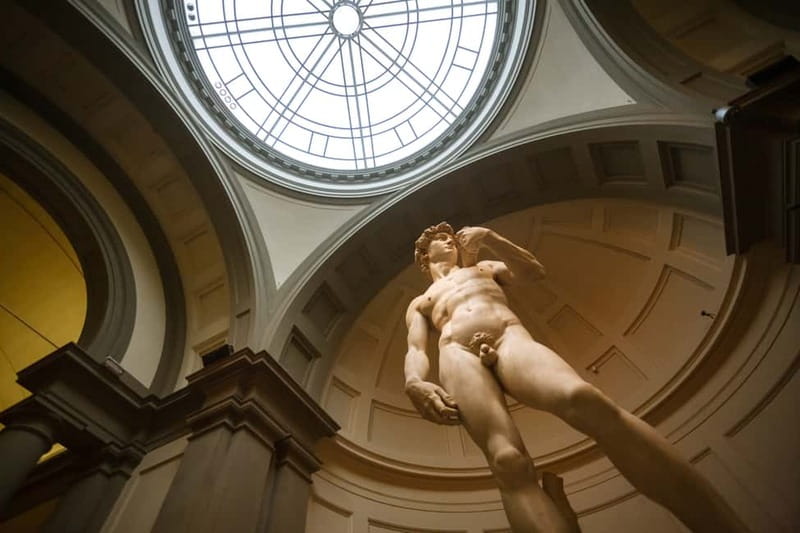
The Accademia’s David is famous for good reason, but a photograph does not prepare you for the sculpture’s scale. The figure is 5.17 meters tall, and Michelangelo’s treatment of the body makes the statue feel both idealized and intensely human.
Look closely at David’s expression and posture. He is not shown after defeating Goliath. He is shown before the fight, alert and tense, with the concentration of someone measuring the danger ahead. That choice gives the statue a quiet force.
Florence adopted David as a symbol of its independent republic. The city faced threats from rival powers, while the Medici family held enormous influence at home. The young biblical hero therefore became more than a religious subject. He represented Florence’s claim to courage, freedom, and self-government.
I recommend walking around the statue rather than stopping at the first view. From different angles, you can notice the turn of the head, the weight of the body, and the way Michelangelo made the marble appear ready to move. Give yourself a few minutes without the audio playing. The statue rewards simple looking.
The main hall can feel crowded, particularly at popular times. Still, the timed system usually gives you a more orderly start than arriving without a reservation. You may have to wait outside before your slot, but once inside, you can spend your time with the art instead of worrying about the general admission line.
More Smartphone Audio Tours in Florence
- Florence: Uffizi Priority Ticket & Masterpieces Audio App
★ 4.2 · 6,402 reviews - Florence: Michelangelo’s David Entrance Ticket and Audio App
★ 4.3 · 1,901 reviews - Florence: Uffizi & Accademia Priority Tickets with Audio App
★ 4.4 · 1,253 reviews
The Prisoners Show Michelangelo’s Work in Progress
Before reaching David, or while exploring the rooms around him, make time for Michelangelo’s unfinished sculptures known as The Prisoners. These figures appear to emerge from blocks of stone, with parts of the body still caught in the marble.
Their unfinished state is not a flaw. It lets you see the relationship between the sculptor, the block, and the final form. David presents Michelangelo’s finished control. The Prisoners show the struggle and force of the process.
St. Matthew offers another look at an incomplete work. The figure remains partly attached to the stone, which makes the statue feel less like a finished object and more like a body being released.
I find these works especially valuable if you already know David from books or screens. They shift your attention from the polished result to Michelangelo’s handling of marble. You can compare the rough surfaces with the smooth finish of David and see how much visual energy comes from that contrast.
The audio app can help here, but do not rely on it without preparation. Download the itinerary and tracks before entering the museum. One useful feature is the short length of many explanations, often around two or three minutes, so you can learn the main point without standing in one place for too long.
Paintings, Busts, and Bartolini Add Depth to the Visit
The Accademia is not a huge museum, and that works in its favor. You can see the main works without giving up an entire day, while still finding enough material to make the visit more than a single-statue stop.
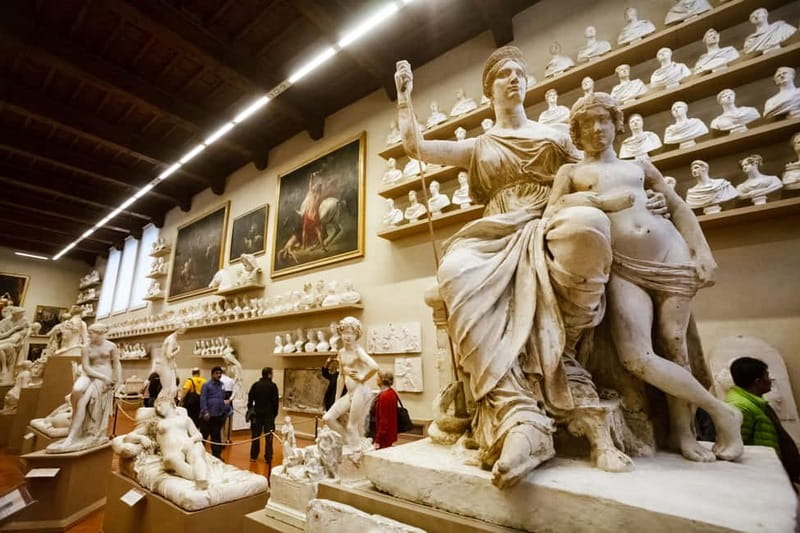
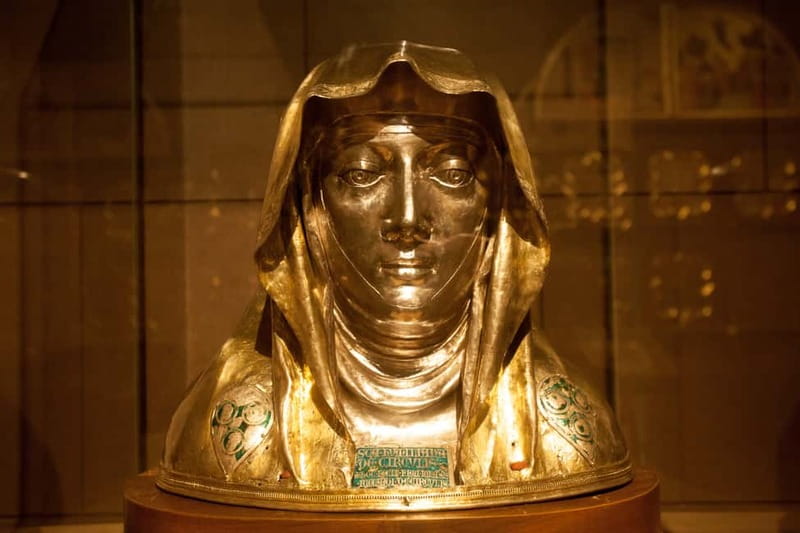
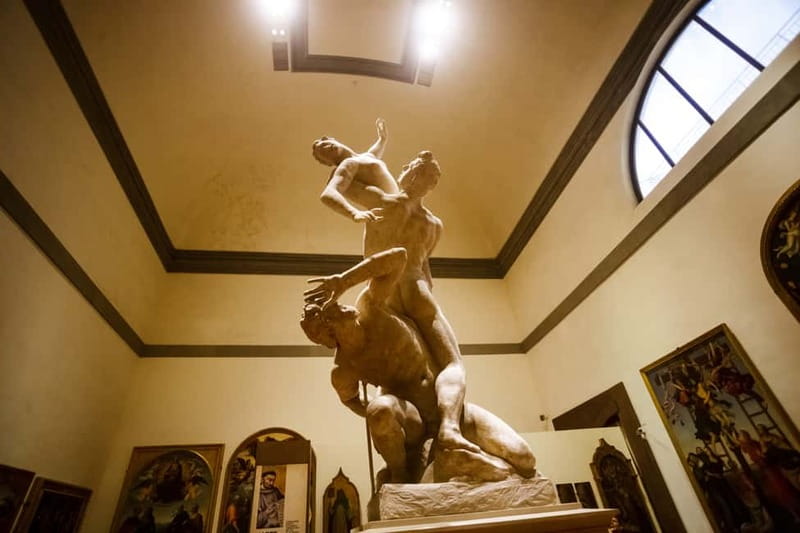
The rooms hold paintings, sculptures, and tapestries collected from the Academy of Design, the Academy of Fine Arts, and former convents. The collection reflects Florence’s long interest in artistic training and religious art.
Look for works by Lorenzo Bartolini and other important Italian artists. Bartolini’s sculptures provide a useful comparison with Michelangelo. David is monumental and symbolic, while later sculptural works may feel more intimate or focused on portraiture and natural detail.
One room filled with busts can be particularly rewarding. It is easy to hurry toward David and miss these faces, but the busts give the museum a strong sense of people and personalities. I would set aside at least an hour for the gallery if you want to listen to the audio guide and examine the other rooms at a calm pace.
You do not need to follow every track. I suggest using the audio app selectively. Start with David, The Prisoners, St. Matthew, and the works that catch your eye. That approach keeps the visit lively and avoids turning a compact museum into a long lecture.
The Cherubini Instruments Are an Unexpected Stop
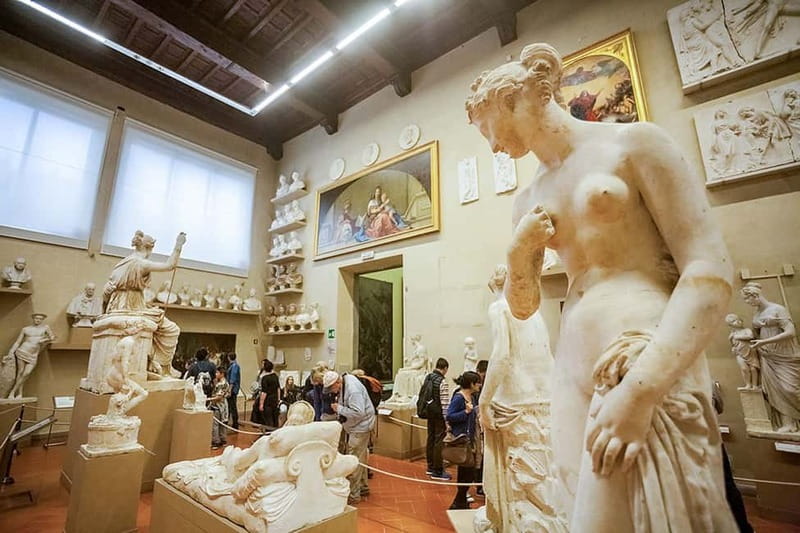
The collection of old musical instruments from the Cherubini Conservatory is one of the less obvious reasons to visit the Accademia. If you come focused only on sculpture, these rooms provide a welcome change of pace.
The instruments connect the gallery with Florence’s wider artistic life. Paintings and sculpture often receive all the attention, but music was central to court, church, and civic life in Italy. The collection gives you a different way to think about craftsmanship, design, and performance.
I would not book this experience only for the instruments. David remains the clear highlight. But the musical collection helps round out the museum and gives you another reason to slow down after the main sculpture rooms.
More Smartphone Audio Tours in Italy
- Florence: Duomo Cathedral Timed Entry Ticket & Audio App
★ 3.7 · 472 reviews - Florence: Accademia Gallery David Entry & Audio Guide App
★ 4.2 · 406 reviews - Florence: Cathedral & Brunelleschi’s Dome Ticket & Audio App
★ 4.4 · 148 reviews - Uffizi Gallery Reserved Ticket & Digital Audio Guide App
★ 4.3 · 69 reviews
How the Timed Entrance Works in Practice
Your selected date and time are binding. You can be refused entry if you arrive outside the assigned slot, so plan your Florence day around this appointment rather than treating it as a casual stop.
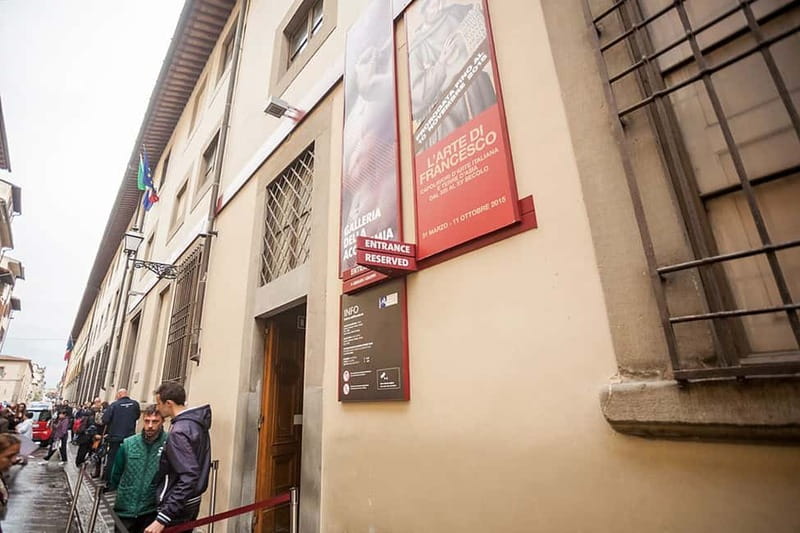
For bookings of up to six people, queue at the red point. Groups of seven or more use the green point. The signs and staff make the system clearer once you are near the gallery, but the wording in the booking instructions can feel vague before arrival.
You exchange your digital voucher for the actual entrance ticket, usually 15 minutes before your scheduled entry. The collection point is near the gallery, and you should allow a little extra time to find it. Some people have found the ticket pickup very quick, while others have waited in the outdoor queue before security.
Do not assume skip-the-line means walk straight into the museum at any minute. You still need to respect the time slot, collect the ticket, and pass security. At busy periods, the red queue can stretch along the street, and people arriving too early may be asked to wait until their group is called.
If you visit in hot weather, bring protection from the sun. The waiting area may offer little shade. In rain, the timed reservation is still useful because the regular ticket line can be longer and less comfortable.
Morning appointments can help if you have a choice. The gallery may become more crowded later, although no time guarantees an empty museum. Off-season visits can be calmer, but even winter appointments may attract a steady crowd.
Getting the Audio App Ready Before You Go
The digital audio guide is useful because it gives you structure without a live guide. You can pause, skip, and choose what interests you. It is a good fit if you prefer exploring alone or if people in your group want to move at different speeds.
The instructions arrive with your booking confirmation. I would open them before leaving your hotel, download the itinerary, and confirm that your phone has enough battery. Do not wait until you are inside the gallery to depend on an internet connection. Wi-Fi may not be available there.
The tracks are short and available in several languages. That format works well in a compact museum. You get the key story, look at the work, and move on when ready.
The app is not perfect. Track numbers may not always line up neatly with the museum’s exhibit labels, and navigating between audio sections can take patience. If the guide refuses to load, the museum itself still works as a self-guided visit, but you lose some helpful context.
Bring headphones if you have them. The supplied information does not specify that headphones are provided, so your own pair is the safest choice. Keep the volume low enough to remain aware of staff instructions and other people nearby.
Is $33 a Fair Price?
At $33 per person, this is a convenience purchase as much as an admission ticket. The value depends on how difficult it is for you to secure an official timed ticket and how much you care about avoiding uncertainty.
If you are visiting Florence at a busy time, the reserved slot can be worth paying extra for. A long outdoor line can waste a large part of your day, especially when you have other appointments at the Duomo, Uffizi Gallery, or elsewhere in the city.
The audio app adds useful context without the cost or fixed pace of a private guide. For a solo visitor, couple, or small group, that combination is practical. You get the main museum experience and some explanation while keeping control of the visit.
The price is less attractive if you are comfortable buying directly from the museum and can find an available time yourself. The ticket does not include a live guide, and the gallery is compact enough that some people may prefer to look around independently.
There are also promotional extras linked to the voucher, including a free souvenir after spending at least €35 at the Rock Shop. Hard Rock Cafe discounts apply in Florence and cannot be combined with other promotions. I would treat these as minor bonuses, not reasons to choose the ticket.
Who Will Enjoy This Accademia Visit Most?
I would recommend this option to first-time Florence visitors who want a dependable time for David. It also suits people who dislike standing in an uncertain ticket queue or who have a tightly planned day.
The audio app makes it a good choice for independent visitors. You can listen to the main explanations, skip sections, and finish when you are ready. Families may also appreciate the short tracks, since younger visitors do not have to follow a long guided talk.
Art lovers should give the museum more than the brief David stop. The Prisoners, St. Matthew, Bartolini’s sculpture, paintings, busts, and musical instruments reward a slower visit.
This may not be the right choice if you want a personal guide who can answer questions throughout the museum. It is also less useful for someone who already has a confirmed museum ticket and does not need the timed-entry service.
Practical Tips for a Smoother Visit
- Bring your passport or ID card.
- Keep the booking confirmation easy to open on your phone.
- Arrive about 15 minutes before the assigned time for ticket collection.
- Use the red point for bookings of up to six people and the green point for larger groups.
- Download the audio content before entering.
- Bring headphones and a charged phone.
- Expect possible outdoor waiting, with little shade.
- Do not count on entering early. Your booked time is binding.
- Give David your full attention, then look for the bust room and unfinished sculptures.
- Use the audio guide as a menu, not a command. You do not need to listen to every track.
Should You Book It?
Book this experience if your main goal is to see David at a reliable time and you value a simple self-guided format. The reserved entrance is the strongest reason to choose it, especially during busy periods when the standard line may eat into your day.
I would also choose it for a first visit if buying museum tickets directly feels confusing. The audio app is a useful extra, provided you download it before arrival and accept that its navigation may be imperfect.
Skip it if you already have a ticket, prefer a live art historian, or want the lowest possible admission cost. For most first-time visitors, though, the combination of timed entry, David, Michelangelo’s unfinished works, and the wider Accademia collection makes $33 a reasonable price for peace of mind and a memorable hour or two.
FAQ
How long is the ticket valid?
The ticket is valid for one day, but you must enter at the specific date and time slot selected when booking.
What is included with the ticket?
The ticket includes reserved entry to the Accademia Gallery and a digital audio guide app.
Is a live guide included?
No. This is a self-guided visit with a digital audio guide rather than a live guide.
Where do I go for a booking of up to six people?
Queue at the red point for bookings of up to six people.
Where do groups of seven or more people queue?
Groups of seven or more should queue at the green point.
When should I collect the entrance ticket?
You can collect the physical entrance ticket 15 minutes before your allotted entry time.
Do I need to bring identification?
Yes. Bring your passport or ID card.
Is the Accademia Gallery wheelchair accessible?
Yes, the activity information states that the gallery is wheelchair accessible.
Latest audio tours in Florence
- Florence: Uffizi Gallery Audio Guided Tour led by Tour Leader★ 3.5 · 6 reviews
- Uffizi Combined Ticket:UFFIZI, PITTI, BOBOLI & digital audioguide★ 4.0 · 26 reviews
- Florence: Uffizi Gallery Reserved Ticket & Digital Audio Guide★ 4.5 · 3 reviews
- Florence: Uffizi Gallery Timed Entry Ticket with Audio★ 3.0 · 3 reviews
- Accademia Gallery Skip the line Tickets with Audio Guide★ 4.0 · 10 reviews
- Uffizi Gallery Audio-Guided Visit with optional Accademia Gallery★ 3.5 · 42 reviews
- Florence Walking Tour with Audioguide on Your Smartphone★ 4.5 · 9 reviews
- Florence Baptistery & Opera Museum Audioguided tour with guide★ 3.5 · 41 reviews
Smartphone Audio Tours, compared.
Colosseum & Forum with Audio Guide App -Optional Arena
Read our review →
Cathedral & Brunelleschi’s Dome Ticket & Audio App
Read our review →
Michelangelo’s David Priority Ticket & Audio App
Read our review →
Uffizi Priority Ticket & Masterpieces Audio App
Read our review →
Castel Sant’Angelo Entry Ticket & Digital Audioguide
Read our review →
Pantheon Priority Entry Ticket & Audio Guide App
Read our review →
Orsay Museum Entry Ticket and Digital Audio Guide App
Read our review →Browse the lists this tour appears in