
Reviewed · ROME
Castel Sant Angelo Audio Guide with Ticket
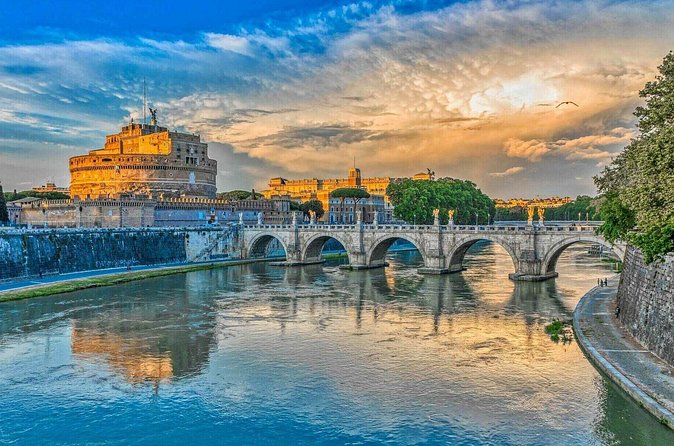
Castel Sant’Angelo is one of Rome’s best historical mashups: a second-century tomb turned fortress, papal refuge, prison, and museum. You’ll move from Hadrian’s mausoleum to frescoed papal apartments, then climb to Angel’s Terrace for broad views of St. Peter’s Basilica and the Tiber.
I like the freedom of a self-guided visit and the chance to see several very different sides of Rome in one building. I also like that the ticket includes skip-the-line entry, which matters at a major sight near the Vatican. The main drawback is that this is not a personal guided tour, and the non-refundable booking policy leaves little room for a change of plans.
Key points to know
- Hadrian’s tomb became a fortress: You can see the remains of the original second-century mausoleum beneath later military and papal additions.
- The Angel’s Terrace is the payoff: The high terrace looks toward the Tiber, Vatican, and St. Peter’s Basilica.
- You set the pace: The digital guide lets you linger in the rooms that interest you and move quickly through the rest.
- Four audio languages are listed: English, Spanish, French, and German are available.
- Allow up to 1 hour 15 minutes: A quick visit can take about 30 minutes, but the rooms, cells, and views deserve more time.
- Ticket delivery deserves attention: One customer reported a delay, while the operator said the ticket was eventually sent and refunded the payment.
Why Castel Sant’Angelo feels unlike other Roman sights

Castel Sant’Angelo does not tell one clean story. It shows Rome changing over nearly two thousand years, layer by layer.
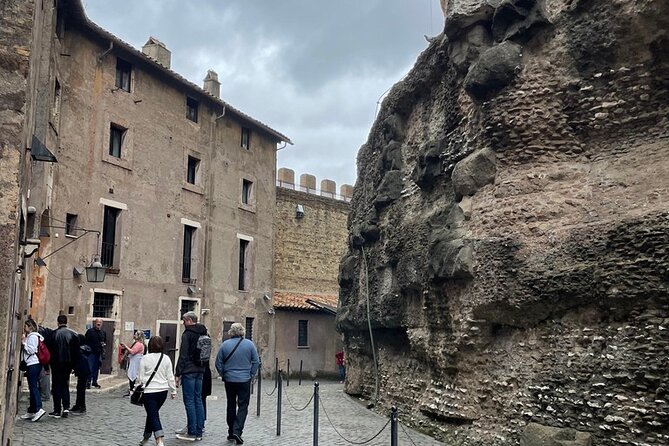
The core began as the mausoleum of Emperor Hadrian in the second century. Later, the building took on military uses. Popes added apartments, chapels, defensive features, and a secure route toward the Vatican. Prisoners were held inside. Today, you enter as a museum visitor and walk through spaces that once served very different purposes.
That variety gives the visit its appeal. You are not simply looking at statues in a formal gallery. You are walking through thick fortified passages, grand rooms, old cells, and open terraces. The building itself is the exhibit.
The audio guide helps connect those pieces. Since no live guide leads the group, you can pause, replay, or skip sections on your smartphone. That suits visitors who prefer to stop for photographs or spend extra time in the rooms with frescoes.
More Audio Tours in Rome
- Rome: Colosseum & Forum with Audio Guide App -Optional Arena
★ 4.2 · 24,770 reviews - Rome: City Sightseeing Hop-on Hop-off Bus with Audioguide
★ 4.0 · 16,045 reviews - Rome: St. Peter’s Basilica & Dome Entry Ticket & Audio Tour
★ 4.2 · 7,537 reviews
Entering Hadrian’s ancient mausoleum
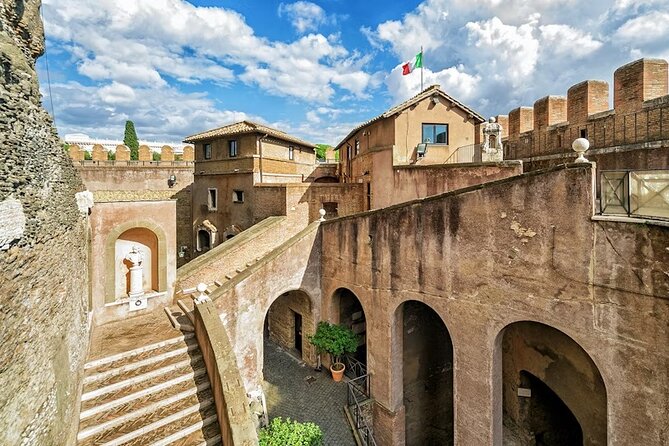
The first major story is the building’s original purpose. Hadrian’s mausoleum was designed as an imperial tomb, and the lower portions still preserve the sense of a massive Roman monument built for power and permanence.
Do not expect a perfectly preserved tomb chamber presented on its own. Later construction changed the site heavily, and much of the experience comes from seeing ancient remains within a medieval and papal fortress.
I find this useful context before looking at the later rooms. The castle was not created from scratch as a defensive stronghold. It began as a grand burial monument, then changed with Rome’s political needs.
Use the audio guide here to understand the transition from imperial tomb to fortified structure. Without that explanation, the layers can blur together. With it, the building becomes easier to read: Roman foundations below, military additions around you, and papal interiors higher up.
Papal apartments and Renaissance decoration
The papal apartments offer a sharp contrast to the heavy stone passages. Here, the mood shifts from military strength to ceremony and comfort.
You can see Renaissance frescoes and rooms once used by popes. The apartments help explain why Castel Sant’Angelo was more than a defensive outpost. It was also a secure papal residence during dangerous periods in Rome.
The rooms are valuable because they show the practical side of power. Popes needed a place where they could live, receive people, and retreat when the city became unsafe. The decoration makes that political story visible, but the fortress setting keeps reminding you that security was never far away.
I would give these rooms more than a quick glance. The frescoes are among the more polished parts of the visit, and they provide a useful change after the stark masonry below. If you move too fast, you may remember only the terrace and miss one of the castle’s most human sections.
Because the visit is self-guided, you control the balance. Listen closely in the apartments if art and papal history interest you. If your main goal is architecture and views, you can keep the visit moving.
The armory and prison cells
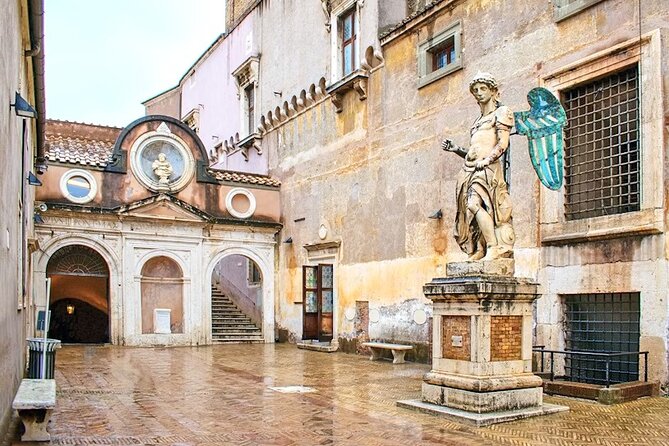
The armory and prison cells show the less comfortable side of the castle. Medieval weapons connect the site to its military role, while the dungeons point to its use as a place of confinement.
These rooms are not decorative filler. They explain why Castel Sant’Angelo mattered so much to Rome’s rulers. A fortress near the Vatican had to protect people, control access, and hold prisoners.
The prison story includes Giordano Bruno, the famous philosopher. That detail adds a personal dimension to the cells. You are no longer looking only at old stone. You are considering the people who were confined there and the power behind the walls.
Conditions and displays can feel stark compared with the papal rooms. That contrast is one of the reasons I like the visit. The castle does not present only grand architecture. It also shows the fear, control, and force that supported Rome’s political life.
The audio guide is especially useful here, since a bare cell can offer few clues on its own. Listen for the historical explanation, then take a moment to look at the structure around you. The narrow spaces make the fortress feel less like a palace and more like a working prison.
Another self-paced route in Rome:
- Colosseum, Roman Forum & Palatine Hill with Audioguide App
★ 4.4 · 6,291 reviews - Vatican & Sistine Chapel Ticket with Optional Audio Guide
★ 4.1 · 5,405 reviews - Rome: Castel Sant’Angelo Entry Ticket & Digital Audioguide
★ 4.7 · 5,347 reviews - Rome: Castel Sant’Angelo Entry Ticket & Audio App
★ 4.3 · 4,952 reviews
Angel’s Terrace and the best reason to climb
The Angel’s Terrace is the visual reward at the top. From here, you can look across the Tiber toward St. Peter’s Basilica and the Vatican.
This is the place to pause. Rome opens up around you in a way that is hard to appreciate from street level. The terrace gives you a strong sense of the castle’s location and its relationship to the Vatican.
The view also explains the building’s strategic importance. From a high defensive position beside the river, the castle could watch movement through the city and protect an important route.
Bring patience for this part of the visit. Even if you are mainly interested in Roman history, the terrace gives your eyes a break from enclosed rooms and corridors. It is also the natural place for photographs.
The terrace is not a separate attraction. It is part of your museum entry, so the ticket gives you both the historical interiors and the city view. That combination improves the value of the admission, especially if you want one compact stop near the Vatican.
The Passetto di Borgo and the escape route
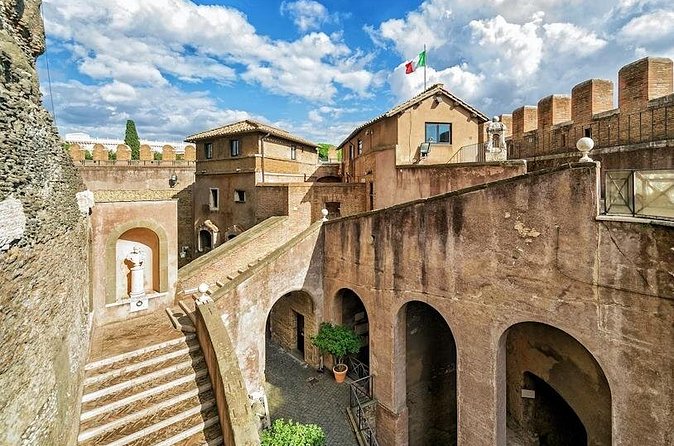
The Passetto di Borgo is the secret passage associated with Castel Sant’Angelo and the Vatican. This corridor once allowed popes to reach the castle during danger.
The important caution is that the passage is not always open to the public. Treat it as a possible extra, not a guaranteed part of the visit.
Even when you cannot walk through it, knowing about the corridor changes how you understand the castle. The fortress was not isolated from the Vatican. It formed part of a wider defensive system, with an escape route for the papacy.
Ask about access when you arrive, but do not plan your entire visit around it. The mausoleum, apartments, prison cells, armory, and terrace remain the main experience.
What the audio guide adds

The audio guide is delivered digitally on your smartphone. It is not a live tour, and no transportation or food is included.
That arrangement works well if you dislike being tied to a group schedule. You can stop for photographs, replay a section, or move through a room without waiting for other people. You also avoid the problem of trying to hear a guide in crowded interiors.
The tradeoff is that you must manage your own device. Make sure your phone is ready before entering, and remember that the experience depends on following the digital instructions correctly. The supplied information does not identify a named guide, so you should book this for the flexibility of recorded commentary rather than for a personal guide’s style or local recommendations.
The audio guide is listed in English, Spanish, French, and German. The tour summary highlights English, but the included language information lists all four. If language choice is important to you, confirm the available option before you visit.
How long the visit takes

The stated duration ranges from 30 minutes to 1 hour 15 minutes. That is a wide range, but it makes sense for a self-guided museum.
A fast visit can cover the main route, hear selected commentary, and reach the terrace in about half an hour. That may suit you if you have a packed Vatican-area schedule.
I would plan closer to an hour, or up to 1 hour 15 minutes if you want to listen carefully and examine the rooms. The apartments and frescoes deserve time, and the views are better when you are not racing to the next appointment.
The castle is near public transportation, which makes it practical to combine with other sights in central Rome. Transportation is not included, so you arrange your own route. The experience is suitable for most people according to the supplied participation information, but no detailed accessibility information is provided.
Is the $42.34 price good value?
At $42.34 per person, the price is not a bargain admission for a short photo stop. It becomes more reasonable if you use the skip-the-line benefit, listen to the audio guide, and spend enough time to see the full range of rooms.
You are paying for more than a view. The ticket covers entry to a major Roman monument with ancient, military, papal, and prison history in one visit. The digital guide adds structure without the cost or fixed timing of a private tour.
The value drops if you plan to stay only 30 minutes or if you already know the monument well. In that case, you may be paying mainly for convenience.
The strongest value comes when you want a self-directed visit near the Vatican. You can see the terrace, understand the building’s changing purpose, and avoid waiting in a standard entry line. That is a solid package for a visitor who prefers independence.
Booking reliability and the no-refund rule
This experience is booked, on average, 27 days in advance, which suggests that you should not leave it until the last moment if Castel Sant’Angelo is important to your plans.
There is one practical warning. A customer reported paying without receiving the ticket on time. The operator responded that the ticket had been sent, explained that pressure on the Castel Sant’Angelo website had caused a delay, and said the customer was able to enter later. The operator also stated that the payment was refunded and an apology was offered.
That response does not remove the risk of a stressful wait, so check your confirmation and ticket carefully after booking. The ticket is non-refundable and cannot be changed for any reason. If your schedule is uncertain, that policy matters more than the modest convenience of prebooking.
Who should book this experience?
I would recommend it to you if you want to explore alone, prefer recorded commentary, and have an interest in buildings that changed purpose over time.
It suits:
- Visitors combining Castel Sant’Angelo with a Vatican-area day
- People who want views of St. Peter’s Basilica and the Tiber
- History fans interested in Roman, papal, military, and prison stories
- Visitors who prefer four-language audio over a fixed live group
- Anyone who values skip-the-line entry and flexible pacing
I would hesitate if you want a live historian, personal questions answered on the spot, or a flexible cancellation policy. I would also think twice if you need guaranteed access to the Passetto di Borgo, since that corridor may not be open.
Should you book Castel Sant’Angelo with this audio guide?
Book it if you want a practical, independent visit with a strong view at the end. The best parts are the variety inside the castle, the papal apartments, the prison story, and Angel’s Terrace.
Before paying, make sure you are comfortable with the non-refundable terms and digital ticket delivery. Check the audio language you want, allow at least an hour if possible, and do not count on the Passetto di Borgo being open.
The experience has a middling overall rating and mixed individual feedback, so I would not call it a risk-free purchase. Still, the monument itself offers enough variety to make the visit worthwhile, and the combination of skip-the-line entry, smartphone commentary, and terrace views gives you a sensible way to see one of Rome’s most unusual buildings.
FAQ
Where is this experience located?
It takes place at Museo Nazionale di Castel Sant’Angelo in Rome, Italy.
How much does the experience cost?
The listed price is $42.34 per person.
How long does the visit last?
The approximate duration is 30 minutes to 1 hour 15 minutes.
Is skip-the-line entry included?
Yes. The package includes skip-the-line entry to Castel Sant’Angelo.
Is a live guide included?
No. The package includes a digital audio guide on your smartphone, not a live guided tour.
Which audio guide languages are available?
The included language options are English, Spanish, French, and German.
What can I see inside Castel Sant’Angelo?
You can see Hadrian’s ancient mausoleum, papal apartments, Renaissance frescoes, the armory, prison cells, and Angel’s Terrace.
Is the Passetto di Borgo always open?
No. The secret passage is not always open to the public.
Can I cancel or change the booking?
No. The experience is non-refundable and cannot be changed for any reason.
Latest audio tours in Rome
- Pantheon Skip the Line Entry Tickets with Digital Audio Guide★ 3.5 · 52 reviews
- St. Peter’s Basilica: Dome Climb with Lift & Audioguide★ 4.5 · 13 reviews
- Audio guide in Vatican Museums and Sistine Chapel★ 4.5 · 12 reviews
- The Roman Jewish Ghetto: A Self-Guided Audio Tour★ 4.0 · 8 reviews
- Experience: The Pantheon Audio Tour★ 4.5 · 4 reviews
- Trastevere: A Self-guided Audio Tour of Rome’s Medieval Village★ 4.5 · 3 reviews
- Navova square underground with audioguide★ 4.5 · 17 reviews
- The Colosseum’s Attic with 3rd, 4th & 5th Levels with Audio Guide★ 4.5 · 20 reviews
Rome Audio Tours, compared.
Colosseum & Forum with Audio Guide App -Optional Arena
Read our review →
City Sightseeing Hop-on Hop-off Bus with Audioguide
Read our review →
St. Peter’s Basilica & Dome Entry Ticket & Audio Tour
Read our review →
Colosseum, Roman Forum & Palatine Hill with Audioguide App
Read our review →
Vatican & Sistine Chapel Ticket with Optional Audio Guide
Read our review →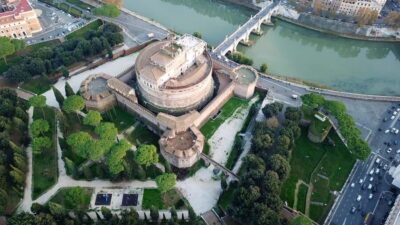
Castel Sant’Angelo Entry Ticket & Digital Audioguide
Read our review →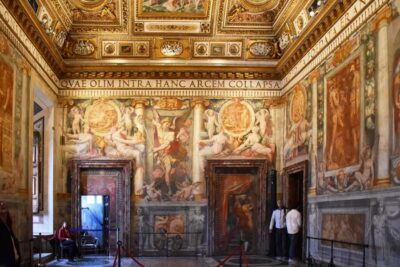
Colosseum, Forum, & Palatine Hill with Audio Guide
Read our review →Browse the lists this tour appears in