

Reviewed · ITALY
Perugia Walking Tour with Audio and Written Guide by a local
Perugia’s old center is best understood on foot, and this self-guided tour gives you a simple route through its Etruscan remains, medieval streets, churches, and papal fortress. The most interesting feature is the way it connects ancient Perugia with the living city you see today, from the Etruscan Arch to cafés and festivals along Corso Vannucci.
I like the freedom to set your own pace, especially if you want to pause for lunch or spend extra time inside the cathedral. I also like the low price and practical food advice, including tips about local dishes and Baci chocolate. The trade-off is that you must manage the map and audio yourself, and some people find the directions less precise than Google Maps.
Key points
- A self-guided route through nine central Perugia sights, starting at the Etruscan Arch and ending at Rocca Paolina.
- Audio and written explanations in English, Spanish, Italian, German, and French.
- Matteo is credited with the guide, which includes history, curiosities, directions, and restaurant suggestions.
- The route takes about three to four hours, but you can stop, pause, or split it around a meal.
- The Etruscan Well requires a separate admission ticket, while the other listed stops are free to enter.
- You need a smartphone with an internet connection, and headphones are optional rather than supplied.
A smart way to meet Perugia
Perugia is an Umbrian hill city with a compact historic center, but its layers can be confusing at first. Etruscan walls sit beside medieval buildings, a Renaissance avenue leads to a papal fortress, and modern events fill the same square where political and religious life once played out.
This tour gives you a route through those layers without tying you to a guide’s timetable. You begin at Via Ulisse Rocchi, 39, near the Etruscan Arch, and finish at Rocca Paolina on Piazza Italia. The advertised walking time is about three to four hours, though the audio guide can be paused whenever you want.
There is no person waiting at the starting point. You receive instructions with your booking confirmation, activate the digital guide, and follow the route using your phone. You can listen through the phone’s speaker or use your own headphones.
That setup works well for independent visitors. You can start later than planned, pause for a coffee, or stop for lunch at one of the suggested places. It is less convenient if you prefer a guide to handle directions, answer questions, and keep the group moving.
The guide is available in five languages: English, Spanish, Italian, German, and French. The written text is useful if street noise, poor audio, or a weak connection makes listening difficult. One especially practical tip is to keep Google Maps open as well. The tour map gives you the general direction, but precise street-by-street navigation may require another app.
More Audio Walking Tours in Italy
- Florence: 2.5 hour Audio Guided Walking Tour led by Host
★ 4.6 · 293 reviews - Verona Walking Tour with Audio and Written Guide by a Local
★ 4.5 · 157 reviews - Bologna Walking Tour with Audio and Written Guide
★ 4.5 · 132 reviews
From the Etruscan Arch to the medieval aqueduct
The first stop is the Monumental Etruscan Gate, commonly called the Etruscan Arch or Arch of Augustus. Built probably in the third century BC, it formed part of Perugia’s ancient city walls, which extend for about three kilometers.
This is a good opening stop because it immediately shows how old Perugia is. The arch once marked the northern side of the city, while Porta Marzia guarded the south. You get a useful sense of Perugia as a fortified Etruscan settlement before moving into its later Roman, medieval, and papal chapters.
Allow about ten minutes here. Admission is free, and the stop is more about orientation and context than a long indoor visit.
Next comes the Medieval Aqueduct, another free outdoor stop. Construction began in 1254 to carry water from Monte Pacciano to the Fontana Maggiore in the city center. The aqueduct extends for about four kilometers.
The route treats the aqueduct as part of Perugia’s practical medieval story. This was not merely decorative architecture. Bringing water uphill and into the center was a major civic project, and the guide helps connect that engineering work with the fountain you will encounter later near the cathedral.
You spend about ten minutes at this stop. Wear shoes with a firm grip, since Perugia’s historic center involves slopes, steps, and uneven paving. The tour data does not give a specific difficulty rating, but this is a walking route through a hilltop city, not a flat promenade.
Seeing the Etruscan Well beneath Palazzo Sorbello
The Etruscan Well is the one stop with a separate admission charge. It lies beneath Palazzo Sorbello in the historic center and dates to the second half of the sixteenth century. The Bourbon di Sorbello family acquired the palace in 1780, and the building remains in the hands of their descendants.
The suggested visit lasts about twenty minutes. This is a useful addition to the route because it moves the story underground. Above ground, Perugia can look thoroughly medieval or Renaissance. Below ground, you encounter another side of the city’s long development and the importance of water storage.
The separate ticket matters when you calculate the real cost of the tour. At $7.81 per person, the digital guide itself is inexpensive, but you should budget extra for this stop if you choose to enter. The other listed stops are free, so the added expense is limited to the well.
You will want to read the access instructions carefully before setting out. The guide provides the place and suggested time, but it does not include admission. A phone with internet access is still required for the digital content.
Piazza IV Novembre and the Cathedral of San Lorenzo
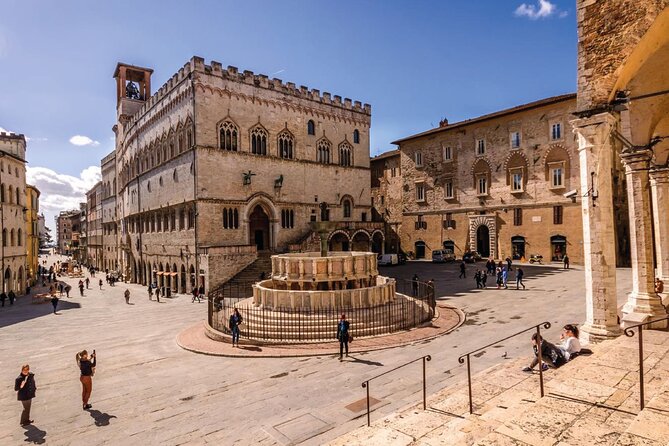
Piazza IV Novembre is the center of the route and the symbolic heart of Perugia. It has long served as a place for political and religious life, and it still hosts major public events, including Umbria Jazz concerts, Eurochocolate stands, and conferences connected with the International Journalism Festival.
This is the point where Perugia’s past and present meet most clearly. You are not being led to a quiet museum square that has been preserved only for visitors. The piazza remains part of the city’s daily and cultural life.
Plan on about twenty minutes here, though you may want longer if the square is hosting an event. The guide’s timing is only an estimate. The best part of a self-guided walk is that you can pause without holding up anyone else.
The next stop is the Cathedral of San Lorenzo, which deserves about thirty minutes. The present church occupies the site of an earlier twelfth-century Romanesque building. That church, in turn, stood over an area once used as the ancient Etruscan and Roman acropolis.
The cathedral gives you a clear example of Perugia’s layered past. The guide helps you look beyond the large, formal interior and understand what lies beneath it. Admission is listed as free, although opening arrangements can change, so it is wise to check the actual access conditions on the day.
The written guide may be especially helpful here. Churches reward a slower look, and a short explanation of the building’s earlier foundations gives you a reason to pay attention to details you might otherwise pass without noticing.
Another self-paced route in Italy:
- Rome: Pantheon Fast-Track Ticket and Official Audioguide
★ 4.5 · 27,353 reviews - Rome: Colosseum & Forum with Audio Guide App -Optional Arena
★ 4.2 · 24,770 reviews - Florence: Timed Entry to Michelangelo’s David + Audio App
★ 4.6 · 19,496 reviews - Rome: City Sightseeing Hop-on Hop-off Bus with Audioguide
★ 4.0 · 16,045 reviews
Braccio’s loggia and Corso Vannucci
From the cathedral area, the route continues to the Loggia di Braccio Fortebracci. Braccio was a powerful military leader who expanded his control across much of central Italy. He took control of Perugia in 1416 after defeating Carlo I Malatesta, who had been chosen by the Church as Defender of Perugia.
In 1423, one year before his death, Braccio commissioned the Bolognese architect Fioravante to design a loggia overlooking Piazza IV Novembre. The project included a staircase leading to Braccio’s residence.
The stop takes about fifteen minutes and is free. Its value is not just architectural. It introduces the local power struggles that shaped Perugia before papal control became dominant. The audio explanation gives the structure a human and political story, rather than treating it as another old façade.
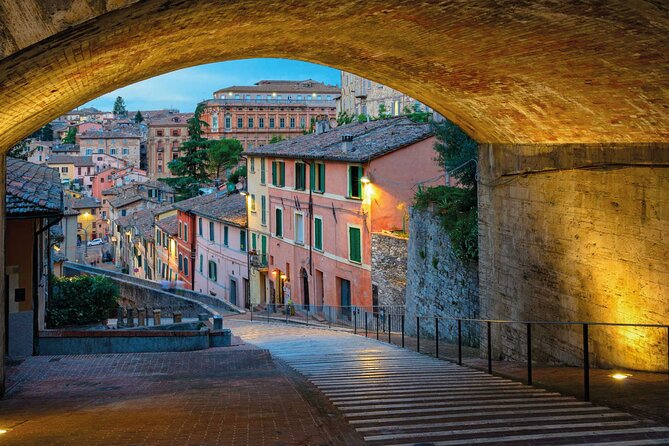
Then you reach Corso Vannucci, Perugia’s main avenue. It links Piazza Italia with Piazza IV Novembre and takes its name from Pietro Vannucci, the Renaissance painter better known as Perugino.
Allow another fifteen minutes, though this is one place where you may want to linger. Corso Vannucci is the natural spine of the historic center, and the food suggestions included with the guide can help you turn the route into a full afternoon rather than a quick march between monuments.
The guide also discusses Baci chocolate, one of Perugia’s best-known food connections. That small detail adds local flavor to the walk and gives you something specific to look for when choosing a snack or gift.
Entering Rocca Paolina, Perugia’s papal fortress
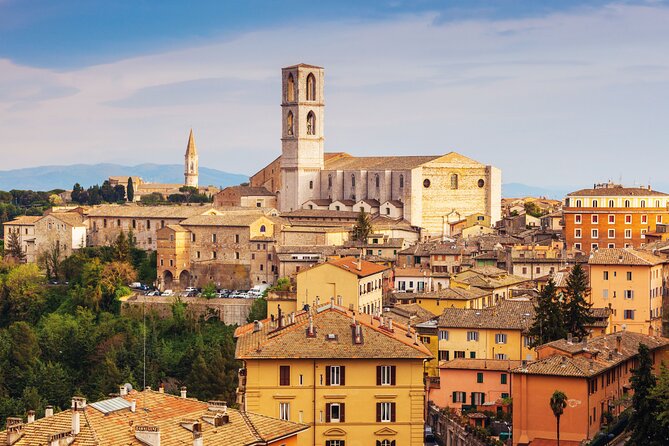
Rocca Paolina is the final major stop and the most striking finish to the route. Pope Paul III Farnese ordered the fortress between 1540 and 1543 after the Salt War, the conflict that helped secure papal control over Perugia.
The fortress was designed by Antonio da Sangallo the Younger. Its construction required the demolition of about a quarter of the city, a fact that makes the structure much more than a military curiosity. It represents a major political change imposed on Perugia, and the route gives you the background needed to understand why the fortress still carries such weight.
The complex had two parts. The larger fortress occupied Landone hill, while a smaller section called Tenaglia sat lower down. Three fortified passages connected them.
You have about thirty minutes here, and the route ends at Rocca Paolina on Piazza Italia. One of the most rewarding details is that the fortress contains remnants of the earlier city within its passageways and structures. The final stop feels different from the open squares and church interiors because you move through a built environment shaped by conflict and control.
Admission is listed as free. The opening information provided for the experience runs from noon until 11:30 p.m. daily during the stated operating period, but conditions at individual parts of the site can vary. The digital tour ends here, so you can continue exploring on your own afterward.
Finishing with the Borgobello viewpoint
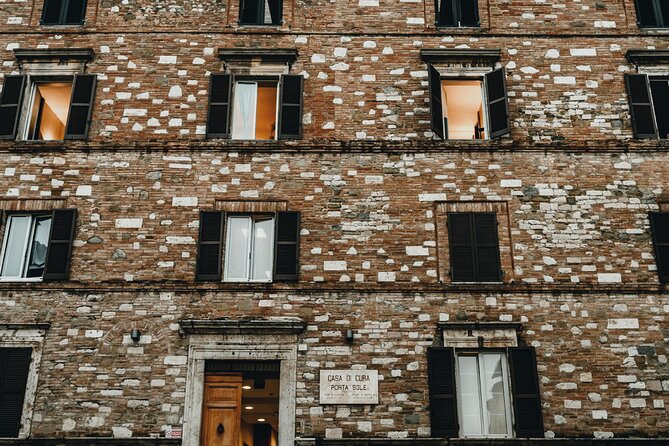
The route includes the Belvedere del Borgobello as the final scenic point listed, while the booking information identifies Rocca Paolina as the end point. This is worth clarifying before you begin. The supplied route order places the viewpoint after Rocca Paolina, but the stated finish says the tour ends at the fortress on Piazza Italia.
At the Belvedere, you can look over Perugia’s buildings, historic center, and the Umbrian countryside. It is also described as a local meeting place for young people and families, so the stop offers more than a picture-taking pause.
Allow about fifteen minutes. If you want the cleanest navigation, follow the app’s actual map and instructions on the day. The route information is useful, but the differing end-point descriptions mean you should not assume the final stop is automatically included after the fortress without checking the digital guide.
What the $7.81 price really gives you
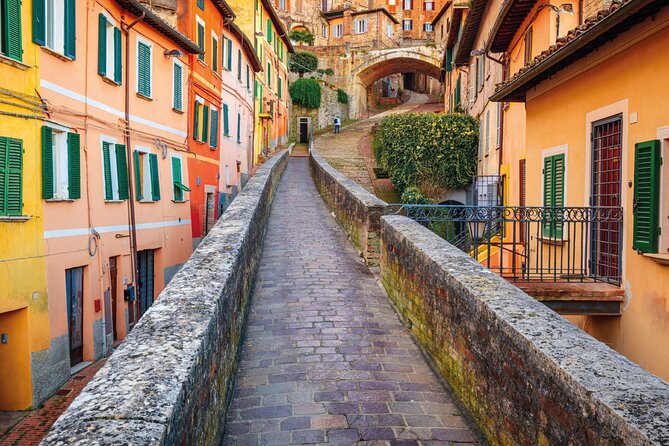
At $7.81 per person, this is priced as a route and reference tool rather than a traditional guided tour. You are paying for the digital guide, audio, written descriptions, directions, monument notes, local curiosities, and restaurant recommendations.
That is strong value if you want structure without paying for a private guide. It is also a good fit for people who like to read as well as listen. The text lets you move at your own speed and revisit an explanation later.
The low price does not remove every cost. The Etruscan Well requires a separate ticket, and you need to supply your own smartphone, internet connection, and headphones if you want private listening. The tour does not include a live guide.
A current score of 4.7 out of 5 from 33 ratings, with 94 percent recommending it, suggests that the format works well for many independent visitors. The strongest praise centers on freedom, low cost, broad coverage of central Perugia, and the ability to stop for food and continue later.
The weaker points are practical. Audio can cut out, some explanations are short, and toggling between the map and information screen can be awkward. The guide points you in the right direction, but precise navigation may require Google Maps.
Who should book this self-guided walk

I would choose this tour if you want to see the main historic sights without joining a fixed group. It suits solo visitors, couples, and families who need the option to pause. It also works for anyone making a short visit and wanting a ready-made route through the center.
It is especially useful if you appreciate written information. One person can listen while another reads, or you can use the text when the audio is unclear. The guide also lets you build lunch into the route instead of treating food as an afterthought.
You may prefer a live guide if you want questions answered on the spot, precise directions at every turn, or a deeper discussion of art and architecture. The audio narration is described as clear and useful, but not every explanation is long, and the sound may occasionally cut out.
Before starting, charge your phone, confirm the guide has activated, and read the voucher carefully. Keep your own headphones handy, and use a separate map app if you want exact street directions.
The booking has free cancellation up to 24 hours before the start time. Changes or cancellations made less than 24 hours ahead are not refundable.
FAQ
Is this a guided tour with a person?
No. It is a self-guided digital visit with audio and written information. No guide accompanies you in person.
How long does the Perugia walking tour take?
The estimated duration is three to four hours. You can pause the guide, stop for food, or spend more or less time at each location.
Where does the tour start?
The stated starting point is Via Ulisse Rocchi, 39, 06123 Perugia.
Where does the tour finish?
The booking information identifies Rocca Paolina at Piazza Italia, 11, as the finish point. The route also includes the Belvedere del Borgobello, so check the digital map for the exact order and final stop.
What languages are available?
The audio and written guide are available in English, Spanish, Italian, German, and French.
Do I need a smartphone and internet connection?
Yes. You need a smartphone with an internet connection to activate and use the digital guide.
Are headphones included?
No. Headphones are not provided. You can listen through your phone’s speakers or bring your own headphones.
Is admission included at every stop?
The listed outdoor and public stops are free. The Etruscan Well requires an admission ticket that is not included.
Can service animals take part?
Yes. Service animals are allowed.
Can I cancel for a full refund?
Yes, if you cancel at least 24 hours before the scheduled start time. Cancellations made less than 24 hours ahead are not refundable.
Should you book it?
Book this tour if you want an inexpensive, flexible introduction to Perugia and are comfortable navigating with a phone. The route covers the city’s major central sights, adds useful local food tips, and gives you enough historical context to make the streets and monuments easier to understand.
Skip it if you want a live expert, detailed street directions at every turn, or a polished audio production that never cuts out. For independent visitors who value freedom and a low price, though, $7.81 buys a useful framework for seeing Perugia at your own pace.
Latest audio tours in Italy
- Pantheon Skip the Line Entry Tickets with Digital Audio Guide★ 3.5 · 52 reviews
- St. Peter’s Basilica: Dome Climb with Lift & Audioguide★ 4.5 · 13 reviews
- Audio guide in Vatican Museums and Sistine Chapel★ 4.5 · 12 reviews
- The Roman Jewish Ghetto: A Self-Guided Audio Tour★ 4.0 · 8 reviews
- Experience: The Pantheon Audio Tour★ 4.5 · 4 reviews
- Trastevere: A Self-guided Audio Tour of Rome’s Medieval Village★ 4.5 · 3 reviews
- Navova square underground with audioguide★ 4.5 · 17 reviews
- The Colosseum’s Attic with 3rd, 4th & 5th Levels with Audio Guide★ 4.5 · 20 reviews
Audio Walking Tours, compared.

City Monuments Guided Walking Tour with Audio Guide
Read our review →

Self Guided Classic Freedom Trail Location Aware (GPS) Walking Audio Tour
Read our review →
Self-Guided Historical Walking Tour (Audio Guide)
Read our review →
Cape Cod & Provincetown Self-Guided Driving & Walking Audio Tour
Read our review →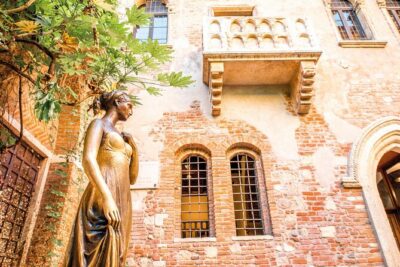
Verona Walking Tour with Audio and Written Guide by a Local
Read our review →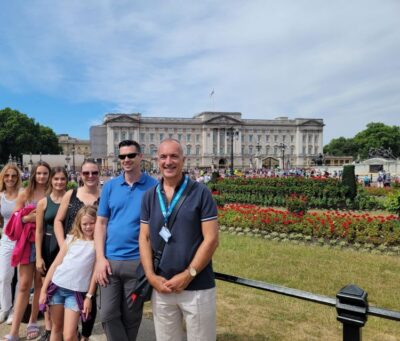
Royal Walking Tour and Buckingham Palace Audio Tour
Read our review →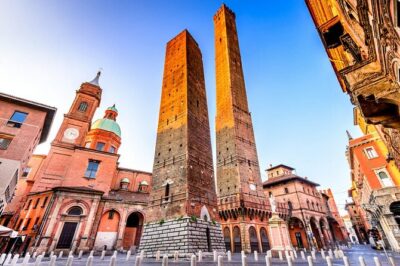
Bologna Walking Tour with Audio and Written Guide
Read our review →Browse the lists this tour appears in