
Reviewed · PALERMO
Palermo Walking Tour with Audio and Written Guide by a Local
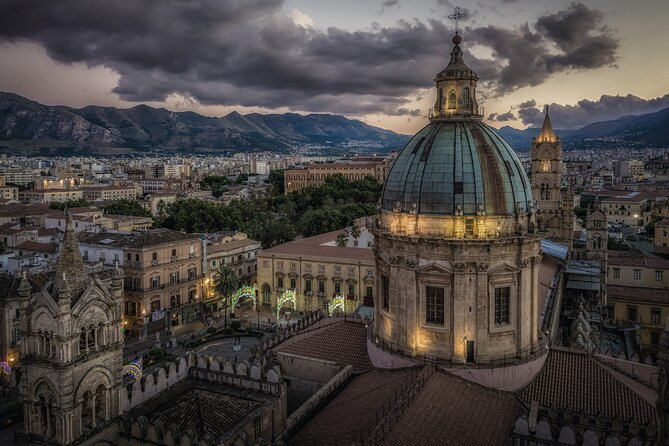
Palermo’s great strength is its mix of cultures, and this self-guided audio walk takes you straight into that mix. In one long day, you move from red-domed Arab-Norman architecture to royal chapels, Baroque squares, an old food market, a historic neighborhood, and two very different museums.
I like the freedom to set your own pace and the clear Google Maps links, which make it easy to pause for coffee or return to a sight later. I also like the low price, especially for first-time visitors who want a useful route without joining a fixed group. The main drawback is simple: you must manage your own timing, phone connection, tickets, and navigation.
Key points to know before you book

- A seven-hour route through Palermo’s main historic districts: The walk links major monuments with markets, squares, and museums.
- Audio and written guidance in five languages: Materials are listed in English, Spanish, Italian, German, and French.
- Google Maps links keep the route practical: You can follow the suggested order or change it to suit your day.
- Admission fees are not included: Budget an additional 36 euros for San Giovanni degli Eremiti, the Norman Palace, and Teatro Massimo.
- You choose the ending point: The suggested finish is the Museum of Majolica, but a digital guide lets you stop earlier or continue elsewhere.
- Best for independent walkers: This suits you if you prefer pausing, skipping, or revisiting places instead of following a live guide.
A low-cost way to get your bearings in Palermo
At $7.21 per person, this is priced more like a digital city guide than a traditional walking tour. That matters because you are not paying for a guide to accompany you. You are paying for a planned route, audio commentary, written explanations, maps, historical notes, and practical suggestions.
The route is ambitious. It covers ten stops across Palermo and takes about six to seven hours if you visit the places in the suggested order. The timed schedule adds up to roughly seven hours, though your real day may be longer once you include ticket lines, lunch, photographs, shopping, and breaks.
I see this as a strong first-day orientation. It gives you a structure, but it does not lock you into a group. You can listen outside a monument, pause the audio inside a museum, or skip a stop that does not suit your interests.
The trade-off is that the experience depends on your phone. You need an internet-connected smartphone, and the activation instructions are included with your booking voucher. Read those instructions before you arrive. The audio can play through your phone speaker or headphones.
More Audio Walking Tours in Italy
- Florence: 2.5 hour Audio Guided Walking Tour led by Host
★ 4.6 · 293 reviews - Verona Walking Tour with Audio and Written Guide by a Local
★ 4.5 · 157 reviews - Bologna Walking Tour with Audio and Written Guide
★ 4.5 · 132 reviews
San Giovanni degli Eremiti and the Norman Palace
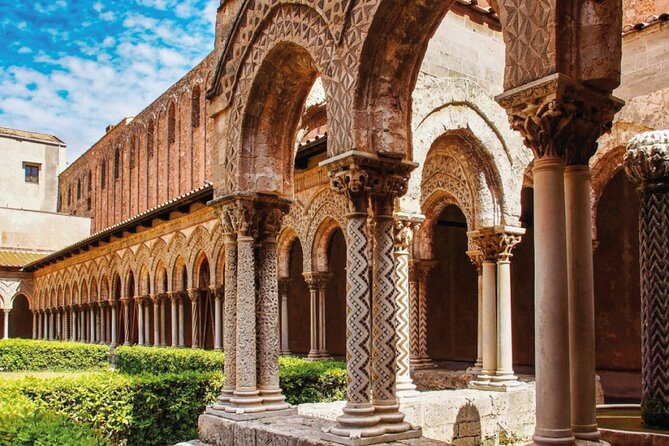
The starting point is the Church of San Giovanni degli Eremiti on Via dei Benedettini. This is one of Palermo’s most memorable introductions to the city because its form reflects several chapters of local history. The site first held a monastery connected with Saint Hermes, later became a mosque during Muslim rule, and was eventually entrusted to Benedictine monks.
The church is part of the UNESCO-listed Arab-Norman route. Its famous red domes make an immediate visual impression, but the real value is the layered story behind the building. The complex also recalls a time when its abbot served as the king’s confessor, a reminder that Palermo’s religious institutions once sat close to royal power.
You have about 25 minutes here, and admission is not included. The listed ticket price is 7 euros. I would allow a little flexibility if you want time to look around rather than simply photograph the exterior.
From there, the route moves to the Norman Palace, also called the Royal Palace. Give this stop the full two hours suggested. The palace is considered the oldest royal palace in Europe and occupies a site with even older roots, including remains connected with Punic and Roman Palermo.
The underground areas are especially useful for understanding how much history sits below the modern city. You may see traces of the first Punic settlements in the sections open to the public. The palace is also one of the places where Palermo’s royal, religious, and cultural stories meet, so rushing through it would weaken the whole point of the visit.
Admission is not included, and the listed ticket price is 17 euros. That makes it the largest single admission cost on the route, but it is also the stop that deserves the most time.
Palermo Cathedral and the long walk toward Teatro Massimo
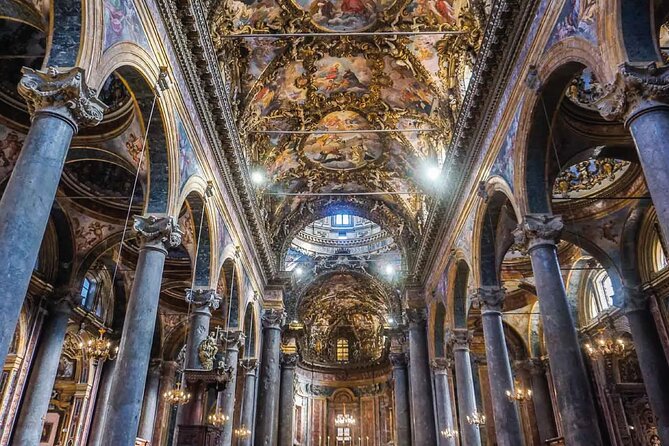
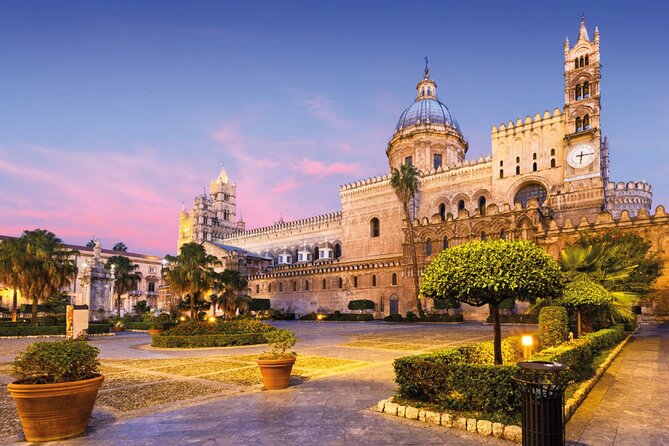
The cathedral is only given 25 minutes in the suggested plan, which is enough for a focused visit but not enough for every detail. Its architecture brings together Byzantine, Islamic, and Latin elements, a combination that helps explain why Palermo feels different from many other Italian cities.
Inside, you can find the Diocesan Museum, a chapel connected with Santa Rosalia, Palermo’s patron saint, and the tombs of Norman kings. The cathedral itself is free to enter according to the supplied details, though parts of the complex may have separate arrangements.
I like the way this stop follows the Norman Palace. Together, the two sites show how royal power and Christian worship shaped the city after the Norman period. The audio guide can give you useful context before you enter, so you are not simply looking at another large stone church.
Next comes Teatro Massimo, Italy’s largest opera house and the third largest in Europe. The building occupies an important position between the old city and Palermo’s northern expansion. Its neoclassical design came from Giovanni Battista Filippo Basile, and its scale is hard to miss.
The suggested visit lasts one hour, with a 12-euro admission fee not included. That is a meaningful extra cost, so decide in advance if you want the interior visit or only an exterior look. If opera houses interest you, this is one of the route’s major cultural stops. If your day is already full, it is also one of the easier places to shorten.
Quattro Canti and Piazza Pretoria
The route then turns to two central squares that explain Palermo’s street plan and public life.
Quattro Canti is the popular name for Piazza Villena. It was created in the seventeenth century where Via Maqueda meets Via Vittorio Emanuele, also known as the Cassaro. This crossing divided the historic center into four districts, called mandamenti.
You only need about 15 minutes here, but do not treat it as an empty traffic junction. Stop in the center and look at how the four corners frame the intersection. This is one of the best places to understand the old city’s layout before you continue walking.
Piazza Pretoria is another short stop, also planned for 15 minutes. Its centerpiece is the fountain that gave the square its darker nickname, Piazza della Vergogna, or Square of Shame. The name refers to the reaction to the fountain’s statues when it arrived in Palermo, though the square today is one of the city’s best-known public spaces.
Both squares are free. They also provide useful breathing room between ticketed monuments. You can listen to the commentary, look around, and continue without spending more money.
Another self-paced route in Italy:
- Rome: Pantheon Fast-Track Ticket and Official Audioguide
★ 4.5 · 27,353 reviews - Rome: Colosseum & Forum with Audio Guide App -Optional Arena
★ 4.2 · 24,770 reviews - Florence: Timed Entry to Michelangelo’s David + Audio App
★ 4.6 · 19,496 reviews - Rome: City Sightseeing Hop-on Hop-off Bus with Audioguide
★ 4.0 · 16,045 reviews
La Vucciria, where the city becomes more informal
No visit to Palermo feels complete without seeing at least one historic market. This route takes you to La Vucciria, in the Loggia district between Via Roma, Piazza San Domenico, and Via Vittorio Emanuele.
The market’s name comes from the French word boucherie, meaning butcher’s shop. Meat was originally sold here. Its past reputation was that of one of the most lively and chaotic markets in the city center, though the character of a market can vary with the day and time of your visit.
The suggested visit is only 25 minutes, so think of La Vucciria as a short city experience rather than a full food tour. This is a good place to use the local restaurant advice included with the guide. You receive suggestions for authentic local food, but the experience does not include a meal or a guide sitting down with you.
I appreciate the market stop because it breaks up the monument-heavy route. Palermo is not only churches, palaces, and museums. Its food traditions and street life are part of how the city makes sense.
La Kalsa and Palazzo Abatellis
The next neighborhood is La Kalsa, one of Palermo’s oldest districts. Its roots reach back to the period of Islamic rule, and the area still carries an oriental feel in parts of its streets and architecture. The route allows only 15 minutes, so you should think of this as a short introduction rather than a full neighborhood walk.
The Kalsa is a good reminder that Palermo’s cultural mix is not confined to one monument. You see it in the shape of the district, the names of streets, and the nearby Arab-Norman buildings.
Palazzo Abatellis receives one hour. Built in the fifteenth century for the Sicilian nobleman Francesco Abatellis, the palace was designed by Matteo Carnilivari. Its architecture joins Gothic forms with Renaissance influence, making it worthwhile even if you are not normally a museum enthusiast.
Admission is not included. The palace is in Piazza Magione, and its position fits well with the Kalsa section of the walk. I would keep the full hour if you enjoy architecture and art. If museums are less important to you, you could shorten this stop and spend more time in the neighborhood.
Majolica at the Museum of the Genius
The final suggested stop is the Museum of Majolica, known as the Rooms at the Museum of Majolica Genius. The collection occupies eight rooms and is arranged by period and geographic origin.
The tiles were produced mainly in Campania and Sicily from the fifteenth through the nineteenth centuries. They were used as flooring in noble and bourgeois homes, so the collection gives you a look at domestic design rather than only grand public buildings.
The visit is planned for one hour, and admission is not included. This is a specialized stop, so it will appeal most if you like ceramics, decorative arts, interiors, or small collections with a clear theme. If majolica does not interest you, you can simply end the route earlier.
The suggested endpoint is on Via Giuseppe Garibaldi, but you are not required to finish there. Since this is a digital guide, you decide when the day is over. That flexibility is one of the product’s strongest features.
What the audio guide does well, and where it falls short
The audio and written formats serve different needs. Audio lets you keep walking while listening, while text is useful when you want to scan a fact, check a name, or read in a noisy street. The Google Maps connection is especially practical because it ties the explanations to the next location.
The route has also been designed in an efficient order. One useful feature is that you can complete most of the main sights in a single day, then return to anything you skipped on a second day. That is less tiring than trying to study every building at equal length.
The instructions for activating the guide are reported to be clear, but you still need to set it up correctly. A digital password or website connection is part of the process. That is a minor task, but it can feel awkward if you arrive without mobile data or with a nearly empty phone battery.
The guide is not the right choice if you want a live person to answer questions, adjust the history to your interests, or handle navigation for you. One drawback is that a suggested route can sometimes send you along an unattractive street. Use common sense, check the map, and feel free to alter the route. The guide is a tool, not a command.
The maximum group size is listed as 104 people, but this does not mean you walk as one physical group. It reflects the digital nature of the experience. You will be exploring independently.
Price, tickets, timing, and practical value
The base price is $7.21 per person. Required or suggested paid admissions add 7 euros for San Giovanni degli Eremiti, 17 euros for the Norman Palace, and 12 euros for Teatro Massimo, for a listed total of 36 euros if you visit all three.
Palermo Cathedral, Quattro Canti, Piazza Pretoria, La Vucciria, and La Kalsa do not have an admission charge listed here. Palazzo Abatellis and the Museum of Majolica also require separate tickets, but their prices are not provided.
That makes the guide excellent value if you want a planned route and basic commentary for very little money. It is less of a bargain if you only want to see the free outdoor sights, since you could walk between them without buying a digital product. The real value lies in the structure, language choices, audio, written notes, maps, and restaurant advice.
Most people can take part, and service animals are allowed. The route is near public transportation, but transportation is not included. The activity is offered in English, while the audio and text materials are listed in five languages.
You can cancel for a full refund if you do so at least 24 hours before the local start time. Changes or cancellations made later are not accepted for a refund.
Who should choose this Palermo walk?
I would choose it if you are visiting Palermo for the first time, want to cover the central sights in one day, and dislike being tied to a live group. It is also useful after a guided tour has been canceled, since the route can still give you a clear plan at short notice.
It suits independent walkers who enjoy choosing their own pauses. You can spend two hours at the Norman Palace, shorten Teatro Massimo, linger in La Vucciria, or return to a museum the next day.
I would not choose it if you expect personal storytelling, help with ticket lines, or detailed answers to questions as they arise. I would also think twice if your phone connection is unreliable or you do not want to listen through a smartphone.
Should you book it?
Book this Palermo walking tour if you want a very inexpensive route through the city’s major Arab-Norman, royal, religious, market, and museum sights. Its best qualities are the efficient order, strong map links, clear audio instructions, and freedom to explore at your own speed.
Skip it if you already know Palermo well or prefer to wander without a plan. For most first-time visitors, though, the $7.21 price is modest, and the route gives you a useful framework. Just bring a charged phone, read the activation details, budget for separate admissions, and do not try to rush every stop into one day.
FAQ
How long does the Palermo walking tour take?
The experience lasts approximately six to seven hours. The suggested stop times add up to about seven hours, not including meals, ticket lines, photographs, or extra breaks.
Where does the tour start?
The suggested starting point is the Church of Saint John of the Hermits at Via dei Benedettini, 16, Palermo.
Where does the tour finish?
The suggested final stop is the Rooms at the Museum of Majolica Genius at Via Giuseppe Garibaldi, 11. Since the guide is digital, you can choose to finish elsewhere.
Are entrance tickets included?
No. Tickets for San Giovanni degli Eremiti, the Norman Palace, Teatro Massimo, Palazzo Abatellis, and the Museum of Majolica are not included. The listed prices for San Giovanni degli Eremiti, the Norman Palace, and Teatro Massimo are 7 euros, 17 euros, and 12 euros.
What languages are available?
The audio guide and written text are listed in English, Spanish, Italian, German, and French. The activity itself is listed as offered in English.
Do I need a smartphone and internet connection?
Yes. You need a smartphone with internet access to use the digital guide. Activation details are provided in your voucher, and you can listen through your phone speaker or headphones.
Latest audio tours in Italy
- Pantheon Skip the Line Entry Tickets with Digital Audio Guide★ 3.5 · 52 reviews
- St. Peter’s Basilica: Dome Climb with Lift & Audioguide★ 4.5 · 13 reviews
- Audio guide in Vatican Museums and Sistine Chapel★ 4.5 · 12 reviews
- The Roman Jewish Ghetto: A Self-Guided Audio Tour★ 4.0 · 8 reviews
- Experience: The Pantheon Audio Tour★ 4.5 · 4 reviews
- Trastevere: A Self-guided Audio Tour of Rome’s Medieval Village★ 4.5 · 3 reviews
- Navova square underground with audioguide★ 4.5 · 17 reviews
- The Colosseum’s Attic with 3rd, 4th & 5th Levels with Audio Guide★ 4.5 · 20 reviews
Audio Walking Tours, compared.
City Monuments Guided Walking Tour with Audio Guide
Read our review →
Self Guided Classic Freedom Trail Location Aware (GPS) Walking Audio Tour
Read our review →
Self-Guided Historical Walking Tour (Audio Guide)
Read our review →
Cape Cod & Provincetown Self-Guided Driving & Walking Audio Tour
Read our review →
Verona Walking Tour with Audio and Written Guide by a Local
Read our review →
Royal Walking Tour and Buckingham Palace Audio Tour
Read our review →
Bologna Walking Tour with Audio and Written Guide
Read our review →Browse the lists this tour appears in