
Reviewed · ITALY
Padova Walking Tour with Audio and Written Guide by a Local
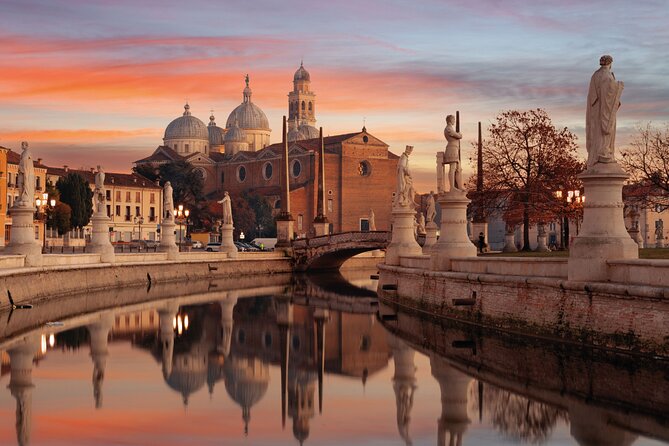
Padua packs a lot into a walkable center, and this self-guided route gives you a useful framework without tying you to a guide or a fixed departure. You’ll move from Giotto’s remarkable Scrovegni Chapel to old market squares, the University of Padua, the Basilica of St. Anthony, and enormous Prato della Valle.
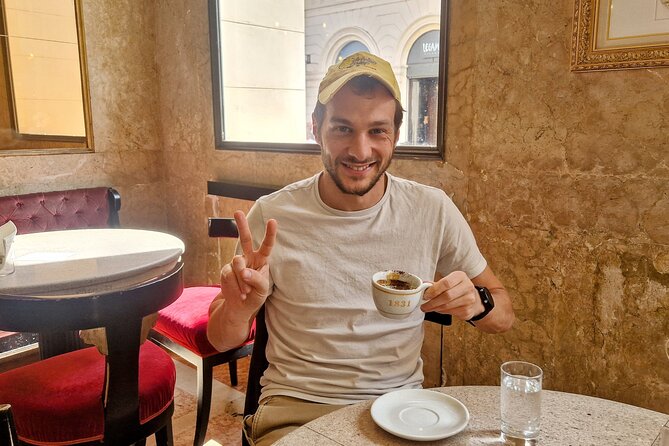
I like the freedom to set your own pace and the mix of audio with written notes. I also like the practical food advice, including the suggestion to try Caffè Pedrocchi, a local drink made with espresso, cocoa, milk, and mint syrup. The main catch is that you need a smartphone with an internet connection, and the Scrovegni Chapel ticket costs an extra €16.
Key points at a glance
- Nine major Padua sights: The route covers the Scrovegni Chapel, Eremitani Church, Pedrocchi Café, historic squares, Palazzo Bo, the Basilica of St. Anthony, and Prato della Valle.
- Flexible timing: Start, pause, stop, or repeat the audio as you wish during your visit.
- Matteo’s local guidance: The guide includes personal tips, historical notes, curiosities, and restaurant suggestions.
- Five language options: Audio and written material are available in English, Spanish, Italian, German, and French.
- Low upfront price: At $7.84 per person, the guide costs less than most live walking tours, but key admission is not included.
- A digital-only format: You will need to read the voucher carefully and activate the guide on a connected smartphone.
Why this Padua walk works well
Padua is easy to underestimate. It is often treated as a day trip from Venice, yet the old center has a strong identity of its own: medieval market squares, a major university, grand churches, arcaded streets, and one of Europe’s largest public squares.
This tour gives you a clear route through that mix. You are not simply handed a list of sights. Each stop comes with audio and written material, plus directions intended to help you move from one place to the next. That matters in a city where several churches and historic buildings can look similar at first glance.
The current rating is 4.7 from 61 reviews, with 95 percent of users recommending the experience. The strongest appeal is simple: you can make the walk fit your day. Start early or late, linger over coffee, stop for lunch, skip a building that is closed, and return to an explanation when you have more time.
At $7.84, the price is especially attractive for solo visitors or couples. A live walking tour can give you more conversation and on-the-spot answers, but this option lets two people share one flexible sightseeing plan without paying a full private-guide rate. Group discounts may also be available.
More Audio Walking Tours in Italy
- Florence: 2.5 hour Audio Guided Walking Tour led by Host
★ 4.6 · 293 reviews - Verona Walking Tour with Audio and Written Guide by a Local
★ 4.5 · 157 reviews - Bologna Walking Tour with Audio and Written Guide
★ 4.5 · 132 reviews
Starting at Prato della Valle
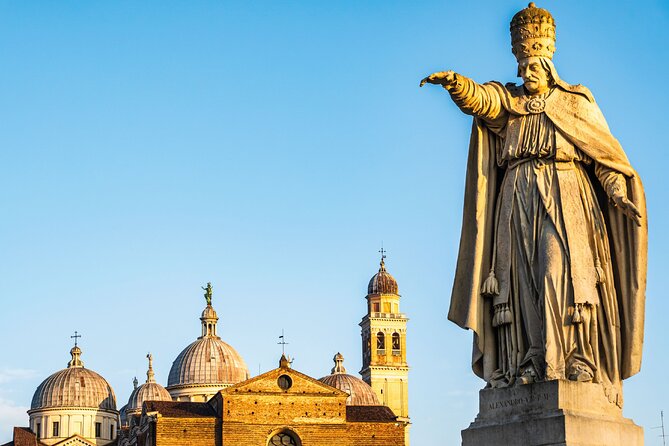
The official meeting point is Prato della Valle, at 35141 Padova. The route also ends there, creating a convenient loop rather than leaving you on the far side of town.
Prato della Valle is a fitting place to begin. At 88,620 square meters, it is described as the second-largest square in Europe, after Moscow’s Red Square. Its scale gives you an immediate sense that Padua is more than a compact medieval core.
The guide’s stop order lists the Scrovegni Chapel first, then continues through central Padua before returning to Prato della Valle. Follow the directions in the digital guide rather than assuming the listed order alone tells you exactly how to walk. One user became confused between churches at the beginning, so take a moment to check the monument title and map direction before setting off.
The total visit is estimated at three to four hours. The listed stop times add up to about three hours, before allowing for walking, photos, a coffee, or a chapel reservation. If you want to enter every available building at a relaxed pace, give yourself more time.
Giotto inside the Scrovegni Chapel
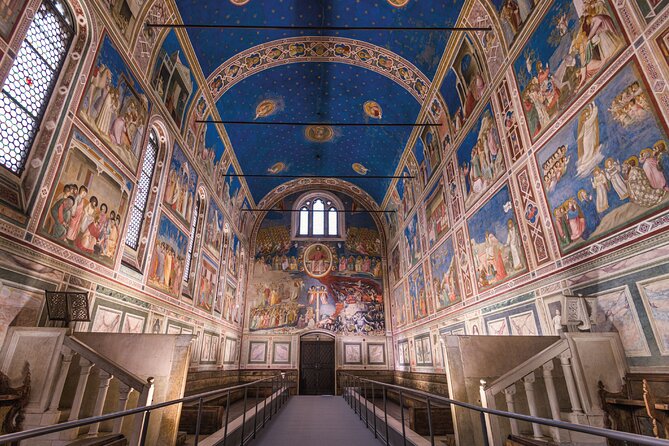
The Scrovegni Chapel is the major ticketed stop, and it is the place where planning matters most. From the outside, the small church can seem modest. Inside, Giotto’s painted scenes turn it into one of Padua’s essential sights.
The chapel occupies part of the area of the Roman amphitheater, and traces of an important Roman structure remain in the façade. The tour allows about 20 minutes for the stop, but the actual visit depends on your admission time and the chapel’s own entry rules.
Admission is not included. The listed price is €16, so add that to the low cost of the digital guide when comparing it with other Padua sightseeing options. The ticket is not mandatory for taking the walking route, but skipping the interior means missing the most important artwork on this itinerary.
I would reserve the chapel before starting the walk if seeing Giotto is a priority. The guide can explain what you are looking at, but it cannot replace the admission ticket or guarantee entry.
Eremitani Church and the art around it
The Church of the Eremitani is free to enter and deserves more than a quick glance. Built between 1260 and 1306 for the Augustinian Eremitan friars, it became one of Padua’s leading churches during the 14th century.
The building was decorated by major artists active in the city, including Andrea Mantegna and Guariento. The suggested visit lasts 20 minutes, enough for a focused look at the interior and a short pause with the guide’s historical notes.
This stop also shows why the route is useful. Padua’s churches are not all alike, but if you wander without context, their names and stories can blur together. Audio commentary gives you something to listen for as you look, while the written version lets you reread details later.
One practical point: keep the church stop matched to the correct title in your phone. The digital directions are meant to guide you, but you still need to pay attention at the start.
Another self-paced route in Italy:
- Rome: Pantheon Fast-Track Ticket and Official Audioguide
★ 4.5 · 27,353 reviews - Rome: Colosseum & Forum with Audio Guide App -Optional Arena
★ 4.2 · 24,770 reviews - Florence: Timed Entry to Michelangelo’s David + Audio App
★ 4.6 · 19,496 reviews - Rome: City Sightseeing Hop-on Hop-off Bus with Audioguide
★ 4.0 · 16,045 reviews
A coffee break at Pedrocchi Café

Pedrocchi Café is one of Padua’s institutions, and the tour gives you about 25 minutes here. That makes it the natural pause in the middle of the walk.
You can visit without paying an admission fee, then decide if you want to order the café’s signature Caffè Pedrocchi. The drink combines espresso, cocoa, milk, and mint syrup. It is a distinctly local tasting stop, not just a place to grab a generic coffee.
The guide also includes advice about local restaurants and authentic food. That is valuable because a short city tour often leaves you knowing where the monuments are but not what to eat afterward. Here, you can use the walking route to get your bearings, then choose a restaurant or pastry shop for a separate stop.
If you are trying to keep the day inexpensive, the café is optional. The tour remains useful without ordering anything, and the included food tips cost nothing beyond the guide price.
Piazza dei Signori and the cathedral
Piazza dei Signori is one of Padua’s handsome public squares. Its name recalls the Palazzo della Signoria, also known as the Palace of the Carraresi, whose family ruled Padua from 1318 to 1405.
The suggested visit is 20 minutes. Use the audio here to connect the open space with Padua’s political past, then take a moment to look at how the square functions today. This is a good place to slow down because the route is not forcing you to keep up with anyone else.
The Cathedral Basilica of Santa Maria Assunta follows, with another 20-minute stop. The cathedral took its present form through the work of architect Andrea da Valle, based on a design by Michelangelo from 1551.
The cathedral is listed as free admission. If you enjoy architecture, this stop gives the walk another angle after the medieval churches and market spaces. If you are short on time, the exterior and the guide’s explanation still provide a worthwhile visit, but you will get more from the route by stepping inside where possible.
Market life around Piazza delle Erbe

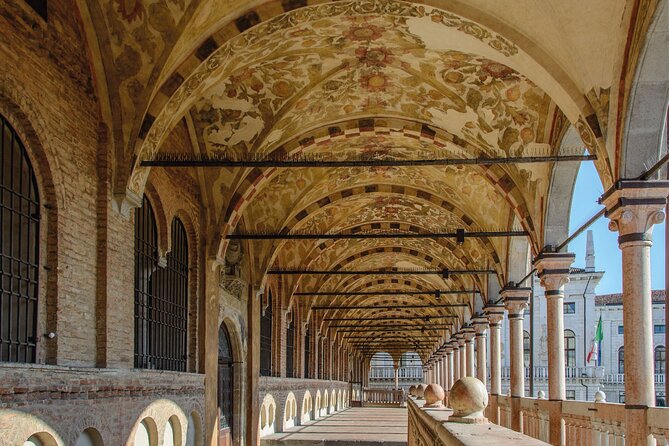
Piazza delle Erbe was Padua’s commercial center for centuries. It had a different role from Piazza dei Signori, where more official and institutional events took place. Popular celebrations belonged here, and the imposing Palazzo della Ragione overlooks the square.
The suggested stop lasts 15 minutes, making it one of the shorter pauses. I would not rush it. Squares like this are less about one object and more about understanding how the city worked: trade, public gatherings, and daily movement all meeting in one space.
The written guide is helpful here because you can read at your own speed while watching the square. Audio is better if you want your eyes free for the buildings and people around you. If the sound does not begin, check for the audio control beneath the attraction title. One user expected more spoken material but had not found the audio section, while the provider explained that each attraction includes a separate audio option.
Palazzo Bo and the University of Padua
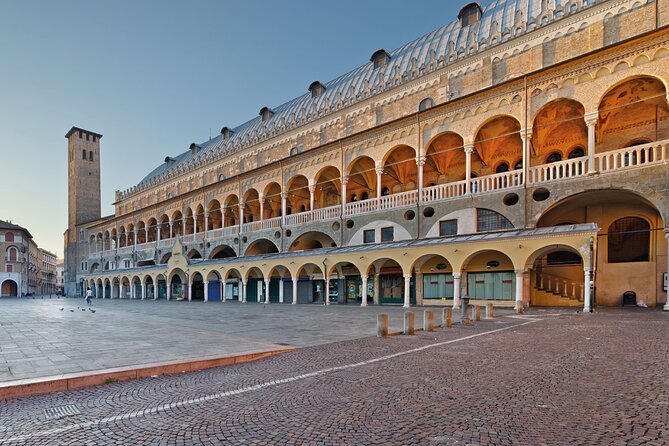
At Palazzo Bo, you reach the University of Padua, founded in 1222. The Studium Patavinum was created for students who had left Bologna, where the church held stronger control over academic life.
The suggested visit is 20 minutes, and admission is listed as free. The university adds an important academic layer to the tour. Padua is not only a city of churches and squares; it has been shaped by students and scholarship for centuries.
The route does not promise an extensive guided university visit, so think of this as an introduction rather than a full campus tour. The audio and written notes give you the basic story and a reason to notice Palazzo Bo. If you want a longer look at university spaces, you may need to set aside additional time beyond the standard three to four hours.
The Basilica of St. Anthony
The Basilica of St. Anthony, known locally as Basilica del Santo, is among Padua’s most visited religious sites. It houses the remains of Saint Anthony of Padua, the city’s best-known saint.
The tour allocates 25 minutes here, the same length as the Pedrocchi Café stop and the longest scheduled church visit. Admission is listed as free. That does not mean you should treat it as a quick photo stop. The basilica is a major pilgrimage destination and a central part of Padua’s identity.
The guide’s commentary can help you approach the basilica with some context instead of wandering through a vast religious building without knowing what matters. Dress and behavior should match the setting, although no specific dress code is provided in the tour details.
This stop is also a useful test of the self-guided format. You can pause the audio when the interior becomes busy, move at your own speed, and replay an explanation without holding up a group.
Returning to Prato della Valle
The final listed stop is Prato della Valle, which also serves as the start and end point. After the tighter streets and smaller squares of central Padua, the open space gives the walk a broad finish.
Allow about 20 minutes for the square itself. The scale is the main attraction, but the guide’s historical notes and curiosities give you a reason to look beyond the size. It is a place to sit, take photos, and decide if you want to continue exploring independently.
The route does not cover every part of Padua. One user wanted information about the observatory and other parks, and those areas are not part of the main plan. That is a fair limitation: this is a highlights walk, not a complete guide to the city.
Audio, text, languages, and phone requirements
You receive a digital written guide and audio commentary in English, Spanish, Italian, German, and French. Text is also available in several languages, including English, German, Spanish, and Italian.
I recommend downloading or opening the guide before you reach the first stop, then checking that your phone can access it. You need an internet connection to use the digital guide, and the activation details are in your booking voucher. Read those instructions carefully.
You can listen through your phone’s speaker or use headphones. Headphones are more discreet inside churches and easier to hear near busy squares, but the tour also works through the phone speaker if you are walking in a quiet spot.
The guide is provided by Walking Cap, and Matteo is the named contact associated with the digital experience. His approach includes personal anecdotes, monument tips, food suggestions, and directions through Google Maps. The material is designed to be simple and intuitive, but you remain responsible for opening the correct stop and following the route.
Who gets the best value from this tour
This is a strong fit for you if you want:
- A low-cost introduction to Padua
- The freedom to stop for coffee or lunch
- A route through the city’s main landmarks
- Audio and text in your preferred language
- A flexible alternative to a scheduled group walk
- Restaurant suggestions alongside sightseeing information
It is less suitable if you want a live guide beside you, detailed answers to every question, or extensive coverage beyond the central sights. The information gives you a solid introduction, but it is not intended to replace a specialist art tour or a full historical tour of Padua.
The maximum group size is listed as 99, but this is a self-guided activity, so you are not joining a traditional group that walks together. Most people can participate, and service animals are allowed. Public transportation is nearby.
You can cancel for a full refund up to 24 hours before the experience begins. Changes or cancellations inside that 24-hour window are not refunded.
Should you book the Padua audio walk?
Book it if you value control, low cost, and a clear route through Padua’s main sights. At $7.84 per person, it is good value for a half-day introduction, especially when you use the written notes, audio stops, and food advice together.
Plan separately for the €16 Scrovegni Chapel ticket, and do not start until you have confirmed that the digital guide is active. If you want a relaxed visit, book the chapel in advance, allow extra time for walking, and use the pause button freely.
Skip it if your main goal is a live conversation with a guide or a detailed tour of lesser-known places such as the observatory and parks. For independent visitors who want to see the essential Padua sights without a rigid schedule, this is a practical and inexpensive choice.
FAQ
How long does the Padua walking tour take?
The estimated duration is three to four hours. The nine listed stops total about three hours of suggested visit time, with additional time needed for walking, food, photos, and any chapel admission arrangements.
Where does the tour begin and end?
The tour begins and ends at Prato della Valle, 35141 Padova PD, Italy.
Is the Scrovegni Chapel ticket included?
No. Admission to the Scrovegni Chapel is optional and costs €16.
Do I need internet access to use the guide?
Yes. You need a smartphone with an internet connection to activate and use the digital guide. Activation details are provided in your booking voucher.
Which languages are available?
The audio and written guide are available in English, Spanish, Italian, German, and French. The included text is also offered in several languages, including English, German, Spanish, and Italian.
Can I cancel the experience for a refund?
Yes. You can receive a full refund if you cancel at least 24 hours before the experience start time. Cancellations or changes made less than 24 hours in advance are not refunded.
Latest audio tours in Italy
- Pantheon Skip the Line Entry Tickets with Digital Audio Guide★ 3.5 · 52 reviews
- St. Peter’s Basilica: Dome Climb with Lift & Audioguide★ 4.5 · 13 reviews
- Audio guide in Vatican Museums and Sistine Chapel★ 4.5 · 12 reviews
- Experience: The Pantheon Audio Tour★ 4.5 · 4 reviews
- Trastevere: A Self-guided Audio Tour of Rome’s Medieval Village★ 4.5 · 3 reviews
- The Roman Jewish Ghetto: A Self-Guided Audio Tour★ 4.0 · 8 reviews
- Navova square underground with audioguide★ 4.5 · 17 reviews
- The Colosseum’s Attic with 3rd, 4th & 5th Levels with Audio Guide★ 4.5 · 20 reviews
Audio Walking Tours, compared.

City Monuments Guided Walking Tour with Audio Guide
Read our review →

Self Guided Classic Freedom Trail Location Aware (GPS) Walking Audio Tour
Read our review →
Self-Guided Historical Walking Tour (Audio Guide)
Read our review →
Cape Cod & Provincetown Self-Guided Driving & Walking Audio Tour
Read our review →
Verona Walking Tour with Audio and Written Guide by a Local
Read our review →
Royal Walking Tour and Buckingham Palace Audio Tour
Read our review →
Bologna Walking Tour with Audio and Written Guide
Read our review →Browse the lists this tour appears in