
Reviewed · INDIA
Audio Guided Walking Tour on HopOn India App – From Gateway to Fountain, Mumbai
Mumbai’s story comes alive on foot, one street corner at a time. This audio walk takes you from the Gateway of India through Colaba and Fort, past grand hotels, old cafes, crowded shopping lanes, art institutions, colonial buildings, and the final memorial at Hutatma Chowk. The route shows old Bombay and modern Mumbai sharing the same streets.
I like the freedom to start when you want and pause for food, photos, or a museum visit. I also like the mix of architecture, local food culture, cinema, religion, commerce, and politics. The main drawback is the app itself: location tracking can be finicky, and one direct user report found that skipping between stops was less smooth than on some other audio apps.
Key details before you set out
- A 21-stop route: Walk from the Gateway of India to Hutatma Chowk, passing through Colaba and Fort.
- A strong historical range: The narration covers British rule, cotton trading, the last British troops leaving India, education, art, religion, and the language movement.
- Food is part of the story: Look for Bade Miya, Leopold Cafe, Mondegar, Khyber, street snacks, and sugarcane juice along the way.
- You control the pace: The walk takes about 90 minutes to two hours, but you can pause or return to it during its validity period.
- Bring your own headphones: Earphones and hand sanitizer are not provided.
- Good value for independent sightseers: At $5.32 per person, the cost is modest, especially if you use the walk more than once during its access period.
Starting at the Gateway of India
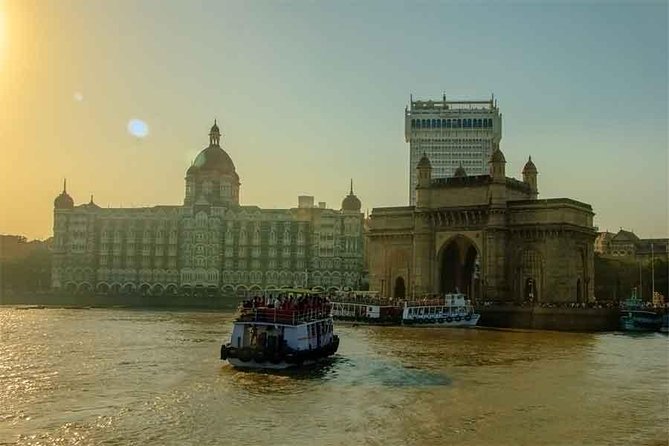
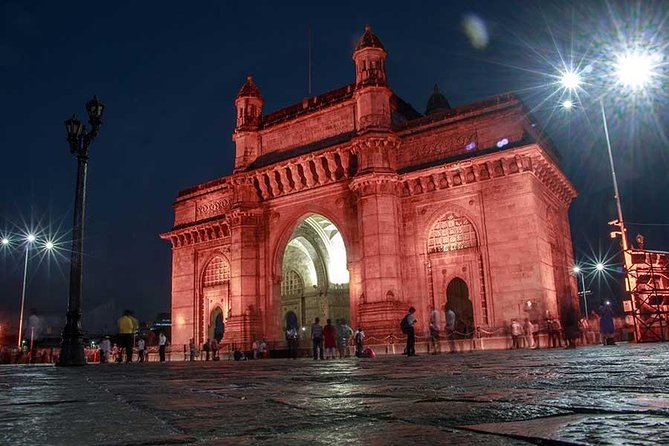
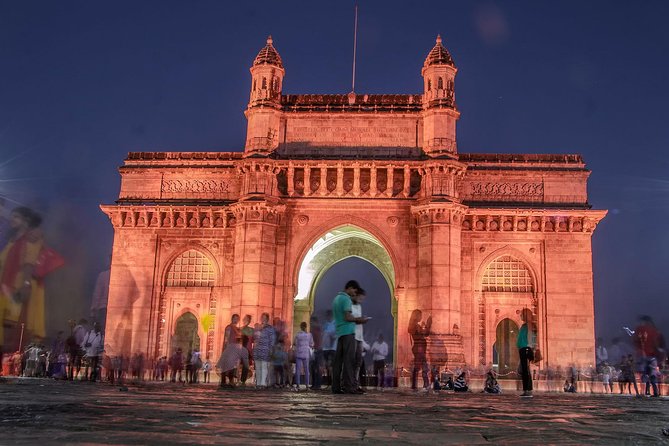
Begin at 12 Chhatrapati Shivaji Maharaj Marg in Fort, near the Gateway of India. The monument is a useful starting point because it explains Mumbai’s role as a port, a trading center, and the main colonial gateway into the city.
The opening narration places the Gateway in its full setting. It was built to mark the visit of King George V and Queen Mary, but its meaning reaches beyond royal ceremony. Ships brought officials, merchants, traders, and British army officers through this waterfront. Cotton trading helped make Bombay wealthy, and the city’s colonial administration called it Urbs Prima in Indis, the foremost city in India.
There is also an irony here. The Gateway became the point where the last British troops left India after independence. The same monument that celebrated imperial arrival later witnessed imperial departure.
Look closely at the architecture as you listen. The building uses Indo-Saracenic, Indo-Gothic, or Bombay Gothic design, a blend of Indian and European forms that appears throughout the walk. Admission to the Gateway area is free, though the waterfront can be crowded and noisy.
More Audio Walking Tours in the world
- Sofia: City Monuments Guided Walking Tour with Audio Guide
★ 4.5 · 825 reviews - Florence: 2.5 hour Audio Guided Walking Tour led by Host
★ 4.6 · 293 reviews - Self Guided Classic Freedom Trail Location Aware (GPS) Walking Audio Tour
★ 4.5 · 258 reviews
The Taj and Colaba’s old food quarter
The next stop is the Taj Mahal Palace, one of Mumbai’s best-known hotels. The audio asks you to look at the hotel from across the street, where you can see the older grand building beside the newer tower. This is a good place to pause because the view also takes in the Gateway behind you, traffic to one side, and the decorated horse carriages known as Victorias.
The hotel stop works best as a lesson in Mumbai’s social contrasts. The same square brings together international luxury, heritage architecture, tourists, working traffic, and street life. You do not need to enter the hotel to understand the point, and the stop itself is short.
From there, the route heads toward Leopold Cafe by way of Lansdowne Road and Tulloch Road. Keep an eye out for curio shops and the Bowen Memorial Methodist Church. Tulloch Road has long been linked with Colaba’s nightlife and late-night eating.
The walk introduces Bade Miya, the kebab stall that has served hungry night owls since 1946. You can treat this as a food stop rather than simply an audio marker. The tour does not include meals, so any eating or drinking is at your own cost, but the route gives you several chances to decide where to stop.
Leopold Cafe is another landmark of Colaba’s restaurant culture. The audio places it within the area’s social life, where food, drinks, conversation, and late hours have long mixed together. This part of the walk feels less like a formal history lesson and more like a tour of the places where Mumbai’s public life has unfolded.
Colaba Causeway and the confusing cafe stop
Colaba Causeway is one of the most practical stops on the route. It is a shopping street packed with stalls selling inexpensive accessories, clothing, souvenirs, and small gifts. The narration uses the market to explain how you can read current fashion and youth culture by simply watching what people buy.
The timing matters. Between about 11 a.m. and 5 p.m., the Causeway can be crowded enough to slow your progress. You may need to weave around shoppers and stalls, so do not plan this as a fast, fixed-time walk. The crowds are part of the experience, but they can make phone navigation harder.
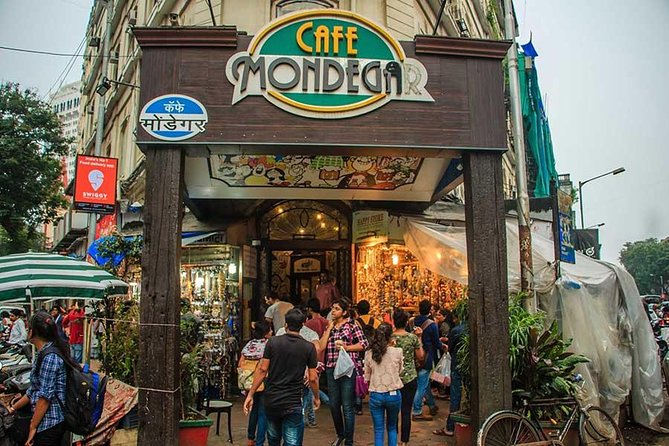
One stop is labeled Apollo imitation jewellery, although the accompanying description turns its attention to Mondegar Cafe. That mismatch is worth knowing before you begin. The narration describes Mondegar as one of the old restaurants of Mumbai, dating from the 1930s and known as the city’s first establishment with a jukebox.
If the jukebox is still working, you can ask the staff. The audio also notes that a table may involve a five to ten minute wait, while the relaxed setting can encourage a much longer stay. You can easily spend more time eating than walking here, so budget accordingly.
This is one of the tour’s strengths and one of its small weaknesses. The stories make the street more interesting, but the app’s stop labels and location behavior need your attention. Check the map and listen for the next instruction rather than relying only on automatic movement between points.
Regal Cinema and Wellington Fountain
Regal Cinema takes you into Mumbai’s film culture. Opened in 1933, the building reflects the Art Deco style and the period when going to the cinema was treated as a special occasion. The narration evokes plush decoration, velvet curtains, good seats, and audiences arriving in their finest clothes.
You may not be able to see every interior detail from the street, but the facade still offers a useful reminder that Mumbai’s film identity has older roots than the modern multiplex. Pause at the entrance and look up before continuing.
Wellington Fountain shifts the story back to the British Empire. It was named after Arthur Wellesley, later the Duke of Wellington, who defeated Tipu Sultan and Napoleon. The stop gives you a compact lesson in how military victories, titles, and colonial memory shaped the names on Mumbai’s streets.
The route does not ask you to enter a museum or buy a ticket at either stop. You are mainly looking, listening, and placing the buildings in context. That keeps the price low, but it also means the experience depends on your attention to the street rather than on interior access.
More Audio Tours in the world
- Barcelona: Sagrada Familia Entry Ticket with Audio Guide
★ 4.6 · 105,312 reviews - Rome: Pantheon Fast-Track Ticket and Official Audioguide
★ 4.5 · 27,353 reviews - Barcelona: Casa Batlló Entry with Self-Audioguide Tour
★ 4.7 · 25,359 reviews - Rome: Colosseum & Forum with Audio Guide App -Optional Arena
★ 4.2 · 24,770 reviews
From the Royal Alfred Sailors’ Home to the art district
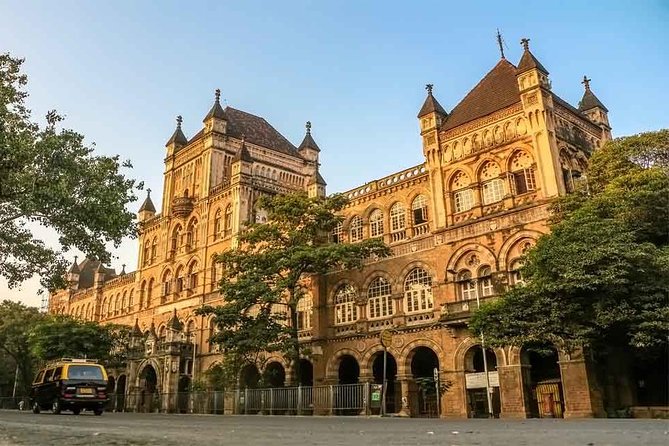
The Maharashtra Police Headquarters occupies the former Royal Alfred Sailors’ Home, completed in 1876. The building was designed by F. W. Stevens, the architect also associated with Victoria Terminus. Look high on the facade for the carved figure of Neptune, the Roman god linked with fresh water and the sea.
The next section explains how Colaba once connected to the main Bombay island. The Colaba Causeway was completed more than 200 years ago. Before that connection existed, the water between the islands made movement difficult and dangerous. As you leave the Causeway, you enter the Fort district and Mumbai’s art quarter.
The National Gallery of Modern Art is the first major art institution on this part of the walk. The audio introduces the area rather than promising museum admission. If you want to go inside, allow extra time beyond the advertised 90 minutes to two hours.
The Chhatrapati Shivaji Maharaj Vastu Sangrahalaya, formerly the Prince of Wales Museum, deserves more time than the audio stop allows. Its collection covers art, archaeology, and natural history, with more than 50,000 objects and a built-up area of over 12,000 square meters. The museum was designed by George Wittet, who also designed the Gateway of India.
I would treat this as a decision point. If you have only two hours, continue with the walk. If you have half a day, stop here and return to the audio route later. The app is designed for repeat access during its validity period, which makes that split practical.
Elphinstone College, Jehangir Gallery, and Kala Ghoda
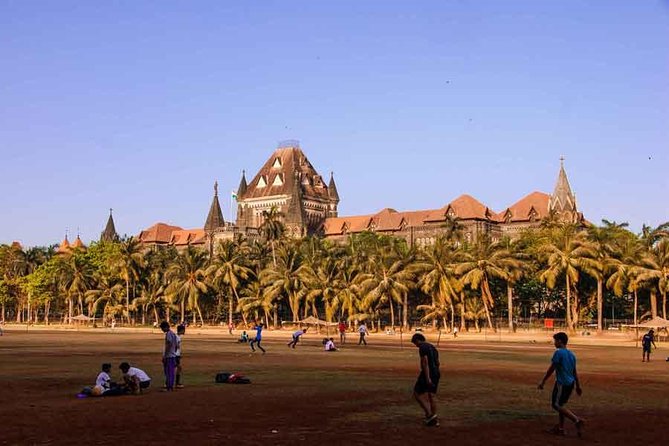
Elphinstone College introduces the role of education in modern Bombay. Named after Governor Mountstuart Elphinstone, the college was established in 1856. Its graduates included reformers, political commentators, businessmen, and freedom fighters.
The narration helps you see the building as more than a handsome colonial facade. It marks the spread of Western education in Bombay and the growth of an educated public involved in social and political change.
Jehangir Art Gallery brings the story into independent India. Built in 1952, it gave young Indian artists a place to show their work. The gallery was funded by Sir Cowasji Jehangir, a member of a prominent Parsi family whose philanthropy also supported Elphinstone College and the University of Mumbai’s Convocation Hall.
Kala Ghoda offers one of the walk’s best naming stories. The neighborhood was already known as Black Horse because a statue of King Edward VII on horseback once stood here. The modern black horse sculpture was installed later, after the name was established. In other words, the sculpture did not give the district its name. The old name gave the sculpture its job.
This section suits you if architecture and the arts interest you. It is less useful if you want only famous photo stops, since several buildings need a few minutes of looking and listening before their importance becomes clear.
Khyber, the synagogue, and a city of many communities
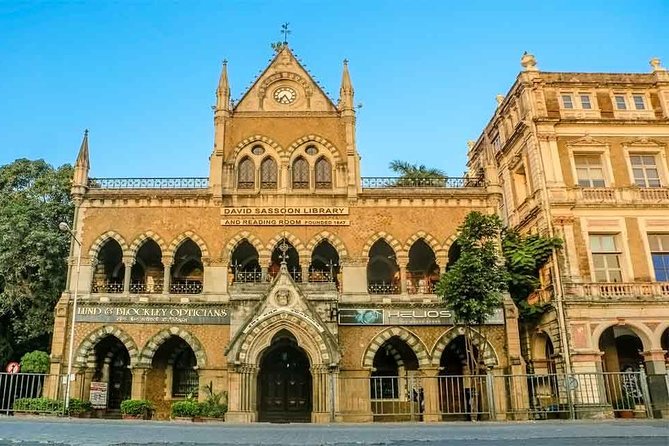
Near Khyber, the tour points out informal food stalls selling items such as sandwiches and sugarcane juice. These small vendors serve workers who cannot spend restaurant prices every day. Their presence adds an important economic layer to the polished art district.
Khyber itself is known for Northwest Frontier cuisine and takes its name from the Khyber Pass, the historic route between Asia and the Indian subcontinent. The contrast is useful: one stop shows everyday street food, the next points to a long-established restaurant associated with formal dining.
The Keneseth Eliyahoo Synagogue adds a different religious and community history. Built in 1884 by the grandson of David Sassoon, it has Burma teak pillars and large stained-glass windows. The synagogue is maintained by the small Jewish community that remains in Mumbai.
The audio encourages you to notice the quiet prayer hall, Hebrew prayer books, and symbolic details. Visiting the interior may require separate arrangements, so do not assume that the free walking tour includes entry. Even from outside, the stop widens your picture of Mumbai beyond its British and Indian political stories.
Watson Hotel, Oval Maidan, and the university quarter
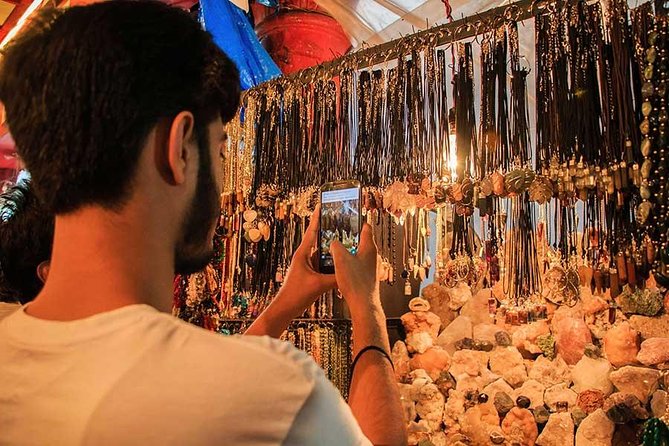
Before reaching Oval Maidan, the route refers to Watson Hotel, a nineteenth-century hotel built for John Watson. Its unusual cast-iron framework was made with girders imported from England and assembled in Mumbai during the late 1860s.
The building once represented elite colonial hospitality, with English waitresses serving English patrons. Its history is less polished than its original purpose, and the stop gives you a reminder that old architecture can carry uncomfortable social divisions as well as beauty.
At Mumbai University, look toward the entrance and the Convocation Hall. The audio points out a statue of Sir Cowasji Jehangir Readymoney and a large circular stained-glass window framed by smaller round openings.
The route then passes the High Court Principal Bench. Its scale is striking, at about 171 meters long and 51 meters wide. At the top of the entrance towers, Justice appears with a blindfold and scales, while Mercy stands with folded hands.
The stop also promises a story about a sensational court case. That is a good example of how the audio goes beyond dates and architectural labels. You are given a reason to look at the building as a place where real disputes, power, and public drama played out.
Rajabai Clock Tower, Flora Fountain, and Hutatma Chowk
Rajabai Clock Tower brings commerce into the story. Premchand Roychand funded the tower with wealth made in the cotton trade. He became known as the Cotton King and was also a major stock market speculator.
The narration connects him with the Bombay Stock Exchange, described here as Asia’s oldest stock exchange. This helps tie the city’s grand buildings to the financial activity that paid for them. The architecture is not separate from business. It was financed by business.
Flora Fountain marks the historic center of old Bombay. Four roads meet here, and many of the oldest British-era buildings gather around them. The fountain also marks the former Church Gate, one of the three entrances to the old Bombay Fort.
The walls and gates were ordered demolished by Governor Sir Bartle Frere because the city needed room to expand. That single decision changed the shape of central Mumbai. You are not just looking at a fountain. You are standing where a fortified colonial town began to open into a larger city.
Finish at Hutatma Chowk, or Martyrs’ Square, near Flora Fountain on Veer Nariman Road. The memorial recalls the political movement of the 1950s that shaped the identity of Bombay and helped define states in India along linguistic lines after independence.
The ending is thoughtful rather than grand. You finish with a story about language, political identity, and sacrifice, after walking past monuments built for empire, commerce, culture, and education. It gives the route a clear sense of how Mumbai kept changing while keeping its old streets.
Price, app performance, and practical value
At $5.32 per person, this is inexpensive for a private self-guided experience covering 21 stops. The strongest value comes from the amount of ground and subject matter included: architecture, food, cinema, art, religion, colonial administration, business, and politics.
You also pay once for access during the stated validity period rather than paying a guide each time. That works well if you want to split the walk over two outings or repeat a favorite section. The walking route itself has no admission charge listed, but museums, food, drinks, and any interior visits cost extra.
Download the walk before setting off if possible, and carry headphones. The app requires a code after booking, and one direct user account reported receiving that code within about 20 minutes. Foreign credit cards may not work directly inside the app, so booking through the external booking channel can be useful if you encounter that problem.
Allow two hours if you plan to keep moving. Allow much longer if you stop at the museum, eat at Mondegar or Khyber, shop on Colaba Causeway, or take photographs. Wear comfortable shoes and bring hand sanitizer, since neither headphones nor sanitizer is supplied.
The experience is private because only your own group takes part, but it is not a live private guide. You will need to manage the route, watch the phone, and decide when to pause. That independence is the point, but it will not suit you if you want someone beside you to answer questions or adjust the route.
Who should book this Mumbai walking tour?
I would choose this walk if you like moving through a city with a story in your ear rather than checking monuments off a list. It suits first-time visitors who want an overview of Colaba and Fort, as well as repeat visitors looking for details they may have missed.
It is especially good for people interested in colonial architecture, Mumbai food culture, cinema, art, and the city’s mix of communities. Families and small groups may also like being able to pause without holding up a guide.
I would skip it if you dislike phone-based navigation, need a perfectly reliable GPS experience, or want detailed access to building interiors. The app can be temperamental, and the route includes many short exterior stops.
For most independent visitors, the low price makes the gamble reasonable. Bring headphones, start with a full phone battery, keep an eye on the stop labels, and give yourself time to pause. You will get the most from it by treating the walk as a flexible introduction to Mumbai, not a race from one marker to the next.
FAQ
How long does the audio walking tour take?
The walk takes approximately one hour and 30 minutes to two hours. Extra time is needed if you stop for food, shopping, photographs, or museum visits.
Where does the tour begin?
It begins at 12 Chhatrapati Shivaji Maharaj Marg in Fort, Mumbai, near the Gateway of India.
Where does the walk finish?
The walk ends at Hutatma Chowk near Flora Fountain on Veer Nariman Road, close to Azad Maidan in Fort.
What is included in the experience?
The price includes the audio-guided walking tour through the HopOn India app and access to the tour multiple times during its stated validity period.
Are headphones provided?
No. You should bring your own headphones or earphones.
Is hand sanitizer provided?
No. The tour information recommends that you carry your own hand sanitizer.
Can I take the tour at my own pace?
Yes. You can begin when you choose, pause along the route, and access the walk multiple times during the applicable validity period.
Is this a private tour?
Yes. Only your group participates, and the experience does not use a live guide.
Latest audio tours in the world
- San Sebastian Scavenger Hunt & Highlights Self Guided Audio Tour★ 4.0 · 7 reviews
- San Marino’s Three Towers: An Audio Tour of the Ancient Republic★ 5.0 · 2 reviews
- San Marino Walking Tour with Audio and Written Guide★ 4.5 · 5 reviews
- Sampling San Sebastián’s History: A Self Guided Audio Tour★ 4.5 · 5 reviews
- Talking Buildings of Old San Juan: A Self-Guided Audio Tour★ 3.5 · 18 reviews
- San Marino: A Self Guided Audio Tour★ 4.5 · 14 reviews
- Essential Downtown SLO: A Self-Guided Audio Tour★ 4.5 · 27 reviews
- Silicon Valley Self-Guided Driving Audio Tour for Tech Lovers★ 4.0 · 24 reviews
Audio Walking Tours, compared.
City Monuments Guided Walking Tour with Audio Guide
Read our review →
Self Guided Classic Freedom Trail Location Aware (GPS) Walking Audio Tour
Read our review →
Self-Guided Historical Walking Tour (Audio Guide)
Read our review →
Cape Cod & Provincetown Self-Guided Driving & Walking Audio Tour
Read our review →
Verona Walking Tour with Audio and Written Guide by a Local
Read our review →
Royal Walking Tour and Buckingham Palace Audio Tour
Read our review →
Bologna Walking Tour with Audio and Written Guide
Read our review →Browse the lists this tour appears in