Reviewed · SELF-GUIDED
Kuala Lumpur Self-Guided Audio Tour
Kuala Lumpur changes character every few blocks. A modern rail station leads to Indian shops, a Chinese temple, Islamic art, tropical gardens, colonial buildings, and the Petronas Twin Towers. This self-guided route gives you a useful way to connect those very different parts of the city.
I like the freedom to set your own route and the helpful Google map, which lets you skip stops or spend longer at places that catch your eye. I also like the low $9 price, especially if you want a private outing rather than a scheduled group walk.
The main drawback is the audio itself. The narration is brief and delivered by a non-native English speaker, and using a SoundCloud playlist can feel clumsy. If you expect deep interpretation or polished storytelling, you may find the material too basic.
Key points at a glance

- Fourteen major sights in one route: The stops cover Kuala Lumpur’s Indian, Chinese, Malay, Islamic, colonial, natural, and modern sides.
- A Google My Maps link guides you: Each marked point connects to its matching audio track, making the map the most useful part of the package.
- You control the schedule: Start and finish anywhere, take breaks, skip stops, or spread the route over as many as six days.
- Several attractions charge separately: The Islamic Arts Museum Malaysia, Kuala Lumpur Butterfly Park, and Petronas Twin Towers do not include admission.
- Expect short audio segments: Each listed stop is planned for about 10 minutes, so this is an orientation tour rather than a full museum visit.
- The $9 price favors independent visitors: You pay little for route planning and context, but the value depends on how much you want polished narration.
What this Kuala Lumpur route is really like
This is not a walking tour with a guide beside you. It is a private audio route delivered through two links. One opens the audio in SoundCloud, where you can listen to individual tracks or play through the full playlist. The other opens a Google My Maps route with all 14 locations and direct links to the matching audio.
That setup gives you control. You can begin at Kuala Lumpur Sentral, Chinatown, KLCC Park, or another convenient point. You can also use the audio before leaving your hotel to decide which stops deserve your time.
The advertised duration is about three hours. Since the route covers a wide part of the city, that timing works best as a brisk overview, not three hours of leisurely museum visits. Transport between some points matters, and you must arrange it yourself. There is no pickup, drop-off, or included transportation.
The access links remain valid for up to six days. That is a useful feature if heat, rain, shopping, or a slow lunch interrupts your plans. You can treat the route as a city sampler instead of forcing all 14 stops into one outing.
More Self-Guided Audio Tours in the world
- Athens: Acropolis Ticket & Optional Self-Guided Audio Tours
★ 4.1 · 2,542 reviews - Gettysburg Battlefield Self-Guided Driving Audio Tour
★ 4.5 · 910 reviews - Joshua Tree National Park Self-Guided Driving Audio Tour
★ 4.5 · 762 reviews
Kuala Lumpur Sentral and the colors of Brickfields
Kuala Lumpur Sentral Railway Station is a practical place to begin. It is Malaysia’s largest transit hub, and the audio explains its modern design and role in connecting the city. You will not spend long here, but the stop gives you a quick picture of Kuala Lumpur as a major regional center.
From there, the route points you toward Little India Brickfields. This district brings a very different mood, with Indian cultural references, colorful storefronts, and food aromas. The audio focuses on the neighborhood’s history and importance to Kuala Lumpur’s Indian community.
I like this opening pairing because it shows the city’s contrast right away. One stop is about trains, concrete, and movement. The next is about community and tradition. The weakness is that 10 minutes at each location gives you only a first look. If you want to browse shops or stop for food in Brickfields, you will need to add your own time.
Thean Hou Temple and Islamic Arts Museum Malaysia
Thean Hou Temple is one of the route’s strongest cultural stops. It is one of Southeast Asia’s largest Chinese temples, and the audio explains the meaning behind its design and its role for Kuala Lumpur’s Chinese community. Give yourself time to look closely at the decorative details instead of treating it as a quick photo stop.
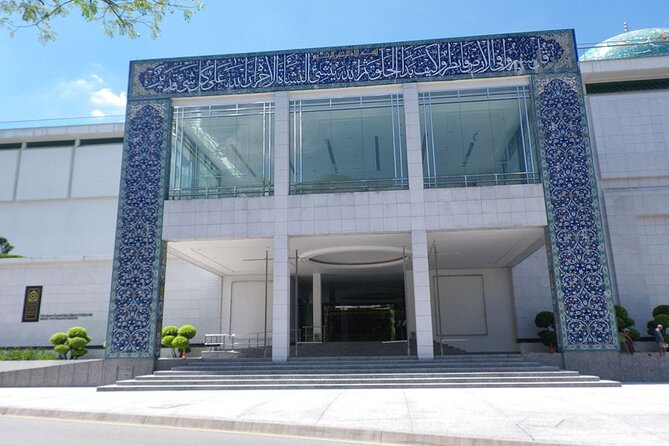
The route then turns toward the Islamic Arts Museum Malaysia. This is an important change of subject. The museum holds a major collection of Islamic decorative arts and offers a way to understand Islamic culture in Malaysia through objects, design, and craftsmanship.
Admission to the museum is not included. That matters when you compare the $9 tour price with your full day’s cost. You can listen to the audio outside and decide if you want to pay for entry, but the museum itself is likely to be more rewarding than a 10-minute stop suggests.
These two locations help explain why Kuala Lumpur cannot be reduced to skyscrapers and shopping malls. One presents Chinese religious traditions. The other provides a wider view of Islamic art and its place in Malaysian society.
Perdana Botanical Garden and the Butterfly Park
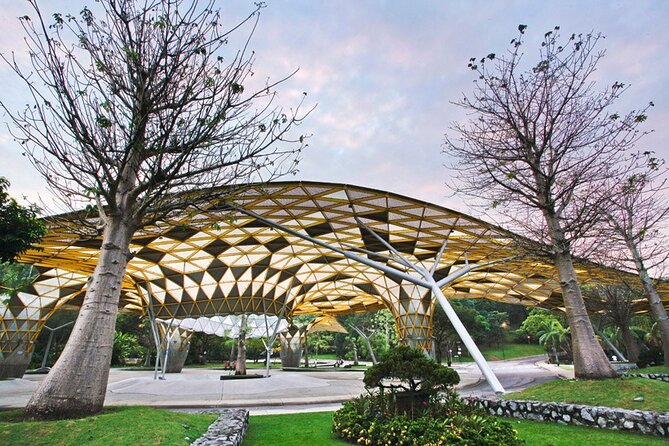
Taman Botani Perdana gives the route a break from buildings. The city’s central gardens offer green space, walking paths, and botanical collections. The audio covers the park’s history and plant life, but you should see this stop as a chance to slow down rather than simply stand at a marked point for 10 minutes.
Kuala Lumpur Butterfly Park is another nature-focused stop. It is described as a tropical setting with thousands of butterflies, along with information about conservation and the park’s ecosystem. Admission is not included, so check the extra cost before you go.
This part of the route is especially useful for families or anyone who wants more than temples and architecture. It also shows the value of controlling your own timing. You might spend 10 minutes at the garden, or you might want much longer under the trees. The audio does not force you to move along.
The two attractions have separate entry requirements, and the tour price covers neither. That is not unusual for a self-guided route, but you should not mistake the $9 fee for an all-inclusive ticket.
More Audio Tours in the world
- Barcelona: Sagrada Familia Entry Ticket with Audio Guide
★ 4.6 · 105,312 reviews - Rome: Pantheon Fast-Track Ticket and Official Audioguide
★ 4.5 · 27,353 reviews - Barcelona: Casa Batlló Entry with Self-Audioguide Tour
★ 4.7 · 25,359 reviews - Rome: Colosseum & Forum with Audio Guide App -Optional Arena
★ 4.2 · 24,770 reviews
Chinatown, Sri Maha Mariamman Temple, and Central Market

Chinatown gives you a look at one of Kuala Lumpur’s best-known historic districts. The audio discusses its past and how the area has changed over time. You will get a broad introduction to the streets and their role in the city, but the short track cannot replace time spent exploring shops, food stalls, and side streets on your own.
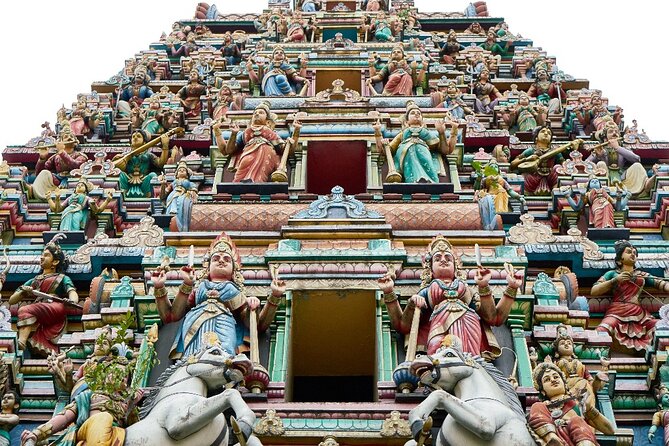
Sri Maha Mariamman Temple is the oldest Hindu temple in Kuala Lumpur. Its architectural details and religious role make it a natural companion to the earlier temple stops. The route does a good job, at least in design, of placing different faith traditions beside one another rather than treating them as isolated attractions.
Remember that this is an active place of worship. Keep your behavior respectful, and allow space for people who are there for religious reasons. The supplied information does not specify dress rules or visiting hours, so check current conditions before relying on a fixed schedule.
Central Market is another practical stop. It began as a wet market and later became a center for arts, crafts, and local shopping. The audio explains that change, giving you a simple way to understand how Kuala Lumpur has repurposed older urban spaces.
This is one of the route’s more useful combinations. Chinatown offers a district shaped by community and commerce. The Hindu temple adds religious history. Central Market shows how culture and retail can share the same city block.
City Gallery and the Moorish center of old Kuala Lumpur
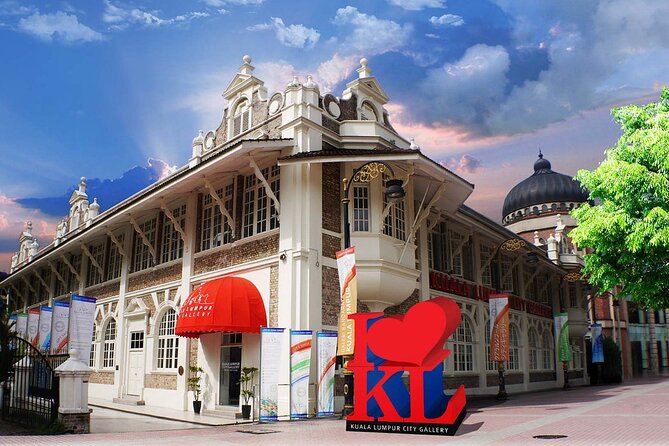
Kuala Lumpur City Gallery focuses on the city’s past, present, and future. The audio covers the capital’s rapid growth and its famous landmarks. This stop can help you connect the earlier neighborhoods with the modern city shown later at KLCC.
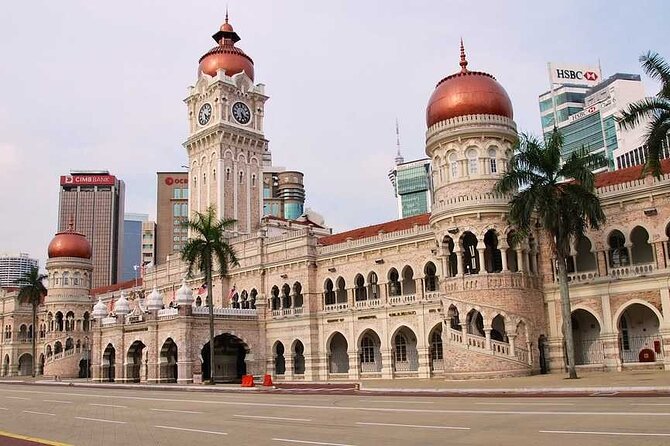
Sultan Abdul Samad Building is one of the route’s most visually important historic buildings. Its Moorish-style design gives the center of Kuala Lumpur a very different feel from the glass towers farther east. The audio explains its historical role and connection to Malaysia’s independence.
These stops work well together because one explains urban change while the other gives you a physical reminder of an earlier period. You may find the information concise, but it helps you notice details you could easily walk past.
The suggested 10 minutes per stop is enough for a look and a short listen. It is not enough for a full museum visit, detailed photography, or a long pause in the surrounding square. Plan your own time instead of treating the itinerary times as strict limits.
Jamek Mosque, KLCC Park, and the Petronas Towers
Jamek Mosque is Kuala Lumpur’s oldest mosque and another example of Moorish and Islamic design. It has an important place in the city’s religious story, and its position near the historic center makes it a logical continuation from Sultan Abdul Samad Building.
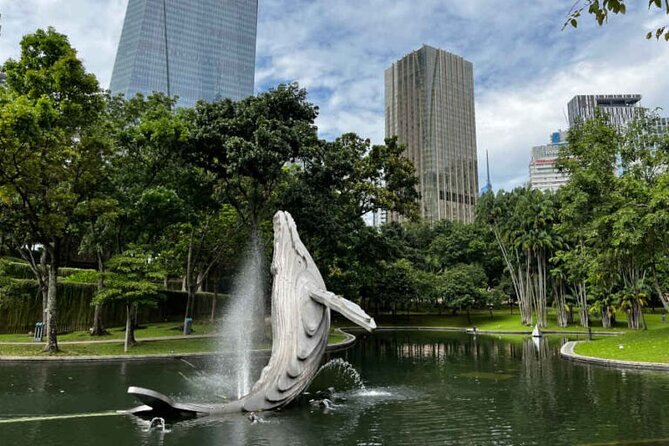
KLCC Park shifts the story forward. Set at the foot of the Petronas Towers, it presents an urban park designed as part of a modern city center. The audio discusses its sustainable design and role in city planning.
Finally, the route reaches the Petronas Twin Towers. These are Malaysia’s best-known buildings and a clear symbol of the country’s modern development. The audio covers their groundbreaking design and meaning in Malaysia’s move toward a modern economy.
Admission to the towers is not included. You can still view them from the outside and use the audio, but entry requires a separate ticket. If you hope to visit an interior observation area, plan that in advance and allow more time than the suggested 10 minutes.
This final section gives the route a satisfying visual progression: a historic mosque, a planned city park, and two famous towers. It is one of the clearest examples of how the tour moves from Kuala Lumpur’s older foundations to its current identity.
How useful is the audio and map?
The Google My Maps link is the most practical tool in the package. It shows all 14 locations and connects each point to its matching audio. You can use it to create a shorter route, begin near your hotel, or split the city into separate outings.
The SoundCloud playlist is less polished. The audio descriptions are basic, and the playlist format can take a little patience. You may need to select tracks individually rather than expecting a smooth, guided walk from one stop to the next.
The narration is in English, but the delivery may sound less natural than you expect from a professional city guide. This does not make the information unusable, but it does affect how enjoyable it is to listen for three hours.
I suggest previewing the audio before you go. The first link lets you listen to individual attractions or the whole tour in advance. That way, you can decide which stops deserve your attention and avoid wasting time searching for tracks on the street.
Bring a charged phone and reliable mobile access. The tour is delivered through web links rather than a traditional handheld device or an in-person guide. The supplied information does not promise downloadable files, so do not assume you can use it without internet access.
Is $9 a fair price?
At $9 per person, the tour is inexpensive for a private activity. You receive a route covering 14 locations, two access links, and the freedom to use the material for up to six days. If you mainly want a framework for seeing Kuala Lumpur, that is a reasonable deal.
The value drops if you expect long, original stories at every stop. The audio is short, and one assessment found that much of the information was similar to material available on Colonial Walk information boards in the streets. That comparison is worth taking seriously.
You are paying for convenience, organization, and a citywide route, not for a live expert guide. The map adds real value because it brings a large number of sights into one plan. The narration adds some context, but it may not be the main reason to buy.
You also need to budget for museum, butterfly park, and Petronas Twin Towers admission. Transportation is separate as well. The low starting price is appealing, but your final cost depends on which paid stops you choose.
Who should choose this tour?
I would choose this experience if I wanted a flexible introduction to Kuala Lumpur and preferred to explore privately. It suits independent visitors who like making their own decisions, families who need breaks, and couples who do not want to keep up with a group.
It also works for a short stay. You can use the route to identify the places worth returning to, then spend another day at the museum, markets, gardens, or towers. The six-day link period makes that approach practical.
I would be more cautious if you want detailed historical interpretation, natural English narration, or someone to answer questions as you go. A live guide would offer more depth and help with transitions between widely separated stops.
The route is also not ideal if you want every attraction included in one simple ticket. Three listed attractions require separate admission, and no transport is provided. You need to manage the practical side yourself.
Booking and planning advice
You receive confirmation when booking. On your chosen travel date, before your selected start time, you should receive the two access links by email. Check your inbox before leaving and test both links while you have a stable connection.
Since this is a private activity, only your group takes part. You choose the starting and ending points within Kuala Lumpur, so you are not tied to a single meeting location.
The experience is non-refundable and cannot be changed after booking. Make sure your date works before paying, especially if your schedule depends on weather or other plans.
For the smoothest day, listen to the tracks in advance, mark your favorite stops, and decide which paid attractions you truly want to enter. Use the map as your main planning tool and the audio as short background guidance.
Should you book it?
Book this tour if you want a cheap, flexible city framework and are comfortable using your phone. The route’s best features are its wide range of sights, useful map, private format, and six-day access period.
Skip it if polished narration and detailed storytelling are essential. In that case, the short audio tracks and awkward SoundCloud playlist may leave you wishing you had chosen a live guide or simply followed Kuala Lumpur’s public information signs.
For most independent visitors, I would treat it as a planning aid with audio rather than a full guided tour. At $9, that can still be worthwhile, especially if you use the map to build your own Kuala Lumpur day.
FAQ
How long does the Kuala Lumpur Self-Guided Audio Tour take?
The tour is designed to take approximately three hours. You can also split it across multiple days because the access links remain valid for up to six days.
Where does the tour start and finish?
You choose both the starting and ending points in Kuala Lumpur. The experience does not require you to follow one fixed meeting location.
What do I receive after booking?
You receive a private SoundCloud link for the audio guides and a private Google My Maps link showing the 14 attractions and their matching audio tracks.
Is transportation included?
No. Pickup, drop-off, and transportation between attractions are not included. You arrange your own travel around Kuala Lumpur.
Are attraction entry fees included?
No. Entry fees are separate where required. The Islamic Arts Museum Malaysia, Kuala Lumpur Butterfly Park, and Petronas Twin Towers are specifically listed as not included.
Can I choose only certain stops?
Yes. You can plan your own route, prioritize specific attractions, skip stops, or listen to individual audio tracks rather than following the suggested order.
How long are the access links valid?
The private access links are valid for up to six days.
Is this a group tour?
No. It is a private self-guided activity, so only your group participates.
Can I cancel or change the booking?
No. The experience is non-refundable and cannot be changed for any reason after booking.
Latest audio tours in the world
- Seville Maestranza Bullring Tour with Audio Guide★ 3.5 · 6 reviews
- Seville Scavenger Hunt and Highlights Self Guided Audio Tour★ 5.0 · 5 reviews
- Seville Audio guided walking tour 3h20 and 28 audio commentaries★ 5.0 · 2 reviews
- Royal Alcazar of Seville Entry Ticket with Audio Guide★ 4.0 · 42 reviews
- Seville Cathedral and La Giralda Entry Ticket with Audio Guide★ 3.0 · 9 reviews
- Seville Cathedral and Giralda Entry Tickets with Audio Guide★ 4.0 · 56 reviews
- Essential Seville’s Ancient History: An Audio Tour★ 5.0 · 9 reviews
- Sequoia National Park Self-Guided Audio Tour★ 4.5 · 9 reviews
Self-Guided Audio Tours, compared.
Acropolis Ticket & Optional Self-Guided Audio Tours
Read our review →


Ultimate Acadia National Park Self-Guided Driving Audio Tour
Read our review →

Akrotiri Ticket with Optional Self-Guided Audios
Read our review →