Reviewed · ITALY
Agrigento: Valley of the Temples Ticket & App Audioguide
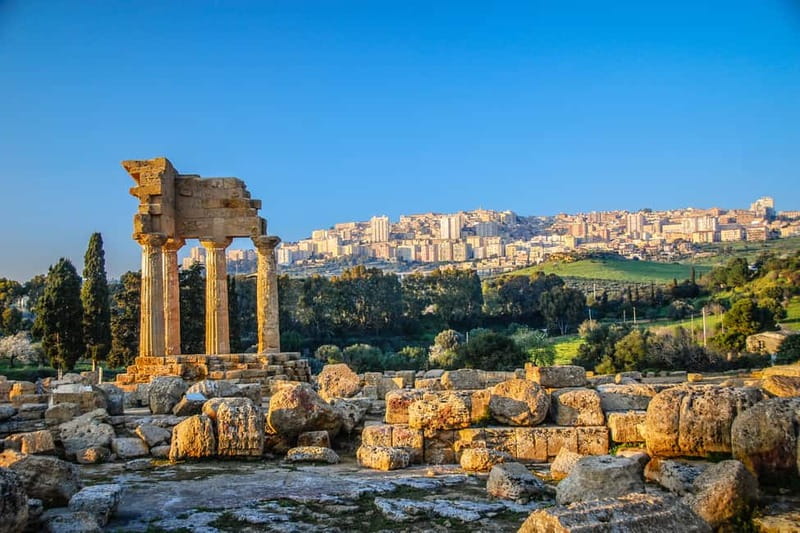
Agrigento’s Valley of the Temples is not a small cluster of ruins you can glance at in half an hour. It is a huge archaeological site where Greek temples, Roman-era remains, aqueducts, and open countryside stretch across roughly 1,300 hectares. The Temple of Concordia is the star, but the real pleasure is walking from monument to monument and seeing how the ancient city was arranged.
I like the convenient one-day ticket and the chance to use a digital audioguide at your own pace. I also like the flexibility of visiting near sunset, when the temples shift from warm stone to glowing silhouettes, or arriving early before the heat builds. The main drawback is that skip-the-line does not always mean walk straight in. You must exchange your voucher for a paper ticket at the Temple of Juno entrance, and the audioguide process can add another wait.
Key points to know before you book
- Enter at the Temple of Juno ticket office: This is the only place where you can exchange the voucher for your admission ticket.
- Walk through an ancient Greek city: The site preserves temples, aqueducts, terraced levels, a gymnasium, and open views toward Agrigento and the sea.
- Use the app audioguide with realistic expectations: It gives you background as you go, but some visitors found it less useful than the cheaper audioguide available at the entrance.
- Plan around the sun: Shade is limited, and the route includes plenty of walking. Early morning and late afternoon are much more comfortable than the hottest part of the day.
- Allow time for the whole complex: A rushed visit misses much of the site. The temples are the main draw, but the spaces between them help you understand ancient Akragas.
- Check the ticket value for your group: The $19 price can be worthwhile during busy periods, but children, reduced-price visitors, and people eligible for free admission may find buying at the gate cheaper.
What you are really visiting at Agrigento
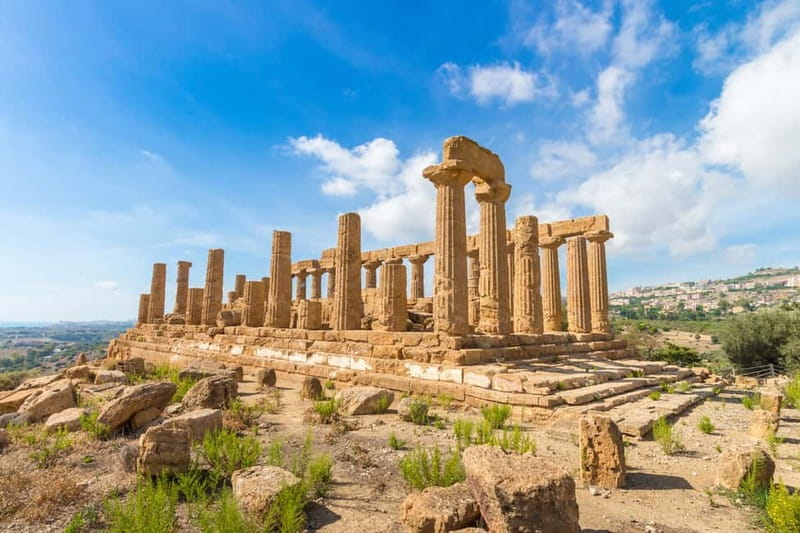
The modern name is the Valley of the Temples, but this was once Akragas, one of the largest Greek cities on the Mediterranean. Its foundations date to the 6th century BC, and the site later developed under Roman rule.
The word valley can be misleading. You are not simply walking through a low hollow filled with temples. The archaeological area spreads along a broad ridge and a series of terraces, with monuments separated by open ground. That scale is part of the experience.
I find the setting almost as important as the ruins. You see the city of Agrigento, distant hills, and broad Sicilian views while moving between the monuments. The ancient builders chose a dramatic position, and the site still feels open and powerful rather than boxed in by a modern town.
The remains also show that Akragas was more than a row of temples. It was a working city with public spaces, athletic facilities, water systems, and religious centers. The aqueducts and gymnasium help fill out that picture.
More Audio Tours in Italy
- Rome: Pantheon Fast-Track Ticket and Official Audioguide
★ 4.5 · 27,353 reviews - Rome: Colosseum & Forum with Audio Guide App -Optional Arena
★ 4.2 · 24,770 reviews - Florence: Timed Entry to Michelangelo’s David + Audio App
★ 4.6 · 19,496 reviews
Starting at the Temple of Juno entrance
Your visit begins at the ticket office near the Temple of Juno on Via Panoramica Valle dei Templi. This detail matters. The voucher can be exchanged only at this entrance, so do not assume you can begin at another gate and sort it out later.
The process is fairly simple, but it may not be instant. You show your voucher, pass through the ticket exchange, and then go through a security check. During quiet periods, you may find no meaningful queue at all. During busier times, the voucher exchange can still save some time compared with buying a ticket from scratch.
The ticket allows one entry only. Once you leave, you cannot use the same admission to come back in later, so have water, sun protection, and anything else you need before entering.
The Temple of Juno is an excellent starting point. It sits high on the eastern end of the archaeological area, giving you a strong first look at the site. From here, the route generally works well as a long walk through the monuments, with many people preferring to begin at the upper entrance and work downhill.
The Temple of Juno and the first stretch
The Temple of Juno introduces the Doric style that shapes much of Agrigento. Its columns and surviving stonework give you an immediate sense of the scale of ancient Greek construction, even though the temple has not survived intact.
This upper section also helps you understand the site’s position. Instead of seeing one isolated monument, you begin to notice the long line of archaeological remains and the changing levels of the ground.
Bring water. Some drinking fountains may be working, but you should not rely on every facility being available. Shade is limited, especially in the afternoon, and the pale stone reflects the heat.
This is a place where comfortable shoes matter. The walk is not described as strenuous, but it is long enough to become tiring, particularly in summer. The route includes uneven archaeological ground and extended stretches between monuments.
The Temple of Concordia, Agrigento’s great survivor
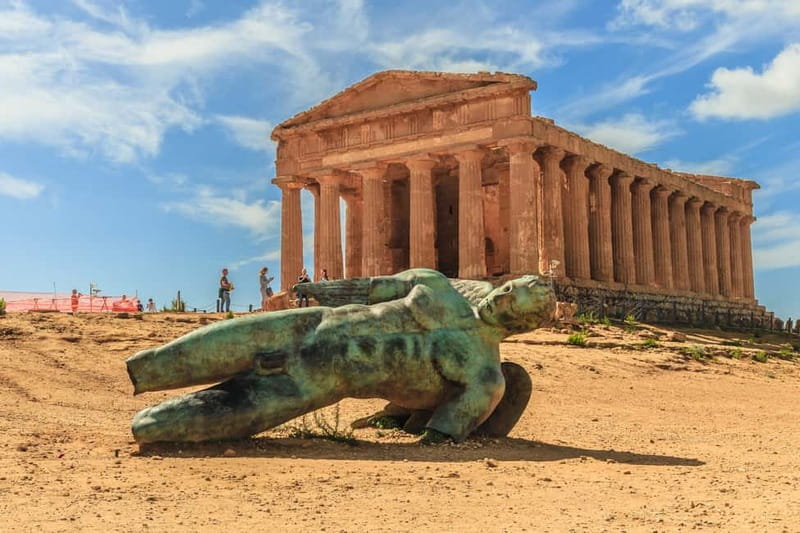
The Temple of Concordia is the high point of most visits. It is among the best-preserved Greek temples anywhere, and its proportions are easy to appreciate from several angles.
You can see why this monument makes Agrigento such a strong alternative to a quick museum visit. The temple is not just a collection of fallen stones. Much of its structure remains clear, with columns and walls that still give you a firm sense of the original building.
Take time to walk around it instead of stopping at the first viewing point. The surrounding grass, stone paths, and distant views create different moods as you move. Late afternoon can be especially attractive, and one visit timed around sunset may continue into evening, when the temples are lit.
The site has limited shade, so the best timing depends on the season. Early morning is practical for cooler temperatures. Late afternoon gives you softer light and, depending on the time of year, a chance to see the monuments after sunset. Midday is the least forgiving choice.
Another self-paced route in Italy:
- Rome: City Sightseeing Hop-on Hop-off Bus with Audioguide
★ 4.0 · 16,045 reviews - Pompeii: Entry Ticket with Audio Guide
★ 4.1 · 13,491 reviews - Venice: La Fenice Opera House Entry Ticket with Audio Guide
★ 4.6 · 11,742 reviews - Rome: Colosseum, Forum, Palatine Hill Entry & Audioguide App
★ 4.4 · 10,957 reviews
The Temple of Heracles and the larger temple zone
The Temple of Heracles, also called the Temple of Heracles or Eracle, is older and more fragmentary than Concordia. That contrast is useful. At Concordia, you study a largely intact temple. Here, you read the remains and use your imagination to reconstruct the original scale.
The Temple of Zeus is another major stop. It is associated with one of the largest temples in the ancient Greek world, but what you see today is largely a field of massive fallen blocks and foundations. Those scattered pieces can be harder to understand without explanation.
This is where an audioguide can earn its keep. A good explanation helps you picture the structure that once occupied the site and understand why the ruins look so different from one monument to the next.
The supplied digital audioguide is included, but it is worth keeping your expectations modest. Some people found the app less useful than the audioguide sold separately at the entrance, while others simply used the signs and site map. If the app is awkward to operate or does not provide enough detail, you can still make a worthwhile visit by reading the placards and moving at your own pace.
Aqueducts, terraces, and the ancient city beyond the temples
The temples are the obvious stars, but I would not hurry through the connecting paths. The terraced levels once formed part of the public life of Greco-Roman Akragas. They help explain how the religious buildings fitted into a much larger urban system.
The aqueducts are particularly useful for understanding the practical side of the city. They remind you that ancient Akragas needed water management, roads, public areas, and athletic spaces, not only monumental temples.
The gymnasium adds another piece to the picture. It was linked to athletic, educational, and recreational activities. Its remains may not produce the same instant reaction as Concordia, but they show how daily life and public life worked alongside religious buildings.
You will also find an exhibition called I Tesori d’Italia, included through December 31, 2025. Check the current date and local arrangements when booking, since the stated access period ends then.
How much walking should you expect?
The archaeological area is extensive, and the main experience is on foot. You can explore at a relaxed pace, but this is not an easy stop if you want to avoid walking altogether.
Some practical choices can make a big difference. One useful approach is to park near Gate V and take a taxi service to the upper entrance, then walk downhill through the site. A shuttle service has also been used to return from the temple area toward the entrance for about €3 each way, according to the supplied information.
Those transport options are not included in the ticket. They also may not suit every visitor or operate in the exact way you expect, so ask locally before committing. The important point is that you do not have to treat the entire route as one uphill hike.
Wheelchair access is available, but archaeological sites can still include uneven surfaces and long distances. If mobility is a concern, check the current route conditions and transport options before you arrive.
Is the $19 ticket good value?
At $19 per person, this is a convenience purchase more than a guaranteed bargain. It includes admission, the digital audioguide, and access to the Italian treasures exhibition during its stated period.
The value improves when the entrance is busy and the voucher exchange moves faster than the regular ticket queue. It also helps if you want to arrange your visit in advance, keep cancellation flexibility, and avoid working out admission after a long drive or train journey.
The value is less clear during quiet periods. Some people found no queue at the entrance, and the voucher still had to be exchanged for a paper ticket. The audioguide is another weak point if you would be just as happy with the signs or a lower-cost guide purchased on site.
Families should check the admission rules carefully. Children may qualify for free entry, and reduced-price or disability-related admissions can change the calculation. One person reported paying for tickets that were not needed because a family member qualified for free admission.
For a couple visiting in the busiest part of the season, the time saved may be worth the premium. For a family with free or reduced admissions, buying directly at the official ticket office may be the better deal.
Timing your visit for heat and light
Agrigento can be very hot, and the site offers little shade. I would choose early morning if comfort is your main concern.
Late afternoon is the best compromise if you want softer light and a cooler walk. A 6 p.m. visit can begin in daylight, continue through sunset, and end with the temples illuminated. That schedule gives you several different views of the same ruins and can make the admission feel especially worthwhile.
Do not arrive at the last minute if you want to see the full complex. The site is large, and the ticket is valid for one day, not for repeated entries.
Spring can bring pleasant conditions and flowering almond trees, while summer afternoons can feel punishing. Whatever the season, bring water and wear shoes suited to a long archaeological walk.
What the audioguide adds, and where it falls short
The digital audioguide is designed for independent exploration. You can stop when you want, skip sections, and spend longer at the monuments that interest you most. That freedom suits people who dislike fixed group schedules.
It also means you receive no live guide. If you want someone to answer questions, explain construction methods, or point out details in person, this ticket will not provide that service.
The app experience may depend on your phone, connection, and patience with the setup. A few technical or scanning problems have occurred, including cases where only one person in a group could activate the audio content. For a group of several people, do not assume one code will automatically work on every phone.
The printed information and site signs can still carry much of the visit. I would treat the app as an optional layer rather than the main reason to book.
The Pemcards souvenir option
The ticket includes access to Pemcards, which lets you turn a digital photo into a physical postcard sent to an address anywhere in the world. It is a nice idea for a place where the best souvenir is often a view of the temples rather than another small object.
The practical issue is finding the stand. Its location is not always obvious, and not everyone was able to locate it. If you care about sending the postcard, ask at the entrance before setting off so you know where to return.
This feature should not decide whether you book the ticket. Think of it as a small extra that may work well if you like sending postcards and can find the station without losing time.
Who should book this experience?
I would choose this option if you want a self-guided visit, plan to go during a busy period, and value arranging admission before arrival. It also suits independent visitors who want to choose their own pace and timing.
It is a strong choice for photographers, history fans, and anyone who wants to see Greek temples without being tied to a group. The sunset option is particularly appealing if your schedule allows it.
I would think twice if you are visiting in a quiet season, traveling with children who may enter free, or mainly want the cheapest possible admission. In those cases, the official ticket office may offer better value, and the included app may not justify the added cost.
FAQ
How long is the ticket valid?
The ticket is valid for one day. Check the selected availability for the starting time.
Where do I exchange the voucher?
Exchange the voucher at the Temple of Juno ticket office near the Temple of Juno on Via Panoramica Valle dei Templi. This is the only entrance where the voucher can be exchanged.
Can I enter more than once?
No. The ticket allows a single entry into the Valley of the Temples.
Is a live guide included?
No. The experience includes a digital audioguide, not a live guide.
Is transportation included?
No. Transportation is not included. Taxi services and a shuttle may be available locally at an additional cost.
Do I need to pass through security?
Yes. You must pass a security check before entering the archaeological site.
Do I need identification?
Bring valid identification if you selected a reduced-price ticket.
Is the site wheelchair accessible?
Yes, the activity is listed as wheelchair accessible.
Is the Italian treasures exhibition included?
Yes. Access to the I Tesori d’Italia exhibition is included through December 31, 2025.
Can I cancel the booking?
Yes. You can cancel up to 24 hours in advance for a full refund. You can also reserve now and pay later.
Should you book the Agrigento ticket?
Book it if you want advance planning, a self-guided route, and possible time savings at a busy entrance. The Valley of the Temples itself is the reason to come: Concordia, Juno, Heracles, Zeus, the aqueducts, and the gymnasium form one of Sicily’s most memorable archaeological visits.
Skip this particular ticket if you are visiting during a quiet period and are comfortable buying directly at the gate. Also check free and reduced admission rules before paying for every member of your group. The ruins are worth your time, but the $19 package is most useful for convenience, not because every included extra is essential.
Latest audio tours in Italy
- Orgosolo Multilingual Audioguide★ 4.5 · 42 reviews
- Pantheon Skip the Line Entry Tickets with Digital Audio Guide★ 3.5 · 52 reviews
- Audio guide in Vatican Museums and Sistine Chapel★ 4.5 · 12 reviews
- St. Peter’s Basilica: Dome Climb with Lift & Audioguide★ 4.5 · 13 reviews
- The Roman Jewish Ghetto: A Self-Guided Audio Tour★ 4.0 · 8 reviews
- Experience: The Pantheon Audio Tour★ 4.5 · 4 reviews
- Trastevere: A Self-guided Audio Tour of Rome’s Medieval Village★ 4.5 · 3 reviews
- Navova square underground with audioguide★ 4.5 · 17 reviews
Italy Audio Tours, compared.
Pantheon Fast-Track Ticket and Official Audioguide
Read our review →
Colosseum & Forum with Audio Guide App -Optional Arena
Read our review →
Timed Entry to Michelangelo’s David + Audio App
Read our review →
City Sightseeing Hop-on Hop-off Bus with Audioguide
Read our review →

La Fenice Opera House Entry Ticket with Audio Guide
Read our review →
Colosseum, Forum, Palatine Hill Entry & Audioguide App
Read our review →