
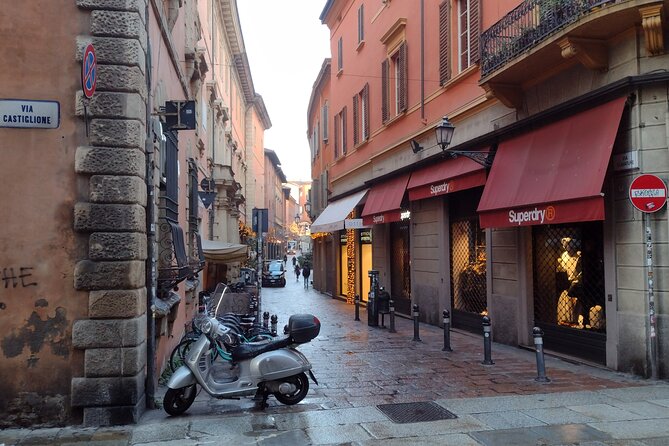
Reviewed · BOLOGNA
Bologna’s Ancient and Recent History: A Self-Guided Audio Tour
Bologna’s center unfolds well on foot, and this self-guided audio tour gives you a clear route through its grand squares, famous porticos, medieval towers, and lesser-known modern stories. Author Frank Bures leads the narration, drawing on time he spent in Bologna as an exchange student in the 1990s.
I like the freedom to stop whenever you want, and I like the low price of $7.99, especially if you want orientation without paying for a live guide. The main caution is content depth: the factual sections can be brief, and some of the running time goes toward Bures’s personal memories rather than detailed history.
Key points at a glance
- Neptune’s Fountain start: Begin in the heart of Bologna, beside one of the city’s best-known landmarks.
- San Petronio and its sundial: Walk across Piazza Maggiore to a basilica with an unusual astronomical feature.
- Two Towers and Dante: See Bologna’s medieval skyline and hear how one tower connects with Inferno.
- Porticos and Santo Stefano: Follow the covered walkways and reach the complex known as the Seven Churches.
- A mix of old and new: The route includes the Roxy Bar, Vasco Rossi, university history, and frog experiments.
- Offline, flexible format: Download the audio, map, and directions, then explore without mobile data or a fixed start time.
A walk from Neptune’s Fountain into Bologna’s past
The tour begins at Neptune’s Fountain in Piazza del Nettuno, a practical meeting point in central Bologna. From here, you are already surrounded by the city’s civic core, with Piazza Maggiore and San Petronio Basilica only a short walk away.
This opening gives you a useful sense of Bologna’s scale. The route is not a point-to-point transfer through scattered neighborhoods. It loops through the historic center and returns to the starting area, so you can fit it into a free morning, an afternoon between meals, or an evening walk.
Frank Bures’s voice gives the tour a personal angle. He spent time in Bologna as an exchange student in the 1990s, and his memories help frame the city as a place lived in by students, musicians, scientists, and ordinary residents, not just a collection of old buildings.
That approach will suit you if you like a story with some personality. If you want a dense lecture packed with dates, rulers, and architectural terms, you may find the narration light. One clear criticism of the experience is that the descriptions at some sights are short, while Bures’s university memories take up part of the time.
More History Audio Tours in Italy
- Colosseum, Roman Forum & Palatine Hill with Audioguide App
★ 4.4 · 6,291 reviews - Venice: St. Mark Basilica Ticket, Audioguide+History Gallery
★ 3.9 · 4,780 reviews - Rome: Colosseum, Ancient Rome Tour or AudioGuided Tour
★ 4.4 · 2,879 reviews
Piazza Maggiore and San Petronio’s giant sundial
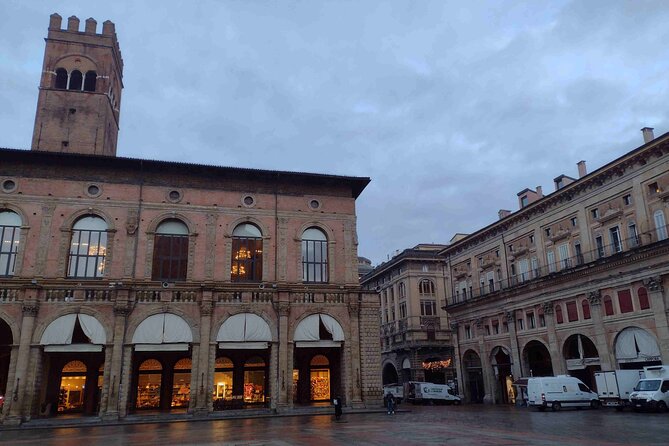
From Neptune’s Fountain, the route takes you across Piazza Maggiore. This is one of Bologna’s essential spaces, and the audio gives you a reason to slow down rather than simply cross it on your way to somewhere else.
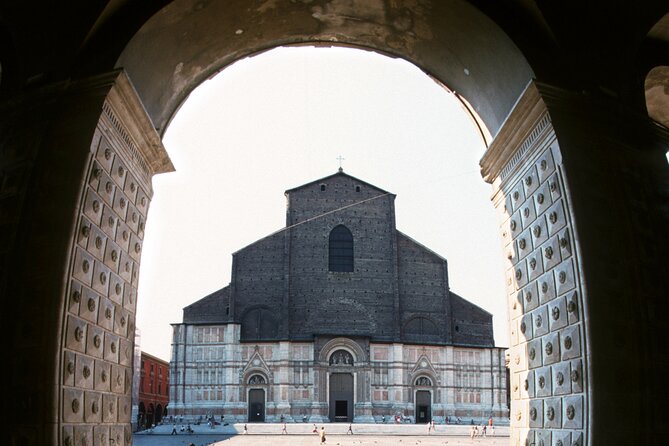
The next major stop is San Petronio Basilica. The church is notable for its size and for the unusual sundial inside. The tour points out that it is the world’s largest sundial, a detail that gives the visit a strong visual and scientific angle.
You should pay attention to the distinction between seeing a building from the route and touring its interior. This experience does not guide you through museums or attractions. If you decide to enter San Petronio or another site along the way, admission is separate and you will visit independently.
That limitation is easy to manage. Use the audio walk first to get your bearings, then return to any building that deserves more time. Since you control the start and finish, you are not forced to choose between listening and looking around.
The Roxy Bar and Bologna’s recent cultural life
The route does not stay in the medieval past. Along the way, you pass the Roxy Bar, known for its connection to Italian singer Vasco Rossi and his song Vita Spericolata, translated as The Reckless Life.
This is the sort of stop that gives the walk a more local feel. It connects Bologna’s streets with popular music and recent Italian culture. You are not only moving from one famous monument to the next. You are also hearing how places acquire meaning through songs and memories.
The Roxy Bar stop may appeal most if you already enjoy learning about Italy through music and everyday life. If you prefer only major monuments, it may feel like a detour. I see it as a useful change of pace, particularly because the older sights receive plenty of attention elsewhere on the route.
The Two Towers and a reference to Dante
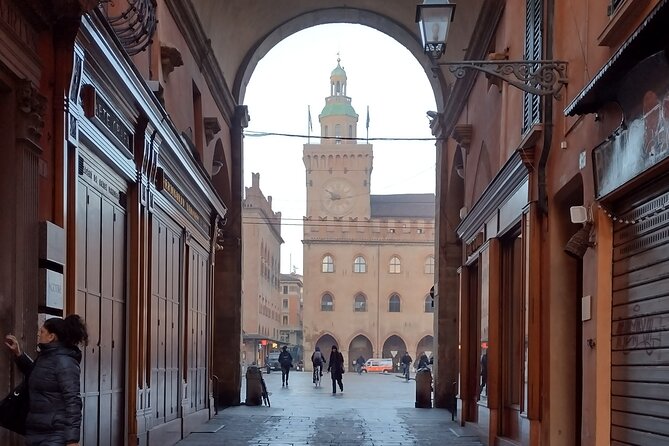
The walk then heads toward Bologna’s Two Towers, one of the city’s most recognizable sights. These medieval towers offer a sharp contrast with the broad public spaces around Piazza Maggiore. Their height and narrow form remind you that Bologna once had a very different skyline.
The audio also connects one of the towers with Dante’s Inferno. That literary reference gives the stop extra interest, especially if you enjoy seeing how famous writers described Italian cities.
You will hear about the towers from outside, not through a guided climb or interior visit. The tour provides context and directions, but it does not include admission to attractions. Keep that in mind if your main goal is to enter every landmark rather than walk through the city center.
The route’s strength here is its sequence. The fountain, main square, basilica, towers, and covered walkways fit together naturally. You get a broad introduction to Bologna without spending much money or committing to a half-day group schedule.
More Self-Guided Audio Tours in Italy
- Naples: Pompeii Self Guided Audio Tour
★ 3.9 · 211 reviews - Matera: Sassi di Matera Historical Self-Guided Audio Tour
★ 3.6 · 183 reviews - Self Guided Audio Tour-Coliseum & the Gladiator’s Legends
★ 3.5 · 49 reviews - The city of Romeo and Juliet: A self-guided audio tour through Verona
★ 4.5 · 28 reviews
Under Bologna’s UNESCO-listed porticos
The porticos are among the most practical features of Bologna. These covered walkways let you move through much of the city with shelter overhead, and they are a major part of the route. Bologna’s porticos became a UNESCO World Heritage site in 2021.
This is a good place to appreciate how architecture shapes daily life. The porticos are not only decorative. They create a continuous public passage, linking streets, squares, shops, churches, and homes.
The audio walk lets you notice them as part of the city rather than as a single monument. You can pause under the arches, listen to the next segment, and continue when you are ready. Since the app uses GPS playback, the narration is designed to follow your position along the route.
The GPS feature works best when you keep the app open and follow the directions carefully. Download the audio, map, and geodata before you set out. Offline access is included, which matters if you do not want to use mobile data while walking.
Santo Stefano and the Seven Churches
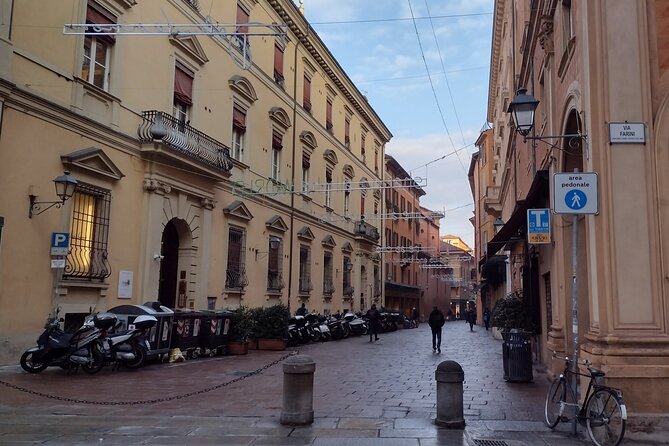
A later section leads you to Santo Stefano, often called the Seven Churches. The name refers to a connected religious complex rather than seven separate stops spread across the city.
This part of the walk offers a different mood from Piazza Maggiore. Instead of a civic square and a huge basilica, you get a quieter look at Bologna’s religious past. The audio helps explain why the complex matters, though you should not expect a full guided visit inside every church.
As with San Petronio, the walk brings you to the site but does not include interior guiding or admission. That makes this tour best for people who want a well-planned introduction and are happy to add their own visits.
You can also use the route as a first pass. Note the places that interest you, finish the loop, then return later with more time. At $7.99, that is a sensible way to organize your first hours in Bologna without hiring a private guide.
Santa Maria della Vita and the route’s smaller stops
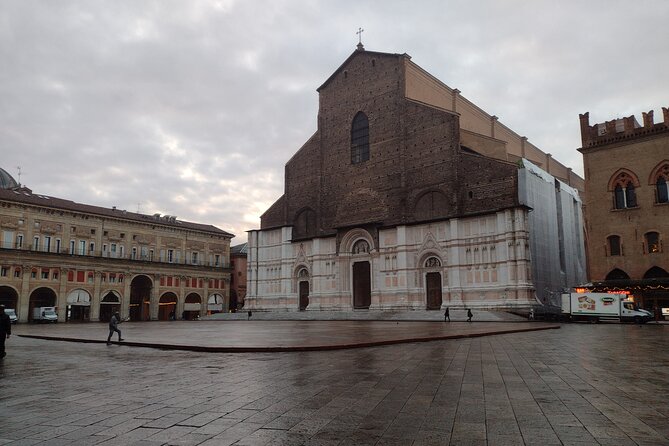
The tour passes Santa Maria della Vita, another important church in the center. The stop adds another layer to the walk, moving you beyond Bologna’s most photographed sights.
Because the experience covers many locations in roughly one to one and a half hours, each stop receives limited time. You will get an introduction and a reason to look, but not a full art-history lesson.
That pacing can be an advantage. You can see a lot without feeling tied to one building. It can also be a weakness if you want detailed commentary on sculpture, architecture, or individual artworks. The tour does not promise museum access, and you should plan separate visits for any interior you want to explore closely.
I would treat Santa Maria della Vita as part of the route’s wider picture. It helps you understand how tightly packed Bologna’s historic center is, with major churches and public buildings often only a few minutes apart.
Bologna’s university and the story of electrified frogs
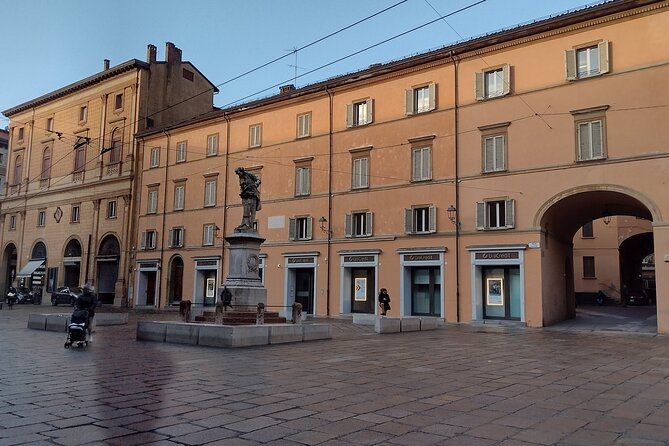
One of the most interesting themes is the history of the University of Bologna, described as the world’s oldest university. The audio explains how the university got its start and places Bologna’s streets within a long academic tradition.
This is a useful subject for a walking tour because the university is not presented as an isolated campus visit. Instead, its story connects to the city around you. Students, scholars, and scientific work have shaped Bologna for centuries.
Near Piazza Galvani, the route turns to experiments that electrified frogs. It is an odd and memorable detail, and it gives the final part of the walk a scientific twist. You may remember this stop more easily than another list of dates.
The route then loops back toward Via d’Azeglio and the starting point. That return is convenient because you finish where you began, with no need to arrange transport back across town.
How the VoiceMap format works on the street
After booking, you receive instructions and a unique code. Install the VoiceMap app on an Android or iOS phone, enter the code, and follow the directions to Neptune’s Fountain.
When you reach the starting point, put on your own headphones and tap start. The app uses automatic GPS playback and turn-by-turn directions, so the next section plays as you reach the correct area.
This format gives you control that a fixed group tour cannot. You can pause for photographs, stop for a coffee, enter a church on your own, or finish the walk over a longer period. You can also use the tour before or after the planned booking date, since access is described as unlimited and lifelong.
You need to bring a smartphone and headphones. Transportation, food, and drinks are not included. The tour is in English or Italian, and the virtual tour option lets you listen from home if you want to preview the route.
The activity is described as private, meaning only your group participates. In practical terms, it is still self-guided audio rather than a live private guide walking beside you. That distinction matters if you want to ask questions or receive help on the spot.
Is $7.99 good value for Bologna?
At $7.99 per person, this is inexpensive by sightseeing standards. You are paying for a planned route, audio commentary, directions, offline maps, and lifetime access, not for admissions or transportation.
The value is strongest if you want structure without a scheduled group. A first-time visitor can move from Neptune’s Fountain to Piazza Maggiore, San Petronio, the Two Towers, Santo Stefano, Santa Maria della Vita, and the university area without having to plan the order alone.
The value is weaker if you expect detailed historical content at every stop. The narration includes personal stories from Frank Bures’s time as an exchange student, and some factual descriptions are notably short. You may want a guidebook or a separate museum visit if you want more depth.
The lack of a refund also deserves attention. This activity is non-refundable and cannot be changed after booking, so only purchase when your plans are reasonably firm.
Who will enjoy this audio walk?
I would recommend it to independent visitors who want a quick introduction to Bologna and prefer to avoid a group. It is also a good fit for solo visitors, couples, and small groups who like setting their own pace.
It works especially well for:
- People with one to two hours available in central Bologna
- Visitors who want commentary in English or Italian
- Anyone comfortable using a phone app and headphones
- Repeat visitors looking for a route that mixes famous sights with local stories
- Budget-minded visitors who do not need attraction admission included
I would hesitate if you want a live guide, extensive historical detail, or a tour inside San Petronio, Santo Stefano, or other attractions. The route gives you access to the city streets and an audio introduction, but you remain responsible for all additional visits.
Should you book Bologna’s ancient and recent history walk?
Book it if you want a low-cost, flexible way to see Bologna’s central sights in a sensible order. The mix of San Petronio’s sundial, Dante’s tower, UNESCO-listed porticos, Santo Stefano, the Roxy Bar, university history, and frog experiments gives the walk more variety than a basic monument checklist.
Skip it if you need a full history lesson or personal answers from a guide. The strongest feature is freedom, not depth. Download the material in advance, allow extra time for stops that interest you, and think of the tour as an introduction that helps you decide where to return.
FAQ
Where does the tour start?
It starts at Neptune’s Fountain in Piazza del Nettuno, 40124 Bologna, Italy.
Where does the tour end?
The route loops back and ends at the starting point, in the Via d’Azeglio area.
How long does the audio tour take?
The estimated duration is about one hour to one and a half hours.
Is a live guide included?
No. This is a self-guided audio tour using the VoiceMap app. Only your group participates, but no live guide accompanies you.
What sights are included along the route?
The route includes Neptune’s Fountain, Piazza Maggiore, San Petronio Basilica, the Two Towers, Bologna’s porticos, Santo Stefano, Santa Maria della Vita, the university area, Piazza Galvani, and the Roxy Bar.
Are attraction admissions included?
No. The audio tour does not guide you through museums or other attractions. If you enter any of them, you pay separately.
Can I use the tour offline?
Yes. Offline access to the audio, maps, and geodata is included. You need your own smartphone and headphones.
Latest audio tours in Italy
- Pantheon Skip the Line Entry Tickets with Digital Audio Guide★ 3.5 · 52 reviews
- St. Peter’s Basilica: Dome Climb with Lift & Audioguide★ 4.5 · 13 reviews
- Audio guide in Vatican Museums and Sistine Chapel★ 4.5 · 12 reviews
- The Roman Jewish Ghetto: A Self-Guided Audio Tour★ 4.0 · 8 reviews
- Experience: The Pantheon Audio Tour★ 4.5 · 4 reviews
- Trastevere: A Self-guided Audio Tour of Rome’s Medieval Village★ 4.5 · 3 reviews
- Navova square underground with audioguide★ 4.5 · 17 reviews
- The Colosseum’s Attic with 3rd, 4th & 5th Levels with Audio Guide★ 4.5 · 20 reviews
Self-Guided Audio Tours, compared.
Acropolis Ticket & Optional Self-Guided Audio Tours
Read our review →


Ultimate Acadia National Park Self-Guided Driving Audio Tour
Read our review →

Akrotiri Ticket with Optional Self-Guided Audios
Read our review →
Browse the lists this tour appears in