

Reviewed · ITALY
Alberobello Walking Tour with Audio and Written Guide by a Local
Alberobello’s famous cone-roofed trulli are far more interesting when you know how they work. This self-guided walk explains the dry-stone walls, insulating air spaces, and carefully layered limestone roofs while leading you through the town’s main historic districts. At about $7.21, it gives you the basic structure of a guided tour without the cost of a private person.
I like the freedom to pause for photographs and explore at your own pace. I also like the mix of audio, written text, local restaurant advice, and practical notes about monuments. The catch is simple: you must navigate between stops yourself, and the audio may sound computer-generated rather than like a polished human narration.
Key points to know before you go
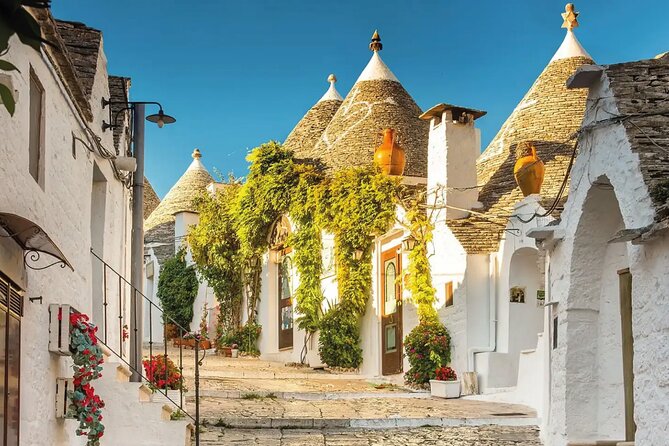
- The route covers Alberobello’s essential trulli districts, including Rione Monti and Aia Piccola.
- The audio and written guide work through your smartphone, with English, German, Spanish, and Italian options.
- The walk ends at Trullo Sovrano, the town’s only two-story trullo, though admission is not included.
- The price is unusually low, making it useful for families and groups saving money for meals or museum visits.
- Directions between stops are limited, so keep your phone’s map available and bring mobile data.
- No in-person guide or headphones are provided, so your phone battery and earphones matter.
A low-cost way to meet Alberobello’s trulli
This experience is best understood as a digital walking route, not a live tour. You begin at the Church of Sant’Antonio, follow a sequence of historic buildings and neighborhoods, and finish near Trullo Sovrano. The full walk takes roughly two to three hours, depending on how often you stop and how quickly you move through the audio.
The price is its biggest advantage. At $7.21 per person, a family can spend very little for a useful introduction to Alberobello. One family calculated that the saving compared with a private guided option was about £160 for five people, enough to put toward a good dinner. That is a sensible trade if you are comfortable handling directions and using your own phone.
I would not choose this if you want lively conversation, spontaneous questions, or stories shaped around your interests. A human guide can explain why a particular street matters, correct your route when you wander, and bring more personality to the town. This digital version gives you information and structure, but you supply the curiosity.
More Audio Walking Tours in Italy
- Florence: 2.5 hour Audio Guided Walking Tour led by Host
★ 4.6 · 293 reviews - Verona Walking Tour with Audio and Written Guide by a Local
★ 4.5 · 157 reviews - Bologna Walking Tour with Audio and Written Guide
★ 4.5 · 132 reviews
Starting at the Trullo Church

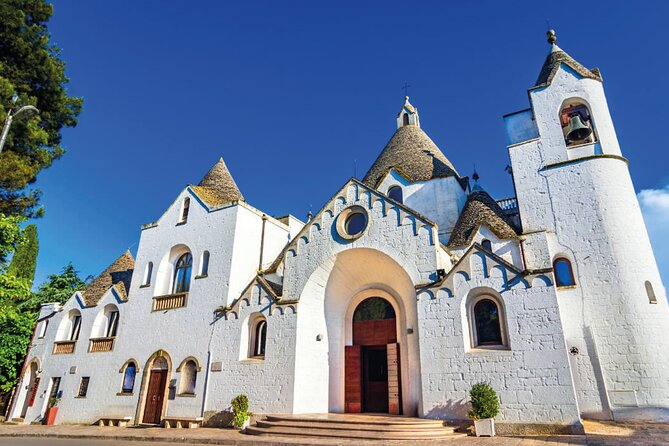
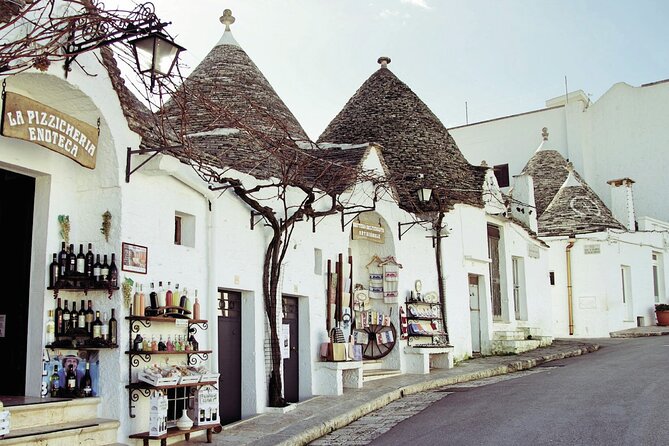
The route opens at Chiesa Parrocchiale di Sant’Antonio da Padova, usually called the Trullo Church. It was built in 1926, when Alberobello was growing and the older Mother Church could no longer serve the entire population comfortably.
The church borrows the visual language of the trulli. Its design makes a useful first stop because you see how local building traditions were carried into a religious structure rather than used only for small rural homes. The admission cost is free, and the suggested stop lasts about 20 minutes.
The starting point is on Via Monte Pertica, 18. Read the activation instructions in your voucher before arriving, since you need a smartphone with an internet connection to access the digital material. The walk is not tied to a scheduled departure, so you have room to choose a convenient time within the stated opening period.
How the trulli keep cool in summer
The next section explains the construction that makes Alberobello so distinctive. Trulli use limestone blocks laid without mortar, and their thick walls contain air spaces that help moderate indoor temperatures. The result is cooler interiors in summer and greater warmth in winter.
The conical roof is built from chiancarelle, thin limestone slabs arranged in gradually narrowing circles. There is no conventional supporting framework beneath the cone. Each layer helps create the familiar pointed shape, which looks simple from the street but requires careful work by the builder.
This is the kind of information that makes the town easier to read. Without it, you mainly see repeated white walls and gray roofs. With it, you begin to notice roof construction, wall thickness, and the difference between a decorative feature and a practical one.
The stop is listed at about 20 minutes and has no admission fee. Take your time here, since the trulli are not all identical. Some have been adapted for shops or homes, while others preserve a more traditional appearance.
Rione Monti and the crowded heart of the town
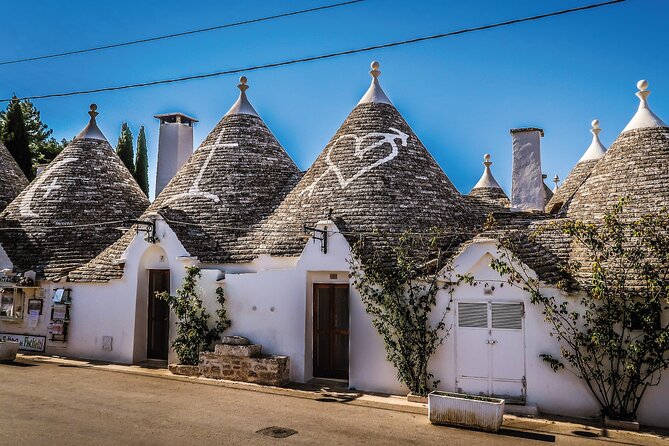
Rione Monti occupies the southern hill and contains more than a thousand trulli along fifteen streets. It is the most concentrated part of the route and one of the places where Alberobello’s fame is easiest to understand.
The district is close to Largo Martellotta, a name linked to three cisterns dug in the 18th century to collect rainwater. That small detail adds practical context to the neighborhood. In a town built with limited resources, water storage was part of daily life, not a decorative afterthought.
You will spend around 15 minutes on this section, though photography and browsing can easily make it longer. The digital format works well here if you want to stop often. You can pause the audio, take pictures, and continue when the street clears.
The drawback is navigation. The route gives you places to find, but it may not always tell you clearly to turn right, descend a hill, or take the next street. Keep Google Maps or another map app open. You need mobile data, and relying only on the audio can make the order of stops confusing.
Another self-paced route in Italy:
- Rome: Pantheon Fast-Track Ticket and Official Audioguide
★ 4.5 · 27,353 reviews - Rome: Colosseum & Forum with Audio Guide App -Optional Arena
★ 4.2 · 24,770 reviews - Florence: Timed Entry to Michelangelo’s David + Audio App
★ 4.6 · 19,496 reviews - Rome: City Sightseeing Hop-on Hop-off Bus with Audioguide
★ 4.0 · 16,045 reviews
The unusual double roof of Trullo Siamese

Trullo Siamese is one of the route’s most memorable buildings. Instead of one cone, it has two connected cones sharing a central wall. From outside, the narrow recess between them gives the building an unusual profile.
The structure is thought to be among Alberobello’s oldest trulli. Its design also shows that the local building tradition was not limited to one standard pattern. The master builder had to solve a more complicated problem than simply placing a single cone over a circular room.
The stop lasts about 15 minutes and is free. It is a good point to listen closely to the explanation, because the building’s importance is easy to miss if you only pass by. The audio gives you a reason to look at the roofline and the central connection.
Aia Piccola, the quieter historic quarter
Aia Piccola is described as Alberobello’s oldest and most authentic neighborhood. Its name comes from its former role as an agricultural work area. This is where the route shifts from the town’s most recognized postcard views toward a more grounded picture of how people lived and worked.
You will spend about 15 minutes here. The area helps balance the more commercial feel you may find around the busiest streets. It is also a useful reminder that trulli were working homes and storage spaces, not buildings created for tourism.
The nearby Civic Museum occupies the former home of doctor and intellectual Giacomo Pezzolla. The museum focuses on local culture and history, making it a natural extra stop if you want more background. Admission details for the museum are not included in the information provided, so check locally if you decide to enter.
Casa D’Amore and the end of an old building rule
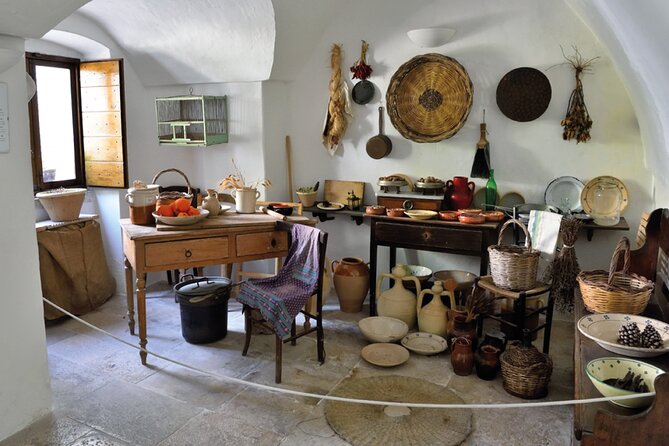
Casa D’Amore marks a change in Alberobello’s building story. Francesco D’Amore built it in 1797, and it was the first house in the town made entirely with terracotta and mortar after a royal decree allowed residents to construct homes in that way.
That detail matters because it shows that the trullo form was not simply a matter of taste. Building methods were shaped by local rules and political conditions. Casa D’Amore represents a move away from the dry-stone construction associated with the older trulli.
The visit takes about 15 minutes and costs nothing. I find this stop especially useful because it gives the route a sense of change over time. You are not only seeing traditional buildings; you are also seeing what happened when residents gained permission to build differently.
The Mother Church of Saints Cosma and Damiano
The Chiesa Santi Cosma e Damiano is the principal church in Alberobello’s historic center. Dedicated to the city’s patron saints, Cosma and Damiano, it dates from 1784 and replaced a smaller chapel that could no longer hold the local congregation.
Plan on about 20 minutes here. The church adds a formal civic and religious center to a walk otherwise dominated by small stone homes. It also helps explain why the later Trullo Church was needed as the population expanded.
The route gives you enough context to appreciate the building without requiring a long museum-style visit. If church interiors are important to you, allow extra time beyond the suggested stop. The walking guide itself does not turn the visit into a guided architectural tour, so your experience will depend on how closely you follow the audio and written notes.
Finishing at the two-story Trullo Sovrano
The final stop is Trullo Sovrano, the only two-story trullo in Alberobello. It dates from the 18th century and shows how local builders adapted the usual rural form for a wealthier family that needed more room.
The building is more complex than the small single-level trulli seen throughout the town. Its two floors make it a useful endpoint because the route finishes with an example of technical ambition rather than simply another cone roof.
The walk ends at Piazza Sacramento, 10, close to the building. Admission is not included, so budget separately if you want to go inside. The stated stop lasts about 15 minutes, but the interior visit may require more time than that.
Ending here is practical. You are not sent back to the starting church, and the finish point leaves you near one of Alberobello’s major sights. It also gives you a clear place to stop the audio and decide if you want to continue exploring on your own.
What the digital format does well
The strongest part of this experience is control. You can listen at your own speed, pause for photographs, skip a section, or return to a point you did not understand. That works well for families, couples, and small groups with different walking speeds.
The written guide is useful when an audio segment is hard to follow. It also gives you another way to absorb names such as Rione Monti, Aia Piccola, and Casa D’Amore. Text is available in English, German, Spanish, and Italian, while the audio is offered in the same four languages.
The local restaurant advice is a welcome extra. It does not replace a full food tour, but it can help you choose a meal with more local character rather than simply stopping at the first convenient place.
The main weakness is the route guidance. Some users found the points hard to locate and resorted to GPS. I would download or open a map before starting, keep the phone charged, and avoid assuming the audio will guide every turn.
Who should book it
I would recommend this walk to budget-minded visitors who want basic context for Alberobello without paying for a private guide. It is also a good fit if you like stopping often, taking pictures, and setting your own pace.
Families and groups gain the most financially. The group discount option can make the low base price even more appealing, though the maximum capacity is listed as 108 people, so this is not a small private outing in the traditional sense. You still move independently rather than as one live group.
I would choose a person-led tour instead if you care most about fluent storytelling, exact directions, or asking questions as you go. The audio provides useful facts, but some listeners may find the voice mechanical and Italian place names imperfectly pronounced. The material also leans toward straightforward information, with fewer personal anecdotes or mysterious local tales.
The experience is available in English, and confirmation arrives when you book. Service animals are allowed, public transportation is nearby, and most people can take part. Cancellation is free up to 24 hours before the start time. After that, the payment is not refunded, and changes are not accepted.
Should you book this Alberobello walking tour?
Book it if you want an inexpensive, flexible introduction to Alberobello’s trulli and do not mind managing your own map. The route covers the key districts, explains how the roofs and walls work, and adds useful stops such as Casa D’Amore and Trullo Sovrano.
Skip it if you expect a warm human voice, rich personal storytelling, or turn-by-turn guidance. At this price, you are buying a well-organized digital aid, not a full substitute for a local guide. Bring headphones if you have them, charge your phone, keep data available, and treat the route as a framework for exploring the town at your own pace.
FAQ
How long does the Alberobello walking tour take?
The experience takes approximately two to three hours, depending on your pace and how long you spend at each stop.
Where does the walk start?
It starts at Chiesa Parrocchiale di Sant’Antonio da Padova, also known as the Trullo Church, at Via Monte Pertica, 18, Alberobello.
Where does the tour finish?
The route finishes at Trullo Sovrano, Piazza Sacramento, 10, Alberobello.
Is a live guide included?
No. The experience is self-guided through digital audio and written material on your smartphone.
Do I need internet access?
Yes. You need a smartphone with an internet connection to activate and use the digital guide.
Is entry to Trullo Sovrano included?
No. Admission to Trullo Sovrano is not included in the tour price.
Latest audio tours in Italy
- Orgosolo Multilingual Audioguide★ 4.5 · 42 reviews
- Pantheon Skip the Line Entry Tickets with Digital Audio Guide★ 3.5 · 52 reviews
- St. Peter’s Basilica: Dome Climb with Lift & Audioguide★ 4.5 · 13 reviews
- Audio guide in Vatican Museums and Sistine Chapel★ 4.5 · 12 reviews
- Experience: The Pantheon Audio Tour★ 4.5 · 4 reviews
- Trastevere: A Self-guided Audio Tour of Rome’s Medieval Village★ 4.5 · 3 reviews
- The Roman Jewish Ghetto: A Self-Guided Audio Tour★ 4.0 · 8 reviews
- Navova square underground with audioguide★ 4.5 · 17 reviews
Audio Walking Tours, compared.

City Monuments Guided Walking Tour with Audio Guide
Read our review →

Self Guided Classic Freedom Trail Location Aware (GPS) Walking Audio Tour
Read our review →
Self-Guided Historical Walking Tour (Audio Guide)
Read our review →
Cape Cod & Provincetown Self-Guided Driving & Walking Audio Tour
Read our review →
Verona Walking Tour with Audio and Written Guide by a Local
Read our review →
Royal Walking Tour and Buckingham Palace Audio Tour
Read our review →
Bologna Walking Tour with Audio and Written Guide
Read our review →Browse the lists this tour appears in