
Reviewed · JAPAN
Tokyo: Open Top Panoramic Sightseeing Bus with Audio Guide
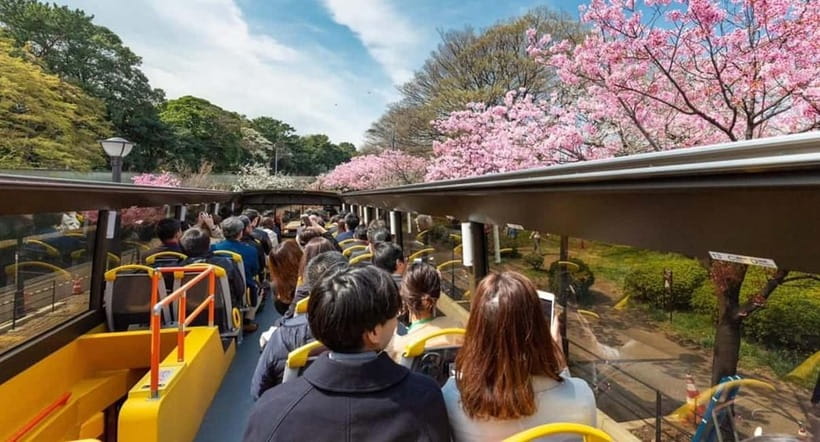
Tokyo looks different from the upper deck of a moving bus. You get wide views of Tokyo Tower, Ginza, Rainbow Bridge, and the waterfront without the usual work of changing trains or finding your way through crowded streets. At $11, this is a simple way to get your bearings fast, especially on your first day.
I like the 70-minute length and the GPS audio system, which sends information as the bus reaches each area. I also like having two useful choices: the Bay Course for water views and Odaiba, or the City Course for the Imperial Palace area, Roppongi, Tokyo Midtown, and Ginza. The main catch is the weather. Heat, cold, rain, and traffic can shape the ride, and the roof may be closed in rain.
Key points at a glance
- Two routes, two sides of Tokyo: Choose the waterfront and Rainbow Bridge on the Bay Course, or major central districts and skyscrapers on the City Course.
- A GPS audio guide keeps pace with the bus: Commentary starts according to your location and is available in seven listed languages.
- Tokyo Tower and Rainbow Bridge are the visual highlights: The Bay Course gives you bridge views from both the Shibaura side and Odaiba side.
- The tour is a strong first-day option: You see a broad slice of Tokyo before deciding where to return for a longer visit.
- Weather matters: The bus runs in ordinary rain or shine, but the open roof can be closed, and temperatures can be uncomfortable.
- Arrive early and find the right building: The Tokyo VIP Lounge is about five minutes from Tokyo Station’s Yaesu North Exit, but late arrivals are not accepted.
What this Tokyo bus tour is really like
This is not a hop-on, hop-off bus. You stay aboard for a fixed 70-minute circuit, listen to the commentary, and watch Tokyo pass from an unusually open viewpoint.
That fixed format is part of the appeal. You do not need to plan a route, work out several train connections, or decide which district to visit first. You simply take a seat and let the city come to you. For a first look at Tokyo, that can be worth more than a long list of individual sights.
The bus is also useful if you have only a short stop in the city. In a little over an hour, you can see central Tokyo, the bay, or both if you book separate routes. You will not visit the landmarks on foot, but you will understand how the districts fit together.
The audio guide uses GPS to follow the bus. It adjusts its timing to the road and traffic, so the information is meant to arrive as the bus reaches each sight. The listed language choices are Japanese, English, Chinese, French, Korean, Vietnamese, and Thai. The booking information also identifies Japanese as the instructor language, so do not expect a live English-speaking guide.
More Bus Audio Tours in the world
- Rome: City Sightseeing Hop-on Hop-off Bus with Audioguide
★ 4.0 · 16,045 reviews - Milan: City Sightseeing Hop-On Hop-Off Bus with Audio Guide
★ 4.0 · 6,256 reviews - Rome: Hop-on Hop-off Sightseeing Bus Tour with Audioguide
★ 4.1 · 4,801 reviews
Choosing the Bay Course for Rainbow Bridge and Odaiba
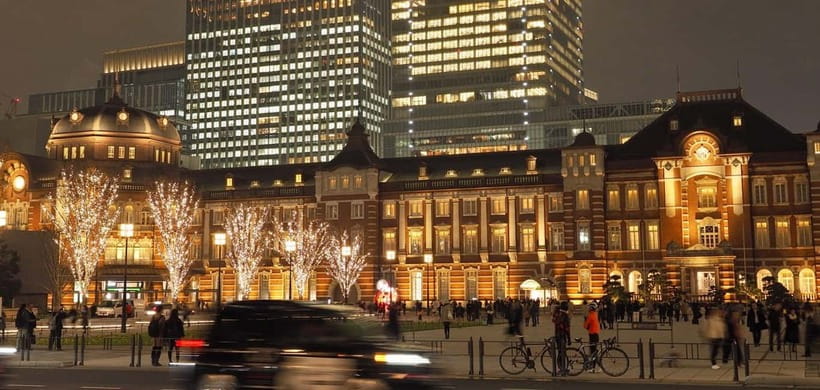
The 70-minute Bay Course is the better choice if you want Tokyo’s water, bridges, and modern waterfront districts. It begins at the Tokyo Station Red Brick Station Building, then heads through Marunouchi toward Zojoji Temple and Tokyo Tower.
Marunouchi gives you an early look at Tokyo’s polished business center. Zojoji Temple offers a cultural counterpoint before the bus reaches Tokyo Tower, one of the city’s most familiar landmarks. From an open-top seat, the tower is easier to frame than it is from a narrow pavement crowded with pedestrians.
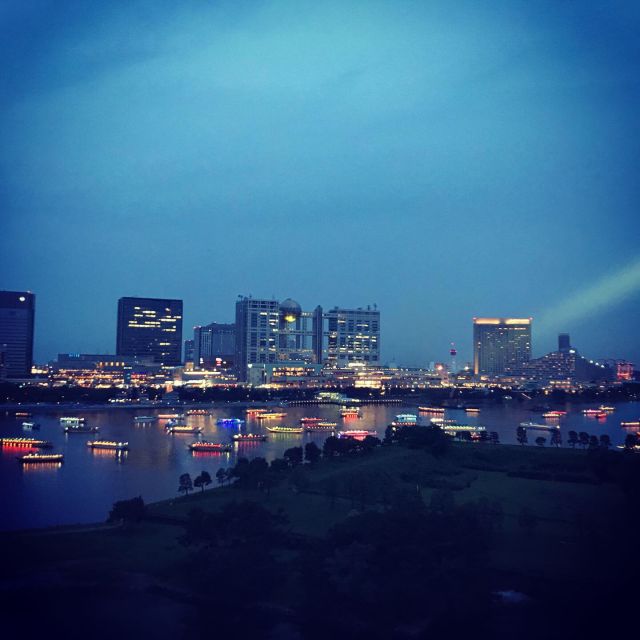
The route then moves toward Shibaura and the first level of Rainbow Bridge. This section gives you a sense of the bridge as a piece of working infrastructure, not just a photo background. The bus continues toward the Fuji TV Building, the Statue of Liberty, and Odaiba Seaside Park.
The small Statue of Liberty in Odaiba is an amusing detail. It is a replica of the Paris statue, created in connection with a French cultural event, and it feels very different from the temples and old streets elsewhere in Tokyo. From the bus, you get a quick look rather than time to explore the waterfront.
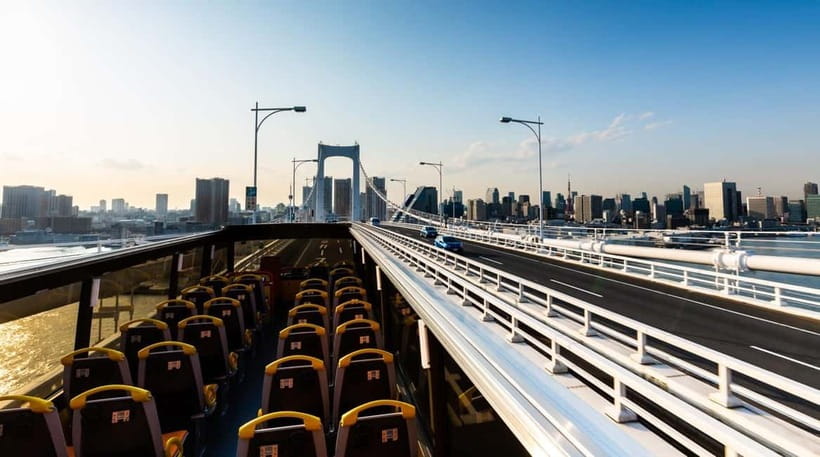
The Bay Course then crosses Rainbow Bridge at its second level before heading through Shiodome and Ginza. The bridge crossing is likely to be the most memorable part of the ride. You get open views across Tokyo Bay, along the bridge structure, and back toward the city.
Shiodome brings you into a dense cluster of modern buildings, while Ginza supplies the grand central-city finish. The route works well because it links old Tokyo references, major towers, the bay, Odaiba, and one of the city’s best-known shopping districts in a single loop.
Choosing the City Course for central Tokyo
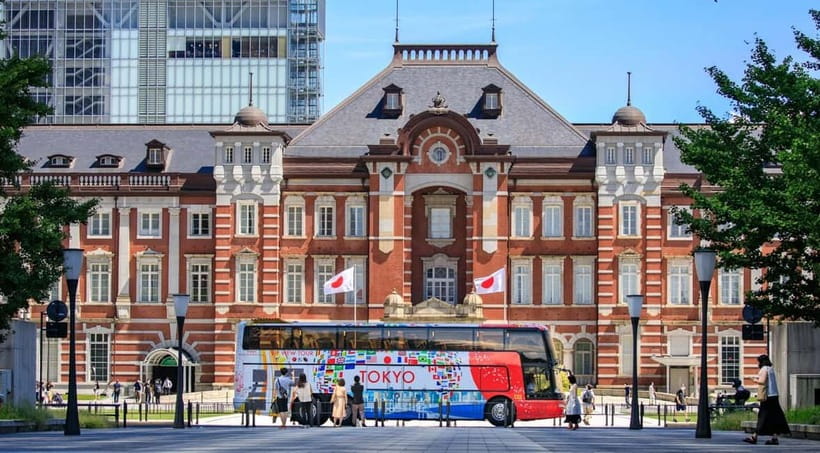
The City Course is the more useful route if you want Tokyo’s major central districts and a look at its tall buildings. It starts at Tokyo Station and passes through Marunouchi before reaching Chidorigafuchi, the moat area beside the Imperial Palace grounds.
You do not get an extended palace visit, but the passing view helps explain the city’s layout. The broad roads, trees, water, and formal grounds feel far removed from the tight streets around Tokyo Station.
Next comes the Akasaka State Guest House, followed by Meiji Jingu Gaien. These areas give the ride a change of pace before it reaches Tokyo Midtown and Roppongi. Tokyo Midtown represents the newer side of the city, with tall buildings and a modern commercial center.
Roppongi is one of Tokyo’s best-known nightlife and arts districts, though you will see it from the road rather than explore it. The bus then reaches Tokyo Tower, giving the City Course its clearest landmark moment.
The route continues through Hibiya and finishes via Ginza. Hibiya connects the palace area with the commercial core, while Ginza provides another chance to look up at Tokyo’s dense buildings and wide avenues.
I would choose the City Course if this is your first introduction to Tokyo and you are more interested in the central districts than the waterfront. Choose the Bay Course if Rainbow Bridge and Odaiba are high on your list. If you have enough time, doing both routes gives you a much fuller picture, though you will spend 140 minutes on buses rather than exploring on foot.
The audio guide: useful, but not perfectly quiet
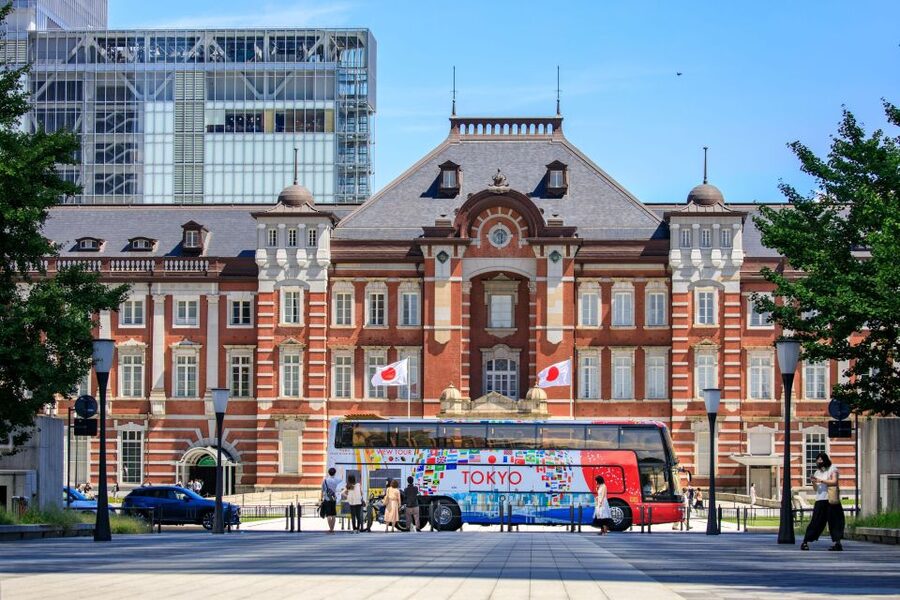
The GPS system is one of the tour’s strongest features. It lets you keep your eyes on Tokyo instead of reading a guidebook, and it gives basic context for the places passing outside the bus.
You can use headphones, but they are not included. Optional headphones cost 100 yen, and the jack accepts only a 3.5mm mini plug. Bring compatible headphones if you have them, or plan to buy a pair before departure.
The audio includes music between sections. Some riders found the music too loud compared with the spoken information, and silence between announcements would have been easier on the ears. A separate issue is the live Japanese commentary from the bus staff. At times, it can compete with the recorded guide, especially if you are trying to follow every word.
The information focuses on landmarks, routes, and history. Do not expect a long discussion of daily life in Tokyo or detailed local stories. Think of it as a moving orientation, not a specialist tour led by a historian.
Japanese-speaking staff are available to help with boarding and basic arrangements. The staff support has received strong praise, including one account of a friendly attendant who walked the group from the lounge to the waiting bus and helped keep everything organized. Communication in English may be limited, so having your booking details ready on your phone is sensible.
More Audio Tours in the world
- Barcelona: Sagrada Familia Entry Ticket with Audio Guide
★ 4.6 · 105,312 reviews - Rome: Pantheon Fast-Track Ticket and Official Audioguide
★ 4.5 · 27,353 reviews - Barcelona: Casa Batlló Entry with Self-Audioguide Tour
★ 4.7 · 25,359 reviews - Rome: Colosseum & Forum with Audio Guide App -Optional Arena
★ 4.2 · 24,770 reviews
What you see from an open-top seat
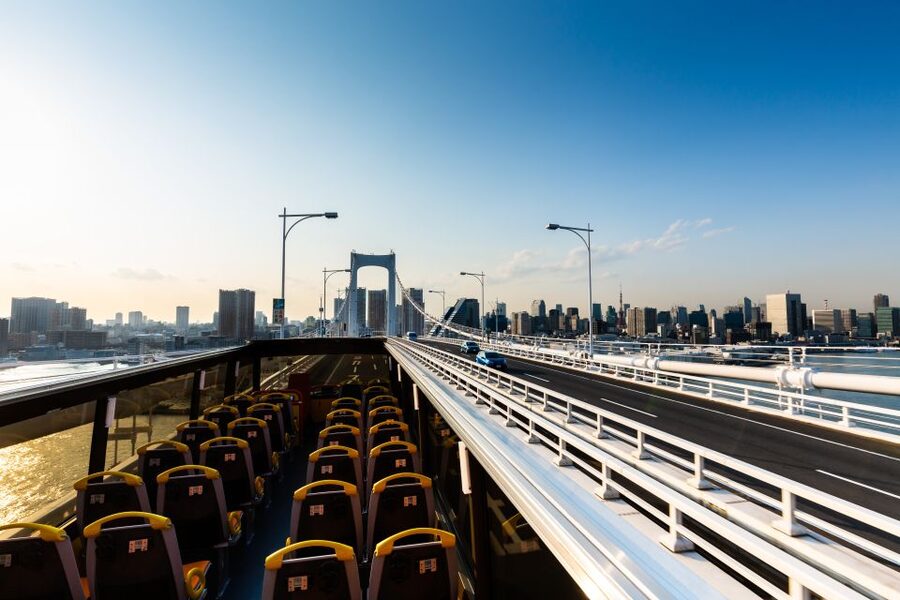
The open top changes the feel of the ride. You can look upward at towers, see more of the bridge structure, and get a broad view across major roads. It also makes the bus more exposed to the weather.
On a clear day, the ride should feel spacious and easy. On a hot day, you may find the lack of shade tiring. On a cold day, the wind can make the temperature feel sharper than it did at street level. A recent assessment also pointed to limited knee space, so taller riders may not find the seating roomy.
Rain does not automatically cancel the tour. The bus operates in ordinary rain or shine, but the open roof may be closed when it rains. That changes the main reason to book, since the high viewpoint is less useful through a closed roof and wet glass.
Only extreme weather, such as a typhoon, triggers cancellation. Schedules can also shift slightly because of traffic, road conditions, weather, or other problems. Check the forecast and dress for the conditions rather than assuming the roof will always be open.
Smoking, food, umbrellas, and selfie sticks are not allowed on the vehicle. The umbrella rule matters on a wet day, so wear a rain jacket instead of relying on something you cannot bring aboard.
Getting to the Tokyo VIP Lounge
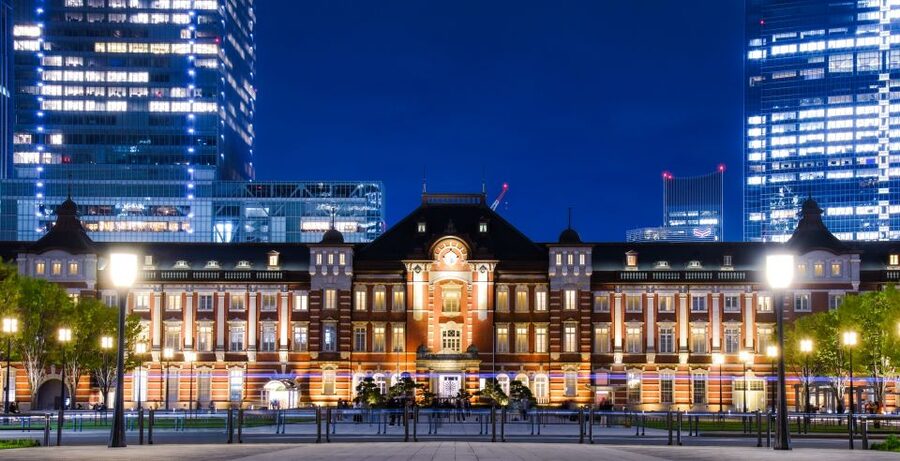
The meeting point is the Tokyo VIP Lounge, on the second and third floors of a building with Family Mart on the ground floor. From Tokyo Station’s Yaesu North Exit, the walk takes about five minutes.
This is the part of the experience where you should slow down and check the directions. The lounge is a shared facility, not a grand private waiting room. It has been described as basic, and the space may be used by other companies and general visitors.
You can use the facility free from 40 minutes before your departure. Outside that window, a fee may apply. Arriving 20 to 40 minutes early is wise, but do not assume you can occupy every empty chair if you arrive well before the free-use period. Keep your booking confirmation handy and follow staff instructions.
The bus leaves on time. There is no wait for late arrivals, including people who call ahead, and refunds are not issued if you go to the wrong place or miss departure. This is one of those Tokyo activities where five minutes of preparation saves a great deal of stress.
The listed coordinates are 35.681763, 139.7713517. The contact number may not respond outside Monday to Saturday, 9:30 AM to 6 PM Japan time, so do not leave a location problem until the last minute.
Is $11 good value for Tokyo?
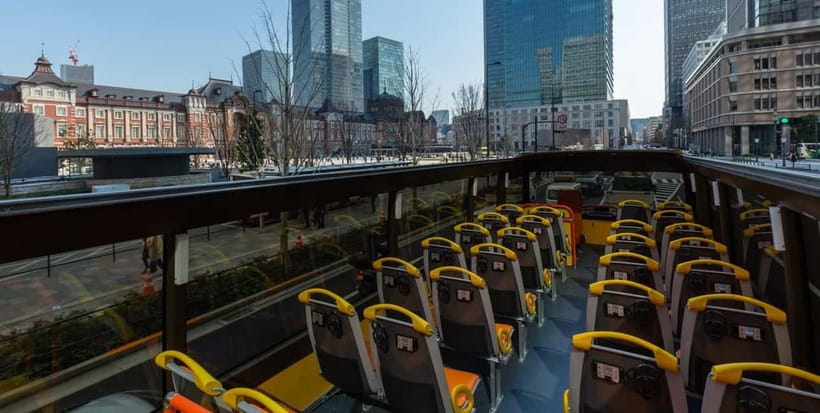
At $11 per person, this is good value if you want an overview rather than a full guided visit. A 70-minute private taxi ride around central Tokyo would cost far more, and public transport will not give you the same elevated view or continuous commentary.
The value is strongest on a first day. You can identify Ginza, Tokyo Tower, Roppongi, Marunouchi, Odaiba, and the bay, then return later by train or on foot to the places that interest you most.
The low price also explains the limits. You do not get a live multilingual guide, a stop at every landmark, included headphones, or time to leave the bus and explore. Traffic can slow the route, and the open-top format depends heavily on the weather.
Free cancellation is available up to 24 hours before departure, and you can reserve now and pay later. That gives you some flexibility, but it does not protect you from missing the bus on the day.
Who should book this ride?
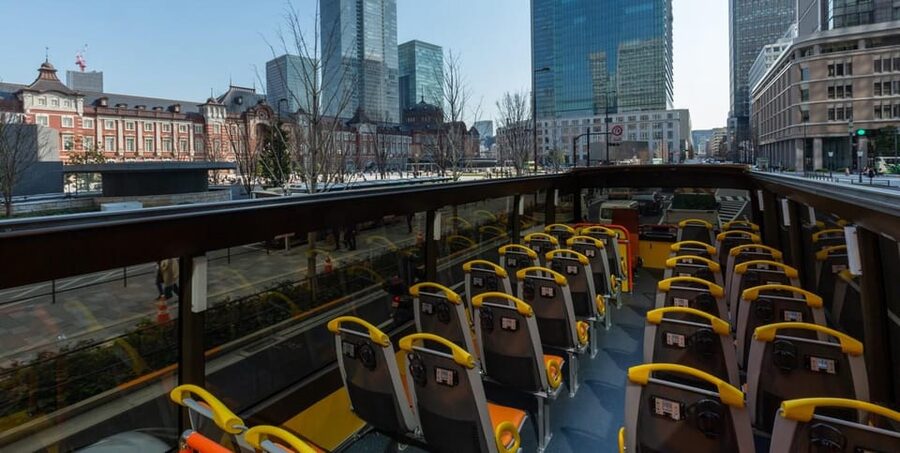
I would recommend it to first-time visitors who want a quick map of Tokyo in their heads. It also suits people with limited time, families who want a simple sightseeing hour, and anyone who enjoys seeing a city from above street level.
It is a good fit if you want photos of Tokyo Tower or Rainbow Bridge without arranging several separate visits. The Bay Course is particularly appealing for the bridge crossing and Odaiba views, while the City Course is better for central Tokyo and the skyline.
I would think twice if you dislike fixed schedules, need lots of legroom, or want a detailed conversation with a guide. It is also a poor match if rain is likely and the open roof is the main reason you are booking.
Final call: book it for orientation, not full exploration
Book this open-top bus tour if you want a low-cost, well-organized first look at Tokyo. I especially like the choice between the City and Bay routes, the location-based audio, and the chance to cross Rainbow Bridge in an open-top bus.
Set realistic expectations. This is a moving introduction, not a deep visit to Tokyo’s landmarks. Arrive early at the correct lounge, bring suitable headphones, check the forecast, and choose your route carefully. For $11, it is an efficient way to see how Tokyo’s temples, towers, shopping streets, business districts, and waterfront connect.
FAQ
How long does the Tokyo open-top bus tour last?
Each route lasts 70 minutes.
What are the two available bus routes?
The Bay Course visits areas including Tokyo Station, Marunouchi, Zojoji Temple, Tokyo Tower, Rainbow Bridge, Odaiba, Shiodome, and Ginza. The City Course includes Tokyo Station, Marunouchi, Chidorigafuchi, Akasaka State Guest House, Meiji Jingu Gaien, Tokyo Midtown, Roppongi, Tokyo Tower, Hibiya, and Ginza.
What languages are available on the audio guide?
The GPS audio guide is listed as available in Japanese, English, Chinese, French, Korean, Vietnamese, and Thai.
Are headphones included?
No. Optional headphones cost 100 yen, and the headphone jack supports only 3.5mm mini plugs.
Where is the meeting point?
The meeting point is the Tokyo VIP Lounge on the second and third floors of a building with Family Mart on the ground floor. It is about a five-minute walk from Tokyo Station’s Yaesu North Exit.
What happens if it rains?
The tour operates in ordinary rain or shine, but the open roof may be closed if it rains. Cancellations are limited to extreme weather conditions such as typhoons.
How early should I arrive?
You should check in 20 to 40 minutes before departure. The bus leaves on schedule and cannot wait for late arrivals or people at the wrong location.
Latest audio tours in the world
- Seville Maestranza Bullring Tour with Audio Guide★ 3.5 · 6 reviews
- Seville Scavenger Hunt and Highlights Self Guided Audio Tour★ 5.0 · 5 reviews
- Seville Audio guided walking tour 3h20 and 28 audio commentaries★ 5.0 · 2 reviews
- Royal Alcazar of Seville Entry Ticket with Audio Guide★ 4.0 · 42 reviews
- Seville Cathedral and La Giralda Entry Ticket with Audio Guide★ 3.0 · 9 reviews
- Seville Cathedral and Giralda Entry Tickets with Audio Guide★ 4.0 · 56 reviews
- Essential Seville’s Ancient History: An Audio Tour★ 5.0 · 9 reviews
- Sequoia National Park Self-Guided Audio Tour★ 4.5 · 9 reviews
Bus Audio Tours, compared.
City Sightseeing Hop-on Hop-off Bus with Audioguide
Read our review →
City Sightseeing Hop-On Hop-Off Bus with Audio Guide
Read our review →
City Bus Tour with Audio Guide and Lake Cruise
Read our review →
Tootbus Panoramic by Night Bus Tour with Audioguide
Read our review →
City Sightseeing Hop-On Hop-Off Bus Tour with Audio Guide
Read our review →
Trakai Tour with Audio Guide and Minibus Transfers
Read our review →Browse the lists this tour appears in