
Reviewed · HOP-ON HOP-OFF
Santiago: Hop-on Hop-off Bus Day Ticket with Audio Guide
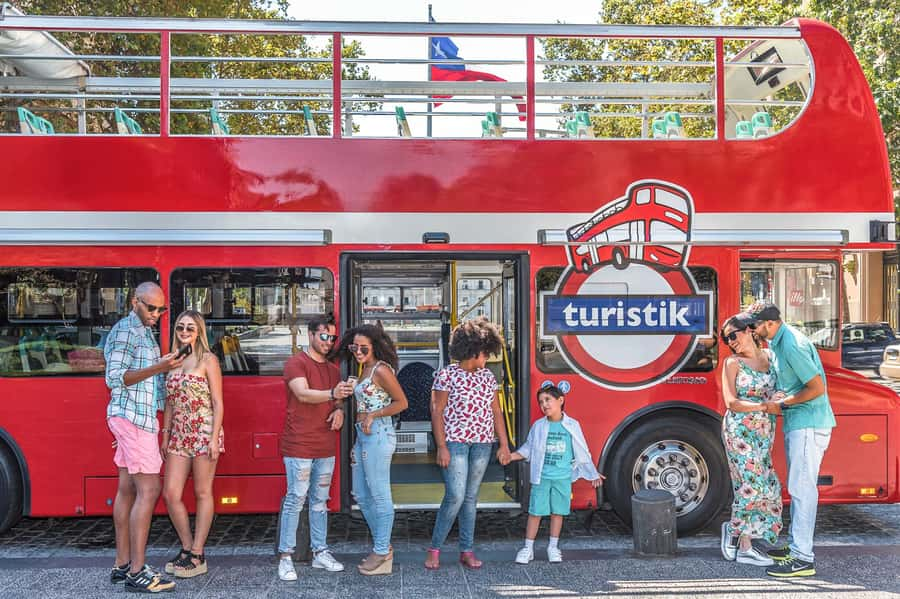
Santiago’s hop-on hop-off bus gives you a useful first look at a very spread-out city, from the modern shopping districts of Las Condes to the old center around Plaza de Armas. The best part is the freedom to stop for Cerro San Cristóbal’s big city views and later walk around La Moneda or Santa Lucía Hill without arranging separate transport.
I like the route’s mix of modern Santiago and older Santiago. I also like the 10 well-placed stops, especially the links to the cable car, funicular, historic center, and major shopping areas. The main drawback is the weekday schedule and the need to board before 4:00 PM if you want to complete the full circuit.
Key points at a glance
- Cerro San Cristóbal connection: Stop near the cable car and funicular for high views over Santiago.
- Ten stops across the city: The route links Parque Arauco, Bicentenario Park, Bellavista, downtown, Providencia, and Las Condes.
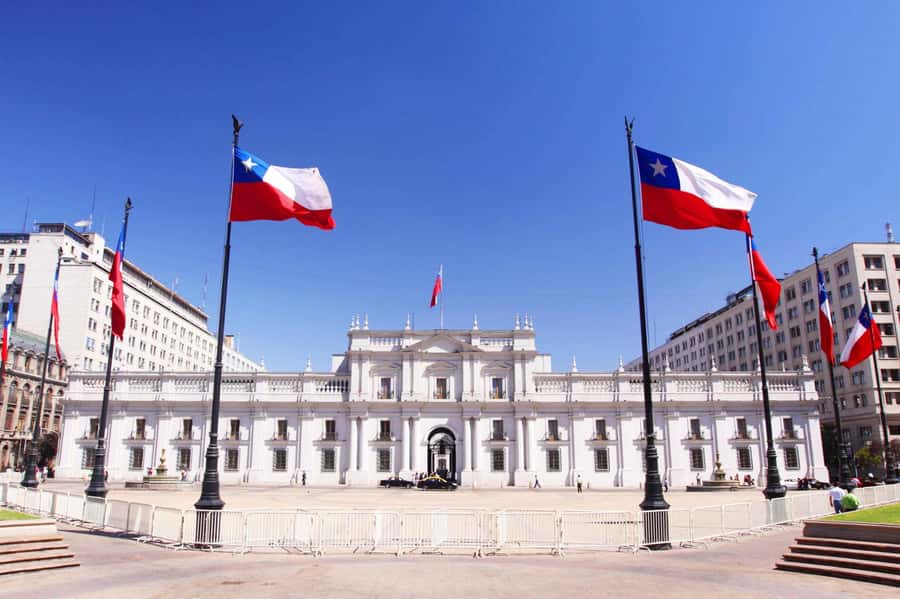
- Historic center access: Get off near Plaza de Armas, La Moneda Palace, and Santa Lucía Hill.
- Shopping and city life: Parque Arauco and Costanera Center add restaurants, shops, and indoor breaks.
- Six audio-guide languages: Commentary is available in English, Spanish, Portuguese, French, German, and Chinese.
- Weekday planning matters: Buses run from 9:30 AM to 6:00 PM, but you should board by 4:00 PM for the complete loop.
A practical way to see Santiago in one day
Santiago is not a city you can understand from one square. Its main sights stretch from the eastern districts of Las Condes and Vitacura to the older center and the foothills of San Cristóbal Hill. This bus helps you cover that distance without constantly figuring out taxis, metro connections, or walking routes.
The experience is designed for flexible sightseeing. You can stay aboard for a broad orientation, then hop off at the places that interest you most. One day-ticket includes unlimited hopping on and off for the day you book, so the value comes from using the bus as transportation rather than treating it as a single sightseeing loop.
I would use it in one of two ways. On a first morning in Santiago, I would ride part of the route to get my bearings, then stop at Cerro San Cristóbal and the historic center. If you already know the city, use the bus as a link between districts that are too far apart for a comfortable walk.
The audio guide comes in six languages: English, Spanish, Portuguese, French, German, and Chinese. Live guide information is also provided in English, Spanish, and Portuguese. The supplied experience information highlights Nathaly and Carlos for giving clear explanations about how the buses work and when to board, a useful touch if you are unsure how the system operates.
More Hop-On Hop-Off Audio Tours in the world
- Rome: City Sightseeing Hop-on Hop-off Bus with Audioguide
★ 4.0 · 16,045 reviews - Milan: City Sightseeing Hop-On Hop-Off Bus with Audio Guide
★ 4.0 · 6,256 reviews - Rome: Hop-on Hop-off Sightseeing Bus Tour with Audioguide
★ 4.1 · 4,801 reviews
Starting at Parque Arauco and moving through modern Santiago
Parque Arauco is the first stop, at Avenida Presidente Kennedy 5413 in Las Condes. This is a practical starting point if you want coffee, food, shopping, or a comfortable indoor beginning to the day. It is one of Chile’s major shopping centers, with international brands and an open-air dining area.
The stop is more commercial than cultural, so I would not make it your main reason for taking the bus. It works best as a starting point, a lunch stop, or a place to retreat if the weather turns unpleasant.
Next comes Bicentenario Park in Vitacura, at the corner of Isabel Montt and Avenida Bicentenario. The park has lagoons, wildlife, walking paths, and modern design. It gives you a calmer break from the traffic and buildings, with good chances for photographs.
Allow enough time here if you like parks and open space. If your priority is historic architecture, you may prefer to stay on the bus and save your time for the center.
Costanera Center, El Golf, and the eastern districts

The route continues toward Costanera Center, at Avenida Vitacura 2653. The complex is next to Sky Costanera, the observatory in the tallest building in South America. The bus information identifies Costanera Center as the largest mall in South America, making this another useful stop for shopping, restaurants, and indoor time.
The bus route also passes through El Golf, one of the polished business and dining areas of eastern Santiago. At the Las Condes Interactive Museum stop, at Isidora Goyenechea 3365, you are near restaurants and a museum built around interactive experiences.
These stops show a newer side of the city. They are helpful if you want food options and a break from sightseeing, but they also make the route feel less like a traditional old-city tour. I would choose only one major shopping stop unless shopping is a central part of your day.
Cerro San Cristóbal by cable car and funicular
For many people, the most important stop is Santiago Cable Car, at Los Conquistadores and Pedro de Valdivia Norte. The stop is about a five-minute walk from the cable car, which takes you up Cerro San Cristóbal for broad views across Santiago.
The mountain transport changes the rhythm of the day. Instead of seeing the city only from street level, you get a high viewpoint and a sense of how large Santiago is. On a clear day, this should be one of your first priorities.
The Santiago Funicular stop is at Pío Nono 445, in the Bellavista area. The historic funicular connects Bellavista with Cerro San Cristóbal and provides another way to reach the hill. The route information also refers to a ticket for San Cristóbal Hill with the cable car stop, while the general conditions say other tickets and entry fees are not included. Because of that mixed wording, confirm exactly which mountain transport admission is covered before you rely on it.
Plan extra time here. A quick hop off may not be enough if you want to use the cable car or funicular, enjoy the views, and return to the bus. The route cannot wait for you, so check the next departure through the operator’s app or stop information.
More Bus Audio Tours in the world
- Trieste Bus Tour with Audio Guide
★ 4.4 · 2,170 reviews - Los Angeles: Hop-On Hop-Off Bus Tour with Audio Guide
★ 3.7 · 2,030 reviews - Zurich: City Bus Tour with Audio Guide and Lake Cruise
★ 4.3 · 1,195 reviews - Paris: Tootbus Panoramic by Night Bus Tour with Audioguide
★ 4.3 · 1,126 reviews
Bellavista and the route toward old Santiago
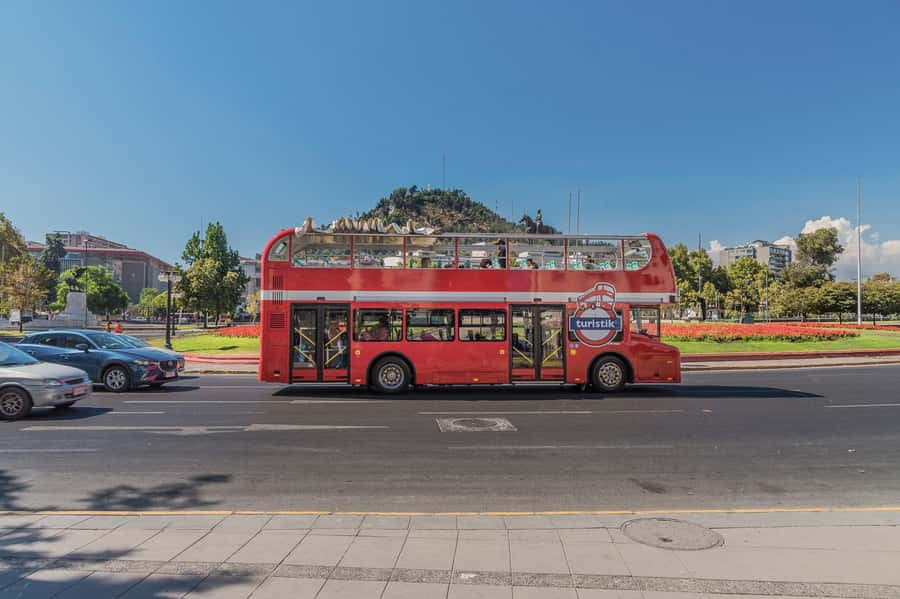
Bellavista links the mountain stop with the older center. The area is useful as a transition between outdoor views and city streets, though the supplied details do not promise a specific walking tour or attraction admission there.
This is a good place to choose your pace. You can hop off for a short look, continue to Plaza de Armas, or use the mountain connection first and return to the bus later. Since you have unlimited rides during the day, you do not need to force every stop into one long walk.
The operator’s app is intended to show stop information, things to do, and the bus’s real-time location. That matters here because mountain visits can take longer than expected. I would use the app before leaving the cable car or funicular area rather than guessing when the next bus will arrive.
Plaza de Armas and Santiago’s historic center
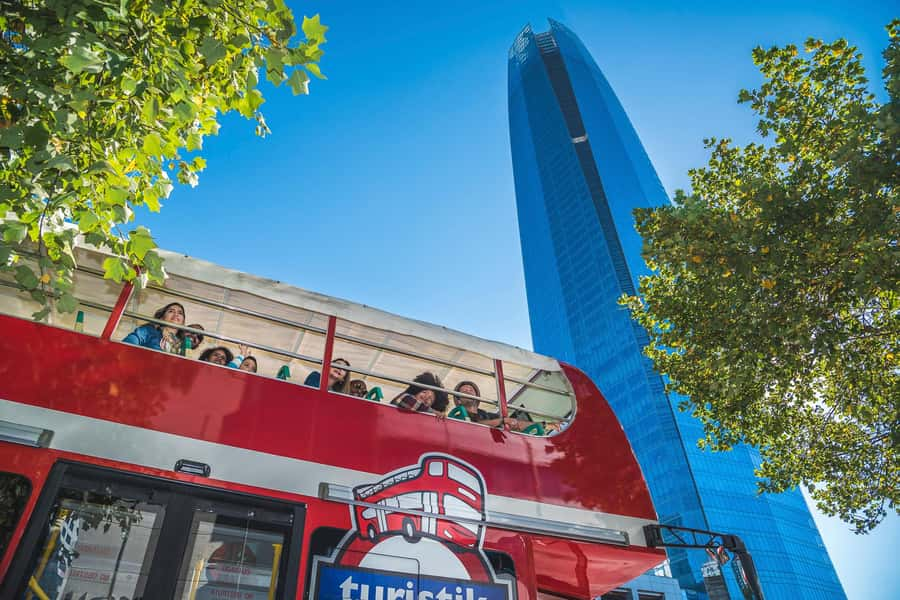
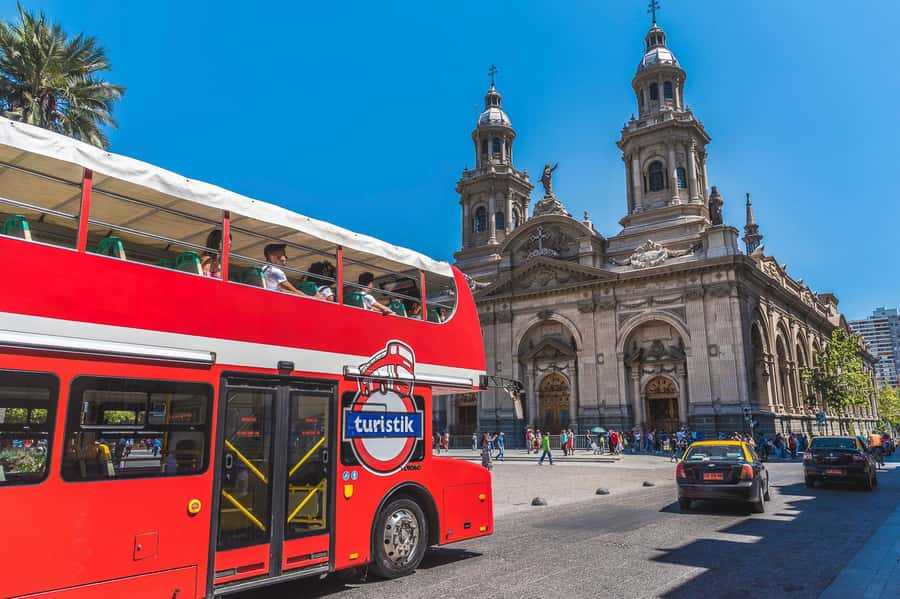
Plaza de Armas is the city’s historic heart, at Plaza de Armas 2. This is the most important stop for seeing colonial landmarks and getting a feel for central Santiago. From here, you can explore the square and the Metropolitan Cathedral, which is specifically identified as part of the downtown route.
This stop deserves more time than a quick photograph. The square helps explain Santiago’s original civic core, while the surrounding streets give you a contrast with the glass towers and shopping centers farther east.
The practical issue is pace. If you spend a long time at Plaza de Armas, you may need to skip one of the shopping or park stops. That is not a problem, since the route works best when you choose a few priorities instead of trying to collect all 10 stops.
La Moneda and Plaza de la Constitución
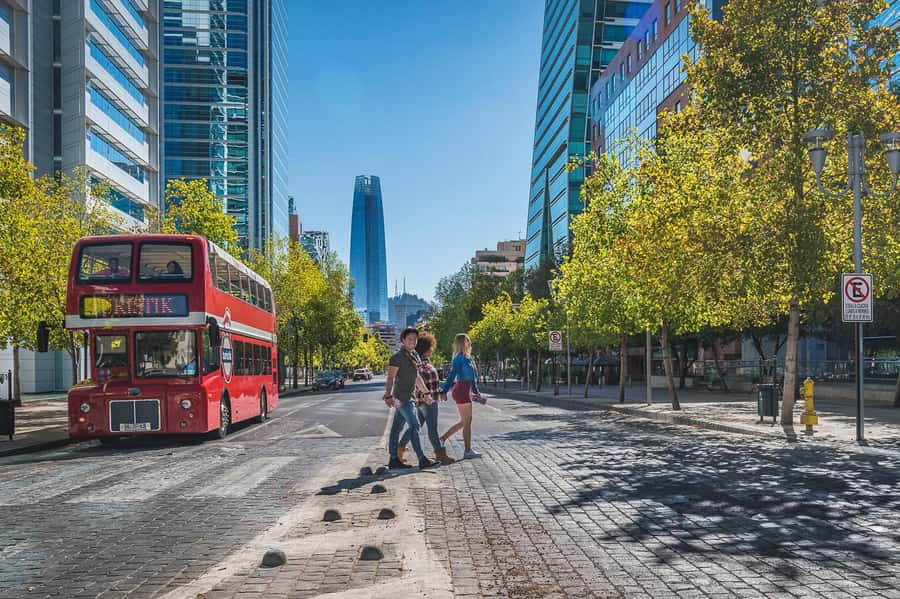
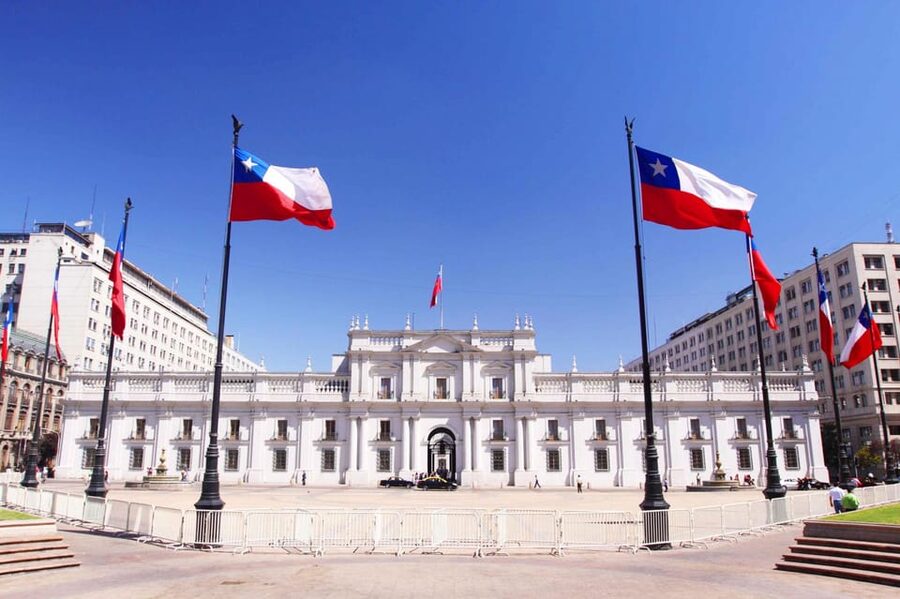
The La Moneda Palace stop is at Teatinos 254, directly in front of Chile’s government headquarters. The nearby Plaza de la Constitución adds another important civic space to the route.
This is a strong stop for visitors interested in Chilean government and modern national history. You can see the palace from the outside and use the area as a central base for more walking. The experience does not promise a guided palace interior visit, so treat this as an exterior and surrounding-area stop unless you arrange another admission separately.
I like this stop because it breaks up the route’s commercial side. After malls, parks, and tall buildings, La Moneda brings you back to the formal center of the country.
Santa Lucía Hill and the Lastarria area
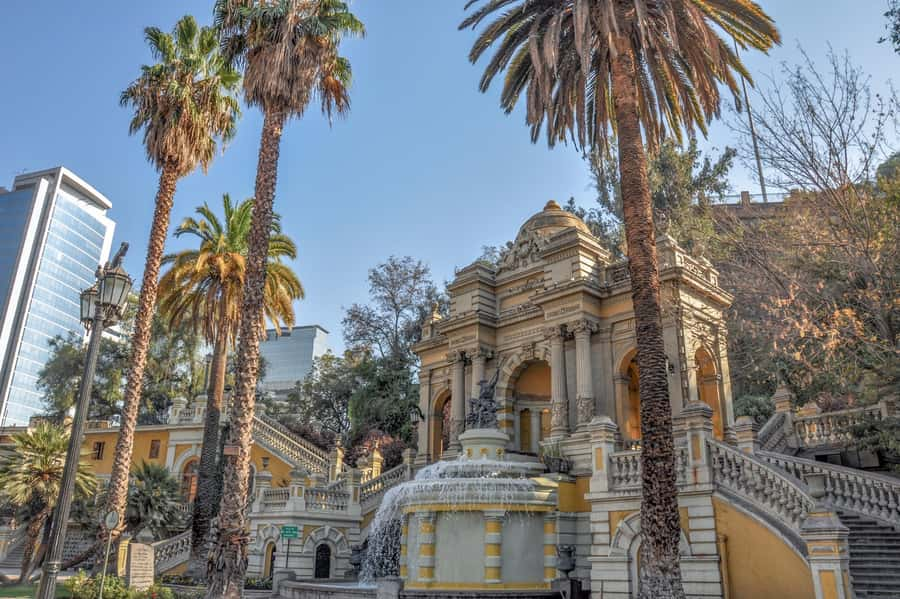
Santa Lucía Hill is at Avenida Alameda 390. The hill is known for neoclassical architecture, terraces, and city viewpoints, and it is near the Lastarria district.
This stop offers a different kind of view from Cerro San Cristóbal. San Cristóbal gives you the broad, high panorama. Santa Lucía gives you a smaller urban hill with terraces and architectural details close to the center.
I would pair Santa Lucía Hill with Plaza de Armas or La Moneda rather than visit it as an isolated stop. These three downtown locations make a natural section of the day, although you should watch the clock if you still need to return toward the eastern districts.
Comfortable shoes matter here. You should also carry water and wear weather-appropriate clothing, since the day includes both bus rides and outdoor stops.
Plaza de la Aviación and the Mapocho River
Aviation Plaza, or Plaza de la Aviación, is at Avenida Providencia 969. It is known for a fountain, green areas, and its position beside the Mapocho River.
This is a lighter sightseeing stop. It gives you space to pause and stretch after downtown walking, with a different view of Santiago’s public parks and river corridor. If your day is already full, you may prefer to see it from the bus rather than hop off.
The stop also helps connect the historic center with Providencia. That makes the route useful even when you are not visiting every attraction. You are getting practical movement between districts, not just a narrated circuit.
Timing, buses, and the limits of a one-day ticket
The buses operate Monday through Friday from 9:30 AM to 6:00 PM. To complete the full route, board before 4:00 PM. That cutoff is important because a cable car visit, lunch, or long downtown walk can easily push you beyond the time needed for the final circuit.
I would begin as early as possible, especially if you want to visit Cerro San Cristóbal and explore the historic center. A late start is better suited to staying on the bus, choosing one or two stops, and enjoying a partial route.
The one-day ticket has good value if you make several stops. At $50 per person, it is not a cheap sightseeing ride, so you should use the transportation benefit as well as the commentary. The price makes more sense when you combine distant areas, use the bus repeatedly, and include the mountain connection if its admission is covered.
The value is weaker if you only want a short panoramic ride or if you plan to spend most of the day at one attraction. In that case, local transport and separate admissions may cost less, though they require more planning.
What to bring and what to watch
Bring your passport or ID card, sunglasses, a camera, water, comfortable shoes, comfortable clothes, and clothing suited to the weather. These are simple items, but they fit the day’s mix of bus travel, parks, city streets, hill paths, and viewpoints.
Keep personal belongings with you. The operator does not accept responsibility for objects left inside the vehicles. Also note that any outside services supplied by other companies have their own operating conditions and risks, so read those terms before using them.
Free cancellation is available up to 24 hours before the activity for a full refund, and you can reserve now and pay later. Availability and starting times should still be checked for your chosen date.
Who will get the most from this Santiago bus tour?
I would recommend it most strongly for a first visit, a short stay, or anyone who wants a broad city introduction without arranging several separate rides. It also suits people who value flexibility and prefer to choose their own stops rather than follow a fixed walking group.
Families and mixed-age groups may appreciate the ability to rest on the bus between attractions. The shopping centers offer food and indoor breaks, while the parks and hill stops add outdoor time.
You should think twice if your main goal is a long, detailed walking tour of downtown. The audio guide helps with orientation, but a hop-on hop-off bus cannot provide the same close attention as a dedicated specialist tour. The route is also less useful on a weekend, since the stated operating schedule is Monday through Friday.
Should you book it?
Book this experience if you want to connect Santiago’s distant districts in one day and plan to use at least four or five stops. Make Cerro San Cristóbal, Plaza de Armas, La Moneda, and Santa Lucía Hill your main targets, then add a park or shopping stop if time allows.
Skip it if you want only one attraction, need a weekend service, or prefer slow walks with detailed local commentary. For most first-time visitors with a weekday available, the bus is a practical introduction to Santiago, provided you start early and confirm the mountain transport inclusions before booking.
FAQ
How long is the Santiago hop-on hop-off ticket valid?
The ticket is valid for one day, with unlimited hop-on hop-off use on the booking date.
What are the operating hours?
The buses operate Monday through Friday from 9:30 AM to 6:00 PM. You should board before 4:00 PM to complete the full route.
How many stops are included?
The route has 10 stops, including Parque Arauco, Bicentenario Park, the Santiago Cable Car, the Santiago Funicular, Plaza de Armas, La Moneda Palace, Santa Lucía Hill, Plaza de la Aviación, Costanera Center, and the Las Condes Interactive Museum.
Is an audio guide included?
Yes. The audio guide is available in English, Spanish, Portuguese, French, German, and Chinese.
Are cable car and funicular tickets included?
The information specifically refers to a ticket for San Cristóbal Hill with the cable car stop, while the general conditions say other entry fees are not included. Confirm the exact mountain transport inclusions before booking.
What languages are available for live guiding?
Live tour guide information is provided in English, Spanish, and Portuguese.
Can I cancel the booking?
Yes. You can cancel up to 24 hours in advance for a full refund. A reserve-now, pay-later option is also available.
Latest audio tours in the world
- San Sebastian Scavenger Hunt & Highlights Self Guided Audio Tour★ 4.0 · 7 reviews
- San Marino’s Three Towers: An Audio Tour of the Ancient Republic★ 5.0 · 2 reviews
- San Marino Walking Tour with Audio and Written Guide★ 4.5 · 5 reviews
- Sampling San Sebastián’s History: A Self Guided Audio Tour★ 4.5 · 5 reviews
- Talking Buildings of Old San Juan: A Self-Guided Audio Tour★ 3.5 · 18 reviews
- San Marino: A Self Guided Audio Tour★ 4.5 · 14 reviews
- Essential Downtown SLO: A Self-Guided Audio Tour★ 4.5 · 27 reviews
- Silicon Valley Self-Guided Driving Audio Tour for Tech Lovers★ 4.0 · 24 reviews
Hop-On Hop-Off Audio Tours, compared.
City Sightseeing Hop-on Hop-off Bus with Audioguide
Read our review →
City Sightseeing Hop-On Hop-Off Bus with Audio Guide
Read our review →

City Sightseeing Hop-On Hop-Off Bus Tour with Audio Guide
Read our review →
Hop-On-Hop-Off with Optional Audio Tour or Cruise
Read our review →
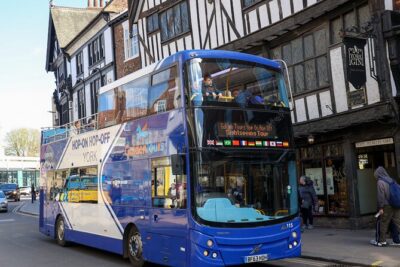
Golden Tours York Hop-on Hop-off Open Top Bus Tour with Audio Guide
Read our review →
Doha: 24-Hour Hop-On Hop-Off Bus Ticket with Audio Guide
Read our review →Browse the lists this tour appears in