Reviewed · ITALY
Agrigento: Valle dei Templi Fast-Track Ticket & Smart Guide
Agrigento’s Valley of the Temples is the kind of ancient site that earns its place on a Sicily itinerary. You walk along a ridge lined with enormous Greek temple ruins, with the countryside opening below. I like the fast-track entry and the freedom to stop wherever you want with the smartphone guide in your pocket. The main thing to plan for is the physical layout: reaching the temples can involve a 2.5-kilometer uphill walk.
I also like that you get as much as four hours, enough time to move slowly instead of rushing from ruin to ruin. The drawback is value: at the advertised $24, the ticket and guide are reasonable, but one purchaser paid €44 for tickets that reportedly cost €17 at the site. Check the final price before paying if you are not visiting during a busy period.
Key points to know before you go
- The 2.5-kilometer approach matters: You may need to walk uphill before reaching the main temple ridge.
- A taxi can save your legs: A local taxi service was reported at €3 per person to carry visitors to the top.
- The audio guide works at your pace: You can pause, replay, and match commentary with the information boards.
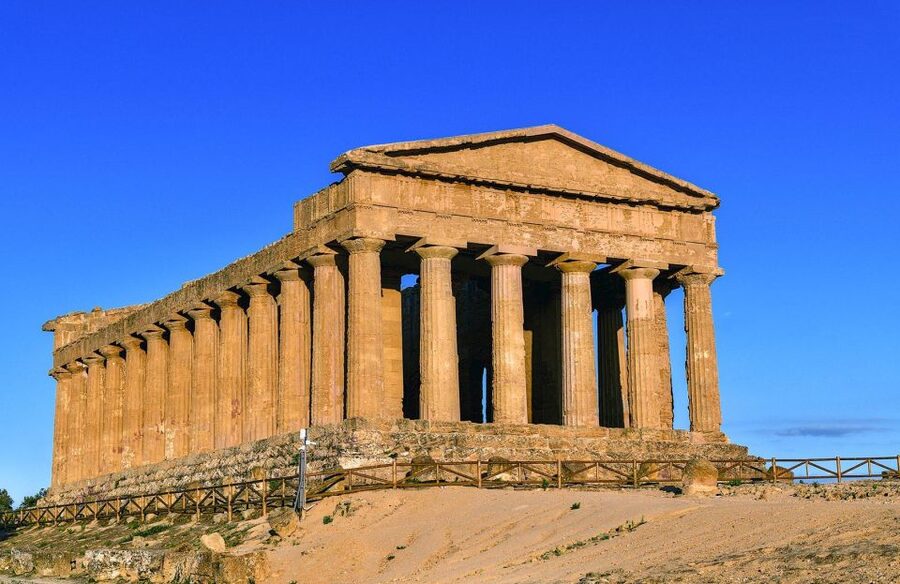
- Concordia, Juno, and Zeus anchor the visit: Each temple offers a different look at the scale and story of ancient Agrigento.
- Bring your own headphones: Earphones are not included, and your smartphone needs a full charge.
- The ticket is not always the cheapest route: Fast entry has value when lines are long, but a walk-up ticket may cost less during quiet periods.
Why the Valley of the Temples deserves four hours
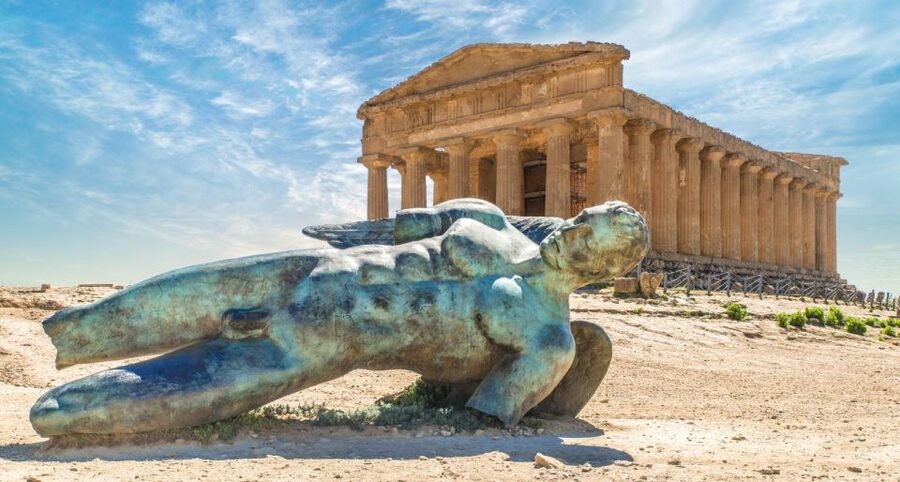
Agrigento is not a single temple with a quick photo stop. It is a broad archaeological area where ancient buildings, broken columns, paths, and long views unfold over time. Four hours gives you room to understand the site rather than simply collect pictures.
The temples are arranged along a ridge, and the walking route takes you through different sections of the ancient city. Some buildings are remarkably complete, while others survive as fragments. That contrast helps you see how much work went into Greek temple construction and how much has been lost over the centuries.
I would not treat this as a rushed stop between other Sicilian sights. The experience depends on walking, looking carefully, and giving the digital guide time to explain what you are seeing.
More Audio Tours in Italy
- Rome: Pantheon Fast-Track Ticket and Official Audioguide
★ 4.5 · 27,353 reviews - Rome: Colosseum & Forum with Audio Guide App -Optional Arena
★ 4.2 · 24,770 reviews - Florence: Timed Entry to Michelangelo’s David + Audio App
★ 4.6 · 19,496 reviews
Getting past the entrance and finding the route
You receive the admission tickets the day before your visit and download the digital guide to your phone. The meeting point is simple: go directly to the Valley of the Temples and begin there. There is no live guide leading a group, so you are responsible for opening the ticket and guide before you arrive.
Fast-track entry can be useful if the entrance is crowded. You bypass the ticket line and go directly inside, which saves time when tour groups and summer visitors arrive together. Still, the value depends on the day. One purchaser found that buying at the site would have cost much less, while another had no trouble with the pre-booked arrangement. If the price difference is large and the entrance looks quiet, compare your options.
The ticket process can require several downloads, tutorials, and barcode steps. Have your phone ready before leaving your accommodation, and keep the ticket message easy to find. A charged smartphone is essential. Bring headphones too, since they are not provided.
The uphill approach to the ancient temples
The practical detail most likely to affect your day is the walk from the lower area toward the temple ridge. One account describes the approach as roughly 2.5 kilometers uphill. That is not a minor footnote if you are visiting in hot weather, traveling with children, or managing limited mobility.
A taxi service was reported at €3 per person to carry visitors to the top. You can then walk along the ridge and gradually make your way down through the temple area. Golf carts are also available for a fee and can transport you between some sections.
The site is described as wheelchair accessible, but accessibility does not mean every part will feel effortless. The uphill approach, heat, and long distances still matter. If you need to limit walking, ask about the available transport when you arrive and allow extra time for a comfortable pace.
Arriving early can make the walk easier. An 8:30 arrival was described as quiet enough for a relaxed pace, with fewer people around. Morning also gives you a better chance of avoiding the strongest heat.
Temple of Juno and the first big views
The Temple of Juno is one of the major stops on the route. Its columns and elevated position help you understand why the ridge was such a powerful setting for ancient religious buildings. From here, you begin to see the relationship between the ruins and the surrounding valley.
This is a good place to start using the digital guide rather than treating it as background audio. Pause beside the remains, compare them with the information boards, and then look at the stonework itself. The guide is most useful when it helps you notice details you might otherwise walk past.
The path between the temples is part of the experience. You are not simply entering separate rooms. You are crossing an open archaeological area, with views changing as you move. Wear sensible shoes, particularly if you plan to explore the full route.
Another self-paced route in Italy:
- Rome: City Sightseeing Hop-on Hop-off Bus with Audioguide
★ 4.0 · 16,045 reviews - Pompeii: Entry Ticket with Audio Guide
★ 4.1 · 13,491 reviews - Venice: La Fenice Opera House Entry Ticket with Audio Guide
★ 4.6 · 11,742 reviews - Rome: Colosseum, Forum, Palatine Hill Entry & Audioguide App
★ 4.4 · 10,957 reviews
Temple of Concordia and the best-preserved monument
The Temple of Concordia is the emotional center of the visit for many people, and it is easy to see why. Its rows of columns and broad structure give you a much clearer idea of what a Greek temple once looked like than the scattered stones found elsewhere.
The digital guide can add useful context here, especially if you take time to listen beside the building instead of walking with the narration playing continuously. The ancient remains are impressive on their own, but the explanation helps connect the architecture with the religious and cultural world that produced it.
This is also one of the strongest photo stops. Frame the columns against the valley, then step back and look at the temple without your phone. The site rewards a slower eye. You can take photographs, but the scale is easier to appreciate when you stop chasing the next viewpoint.
Temple of Zeus and the fragments that tell another story
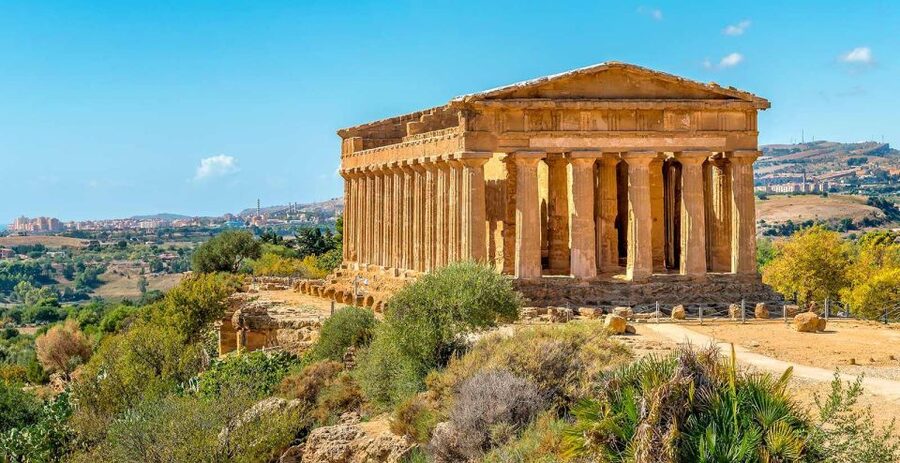
The Temple of Zeus offers a different experience. Rather than presenting a nearly complete building, it shows the ambition and destruction of a much larger monument through surviving fragments and massive architectural pieces.
This section is valuable because it keeps the visit from becoming a parade of similar columns. The guide explains what you are seeing and helps you imagine the original scale. You may find the remains less immediately photogenic than Concordia, but they reveal more about the size of the ancient complex.
The contrast between the temples is worth paying attention to. Juno gives you an elevated setting, Concordia offers a strong surviving structure, and Zeus presents monumental remains that ask you to reconstruct the past in your mind.
Using the smart guide without losing the site
A self-guided tour works best when you treat the audio as a tool, not a timetable. You can listen to each section, pause for photographs, replay a point, or skip ahead if a particular explanation does not interest you.
The guide is available in different languages, although the specific language list should be checked when booking. It is described as easy to download and use, but the initial setup can involve several steps. Download it before entering if possible, and do not rely on a weak mobile signal inside the archaeological area.
Information boards help you stay oriented. One early visitor found that the combination of the audio guide and the signs made it easier to understand what each temple was meant to show. That is a useful approach: use the phone for context, then use the site itself for scale, texture, and atmosphere.
Because there is no live guide, you do not get spontaneous answers to questions. In return, you avoid being tied to a group schedule. I would choose this format if you like moving independently and already feel comfortable using a phone for directions and audio.
Panoramic viewpoints and photo stops
The Valley of the Temples is not only about ruins. The open views across the valley give the visit its sense of place. From the ridge, you can photograph the temples with the countryside behind them, then turn toward the long sequence of archaeological remains.
The viewpoints are especially helpful after listening to the guide. Once you understand how the temples were arranged, the wider view becomes more meaningful. You can see the monuments as part of a city and religious center, not as isolated buildings placed for modern sightseeing.
Give yourself time to stop at several points. A four-hour window is generous enough for this, while a shorter visit could leave you choosing between the temples and the views. In hot weather, plan water and pauses, since the route includes exposed walking and a downhill section that can be tiring.
The downhill walk, heat, and pacing
After reaching the upper ridge, you generally walk along the temples and then descend. The downhill section can be beautiful, but it is not automatically easy. Heat, uneven surfaces, and the length of the route can make the final part harder than expected.
This is where the taxis and golf carts may be useful. You can pay for transport to reduce the walking between monuments, though the experience will be less continuous. If you are fit and the weather is mild, walking gives you the clearest sense of how the site unfolds.
I would plan the visit around your energy rather than trying to see every corner at top speed. Early morning is a smart choice, and a slow pace makes it easier to hear the guide, study the columns, and enjoy the views.
Archaeological Museum access is not straightforward
The archaeological museum is a separate point of interest, but reaching it from the Valley of the Temples may not be simple. Poor signage and locked gates were reported along the route, so do not assume you can easily move from the temple area to the museum without planning.
The museum is not included in the stated ticket and guide package. If you want to visit it, check the access arrangements before starting your walk. Otherwise, focus your time on the temples and avoid losing part of the four-hour visit searching for an entrance.
Is $24 good value?
At $24 per person, the package offers two useful things: admission and a digital guide. The guide adds value if you want historical context but do not want to join a scheduled group. The skip-the-line feature matters most when the entrance is busy.
The value is less clear when the site is quiet. One purchaser paid €44 and compared it with a reported €17 walk-up price. That is a substantial difference, not a small convenience fee. Prices can vary by booking channel and date, so check the total cost carefully before confirming.
The strongest case for booking is convenience. You receive the ticket ahead of time, avoid the main ticket queue, and have commentary ready on your phone. The weakest case is a quiet day when you can buy a cheaper admission at the entrance and do not mind arranging your own information.
Cancellation is flexible enough for normal trip planning: you can cancel up to 24 hours in advance for a full refund. That is useful if your Sicily route depends on weather or changing transport plans.
Who should choose this experience?
I would recommend it to you if you want to explore independently, enjoy audio commentary, and prefer not to be tied to a guide’s pace. It suits people who like stopping for photographs and spending extra time at one temple rather than following a fixed group.
It is also a good choice if you are concerned about queues and want your admission settled before arriving. Families and couples may appreciate the freedom to pause, though everyone in your party needs access to a charged phone and headphones.
You may want a different arrangement if you need detailed personal guidance, dislike phone-based tours, or are trying to keep costs as low as possible. The uphill walk also makes this less suitable for anyone who cannot comfortably manage a long outdoor route unless they arrange local transport.
What to bring for a smoother visit
Keep your preparation simple:
- A fully charged smartphone
- Headphones or earphones
- Your digital ticket ready to display
- Comfortable walking shoes
- Water and protection from the sun
- Extra time if you plan to use taxis, golf carts, or visit the museum
The headphones matter because the guide is designed for personal listening. Without them, you may struggle to hear the commentary clearly, especially when other people are nearby.
Should you book the Valley of the Temples smart guide?
Book it if you place a high value on convenience, want to enter without waiting, and like exploring at your own speed. The Temples of Concordia, Juno, and Zeus provide plenty to see, while the audio guide gives structure to a large and sometimes confusing archaeological area.
Before paying, compare the package price with the entrance price for your date. If the difference is modest, the advance ticket and guide may be worth it. If the price rises sharply, arrive early, check the queue, and consider buying directly at the site.
The experience itself is well suited to a half-day in Sicily. Just plan for the uphill approach, bring headphones, and do not mistake a fast-track ticket for a fast visit. The temples deserve time.
FAQ
How long does the experience last?
The stated duration is four hours. That gives you time to walk through the archaeological site, listen to the digital guide, visit the main temples, and stop at viewpoints.
Where do I meet the guide?
There is no live guide or group meeting point. Go directly to the Valley of the Temples and begin the audio guide there.
When do I receive the ticket?
The ticket is sent the day before your visit. You should have it ready on your smartphone when you arrive.
Do I need to bring headphones?
Yes. Earphones are not included, so bring your own headphones to hear the smartphone guide clearly.
Is the Valley of the Temples wheelchair accessible?
The activity is described as wheelchair accessible. However, the approach can involve a 2.5-kilometer uphill walk, so check the available taxi or golf-cart transport if needed.
Are taxis or golf carts included?
No. Local taxis and golf carts are not included in the ticket. A taxi service was reported at €3 per person to reach the top, and golf-cart transport is available for an additional fee.
Can I cancel the booking?
Yes. You can cancel up to 24 hours before the activity for a full refund.
Latest audio tours in Italy
- Orgosolo Multilingual Audioguide★ 4.5 · 42 reviews
- Pantheon Skip the Line Entry Tickets with Digital Audio Guide★ 3.5 · 52 reviews
- St. Peter’s Basilica: Dome Climb with Lift & Audioguide★ 4.5 · 13 reviews
- Audio guide in Vatican Museums and Sistine Chapel★ 4.5 · 12 reviews
- Trastevere: A Self-guided Audio Tour of Rome’s Medieval Village★ 4.5 · 3 reviews
- The Roman Jewish Ghetto: A Self-Guided Audio Tour★ 4.0 · 8 reviews
- Experience: The Pantheon Audio Tour★ 4.5 · 4 reviews
- Navova square underground with audioguide★ 4.5 · 17 reviews
Italy Audio Tours, compared.
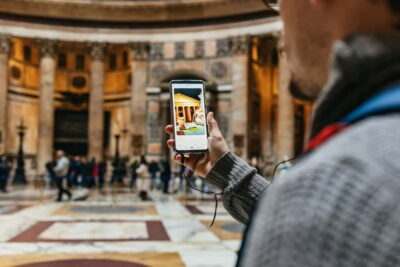
Pantheon Fast-Track Ticket and Official Audioguide
Read our review →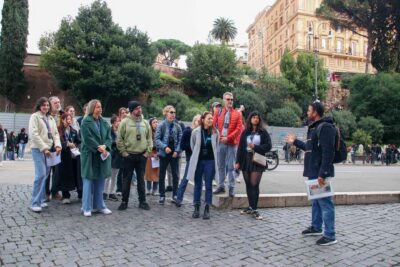
Colosseum & Forum with Audio Guide App -Optional Arena
Read our review →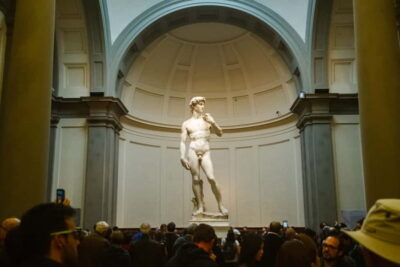
Timed Entry to Michelangelo’s David + Audio App
Read our review →
City Sightseeing Hop-on Hop-off Bus with Audioguide
Read our review →

La Fenice Opera House Entry Ticket with Audio Guide
Read our review →
Colosseum, Forum, Palatine Hill Entry & Audioguide App
Read our review →