
Reviewed · ROME
Rome: Navona Square Underground Ticket with Audio Guide
The most surprising part of Piazza Navona is below your feet. Five meters beneath the busy square lie the remains of the Stadium of Domitian, an ancient sports venue that once held as many as 30,000 spectators. You see the masonry, entrances, and traces of the seating area, then use audio, video, and 3D reconstructions to picture the stadium as it once looked.
I like the clear story about Roman sports and rulers, and I like how the visit connects the ancient stadium to the modern piazza above. The audio guide is available in seven languages, and a child-friendly version helps younger visitors follow along.
The main drawback is scale. This is a compact archaeological site, not a second Colosseum, and many people finish in 45 to 60 minutes. The audio numbering can also be confusing, and redeeming a phone voucher may take an extra step before you enter.
Key points to know before you go
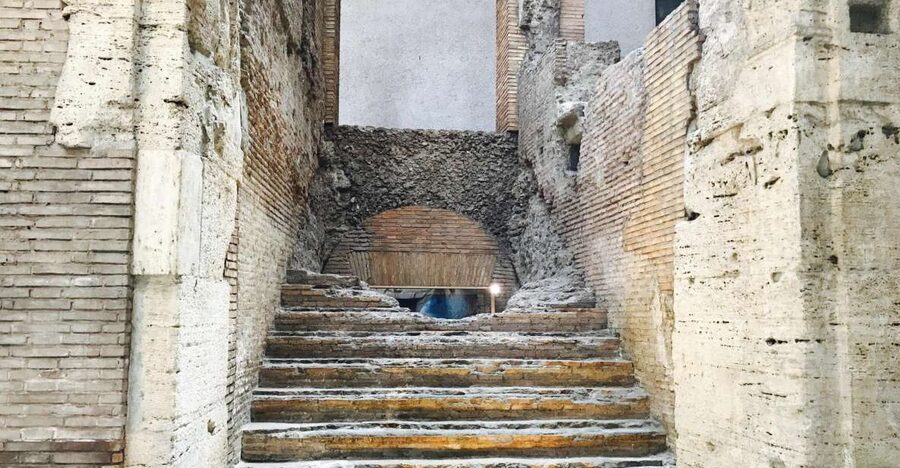
- Five meters below Piazza Navona: Descend beneath one of central Rome’s best-known squares to see the remains of an ancient stadium.
- Up to 30,000 spectators: Learn how Roman crowds were organized and how sport served the power of the emperors.
- Audio guide in seven languages: Choose Spanish, English, French, German, Italian, Russian, or Portuguese.
- Visual aids add useful context: Unpublished photographs, information panels, video, and 3D images help rebuild the missing parts of the stadium.
- Expect a short, focused visit: Most people need about 45 minutes to an hour, depending on how closely they follow each audio stop.
- Optional food and wine: Add an aperitif with one cocktail and snacks, or a tasting of two wines with a traditional appetizer board.
What lies beneath Piazza Navona
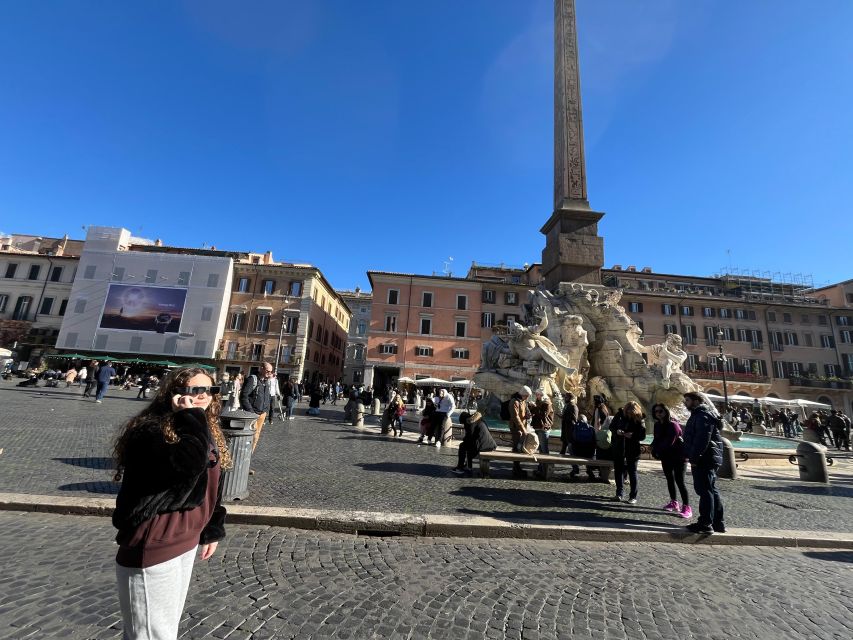
Piazza Navona is easy to read as a grand Baroque square. You see Bernini’s Fountain of the Four Rivers, the Church of Sant’Agnese in Agone, artists, cafés, and the steady movement of central Rome. The archaeological site below gives you a different version of the square.
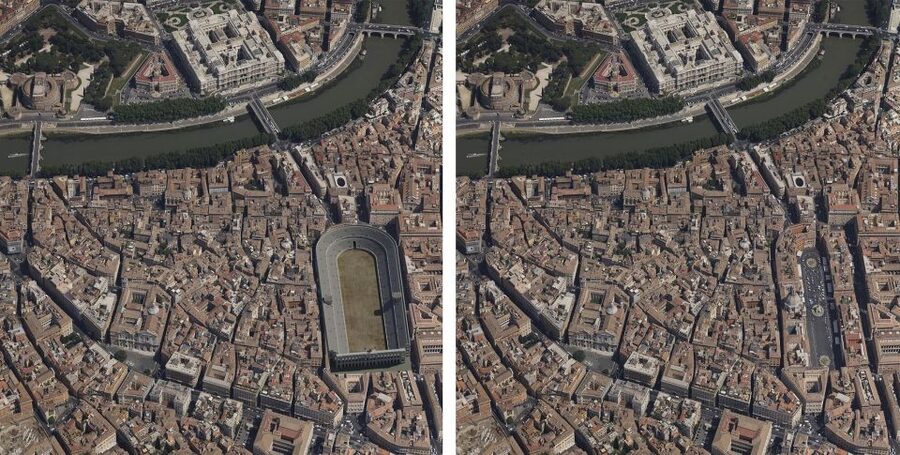
The modern piazza follows the long, narrow shape of the ancient Stadium of Domitian. The stadium was built for athletic contests and public spectacles, rather than chariot racing. It was the first and only stadium in Ancient Rome built entirely from masonry, according to the site’s interpretation.
That distinction matters. Rome has many ruins, but this visit focuses on a building designed for organized sport and mass spectatorship. You are not simply looking at old walls. You are learning why the piazza has its unusual shape and how a Roman sports venue slowly became part of the city above it.
The stadium was built during the reign of Emperor Domitian in the first century. Its remains now sit beneath the present street level, surrounded by later layers of Rome. The underground setting is a useful reminder that the city you see today was built over, around, and sometimes directly on top of earlier Rome.
More Audio Tours in Rome
- Rome: Colosseum & Forum with Audio Guide App -Optional Arena
★ 4.2 · 24,770 reviews - Rome: City Sightseeing Hop-on Hop-off Bus with Audioguide
★ 4.0 · 16,045 reviews - Rome: St. Peter’s Basilica & Dome Entry Ticket & Audio Tour
★ 4.2 · 7,537 reviews
Entering at Piazza Navona 25
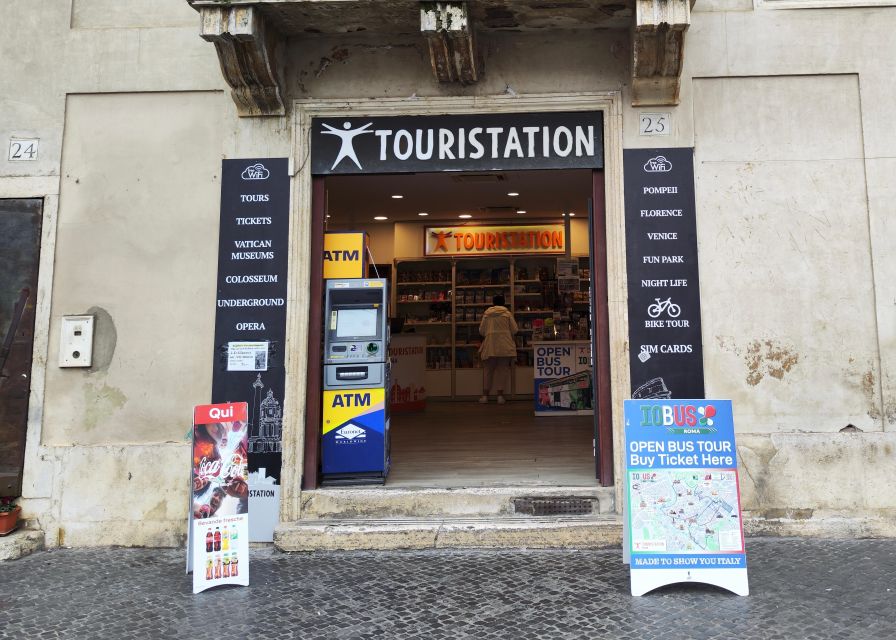
The meeting point is the tourist point at Piazza Navona 25, in front of the main fountain. This is central and easy to combine with a walk through the piazza, but give yourself a little time to find the correct desk and entrance.
If you have a phone voucher, you may need to redeem it for an admission ticket before going to the archaeological entrance. The ticket office can be a short walk away, and the extra step has caused confusion for some people. Allow roughly 5 to 10 additional minutes so you are not rushing into a booked starting time.
The site is clean and has toilets and a gift shop. The staff can help with the admission process, but this is not a live guided tour. You enter on your own schedule within the operating arrangements for your booking and follow the audio material independently.
The attraction is wheelchair accessible. A pram may be less practical, based on the underground layout and the experience of families who have taken young children. If you are visiting with a small child, ask staff for the child audio guide. One version uses a guide pen and map, which can make the short visit more engaging.
Walking through the ancient stadium

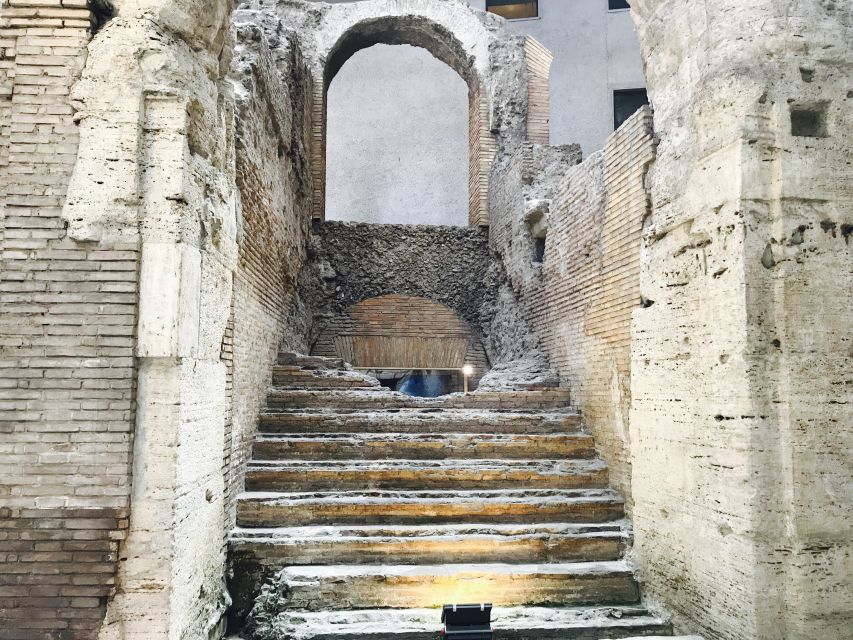
Once inside, you move through the excavated remains and see the construction materials that made the stadium possible. The audio explains the travertine blocks, brickwork, and marble columns used around the main entrances.
These details are easy to miss if you walk past the site at street level. The stone is not presented as a random pile of ruins. The displays explain how the parts fit together and where people would have entered the stadium.
The route lets you understand the shape of the building, although the experience is not a full walk around a preserved arena. The underground section is small, and part of the ancient stadium remains beyond the accessible area or beneath the modern city. That limited footprint is the reason some people expect more after hearing about a 30,000-seat venue.
I suggest treating the visit as a focused archaeological exhibition rather than a huge monument. You will not spend half a day here. Instead, you get a close look at one unusual building and a clear explanation of how its form influenced Piazza Navona.
Reconstructing Roman sport with sound and images
The audio guide is the heart of the visit. It explains the history of the stadium, the development of the square, and the evolution of Roman sports. English, Italian, French, German, Spanish, Russian, and Portuguese are available.
The narration gives the ruins a purpose. You learn how spectators were divided inside the arena and how the seating system could accommodate up to 30,000 people. The story also places sport within the world of Roman rulers, where public events were entertainment but also a way for emperors to display power.
Visual material strengthens the explanation. Information panels, historic photographs, a video presentation, and 3D renderings show how the stadium may have looked when complete. These reconstructions are especially useful because the surviving remains do not immediately reveal the full scale of the building.
The audio is generally easy to follow and informative. Still, you should pay attention to the numbered stations. Some numbers do not seem to follow a perfectly natural order, and the sound does not always line up exactly with the image or display in front of you. Take a moment to check the station number before starting each section.
Street noise can also reach the underground viewing area. The site is below the piazza, but it is not sealed off from the life of modern Rome. You may hear sounds from above while listening to ancient history. For some people that weakens the atmosphere. For me, it also makes the point that modern Rome and ancient Rome occupy the same space.
Another self-paced route in Rome:
- Colosseum, Roman Forum & Palatine Hill with Audioguide App
★ 4.4 · 6,291 reviews - Vatican & Sistine Chapel Ticket with Optional Audio Guide
★ 4.1 · 5,405 reviews - Rome: Castel Sant’Angelo Entry Ticket & Digital Audioguide
★ 4.7 · 5,347 reviews - Rome: Castel Sant’Angelo Entry Ticket & Audio App
★ 4.3 · 4,952 reviews
How long the visit takes

Plan on about 45 minutes if you listen to every audio item at a steady pace. An hour is more comfortable if you pause at the displays, watch the video, study the reconstruction images, and browse the gift shop.
The official validity is one day, but that does not mean you need to spend a full day at the site. The attraction is best used as one stop in a central Rome walking route. Visit the stadium before or after seeing the fountains and churches around Piazza Navona, then continue toward the Pantheon or Campo de’ Fiori if those places are part of your plans.
The short duration is both a benefit and a limitation. It is easy to fit between larger sights, and you will not lose a whole afternoon. On the other hand, if you want a long archaeological tour with many rooms and extensive remains, this will feel brief.
Crowds can vary. At quieter times, the small exhibition is easier to follow and the audio stations feel more personal. A compact site can become less comfortable when several groups gather at the same displays, so arriving outside the busiest part of the day may help.
Is the $18 price worthwhile?
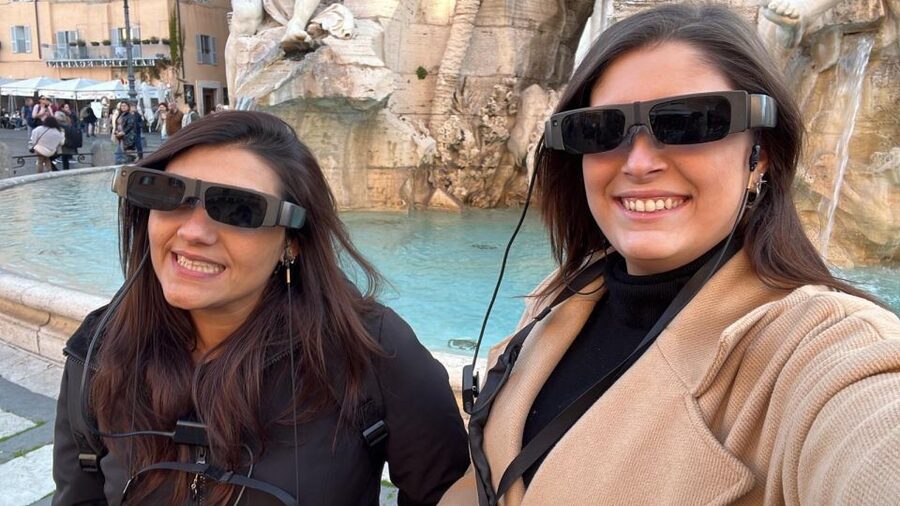
At about $18 per person, this is a moderate-cost Rome attraction. The value depends on what you want from your day.
I think the ticket works well if you have already seen the major monuments and want a more specialized look at Roman life. It also makes sense if you are interested in architecture, ancient sports, or the way Rome has changed over time. The audio guide and visual reconstructions add more than you would get from simply looking down through a street-level opening.
If you are visiting Rome for the first time with a tight budget, you may choose the Colosseum, Roman Forum, Pantheon, or Vatican Museums before this attraction. Those sites offer more extensive remains and take longer to explore. The Stadium of Domitian is a supplement, not a replacement for Rome’s major archaeological sights.
The ticket becomes better value if you select one of the food options. The aperitif includes one cocktail and snacks at a viewpoint in the heart of Rome. The wine option includes two wines paired with a traditional appetizer board. Staff reserve the table at the meeting point, so the food add-on can turn a short archaeological visit into a more complete stop.
The exact appeal of the add-on depends on your plans. If you already have dinner or a bar reservation nearby, the basic ticket may be enough. If you want a simple drink or tasting after the exhibition, the combined option saves you from arranging another stop.
Who will enjoy this experience most?
I would recommend it to people who enjoy smaller museums and focused historical sites. You get a particular story, not a broad survey of Ancient Rome.
It suits families because the exhibition is compact and the child audio guide gives younger children something active to do. You can keep sight of a child more easily here than in a huge open archaeological zone, although the area is not ideal for prams.
It also works for repeat visitors to Rome. If you have walked across Piazza Navona before, the underground stadium gives the square a new meaning. You begin to see its long oval shape as an echo of the building underneath.
History fans should appreciate the construction details and the explanation of Roman sports. People who prefer grand views, dramatic ruins, or a long guided walk may find the site too small. The attraction has a quiet, museum-like character rather than the large-scale drama of the Colosseum.
Practical tips for a smoother visit
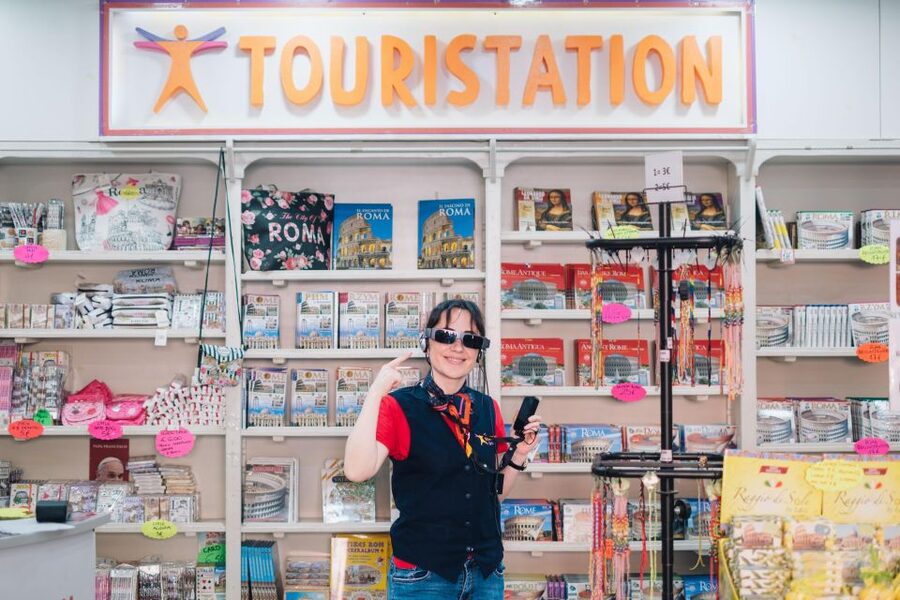
- Redeem your voucher at the tourist point in front of the main fountain at Piazza Navona 25.
- Allow 5 to 10 extra minutes in case you must collect a printed admission ticket from another nearby location.
- Check the audio station numbers carefully. They can feel out of sequence.
- Wear comfortable shoes, since the visit involves walking through an archaeological exhibition below street level.
- If you are visiting with a child, ask about the special child audio guide and guide pen.
- Combine the attraction with the rest of Piazza Navona, rather than making a separate trip across Rome for a visit that may take less than an hour.
- Consider the aperitif or wine option if you want a drink and snack after the exhibition.
The activity allows free cancellation up to 24 hours before the scheduled visit, and you can reserve now and pay later. Starting times depend on availability, so check the schedule before building the rest of your day around it.
Should you book the Stadium of Domitian?
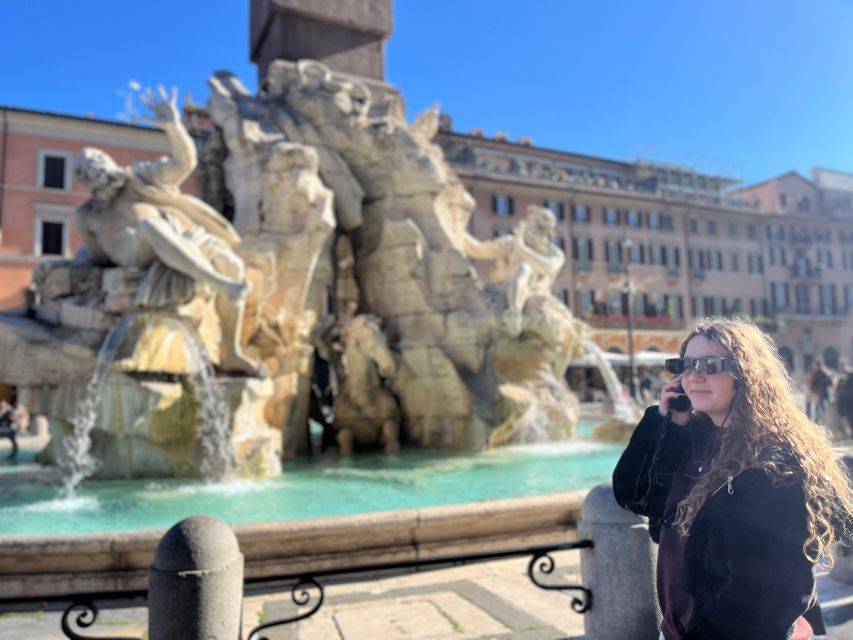
Book it if you want to see what is under Piazza Navona, enjoy self-guided history, and have 45 to 60 minutes available for a compact but unusual site. The audio guide, 3D reconstructions, and ancient building remains work together well, especially if Roman sport interests you.
Skip it if this is your first short trip to Rome and you have not yet visited the city’s major monuments. You can also pass if you expect a large underground complex or a full guided tour.
For many people, this is best as a thoughtful extra, not the centerpiece of a Rome itinerary. At $18, it offers a clear story, a central location, and a look at a part of the city that most people never notice from above. Add the aperitif or wine tasting if you want the visit to end with a drink rather than a quick return to the piazza.
FAQ
Where is the Stadium of Domitian entrance?
Redeem your voucher at the tourist point in front of the main fountain at Piazza Navona 25. You may need to collect an admission ticket before going to the archaeological entrance.
How far below Piazza Navona is the site?
The remains are located about five meters below street level.
Is this a guided tour?
No. The ticket includes an audio guide, but not a live guide. You explore the exhibition independently.
Which audio guide languages are available?
The audio guide is available in Spanish, English, French, German, Italian, Russian, and Portuguese.
How long does the visit take?
Most people need about 45 minutes to one hour, depending on how many audio stops and displays they explore.
Is the site wheelchair accessible?
Yes, the activity information states that the site is wheelchair accessible.
Latest audio tours in Rome
- Pantheon Skip the Line Entry Tickets with Digital Audio Guide★ 3.5 · 52 reviews
- St. Peter’s Basilica: Dome Climb with Lift & Audioguide★ 4.5 · 13 reviews
- Audio guide in Vatican Museums and Sistine Chapel★ 4.5 · 12 reviews
- The Roman Jewish Ghetto: A Self-Guided Audio Tour★ 4.0 · 8 reviews
- Experience: The Pantheon Audio Tour★ 4.5 · 4 reviews
- Trastevere: A Self-guided Audio Tour of Rome’s Medieval Village★ 4.5 · 3 reviews
- Self-Guided Audio Tour – The gods of the Palatine★ 3.5 · 5 reviews
- Navova square underground with audioguide★ 4.5 · 17 reviews
Rome Audio Tours, compared.
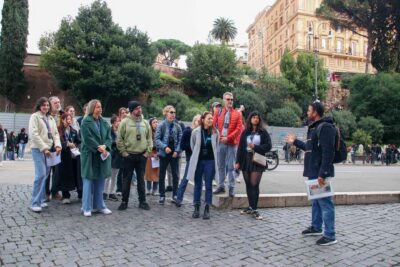
Colosseum & Forum with Audio Guide App -Optional Arena
Read our review →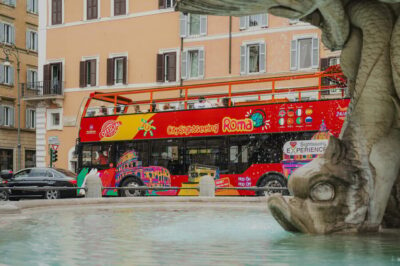
City Sightseeing Hop-on Hop-off Bus with Audioguide
Read our review →
St. Peter’s Basilica & Dome Entry Ticket & Audio Tour
Read our review →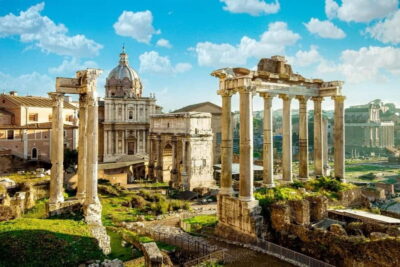
Colosseum, Roman Forum & Palatine Hill with Audioguide App
Read our review →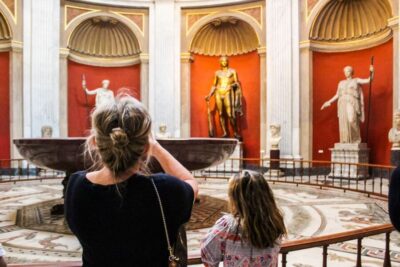
Vatican & Sistine Chapel Ticket with Optional Audio Guide
Read our review →
Castel Sant’Angelo Entry Ticket & Digital Audioguide
Read our review →
Colosseum, Forum, & Palatine Hill with Audio Guide
Read our review →Browse the lists this tour appears in