
Reviewed · ISTANBUL
Turkish and Islamic Arts Museum: Entry Ticket & Audio Guide
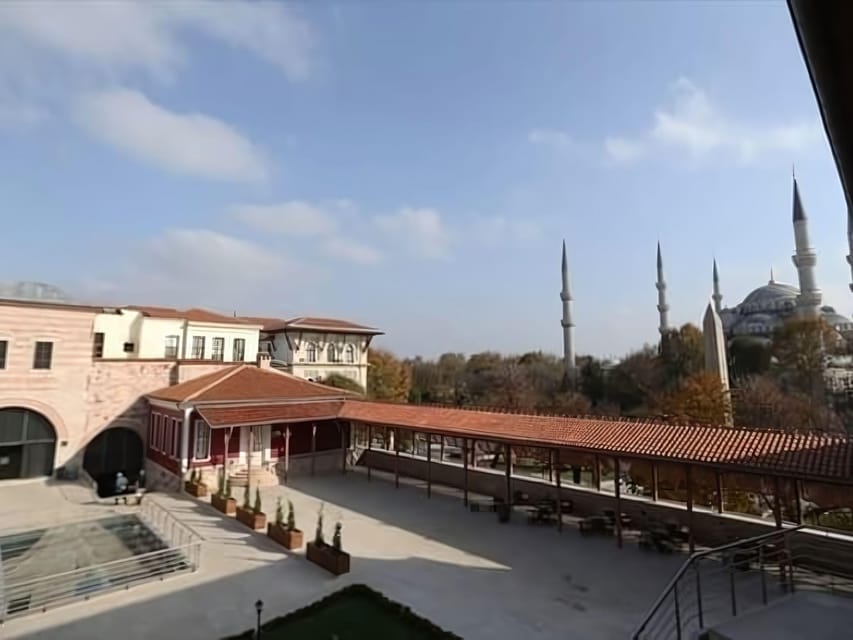
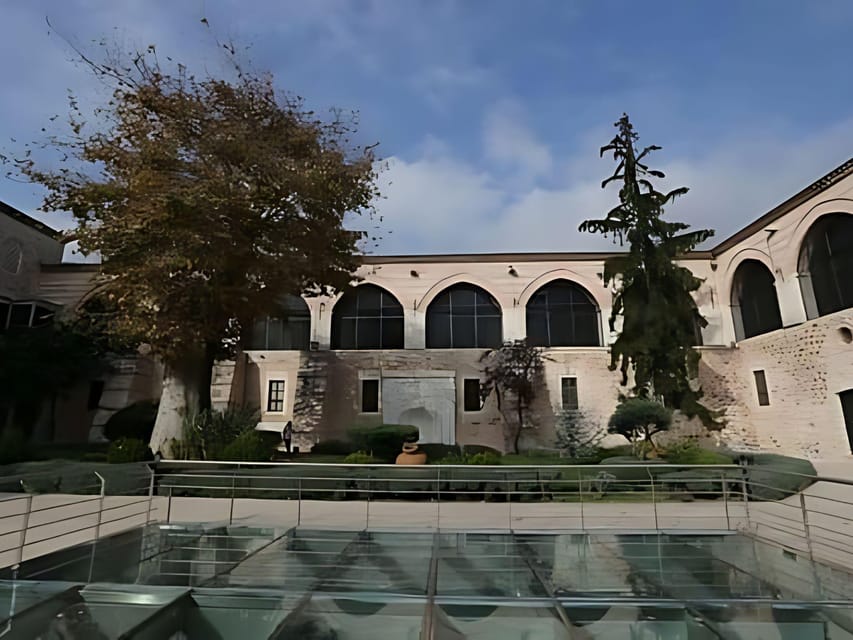
The most striking part of the Turkish and Islamic Arts Museum is its setting inside Ibrahim Pasha Palace, a 16th-century building beside the Blue Mosque. Inside, you move from Seljuk carpets and Ottoman textiles to calligraphy, manuscripts, ceramics, metalwork, and religious relics. I like the mix of fine art and everyday craftsmanship, and I like having an audio guide in 25 languages while you explore at your own pace.
The main catch is practical: the QR ticket can help you skip the ticket line, but security screening is still required. Download the audio guide before you arrive, too. One visitor who booked on the same day had trouble getting the guide past Apple security, then found there was no Wi-Fi at the museum.
Key points
- 16th-century palace setting: The museum occupies Ibrahim Pasha Palace in Sultanahmet, close to the Blue Mosque.
- Excellent carpet collection: See Seljuk designs and Ottoman carpets known for careful patterns, color, and weaving skill.
- 25 audio-guide languages: Options include English, Turkish, Arabic, French, German, Spanish, Chinese, Japanese, Urdu, and more.
- QR entry ticket: The ticket is designed to help you avoid the regular ticket line, though it does not remove the security check.
- Flexible one-day visit: You choose an available start time and can spend your museum visit at your own pace.
- Central Istanbul location: Sultanahmet tram station is about a five-minute walk from the museum.
Inside Ibrahim Pasha Palace beside the Blue Mosque
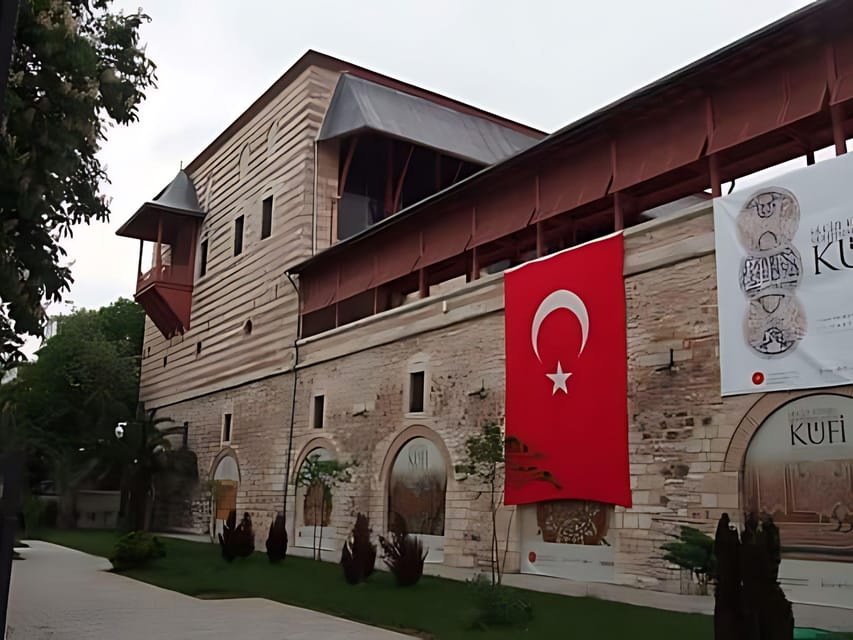
The museum’s address is one of its biggest advantages. It sits in Sultanahmet Square, very close to the Blue Mosque, so you can fit it into a day of old Istanbul sightseeing without arranging a separate excursion.
Ibrahim Pasha Palace gives the visit a sense of place that a modern gallery could not match. The building is a famous 16th-century landmark, and the exhibits are displayed within a setting connected to the Ottoman capital. I would allow enough time to look at the building itself, not just the objects in the cases.
This location also makes the museum easy to pair with other major sights in the area. You can reach Sultanahmet by tram, walk from the station, and then continue on foot through the historic center. The tradeoff is that the square is a busy meeting point, so allow extra time to find the entrance and pass through security.
More Museum Audio Tours in Istanbul
- Istanbul: Hagia Sophia History Museum Entry with Audio Guide
★ 4.1 · 102 reviews - Istanbul Archaeological Museums Entry Ticket & Audio Guide
★ 4.0 · 81 reviews - Chora Museum Skip-the-Ticket-Line Entry with Audio Guide
★ 3.6 · 9 reviews
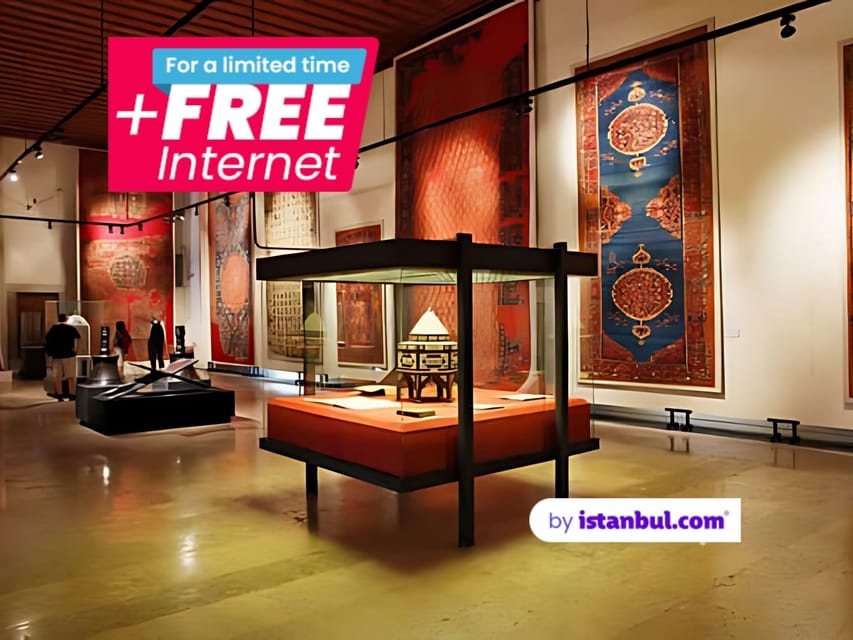
The carpet collection is the museum’s visual star
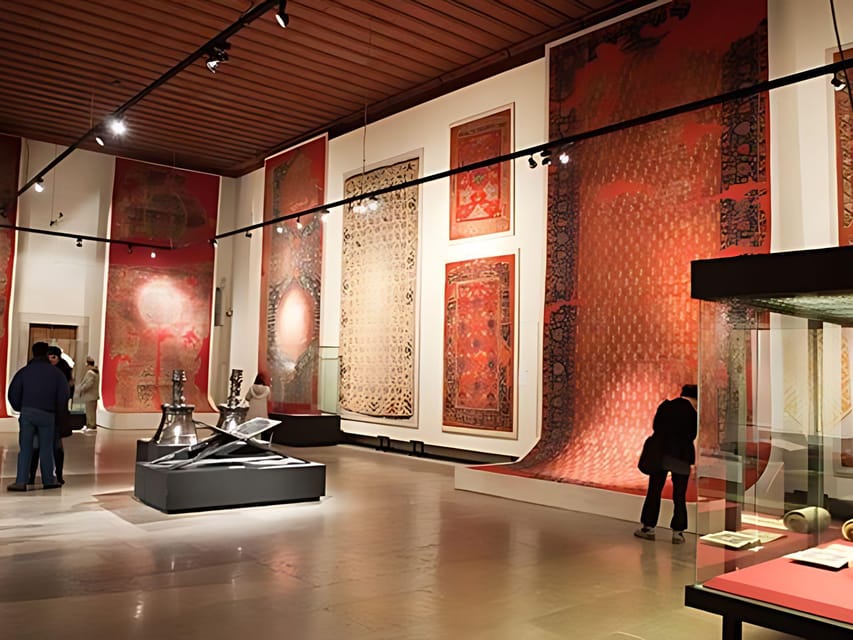
If you have limited time, begin with the carpets. They are among the most impressive objects here, with intricate patterns, strong color, and the kind of close workmanship that rewards slow viewing.
The collection covers different periods and styles, including early Seljuk designs and later Ottoman examples. That range lets you notice changes in pattern and technique rather than seeing a room of similar rugs. You may also begin to recognize how geometric forms, floral details, and borders are arranged across the surface.
I find carpets especially useful for understanding Islamic art because they combine beauty with daily use. These were not made only to hang in a gallery. They served homes, religious spaces, and public interiors, while also showing the skill and status of the people who commissioned them.
Take your time with the smaller details. From a distance, a carpet may look like one bold design. Up close, repeated shapes and careful color changes reveal how much work went into making the final pattern.
Manuscripts, calligraphy, and wooden works
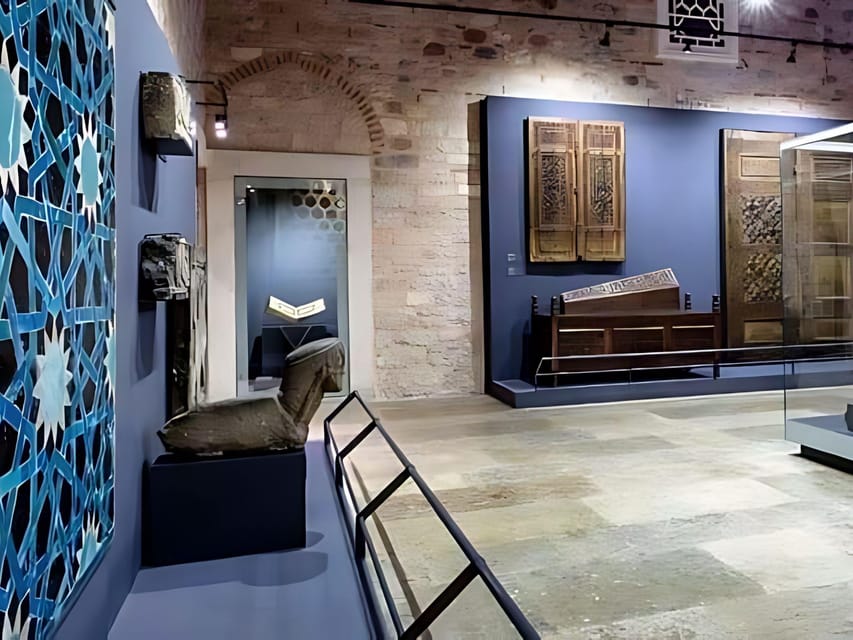
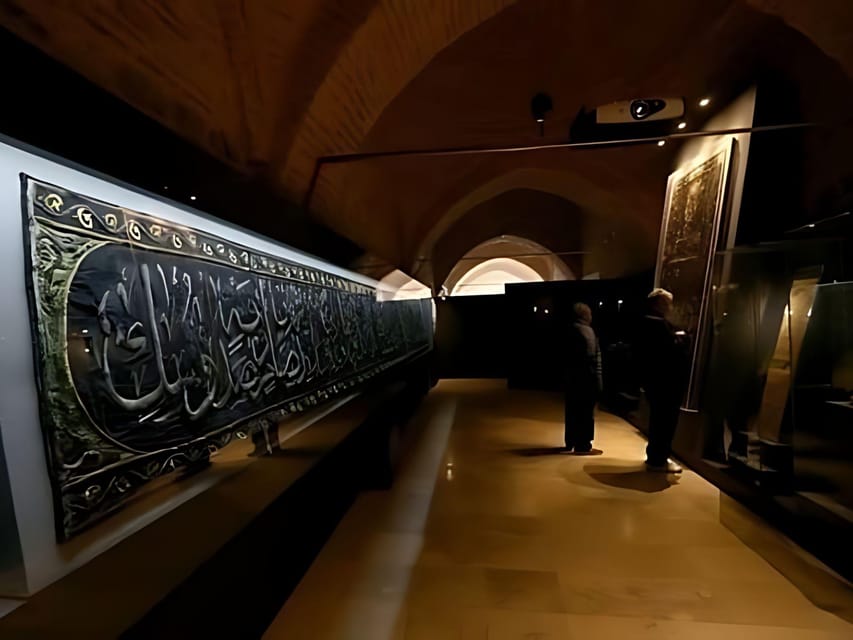
The museum extends well beyond textiles. Its displays include ancient manuscripts, calligraphy, and wooden objects, giving you several ways to see how Islamic artists worked with different materials.
Calligraphy is especially important in Islamic art, where writing can be both a carrier of meaning and a work of visual design. If you do not read Arabic or Ottoman Turkish, the audio guide can help explain what you are seeing. Even without reading the text, you can study the balance of the letters, the spacing, and the way the page has been arranged.
The manuscript displays also add a quieter side to the visit. Large carpets catch your eye immediately, but a manuscript asks you to stand close and inspect the page. I would not rush these cases. They show how artistic effort went into objects that were handled, studied, and preserved over long periods.
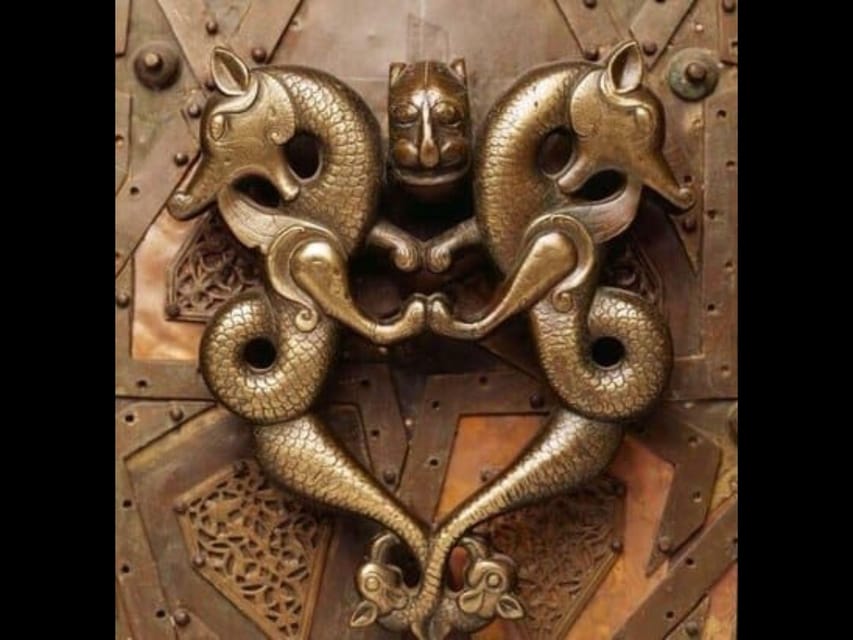
Wooden relics and carved objects offer a different texture. After the soft surfaces of rugs and paper, wood brings depth and visible craftsmanship. The collection’s range helps you see that Islamic art was not limited to one material or one kind of decoration.
Ceramics, glasswork, and metalwork across several cultures

The museum also presents ceramics, glasswork, and metalwork. These sections are useful if you want more than carpets and religious objects, since they show how artists shaped practical materials into finely decorated pieces.
Ceramics can reveal how pattern and color were transferred onto hard surfaces. Glasswork gives you another view of form and light, while metalwork shows the skill required to cut, shape, and decorate a durable material. The objects come from different Islamic regions and periods, so the displays offer a broad picture rather than a single local style.
You should expect the collection to feel varied. This is not a small gallery devoted to one artist or one dynasty. It brings together objects from across centuries, which means some sections will interest you more than others. That variety is a strength for a first visit, but anyone seeking a tightly focused exhibition may find the presentation broad.
The audio guide helps give the objects a clear purpose. Without explanation, a small metal object or manuscript can be hard to place. With spoken context, you can better understand why it matters and how it fits into Islamic artistic traditions.
More Museum Audio Tours in Turkey
- Istanbul: Panorama 1453 History Museum Tickets +Audioguide
★ 4.3 · 8 reviews - Topkapi Palace Museum Skip The Ticket Line Tickets + Audio Guide
★ 3.0 · 2 reviews - Topkapi Palace and Harem Museum Ticket with Audio Guide
★ 3.0 · 2 reviews
Religious relics require a respectful visit
One of the museum’s most sensitive sections contains religious relics, including fragments associated with the Prophet Muhammad, such as beard fragments and a footprint. These objects hold major religious and historical importance for many people.
The displays are not simply art objects. They carry spiritual meaning, and you should approach this part of the museum with respect. The audio guide may help explain their place within Islamic tradition, but it is worth allowing the objects to speak through their setting and the quiet attention they receive.
This section may be especially meaningful if you are interested in Islamic faith and devotional culture. If your interest is mainly carpets or decorative art, you can still visit it briefly without making it the central part of your museum time.
How the QR ticket and audio guide work
The ticket provides a QR code for entry, and the audio guide link arrives separately from Istanbul Tourist Pass. Check both email messages before you leave for the museum. It is a good idea to open the guide link and confirm that it works while you still have a reliable internet connection.
The ticket is described as skip-the-line, but that applies to the ticket queue, not the security queue. Every visitor must pass through security, and a line can form at the entrance. This distinction matters if you are planning a tightly timed morning around the Blue Mosque or another Sultanahmet attraction.
The audio guide is available in 25 languages:
- English
- German
- Russian
- Persian
- Arabic
- French
- Italian
- Chinese
- Dutch
- Spanish
- Hindi
- Romanian
- Ukrainian
- Korean
- Turkish
- Bulgarian
- Polish
- Swedish
- Japanese
- Indonesian
- Greek
- Hungarian
- Portuguese
- Urdu
- Croatian
The guide is useful because the museum covers a lot of material. You can listen to the explanation for an object that interests you and move on from sections that do not. This is more flexible than joining a fixed guided tour, but it also means you must manage the visit yourself.
There is no live guide included. If you want to ask questions or have someone lead you from room to room, you would need a separate guided tour. For independent visitors, the audio option keeps the pace relaxed and avoids the pressure of staying with a group.
Getting to Sultanahmet by tram or ferry
The simplest route from many parts of Istanbul is the Kabatas to Bagcilar tramway. Get off at Sultanahmet station, then walk for about five minutes to the museum in Sultanahmet Square.
From Istanbul’s Asian side, take a ferry from Kadikoy or Uskudar to Eminonu. From Eminonu, connect with the tram toward Sultanahmet. This route combines a short crossing of the Bosphorus with a straightforward ride through the historic center.
Transportation is not included in the $28 price, so you pay your own tram or ferry fare. That is not a major drawback because the museum is in one of Istanbul’s easiest sightseeing areas, but you should include the transit time when choosing your start time.
The meeting point is not a remote pickup location. You do not need to meet a guide at a hotel or search for a private vehicle. Go directly to the museum near the Blue Mosque, with your QR code and audio-guide link ready.
Is $28 good value for a one-day ticket?
At $28 per person, the value depends on how much you care about the audio guide and avoiding the normal ticket queue. You are paying for entry, digital access, and convenience rather than transportation or a personal guide.
I think the price makes more sense if you want to understand what you are seeing. The museum covers carpets, manuscripts, calligraphy, ceramics, glass, metal, wood, and religious relics. Without some explanation, you may admire the objects but miss the differences in period, purpose, and technique.
The ticket is less compelling if you only want a quick look and already know the museum well. You can also lose some of its practical value if you book at the last minute and cannot get the audio guide working before arrival.
The flexible cancellation terms help reduce the risk. You can cancel up to 24 hours in advance for a full refund, and the reserve-now, pay-later option lets you keep your plans open. The ticket is valid for one day, with available starting times shown when you book.
How much time should you allow?
The experience is listed as valid for one day, but that does not mean you need to spend an entire day inside. The ticket gives you a flexible visit period, while the actual museum time depends on your interests.
A short visit could focus on the carpets, palace setting, and religious relics. A slower visit would add the manuscripts, calligraphy, ceramics, glasswork, metalwork, and wooden objects, with time to listen to the audio guide.
I would avoid scheduling the museum down to the minute. Security may create a wait, and the audio guide works best when you can pause and look closely. If you are visiting the Blue Mosque and other Sultanahmet sights on the same day, leave room between reservations.
The museum works well early in an Istanbul sightseeing day because of its central location. It also makes a useful stop when the nearby monuments begin to feel crowded or visually overwhelming. Inside, you can slow down and focus on details.
Who will enjoy this museum most?
This experience suits art lovers, history students, and anyone interested in Islamic culture. The carpet collection alone gives the visit a clear reason, while the manuscripts, calligraphy, and objects made of wood, glass, ceramic, and metal add variety.
Families can also benefit from the audio guide because each person can listen in a preferred language and move at an individual pace. The museum may be less engaging for very young children who need hands-on exhibits, since the experience centers on looking closely at fragile historical objects.
It is also a good choice for independent visitors who do not want a full guided tour. You receive information in your selected language without having to follow a group. The limitation is that you cannot ask the audio guide a question or request more detail about an object.
If you have a strong interest in Ottoman architecture alone, remember that this is primarily an art museum inside a palace, not a full palace tour. The building matters, but the collection is the main event.
Small practical details that make a difference
Download both QR entry codes and the audio guide before setting out. The entry codes and guide link arrive in separate emails, so do not assume one message contains everything.
Keep your phone charged. The guide is digital, and a dead battery would leave you with the objects but none of the accompanying commentary. The same-day booking problem caused by Apple security is a useful warning: technical checks are easier before you reach the museum.
Expect security even with a skip-the-line ticket. It is mandatory for everyone, and an entrance line can still form. Arriving with your ticket already open on your phone should make the process simpler.
The museum is in a very common public area, so transportation is straightforward. Still, Sultanahmet Square can be confusing when you are moving between major monuments. Use the Blue Mosque as your reference point and allow five minutes from the tram station for the final walk.
Should you book the Turkish and Islamic Arts Museum?
Book this experience if you want a self-guided museum visit with a strong carpet collection, a historic setting, and explanations in your own language. The central location makes it easy to add to a day in Sultanahmet, and the QR ticket is useful when you prefer to avoid the standard ticket queue.
Think twice if you need a personal guide, hotel pickup, or a fully organized group tour. Those are not included. I would also avoid booking at the very last minute unless you can download and test the audio guide before arrival.
For most independent visitors interested in Islamic art, the $28 price is reasonable, especially if you use the audio guide and take time with the carpets, manuscripts, and religious relics. Bring a charged phone, plan for security, and let the collection set the pace.
FAQ
Where is the Turkish and Islamic Arts Museum?
The museum is in Ibrahim Pasha Palace in Sultanahmet Square, very close to the Blue Mosque in Istanbul’s Fatih district.
How do I reach the museum by public transportation?
Take the Kabatas to Bagcilar tramway and get off at Sultanahmet station. The museum is about a five-minute walk from the station. From Istanbul’s Asian side, you can take a ferry from Kadikoy or Uskudar to Eminonu, then connect to the tram.
What does the ticket include?
The ticket includes museum entry and an audio guide available in 25 languages.
Is a guided tour included?
No. A live guided tour is not included. The experience provides an audio guide instead.
Can the ticket skip all lines?
The QR ticket is intended to help you skip the ticket line. You still must pass through security, and a security line may form at the entrance.
How do I receive the entry ticket and audio guide?
You receive the two QR entry codes and the audio-guide link in separate emails from Istanbul Tourist Pass.
Which languages are available for the audio guide?
The audio guide is available in English, German, Russian, Persian, Arabic, French, Italian, Chinese, Dutch, Spanish, Hindi, Romanian, Ukrainian, Korean, Turkish, Bulgarian, Polish, Swedish, Japanese, Indonesian, Greek, Hungarian, Portuguese, Urdu, and Croatian.
Is transportation included in the price?
No. Transportation fees are not included, so you pay separately for the tram, ferry, or other transportation you use.
Can I cancel the booking?
Yes. You can cancel up to 24 hours in advance for a full refund. You can also reserve now and pay later, which keeps your plans flexible.
Latest audio tours in Istanbul
- Topkapi Palace Museum Skip The Ticket Line Tickets + Audio Guide★ 3.0 · 2 reviews
- Topkapi Palace and Harem Museum Ticket with Audio Guide★ 3.0 · 2 reviews
- Istanbul Walking Tour with Audioguide on Your Smartphone★ 5.0 · 6 reviews
- Istanbul: Hagia Sophia Entry Ticket with Digital Audio Guide★ 4.5 · 7 reviews
- Istanbul Self-Guided Audio Tour★ 3.0 · 2 reviews
- Istanbul Bosphorus Sightseeing Cruise with Audio Guide★ 5.0 · 67 reviews
- Istanbul: Bosphorus and Golden Horn Cruise with Audio Guide★ 4.5 · 83 reviews
- Dolmabahçe Palace Fast Entry QR Code Ticket & Audio Guide★ 5.0 · 2 reviews
Museum Audio Tours, compared.

Uffizi Priority Ticket & Masterpieces Audio App
Read our review →
Louvre Museum Hosted Entry and Mona Lisa Audioguide
Read our review →
St. Mark Basilica Ticket, Audioguide+History Gallery
Read our review →
Borghese Gallery Skip-the-Line Ticket & Audioguide
Read our review →
Borghese Gallery Ticket + Audioguide or Guided Tour
Read our review →
Orsay Museum Entry Ticket and Digital Audio Guide App
Read our review →
Uffizi Gallery Timed Entry Ticket & Audio Guide
Read our review →
Acropolis Museum Ticket with optional Audio Guide
Read our review →Browse the lists this tour appears in