
Reviewed · ITALY
Tivoli: Entrance Ticket to Villa Adriana & App Audioguide
Hadrian’s Villa is not one tidy monument. It is a one-square-kilometer Roman estate, scattered with palaces, baths, pools, libraries, gardens, and half-excavated ruins outside Tivoli. You can walk through the same retreat built for Emperor Hadrian, then pause beside the Maritime Theater, a round private complex with its own pool and artificial island.
I like the freedom of a full-day ticket and the digital audioguide, which let you set your own pace instead of following a group. I also like the scale: more than 30 buildings, grand water features, statues, and surviving mosaics give you a strong sense of how large and ambitious the villa was. The drawback is that this is an archaeological site, not a polished museum, so you need comfortable shoes, patience, and a willingness to imagine what lies beneath the unexcavated ground.
Key points to know before you book
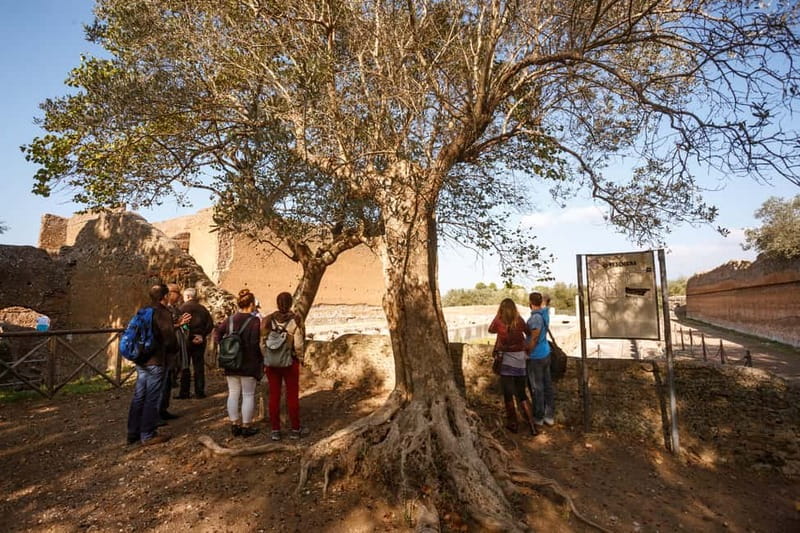
- Hadrian’s private retreat: Explore the country estate built because the emperor disliked living on Rome’s Palatine Hill.
- Maritime Theater: See the round portico, heated rooms, library, art gallery, fountain, and pool surrounding an artificial island.
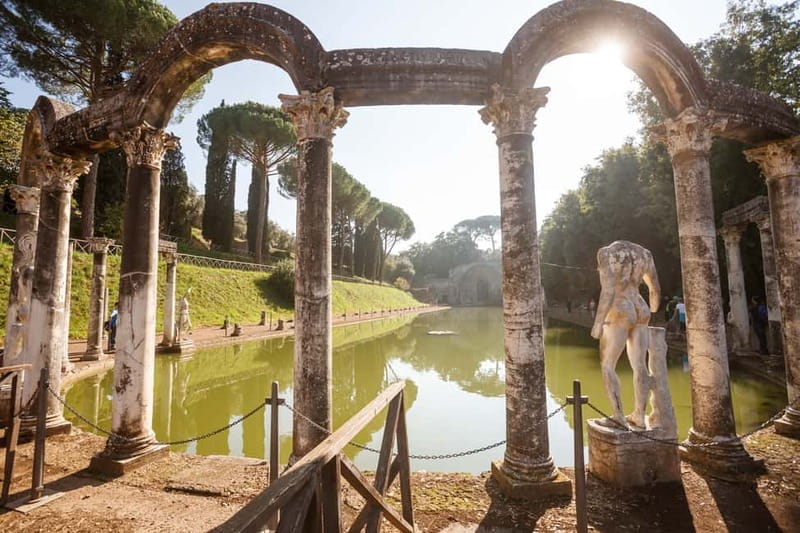
- Canopo and Serapeum: Walk beside the large rectangular pool and its sculptures, then see the nearby artificial grotto.
- Roman mosaics and statues: Look for mosaics from the baths and theater, plus marble statues linked to Antinous, Hadrian’s deified lover.
- Independent visit: The ticket includes entry and a digital audioguide, but not a live guide or transportation.
- Practical rules: You must exchange a printed voucher at the ticket office, pass security, and leave rucksacks, suitcases, and large bags behind.
Why Hadrian chose Tivoli for his grand retreat
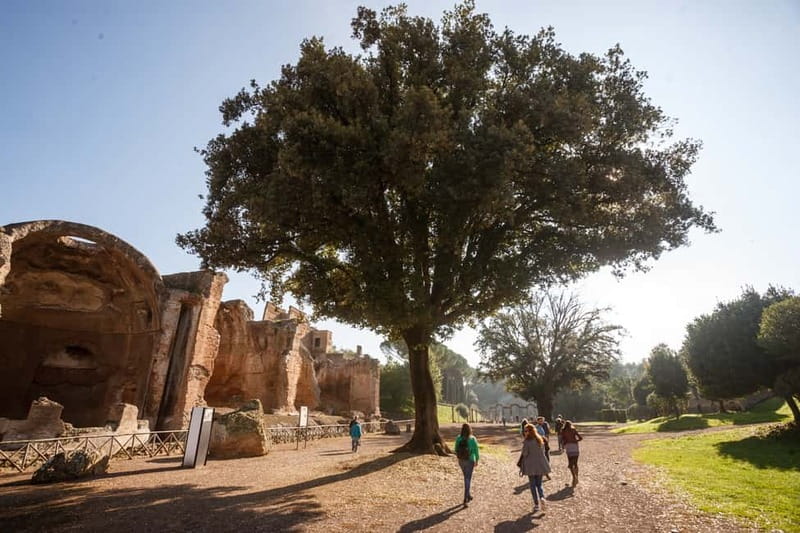
Villa Adriana sits in Tivoli, east of Rome, where the emperor created a country estate far removed from the tight confines of the capital. The site was built as a retreat, but the word villa hardly captures its size. This was a huge complex of residences, baths, theaters, pools, libraries, service areas, and ceremonial spaces.
The setting helps you understand the choice. Instead of moving from room to room inside a single palace, you walk through open grounds linking one major structure to another. Some ruins are clearly defined. Others appear as walls, foundations, broken columns, and stretches of ancient paving. The experience asks you to picture the buildings as they once looked, covered in marble and filled with sculpture.
I find this more rewarding than a compact ruin because the scale tells its own story. Hadrian was not simply building a comfortable summer home. He was creating a miniature world, complete with public-looking spaces and highly private rooms. The estate also reflects his interest in architecture, engineering, art, and the cultures of the Roman Empire.
Much of the site has not been excavated. That is both a limitation and part of the appeal. You will not see every part of the villa, but the untouched ground hints that the visible remains are only a portion of the original complex.
More Audio Tours in Italy
- Rome: Pantheon Fast-Track Ticket and Official Audioguide
★ 4.5 · 27,353 reviews - Rome: Colosseum & Forum with Audio Guide App -Optional Arena
★ 4.2 · 24,770 reviews - Florence: Timed Entry to Michelangelo’s David + Audio App
★ 4.6 · 19,496 reviews
Beginning at the ticket office
Your visit begins at the Villa Adriana ticket office, where you exchange the printed voucher for entry. The ticket is valid for one day, and the experience ends back at the site rather than at a separate meeting point.
The attraction includes skip-the-ticket-line access, but you still need to deal with the ticket office and security. Bring the required printed voucher, and allow time for the entry process. You will pass through a security check before entering.
Pack lightly. Rucksacks, suitcases, and large bags are not permitted inside the attraction. This rule matters because the site covers a large area, and carrying bulky luggage would make the walk harder even if it were allowed.
There is no transportation included, so you must arrange your own way to Tivoli. There is also no live guide. The digital audioguide provides the interpretation, while you decide how long to spend at each ruin and when to stop for photographs.
The Maritime Theater and Hadrian’s private world
Make the Maritime Theater one of your first major stops. Despite its name, this is not a theater in the usual sense. It is a circular portico with a barrel vault supported by pillars, enclosing a pool and an artificial island.
The design is unusually private and self-contained. Inside the complex were a lounge, library, heated baths, three suites with heated floors, a washbasin, an art gallery, and a large fountain. The island gave Hadrian a secluded place within his already secluded estate.
This is one of the best places to grasp the emperor’s taste for architectural experiments. The circular form, the water, and the enclosed island create a retreat inside the retreat. You can look across the pool and picture a Roman ruler using the space for quiet time, reading, bathing, or receiving a small circle of people.
The remains will not present themselves like a complete palace. You need to read the surviving walls and the shape of the complex with help from the audioguide. That makes the commentary useful, especially if you are not familiar with Roman building methods.
The engineering deserves close attention. Straight walls remain impressively precise, while curved walls and domed forms show the skill of Roman builders. The site rewards people who like to notice construction details, not just grand views.
Canopo, sculptures, and the Serapeum grotto
The Canopo gives the villa its most theatrical water feature. It is a long, rectangular pool surrounded by sculptures. The pool and colonnaded setting helped turn water into a major part of the villa’s design, not simply a practical feature.
Take time to walk around the area instead of viewing it from only one angle. The scale becomes clearer as you move along the pool, and the sculptures help you imagine how decorative the complex once was. The remains are still impressive, but the original villa would have been much more visually crowded with marble, color, and statuary.
Near the Canopo is the artificial grotto of the Serapeum. This unusual structure shows how the villa combined architecture, water, ceremony, and spectacle. You will see a place designed to feel different from the open courtyards and formal buildings elsewhere on the grounds.
The Canopo and Serapeum are especially good stops for visitors who want the most recognizable images from Hadrian’s Villa. They also show that the estate was not designed only for utility. Hadrian wanted spaces that surprised, entertained, and impressed.
Another self-paced route in Italy:
- Rome: City Sightseeing Hop-on Hop-off Bus with Audioguide
★ 4.0 · 16,045 reviews - Pompeii: Entry Ticket with Audio Guide
★ 4.1 · 13,491 reviews - Venice: La Fenice Opera House Entry Ticket with Audio Guide
★ 4.6 · 11,742 reviews - Rome: Colosseum, Forum, Palatine Hill Entry & Audioguide App
★ 4.4 · 10,957 reviews
Baths, mosaics, and the villa’s artistic remains
The Roman baths help fill in the daily life of the estate. You can see remains of heated rooms and mosaics connected with the baths and theater. These details matter because they bring the complex down from the level of imperial architecture to the practical routines of bathing, gathering, and relaxation.
Mosaics are among the most rewarding things to look for. They may not cover every surface, but surviving sections reveal the care that went into floors and interior decoration. The mosaics in the hospital area are particularly striking, according to the supplied site details, and are worth seeking out if they are open during your visit.
You will also encounter artifacts dating from the period when the villa was built. Marble statues of Antinous are especially important. Antinous was Hadrian’s deified lover, and his presence connects the art at the villa with the emperor’s personal life and religious expression.
Do not expect every statue to remain in its original setting. Ancient sites often preserve fragments, foundations, and relocated objects rather than complete rooms. The audioguide can help explain what you are seeing, but you should still give yourself time to look closely before moving on.
Walking through more than 30 buildings
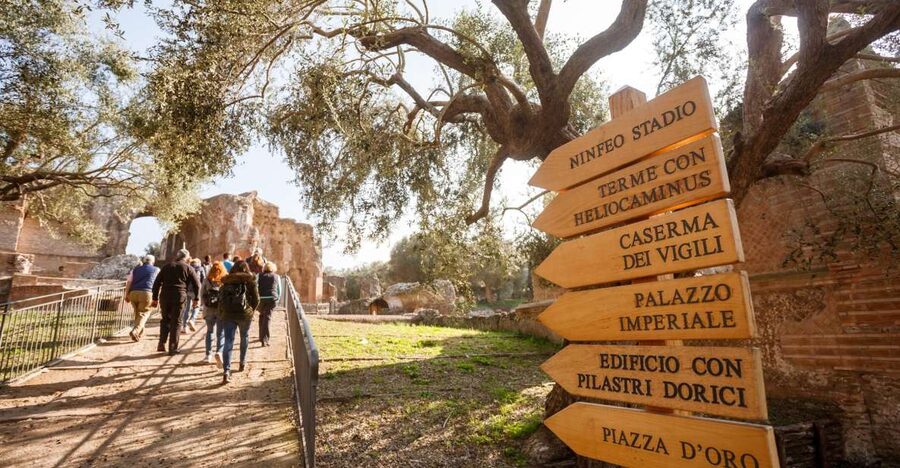
The villa’s size is its greatest strength and its main challenge. More than 30 buildings are spread across the grounds, and the site covers about one square kilometer. You are not simply checking off a few ruins along a short path.
I would allow at least two hours, and more if you want to move slowly, listen to the audioguide, photograph the details, and absorb the setting. A quick visit can cover the headline monuments, but it will not give you a fair sense of the estate’s scale.
The grounds include water features, classical statues, courtyards, walls, baths, and broad stretches of Roman construction. Some areas may feel immediately understandable. Others require imagination. You may find yourself walking past a long wall without knowing its original purpose until the audio commentary supplies the missing context.
Wear comfortable shoes and expect a fair amount of walking. The supplied information does not promise a guided route or transportation around the site, so you should plan for an independent visit on foot.
This is also a place where hot weather can affect your pace. No special weather advice is provided with the ticket, but the outdoor setting makes sensible clothing, water, and sun protection practical choices.
What the digital audioguide adds
The digital audioguide gives you structure without forcing you to stay with a group. That suits this site because you may want to spend ten minutes at the Maritime Theater and much longer at the Canopo, or pause for photographs before continuing.
A live guide would offer the chance to ask questions, but none is included. If you prefer personal explanation, this ticket may feel limited. If you like setting your own rhythm, the audio format is a useful compromise between a bare entry ticket and a scheduled tour.
Pay attention to the building names and the explanations of Roman engineering. The villa can otherwise feel like a large collection of walls. Details about heated floors, barrel vaults, pools, fountains, and artificial islands make the remains easier to read.
The audioguide also helps you connect the separate areas. Hadrian’s Villa is spread out, so context matters. The Maritime Theater, Canopo, baths, galleries, and residential areas make more sense when you understand that they belonged to one huge imperial retreat.
Price and overall value
At $19 per person, this is a reasonable choice if you are already planning to visit Tivoli and want a self-guided archaeological experience. The price includes the Villa Adriana entry ticket and digital audioguide, but not transportation or a live guide.
The value comes from the amount of site included. You are paying to explore an extensive Roman complex rather than a single ruin. The Maritime Theater alone is memorable, but the Canopo, Serapeum, mosaics, baths, statues, and scattered buildings make the ticket worthwhile for anyone interested in Roman architecture.
The price is less attractive if you want a fully organized day from Rome. Since transportation is not included, you must arrange your own journey to Tivoli and manage the visit yourself. That is not a flaw in the site, but it changes the total cost and planning effort.
There is also a Pemcard option, which lets you turn a digital photograph into a real postcard sent anywhere in the world. It is a small extra touch rather than a reason to book, but it can make a pleasant souvenir from a place where ordinary postcards may not capture the scale.
You can cancel up to 24 hours in advance for a full refund, and the reserve-now, pay-later option gives you some flexibility while your plans are still changing.
Who will enjoy Villa Adriana most
I would recommend this visit to you if you enjoy ancient architecture, Roman engineering, sculpture, mosaics, and open-air archaeological sites. It is also a strong choice if you want something outside central Rome and prefer to explore without a fixed group schedule.
Families with older children may enjoy the pools, islands, grottoes, and large open spaces, though the amount of walking may test younger children. History-minded visitors will find plenty to study, while photographers will have many angles on the circular Maritime Theater and long Canopo pool.
You may want to think twice if you dislike ruins that require imagination. Much of the villa is incomplete, and the grounds are large. Visitors looking for a short, polished indoor attraction may prefer a museum in Rome.
I also would not choose this ticket if you need transportation or a live guide included. It is a straightforward entry experience with digital commentary, not a door-to-door excursion.
Should you book this Tivoli experience?
Book it if you want to see one of Rome’s most ambitious ancient retreats without committing to a group tour. The Maritime Theater, Canopo, mosaics, and Antinous statues provide enough standout sights, while the wider grounds reward a slower visit of at least two hours.
Skip it if you have limited mobility, large luggage, or no interest in walking through partly excavated ruins. The ticket is best for independent visitors who can arrange transportation to Tivoli, carry a printed voucher, pack light, and give the villa time to unfold.
For $19, the combination of entry and audioguide offers solid value. Just remember what you are buying: access to a vast Roman archaeological site, not a guided tour or a transport package.
FAQ
Where is Villa Adriana located?
Villa Adriana is in Tivoli, in the Lazio region of Italy, east of Rome.
How long is the ticket valid?
The ticket is valid for one day.
What does the ticket include?
It includes entry to Villa Adriana and a digital audioguide.
Is transportation included?
No. Transportation to and from Villa Adriana is not included.
Is a live guided tour included?
No. The experience includes a digital audioguide, not a live guide.
Do I need a printed voucher?
Yes. You need to exchange a printed voucher at the Villa Adriana ticket office.
Can I bring a suitcase or large backpack?
No. Rucksacks, suitcases, and large bags are not permitted inside the attraction.
Can I cancel the booking?
Yes. You can cancel up to 24 hours in advance for a full refund.
Latest audio tours in Italy
- Orgosolo Multilingual Audioguide★ 4.5 · 42 reviews
- Pantheon Skip the Line Entry Tickets with Digital Audio Guide★ 3.5 · 52 reviews
- St. Peter’s Basilica: Dome Climb with Lift & Audioguide★ 4.5 · 13 reviews
- Audio guide in Vatican Museums and Sistine Chapel★ 4.5 · 12 reviews
- The Roman Jewish Ghetto: A Self-Guided Audio Tour★ 4.0 · 8 reviews
- Experience: The Pantheon Audio Tour★ 4.5 · 4 reviews
- Trastevere: A Self-guided Audio Tour of Rome’s Medieval Village★ 4.5 · 3 reviews
- Self-Guided Audio Tour – The gods of the Palatine★ 3.5 · 5 reviews
Italy Audio Tours, compared.

Pantheon Fast-Track Ticket and Official Audioguide
Read our review →
Colosseum & Forum with Audio Guide App -Optional Arena
Read our review →
Timed Entry to Michelangelo’s David + Audio App
Read our review →
City Sightseeing Hop-on Hop-off Bus with Audioguide
Read our review →
La Fenice Opera House Entry Ticket with Audio Guide
Read our review →
Colosseum, Forum, Palatine Hill Entry & Audioguide App
Read our review →