
Reviewed · SPAIN
Tarragona Walking Tour: An Audio Guide to Tarraco
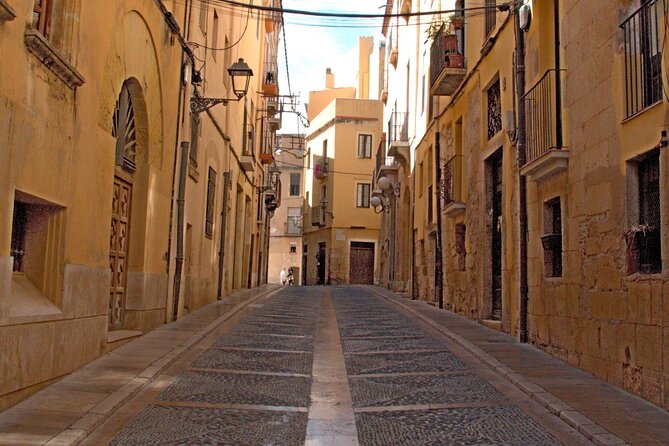
Tarragona’s Roman past is best understood on foot, and this GPS audio tour gives you a clear route from sea views to ancient forums. You’ll begin above Miracle Beach, pass the amphitheater and circus, then move through medieval streets toward the Central Market. The narration helps connect scattered ruins into one old Roman city.
I like the freedom to pause and explore and the fact that your $14.99 buys lifetime access, including offline maps and audio. I also like the route’s range: Roman spectacles, city gates, defensive towers, a grand home, and daily civic life all appear in one walk. The trade-off is that GPS can be only more or less accurate on small streets, so you should keep an eye on the map.
Key points at a glance
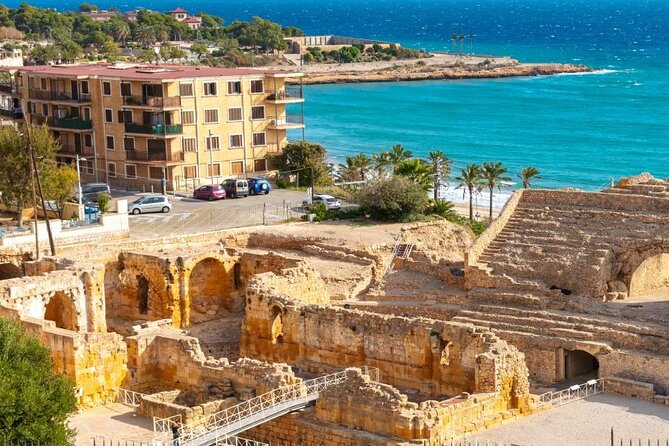
- Starts above the Mediterranean: Begin at the Balcón del Mediterráneo with views over Miracle Beach.
- Covers Tarragona’s major Roman sights: The route includes the amphitheater, circus, archaeological museum, and Roman forum.
- Adds medieval and later Tarragona: You’ll pass the cathedral, a defensive tower, an old city gate, and an iron magnate’s palace.
- Works at your own speed: Pause the narration, linger at a ruin, or spread the walk over more than one visit.
- Offline access matters: Download the audio, map, and geodata before setting out.
- Ends at the Central Market: The finish at Mercat Central puts you near a useful city landmark and public transportation.
Why this audio walk works for Tarragona
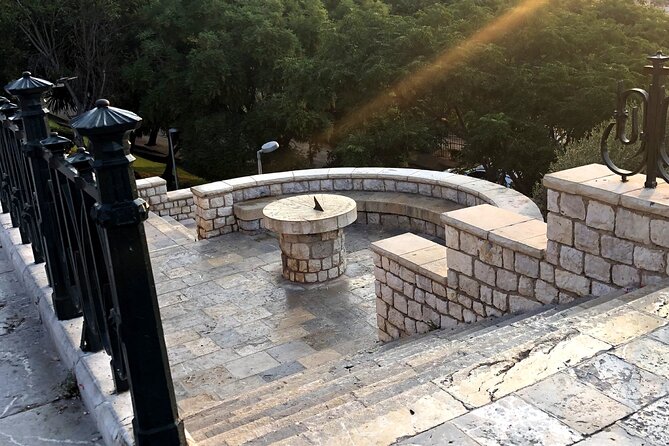
Tarragona is not one single archaeological site. Its Roman remains are scattered through the modern city, often tucked beside streets, squares, and later buildings. That can make independent sightseeing feel disjointed. One ruin looks impressive, but you may not see how it relates to the next one.
This route gives you that larger picture. You begin at the Mediterranean edge, where the city’s position feels immediate, then walk through the old Roman center before ending near the market. The sequence moves from spectacle to public life, then into the city’s medieval and later layers.
You are not tied to a group or a fixed departure time. The tour is private to your party because the audio plays on your own phone. You can listen straight through in roughly three to four hours, or pause for photographs, coffee, museum time, and a closer look at the ruins.
The narration is in English. Based on the supplied information, the audio segments are not very long, which helps keep the walk moving instead of turning every stop into a lecture. That suits Tarragona, where you want context but also time to look around.
More Audio Walking Tours in Spain
- Ronda Old Town Walking Tour with Audioguide on Your Smartphone
★ 4.0 · 20 reviews - Audioguide City Walk Malaga for cruises (German & English)
★ 4.0 · 17 reviews - Cadiz: City Walk with Audio Guide in 7 Languages on your Phone
★ 4.5 · 7 reviews
Begin at the Balcón del Mediterráneo
The starting point is the Balcón del Mediterráneo on Passeig de les Palmeres. This lookout gives you a broad view over Miracle Beach and the Mediterranean. It is a smart place to start because you can first get your bearings from above, rather than beginning in a maze of old streets.
Take a moment here before starting the audio. The sea helps explain Tarragona’s importance as a Roman port and regional center, even though the tour itself focuses on the city’s monuments and streets. The view also gives the walk a pleasant opening instead of dropping you straight into stone walls.
The lookout is the official start point, so check that your phone recognizes the location before walking away. Directions to the start are included. Since the tour uses GPS, make sure location services are active and the audio, map, and data are downloaded in advance.
The amphitheater and the Roman show
From the lookout, the route takes you to Tarragona’s ancient Roman amphitheater. This is one of the walk’s strongest early stops because the setting makes Roman entertainment easy to picture. You can imagine crowds gathered for public spectacles while the Mediterranean lay beyond the arena.
The audio gives you the historical frame, but the site itself rewards quiet observation. Look at the shape of the seating area and the way the monument sits against the slope. The point is not only that Romans watched events here. It is that public entertainment was built into the city’s social life.
The tour does not include admission fees to attractions mentioned along the way. That matters if you decide to enter a site rather than view it from the route. Budget separately for any museum or monument entry, and remember that the three-to-four-hour estimate can stretch if you stop inside places.
Tarragona’s cathedral and the layered old city
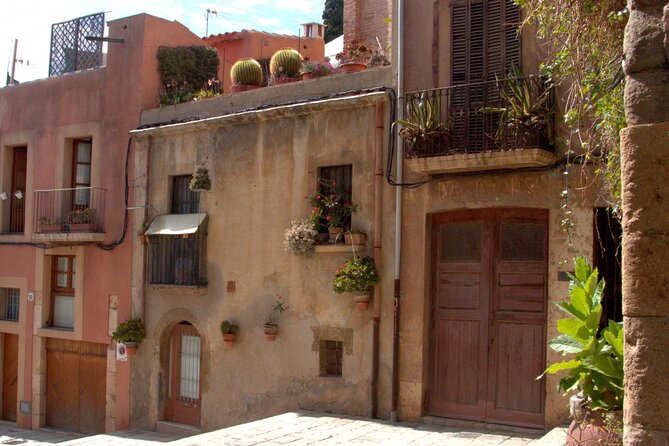
The route passes the unfinished cathedral, described as a city symbol dating from 1348. This stop shifts the story from Roman Tarragona to the medieval city that grew over and around the earlier one.
You may find this especially useful if you are trying to understand why Tarragona can feel historically dense. Roman foundations, medieval religious buildings, defensive structures, and later private homes are not neatly separated into different districts. They overlap.
The cathedral is a pass-by stop in the supplied route, so do not assume the tour includes interior access. If you want to go inside, treat that as an optional addition and allow extra time. The audio can continue when you are ready.
Another self-paced route in Spain:
- Barcelona: Sagrada Familia Entry Ticket with Audio Guide
★ 4.6 · 105,312 reviews - Barcelona: Casa Batlló Entry with Self-Audioguide Tour
★ 4.7 · 25,359 reviews - Granada: Alhambra Entry Ticket with Audio Guide
★ 4.1 · 5,950 reviews - Casa Batllo Admission Ticket with Intelligent Audio Guide
★ 4.5 · 3,168 reviews
Roman chariot racing at the circus
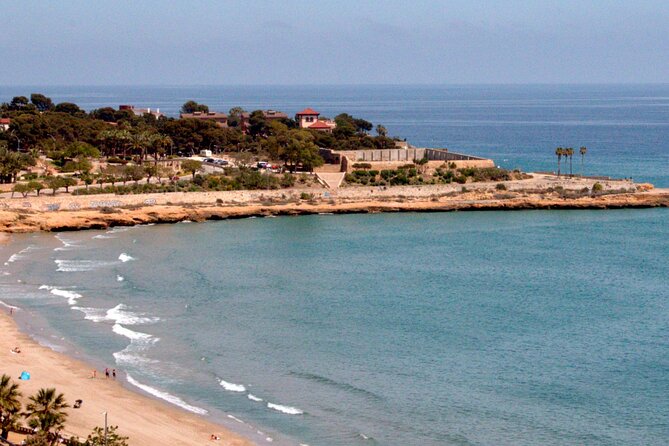
Next comes the Roman circus, where chariot racing once supplied the city’s high-energy public entertainment. The amphitheater and circus show two different sides of Roman spectacle. One was associated with arena events, while the other was built around racing and mass crowds.
This is one reason I like the route’s order. You first encounter a Roman arena, then later hear about the circus, so the city’s entertainment system begins to make sense as a set of major public buildings rather than isolated ruins.
Modern Tarragona can make the circus difficult to read at a glance. Streets and later buildings have changed the setting, and you might need the audio’s directions to understand where the ancient structure ran. Keep the map open, especially in narrow lanes. The route is generally easy to follow, but GPS accuracy can vary in small streets.
Ancient objects at Tarragona’s museum
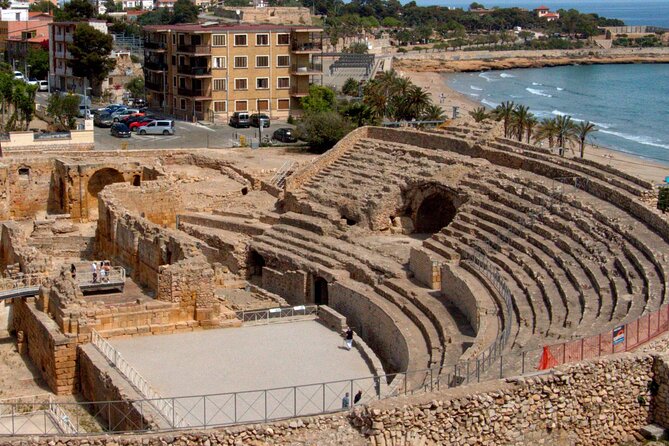
The walk also brings you to exhibits and artifacts that show Tarragona’s ancient past and its place in Roman history. This stop adds objects to the large monuments. An amphitheater tells you about public architecture, while artifacts can offer clues about everyday life, trade, government, and the people who used the city.
Admission is not included. The tour can guide you to the museum area, but entry is your choice and may affect the walking time. If you want to keep to the stated three-to-four-hour estimate, check how much time you wish to spend indoors before starting.
The audio format is useful here because you can pause it at the museum and restart later. That is better than trying to listen while reading displays or moving through galleries.
Medieval defenses, the city gate, and Roman civic life
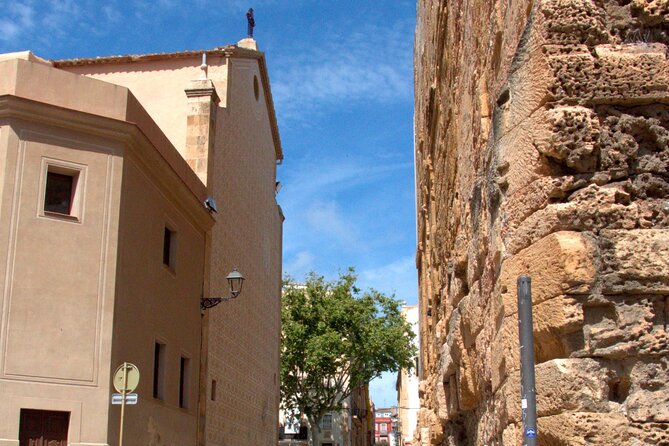
The route then moves through Tarragona’s defensive past. You will learn about a historical tower that once formed part of the city’s defenses, followed by an ancient gate where you can picture medieval life passing in and out of the walls.
These stops prevent the tour from becoming a Roman-only circuit. Tarragona did not stop being important when Roman rule ended. The tower and gate show how the city adapted, protected itself, and continued as a working urban center.
The route also reaches the heart of ancient Tarraco, where civic and social activities took place. This is a key change in scale. The amphitheater and circus show mass entertainment, while the civic center points to government, public business, and ordinary urban interaction.
If you are interested in how Roman cities functioned, pay close attention to this section. It explains that Tarraco was more than a collection of grand monuments. It was a place where administration, commerce, and public life met.
The palace of an iron forge magnate
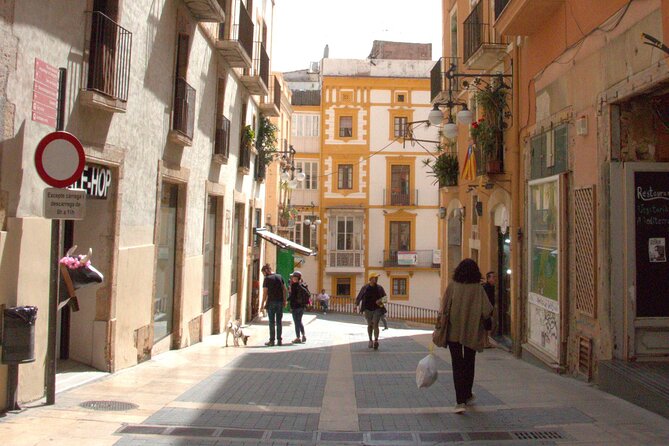
One of the more unusual stops is an opulent palace linked to an iron forge mogul. It offers a glimpse into a later period of Tarragona’s story, when industrial wealth could produce a very different kind of city residence.
I like this inclusion because it breaks up the ancient monuments with a private home from a more recent era. You get a reminder that Tarragona’s history includes successful business families and changing patterns of wealth, not only emperors, soldiers, and public arenas.
The description provides the palace as part of the walking route, but it does not promise interior access. Expect to learn from the outside unless you independently confirm that the building is open.
Finish at the Roman forum and Central Market
The tour ends at a Roman forum, where the narration reflects on the center’s role in government and commerce. It is a fitting final historical stop. After seeing entertainment buildings, defenses, and private wealth, you finish with the public machinery of ancient Tarraco.
The official end point is Mercat Central, Tarragona’s Central Market, at Plaça de Corsini. That makes the finish practical. You can stop the audio, find food, or continue exploring the modern city without needing to return to the starting lookout.
The market is listed as open around the clock for the stated operating period, from October 7, 2024, through February 25, 2027. Since market activity and individual businesses can vary, use the supplied hours as a broad access guide rather than assuming every stall operates at all times.
What $14.99 gets you
At $14.99 per person, this is a low-cost alternative to a private live guide. The main value is not just the narration. You also receive directions to the starting point, GPS routing, offline maps, audio, and geodata. Those tools matter in Tarragona because the sights are spread through the city rather than arranged in one enclosed complex.
Lifetime use improves the value. You can use the tour before the booking date and after it, and the virtual playback option lets you listen like an audiobook from anywhere. That means the purchase can serve as trip preparation, an on-site walk, or a way to revisit the route later.
The comparison with a live guide is fair but limited. You do not get a person answering questions, adjusting the route, or pointing out something you happen to notice. You do get privacy, no group pace, and the chance to pause whenever you want.
For two people, the price is still modest compared with many private tours. For a solo visitor, it remains attractive if you prefer structure but do not want to join a scheduled group.
How to prepare your phone and pace
Bring your own smartphone and headphones. Those are not supplied. Download everything before leaving reliable Wi-Fi, including the audio, map, and geodata. Offline access is included, but it only helps if the content is ready on your device.
Keep your battery in mind. A three-to-four-hour walk with GPS and audio can use power, so start with a good charge. The supplied details do not state whether phone charging is available along the route, so do not count on it.
The app allows you to pause between stops. Use that feature. Tarragona’s ruins deserve more than a quick audio clip, and the walk can include time for photos or optional attraction visits.
The tour is offered in English only. Most people can participate, and service animals are allowed. The route is near public transportation, which gives you practical options for reaching the start or leaving the end.
Who should book this Tarragona walk?
I would choose this for an independent visitor who wants a strong route and historical context without a fixed group. It also suits couples, families with older children, and anyone who likes to stop often.
It is especially good for a first visit because it covers the main Roman sights while adding medieval and later history. You will not see only one famous ruin. You will get a city-wide introduction, from the sea lookout to the forum and market.
You might prefer a live guide if you want detailed questions answered, help interpreting every structure, or a more personal conversation. You may also want to compare other options if your main goal is interior access, since admission fees are separate and the route does not promise entry to every attraction.
A 4.7 rating from 23 ratings and a 96 percent recommendation figure suggest strong satisfaction, but the smaller number of ratings means I would treat those figures as useful guidance, not a guarantee. The most consistent strengths are clear narration, an easy overall circuit, and the freedom to pause.
Free cancellation is available up to 24 hours before the local start time. Changes or cancellations made inside that window are not accepted for a refund.
Should you book the VoiceMap Tarragona tour?
Book it if you want to see Tarraco in a logical order, prefer your own pace, and are comfortable using your phone for navigation. The combination of Roman monuments, medieval defenses, a later palace, and a market finish gives you more than a simple ruins walk.
Skip it if you need a live expert beside you or want admission to every site included in the route. For most independent visitors, though, $14.99 is a sensible price for a flexible three-to-four-hour introduction to Tarragona.
FAQ
How long does the Tarragona audio tour take?
The tour takes approximately three to four hours. Your total time can vary because you can pause the audio and stop at attractions along the route.
Where does the tour start?
It starts at the Balcón del Mediterráneo on Passeig de les Palmeres, s/n, 43004 Tarragona, Spain.
Where does the tour end?
The tour ends at Tarragona’s Central Market, Mercat Central, at Plaça de Corsini, 43001 Tarragona, Spain.
What language is the audio tour offered in?
The tour is offered in English.
Do I need my own phone and headphones?
Yes. You must bring your own smartphone and headphones.
Are attraction entry fees included?
No. Entry fees for museums and attractions mentioned along the route are not included.
Can I use the tour offline?
Yes. Offline access to the audio, maps, and geodata is included.
Can I pause the tour?
Yes. The self-guided format lets you pause and continue at your own pace.
Is cancellation free?
You can cancel for a full refund at least 24 hours before the experience start time. Cancellations or changes made less than 24 hours before the start time are not accepted for a refund.
Latest audio tours in Spain
- Seville Maestranza Bullring Tour with Audio Guide★ 3.5 · 6 reviews
- Seville Scavenger Hunt and Highlights Self Guided Audio Tour★ 5.0 · 5 reviews
- Seville Audio guided walking tour 3h20 and 28 audio commentaries★ 5.0 · 2 reviews
- Royal Alcazar of Seville Entry Ticket with Audio Guide★ 4.0 · 42 reviews
- Seville Cathedral and La Giralda Entry Ticket with Audio Guide★ 3.0 · 9 reviews
- Seville Cathedral and Giralda Entry Tickets with Audio Guide★ 4.0 · 56 reviews
- Essential Seville’s Ancient History: An Audio Tour★ 5.0 · 9 reviews
- Segovia from the Aqueduct to the Alcazar: A Self-Guided Audio Tour★ 4.5 · 10 reviews
Audio Walking Tours, compared.
City Monuments Guided Walking Tour with Audio Guide
Read our review →

Self Guided Classic Freedom Trail Location Aware (GPS) Walking Audio Tour
Read our review →
Self-Guided Historical Walking Tour (Audio Guide)
Read our review →
Cape Cod & Provincetown Self-Guided Driving & Walking Audio Tour
Read our review →
Verona Walking Tour with Audio and Written Guide by a Local
Read our review →
Royal Walking Tour and Buckingham Palace Audio Tour
Read our review →
Bologna Walking Tour with Audio and Written Guide
Read our review →Browse the lists this tour appears in