
Reviewed · USA
Selma Civil Rights Walk of Freedom Self Guided GPS APP Audio Tour
The most powerful part of this Selma walk is its route through places tied directly to the voting-rights struggle. You begin at the Old Depot Museum, pass the Edmund Pettus Bridge and Bloody Sunday site, and finish at Brown Chapel AME Church, where the Selma to Montgomery march was planned.
I like two things right away: the freedom to go at your own pace and the low $9.75 price. You can start when it suits you, listen in English through your phone, and continue even when local buildings are closed. The app also gives you a private experience rather than placing you in a group.
The tradeoff is that this is an outdoor phone tour through a town that can feel worn and quiet. One person found the starting area uncomfortable, with boarded buildings, rusting cars, and litter. I would go in daylight, avoid the hottest part of the day, and treat the app as a useful guide rather than a substitute for a staffed museum or local historian.
Key points at a glance
- Starts at the Old Depot Museum: Learn how this railroad building connects to Selma’s Civil Rights story before walking into the historic district.
- Reaches Edmund Pettus Bridge: Spend about 15 minutes hearing about Bloody Sunday, Turnaround Tuesday, and the third march.
- Includes major courthouse sites: Visit the Selma Municipal Court, where Martin Luther King Jr. was jailed, and the Dallas County Courthouse, tied to voting rights.
- Ends at Brown Chapel AME Church: The final stop marks the place where the Selma to Montgomery march was planned and organized.
- Costs $9.75 per person: That is a strong price for a private, self-guided route, though admissions and refreshments are not included.
- Requires your phone and outdoor walking: The tour is in English, all stops are outside, and the full route takes about one hour to one hour and 15 minutes.
Why this Selma walk matters
Selma is not a place where the Civil Rights story is confined to one exhibit hall. The story runs along streets, across a bridge, past churches, and around public buildings where people challenged the voting system and accepted enormous personal risk.
That makes a walking route especially useful. You are not simply hearing dates in isolation. You move from the railroad depot toward the church, courthouse, and bridge, following the physical shape of the events. The app supplies the narration as you reach each location, helping you connect the place in front of you with the people and actions tied to it.
The experience also keeps its focus narrow. It is not a general tour of Selma, and it does not promise interior access to every landmark. Instead, it concentrates on the Civil Rights Movement and the local sites that shaped the Selma to Montgomery campaign.
At $9.75, I see this as an inexpensive way to add structure to a visit. If you arrive when museums are closed, the audio route still gives you something meaningful to do. One person used it on a weekend when there was little else open and appreciated being able to listen before moving on.
More Self-Guided Audio Tours in the USA
- Gettysburg Battlefield Self-Guided Driving Audio Tour
★ 4.5 · 910 reviews - Joshua Tree National Park Self-Guided Driving Audio Tour
★ 4.5 · 762 reviews - Ultimate Acadia National Park Self-Guided Driving Audio Tour
★ 4.0 · 521 reviews
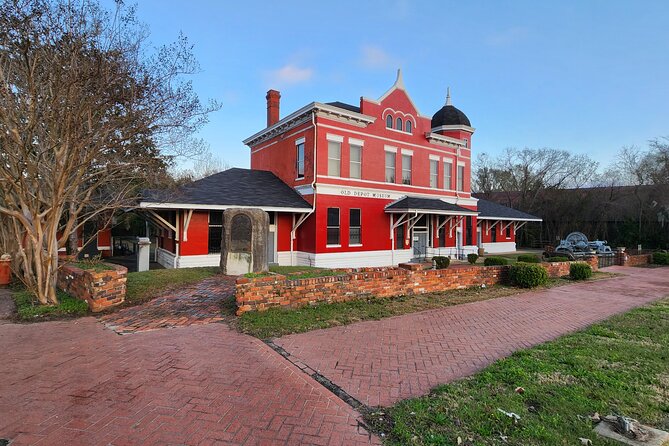
Starting at the Old Depot Museum
The tour begins at the Old Depot Museum, at 4 Martin Luther King Street. The opening narration explains the building’s past and its connection to Selma’s Civil Rights story.
Starting here gives the walk a useful sense of place. A depot is linked to movement, arrival, and departure, and the tour uses that setting to introduce a city caught up in a national struggle. You begin with the building itself, then set off step by step through Selma.
The app is meant to guide you from one location to the next. You do not need to match a scheduled departure, wait for a group, or keep up with a guide. That flexibility is handy if you are combining the walk with a drive through Alabama or fitting it into a larger day.
I would arrive with your phone charged and your audio ready. The information supplied does not mention a loaner device, printed map, or on-site staff member, so the experience depends on your own smartphone and the Walking Tour app.
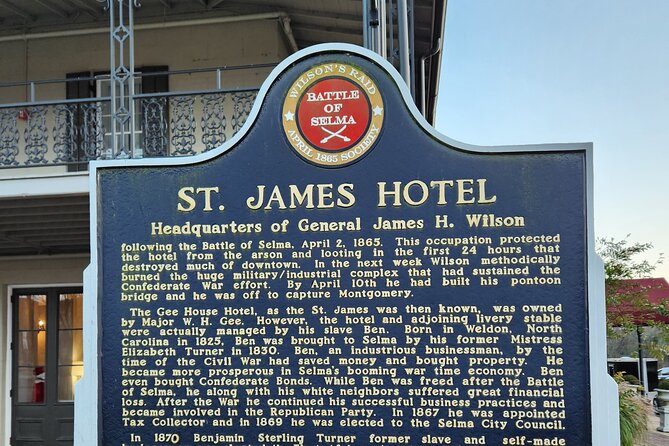
St. James and the story of a former slave
One short stop takes place outside St. James. The audio explains the building’s history, the battle connected with it, and why it remains standing because of one man, a former slave.
This is a brief stop, listed at about five minutes, but it adds an important layer to the route. Selma’s story did not begin in the 1960s. The tour connects the Civil Rights era with earlier struggles and with the people who shaped the city long before the marches.
Because you remain outside, you should not expect a church interior visit or an admission-based presentation here. The value comes from standing near the site while the narration supplies the context. That format works best if you pause rather than rush past with the audio playing in the background.
Edmund Pettus Bridge and Bloody Sunday
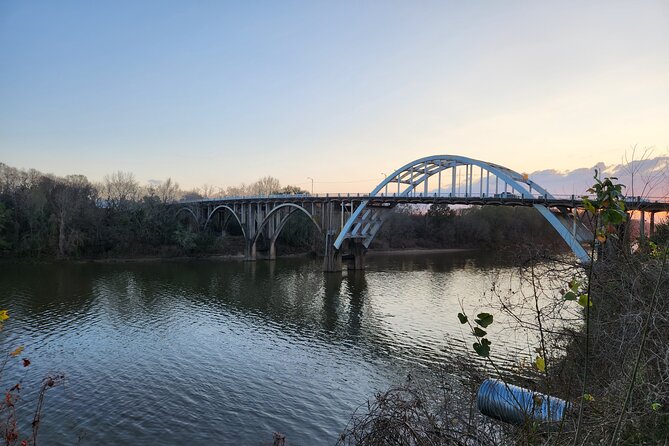
The bridge is the emotional center of the walk. The tour brings you to the Edmund Pettus Bridge and asks you to picture the marchers who crossed it, along with the attack known as Bloody Sunday.
The approximately 15-minute stop covers Bloody Sunday, Turnaround Tuesday, and the third march. Those events are presented as part of a sequence, so you can follow how an initial march, a retreat, and a later successful effort fit together.
This is where the GPS format earns its keep. You are hearing the story at the place where the confrontation happened, not several miles away in a classroom. The audio can help you slow down and take in the setting instead of treating the bridge as a quick photograph stop.
The bridge is also an exposed outdoor location. The tour notes do not provide shade, seating, or weather protection, so plan around conditions. An 82-year-old participant was unable to take the walk in 94-degree heat, a useful warning for anyone managing age, heat, or mobility concerns. You may find early morning or late afternoon more comfortable, though no specific preferred start time is provided.
Another self-paced route in the USA:
- Los Angeles: Hop-On Hop-Off Bus Tour with Audio Guide
★ 3.7 · 2,030 reviews - City Sightseeing Hop-On Hop-Off Bus Tour with Audio Guide
★ 3.0 · 1,083 reviews - Medieval Torture Museum Ticket with Audio Guide and Ghost Hunting
★ 5.0 · 962 reviews - San Francisco: Alcatraz, Ferry & Audio Tour w/ Night Option
★ 4.4 · 617 reviews
Thirty minutes through Selma’s Civil Rights sites
The longest part of the experience is a roughly 30-minute walk through Selma’s streets. The app points out historic places and explains their part in the Civil Rights story as you go.
This section gives the tour its shape. The bridge is the best-known location, but the surrounding streets and public buildings show how the movement depended on more than one dramatic day. Churches provided meeting places. Courthouses represented the voting system people were challenging. Jail cells and memorials show the personal cost.
The walk is private, meaning only your group participates. That can be a real advantage if you want to pause, replay a section, or discuss what you are hearing without holding up other people. It also means you have to manage your own pace and attention. There is no guide nearby to answer a question or redirect you if the app fails.
The route passes through an area that may feel run down. The supplied information describes boarded buildings, rusting cars, abandoned-looking properties, and litter near the starting area. That condition can be jarring, especially when you are visiting a place of such importance. I would not pretend the setting is polished. Go in daylight and, if you prefer added comfort, bring a companion or use the walk as part of a larger daytime visit.
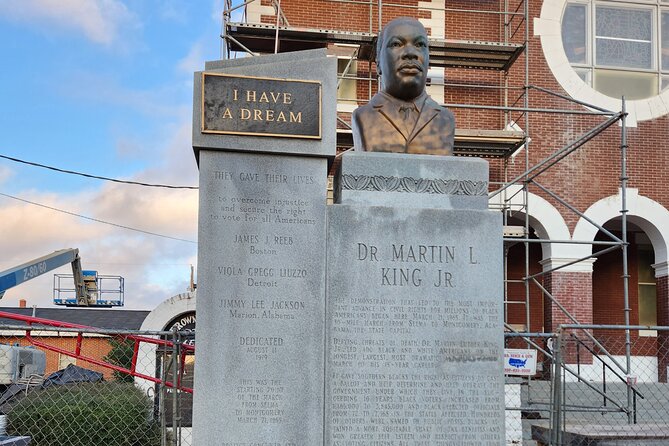
The Selma Municipal Court and Martin Luther King Jr.
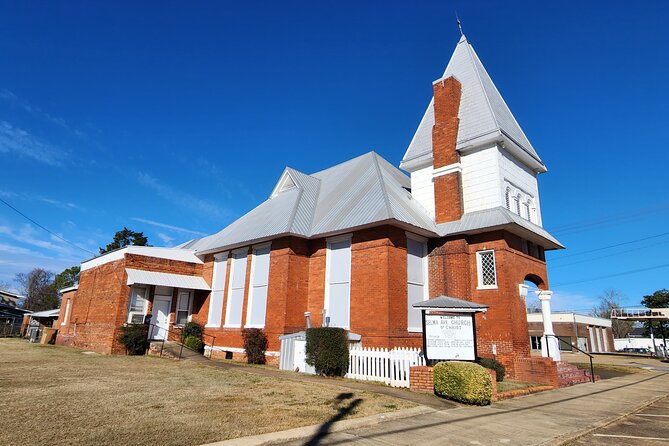
The route stops outside the Selma Municipal Court, where you learn about Martin Luther King Jr.’s imprisonment and why he was jailed.
This is a short stop, but it turns a broad national figure into a local story. King was not simply speaking from a distant stage. He was physically present in Selma, subject to the town’s legal machinery, and jailed as part of the conflict over Civil Rights.
The tour does not include admission to the court. You hear the account from outside, so keep your expectations clear: this is a location-based audio explanation, not an interior courthouse tour. For $9.75, that limitation is reasonable, especially if you mainly want the route and the historical context.
Dallas County Courthouse and voting rights
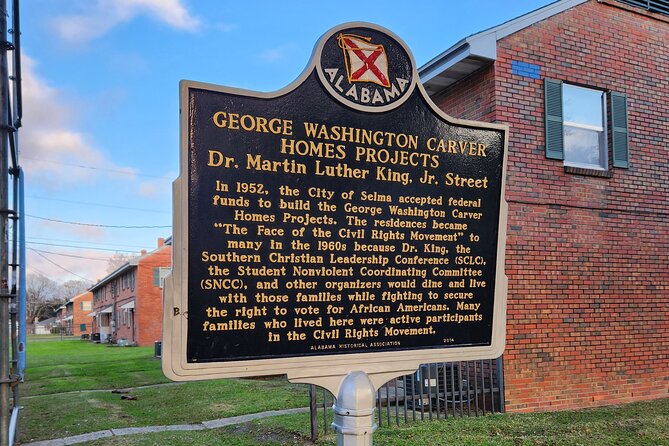
The Dallas County Courthouse is another important stop. The narration explains its role in voting rights and what Martin Luther King Jr. did there.
Courthouses are central to understanding Selma because voting rights were not only debated in speeches. They were tested through registration rules, official procedures, and the refusal to treat Black citizens fairly. The stop helps you see the courthouse as part of that struggle.
The listed time for this stop is about five minutes. That is enough for a focused explanation, but not for a long lecture. If a detail catches your attention, the self-guided format gives you the option to pause before moving on.
Rev. James Reeb’s memorial
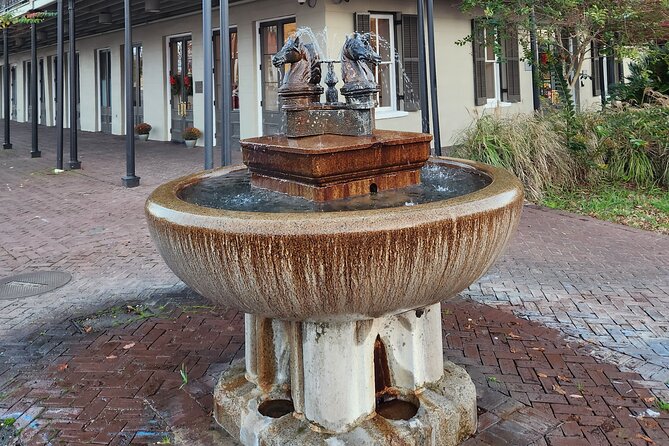
The route also takes you to the memorial plaque for Rev. James Reeb. You hear why he came to Selma in support of Civil Rights and how he was killed.
This stop adds a personal and national dimension to the walk. Reeb came to Selma in response to the movement, and his death showed the danger faced by people who joined the cause. The five-minute segment is short, but the subject deserves a quiet pause.
A memorial plaque can be easy to miss when you are following a phone map. I would stop the audio, look carefully at the marker, and give yourself time to connect the words with the location. The app provides the story, but your attention gives the place its meaning.
Brown Chapel AME Church, the fitting endpoint
The tour ends outside Brown Chapel AME Church, at 410 Martin Luther King Street. This is where many events were planned and organized, including the march from Selma to Montgomery.
Ending here makes sense. The walk begins with the Old Depot Museum and proceeds through the city’s Civil Rights sites before arriving at a church that served as an organizing center. The route finishes not with a general overview, but with the place where people planned action.
The final stop takes about five minutes. No admission is included, and the tour does not promise entry into the church. You should think of Brown Chapel as the endpoint of the audio route, not as a guaranteed interior visit.
The end point is also practical. Since the tour runs from the Old Depot Museum to Brown Chapel, you should consider how you will return to your vehicle if you drive to the start. The supplied details do not specify parking arrangements or a return shuttle. Both locations are on Martin Luther King Street, and public transportation is nearby, but you should plan your return before you begin.
How the GPS audio format works for you
This is a self-guided experience delivered through the Walking Tour app in Selma. You go when you want, follow the route on your phone, and listen as you reach each stop.
I like this format for Selma because the town’s story rewards pauses. You can spend longer at the bridge, replay a section, or stop for a break without asking a group to wait. If your schedule changes, you are not tied to a particular departure time.
The weak point is support. One rating reports that the tour did not work and that help was not available. That is only one experience, but it is enough reason to prepare before walking. Confirm that the app has downloaded or opened properly, check your phone battery, and do not rely on the tour as your only source of directions.
This is not a live tour with a named guide. No guide’s name is provided, and the narration comes through the app in English. If you prefer a conversation, detailed follow-up questions, or a local person adjusting the story to your interests, you may find a guided tour more satisfying.
Price, timing, and who gets the best value
At $9.75 per person, this is one of the more affordable ways to explore Selma’s Civil Rights landmarks. The price covers access to the mobile tour, not food, drinks, admissions, or transportation.
For the money, you receive about one hour to one hour and 15 minutes of structured content and a private route through major sites. I consider that good value if you are already in Selma and want historical context without paying for a full group tour.
The value is lower if you expect indoor access or extensive personal guidance. Every listed stop is outside, and much of the experience depends on your own phone, walking pace, and willingness to listen. The route also may not suit you in very hot weather. One participant found 94-degree conditions too difficult, and that concern is especially important for older adults.
Most people can participate, and the tour is near public transportation. Still, the supplied details do not give a specific accessibility rating, route surface description, or seating information. If you have mobility concerns, contact the provider before booking rather than assuming every stretch will be easy.
Free cancellation is available if you cancel at least 24 hours before the start time. Cancellations or changes made within 24 hours are not refunded, and the cut-off follows local Selma time.
Who should book this walking tour
I would choose this tour if you want a low-cost introduction to Selma, prefer independent sightseeing, and are comfortable using a phone outdoors. It also suits a weekend visit when museums or other attractions may not be open.
It is a good match for history-minded visitors who want to see the Edmund Pettus Bridge, Brown Chapel AME Church, the courthouses, and the Reeb memorial in one connected route. Families or private groups may appreciate being able to pause and talk without a guide setting the pace.
I would think twice if you want a polished sightseeing district, a live guide, interior access, or dependable on-the-spot technical support. The route passes through parts of Selma that may look neglected, and the experience asks you to be self-sufficient.
Should you book it?
Book it if you want the essential Selma Civil Rights route for $9.75 and value flexibility more than personal commentary. The strongest feature is the combination of the bridge, courthouses, churches, and memorial in one manageable walk.
Go in daylight, check your phone before setting out, carry water, and avoid the hottest part of the day. If you need a person to answer questions or want to enter historic buildings, choose a live or admission-based option instead. For an independent visitor with realistic expectations, this audio walk offers a practical and meaningful way to understand Selma.
FAQ
How long does the Selma Civil Rights audio tour take?
The tour takes approximately one hour to one hour and 15 minutes.
Where does the tour begin?
It begins at the Old Depot Museum, 4 Martin Luther King Street, Selma, Alabama 36703.
Where does the tour end?
It ends at Brown Chapel AME Church, 410 Martin Luther King Street, Selma, Alabama 36703.
What language is the audio tour offered in?
The tour is offered in English.
Is this a guided group tour?
No. It is a private, self-guided activity using the Walking Tour app. Only your group participates, and you can go at your own pace.
Are admissions included?
No. All stops are outside, and admission fees are not included.
Can I cancel for a full refund?
Yes, if you cancel at least 24 hours before the experience start time. Cancellations or changes made less than 24 hours before the start time are not refunded.
Latest audio tours in the USA
- Sequoia National Park Self-Guided Audio Tour★ 4.5 · 9 reviews
- Sequoia and Kings Canyon Audio Tour Self Guide National Park Tour★ 5.0 · 3 reviews
- Kings Canyon National Park Self-Guided Audio Tour★ 4.0 · 4 reviews
- Sedona, Arizona Self-Guided Audio Tour★ 4.0 · 36 reviews
- Sedona & Red Rock State Park Self-Guided Driving Audio Tour★ 3.0 · 30 reviews
- Haunted Savannah Self-Guided Walking Audio Tour★ 4.5 · 3 reviews
- Downtown Seattle Self-Guided Walking Audio Tour★ 4.5 · 6 reviews
- Uncover Seattle: Self-Guided Audio Tour★ 3.5 · 7 reviews
Self-Guided Audio Tours, compared.

Acropolis Ticket & Optional Self-Guided Audio Tours
Read our review →


Ultimate Acadia National Park Self-Guided Driving Audio Tour
Read our review →

Akrotiri Ticket with Optional Self-Guided Audios
Read our review →