
Reviewed · ROME
Rome: Castle Sant’Angelo Ticket w/ audioguide option
Castel Sant’Angelo began as Emperor Hadrian’s tomb and later became a papal fortress, prison, execution site, and emergency refuge. That unusual mix gives the visit real variety: you move from ancient Rome to the Renaissance, then up to a rooftop where the Tiber and St. Peter’s Dome spread out below. The panoramic terrace is the payoff, but the fortress itself is the main event.
I like two things right away. The skip-the-line entrance saves time, especially when Rome is crowded, and you explore at your own pace rather than being tied to a guide’s schedule. I also like the flexibility for visitors who need frequent breaks. The drawback is that the basic ticket includes no live guide or audio guide, and the castle is not suitable for wheelchair users or people with mobility impairments.
Key points to know before you book
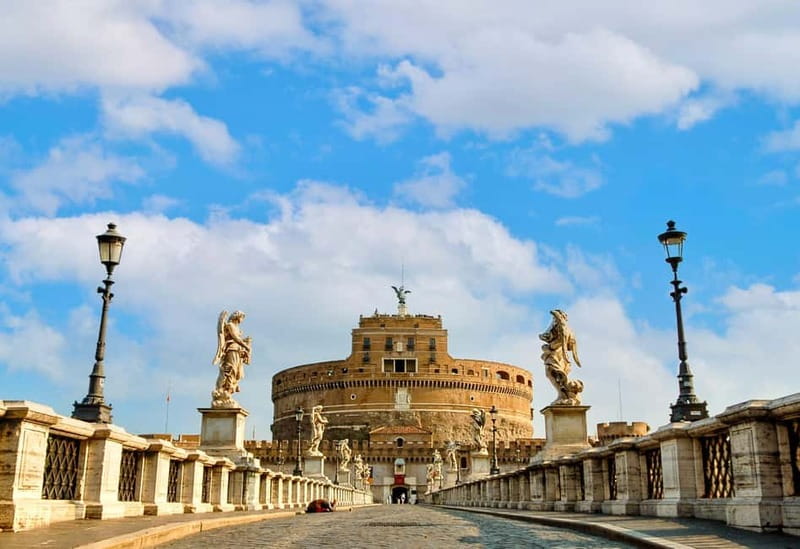
- Hadrian’s tomb became a papal fortress: The building’s Roman, papal, military, and prison chapters are all part of the visit.
- The rooftop view is the clear finale: You’ll look over the Tiber, Rome, and St. Peter’s Dome from the upper terrace.
- Skip-the-line entry uses a separate entrance: Meet the host near the Angel Statue, in a light blue jacket or shirt.
- You set the pace inside: This works well if you want time for photos, pauses, or a slower look at the rooms.
- The audio guide costs extra: Optional commentary is available in English, French, Italian, or Spanish.
- Bring photo ID and pack light: Passports or ID cards are required, while large bags, luggage, strollers, weapons, pets, alcohol, and drugs are not allowed.
Why Castel Sant’Angelo is more than a viewpoint
Many people first notice Castel Sant’Angelo because of its round shape and commanding position beside the Tiber. Its profile is memorable, but the building makes more sense once you know what it was built to do. Emperor Hadrian commissioned it as a mausoleum, and the ashes of the emperor have been kept inside since the second century AD.
Later, the monument changed jobs. During the Early Renaissance, it became a papal fortress, a prison, and an execution site. That history gives the visit a darker edge than a simple palace tour. You are not only looking at grand rooms. You are also following a structure designed for protection, confinement, and escape.
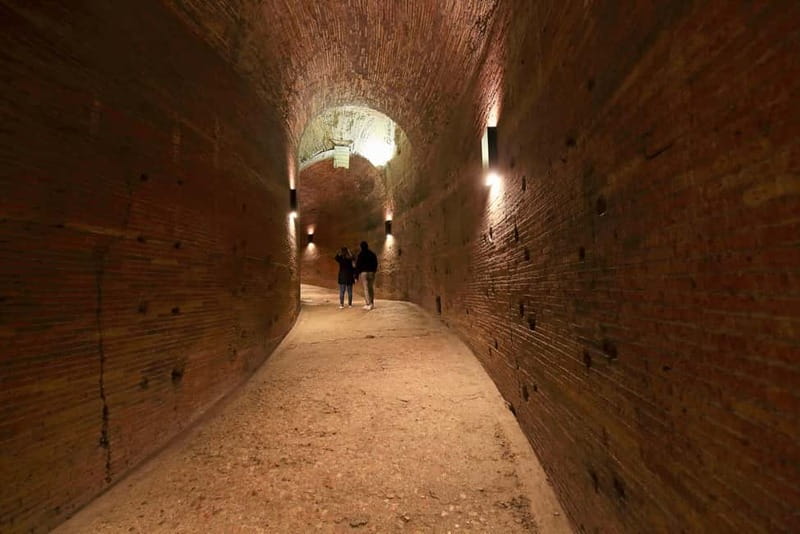
The castle’s connection with the Vatican adds another layer. A secret passage links it with the Vatican Palace, allowing popes to reach the fortress when danger threatened. That passage helped inspire the scenes involving the castle in Angels and Demons. The walkway is part of the site’s story, but you should not assume this ticket includes a separate visit through it. The included experience is entry to Castel Sant’Angelo itself.
I find that context especially useful because it changes how you read the building. A thick wall is not just an old wall. It may have served a defensive purpose. A formal room may belong to the papal period, while a narrow section recalls the fortress’s harsher work as a prison.
More Castle and Palace Audio Tours in Rome
- Lateran Palace Entry Ticket with Audio Guide
★ 3.1 · 16 reviews - ROME: Castle of the Holy Angel AUDIO TOUR APP
★ 5.0 · 4 reviews - Prague: Skip-the-line Castle Ticket and Optional AudioGuide
★ 4.3 · 11,121 reviews
Meeting the host by the Angel Statue
Your meeting point is directly in front of the entrance, near the Angel Statue. Look for the local team wearing a light blue jacket or shirt. This detail matters because the area around Castel Sant’Angelo can feel busy, and a clear landmark is easier to find than a street address alone.
The host or greeter may speak English, French, Italian, Spanish, Portuguese, Norwegian, Thai, German, Polish, or Russian. The host is there to help with entry rather than provide a full guided tour. Once you are inside, you visit independently.
You should include your country code and phone number when booking in case the team needs to contact you. If your plans change, contact the provider about moving the entry time. Same-day changes may be possible, but they need to be arranged directly and are not automatic.
The details about cancellation should be checked carefully before payment. The information supplied for this experience gives both a three-day cancellation window and a note about free cancellation up to 24 hours before the visit. Since those terms conflict, read the current conditions attached to your selected time before you book.
What the skip-the-line ticket really saves
The ticket uses a separate entrance, which is the main practical benefit. In a city where a few saved minutes can protect the rest of your day, this is useful. You can plan Castel Sant’Angelo around nearby sights without spending your best sightseeing time waiting at the main queue.
Skip-the-line does not mean you skip every step. You still meet the host, confirm your ticket, and follow the entry procedure. Bring a passport or ID card, as identification is listed as required.
The price is about $30 per person. I consider that fair if you value a fixed entry arrangement and want to avoid a long wait, but it is not the cheapest way to see Rome. The value rests on three points: the separate entrance, the freedom to explore without a live group, and access to a major monument with one of the city’s best high-level views.
The audio guide is not part of the standard inclusion. If you prefer historical explanation as you walk, add the optional audio guide if available for your selected booking. It is offered in English, French, Italian, and Spanish. If you are comfortable reading the site at your own speed, you may prefer to keep the basic ticket and spend more time with the architecture instead.
Starting with Hadrian’s mausoleum
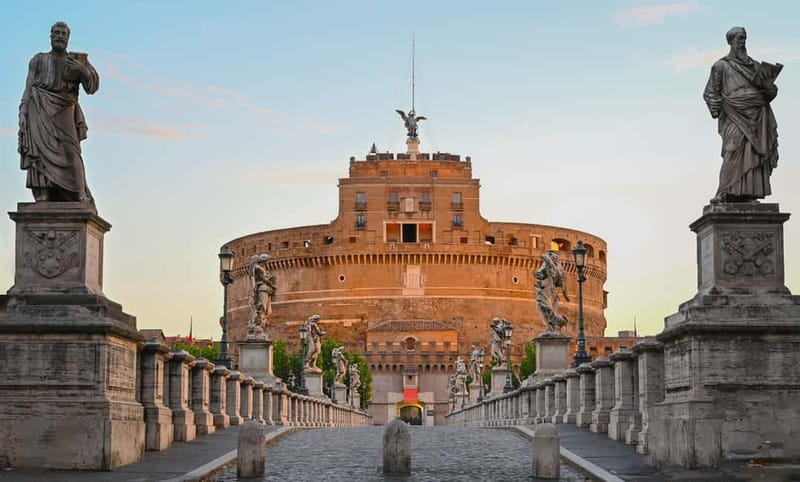
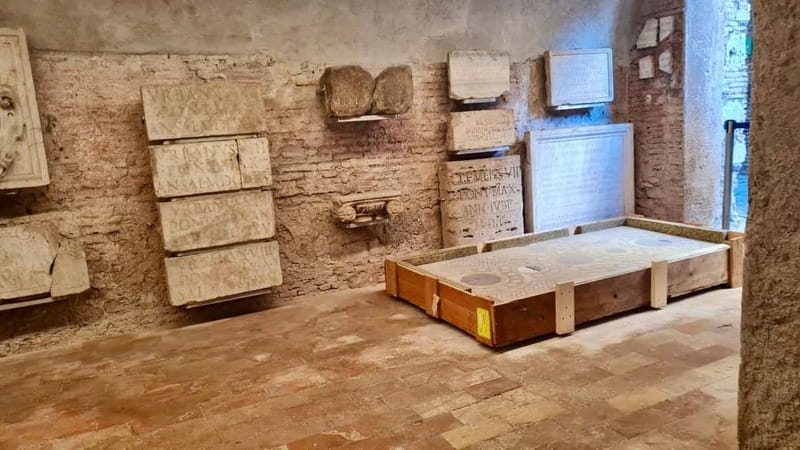
The earliest chapter begins with Hadrian’s tomb. The monument was created as an imperial mausoleum, and the ashes of Hadrian are kept inside. This Roman foundation is important because the castle’s later papal decoration can otherwise make it seem like a Renaissance building from the start.
As you move through the interior, look for the contrast between the original funerary purpose and the fortress that grew around it. The building’s identity changed, but the older core remained part of the structure. That is one reason Castel Sant’Angelo feels different from a palace or a single-period museum.
The Room of the Ashes of Hadrian’s Emperor is one of the named stops. It connects the visit directly to the emperor who began the monument. The room may be more meaningful if you have already seen other Roman sites, but you do not need a detailed background in Roman history to understand its importance.
The castle is best approached as a sequence of layers. First comes the emperor’s tomb. Then come the defensive and papal additions. Finally, the upper levels bring you to the city view. Each stage answers a different question about why the building survived and why it kept being reused.
More Audio Tours in Rome
- Rome: Colosseum & Forum with Audio Guide App -Optional Arena
★ 4.2 · 24,770 reviews - Rome: City Sightseeing Hop-on Hop-off Bus with Audioguide
★ 4.0 · 16,045 reviews - Rome: St. Peter’s Basilica & Dome Entry Ticket & Audio Tour
★ 4.2 · 7,537 reviews - Colosseum, Roman Forum & Palatine Hill with Audioguide App
★ 4.4 · 6,291 reviews
Papal rooms and the emergency route to the Vatican
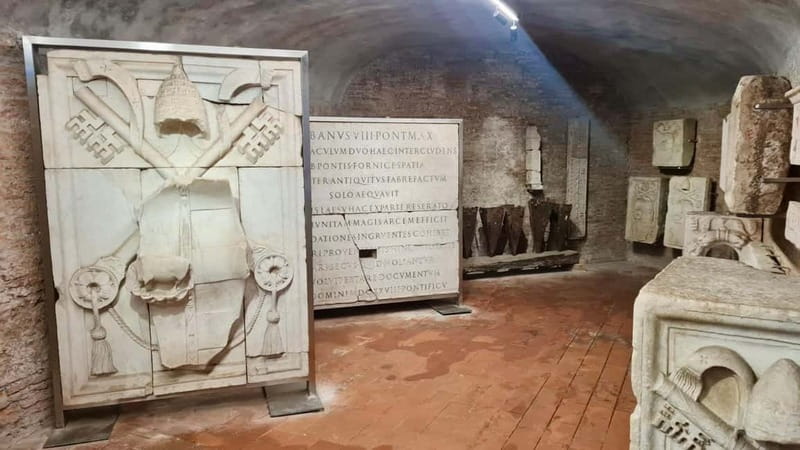
The Papal Rooms show the fortress in its later role as a papal stronghold. They also remind you that Castel Sant’Angelo was not an isolated monument. Its secret connection to the Vatican Palace allowed popes to flee into the fortress when they faced danger.
That walkway is known as the Passetto di Borgo, though the supplied details describe it simply as the secret passage connecting the two buildings. It helped inspire Angels and Demons, which gives the site a modern film connection without replacing its real history.
You should keep expectations in check here. This ticket covers Castel Sant’Angelo, not a live explanation of every papal room or a guaranteed walk along the secret passage. If the Vatican connection interests you, the castle’s location and surviving story still make it easy to understand why this refuge mattered.
The papal rooms also provide a change of mood. After the severe Roman and military sections, you encounter spaces linked to power and residence. That contrast is valuable because it shows how the same building could protect a pope, hold a prisoner, and preserve the remains of an emperor.
Prisons, famous prisoners, and the castle’s darker side
Castel Sant’Angelo served as a prison and execution site, and this is not a detail to skip. Famous prisoners included the goldsmith Benvenuto Cellini and the charlatan Cagliostro.
Their presence in the castle’s story gives the prison sections a human scale. You are no longer thinking only about emperors and popes. You are also thinking about people held inside the fortress, often under very different conditions from those who occupied the papal rooms above.
The phrase famous prisoners can make the history sound dramatic, but the useful point is simpler: this was a working prison, not merely a ceremonial monument. The building’s thick walls and restricted spaces make more sense when you remember that confinement was part of its purpose.
The castle’s history also includes executions. That fact may not suit every visitor, especially younger children or anyone looking for a lighter sightseeing stop. Still, it gives the visit more honesty. Castel Sant’Angelo was a place of power and protection, but it was also a place where authorities controlled, punished, and imprisoned people.
The spiral staircase and the changing levels
The spiral staircase is another named feature of the visit. It helps you understand the castle physically because the experience is not a flat series of rooms. You move through a monumental structure with different levels, passages, and viewpoints.
The staircase can also affect how comfortable the visit feels. The activity is specifically not suitable for people with mobility impairments or wheelchair users. Baby strollers are not allowed, and you should expect the building’s historic design to require more effort than a modern museum.
For anyone who can manage the route, the upward movement adds to the sense of discovery. You start with the interior history, pass through rooms and prison areas, and work toward the roof. I prefer this kind of progression to a monument where the best feature is visible immediately from the entrance.
Give yourself time rather than trying to race through. The ticket information describes the activity as valid for one hour, so check the exact time and conditions when selecting your slot. The supplied experience also emphasizes visiting at your own pace, but you should still plan around the validity period shown for your booking.
The rooftop view toward St. Peter’s Dome
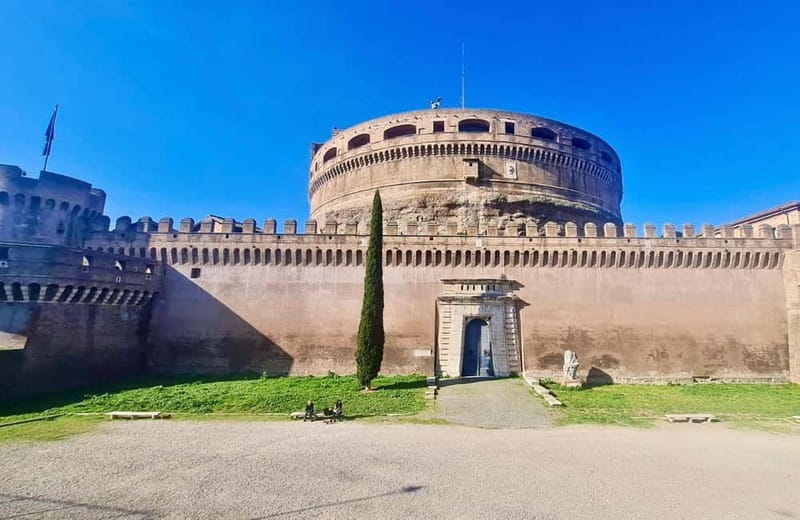
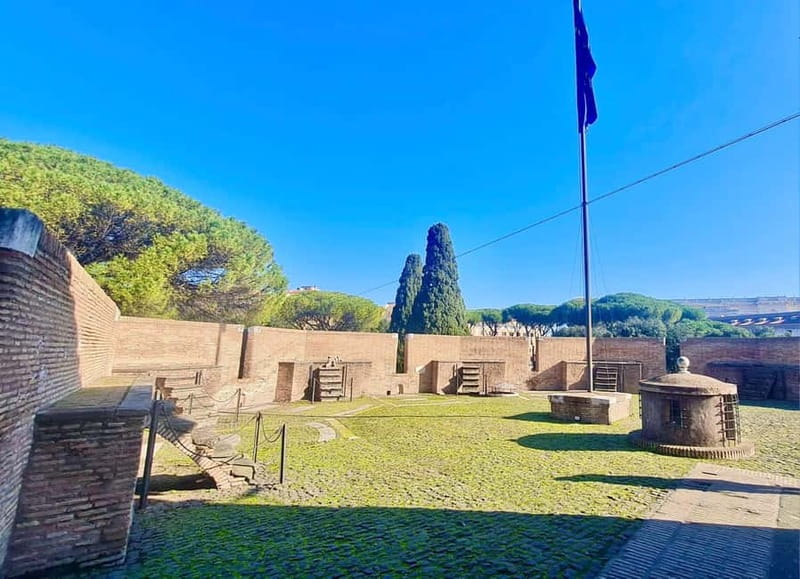
The rooftop terrace is the obvious reward for climbing through the castle. From here, you can look across Rome, along the Tiber, and toward St. Peter’s Dome. The view gives you a useful sense of the city’s geography, not just a photo opportunity.
The Angel statue near the entrance helps frame the monument from below, while the terrace lets you see the castle’s position in relation to the Vatican and river. I like viewpoints that explain the city, and this one does. You can connect the fortress, the Vatican, and the Tiber in a single glance.
The rooftop is also where the visit may feel most complete. You have seen the building as a tomb, fortress, papal refuge, prison, and museum. Now you see why its location mattered. A strong position beside the river gave the castle both defensive value and a commanding view.
Weather and crowd levels can affect how long you want to stay outside, but the view remains the main reason to include this monument in a Rome plan. If you have limited time in the city, I would choose a clear part of the day when the terrace can do its work.
Exploring independently versus choosing the audio guide
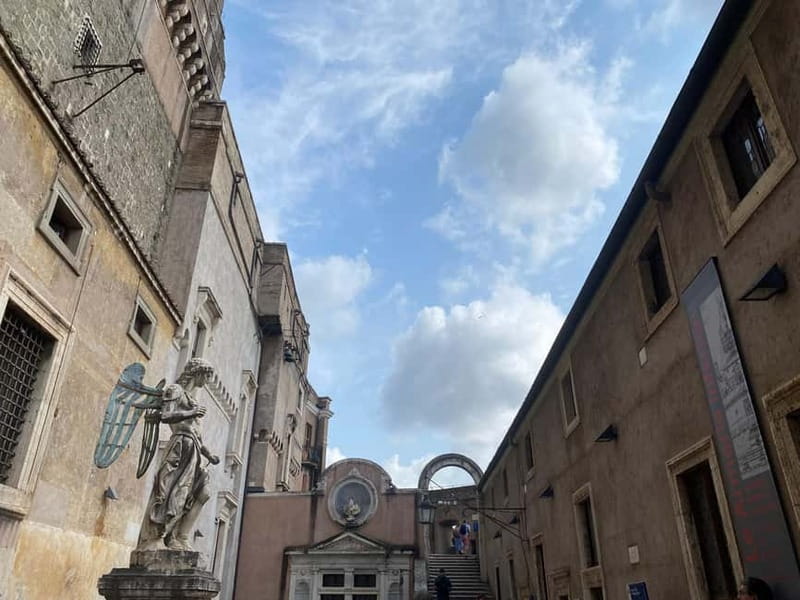
This experience suits people who like control. You are not following a live guide from room to room, and you can stop for photos or take a break when needed. That flexibility is especially useful for families or older parents who cannot keep a brisk pace.
One person who booked ahead was contacted by phone about 30 minutes before the scheduled time to confirm receipt of the tickets. That kind of confirmation can be reassuring, though you should still keep your phone available and check your email before leaving for the monument.
The optional audio guide changes the feel of the visit. It gives you more structure and may help connect the Roman, papal, prison, and military chapters. The available languages are English, French, Italian, and Spanish. Since it is not included in the basic ticket, decide before booking if you want commentary or prefer to explore independently.
I would choose the audio option if Castel Sant’Angelo is one of your main history stops in Rome. I would skip it if you already have a full day of guided sightseeing and mainly want the building and rooftop view.
Who should book this Castel Sant’Angelo visit?
I would recommend it to you if you want a major Rome monument without committing to a long guided tour. It is especially well suited to independent visitors, couples, families with older children, and anyone who wants to pause often.
It is also a good match if you enjoy buildings with several distinct chapters. Hadrian’s mausoleum, papal rooms, the secret Vatican connection, famous prisoners, and the rooftop create a fuller experience than a simple photo stop.
I would be more cautious if you need step-free access, use a wheelchair, or rely on a stroller. The experience is not suitable for wheelchair users or people with mobility impairments, and strollers are not allowed. I would also think twice if you want a live historian explaining every room, since no live guide is included.
Pack only what you need. Luggage and large bags are not allowed, along with weapons or sharp objects, alcohol, drugs, and pets, although assistance dogs are allowed. Bring your passport or ID card and wear something comfortable for moving through the castle.
Should you book the $30 ticket?
Book it if saving queue time matters to you and you want the freedom to explore Castel Sant’Angelo without a fixed live tour. The rooftop view, the unusual history, and the separate entrance make the $30 price reasonable for many first-time visitors to Rome.
Do not book it expecting a fully guided experience or an included audio tour. You pay extra for the audio option, and the experience is not designed for visitors with mobility limitations. If you mainly want the terrace, the castle still offers enough history to justify the entry, but you should allow time to see more than the view.
For the strongest visit, meet the host near the Angel Statue, confirm the light blue clothing, bring identification, keep your bags small, and check the exact cancellation and entry-time rules before payment. If you value your own pace and can manage the historic route, Castel Sant’Angelo is a smart addition to a Rome itinerary.
FAQ
Is the audio guide included in the ticket?
No. The basic inclusion is skip-the-line entry to Castel Sant’Angelo. An audio guide is optional and available in English, French, Italian, and Spanish.
Where do I meet the host?
Meet the team directly in front of the entrance, near the Angel Statue. The host team wears a light blue jacket or shirt.
What languages can the host or greeter speak?
The host or greeter may speak English, French, Italian, Spanish, Portuguese, Norwegian, Thai, German, Polish, or Russian.
Do I need to bring identification?
Yes. A passport or ID card is listed as required, so bring one with you.
Can I bring luggage or a stroller?
No. Luggage, large bags, and baby strollers are not allowed. Weapons, sharp objects, alcohol, drugs, and pets are also prohibited, although assistance dogs are allowed.
Is Castel Sant’Angelo suitable for wheelchair users?
No. The experience is listed as unsuitable for wheelchair users and people with mobility impairments.
Latest audio tours in Rome
- Pantheon Skip the Line Entry Tickets with Digital Audio Guide★ 3.5 · 52 reviews
- St. Peter’s Basilica: Dome Climb with Lift & Audioguide★ 4.5 · 13 reviews
- Audio guide in Vatican Museums and Sistine Chapel★ 4.5 · 12 reviews
- The Roman Jewish Ghetto: A Self-Guided Audio Tour★ 4.0 · 8 reviews
- Experience: The Pantheon Audio Tour★ 4.5 · 4 reviews
- Trastevere: A Self-guided Audio Tour of Rome’s Medieval Village★ 4.5 · 3 reviews
- The Colosseum’s Attic with 3rd, 4th & 5th Levels with Audio Guide★ 4.5 · 20 reviews
- Self-Guided Audio Tour – The gods of the Palatine★ 3.5 · 5 reviews
Castle & Palace Audio Tours, compared.
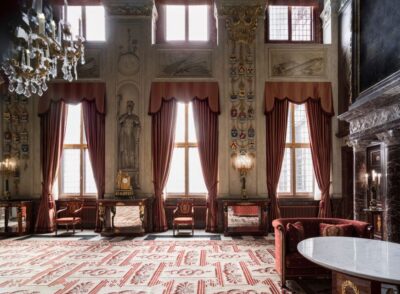

Topkapi Palace and Harem Skip-the-Line-Tickets & Audio Guide
Read our review →
Sforza Castle Entry Ticket with Digital Audio Guide
Read our review →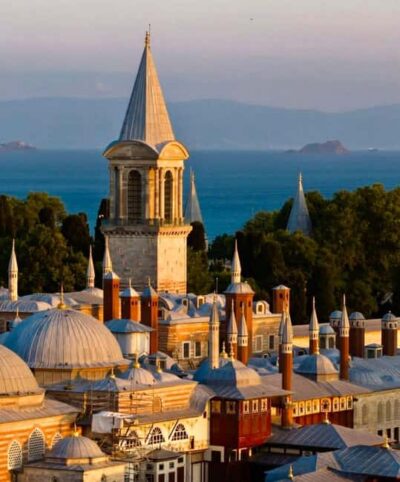
Topkapi Palace and Harem Ticket with Audio Guide
Read our review →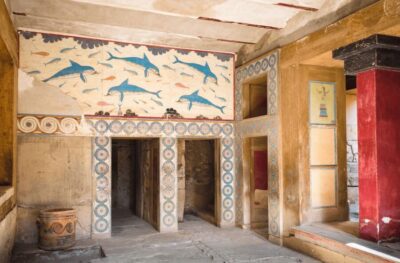
Knossos Palace Entry Ticket with Optional Audio Guide
Read our review →
Dolmabahce Palace and Harem Fast-Track & Audio
Read our review →
Browse the lists this tour appears in