
Reviewed · ROME
Rome: Ancient Baths of Caracalla Ticket & Audio Guide
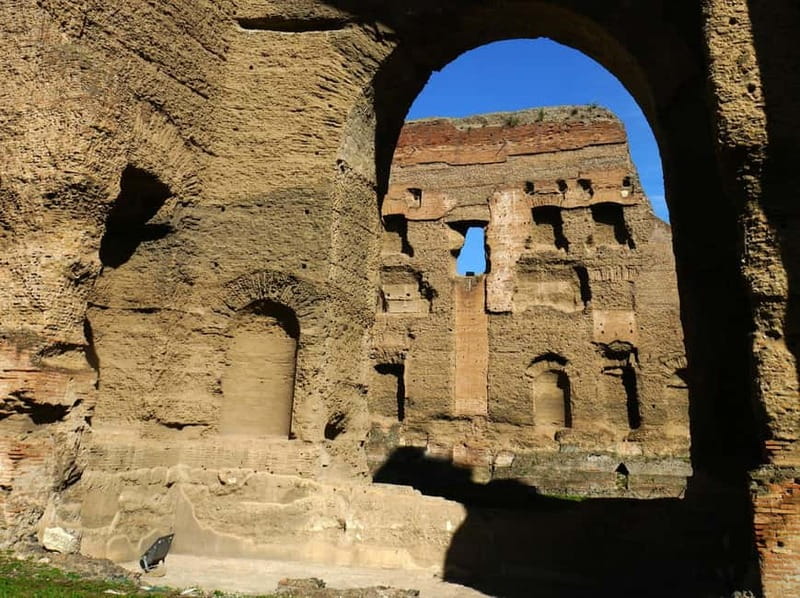
The Baths of Caracalla are not just a pile of old walls. They were once a huge public leisure center, with swimming pools, exercise rooms, massage areas, artworks, and a clever underground heating system. The scale is the first thing to grasp: even in ruins, the complex gives you a clear sense of Roman ambition.
I like the freedom to move at your own pace, and I like that the audio guide covers 17 points of interest rather than leaving you to guess what each broken arch once did. The main drawback is that the audio guide runs on your own phone, and some people have found the route hard to follow or the app difficult to operate.
Key points to know before you go
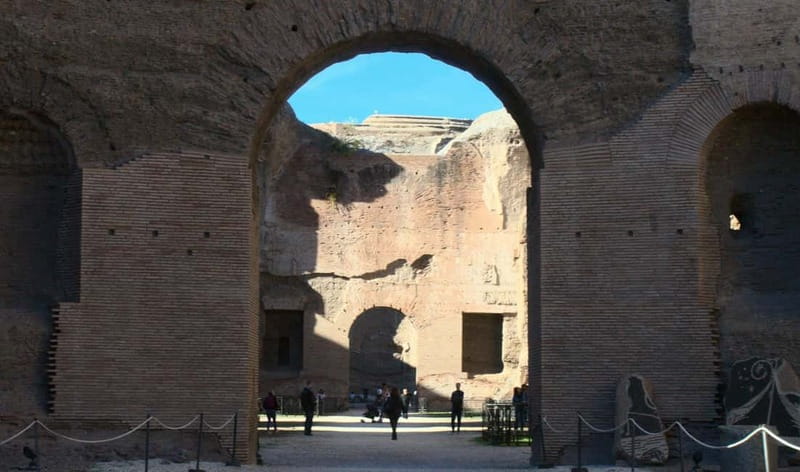
- The heating system is the star: Learn how a hypocaust warmed the baths from below.
- You get 17 audio stops: The route covers the swimming pool, gymnasium, massage rooms, mosaics, and more.
- This is a self-guided visit: There is no in-person guide, headset, or mobile device provided.
- Bring your own equipment: You need a charged smartphone and headphones.
- The ruins need imagination: Several buildings are preserved as walls, floors, and fragments rather than complete rooms.
- Allow about two hours: That gives you time to listen, look closely, and take photographs without rushing.
Why the Baths of Caracalla matter
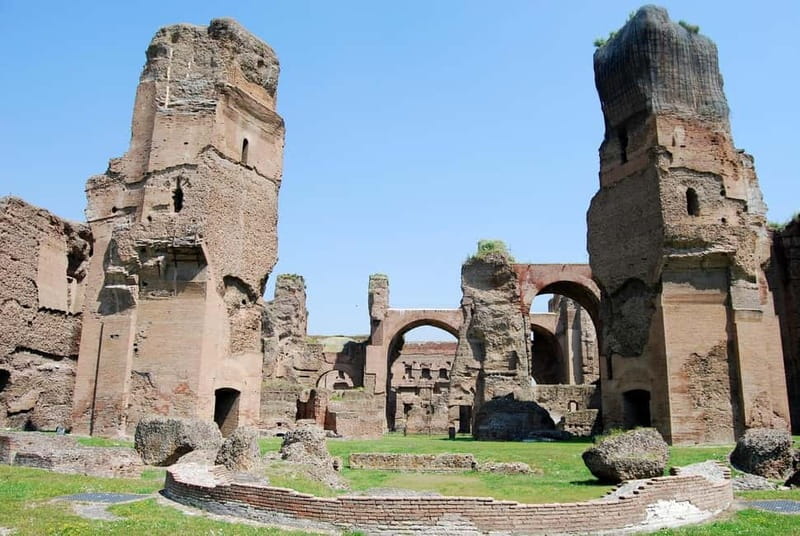
The Baths of Caracalla were built under the emperors Septimius Severus and Caracalla, and they were open to the public. That point matters. This was not a private palace reserved for the imperial family. It was a public complex designed for everyday Roman life, combining bathing, exercise, social time, and personal care.
The site is described as the second-largest imperial Roman bath complex. Even with missing roofs and damaged walls, the surviving structure shows how much planning went into the building. You can still trace the main spaces and imagine thousands of people moving through a large, carefully ordered center.
I find the baths especially useful for understanding ancient Rome beyond monuments built for emperors and armies. Here, the focus is on ordinary routines. People came to exercise, wash, meet friends, relax, and receive treatments. The building was grand, but its purpose was practical and social.
The complex is also counted among Rome’s seven wonders. That title can sound grand until you see the enormous brick walls and remains of the decorated floors. The site earns its reputation through size, engineering, and the amount of daily activity once packed into it.
More History Audio Tours in Italy
- Colosseum, Roman Forum & Palatine Hill with Audioguide App
★ 4.4 · 6,291 reviews - Rome: Colosseum, Ancient Rome Tour or AudioGuided Tour
★ 4.4 · 2,879 reviews - Colosseum, Roman Forum & Palatine Hill Entry and Audioguide
★ 4.1 · 2,475 reviews
Arriving at Viale delle Terme di Caracalla
You go directly to the main entrance at Viale delle Terme di Caracalla, 00153 Rome. This is not a tour with a central meeting point and a guide waiting to gather a group. Have your downloaded ticket ready to show at the entrance.
The digital ticket is sent through WhatsApp within 24 hours of your travel date. That makes it important to check your phone before leaving for the site. Do not assume you can sort everything out at the gate if your signal is poor or your battery is low.
The audio guide is downloaded by scanning the QR code on your voucher. Do this before arrival if possible. You need your own headphones, and the experience does not provide a headset or phone.
That setup is simple once prepared, but it is less forgiving than a standard guided tour. Bring:
- A charged smartphone
- Headphones
- Comfortable shoes
- The downloaded ticket and audio guide
The entrance can be hard to identify if you arrive without checking the address. Have Viale delle Terme di Caracalla saved in your map app, and keep your ticket open before you reach the gate.
The first look at the imperial complex
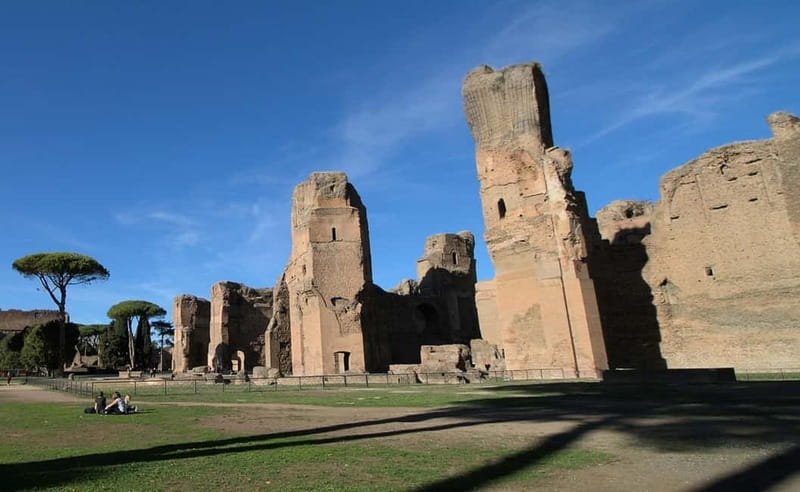
Once inside, take a moment before starting the audio commentary. The Baths of Caracalla are easier to understand when you first look at the whole site. Notice the high brick walls, broad open spaces, and the way the remaining structures suggest a carefully planned complex.
The ruins are not restored into a complete bathhouse. You will see walls, vaults, fragments of floors, and sections of decoration. That is part of the appeal, but it also means you must do some mental reconstruction.
The audio guide helps by connecting the fragments to their original uses. It explains the importance of the baths and directs your attention toward specific parts of the complex. The 17 stops give the visit a useful framework, especially if you do not already know Roman bath architecture.
Still, the route may not always feel obvious. Some people have had trouble matching the audio stops to what they see in front of them. Look for the numbered or named points in the app and pause the commentary if you need time to find the right location.
Following the 17 audio points
The audio guide is available in English, Spanish, French, German, and Italian. It also includes commentary on Rome landmarks, though the main value here is the explanation of the baths themselves.
I would not race from one stop to the next. Listen to a section, look around, and then move on. The ruins reward close attention more than speed. A two-hour visit gives you enough time for all 17 points, photographs, and a few pauses.
The stops help explain how the complex worked as a whole. You are not only looking at individual rooms. You are learning how people entered, exercised, bathed, received treatments, and moved through the building.
The audio is more detailed than the brief information available at the site itself, which is useful when you want more than labels and basic dates. It also gives the remains a human purpose. A large empty room becomes a place for exercise or social life rather than just another section of ancient masonry.
The weakness is technical rather than historical. If the app does not work, or if you forget headphones, much of the value disappears. Download the guide early, test the sound, and carry a backup battery if your phone is already low.
More History Audio Tours in Rome
- Rome: Colosseum, Roman Forum & Palatine Hill Visit + Audio Guide
★ 3.5 · 1,522 reviews - Rome: Roman Forum Super Pass Entry with Audio Guide App
★ 4.2 · 750 reviews - Colosseum, Roman Forum, Palatine Guided Tour or AudioGuide Option
★ 4.5 · 631 reviews - Colosseum, Roman Forum & Palatine Hill Admission With Audio Guide
★ 4.5 · 586 reviews
The swimming pool and major bathing rooms
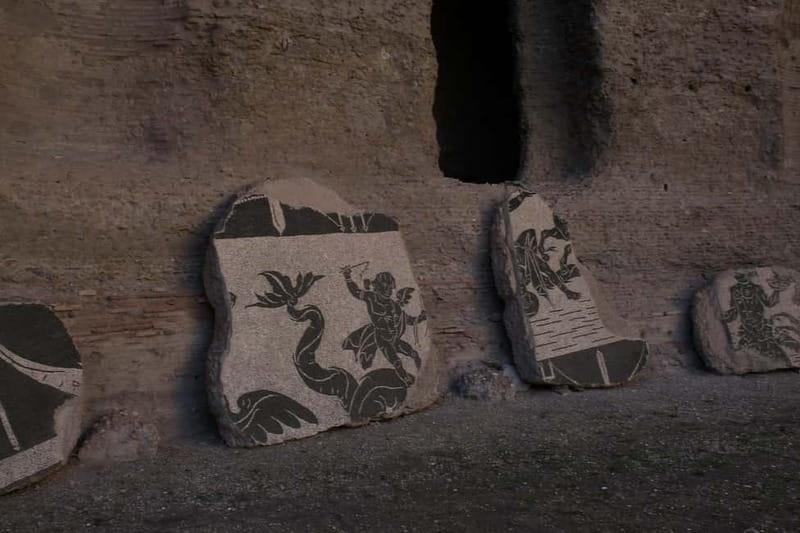
The swimming pool is one of the main points on the route. It helps you picture the scale of the bathing complex and the public role it played. This was not a small neighborhood bath. It was a large imperial facility built to handle substantial use.
The bathing areas were part of a sequence of spaces rather than one simple room. The audio commentary explains the functions of the different areas and helps you see how bathing connected with exercise and personal care.
You may notice that some areas are easier to identify than others. Large structural remains are clear, while smaller rooms can seem like a maze of partial walls. This is where the audio guide earns its place, provided you can match the commentary to the site.
The surviving mosaics are among the most rewarding details. Look down as well as up. The brick walls attract attention, but the marble mosaic fragments show the decoration and skill that once covered the complex.
Bring your phone or camera, but keep your visit from becoming only a photography stop. The photographs are a nice record, yet the real interest lies in understanding what the rooms were built to do.
Gymnasium, massage rooms, and daily Roman life
The gymnasium and massage rooms show why calling the Baths of Caracalla a bathing facility is too narrow. The complex functioned as a leisure center, with exercise and body care built into the experience.
The gymnasium gives you a sense of the physical side of Roman bathing culture. People did not simply arrive, sit in warm water, and leave. Exercise, washing, massage, and social time were connected.
The massage rooms are another reminder that the baths served a wide range of needs. They were places for grooming and relaxation as well as hygiene. The audio guide explains this daily routine in a way that makes the ruins easier to read.
I like this part of the visit because it shifts the focus away from emperors and battles. You see how public buildings shaped normal life. The baths were impressive, but their importance came from regular use by the wider population.
Do not expect furnished rooms or reconstructed scenes. The experience asks you to imagine people using spaces that now contain only masonry and fragments. If you prefer fully restored interiors, the site may feel sparse. If you enjoy reading ruins and connecting them to daily life, it becomes much more rewarding.
How the hypocaust heated the baths
The Roman heating system is one of the most interesting subjects covered by the audio guide. The baths used a hypocaust, a system that circulated hot air beneath raised floors and through parts of the walls.
That technology required careful planning. Heat had to be produced, directed, and controlled across a large complex. The system shows that Roman engineering was not only about roads, bridges, and aqueducts. It also served comfort and leisure.
The audio explanation is valuable because the heating system is not always easy to see at first glance. Much of the engineering is below the level of the main rooms or survives in partial form. Without context, you might walk past it without understanding its role.
I would give this section extra time. It explains why the baths could operate on such a large scale and why the buildings needed so much service space. The heating system turns the site from a grand ruin into a working machine.
Marble mosaics and missing decoration
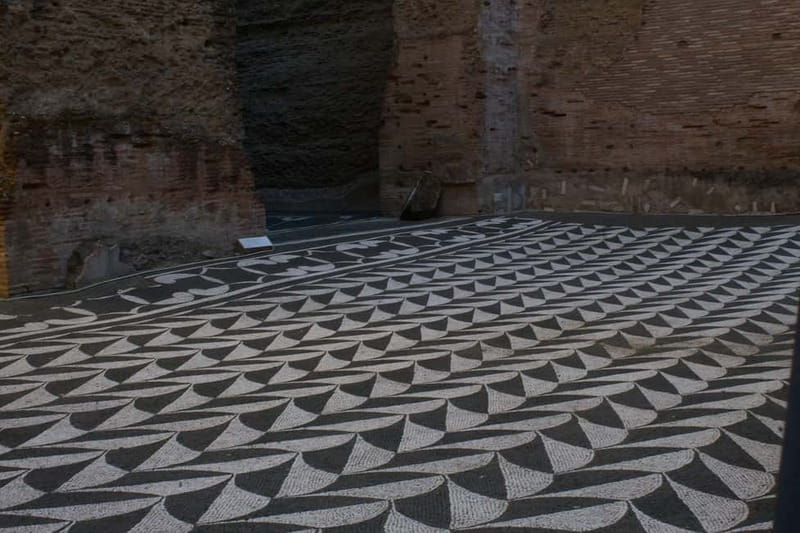
The mosaics are some of the most attractive remains at the Baths of Caracalla. Their marble designs give you a glimpse of the color and finish that once softened the heavy brick architecture.
Many Roman buildings look plain today because so much decoration has disappeared. Here, preserved mosaic sections help you picture the original interior. Look for details in the floors and surviving artwork rather than focusing only on the tallest walls.
The baths also have a complicated later life. Stones from the complex were eventually reused in the construction of St Peter’s Basilica. That fact helps explain why a building of such size survives in a fragmentary condition.
It is worth remembering that the missing pieces are not simply the result of age or weather. The site was also treated as a source of building material over later centuries. The audio guide connects the ancient baths to this later reuse, adding another layer to the visit.
What the $20 price includes
The listed price is $20 per person. It includes the entrance ticket, applicable taxes and fees, the Baths of Caracalla audio guide, and an audio guide covering Rome landmarks.
The price is reasonable if you want more explanation than a basic entry ticket provides and you are comfortable using your own phone. You are paying for convenience and commentary, not for a personal guide or transport.
There is an important comparison to make. Admission has been available separately at the site for about €8 per person, while the audio guide add-on has been offered for about €6 per person. Prices can change, but this gives you a useful way to judge the package. If you are visiting with two people and can share one audio guide, buying entry separately may cost less.
On the other hand, purchasing the package in advance can save you from arranging the ticket and guide separately. The value depends on how much you want commentary and how comfortable you are managing the app.
You should not book this expecting a guided tour. There is no live guide, headset, or transport. The best value goes to someone who wants a flexible visit and is willing to prepare the technology before arrival.
Seasonal access and site conditions
Some parts of the complex may be closed for restoration or renovation, especially in winter. That can affect how much of the site you see on a particular day.
This is worth considering if the Baths of Caracalla are one of your main reasons for visiting this part of Rome. The ticket remains useful, but your route may change and some areas may not be available.
Winter also affects the feel of the visit. The open site can be exposed, and comfortable shoes matter on uneven ground. The supplied rules prohibit sandals, flip-flops, shorts, and sleeveless shirts, so dress for the stated requirements rather than treating this as a casual walk through a park.
The site is wheelchair accessible, though closures and the condition of ancient remains can still affect movement. If you need a specific route, confirm current access conditions before setting out.
Who should book this experience
I would recommend it to you if you enjoy Roman history, large archaeological sites, and self-guided visits. It also suits independent visitors who want to spend more time photographing mosaics or pausing at the heating system without being held to a group schedule.
It is a good choice if you already have a phone, headphones, and enough battery for a two-hour visit. The multilingual audio makes it useful for English, Spanish, French, German, and Italian speakers.
I would be cautious if you want a live guide to explain the ruins and answer questions. I would also think twice if you dislike apps or find it frustrating to match audio stops with outdoor archaeological remains.
The baths are not a quick photo stop. You need some imagination, and the audio commentary is important. Without it, the surviving walls and partial rooms can be difficult to understand.
Should you book the Baths of Caracalla audio guide?
Book it if you want a flexible two-hour visit with clear historical context, especially if the hypocaust, mosaics, and everyday Roman life interest you. The audio guide adds much more than simply walking around the ruins, and the self-paced format lets you stop when a detail catches your eye.
Before paying, compare the $20 package with the cost of buying entry and an audio guide separately. Also check whether current restoration work has closed areas you most want to see.
My practical advice is simple: download the ticket and audio guide before arrival, bring headphones, wear compliant shoes and clothing, and arrive with a charged phone. Prepared properly, this is one of Rome’s better ways to understand how ancient public life worked. Unprepared, it can become an expensive walk around difficult-to-read ruins.
FAQ
Where are the Baths of Caracalla?
The main entrance is at Viale delle Terme di Caracalla, 00153 Rome, Italy.
How long does the experience last?
The stated duration is two hours.
Is this a guided tour?
No. This is a self-guided visit with an audio guide. No live guide is included.
Which languages are available?
The audio commentary is available in English, Spanish, French, German, and Italian.
Is the entrance ticket included?
Yes. The package includes a ticket to the Baths of Caracalla, along with applicable fees and taxes.
Do I receive headphones or a phone?
No. You must bring your own mobile device and headphones.
How do I access the audio guide?
Scan the QR code on your voucher to download the audio guide before arrival.
When will I receive the e-ticket?
The e-ticket is sent through WhatsApp and is available for download within 24 hours of your travel date.
Is the site wheelchair accessible?
Yes. The experience is listed as wheelchair accessible.
What clothing is required?
The stated dress code does not allow flip-flops, sandals, shorts, or sleeveless shirts. Comfortable shoes are recommended.
Latest audio tours in Rome
- Pantheon Skip the Line Entry Tickets with Digital Audio Guide★ 3.5 · 52 reviews
- St. Peter’s Basilica: Dome Climb with Lift & Audioguide★ 4.5 · 13 reviews
- Audio guide in Vatican Museums and Sistine Chapel★ 4.5 · 12 reviews
- The Roman Jewish Ghetto: A Self-Guided Audio Tour★ 4.0 · 8 reviews
- Experience: The Pantheon Audio Tour★ 4.5 · 4 reviews
- Trastevere: A Self-guided Audio Tour of Rome’s Medieval Village★ 4.5 · 3 reviews
- The Colosseum’s Attic with 3rd, 4th & 5th Levels with Audio Guide★ 4.5 · 20 reviews
- Self-Guided Audio Tour – The gods of the Palatine★ 3.5 · 5 reviews
History Audio Tours, compared.
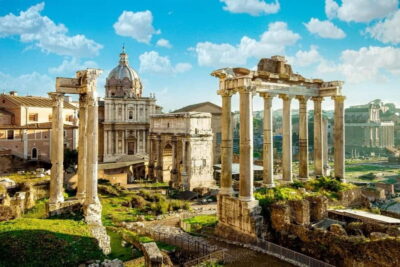
Colosseum, Roman Forum & Palatine Hill with Audioguide App
Read our review →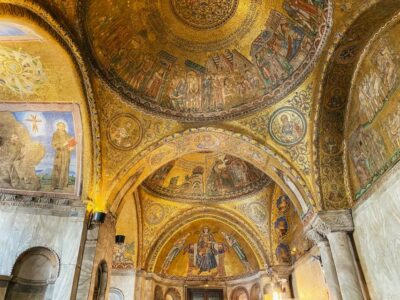
St. Mark Basilica Ticket, Audioguide+History Gallery
Read our review →
Colosseum, Ancient Rome Tour or AudioGuided Tour
Read our review →
Colosseum, Roman Forum & Palatine Hill Entry and Audioguide
Read our review →
Taormina: Ancient Theater Skip-the-Line Ticket & Audio Guide
Read our review →
Colosseum, Roman Forum & Palatine Hill Visit + Audio Guide
Read our review →
National Archaeological Museum Ticket & Audio Guide
Read our review →
Roman Forum Super Pass Entry with Audio Guide App
Read our review →Browse the lists this tour appears in