
Reviewed · PHILADELPHIA
Philadelphia Architecture: Discover Every American Style on a GPS Audio Tour
Philadelphia packs a remarkable range of American architecture into a walk of about 90 minutes to two hours. This GPS audio tour leads you from the Pennsylvania Academy of the Fine Arts on North Broad Street toward Love Park, explaining the buildings and styles along the way rather than simply pointing them out.
I like the low price and the fact that the audio, map, and route work offline through the VoiceMap app. I also like the architect-narrated commentary, which gives the walk a clear focus: you are not just ticking off landmarks, you are learning how different periods and design ideas shaped central Philadelphia.
The main drawback is simple: this is a self-guided walk, not a live tour. You need your own smartphone and headphones, and the route passes by several major buildings without including museum or observation-deck admission.
Key points to know before you go
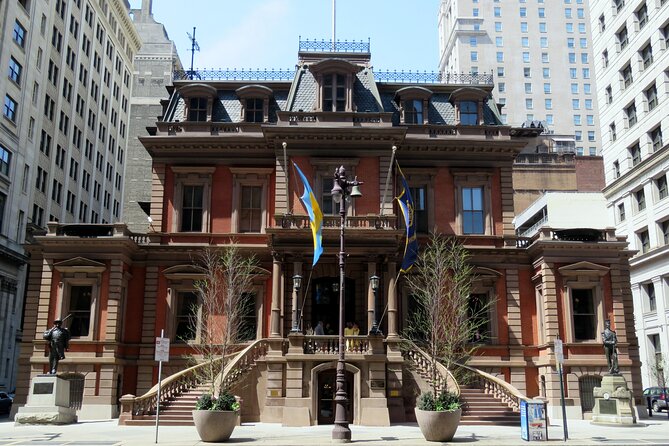
- Starts at PAFA: Begin outside the Pennsylvania Academy of the Fine Arts at 118 to 128 N Broad St.
- Covers several architectural styles: The route links PAFA, the Masonic Temple, City Hall, the Union League, the Academy of Music, and modern office landmarks.
- Ends at Love Park: The walk finishes at JFK Plaza, a useful central point for continuing around Philadelphia.
- Uses GPS audio: The VoiceMap app connects the spoken commentary with maps and geodata.
- Works offline: Downloaded audio and route information are available without relying on a live data connection.
- Costs $11.99: That is good value if you want an architecture lesson and a central-city orientation in one walk.
From PAFA to Love Park, Philadelphia in architectural fast-forward
The route begins outside the Pennsylvania Academy of the Fine Arts, known as PAFA, at 118 to 128 North Broad Street. That starting point is well chosen because the building itself gives you an immediate architectural subject before the walk even gets moving.
From there, the tour heads through central Philadelphia, using a series of prominent buildings to explain how American architecture changed over time. You are not looking at one single style or one tightly themed district. Instead, the route gives you a broad introduction to the city’s civic, cultural, commercial, and institutional buildings.
That variety is the heart of the experience. Within one walk, you encounter grand public architecture, formal clubs, performing-arts spaces, major city offices, modern high-rise development, and a well-known urban plaza. If you have ever looked at Philadelphia buildings and wondered why they feel so different from one block to the next, this tour gives you a useful framework.
The walk is listed at about one hour and 30 minutes to two hours. Your exact time will depend on how quickly you move and how long you pause to look upward, check the map, or replay a section. I would allow the full two hours rather than trying to squeeze it into a tight schedule.
More Smartphone Audio Tours in the USA
- Self-Guided GPS Audio E-Bike Tour Hawaii Volcanoes National Park
★ 4.5 · 131 reviews - Santa Fe Historic Downtown Smart Phone Audio App Self Guided GPS Walking Tour
★ 4.5 · 112 reviews - Ultimate Portland Self-Guided Driving GPS Audio Tour
★ 4.0 · 56 reviews
PAFA gives the tour a strong opening
Starting at the Pennsylvania Academy of the Fine Arts makes sense for an architecture-focused walk. The commentary begins with a building that is central to Philadelphia’s art and design story, then uses it as an entry point into the city’s architectural variety.
The tour does not provide museum admission, so think of PAFA as an exterior starting point. You can listen before setting off, examine the building from outside, and then follow the route through the city. If you want to visit the museum itself, that would be a separate plan with a separate ticket.
This first stop also helps establish the tone of the walk. The experience is not only about dates and names. It is designed to explain architectural styles in Philadelphia, which was the strongest theme in the feedback provided for this experience.
One practical tip: begin with your phone fully charged and the VoiceMap route already downloaded. The tour includes offline access to audio, maps, and geodata, which is useful, but you still want to set up before standing on a city sidewalk trying to manage a new app.
The Masonic Temple brings civic drama to Broad Street
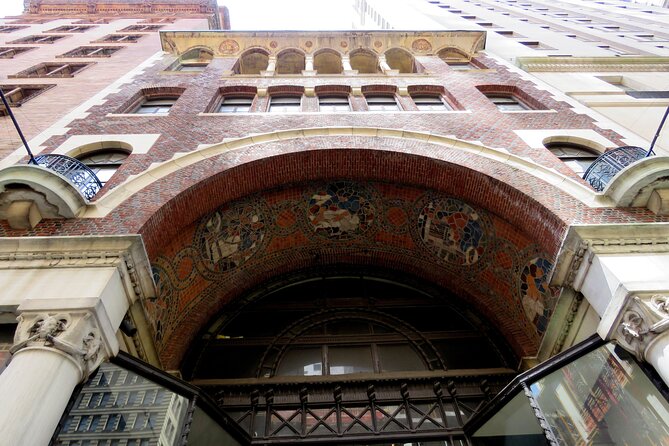
The route passes by the Masonic Temple, one of the most visually forceful buildings on the walk. Even without entering, you get a chance to study its exterior and hear how its design fits into the larger story of American architecture.
This is the kind of stop where the audio adds real value. A large building can look impressive while its design language remains hard to read. The architect’s narration helps you notice the details and understand why the structure feels formal and imposing.
Since the itinerary says the tour passes by the temple, do not assume that entrance is included. The tour price covers the audio experience, not tickets to attractions along the route. That distinction matters if you are planning to spend time inside any of the buildings.
City Hall is the route’s major visual anchor

Philadelphia City Hall is one of the most important stops on this walk, and the audio gives it the attention it deserves. The route uses City Hall to explain how a city presents its power, identity, and public ambitions through architecture.
This is also where the walk’s broad approach works well. You are not hearing about City Hall in isolation. You have already begun with PAFA and passed the Masonic Temple, so you can compare different ideas about public buildings as you go.
The supplied comments specifically praise the explanations of City Hall, PAFA, and the Masonic Temple. That tells you where the narration is likely to feel most useful. If you want to make the most of the tour, slow down at these stops instead of treating them as quick audio checkpoints.
City Hall is also a good place to look around and reorient yourself. A GPS tour is easiest when you occasionally confirm where you are, especially if city streets, pedestrian areas, and large buildings make the route less obvious.
Another self-paced route in the USA:
- Los Angeles: Hop-On Hop-Off Bus Tour with Audio Guide
★ 3.7 · 2,030 reviews - City Sightseeing Hop-On Hop-Off Bus Tour with Audio Guide
★ 3.0 · 1,083 reviews - Medieval Torture Museum Ticket with Audio Guide and Ghost Hunting
★ 5.0 · 962 reviews - Gettysburg Battlefield Self-Guided Driving Audio Tour
★ 4.5 · 910 reviews
The Union League shows a different side of Philadelphia
The tour then passes by The Union League of Philadelphia. This stop shifts the subject from public government to the architecture associated with a prominent private institution.
That change is important because it widens your understanding of the city. Philadelphia’s architectural character is not built only from government buildings and museums. Clubs, organizations, performance halls, and commercial spaces also tell you how the city’s institutions wanted to present themselves.
The route does not include an interior visit, so the value here lies in the exterior and the explanation. You can listen for how the building’s appearance differs from City Hall or the Masonic Temple, then consider what those differences say about purpose and audience.
I would treat this section as part of the larger lesson rather than expecting every stop to be a full attraction. The tour works best when you compare the buildings as a group.
The Academy of Music adds culture and performance
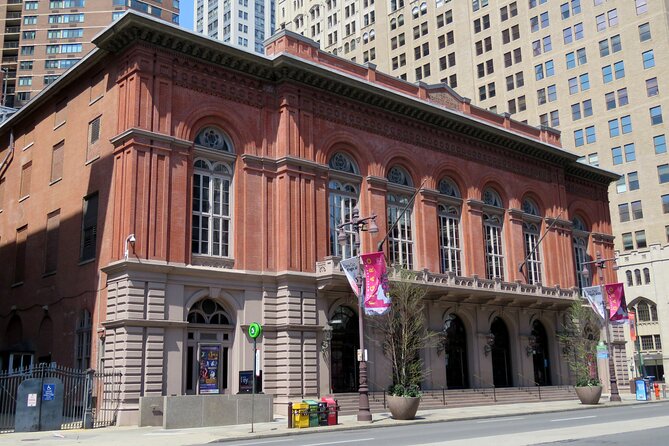
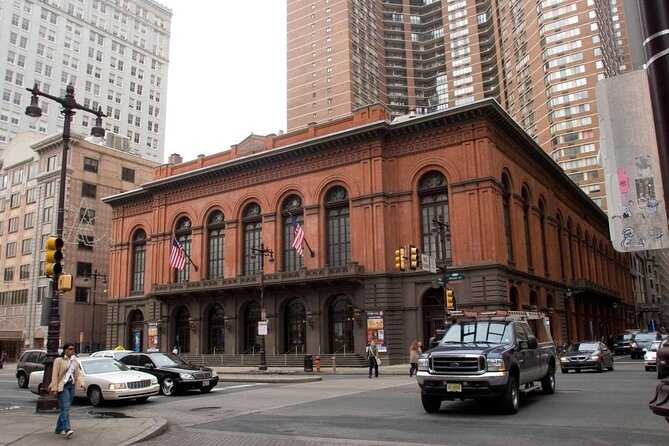
The Academy of Music gives the walk another architectural angle. Here, the focus turns toward a building connected with music and performance, rather than civic administration or private organization.
That helps keep the route from feeling like a march of government façades. You get a sense of how Philadelphia’s cultural life found a physical home in the city center, and how a performance venue can contribute to the character of a street.
Again, the tour passes by the building. Admission to museums and other attractions is not included, and no separate entrance is promised as part of the audio route. If you are hoping to attend a performance or see an interior, check that separately.
The Academy of Music is also a useful reminder to wear comfortable shoes. The distance is not described in the tour details, but the route links several central-city stops over up to two hours. You will get more from it if you are comfortable walking and stopping at intervals.
Modern Philadelphia appears near One Liberty Observation Deck

The route passes by One Liberty Observation Deck, bringing a more recent commercial and high-rise element into the architectural comparison. This is where the tour can help you see Philadelphia as more than a collection of historic façades.
The stop is especially useful because it places newer city development beside older civic and cultural buildings. You can hear how the city’s architectural story continued into the modern era, then look at the changing scale of the streets around you.
Do not read the name One Liberty Observation Deck as an included ticket. The experience does not include entrance fees to attractions along the way. If you want the view from the observation deck, that requires a separate purchase.
The audio format works nicely here because you can listen while looking around at the wider group of buildings. You are not confined to a guide’s pace, so you can pause the narration and spend a little longer comparing old and new.
Penn Center and Suburban Station show working-city architecture
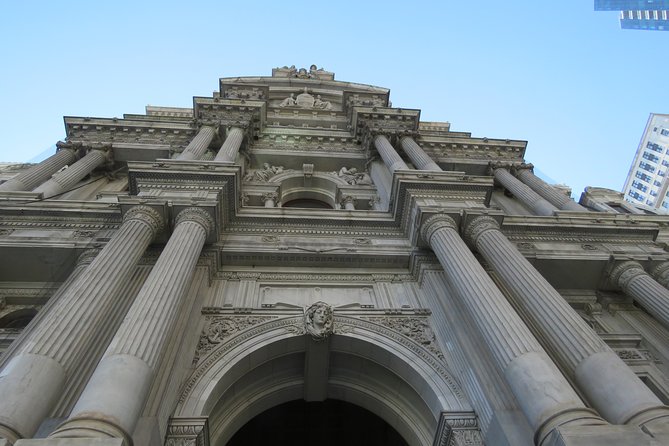
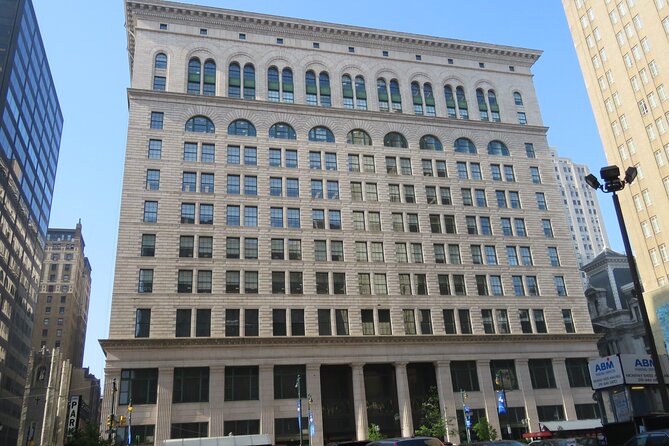
The tour also passes by the Penn Center and Suburban Station. These stops bring transportation and office life into the story, adding a practical side to Philadelphia’s architecture.
Civic buildings and cultural landmarks are easy to notice because they are visually distinctive. Transportation hubs and office centers matter for a different reason: they show how people move through and work in the city every day.
The route’s inclusion of Suburban Station keeps the experience grounded in the functioning city rather than turning it into a parade of monuments. You get a look at how central Philadelphia handles movement, business, and urban connections.
This is another place where the GPS map can help. The tour includes offline maps and geodata, so you can follow the route without needing constant mobile service. You still need your smartphone, and you should bring headphones because neither is supplied.
Love Park is a practical ending point
The tour ends at JFK Plaza, better known as Love Park, on Arch Street. This gives the route a clear finish in a central public space rather than leaving you at an obscure corner.
Love Park is a useful place to end because you can stop the audio, take a break, and decide what to do next. The experience itself does not include food, drinks, transportation, or entrance tickets, so any onward plans are yours to arrange.
The ending also gives the walk a satisfying change of mood. You begin with a major arts institution, move through civic and institutional Philadelphia, pass modern commercial and transportation landmarks, and finish in a public plaza associated with the city’s everyday life.
The listed opening hours show the route as available Monday through Sunday, around the clock, from July 30, 2020 through February 28, 2027. Since it is self-led, you can choose a time that fits your schedule. Daylight may be preferable if you want to study building exteriors closely, but the tour data does not impose a particular start time.
How the VoiceMap format affects the experience
VoiceMap is the delivery system for the tour. You use its Android or iOS app to access the audio, map, and location data.
The key benefit is control. You can start when you like, pause when you want, and use the tour again because access never expires. That makes the $11.99 price more attractive than it might first appear. You are paying for a reusable audio experience rather than a single fixed departure.
The audio is narrated by an architect, which gives the tour a clear point of view. The available feedback gives especially strong emphasis to the explanation of different architectural styles and the clear coverage of key buildings.
The tradeoff is that you do not have a live person beside you. If you miss a turn, want to ask a question, or prefer a guide to react to your interests, the app cannot replace that contact. You need to manage your own pace and keep an eye on the route.
This is described as a private activity, meaning only your group participates. In practice, that fits the self-guided format: you are not joining a larger walking group, but you also are not receiving personal live commentary.
Is $11.99 good value?
At $11.99 per person, the tour is priced as an inexpensive introduction to Philadelphia architecture. The value is strongest if you want a structured walk but do not need a live guide or attraction admission.
You receive lifetime access in English, offline audio, offline maps, offline geodata, and a route that links several major central-city buildings. If you use the tour once, the cost is already modest. If you return to Philadelphia or want to repeat a section at a slower pace, the no-expiration feature adds extra value.
The price does not include your phone, headphones, food, drinks, transport, or tickets to museums and other attractions. Those exclusions are reasonable for an app-based walking tour, but they mean you should budget separately for anything you want to visit inside.
The tour is offered in English only. If you want a multilingual experience, this is not the right choice.
Who will get the most from this walk?
I would recommend this tour to you if you like cities best when you understand the buildings around you. It suits independent visitors who want facts and context without being tied to a departure time.
It is also a good fit for:
- People with a short visit who want a central Philadelphia orientation
- Architecture students, design-minded visitors, and curious city walkers
- Couples or small groups who prefer setting their own pace
- Repeat visitors looking for a different way to read familiar streets
- Budget-conscious visitors who do not need museum admission included
You may want a different experience if you strongly prefer a live guide, frequent personal interaction, or interior access to the buildings. The route is about seeing and understanding exteriors, not entering every landmark.
Most people can participate, and service animals are allowed. The route is near public transportation, but transportation itself is not included. The tour is non-refundable and cannot be changed after booking, so check your schedule and make sure you have the required phone and headphones before paying.
Should you book Philadelphia Architecture?
Book it if you want a low-cost, flexible architecture lesson that connects PAFA, the Masonic Temple, City Hall, the Union League, the Academy of Music, One Liberty Observation Deck, Penn Center, Suburban Station, and Love Park in one route.
The strongest reason to choose it is the narration. The audio focuses on the different architectural styles found in Philadelphia, and the comments supplied for the experience give particular credit to the clear explanations of PAFA, City Hall, and the Masonic Temple.
Skip it if you want a live expert who can answer questions or take you inside the landmarks. For everyone else, $11.99 buys a useful self-guided walk, offline access, and the freedom to repeat the route whenever you like.
FAQ
Where does the Philadelphia architecture tour start?
It starts outside the Pennsylvania Academy of the Fine Arts at 118 to 128 N Broad St, Philadelphia, PA 19102.
Where does the tour end?
The tour ends at JFK Plaza, also known as Love Park, on Arch Street in Philadelphia.
How long does the audio tour take?
The estimated duration is about one hour and 30 minutes to two hours.
What language is the tour offered in?
The tour is offered in English.
Do I need a smartphone and headphones?
Yes. A smartphone and headphones are not included. You use the VoiceMap app on an Android or iOS device.
Can I use the tour without mobile data?
Yes. The tour includes offline access to the audio, maps, and geodata.
Are attraction tickets included?
No. Food and drinks, transportation, smartphone and headphones, and entrance fees to museums or other attractions along the route are not included.
Latest audio tours in the USA
- Sequoia National Park Self-Guided Audio Tour★ 4.5 · 9 reviews
- Sequoia and Kings Canyon Audio Tour Self Guide National Park Tour★ 5.0 · 3 reviews
- Kings Canyon National Park Self-Guided Audio Tour★ 4.0 · 4 reviews
- Sedona, Arizona Self-Guided Audio Tour★ 4.0 · 36 reviews
- Sedona & Red Rock State Park Self-Guided Driving Audio Tour★ 3.0 · 30 reviews
- Haunted Savannah Self-Guided Walking Audio Tour★ 4.5 · 3 reviews
- Downtown Seattle Self-Guided Walking Audio Tour★ 4.5 · 6 reviews
- Uncover Seattle: Self-Guided Audio Tour★ 3.5 · 7 reviews
Smartphone Audio Tours, compared.
Colosseum & Forum with Audio Guide App -Optional Arena
Read our review →
Timed Entry to Michelangelo’s David + Audio App
Read our review →
Cathedral & Brunelleschi’s Dome Ticket & Audio App
Read our review →
Michelangelo’s David Priority Ticket & Audio App
Read our review →
Uffizi Priority Ticket & Masterpieces Audio App
Read our review →
Castel Sant’Angelo Entry Ticket & Digital Audioguide
Read our review →
Pantheon Priority Entry Ticket & Audio Guide App
Read our review →Browse the lists this tour appears in