
Reviewed · MONTEREY
Historic Cannery Row: A Self-Guided Audio Tour of John Steinbeck’s Monterey
Cannery Row is easy to see and easy to miss. The souvenir shops, restaurants, and Monterey Bay Aquarium draw most people, but this self-guided walk adds the people and stories behind the corrugated buildings. You follow John Steinbeck’s Monterey while learning about his friendship with marine biologist Ed Ricketts, whose Pacific Biological Laboratories once stood along the route.
I like the freedom to pause, restart, or take the tour again years later. I also like the price: at $8.99, it costs less than many guided walks and gives you an hour-plus of focused local context. The catch is technical. A small number of users had trouble getting the app to work, and you need your own smartphone and headphones.
Key points at a glance
- Follow Steinbeck’s Cannery Row: Connect the novel to real places, including the old Monterey Canning Company warehouse and Ed Ricketts’s laboratory.
- Use your own pace: The GPS-led audio lets you stop for photos, food, the Aquarium, or a quiet look at the shore.
- Start near the Sardine Factory: The route finishes at Steinbeck Plaza, a short distance away.
- Hear more than the main street: The walk points out murals, coastal paths, historic buildings, and details easy to miss on a casual stroll.
- Pay once, use later: Downloaded audio, maps, and location data remain available for lifetime access.
- Plan for app problems: Download before you arrive, carry headphones, and contact VoiceMap support if the tour will not load.
Why Cannery Row needs a little explanation
Cannery Row can feel like a narrow strip of restaurants and gift shops. The street is busy with visitors, but the older story sits just behind the signs: sardine canneries, workers, scientists, writers, fires, and a waterfront economy that changed sharply over time.
This tour gives you that missing layer. Instead of simply walking from the Aquarium to a restaurant, you hear why certain buildings matter and how Steinbeck and Ed Ricketts saw this part of Monterey. The commentary is especially useful if you have read Cannery Row. One of the strongest practical tips is to read the book before you go. You do not need to be a Steinbeck expert, but familiar characters and places make the walk more meaningful.
The route takes about one hour and fifteen minutes, though your actual visit can last longer. Stop for photographs, enter the Aquarium, browse shops, or pause the audio when traffic and crowds make listening difficult. This is not a guide-led group walk, so you will not have someone beside you to answer questions or fix a phone problem.
More History Audio Tours in the USA
- Santa Fe Historic Downtown Smart Phone Audio App Self Guided GPS Walking Tour
★ 4.5 · 112 reviews - Savannah’s Historical District: A Self-Guided Audio Tour
★ 4.5 · 69 reviews - Self-Guided Walking Audio Tour of Historic Santa Fe
★ 4.5 · 43 reviews
Starting at the Sardine Factory
The tour begins outside the Sardine Factory at 701 Wave Street. That starting point puts you close to the southern end of Cannery Row and gives the route a useful sense of direction.
You receive access through the VoiceMap app for Android or iOS. The included offline audio, map, and geodata matter here. Monterey is a place where you may want to put your phone away for stretches, and offline access means the narration does not depend on a live connection once the tour is downloaded.
You should set up the tour before you start walking. The supplied experience information does not include a phone or headphones, so bring both. A few users had trouble signing in or getting the audio to work, while others found the app very easy to use. That uneven record is the main weakness of the experience. Download the route in advance, check that the audio plays, and keep the support address, [email protected], available if something goes wrong.
The Cannery Row Monument and its working past
One early stop takes you past the Cannery Row Monument. The audio explains the people shown there, giving you a quick introduction to the workers and figures tied to the area.
This is a good example of what the tour does best. A monument can become background scenery when you pass it on your way to the Aquarium. With the narration running, you get a reason to stop and look at the individual figures. The explanation also helps connect the public memorial to the larger story of the waterfront.
The route does not require you to enter an attraction at this point. That keeps the cost low, but it also means the experience depends on your willingness to look closely outdoors. Bring patience. Some stops are about seeing a building from the sidewalk rather than entering a museum with displays and staff.
The Monterey Canning Company warehouse
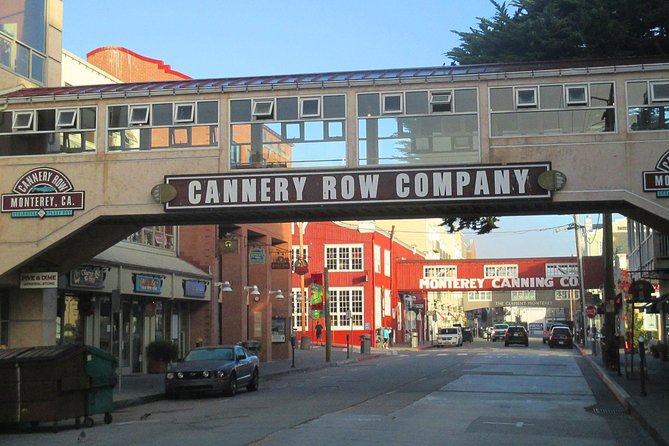
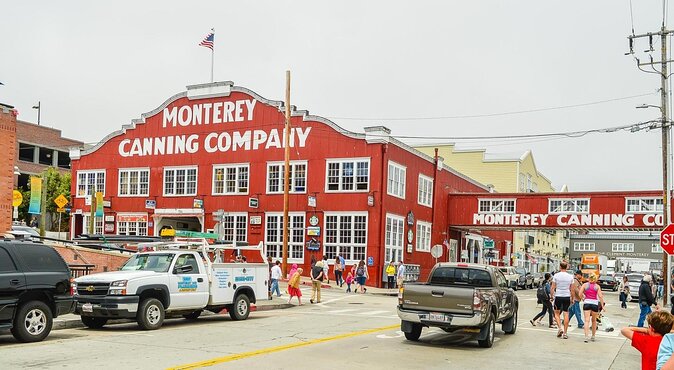
Outside the original Monterey Canning Company warehouse, you hear the story of Cannery Row itself. This is one of the most important stops because it moves the tour from literary references to the physical remains of Monterey’s canning industry.
The warehouse gives the past a solid address. You can look at the building while the narration explains how the Row developed and why the old structures matter. The audio helps you read the waterfront as a former industrial area rather than a shopping district dressed up with historic signs.
Do not expect the tour to turn the warehouse into an indoor museum visit. Entrance fees and tickets are not included, and the route is mainly an outdoor walk. Its value comes from interpretation, not from a large collection of objects.
More Self-Guided Audio Tours in the USA
- Gettysburg Battlefield Self-Guided Driving Audio Tour
★ 4.5 · 910 reviews - Joshua Tree National Park Self-Guided Driving Audio Tour
★ 4.5 · 762 reviews - Ultimate Acadia National Park Self-Guided Driving Audio Tour
★ 4.0 · 521 reviews - Ultimate Lake Tahoe Self-Guided Driving Audio Tour
★ 4.5 · 435 reviews
Bubba Gump and the odd afterlife of Cannery Row
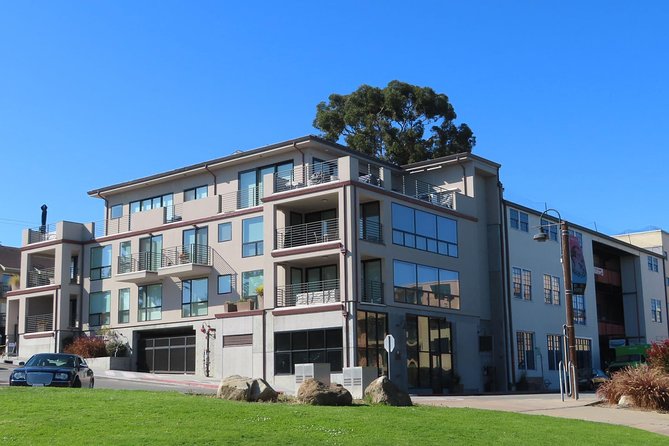
The route passes Bubba Gump Shrimp Co., described here as the highest-grossing restaurant on Cannery Row. That modern business becomes a bridge to the old Monterey Canning Company, linking today’s visitor economy with the seafood industry that once defined the street.
It is a useful stop because it shows how places change without losing every connection to their past. You are not asked to eat there, and food is not included. Instead, you hear why this particular restaurant fits into the story of the Row.
This is also a reminder that the tour does not pretend Cannery Row has been frozen in Steinbeck’s time. You will walk through a commercial district with restaurants, hotels, and crowds. The audio gives you context for what remains, but it cannot remove the modern signs and tourist traffic.
A historic view inside The Clement Monterey
The walk briefly enters the InterContinental The Clement Monterey Hotel, where you can see a historic aerial photograph of Cannery Row.
That photograph is a strong visual aid. Street level can make it hard to understand how the canneries, shoreline, warehouses, and roads fit together. An aerial view gives you a larger sense of the district and helps explain how much has changed.
The stop is brief, so treat it as a quick look rather than a hotel tour. The experience does not promise extended indoor access or a private presentation. You simply use the photograph to orient yourself before continuing along the route.
Ed Ricketts and Pacific Biological Laboratories
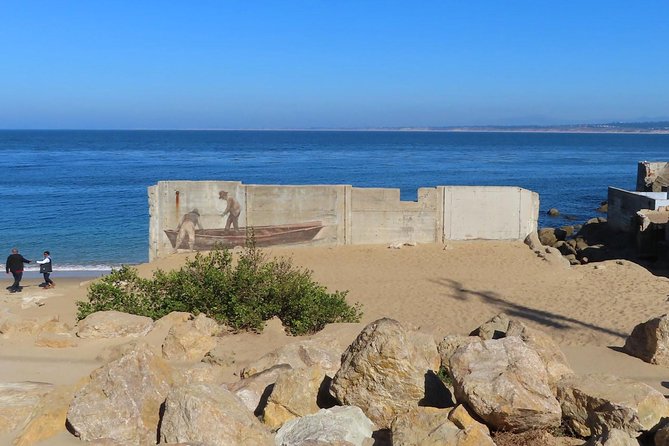
The route passes Pacific Biological Laboratories, the former workplace and home of Ed Ricketts. This is likely the literary heart of the walk.
Ricketts was a marine biologist and an important figure in Steinbeck’s Monterey. The audio gives you more about the man who lived there, helping explain why this building matters beyond its address. If you have read Steinbeck, this stop makes the connection between the books and the real waterfront much clearer.
The area also rewards slow walking. One useful detail from the route is the attention to coastal access paths and the area near Ricketts’s backyard. Those paths can be easy to miss if you are hurrying between the parking garage and the Aquarium. The tour encourages you to look toward the edges of the main street, where the setting feels less commercial.
Monterey Bay Aquarium and the oceanfront route
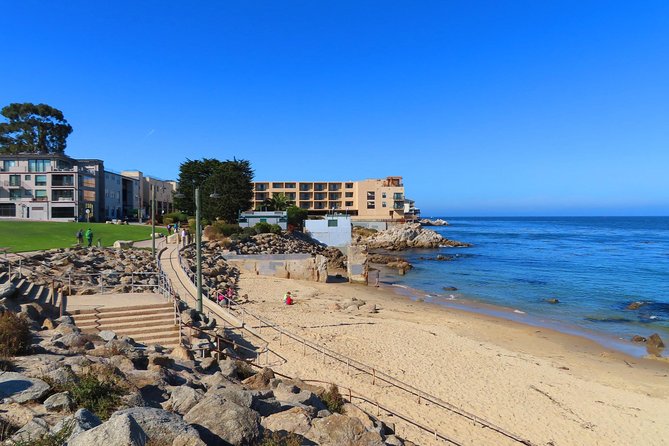
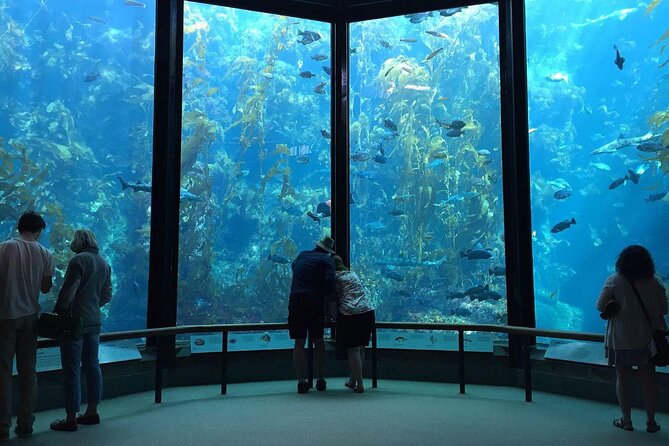
The tour passes the Monterey Bay Aquarium, one of the area’s major attractions. You do not receive admission, and the audio walk is not a replacement for the Aquarium. If you plan to visit both, allow extra time and check the Aquarium’s current hours separately.
The value of passing it on foot is context. The Aquarium represents Monterey’s modern focus on marine education and conservation, while earlier stops dealt with canneries and marine science in smaller, more personal settings. The route lets you see those different chapters in one walk.
A nearby stop takes you past the Aquarium’s environmentally sustainable, 25,000-square-foot education center. It opened in 2019 to expand the Aquarium’s programs for teachers and students, with free informational programs. The audio gives you a reason to notice this less famous building instead of treating the Aquarium area as the end of the story.
If you plan a full Aquarium visit, think carefully about timing. The walking tour lasts about 75 minutes, and the Aquarium can require much longer. You may prefer to do the audio route before your admission time, after your visit, or on another day.
Monterey Plaza Hotel and San Carlos Beach
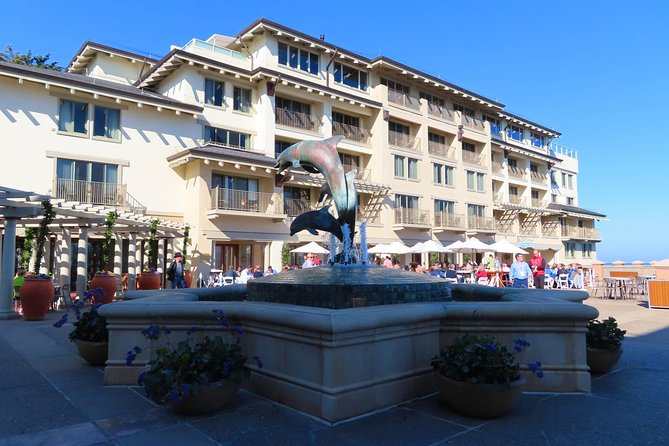
Near the Monterey Plaza Hotel & Spa, the narration points out some of the hotel’s shops. This is a short stop, but it continues the theme of old waterfront places gaining new uses.
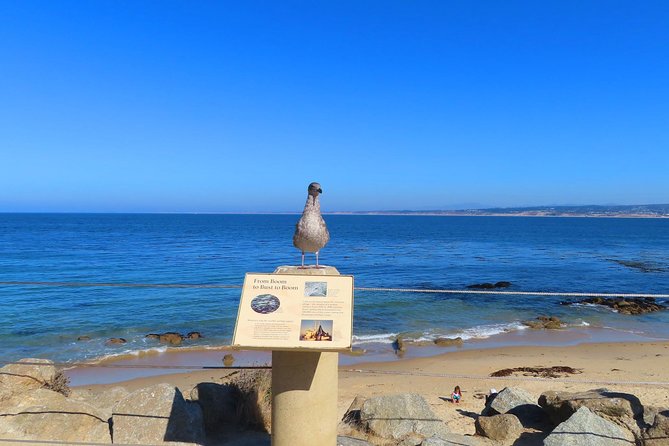
The final stretch takes you along San Carlos Beach. Here, the route becomes less about storefronts and more about the shore. You get a change of pace after the buildings, signs, and restaurant fronts of Cannery Row.
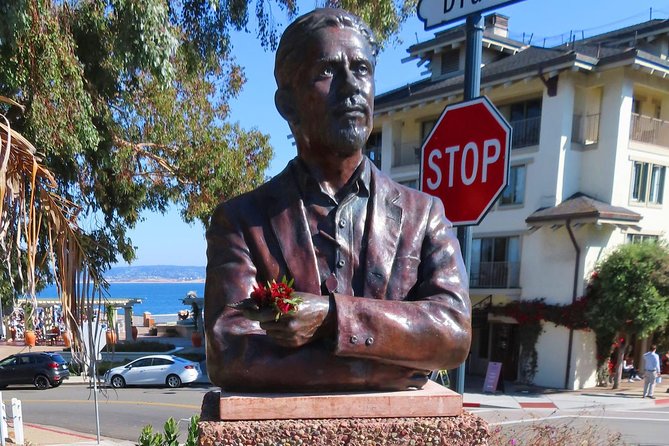
The beach section also helps the route feel like a walk through a real neighborhood rather than a line between attractions. You can slow down, listen to the water, and let the earlier stories settle. The tour ends at Steinbeck Plaza, in front of a bust of John Steinbeck, a short distance from the starting point.
What the $8.99 price really buys
At $8.99 per person, this is a good-value choice if you want more than a casual walk but do not want to pay for a private guide. You receive lifetime access in English, plus offline audio, maps, and location data. That changes the value calculation: you are not limited to one use on one afternoon.
You can pause the tour when you find a restaurant, repeat a section later, or return on another visit. The route’s lifetime access is particularly useful for people who spend several days in Monterey or expect to return.
The price does not cover transportation, food, headphones, the phone, museum tickets, or admission to attractions such as the Aquarium. Parking can also affect your total cost. The Foam Street Garage may be practical for starting near the route, but parking in the Cannery Row area can be expensive. San Carlos Beach was suggested as a less hurried alternative starting area by someone who used only part of the route, but the official start remains the Sardine Factory.
How the app works in real conditions
The GPS format is simple in theory. You walk, and the app plays the relevant section as you reach each location. Several parts of the route were praised for being easy to follow, with clear directions and plenty of information.
The same system can be frustrating if your phone, app, or download does not cooperate. Two serious complaints described hours spent trying to log in and use the tour. Another person found that only one phone in a group worked properly and felt the audio quality was poor. Those problems were not universal, but they are enough to justify preparation.
Use one phone as the main device, download everything on a strong connection, test the first audio segment, and bring charged headphones. If you are traveling with a group, remember that each person may need a separate purchase if everyone wants independent access.
Who will get the most from this walk
I would choose this for an independent-minded visitor who likes to stop when something catches the eye. It suits readers of Steinbeck, people interested in Monterey’s working waterfront, and repeat visitors who have already seen the Aquarium and want a different reason to walk Cannery Row.
It also works for a private group because only your party participates. You do not have to match another group’s pace or listen to a guide speak over street noise.
I would be more cautious if you want a polished, fully guided experience with guaranteed technical support on the spot. The tour is also less useful if you only have time for the Aquarium and cannot spare roughly 75 minutes outdoors. For families, the literary and industrial material may appeal more to older children than very young ones, though most travelers can participate.
Should you book Historic Cannery Row?
Book it if you want to understand why Cannery Row matters, not just see where the restaurants and Aquarium are. The strongest parts are the links between Steinbeck, Ed Ricketts, the canneries, and the overlooked coastal paths. At $8.99, lifetime access makes the risk fairly small.
Skip it if you dislike app-based tours or do not want to troubleshoot a download. Before booking, decide if you can start near the Sardine Factory, bring headphones, and give the route enough time. Read Cannery Row first if you can. That one step will make the voices, buildings, and final Steinbeck Plaza stop carry much more weight.
FAQ
How long does the Historic Cannery Row audio tour take?
The tour takes approximately one hour and fifteen minutes. You can make the visit longer by pausing for photographs, shops, the Aquarium, or the waterfront.
Where does the tour start?
It starts at The Sardine Factory, 701 Wave Street, Monterey, California 93940.
Where does the tour end?
It ends at Steinbeck Plaza on Prescott Avenue, in front of the bust of John Steinbeck. The end is a short distance from the starting point.
What language is the audio tour offered in?
The tour is offered in English.
Does the tour include Monterey Bay Aquarium admission?
No. Tickets and entrance fees for the Aquarium and other attractions along the route are not included.
Do I need a smartphone and headphones?
Yes. The smartphone and headphones are not provided. The tour uses the VoiceMap app for Android and iOS.
Can I use the audio tour without mobile data?
Yes. The included offline access covers the audio, maps, and geodata after you download the tour.
Does the tour expire after one use?
No. Once downloaded, the tour includes lifetime access and can be used again later.
Can I cancel for a full refund?
Yes, if you cancel at least 24 hours before the experience start time. Cancellations made within 24 hours are not refunded, and changes within that period are not accepted.
Latest audio tours in the USA
- Sequoia National Park Self-Guided Audio Tour★ 4.5 · 9 reviews
- Sequoia and Kings Canyon Audio Tour Self Guide National Park Tour★ 5.0 · 3 reviews
- Kings Canyon National Park Self-Guided Audio Tour★ 4.0 · 4 reviews
- Sedona, Arizona Self-Guided Audio Tour★ 4.0 · 36 reviews
- Sedona & Red Rock State Park Self-Guided Driving Audio Tour★ 3.0 · 30 reviews
- Haunted Savannah Self-Guided Walking Audio Tour★ 4.5 · 3 reviews
- Downtown Seattle Self-Guided Walking Audio Tour★ 4.5 · 6 reviews
- Uncover Seattle: Self-Guided Audio Tour★ 3.5 · 7 reviews
Self-Guided Audio Tours, compared.

Acropolis Ticket & Optional Self-Guided Audio Tours
Read our review →


Ultimate Acadia National Park Self-Guided Driving Audio Tour
Read our review →

Akrotiri Ticket with Optional Self-Guided Audios
Read our review →
Browse the lists this tour appears in