
Reviewed · USA
Chicago Self-Guided Audio Tour
Chicago’s best feature is its variety, and this $6 audio tour gathers a remarkable spread of it: grand train halls, free public art, lakefront parks, major museums, a research library, and a skyscraper view. You can begin at Union Station, Navy Pier, or any other stop, then build the day around your own interests. The stories cover everything from the Great Fire and the 1893 World’s Fair to Tiffany glass and the reversal of the Chicago River.
I like the freedom to choose your route and the low price. I also like the narration’s practical format: clear, audible English stories with folklore and background you can hear while standing at each sight. The main catch is brevity. The recordings are designed as short introductions, not long museum tours, and one detailed assessment found that much of the audio lasted only a minute or less.
Key points at a glance
- Fifteen major sights: The route includes Union Station, the Field Museum, Millennium Park, Navy Pier, Lincoln Park Zoo, and more.
- Use it your way: Start and finish anywhere, visit stops in any order, and split the experience across as many as six days.
- Short audio segments: Expect focused commentary rather than hours of spoken material.
- Two simple web links: One opens the SoundCloud playlist, and one opens the Google My Maps itinerary in a browser.
- Entry costs are separate: Admission is required at several museums and attractions, while places such as Millennium Park and the Chicago Cultural Center are free.
- Bring your own setup: You need a charged smartphone, internet access, and headphones or earphones.
What this Chicago audio tour really offers

This is best understood as a low-cost audio companion for sightseeing, not a traditional guided tour. You receive one playlist with recordings for all 15 attractions and a separate map showing each stop with a headphone icon.
The audio is in English and the activity is private, meaning only your group uses the experience. There is no guide walking beside you, no pickup, and no fixed meeting point. You make the route.
That distinction matters. A live guide can answer questions, adjust the pace, and point out details as you go. This tour cannot. In return, you can pause whenever you like, skip places you have already seen, or spend a full afternoon in one museum without worrying about keeping up.
The recordings focus on stories and context. At Union Station, for example, you hear about Beaux-Arts design, films made there, wartime use, and tunnels below the building. At Cloud Gate, the familiar Bean becomes a starting point for discussion about design, engineering, maintenance, and Chicago’s identity.
The strongest part of the format is its ability to give you a reason to look more closely. The weaker part is the limited amount of spoken material. If you want a detailed explanation of every room in the Art Institute or every exhibit in the Field Museum, you will need the attraction’s own guide or additional reading.
More Self-Guided Audio Tours in the USA
- Gettysburg Battlefield Self-Guided Driving Audio Tour
★ 4.5 · 910 reviews - Joshua Tree National Park Self-Guided Driving Audio Tour
★ 4.5 · 762 reviews - Ultimate Acadia National Park Self-Guided Driving Audio Tour
★ 4.0 · 521 reviews
From Union Station to the Field Museum
Union Station is a smart place to begin because the building gives you an immediate sense of Chicago’s ambition. The audio points you toward the Great Hall’s soaring skylight, marble corridors, film appearances, famous passengers, and the station’s wartime role.
The recording also covers the tunnels beneath the station. That is useful because much of Union Station’s importance is easy to miss when you are simply catching a train. Give yourself time to look upward and around rather than treating the stop as a quick photo opportunity.
The itinerary assigns about 20 minutes to each stop, but that does not mean you should limit a large museum to 20 minutes. The time is better treated as a suggested audio stop. Union Station itself is free to enter, though it functions as an active transportation hub, so be mindful of people moving through the building.
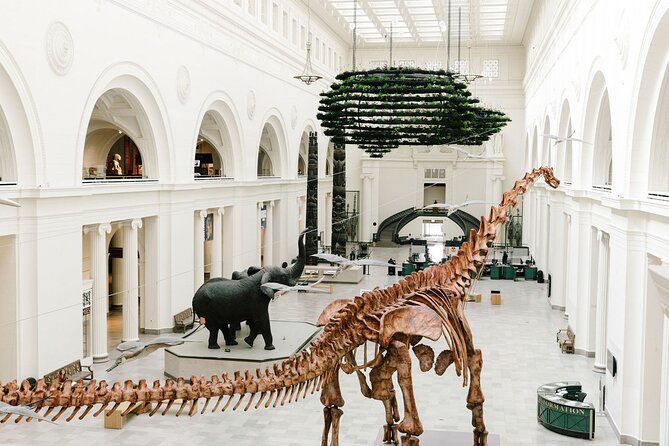
The Field Museum shifts the subject from architecture to natural history. The audio introduces the museum’s connection to the 1893 World’s Fair and points you toward Ancient Americas displays, Egyptian mummies, and scientific work carried out behind the public galleries.
The famous T-Rex may draw the first crowd, but the recording encourages you to look beyond it. That is good advice. The museum is large, and a short audio track can help you choose a few subjects instead of wandering without a plan.
Admission is not included. If you want to make this stop worthwhile, allow far more time than the 20-minute itinerary marker. The audio gives you orientation, but it is not a substitute for the museum’s exhibits, labels, or a full museum guide.
Buckingham Fountain, the Art Institute, and Millennium Park
Clarence F. Buckingham Fountain is one of the easiest stops to fit into an outdoor route. The audio explains the family story behind the fountain, its engineering, its Great Lakes symbolism, and the restoration work that kept it operating.
You also get background on seasonal operation and the historic nighttime light show. Since the fountain is free, you can linger without adding another ticket to the day. Its setting makes it a natural link between the lakefront and the downtown sights.
The Art Institute of Chicago requires more planning. The audio focuses on the way Chicago’s industrial wealth helped create an ambitious art collection, the donors who shaped it, and the stories behind works that became widely known, including Grant Wood’s American Gothic.
That context is valuable because the museum can feel overwhelming. A short introduction helps you think about how the collection was assembled, rather than simply rushing from one famous painting to another. Entry is not included, so check the museum’s current admission details separately before you go.
Millennium Park then brings you back outdoors. The audio explains how a former industrial area became a major public space, including the politics, engineering, and art behind the project.
You hear about Crown Fountain, the Lurie Garden, underground support systems, and the international artists involved. This is one of the better stops for using the audio while walking because the features are spread through an open public setting. The park itself is free, and you can pair it with Cloud Gate without arranging transport between them.
Cloud Gate and the Chicago Cultural Center
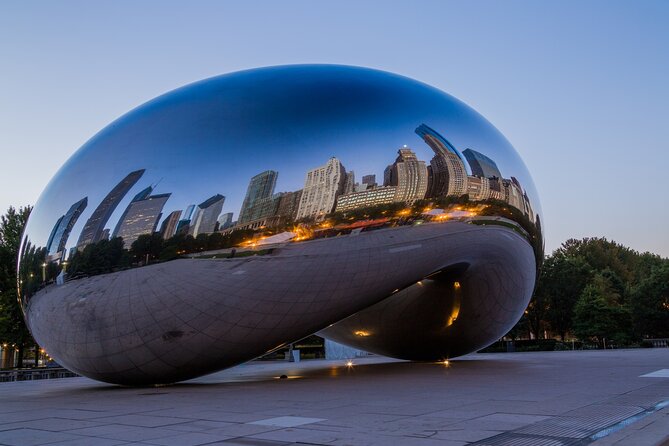
Cloud Gate needs little introduction, but the audio tries to move you beyond the standard Bean photograph. It covers the sculpture’s seamless surface, the engineering problems involved in building it, its mathematical qualities, and the maintenance required to keep it shining.
The recording also connects the sculpture to Chicago’s industrial character and its role in the city’s modern cultural image. That makes the stop more satisfying than simply taking a picture and moving on.
Expect crowds around the sculpture, especially when people are trying to photograph the reflections. The self-guided format helps here because you can listen before or after approaching the sculpture, then return to it from another angle without waiting for a group.
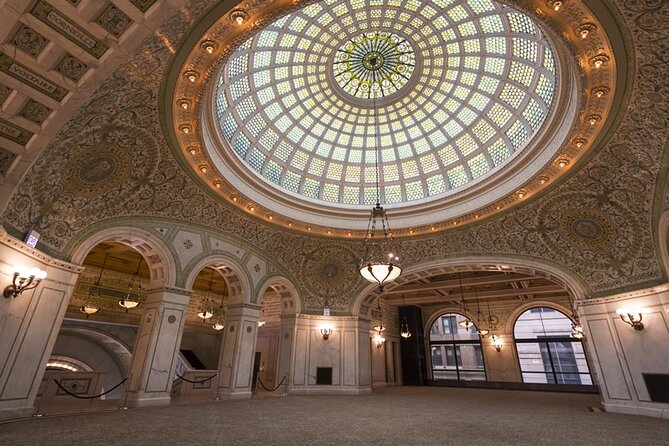
The Chicago Cultural Center offers a very different experience. This free building was originally Chicago’s central library and is now a public cultural center. Its Tiffany glass domes, mosaics, galleries, and performance spaces give the audio plenty to explain.
The recording also covers the political fight that saved the building from demolition. Pay attention to the smaller architectural details, not just the main dome. Since there is no admission fee, this is an easy stop to add even if you are keeping your day inexpensive.
Together, Cloud Gate and the Cultural Center make a compact downtown pairing. The first is modern sculpture in an open plaza. The second is ornate interior architecture a short distance away. You can visit both without committing to a museum ticket.
Another self-paced route in the USA:
- Los Angeles: Hop-On Hop-Off Bus Tour with Audio Guide
★ 3.7 · 2,030 reviews - City Sightseeing Hop-On Hop-Off Bus Tour with Audio Guide
★ 3.0 · 1,083 reviews - Medieval Torture Museum Ticket with Audio Guide and Ghost Hunting
★ 5.0 · 962 reviews - San Francisco: Alcatraz, Ferry & Audio Tour w/ Night Option
★ 4.4 · 617 reviews
The Chicago Riverwalk and Navy Pier

The Chicago Riverwalk is one of the most useful places to hear the city’s engineering story. The audio explains the river’s role in Chicago’s growth, the enormous project that reversed its flow, and the later work that turned an industrial waterfront into a public walkway.
The commentary also points out architecture visible from water level and the environmental changes along the river. This is a good place to pause the recording often. The riverfront is meant to be experienced at walking speed, and you will get more from it if you look outward rather than keeping your eyes fixed on your phone.
Navy Pier adds military history and lakefront entertainment. The audio covers its wartime training role, the period when demolition seemed possible, and the later transformation into a major attraction.
You also hear about engineering under the boardwalk, tourism, local community concerns, and environmental efforts. The pier is free to enter, but individual attractions and activities require their own charges. The audio helps you understand the place before deciding how much time and money you want to spend there.
These two waterfront stops are not next door to each other. Because transport is not included, you need to plan your route using public transportation, walking, or your own arrangements. The attractions are near public transportation, but the tour does not provide pickup or drop-off.
Gilded Age rooms and a view from 360 Chicago
The Richard H. Driehaus Museum is the most intimate stop on the route. It occupies a Gilded Age mansion filled with decorative arts, Tiffany windows, hand-painted ceilings, and period furnishings.
The audio tells the story of the original family, the building’s restoration, and the craftsmen behind its interiors. This is a strong choice if you enjoy domestic architecture and design more than large public museums.
Admission is not included. The stop is also more focused than the Field Museum or Art Institute, so the short recording may feel better matched to the scale of the place. You still need to allow enough time to look carefully at the rooms.
At 360 Chicago, the subject changes from a single building to the whole city. From the observation deck, the audio discusses Chicago’s architectural development, the engineers and architects who shaped the skyline, neighborhood patterns, and the forces that continue to change the city.
Entry is separate, and the ticket is likely to be a substantial part of your total day’s cost compared with the $6 tour. That makes the audio most useful as background for the view, not as the reason to buy admission.
You can use the recording to identify parts of the city below you and connect the skyline to Chicago’s growth. The freedom to stay as long as you like is useful here, since weather and visibility will affect how much you enjoy the experience.
Lincoln Park Zoo and the Chicago History Museum
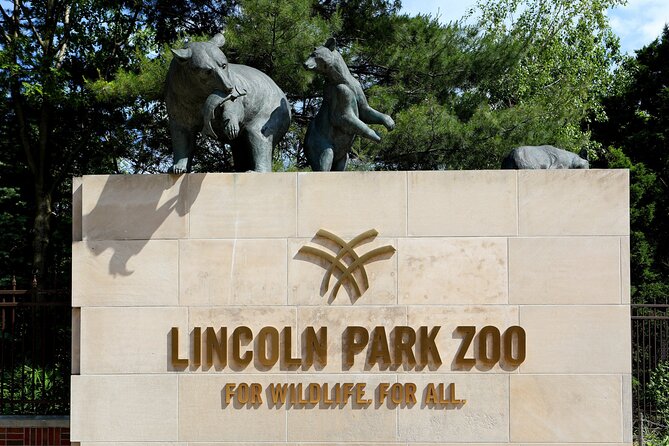
Lincoln Park Zoo is the route’s free family-friendly stop. The audio explains the zoo’s development from a small menagerie into a conservation and research institution, with attention to captive breeding, habitat design, animal care, and endangered species.
The zoo is free to enter, but it is not a quick indoor attraction. You can spend a long time walking between habitats, so treat the 20-minute marker as an audio suggestion rather than a complete visit. The recording gives you a framework for thinking about conservation while you explore.
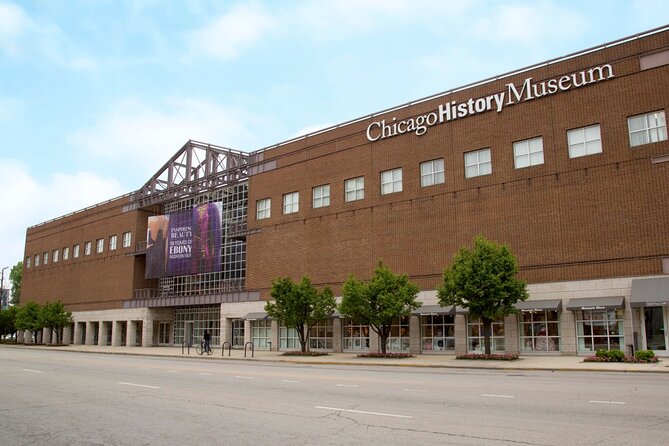
The Chicago History Museum provides the citywide story. It covers Chicago’s change from a frontier trading post to a major city and points you toward the Great Fire, the World’s Fair, local cultural movements, and the experiences of ordinary people.
Admission is not included. This stop is especially useful if you want to connect the other attractions. Union Station, the river, the skyline, the museums, and the lakefront all make more sense when you understand the forces that shaped Chicago.
The audio cannot replace the museum’s displays, but it can help you decide which sections deserve your time. If you have only one museum admission available, compare this stop with the Field Museum, Art Institute, or Griffin Museum of Science and Industry based on your interests.
Newberry Library and Griffin Museum of Science and Industry
The Newberry Library is an independent research library with rare manuscripts, historic maps, literary collections, and reading rooms. The audio tells you about its founding, its role in Chicago’s intellectual life, and the scholars and writers who worked with its collections.
This is a quieter stop than Navy Pier or Millennium Park. The audio helps you appreciate why a research library matters even when you are not conducting research yourself. The building’s architecture and public programs add to the visit, and admission is free.
The Griffin Museum of Science and Industry is the biggest time commitment among the 15 stops. It occupies the last surviving building from the 1893 World’s Columbian Exposition and includes major exhibits such as a captured German U-boat and the Pioneer Zephyr train.
The audio explains the museum’s origins and its focus on technology, medicine, innovation, and hands-on learning. Admission is not included, and you should not expect to see the whole museum in 20 minutes. Pick the exhibits that interest you most and let the audio serve as a guide to the building’s purpose and history.
This stop is on the South Side, while many of the downtown locations are clustered closer together. If you plan to cover the entire route, use the map and transport planning before you leave. The tour offers flexibility, but it does not remove the distance between neighborhoods.
How to use the links without losing time
Before your chosen date, prepare your phone rather than waiting until you reach the first stop. You receive the access links through the booking platform’s messaging system before your start time.
The first link opens a SoundCloud playlist. You do not need to create a SoundCloud account. Open it in a normal web browser, such as Safari or Chrome, then select the attraction you want to hear.
The second link opens Google My Maps in a browser. It is important to use the browser rather than the Google Maps app. You can tap a headphone icon on the map or open the tour title to see the full list of stops.
Bring headphones, a fully charged smartphone, and internet access. The audio device, data connection, and earphones are your responsibility. Test both links before setting out, especially if you plan to use the tour across several neighborhoods.
The links remain valid for up to six days. That is the tour’s biggest practical advantage. You can make one downtown day, one lakefront day, and another day for the South Side or Lincoln Park without forcing all 15 attractions into one tiring circuit.
Is $6 a good value?
At $6 per person, the price is low enough to work as a supplement to a self-planned Chicago visit. Even a few useful stories at Union Station, Millennium Park, or the Riverwalk can justify the cost, especially since several stops are free.
The value drops if you expect a full spoken tour. The total audio is short, with some attractions receiving only brief segments. One detailed account found the full spoken material added up to less than 30 minutes and felt that the recordings did not match the grand scale suggested by the attraction descriptions.
That criticism is fair if you want depth. The product works better when you see it as a set of concise introductions. You are paying for route ideas, short narration, and the ability to choose your own order, not for hours of expert commentary.
You will also need to budget separately for entry to the Field Museum, Art Institute, Driehaus Museum, 360 Chicago, Chicago History Museum, and Griffin Museum of Science and Industry. Transport, food, drinks, headphones, and internet access are also outside the $6 price.
Who should choose this tour?
I would choose this for an independent person who likes to set the pace and wants a cheap layer of context over a sightseeing day. It suits couples, families, and small private groups who may not all want to spend the same amount of time at each attraction.
It is also useful if you are visiting Chicago over several days. The six-day link period lets you divide the route and return to places that deserve more time.
I would not choose it as my only guide to the Art Institute, Field Museum, or Griffin Museum of Science and Industry. Those institutions are too large for a short recording to explain fully. I would also avoid it if you want a local guide who can answer questions or adjust the tour as you walk.
The clearest praise concerns the narration’s sound and delivery. The guide is described as articulate, engaging, and loud enough for a group to hear, with folklore and stories that add character. That is a real strength for a self-guided product, since poor audio would make even a flexible route frustrating.
FAQ
How much does the Chicago Self-Guided Audio Tour cost?
The price is $6 per person.
How long does the tour take?
The estimated duration is about 3 to 9 hours. You can also split the experience across multiple days because the access links remain valid for up to six days.
Can I choose my own starting and ending points?
Yes. There is no fixed meeting point because you decide where to begin, which attractions to visit, and where to finish.
Is the tour GPS guided?
No. It is not GPS guided. You use an interactive Google My Maps itinerary in a web browser and select the attraction you want to visit.
What do I need to bring?
Bring a fully charged smartphone, headphones or earphones, and internet access. Audio devices, headphones, and internet service are not provided.
Are admission fees included?
No. Entry fees are not included. Admission may be required at the Field Museum, Art Institute of Chicago, Richard H. Driehaus Museum, 360 Chicago, Chicago History Museum, and Griffin Museum of Science and Industry.
Is the tour available in other languages?
The tour is offered in English.
Should you book it?
Book it if you want a very inexpensive, flexible audio layer for a Chicago sightseeing plan. The range of stops is impressive, and the combination of free public places with major museums lets you shape the cost and pace to suit you.
Skip it if you expect a detailed, continuous narration or a live guide. The short recordings are best for orientation and atmosphere. For $6, that can be a useful bargain, as long as you arrive expecting concise stories rather than a full museum lecture.
Latest audio tours in the USA
- Sequoia National Park Self-Guided Audio Tour★ 4.5 · 9 reviews
- Sequoia and Kings Canyon Audio Tour Self Guide National Park Tour★ 5.0 · 3 reviews
- Kings Canyon National Park Self-Guided Audio Tour★ 4.0 · 4 reviews
- Sedona, Arizona Self-Guided Audio Tour★ 4.0 · 36 reviews
- Sedona & Red Rock State Park Self-Guided Driving Audio Tour★ 3.0 · 30 reviews
- Downtown Seattle Self-Guided Walking Audio Tour★ 4.5 · 6 reviews
- Uncover Seattle: Self-Guided Audio Tour★ 3.5 · 7 reviews
- Haunted Savannah Self-Guided Walking Audio Tour★ 4.5 · 3 reviews
Self-Guided Audio Tours, compared.
Acropolis Ticket & Optional Self-Guided Audio Tours
Read our review →


Ultimate Acadia National Park Self-Guided Driving Audio Tour
Read our review →

Akrotiri Ticket with Optional Self-Guided Audios
Read our review →