
Reviewed · BOSTON
Boston Civil War and Abolition Movement: A Self-Guided Audio Tour
Boston’s Civil War story begins well before the first shots were fired. This self-guided walk connects Daniel Webster’s fight to preserve the Union, Harriet Beecher Stowe’s antislavery writing, Frederick Douglass’s sharp criticism of American freedom, and the service of the 54th Massachusetts Regiment. You move through the city while the VoiceMap audio guide supplies the story.
I like the freedom to stop, look around, or pause the tour whenever you wish. I also like the mix of famous sites and less expected subjects, including the Boston Irish Famine Memorial and Louisa May Alcott’s final home at Louisburg Square. The main drawback is that this is audio only, so you must supply your own phone, headphones, and attention to the map.
Key points to know before you go

- Daniel Webster sets the political stage: The walk opens at Faneuil Hall with Webster’s long effort to keep the Union together.
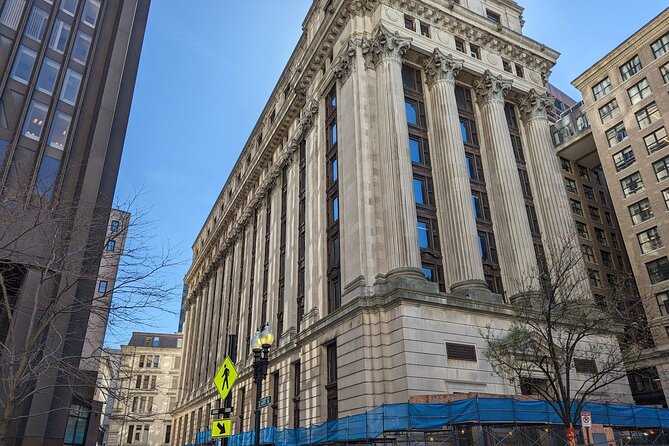
- The route links several historic buildings: You pass the Old State House, Old Court House, New State House, Old City Hall, Old Corner Bookstore, and Old South Meeting House.
- Abolition voices shape the tour: Harriet Beecher Stowe and Frederick Douglass receive special attention.
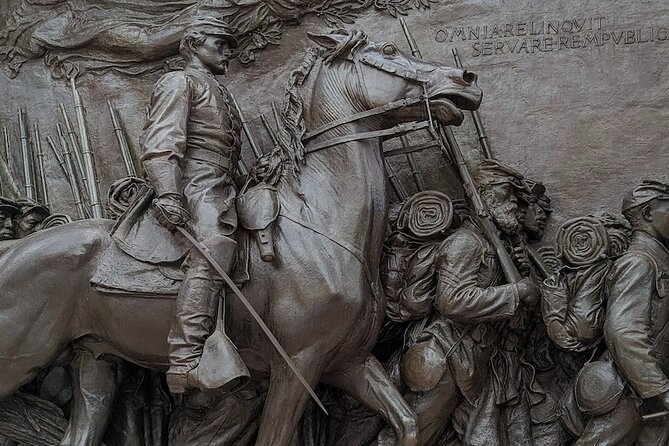
- The 54th Massachusetts gets its due: The Robert Gould Shaw and 54th Regiment Memorial brings the Black military experience into focus.
- You can walk on your own schedule: Offline maps, audio, and geodata work through the VoiceMap app for Android and iOS.
- The ending is at the Soldiers and Sailors Monument: The walk finishes near Boston Common after about 90 minutes to two hours.
A Civil War story told through downtown Boston

This is not a museum tour and not a costumed performance. It is a walking route through central Boston, with a recorded narrator guiding you from one location to the next.
That format works well here because the city itself supplies much of the visual material. You pass old government buildings, churches, burial grounds, memorials, and grand residential streets. The audio fills in the political and human stories that are not always obvious from the buildings alone.
The focus is broader than battlefield history. You hear about the arguments that led to war, the abolition movement, the treatment of Black soldiers, immigration, slavery, literature, and the meaning of American freedom. The tour also reaches back to the American Revolution, giving Paul Revere and John Hancock a place in the larger story of Boston.
The route includes 11 stops, with roughly 10 minutes assigned to each. In practice, your total time can range from about an hour and a half to two hours, depending on your walking pace and how long you spend looking at each place.
More Self-Guided Audio Tours in the USA
- Gettysburg Battlefield Self-Guided Driving Audio Tour
★ 4.5 · 910 reviews - Joshua Tree National Park Self-Guided Driving Audio Tour
★ 4.5 · 762 reviews - Ultimate Acadia National Park Self-Guided Driving Audio Tour
★ 4.0 · 521 reviews
Starting at Faneuil Hall with Daniel Webster
The tour begins in front of Faneuil Hall Marketplace at 1 Faneuil Hall Square. This is a useful starting point because Faneuil Hall is one of Boston’s best-known civic landmarks, and the surrounding area is easy to reach by public transportation.
The opening story centers on Daniel Webster and his 30-year effort to preserve the Union. That gives you an important political introduction before the walk turns toward abolition and the Civil War itself. Webster’s role helps explain that the conflict did not appear overnight. For decades, politicians argued over federal power, slavery, states’ rights, and the future of the country.
You do not need to enter Faneuil Hall for the audio route. The tour begins outside, and admission to the stop is free. Since this part of Boston can be active, it is wise to locate the Visitor Center and get your audio running before you set off.
Four government buildings and the road to war
From Faneuil Hall, the route passes several examples of Georgian and civic architecture. The Old State House, Old Court House, New State House, and Old City Hall each contribute another piece of the political story.
This section should appeal to you if you like architecture with your history. You are not simply moving from one unrelated landmark to another. The narration uses the buildings to show how Boston’s political life developed and how debates over the Union took shape in public institutions.
The Old State House is especially important as a symbol of colonial and early American government. The New State House, by contrast, points to the continuing work of state politics. The Old Court House and Old City Hall add the legal and municipal sides of the story.
The audio does not guide you inside these buildings. If you decide to enter any attraction along the way, you will pay separately and visit on your own. That keeps the tour price low, but it also means you should not expect an indoor presentation or a staff-led explanation at each stop.
Harriet Beecher Stowe and the Old Corner Bookstore
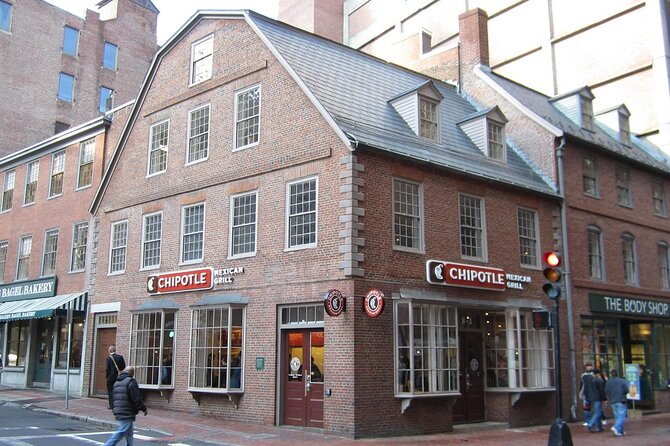
Outside the Old Corner Bookstore, the tour turns to Harriet Beecher Stowe and the reason she traveled from Ohio to Boston to publish Uncle Tom’s Cabin.
This is one of the route’s strongest literary connections. The bookstore helps you see Boston not only as a center of politics, but also as a place where printed ideas could reach a national audience. Stowe’s book became a major force in the debate over slavery, and the narration connects her publishing story to the wider abolition movement.
The stop is brief, listed at about 10 minutes, but the subject gives the walk a welcome change of pace. You move from politicians and government buildings to the way literature shaped public opinion.
Another self-paced route in the USA:
- Los Angeles: Hop-On Hop-Off Bus Tour with Audio Guide
★ 3.7 · 2,030 reviews - City Sightseeing Hop-On Hop-Off Bus Tour with Audio Guide
★ 3.0 · 1,083 reviews - Medieval Torture Museum Ticket with Audio Guide and Ghost Hunting
★ 5.0 · 962 reviews - San Francisco: Alcatraz, Ferry & Audio Tour w/ Night Option
★ 4.4 · 617 reviews
Old South Meeting House and Boston’s public debates
The route next passes the Old South Meeting House. The building is closely tied to Boston’s tradition of public debate, and it provides another setting for understanding how political ideas reached ordinary people.
You will hear about the building while walking past it rather than taking part in an interior visit. That distinction matters. The tour is designed to explain places from the street, not to provide admission or a guided museum experience.
If you want a fuller look at the meeting house, you can choose to enter independently. The audio tour still works as a self-contained outdoor walk, so an additional visit is optional rather than required.
The Irish Famine Memorial and Boston’s immigrant story
The Boston Irish Famine Memorial adds a different human perspective. Here, the narration turns to the Irish in Boston and the history represented by the memorial.
This stop broadens the Civil War story beyond famous politicians and generals. Boston’s population included immigrants dealing with poverty, displacement, and difficult social conditions. The Irish experience helps you consider how national conflict affected communities that were also building new lives in the United States.
The memorial is one of the more distinctive stops because it is not simply a colonial building or a Revolutionary War site. It reminds you that Boston’s identity was shaped by later waves of immigration as well as its early American past.
Frederick Douglass at Tremont Temple Baptist Church
At Tremont Temple Baptist Church, the tour focuses on Frederick Douglass. The narration recounts how Douglass, a formerly enslaved man, addressed a mostly white congregation and explained why the Fourth of July did not represent freedom to people who had lived under slavery.
This is a powerful point in the walk because it puts abolitionist arguments in direct, personal terms. Douglass was not discussing freedom as an abstract political idea. He was asking his audience to confront the gap between American ideals and American practice.
The church also fits the route’s wider interest in public speech. Faneuil Hall, the Old State House, the Old South Meeting House, and Tremont Temple all become places where ideas were presented, challenged, and shared.
Granary Burying Ground and the Revolutionary generation

The walk then enters Granary Burying Ground, where you can see the graves of John Hancock and Paul Revere. This stop moves the timeline back to the American Revolution.
At first, that may seem like a detour from the Civil War. It is actually useful context. The Civil War generation often appealed to the language and promises of the Revolution. By placing Revolutionary figures in the route, the audio helps you connect the country’s founding ideals with the later struggle over who would truly enjoy liberty.
The burial ground is also one of the places where you should slow down. The audio may take about 10 minutes, but the compact cemetery rewards a careful look at the markers and layout. Admission is free, and you are not required to join a group or keep pace with anyone else.
Paul Revere and the meaning of American freedom
A separate stop focuses on Paul Revere and his role in the American Revolution. Since Revere’s grave is within the Granary Burying Ground, these two portions of the walk are closely connected.
The value here is not simply hearing another familiar name. The route uses Revere as a reminder that Boston’s patriotic story has many layers. The Revolution created a powerful national memory, but later generations had to argue over how its promises applied to slavery, Black citizenship, and military service.
If you already know the basic Paul Revere story, this stop may feel familiar. Its place in the larger route still gives it purpose, especially when paired with the later discussion of the 54th Massachusetts.
Robert Gould Shaw and the 54th Massachusetts
The Robert Gould Shaw and 54th Regiment Memorial is one of the tour’s central stops. The narration follows the regiment’s struggle for respect and its role in encouraging the enlistment of approximately 180,000 additional Black recruits during the Civil War.
This is the point where the political and moral arguments heard earlier become connected to military service. Black soldiers had to fight not only the Confederacy, but also prejudice within the Union army and society. Their service forced the country to confront the question of Black citizenship in a direct way.
The memorial gives you a strong visual focus for the story. You can take time to look at the figures and details while the audio continues. Since the tour is private to your group, you can pause without holding up a guide or other participants.
Louisburg Square and Louisa May Alcott
The route later reaches Louisburg Square, one of Boston’s most expensive residential areas. Here, you hear about the final part of Louisa May Alcott’s life.
This stop shifts from war and abolition to literature and social class. Louisburg Square’s setting gives the story a different tone from the burial ground and public memorials. It also shows how the tour uses Boston’s streets to connect private lives with national history.
Alcott is best known for her writing, but the stop is framed around the end of her life. That makes it a quieter section of the walk. You may appreciate the change after the intense political material, though anyone seeking a tour devoted only to the Civil War may find this part less central.
Finishing at the Soldiers and Sailors Monument
The tour ends at the Soldiers and Sailors Monument at 139 Tremont Street, near Boston Common. The monument honors the 120 Massachusetts regiments that fought in the Civil War.
It is a fitting final stop because the walk has moved from political argument to abolition, public speech, immigration, Black military service, and the memory of the war. The monument gives the route a clear closing point rather than leaving you at an unrelated street corner.
The end location is also practical. You finish near public transportation and other central Boston sights. You can continue exploring on foot, find food nearby, or use the area as a convenient point for the next part of your day.
How the VoiceMap format works
You need a smartphone and headphones, neither of which is included. The tour uses the VoiceMap app on Android and iOS, and your purchase includes lifetime access in English.
The useful feature is offline access to the audio, map, and geodata. Download the material before you begin so you are not relying on a mobile signal while walking. The map matters as much as the narration, since this is a self-guided route rather than a person physically leading you from stop to stop.
The audio also provides directional alerts. If you head the wrong way, the app can give you a humorous warning and help you check your position. That is a small feature, but it reduces the stress of navigating an unfamiliar downtown route.
There is no scheduled start time. The listed hours run around the clock, from midnight to 11:59 p.m., Monday through Sunday. That flexibility is useful if you want to fit the walk around another Boston visit.
Is $11.99 a fair price?
At $11.99 per person, the tour is priced as a low-cost introduction to central Boston’s Civil War and abolition story. Your payment covers the audio tour, app access, and offline route material. It does not cover food, transportation, a smartphone, headphones, or admission to museums and other attractions.
The value is strongest if you want a focused walk without paying for a private guide. You get a planned route, a clear subject, and the freedom to stop whenever you like. If you would otherwise wander among these sites without knowing how they connect, the narration adds useful structure.
The price is less attractive if you want long indoor visits or a live historian who can answer questions. You also need to accept the non-refundable booking policy. Once purchased, the experience cannot be canceled or changed for a refund, so book only when your Boston plans are firm.
Who should choose this walk?
I would recommend it to independent visitors who enjoy city walks, want control over their schedule, and have an interest in the period before and during the Civil War. It also suits people who want abolition history presented alongside Boston’s Revolutionary landmarks, literary sites, immigrant memorials, and civic buildings.
Families with older children may find the format useful because the walk can be paused. The subject matter includes slavery, racism, war, and death, so adults should decide if the tone fits their group.
You should think twice if you dislike listening through headphones, prefer a live guide, or need extensive indoor access. The route is primarily an outdoor explanation of places you pass, not a museum program.
Should you book it?
Book this tour if you want an affordable, flexible way to connect Boston’s political, literary, abolitionist, immigrant, and military stories. The strongest sections are the Harriet Beecher Stowe stop, Frederick Douglass’s account at Tremont Temple, and the Robert Gould Shaw and 54th Regiment Memorial.
Skip it if your priority is entering historic buildings or asking questions of a guide. Bring a charged phone, headphones, and enough time to pause at the burial ground and memorials. For the right kind of independent walker, the tour gives Boston’s familiar streets a sharper historical meaning without locking you into a group schedule.
FAQ
Where does the tour start?
The tour starts in front of the Faneuil Hall Visitor Center at 1 Faneuil Hall Square, Boston, Massachusetts 02109.
Where does the tour finish?
It ends in front of the Soldiers and Sailors Monument at 139 Tremont Street, Boston, Massachusetts 02109.
How long does the walking tour take?
The estimated duration is about one hour and 30 minutes to two hours.
What language is the audio tour offered in?
The tour is offered in English.
What app does the tour use?
It uses the VoiceMap app, which is available for Android and iOS.
Can I use the tour offline?
Yes. The tour includes offline access to the audio, maps, and geodata.
Is a smartphone included?
No. You need to bring your own smartphone.
Are headphones included?
No. You need to provide your own headphones.
Does the tour include admission to museums or other attractions?
No. The audio tour does not guide you through museums or other attractions mentioned along the route. If you enter one, you pay for admission separately.
Is this a group tour with a live guide?
No. It is a private self-guided activity for your group, using recorded audio through the VoiceMap app.
Latest audio tours in the USA
- Solvang City Personalized Self-Guided App Tour★ 3.0 · 6 reviews
- Essential Downtown SLO: A Self-Guided Audio Tour★ 4.5 · 27 reviews
- Silicon Valley Self-Guided Driving Audio Tour for Tech Lovers★ 4.0 · 24 reviews
- Self-Guided Audio Tour of the Golden Gate Bridge★ 3.5 · 3 reviews
- The Ghosts of San Francisco Haunted Audio App Walking Tour★ 5.0 · 2 reviews
- Point Reyes National Seashore Self Guided Driving Audio Tour★ 4.0 · 9 reviews
- San Francisco Self-Guided Audio Drive: Explore at Your Own Pace★ 4.0 · 9 reviews
- Explore Coronado Island on a Self Guided Audio Tour★ 5.0 · 2 reviews
Self-Guided Audio Tours, compared.

Acropolis Ticket & Optional Self-Guided Audio Tours
Read our review →


Ultimate Acadia National Park Self-Guided Driving Audio Tour
Read our review →


Akrotiri Ticket with Optional Self-Guided Audios
Read our review →
Browse the lists this tour appears in