
Reviewed · GREECE
Archaeological Site of Mycenae: E-Ticket with Audio Guide
Mycenae is the kind of place where the stones do much of the talking. You walk through the Lions’ Gate, follow the old route toward the palace, then enter the huge beehive-shaped Tomb of Agamemnon. The audio tour adds the missing human story, explaining what these walls, frescoes, tombs, and battered foundations once meant.
I like the freedom to explore without keeping up with a group, and I like having the museum ticket and archaeological site entry bundled together. The short audio stories also make a difference, especially when you are looking at ruins that need context. The main drawback is practical: mobile coverage can be poor, so download your ticket and audio tour before you arrive.
Key points to know
- The Lions’ Gate gives you a dramatic entrance: This massive Bronze Age gateway is the site’s most famous view and an excellent place to begin.
- The Tomb of Agamemnon is included: Your ticket covers entry to the Treasury of Atreus at the selected date and time.
- The audio tour works offline: Download the app, narration, text, and maps before reaching Mycenae.
- The museum completes the picture: See frescoes and objects connected with plants, griffins, lions, bull-leaping, warriors, chariots, and battles.
- You explore independently: There is no live guide or transportation, so you control the pace and must arrange your own arrival.
- The site requires steady footing: Comfortable shoes, sun protection, and a charged phone matter here.
Why Mycenae feels different from other Greek ruins
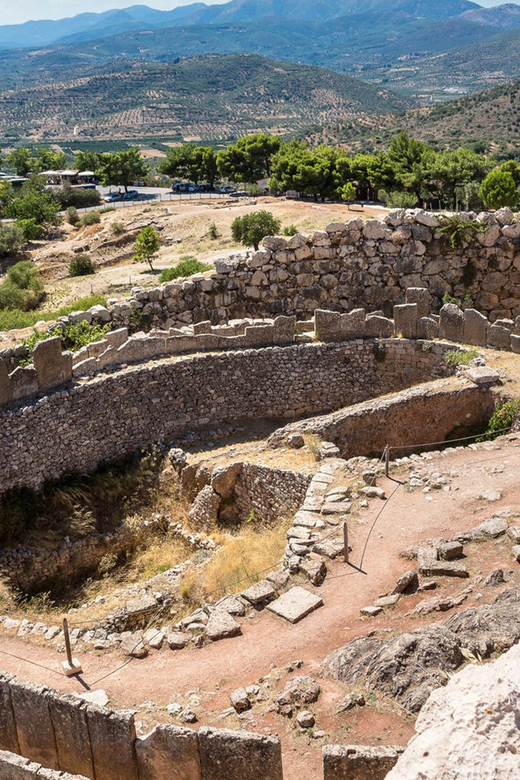
Mycenae takes you to Bronze Age Greece, long before the classical temples most people picture when they hear the word ancient Greece. This was one of the major centers of Greek civilization, and its builders worked on a scale that still surprises you.
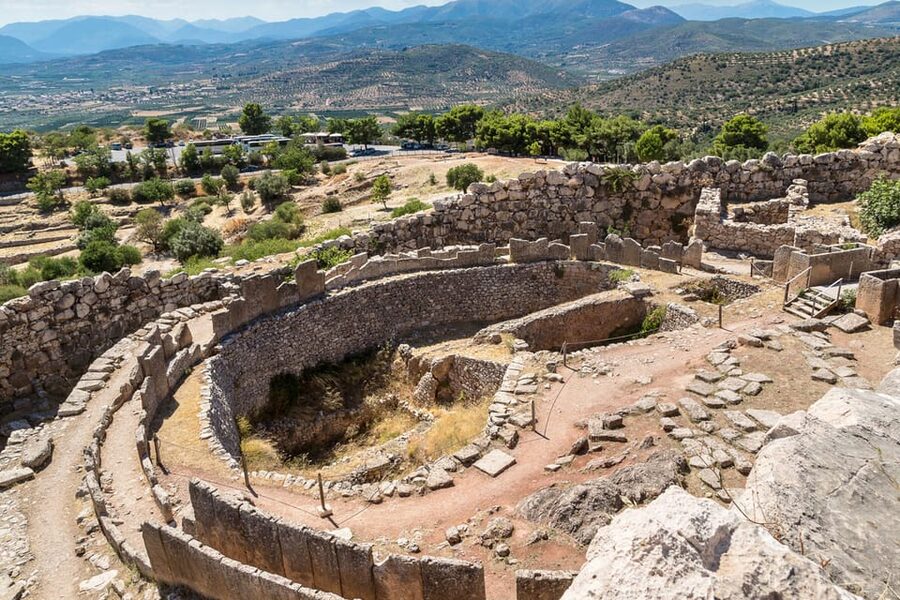
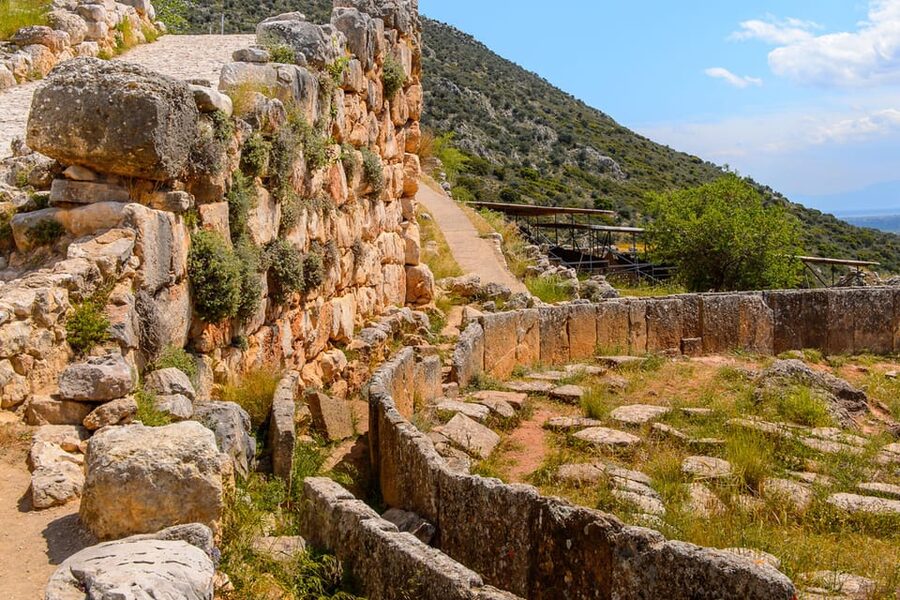
The great walls are made from enormous blocks of stone. Later Greek visitors apparently thought such stones were too large for ordinary people to move, which helped give rise to the name Cyclopean Walls. You do not need to know every date or dynasty to appreciate the effect. The walls make an immediate point: this was a powerful place.
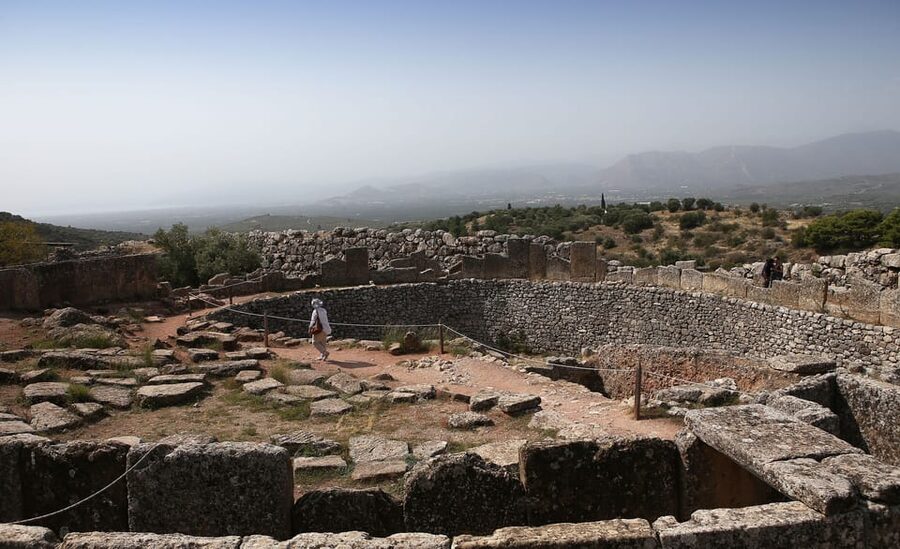
The site is not preserved as a complete city. You will see foundations, wall lines, tombs, steps, and scattered remains rather than standing houses and rooms. That is where the audio tour earns its keep. Its commentary is arranged as short stories, with historical details, unusual anecdotes, and explanations tied to the places in front of you.
I find this format better suited to Mycenae than a long lecture. You can stop the narration, look around, and continue when you are ready. If a particular building interests you, you can spend extra time there. If the heat is wearing you down, you can keep moving.
More History Audio Tours in Greece
- Athens: National Archaeological Museum Ticket & Audio Guide
★ 4.3 · 1,330 reviews - Delphi: Archaeological Site & Museum Ticket with Audio Tours
★ 4.3 · 721 reviews - Athens: National Archaeological Museum Ticket w/ Opt. Audio
★ 4.4 · 713 reviews
Starting at the Lions’ Gate
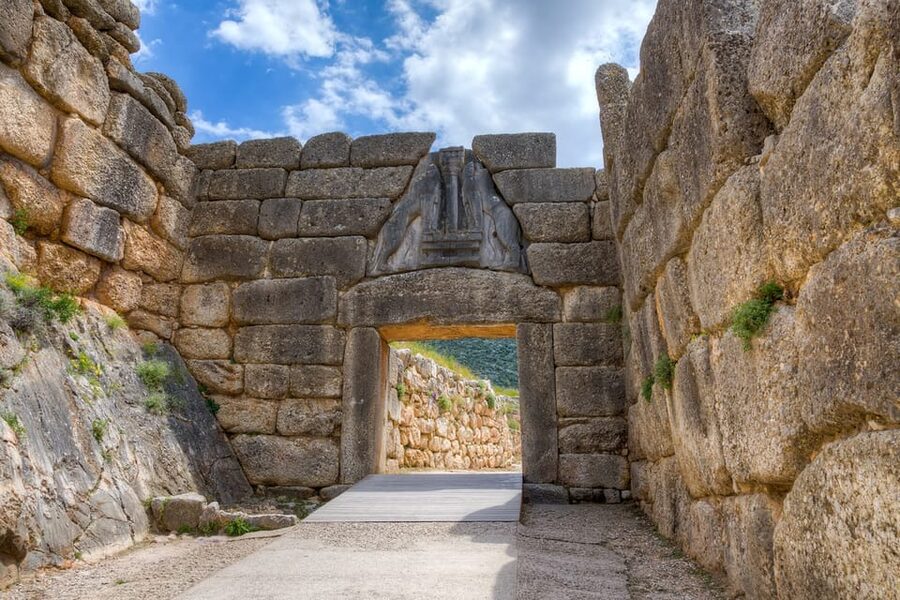
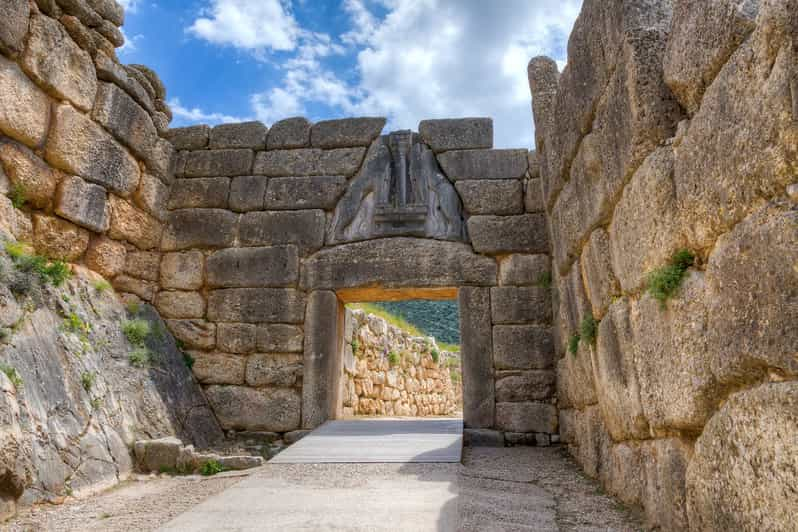
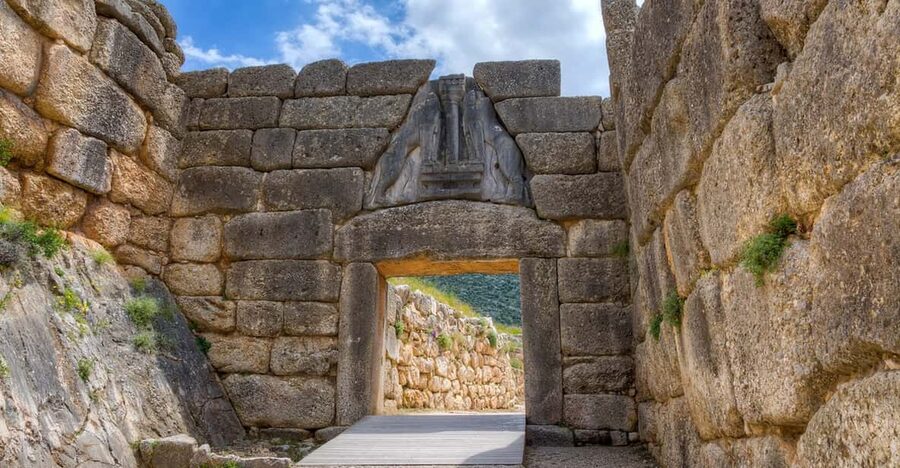
The self-guided route is designed to begin at the entrance to the archaeological site. From there, the Lions’ Gate provides your first major encounter with Mycenaean architecture.
The gateway is built into the fortification wall, with two large lions carved above the entrance. The heads are missing, but their bodies still frame the triangular relief. This is more than a decorative doorway. It was a statement of power, designed to make the approach to the citadel feel controlled and impressive.
Put on your headphones here and let the audio guide set the scene. The narration helps you notice details that are easy to miss when you are simply taking photographs. It also gives you a useful sense of how the entrance connected with the wider fortified complex.
The area can feel exposed, especially under strong Peloponnese sun. Bring a hat and sunscreen, and do not count on finding shade whenever you need it. Comfortable shoes are important because you will be walking over uneven archaeological ground rather than smooth museum flooring.
Walking the Cyclopean Walls and palace remains
Beyond the gate, the route leads through the remains of the citadel. You will see sections of the Cyclopean Walls, old passageways, and traces of the palace complex.
The palace, or Megaron, was the center of royal life. What remains is mainly architectural evidence: foundations, floor plans, and fragments that require a little imagination. The audio guide helps you connect these pieces with the larger idea of a Mycenaean court and administrative center.
This is also the part of the visit where the self-guided format becomes especially useful. A live guide might explain the area once and move on with the group. With the app, you can replay a section or pause beside a feature that catches your eye. The commentary is not meant to replace a specialist archaeologist, but it gives enough structure to prevent the ruins from becoming a blur of stones.
The site is not wheelchair accessible and is not suitable for people with mobility difficulties. The terrain, walls, and paths make this a demanding place for anyone who has trouble walking. The museum is wheelchair accessible, but that does not make the outdoor citadel accessible.
The palace, Megaron, and Bronze Age art
The Megaron is one of the most important areas to understand because it shows how Mycenae functioned as a seat of power. The surviving remains do not offer a complete royal room, so the audio narration must do some of the explanatory work.
You will hear about the palace layout and the role of the complex as you move through the remains. Look for the way rooms and open areas fit together. Even when walls have disappeared, the plan of the site gives you a sense of order and hierarchy.
The museum adds color to this bare-stone experience. Among the finds and displays are images of plants, griffins, lions, bull-leaping, battle scenes, warriors, chariots, and boar hunts. These subjects help you picture a culture that was not simply about fortifications and tombs. Mycenaean life included ceremony, art, warfare, hunting, and contact with a wider Bronze Age world.
The museum is also where the audio tour can help you slow down. At an outdoor ruin, your eye tends to move across the whole scene. In the museum, you can focus on individual objects and ask what each one reveals about daily life, beliefs, status, or military power.
More Smartphone Audio Tours in Greece
- Crete: Palace of Knossos E-Ticket and Audio Guide
★ 3.8 · 1,540 reviews - Athens: Ancient Agora E-Ticket and Audio Tour
★ 3.9 · 413 reviews - Olympia: Archaeological Site & Museum E-Ticket & Audio Guide
★ 4.3 · 272 reviews - Rhodes: Palace of the Grand Master E-Ticket & Audio Tour
★ 4.2 · 216 reviews
Entering the Tomb of Agamemnon
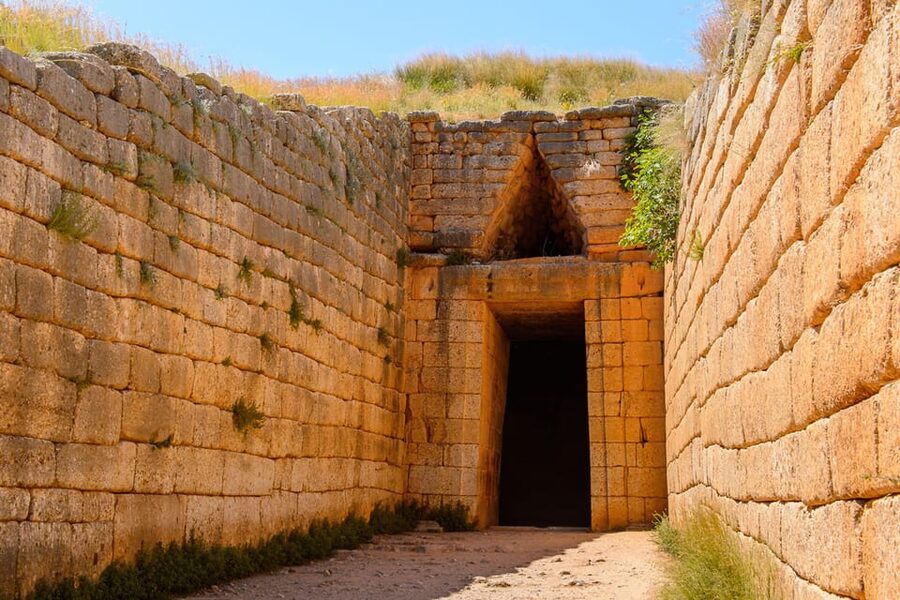
The Treasury of Atreus, often called the Tomb of Agamemnon, is one of the strongest parts of the visit. Your ticket includes entry on the selected date and time slot, so pay attention to that part of your booking.
The approach leads through a passage toward the large circular tomb. Its beehive-shaped interior is formed by carefully laid stone courses that curve inward until they meet. The effect is simple and powerful: you enter a dark, tall chamber built with remarkable precision.
The tomb is not just a quick photo stop. Give your eyes a moment to adjust and notice the scale of the space. The smooth curve of the walls feels different from the rougher fortifications outside. It also offers a useful contrast between the public face of Mycenae and the burial monuments connected with its ruling elite.
The name links the tomb with Agamemnon, the legendary king associated with the Trojan War. The audio guide can help separate the later legends from what archaeology can actually show. That distinction matters. Mycenae lives partly in epic stories, but the stones and artifacts belong to a much older Bronze Age world.
The Mycenae Museum and its painted fragments
After walking the citadel, the museum gives you a more focused stop. It houses objects found in the Mycenae complex, including material that helps explain the buildings and tombs you have just seen.
The fresco subjects are among the most memorable details. You may encounter images of griffins, lions, plants, bull-leaping, warriors, chariots, battle scenes, and boar hunts. These scenes are useful because they bring movement and color to a site that can otherwise feel dominated by weathered stone.
I recommend visiting the museum as part of the main experience rather than treating it as an optional add-on. The outdoor ruins show size and position. The museum shows decoration, craft, and the visual world of the people who used the site.
The museum is wheelchair accessible, unlike the archaeological site. If someone in your group has mobility limitations, the museum may still offer a meaningful part of the Mycenae experience, but the full outdoor route is not suitable.
How the Clio Muse audio guide works
The audio tour is supplied through a mobile app and is available for Android version 5.0 or later and iOS. It is not compatible with Windows phones. You need about 100 to 150 MB of storage, headphones, and a charged smartphone.
The most important step is downloading everything before you reach Mycenae. The site may have weak internet coverage, and relying on the signal to retrieve your ticket at the entrance can cause trouble. Save the ticket and audio content to your phone while you still have a reliable connection.
The guide includes audio narration, written content, and maps for offline use. You can use the downloaded tour indefinitely and at any time, which is useful if you want to revisit the material later. The available languages are English, German, Spanish, French, and Italian.
Do not expect a live guide to answer questions or adjust the route for your interests. This is a private, self-directed experience. That is a strength if you dislike fixed group schedules, but a limitation if you want conversation, archaeological debate, or help interpreting every feature on site.
Getting there and planning your visit
The easiest way to reach the entrance is by car. Transportation is not included, so you must arrange your own way to Mykines in the Peloponnese.
The ticket is valid for one day, with availability shown for specific starting times. It includes the archaeological site, the Museum of Mycenae, and the Treasury of Atreus on the selected date. The exact timing for the tomb matters, so keep your booking details easy to find.
The experience costs about $41 per person. That price is reasonable if you want the site, museum, Treasury of Atreus, and audio content in one purchase, especially if you value independent pacing. It is less attractive if you only want a quick look at the ruins or already have a separate guide.
One unusual detail can affect the cost: the booking is made per device used, not per participant. If two people want to listen on separate phones, check how the purchase applies before booking. You can also use one device between two people, though sharing headphones may be less comfortable.
Free and reduced-price entry tickets can only be obtained on-site. If you qualify for one of those categories, compare the savings before paying for this package.
What to bring for a comfortable visit
Mycenae rewards preparation more than fancy equipment. Pack:
- Comfortable shoes for uneven paths
- A hat and sunscreen
- Headphones
- A fully charged smartphone
- Enough phone storage for the 100 to 150 MB download
Large bags and backpacks are not allowed, and baby strollers are not allowed. Plan to arrive with only what you need for the visit.
Because the site is outdoors and the experience lasts up to a day in terms of ticket validity, avoid treating it like a quick indoor museum stop. You may want time for the citadel, tomb, and museum without rushing between them. The audio guide lets you set the pace, but the sun and uneven ground still set some limits.
Who should book this Mycenae experience
I would choose this option if you are arriving independently, want a clear explanation of the ruins, and prefer not to join a scheduled group. It works particularly well for couples, families with older children, and independent sightseers who are comfortable using a smartphone.
It is also a good fit if you want several languages. English, German, Spanish, French, and Italian are included, so you can listen in the language that makes the historical details easiest to follow.
I would think twice if you need transportation, personal assistance, or a fully accessible route. I would also skip it if you cannot download apps, carry a charged phone, or manage uneven outdoor paths. A live guide would be better for visitors who want questions answered on the spot.
Should you book the Mycenae audio tour?
Book it if you want the freedom to explore the Lions’ Gate, Cyclopean Walls, palace, museum, and Tomb of Agamemnon in one self-guided visit. The strongest value comes from the combination of site entry, museum admission, Treasury of Atreus access, and offline storytelling.
Before you go, download the app and ticket, check your phone storage, bring headphones, and confirm the tomb time slot. If you handle those details and can manage the terrain, this is a practical way to make sense of one of Greece’s most striking Bronze Age sites.
FAQ
What does the Mycenae e-ticket include?
It includes entrance to the Mycenae archaeological site, the Museum of Mycenae, and the Treasury of Atreus on the selected date. A self-guided audio tour with offline text, narration, and maps is also included.
Is transportation included?
No. Transportation is not included. The easiest way to reach the archaeological site entrance is by car.
Is there a live guide?
No. This is a self-guided audio tour on your smartphone. There is no live guide.
What languages are available?
The audio guide is available in English, German, Spanish, French, and Italian.
Will the audio guide work without internet?
Yes, after you download the app and tour content. Download the ticket and audio guide before arrival because internet coverage at the archaeological site may be weak.
Is Mycenae wheelchair accessible?
The archaeological site is not wheelchair accessible and is not suitable for people with mobility difficulties. The Museum of Mycenae is wheelchair accessible.
What phone do I need?
You need an Android phone running version 5.0 or later, or an iOS smartphone. The tour does not work with Windows phones and requires about 100 to 150 MB of storage.
Latest audio tours in Greece
- E-Ticket to Akrotiri with Audio Tour on your Phone★ 5.0 · 2 reviews
- Authentic Santorini: A Self-Guided Audio Tour of Oia★ 4.5 · 3 reviews
- The Palace of the Grand Master E-Ticket with Audio Tour★ 4.0 · 9 reviews
- Explore Lindos Acropolis in 3D & Audio★ 4.0 · 4 reviews
- The Palace of the Grand Master. Self-guided Audio Tour★ 3.5 · 15 reviews
- Acropolis of Lindos E-Ticket with Audio Tour on your Phone★ 4.5 · 8 reviews
- Olympia Archaeological Site & Museum E-Ticket with Audio Tour★ 4.0 · 11 reviews
- Mykonos: Find your (queer) god Self-Guided Audio Tour★ 4.0 · 2 reviews
Smartphone Audio Tours, compared.
Colosseum & Forum with Audio Guide App -Optional Arena
Read our review →
Timed Entry to Michelangelo’s David + Audio App
Read our review →
Cathedral & Brunelleschi’s Dome Ticket & Audio App
Read our review →
Michelangelo’s David Priority Ticket & Audio App
Read our review →
Uffizi Priority Ticket & Masterpieces Audio App
Read our review →
Castel Sant’Angelo Entry Ticket & Digital Audioguide
Read our review →
Pantheon Priority Entry Ticket & Audio Guide App
Read our review →Browse the lists this tour appears in