
Reviewed · SPAIN
Lugo: Cathedral of Santa Maria Entry Ticket and Audio Guide
Lugo Cathedral packs centuries of Spanish church architecture into one visit. You move from a Romanesque north door to a Neoclassical west façade, then inside to a narrow cathedral floor plan, a lavish Churrigueresque altar, and the remarkable Christ in Majesty stone carving. I like the freedom to set your own pace, and I like that the ticket includes both the cloister and museum, not just the main church.
The main caution is the audio guide. The numbered stops may not always match the commentary perfectly, and there may be little orientation when you enter. The cathedral can also close for liturgical events, so check the day’s schedule and avoid arriving close to the 7 PM closing time.
Key points to know before you go
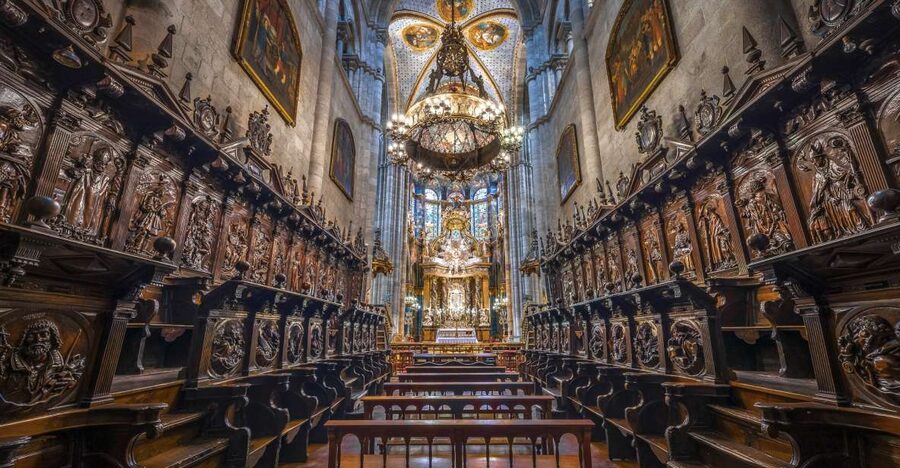
- The Christ in Majesty carving is one of the visit’s finest Romanesque works.
- The ticket includes three areas: the cathedral, cloister, and Cathedral Museum.
- Five audio guide languages are available: Spanish, English, Portuguese, French, and Galician.
- The building changes style as you explore, from Romanesque details to Baroque Churrigueresque decoration and a Neoclassical façade.
- The last entry is 45 minutes before closing, and the cathedral closes at 7 PM.
- The visit is self-guided, so you should bring your own sense of order if the audio stops and room numbers do not line up.
Why Lugo Cathedral deserves a place in your day
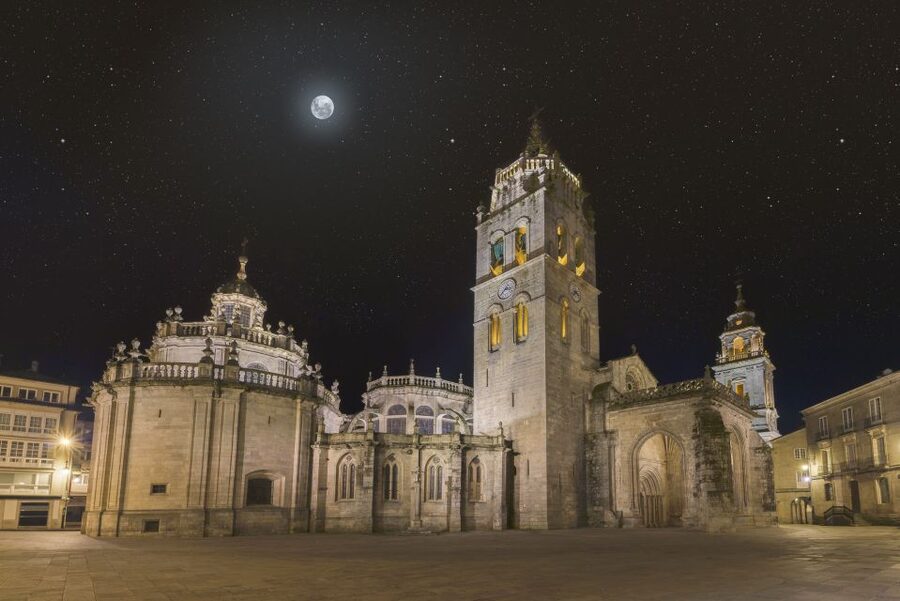
Lugo is best known for its complete Roman wall, but the Cathedral of Santa Maria gives the old center another strong focal point. The cathedral was built over a much longer period than a quick glance suggests. Its story reaches back to late Roman times, when a temple was built after the city’s conversion to Christianity. Nothing of that first church remains, but the present building can be traced to the 12th century.
That long building history explains the cathedral’s changing appearance. You are not looking at one clean architectural idea. You are looking at a building adjusted, expanded, and redecorated across several centuries. For you, that means the visit rewards slow looking. A door, altar, window, or façade may belong to a different period from the part beside it.
At about $9 per person, the ticket is a modest expense for a major monument. The price makes the most sense if you use all of it: take time with the main church, enter the cloister, and visit the museum. If you only walk in, glance at the altar, and leave, the value is thinner.
More Church Audio Tours in Spain
- Cordoba: Mosque-Cathedral E-Ticket with Audio Guide
★ 4.1 · 2,895 reviews - Cathedral and Giralda Entry Ticket with Audio Guide
★ 4.1 · 505 reviews - Granada: Basilica of San Juan de Dios Ticket & Audio Guide
★ 4.6 · 336 reviews
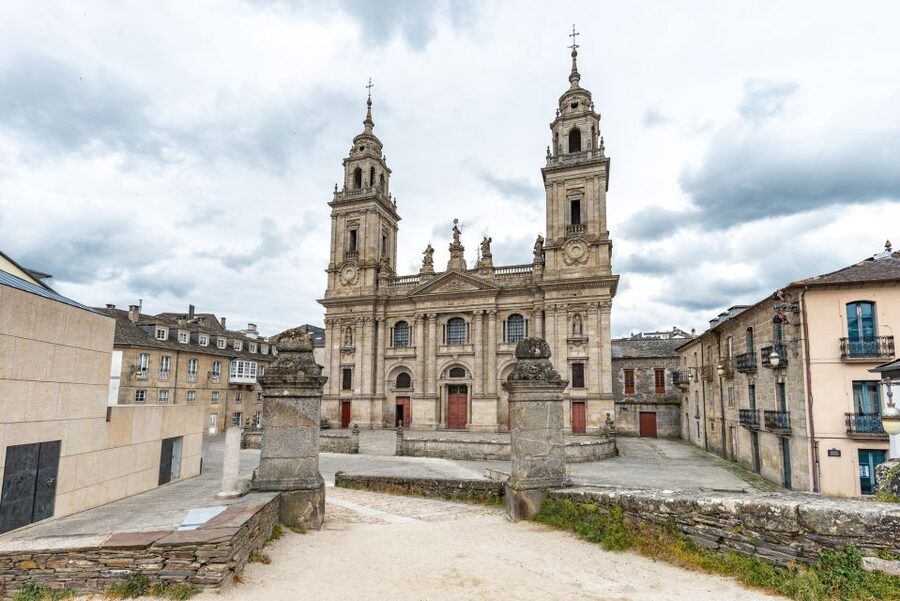
Entering through the Neoclassical west façade
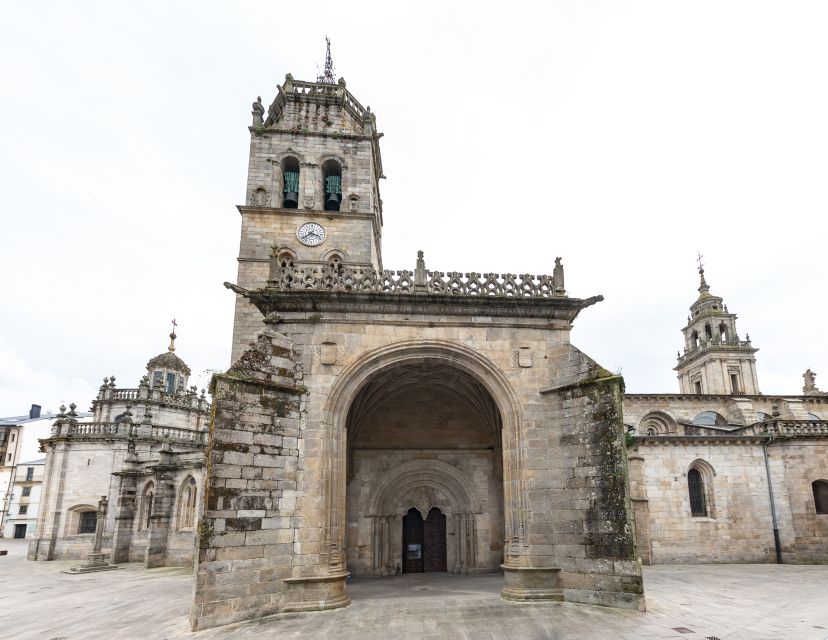
Your entrance is through the cathedral’s Neoclassical façade. Tickets are collected inside, at a ticket office in the store by the Neoclassical door. This detail matters because you do not need to search for a separate meeting point somewhere in Lugo. Go directly to the cathedral entrance and collect the ticket inside.
The façade gives you your first lesson in the cathedral’s mixed style. It is not the oldest-looking part of the building, and it does not prepare you for every detail inside. That contrast is part of the appeal. Lugo Cathedral is a record of changing taste, not a single-period monument preserved in one neat package.
Allow a little time to get oriented once inside. The visit is not led by a named guide or fixed group. You receive an audio guide and explore independently. A practical complaint has been that the opening was delayed on one occasion, with no clear direction at first. Another issue was a lack of exact synchronization between the audio commentary and the numbered points.
So, do not expect a polished tour flow where someone takes you from one stop to the next. Look for the numbered markers, listen carefully, and accept that you may need to pause or replay a section. The self-guided format gives you privacy, but it also asks you to manage the visit yourself.
A cathedral floor plan built for close looking
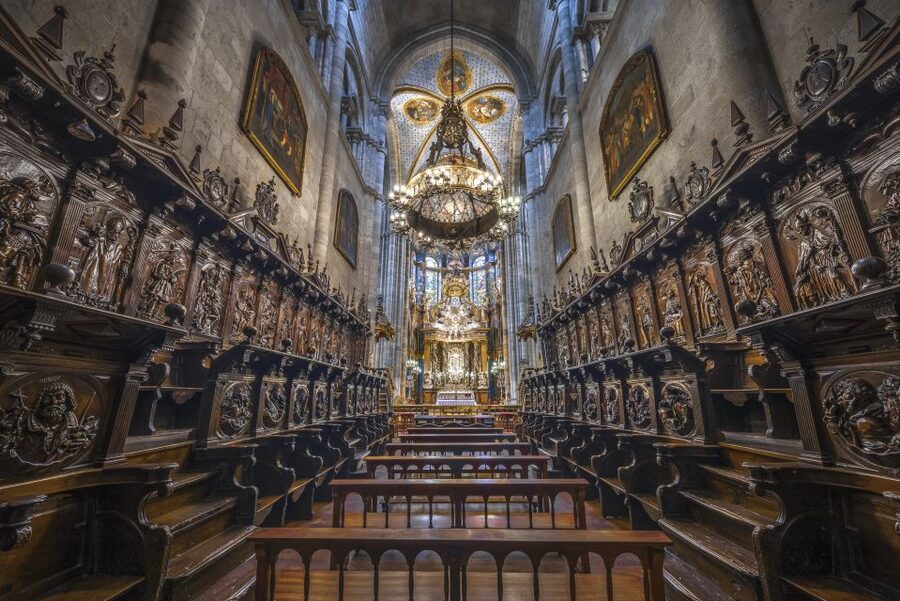
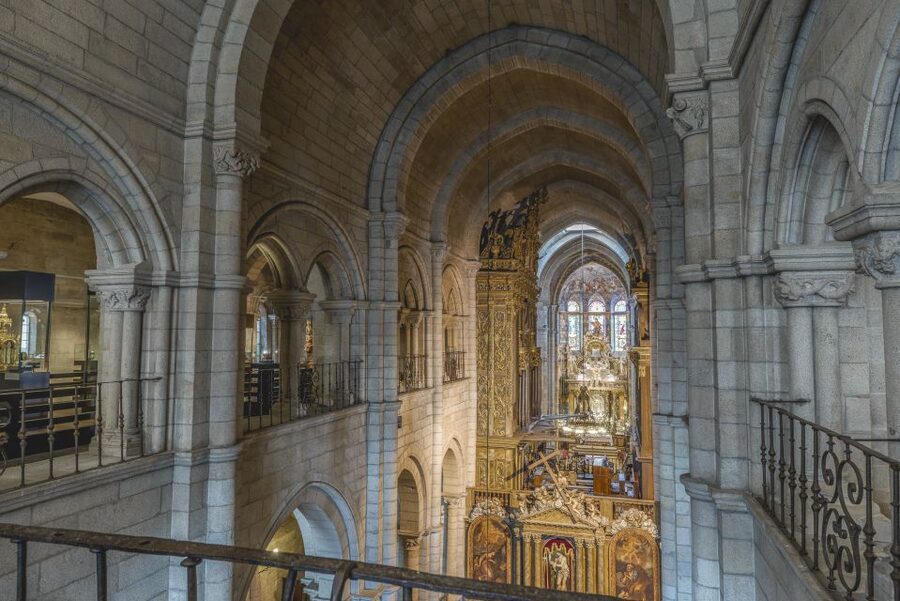
Inside, you find a floor plan described as the longest and narrowest of any Hispanic cathedral. That shape changes the way you experience the space. Instead of opening out into a broad, easy-to-read interior, the building draws your attention along its length.
This is a good place to use the audio guide. The cathedral contains details from different periods, and a short explanation can help you understand what you are seeing. Audio is available in Spanish, English, Portuguese, French, and Galician, so you can choose the language that lets you concentrate on the art rather than translate in your head.
The narrow layout also rewards a slow walk. Stand back when you can, then move closer to inspect the stonework, decoration, and windows. You do not need to follow a strict route, and you can return to a detail that caught your eye. That freedom is one of the ticket’s best features.
Keep your voice low and follow the site rules. Food and drinks, smoking, vaping, flash photography, tripods, selfie sticks, and video recording are not allowed. Pets are also prohibited. These rules are ordinary for an active cathedral, but they affect how you record the visit: you will need to rely on memory, written notes, or non-flash photographs where permitted.
The Christ in Majesty and the cathedral’s Romanesque core
The Christ in Majesty is a key reason to pay attention during the visit. It is described as a masterpiece of Spanish Romanesque stone carving, and it gives you a direct connection to the cathedral’s earlier artistic language.
Romanesque sculpture often communicates through strong shapes and a formal, commanding presentation. Here, the interest is not only in the subject, but in the age and character of the carving. Look closely at the stone rather than rushing toward the brighter decoration farther inside.
This work helps set the cathedral’s timeline. After seeing it, the later Churrigueresque and Neoclassical elements make more sense. You can read the building almost like a visual history lesson: early stone carving, later decorative ambition, then a more restrained exterior style.
If you use the audio guide, listen to this section before moving on. The commentary is most useful when it gives you a reason to look closely. If the numbered references do not line up exactly, use the guide as background rather than treating it as a strict route.
Another self-paced route in Spain:
- Barcelona: Sagrada Familia Entry Ticket with Audio Guide
★ 4.6 · 105,312 reviews - Barcelona: Casa Batlló Entry with Self-Audioguide Tour
★ 4.7 · 25,359 reviews - Granada: Alhambra Entry Ticket with Audio Guide
★ 4.1 · 5,950 reviews - Casa Batllo Admission Ticket with Intelligent Audio Guide
★ 4.5 · 3,168 reviews
The Churrigueresque altar under stained glass
The lavish Churrigueresque altar is likely to be the cathedral’s biggest visual surprise. Churrigueresque decoration is known for elaborate, energetic detail, and this altar provides a sharp contrast to the simpler Romanesque carving.
The altar is surrounded by stained glass windows, which adds another layer of interest. You get ornate carved decoration below and colored light around it. The effect changes with your position, so do not inspect it from only one spot. Step back to take in the full arrangement, then look closer at the details.
This is also where the cathedral can feel most theatrical. If your taste runs toward plain Romanesque buildings, the altar may seem busy. That is not a flaw so much as a reminder that the cathedral was repeatedly updated. The interior reflects changing ideas about worship, decoration, and display.
I would give this area more time than a quick photograph. The combination of altar and stained glass is one of the clearest examples of how Lugo Cathedral moved from medieval construction into later decorative styles.
The cloister adds a quieter change of pace
Your entry ticket includes the cloister, so make a point of finding it. The cloister gives the visit a different rhythm from the long central interior. It is also important because it shows that the cathedral is more than a single grand worship space.
The supplied information does not specify every feature or display in the cloister, so I would not plan the visit around a particular architectural detail. Instead, use it as a place to slow down and consider the cathedral as a working religious complex.
This is one reason the ticket offers fair value at $9. You are not paying only to see the main nave and altar. The cloister expands the visit, while the museum adds a second layer of history and art. If you have less time, see the main interior first, then decide how long you can give the cloister and museum.
The Cathedral Museum and its archaeological collection
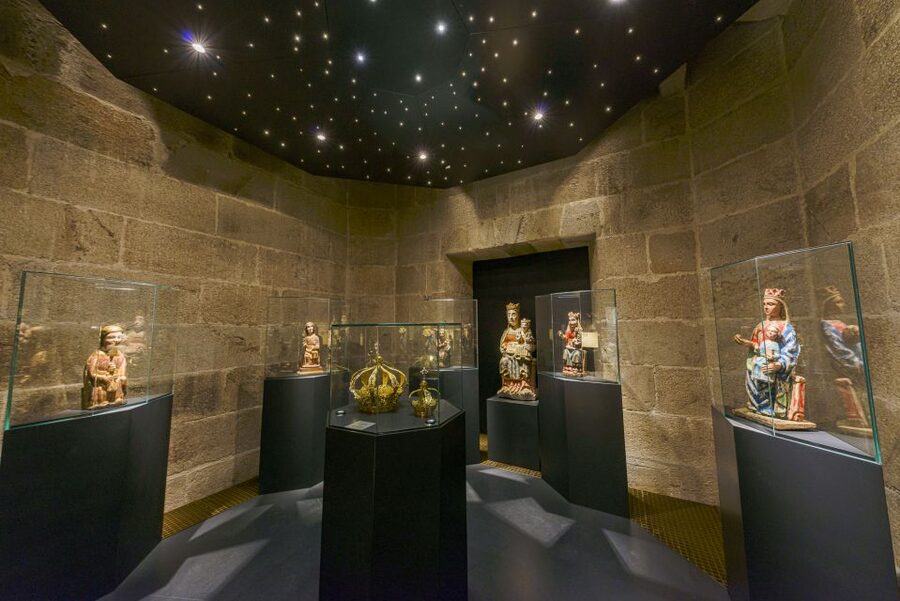
The museum is included in the same ticket, and it may be the part most easily skipped by people focused on the church. That would be a mistake if you have time. The archaeological exhibition helps explain the long story of the site, including the connection with late Roman Lugo and the earlier religious buildings that came before the present cathedral.
The museum also holds an extensive art collection. Works are associated with Cornielles de Holanda and Joannes de Boloña, along with other artists. Those names give the collection real weight, but you should not expect a full museum day from a $9 cathedral ticket. Think of it as a focused companion to the building.
The museum is especially useful after you have seen the cathedral. You can connect objects and styles to the spaces you just visited. It also gives you a break from looking upward at architecture. Spend time with the pieces that catch your attention, then return to the main church if the ticket and opening hours allow.
How much time should you allow?
The experience is valid for one day, but no fixed tour duration is given. That is useful if you want a flexible stop during a day in Lugo. You can visit at your chosen starting time, subject to availability and the cathedral’s schedule.
A rushed visit could cover the central interior, but I would allow enough time for all three included areas. The exact length depends on how closely you use the audio guide and how much time you spend with the museum collection. If you listen to every section, examine the Romanesque carving, pause at the altar, and visit the cloister, the stop becomes a proper cultural visit rather than a quick look inside a church.
The cathedral closes at 7 PM, with last entry 45 minutes earlier. Treat 6:15 PM as the firm cutoff, not as a suggested arrival. The schedule may change for liturgical events, so confirm the day’s opening time before setting your plans around the visit.
One practical point: the experience has free cancellation up to 24 hours before the booked time, and you can reserve while paying later. That flexibility is useful in Galicia, where a day’s plan may change. It does not protect you from a same-day schedule change at the cathedral, so checking ahead still matters.
Is the audio guide worth using?
Yes, if you want context rather than decoration. The cathedral combines several styles, and the audio guide can help you understand why. Without it, you may notice the Romanesque door, stained glass, altar, and façade but miss the connection between them.
Do not treat it like a live tour. No guide’s name is provided because this is an audio-led visit, and you move independently. On the practical side, the commentary and the numbered points may not always synchronize perfectly. You may need to check the number twice, pause the audio, or move back to the previous point.
That minor inconvenience is worth accepting for the price, especially if you choose English, French, Portuguese, Spanish, or Galician and want a little historical background. If you prefer to wander without listening, you can still appreciate the building, but you will get less help sorting its many periods.
Who will get the most from this visit?
I recommend the cathedral ticket to anyone already planning to see Lugo’s historic center. It is central, inexpensive, and gives you a useful indoor stop alongside the Roman walls and other old-town sights.
It suits you particularly well if you enjoy architecture, church art, archaeology, or places built and altered over long periods. The mix of Romanesque, Churrigueresque, stained glass, and Neoclassical work gives you plenty to compare.
Families can use the self-guided format to move at their own speed, though children may need help staying interested in the audio commentary. Bring identification for yourself and for children, since a passport or ID card is required. The cathedral is wheelchair accessible, which makes this a practical cultural stop for many visitors.
You may want to skip it if your schedule allows only a very short stop or if you dislike audio guides that require you to match numbered points. The experience can also disappoint if you expect a live guide to explain the building or give you directions from room to room.
Should you book the Lugo Cathedral ticket?
Book it if you want a low-cost, flexible look at one of Lugo’s major historic buildings, and plan to use the full ticket. The combination of the cathedral, cloister, museum, and audio guide gives you more substance than a basic entrance alone.
Go early enough to avoid the 45-minute last-entry limit, and allow for a possible liturgical schedule change. Once inside, begin with the Romanesque carving, take your time with the narrow cathedral interior, study the Churrigueresque altar and stained glass, then finish with the cloister and museum.
At $9, this is a sensible purchase for a visitor who values context and art. It is less convincing as a quick photo stop. The audio guide may need patience, but the building’s unusual mix of styles and the included museum make the visit worthwhile for most people spending time in Lugo’s historic center.
FAQ
Where do I enter Lugo Cathedral?
Enter through the Neoclassical façade. Tickets are collected inside the cathedral at the ticket office in the store by the Neoclassical door.
What does the ticket include?
The ticket includes entry to Lugo Cathedral, the cloister, the Cathedral Museum, and an audio guide.
Which languages are available for the audio guide?
The audio guide is available in Spanish, English, Portuguese, French, and Galician.
How long is the ticket valid?
The ticket is valid for one day. Starting times depend on availability.
What time does the cathedral close?
The cathedral closes at 7 PM. Last entry is 45 minutes before closing.
Can the opening schedule change?
Yes. The schedule may change because of liturgical events, so check the opening information before your visit.
Is Lugo Cathedral wheelchair accessible?
Yes, the activity is listed as wheelchair accessible.
What should I bring, and what is not allowed?
Bring a passport or ID card, including one for children. Pets, smoking, vaping, food, drinks, selfie sticks, flash photography, tripods, video recording, alcohol, and drugs are not allowed.
Latest audio tours in Spain
- Seville Maestranza Bullring Tour with Audio Guide★ 3.5 · 6 reviews
- Seville Scavenger Hunt and Highlights Self Guided Audio Tour★ 5.0 · 5 reviews
- Seville Audio guided walking tour 3h20 and 28 audio commentaries★ 5.0 · 2 reviews
- Royal Alcazar of Seville Entry Ticket with Audio Guide★ 4.0 · 42 reviews
- Seville Cathedral and La Giralda Entry Ticket with Audio Guide★ 3.0 · 9 reviews
- Seville Cathedral and Giralda Entry Tickets with Audio Guide★ 4.0 · 56 reviews
- Essential Seville’s Ancient History: An Audio Tour★ 5.0 · 9 reviews
- Segovia from the Aqueduct to the Alcazar: A Self-Guided Audio Tour★ 4.5 · 10 reviews
Church & Cathedral Audio Tours, compared.
St. Peter’s Basilica & Dome Entry Ticket & Audio Tour
Read our review →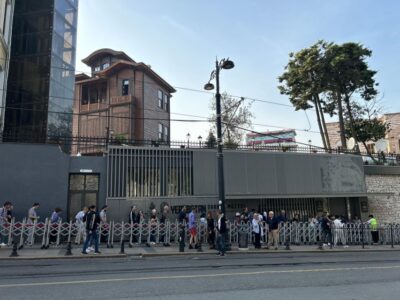
Basilica Cistern Fast-Track Entry and Audio Guide
Read our review →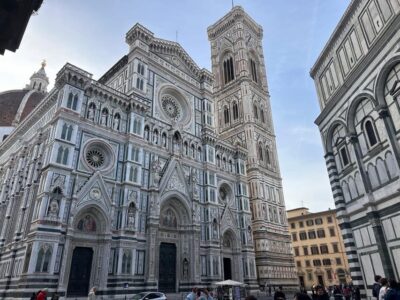
Cathedral & Brunelleschi’s Dome Ticket & Audio App
Read our review →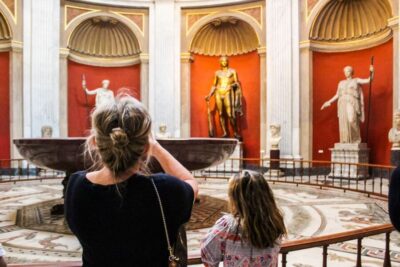
Vatican & Sistine Chapel Ticket with Optional Audio Guide
Read our review →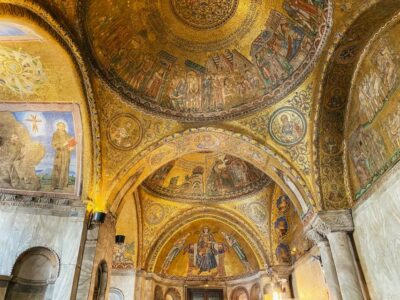
St. Mark Basilica Ticket, Audioguide+History Gallery
Read our review →
Skip the Line: Vatican & Sistine Chapel Ticket with Audio Guide
Read our review →
St. Peter’s Basilica with Optional Dome Ticket & Audioguide
Read our review →
Browse the lists this tour appears in