
Reviewed · LISBON
Lisbon: National Tile Museum E-Ticket & Audio Guide
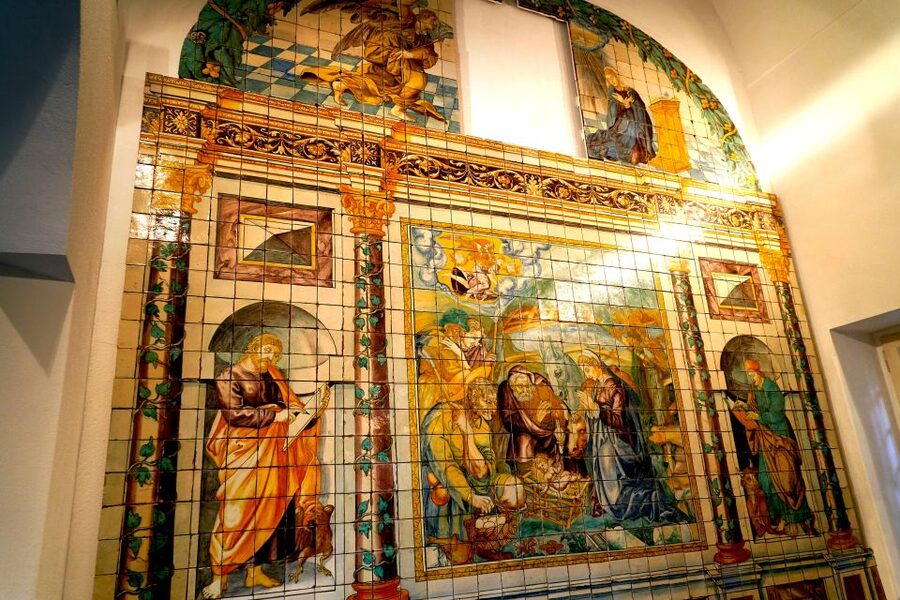
Lisbon’s National Tile Museum tells the city’s story through painted ceramic, from medieval patterns to modern designs. The most memorable displays include the Mickey Mouse tile panel, the diamond-patterned panel, and the elegant Dona Leonor Chapel.
I like the easy phone-based format and the chance to explore without being tied to a live guide. I also like that the audio includes background and small details you may miss on a quick walk through. The main catch is that the audio is not always arranged in the same order as the museum, so you may need to select the room or image that matches where you are.
A second practical point: you book this experience per device, not per person. At $16, it makes the most sense if you want an English explanation and skip-the-line access, but a visitor who only wants to see the collection may prefer the museum’s own free download or standard admission.
Key points at a glance

- See Portugal’s tile story in one place: The museum covers tilework from the medieval period through more recent designs.
- Find the Mickey Mouse panel: This unusual display adds a playful note to a collection best known for historic patterns.
- Look closely at Mudéjar designs: Geometric forms show the influence of medieval Islamic and Iberian decoration.
- Step into Dona Leonor Chapel: The chapel is one of the museum’s most atmospheric spaces.
- Use the audio guide flexibly: You can replay sections, skip ahead, and listen at your own pace.
- Plan for phone preparation: You need an Android 5.0 or later or a compatible iPhone, plus about 100 to 150 MB of storage.
Why Lisbon’s tile museum deserves your time
Tiles are not just decoration in Lisbon. They help explain the city’s visual identity, its links with different cultures, and the way craft became part of everyday Portuguese life. The National Tile Museum gives you a focused place to see that story rather than finding individual tile facades scattered across town.
The museum is especially useful if you have admired tiled buildings in Lisbon but never understood the styles or dates behind them. Here, the displays let you compare patterns and periods side by side. You can look at the work as art, but you can also read it as a record of changing taste and outside influence.
I would allow at least one full hour for a brisk visit. Two hours gives you time to listen to much of the audio and pause at the main displays. If you read every label and replay sections, three hours would not be excessive. One person specifically found the museum absorbing enough for a longer stay, which makes the advertised one to two hours a sensible minimum rather than a firm limit.
More Smartphone Audio Tours in Portugal
- Lisbon: São Jorge Castle E-Ticket and Audio Guide
★ 4.3 · 2,182 reviews - Lisbon: Jerónimos Monastery E-Ticket and Audio Guide
★ 3.7 · 660 reviews - Lisbon: National Palace of Ajuda E-Ticket & City Audio Guide
★ 4.1 · 87 reviews
Entering with an e-ticket and phone guide
Your ticket arrives by email with instructions for downloading the app and audio content. Check your spam folder if the message does not appear. You need to complete the download before or during your visit, and the offline content includes text, narration, and maps.
That offline feature matters. Once the material is stored on your phone, you do not need to rely on a strong museum connection while moving between rooms. Give yourself time to install everything, though. The audio uses roughly 100 to 150 MB, and an older phone may not support it.
The guide is in English. You provide your own smartphone and headphones, so check your battery before leaving your hotel. The system works with Android version 5.0 and later and compatible iPhones. It does not work with Windows Phones, iPhone 5, iPhone 5C, older iPod Touch and iPad models, or the first iPad Mini.
This is not a live tour. You will not have a person answering questions or adjusting the route for your interests. The benefit is control: pause the narration, repeat an explanation, or move on when a subject does not hold your attention.
The first galleries: patterns, craft, and cultural exchange
Begin by getting your bearings before pressing play on every section. The audio is packed with useful background, but it may not guide you in the exact physical order of the rooms. The most helpful approach is to look for the image or room selection that matches your location, then start that track.
The museum’s older tilework includes Mudéjar patterns, with geometric designs that reflect medieval Iberian and Islamic artistic influence. These displays are valuable because the patterns are easy to appreciate at a glance but harder to place historically without context. The narration helps connect the shapes to Portugal’s past and the development of its tile industry.
Take your time with repeated motifs. A geometric panel can seem simple from a distance, yet the close arrangement of color and shape rewards a slower look. You may find that the museum works best as a place for comparison: look at one panel, then walk back to an earlier room and notice how the design language changes.
The audio includes facts and less familiar anecdotes about Portugal from the medieval period to the present day. It is not only a description of what is in front of you. It tries to explain why the objects matter, which makes the visit more useful than a quick series of photographs.
The 16th-century tile and the museum’s central highlights
A 16th-century tile is among the pieces singled out for attention. This is the sort of object that can be easy to pass over when a large panel or decorated chapel takes the spotlight. Listen closely here, since the smaller pieces help show how tile production developed before later, more expansive displays.
The diamond-patterned panel gives you a strong example of how a simple repeated form can create a striking surface. It is worth viewing from both near and far. Up close, you see the individual units and their paintwork. From farther back, you see the overall rhythm of the panel.
Then there is the Mickey Mouse panel, one of the collection’s more unexpected sights. It offers a welcome change of tone and shows that tile design is not limited to solemn religious work or formal architectural decoration. If you are visiting with children, this may be the display that gives them an easy way into the museum.
Do not rush these highlights simply because they are named in the ticket description. The museum’s appeal comes from the contrast between the famous or unusual pieces and the quieter examples around them. The smaller works make the major displays easier to understand.
More Smartphone Audio Tours in Lisbon
- Lisbon: National Pantheon E-Ticket & Audio City Tour
★ 4.0 · 49 reviews - E-ticket to St. George with Audio Tour and Lisbon City Audio Tour
★ 4.5 · 27 reviews - Electric Car Tour of Lisbon Old Town and Belém with GPS Audio Guide
★ 5.0 · 23 reviews - Lisbon: E-ticket to St. George Castle & Audio Tour on Your Phone
★ 3.0 · 18 reviews
Dona Leonor Chapel and the most atmospheric stop
Dona Leonor Chapel is one of the places where the building and collection work together. Rather than viewing tiles as loose objects in cases, you see decoration in an architectural setting. That changes the scale of the visit and helps you picture how tilework can shape a room.
The chapel deserves a pause even if religious art is not your main interest. Look at how the decoration relates to the walls and the space around it. The audio can add useful background, but you can also enjoy this stop without listening to every word.
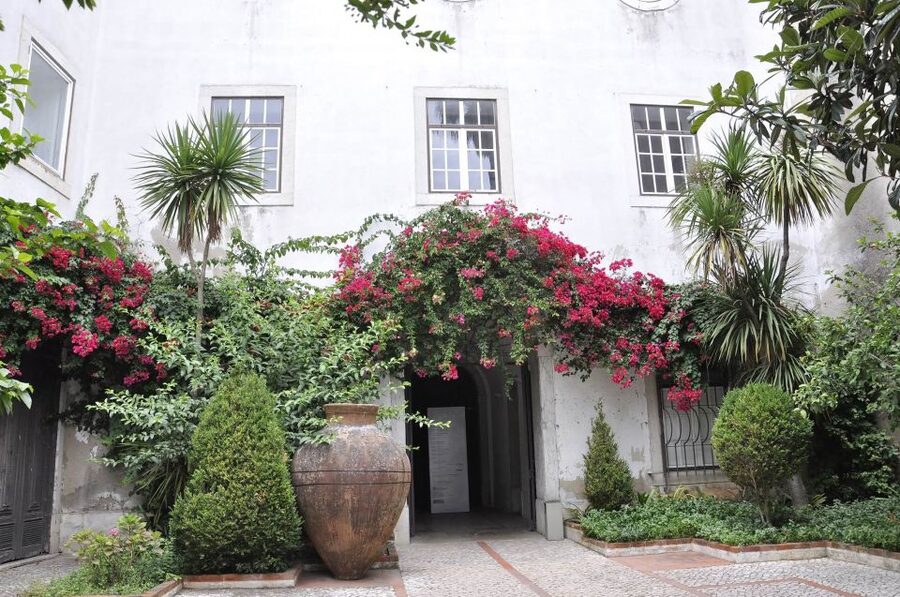
The museum’s courtyard is another pleasant break. It gives you somewhere to slow down after the galleries, and the adjacent cafeteria area has a pretty garden with tables and chairs. If you have brought food or a drink, this is a practical place to sit, provided the site’s current rules allow it.
That courtyard and garden help keep the visit from feeling like a nonstop march through rooms. For a museum of this size, a short pause can make the difference between paying attention to the final gallery and simply looking for the exit.
How well the audio guide works
The narration is full of information and uses short stories rather than only dry labels. You can replay it as often as you like, which is useful if you are sharing one device or want to stop and inspect a piece before continuing.
The weak point is navigation. The audio may not follow the route you naturally take through the museum. If you begin with the first track and walk at your own pace, you can end up listening to an explanation for a room you have not reached yet.
I suggest this simple method:
- Open the map or image list before entering the main galleries.
- Match the audio section to the room or object in front of you.
- Skip ahead when the narration is describing a space you have already passed.
- Replay the sections that explain styles or dates you want to remember.
The app itself is considered easy to use once you understand its layout. The initial confusion comes from not knowing that you can advance to the picture of the room you are currently visiting. This is a small issue, but it matters if you have only an hour.
You can also visit without using the audio. Wall labels provide enough basic information to make the collection worthwhile, and a free museum download may be available on arrival. The paid option is more attractive if you want a prepared English route, offline content, and the convenience of arranging your ticket before you go.
Is $16 a fair price?
The adult ticket costs $16 per person, but the booking rule needs attention: you pay per device used, not per participant. If two people are happy to share one phone and one pair of headphones, that can affect the value. If you each want separate audio, plan around the device requirement.
At that price, you are paying for more than entrance. You get the adult museum ticket, skip-the-line service, the smartphone guide, and offline text, audio, and maps. The audio adds the most value if you want context and do not plan to read every wall label.
The value is less clear if you qualify for free or reduced admission. Those tickets must be obtained on-site and do not receive skip-the-line privileges. Children up to age 12 enter free, so families should compare the cost of the adult device option with the number of people who actually need paid admission.
There is also a warning that long lines can occur at the entrance. Skip-the-line service can help, but it does not guarantee that you will walk straight in under every condition. Site rules can change, and the route or entry process may be adjusted by museum staff.
Access, timing, and who will enjoy it most

The museum is wheelchair accessible, and the activity is listed as suitable for wheelchair users. The visit lasts about one to two hours, with starting times selected during booking. Since this is a self-guided format, you are not pushed out when a group’s scheduled narration ends.
The group size is limited to 10 participants, though the audio guide means the experience remains largely independent rather than a traditional small-group tour. That can be helpful if you prefer quiet viewing and your own pace.
I would recommend this for:
- First-time Lisbon visitors who want context for the city’s tile-covered buildings.
- Art and design fans who enjoy patterns, craft, and architectural decoration.
- Independent visitors who do not want a live guide.
- People who value a prearranged ticket and English narration.
- Families who can share a device and want a few unusual sights, especially the Mickey Mouse panel.
I would be more cautious if you dislike managing apps, have an unsupported phone, or want a perfectly ordered spoken tour. The audio requires a little attention from you. It is best treated as a flexible companion, not an automatic room-by-room escort.
Getting the most from your visit
Download the app and audio before you arrive if possible. Confirm that the content is stored offline, bring headphones, and make sure your phone has enough free space. These are small jobs, but they prevent the most common frustration at the door.
Give yourself more time than the shortest estimate if the subject interests you. A fast visit can cover the headline pieces in one hour, but the museum rewards a slower pace. The stories about Portugal’s tile industry make more sense when you pause between the major displays and compare the patterns.
Use the audio selectively. You do not need to hear every track. Choose the sections connected to the 16th-century tile, Mudéjar designs, the diamond panel, Mickey Mouse, and Dona Leonor Chapel, then spend the remaining time looking closely at pieces that catch your eye.
Finally, save a few minutes for the courtyard and garden beside the cafeteria. It is a useful place to rest, sort out your photos, and decide if you want to continue listening before leaving.
Should you book this National Tile Museum experience?
Book it if you want the museum ticket arranged in advance and value an English audio guide with offline maps and narration. The collection offers more than pretty surfaces: it gives you a way to understand how tiles became part of Portugal’s visual character. The chapel, Mudéjar patterns, diamond panel, and Mickey Mouse display provide a good mix of serious, historic, and unexpected sights.
Skip the paid audio option if you qualify for free admission, prefer reading labels, or do not want to handle a phone during your museum visit. You can still see the collection, and a free download may be available at the site.
For most independent visitors, this is a useful, fairly priced way to visit, with one clear warning: prepare the app first and expect to choose the audio sections yourself. Once you understand that, the museum becomes an easy and rewarding one to two-hour stop in Lisbon.
FAQ
Where is the experience located?
It takes place at the National Tile Museum in the Lisbon District of Portugal.
How long does the visit take?
The listed duration is one to two hours. You may need longer if you listen to most of the audio, read the labels, or want to study the collection carefully.
Is the audio guide included?
Yes. An English smartphone audio guide is included, along with offline text, audio narration, and maps.
Do I need to bring my own phone and headphones?
Yes. A smartphone and headphones are not included. You need a compatible Android or iOS phone to use the audio guide.
Which phones work with the audio guide?
The guide works with Android version 5.0 and later and compatible iPhones. It does not support Windows Phones, iPhone 5 or 5C, older iPod Touch models, older iPads, or the first iPad Mini.
Do I need to book one ticket for every person?
You should book per device used, not per participant. This means the number of devices matters when planning the booking.
Is the museum wheelchair accessible?
Yes, the museum is wheelchair accessible.
Can I cancel the booking?
Yes. You can cancel up to 24 hours in advance for a full refund.
More Museum Audio Tours in Lisbon
- Lisbon: National Coach Museum Entry Ticket and Audio Guide
★ 4.5 · 49 reviews - National Coach Museum: E-ticket with Audio Tour on Your Phone
★ 4.0 · 11 reviews - Belem, Jeronimos & Tile Museum Skip-the-Line Tickets+Audio Guides
★ 3.5 · 2 reviews - Florence: Uffizi Priority Ticket & Masterpieces Audio App
★ 4.2 · 6,402 reviews
Latest audio tours in Lisbon
- Prazeres Cemetery: A Self-Guided Audio Tour in Lisbon★ 3.0 · 2 reviews
- Lisbon: E-ticket to St. George Castle & Audio Tour on Your Phone★ 3.0 · 18 reviews
- National Palace and Gardens of Queluz: E-ticket with Audio Guide★ 3.5 · 6 reviews
- Riverside Ride Audio Adventure Lisbon to Belem★ 5.0 · 8 reviews
- Lisbon Walking Tour with Audioguide on Your Smartphone★ 4.5 · 4 reviews
- Self-Guided Audio Tour – Lisbon on Wheels: the capital of the sea★ 5.0 · 3 reviews
- National Coach Museum: E-ticket with Audio Tour on Your Phone★ 4.0 · 11 reviews
- Electric Car with GPS Audio Guide Full Day Tour in Lisbon★ 5.0 · 15 reviews
Museum Audio Tours, compared.

Uffizi Priority Ticket & Masterpieces Audio App
Read our review →
Louvre Museum Hosted Entry and Mona Lisa Audioguide
Read our review →
St. Mark Basilica Ticket, Audioguide+History Gallery
Read our review →
Borghese Gallery Skip-the-Line Ticket & Audioguide
Read our review →
Borghese Gallery Ticket + Audioguide or Guided Tour
Read our review →
Orsay Museum Entry Ticket and Digital Audio Guide App
Read our review →
Uffizi Gallery Timed Entry Ticket & Audio Guide
Read our review →
Acropolis Museum Ticket with optional Audio Guide
Read our review →Browse the lists this tour appears in