
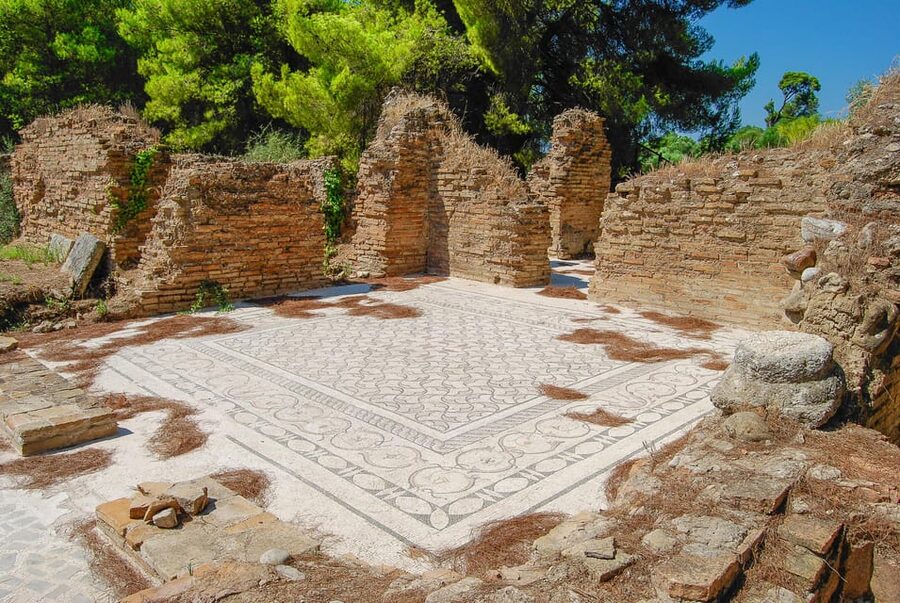
Reviewed · GREECE
Ancient Olympia Entry Ticket & Virtual Reality Audio Tour
Ancient Olympia comes alive best when you can compare the broken columns in front of you with images of the buildings as they once looked. This four-hour experience combines entry to the archaeological site and museum with a phone-based virtual reality app and audio commentary in nine languages. It is a practical way to picture the sanctuary that hosted the Olympic Games from 776 BC to AD 393.
I like the freedom to enter the archaeological site anytime on your booked date, and I like the clear museum time slot, which helps you plan the visit. The app also includes photographs and historical reconstructions, a useful aid when the ruins seem hard to read. The main drawback is important: despite the name, you do not receive VR goggles. You use your own smartphone, and the app can be difficult to follow if your browser closes or its map does not match your position.
Key points to know before booking
- The virtual reality experience runs on your own smartphone, not supplied headsets or glasses.
- The archaeological site allows entry anytime on your selected date, but the museum requires a fixed date and time.
- The Temple of Hera, Temple of Zeus, original stadium, and Bouleuterion form the core of the outdoor visit.
- Audio commentary comes in nine languages: English, German, Spanish, Chinese, Polish, Portuguese, Russian, Italian, and French.
- You need headphones and a charged phone, since there is no live guide or on-site staff included.
- Children and reduced-price tickets are not available, so the quoted $36 price needs comparing with regular admission for your group.
What the Olympia app really gives you
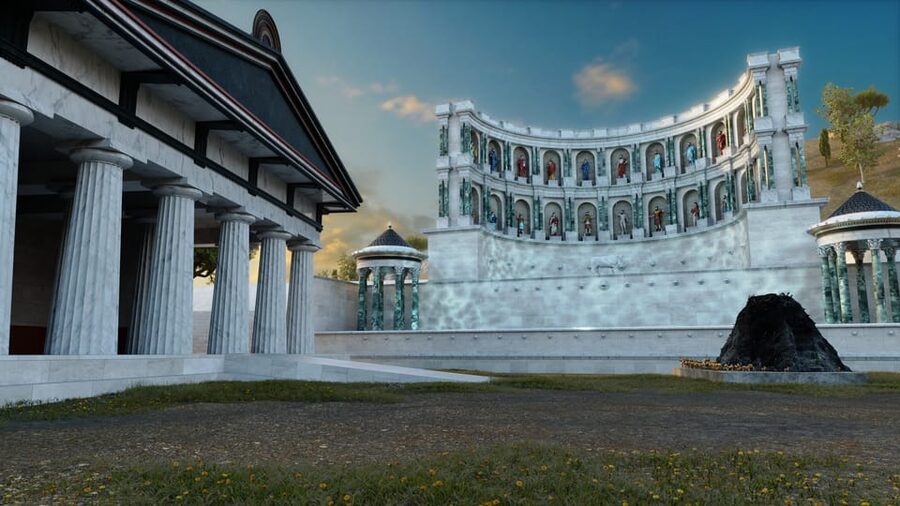
The word virtual reality may set up the wrong expectation. This is not a headset experience, and no glasses are handed to you at the entrance. Instead, you receive access to an application on your own phone, with audio commentary and images that show how parts of Ancient Olympia may have appeared in the past.
That distinction matters. If you want a hands-on technology attraction, this may feel modest. If you want help understanding scattered stones, partial walls, and missing statues, the historical images can be useful. One especially practical feature is the use of photographs alongside the explanations, since they can help you identify the buildings you are standing beside.
You should download or open the app according to the instructions sent with your ticket voucher. Keep the browser open while you use it. One person found that closing the browser caused trouble, so avoid treating the app like a normal audio file that you can casually shut down and reopen later.
Bring your own headphones. Your smartphone should be fully charged before you arrive, because the app, audio, and visual material will use the battery for much of the visit. There is no live guide to fill gaps if the application fails, and there is no live staff member included in the experience.
More History Audio Tours in Greece
- Athens: National Archaeological Museum Ticket & Audio Guide
★ 4.3 · 1,330 reviews - Delphi: Archaeological Site & Museum Ticket with Audio Tours
★ 4.3 · 721 reviews - Athens: National Archaeological Museum Ticket w/ Opt. Audio
★ 4.4 · 713 reviews
Entering the sanctuary of Ancient Olympia
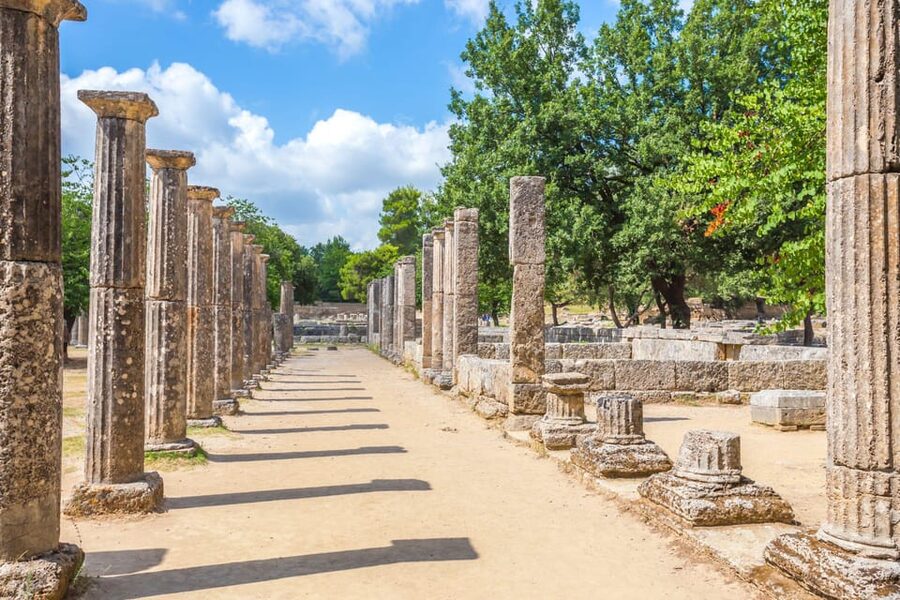
The archaeological site is the heart of the visit. Olympia was not simply an old sports ground. It was a major sanctuary dedicated to Zeus, with temples, meeting spaces, training areas, and the stadium connected to the ancient Olympic Games.
Your ticket lets you enter the site on the date selected during booking, at any time within the opening hours. That flexible access is valuable. You can visit earlier or later in the day instead of being tied to a group departure, and you can spend longer at the ruins if a particular area catches your attention.
The advertised duration is four hours, but that is a planning guide rather than a strict tour length. The site itself allows unlimited time on your booked date, subject to opening hours. You also need time for the museum, where entry is tied to the specific slot you choose.
The outdoor ruins can be hard to understand without context. Much of what you see consists of foundations, fallen stone, and reconstructed fragments rather than complete buildings. The app’s reconstructions help bridge that gap, although you may need to pause, look around, and work out which image matches your location.
The site is wheelchair accessible, an important practical point. Still, your pace around an archaeological area may depend on the surfaces and the condition of particular paths, so allow time rather than rushing from one stop to another.
The Temple of Hera and the Olympic Flame
The Temple of Hera is one of the first major stops to seek out. It is also linked with the modern Olympic Games, since the Olympic Flame is lit in front of the temple during the modern ceremony.
The remaining columns and stones do not immediately communicate the temple’s former importance. This is where the visual part of the app earns its keep. Seeing a reconstruction while standing among the surviving remains gives you a clearer sense of the building’s size and position.
The audio commentary adds background in your chosen language. You can listen in English, German, Spanish, Chinese, Polish, Portuguese, Russian, Italian, or French. That range is one of the strongest reasons to choose this format if you do not want to read a long printed guide or join a tour in a language that is not comfortable for you.
You should not expect a guide to point out small details in real time. The app will not know exactly what you are looking at unless its map and your position happen to line up well. Take a moment to match the image with the ruins before moving on.
The Temple of Zeus and a lost wonder
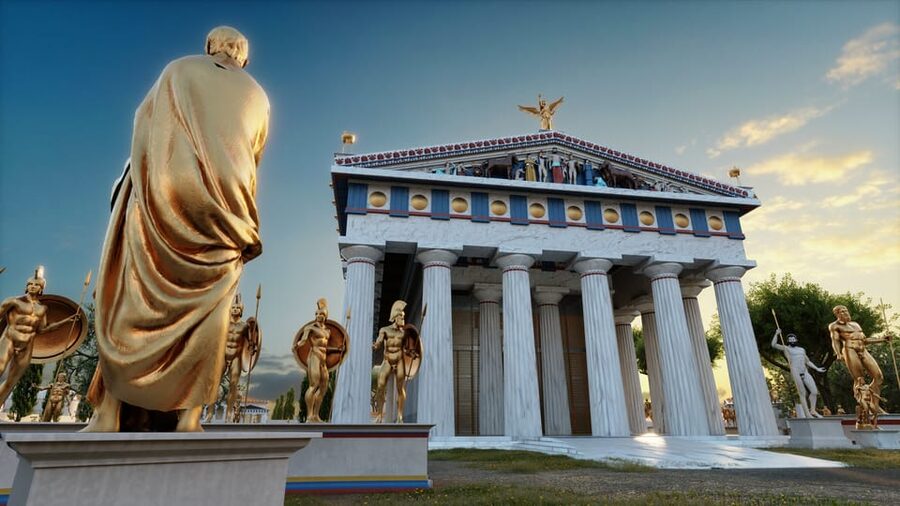
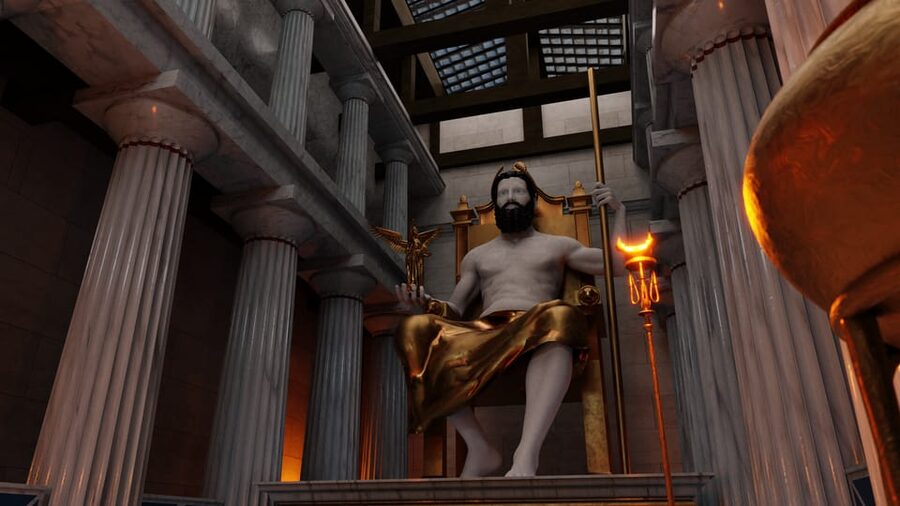
The Temple of Zeus is the site’s grandest story. It once held a gold and ivory statue of Zeus, counted among the Seven Wonders of the Ancient World.
The statue is gone, and the temple is now a ruin, but the scale of the site still makes this stop worthwhile. The app can show you a version of the temple as it may have looked, helping you imagine the structure before earthquakes and time reduced it to fragments.
I would use the commentary here as a prompt rather than a replacement for looking. Listen to a section, study the image, then look back at the stonework. That simple rhythm works better than walking with your face buried in the phone.
Because the experience is self-guided, you control the pace. You can linger at the Temple of Zeus, skip material that feels repetitive, or revisit a section if the first explanation did not make sense. The tradeoff is that you must organize the route yourself. One booking produced unclear directions about how to walk through the site, and the app’s images did not always correspond neatly with the user’s exact position.
Another self-paced route in Greece:
- Athens: Acropolis Ticket with Optional Audio or Live Guide
★ 4.2 · 11,055 reviews - Athens: Cape Sounio & Poseidon Temple Trip with Audio Guide
★ 4.4 · 4,521 reviews - Athens: Acropolis Ticket with Audio Guide
★ 4.0 · 3,575 reviews - From Athens: Delphi Full Day V.R. Audio Guided Tour
★ 4.6 · 3,028 reviews
Walking toward the original Olympic stadium
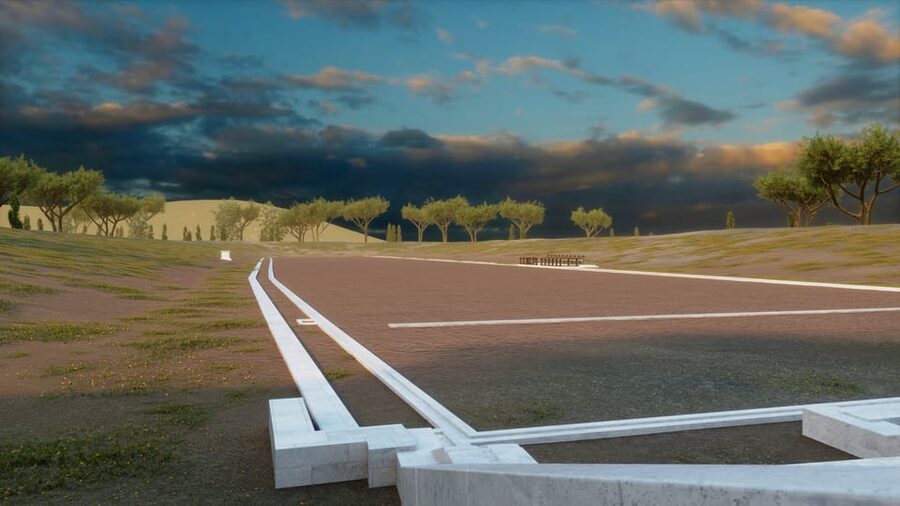
The stadium connects the sanctuary to the athletic contests that made Olympia famous. The original Olympic Games began in 776 BC and continued until AD 393, giving this place a long sporting tradition rather than a single famous event.
You can use the app to picture the stadium in operation and to understand how the site related to the rest of the sanctuary. The visual material is particularly helpful here because an open athletic space can otherwise look like little more than a broad stretch of earth and stone.
Do not expect modern stadium facilities or a polished exhibition. The value comes from standing in the original setting and using the commentary to supply the missing context. This is a quiet, self-paced stop, and it suits you if you prefer to pause and think rather than follow a guide’s fixed schedule.
The lack of a suggested route is a weakness. A simple order of stops would make the visit easier, especially for families or anyone visiting for the first time. You may need to use the application’s map and the site signs together, and their relationship is not always obvious.
The Bouleuterion and the wider sanctuary
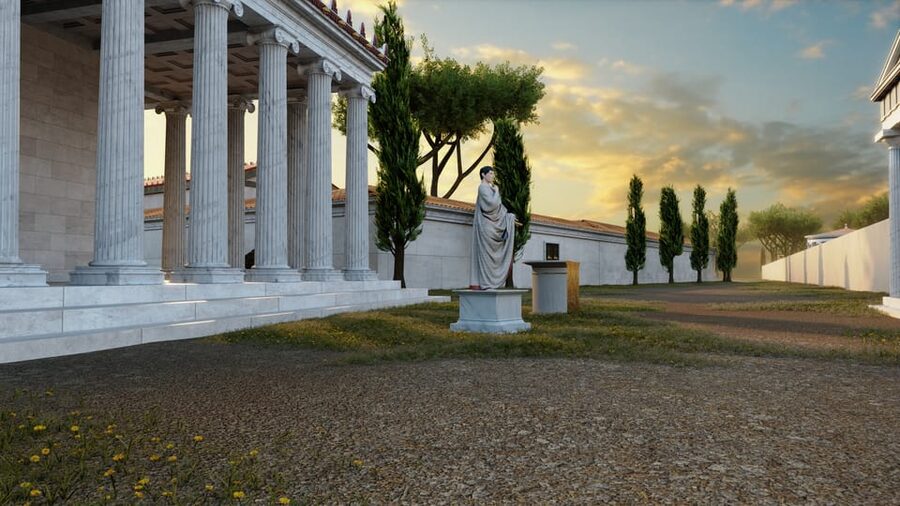
The Bouleuterion belongs to the civic side of Olympia. Its presence reminds you that the sanctuary was more than temples and athletic contests. Spaces for organization and decision-making were part of the ancient complex too.
This is the sort of stop that benefits from audio commentary. The stones alone may not tell you why the building mattered, while a short explanation can give the remains a clear role in the site’s story.
The app’s value changes from building to building. At the best points, a reconstruction and a short explanation make the ruins easier to read. At less successful points, you may be left checking your position and wondering if the image matches the structure in front of you.
That unevenness does not ruin the visit, but it means you should treat the app as an aid, not as a perfectly guided route. If you have a good sense of direction and are comfortable using your phone outdoors, you will likely get more from it than someone expecting a staff member at every turn.
The Archaeological Museum of Olympia
The museum completes the visit, and it should not be treated as an optional extra. The outdoor site shows the setting and surviving architecture, while the museum brings you closer to the sculptures and objects connected with Olympia.
You must select a specific museum date and entry time when booking. This is the one part of the ticket that is not flexible, so choose carefully. You can enter the archaeological site at any time on the booked date, but you cannot simply arrive at the museum whenever you like.
The museum slot gives your day some structure. You might visit the ruins first and then use the museum to identify pieces you saw referenced in the app, or you might go to the museum first and then return outdoors with a clearer idea of what to look for. The best order depends on your chosen time and the opening hours for your visit month.
The ticket information lists high-season hours from 8:00 to 20:00, generally April through October, and low-season hours from 8:30 to 15:30, generally November through March. The last admission is 15 minutes before closing. Opening times can change, so confirm the exact hours for your date before setting your plan.
Is the $36 price good value?
The listed price is $36 for a group up to one person, so check the final booking details carefully and compare it with the current standard admission before paying. The package includes entry tickets and the app, but not transportation, a live guide, or live staff.
The value comes from convenience rather than luxury. Prebooked admission can save you time at the ticket counter, and one person specifically found the express entry useful. You also get the phone-based reconstructions and audio in nine languages, which may be worth paying a little extra if you want help making sense of the ruins.
It is less attractive if you only want admission. A booking in October was described as costing about 5 euros more than the regular combined price for the two museums and excavation site. Prices can change, so use that only as a comparison point, not as a current rate.
Families need to do the arithmetic carefully. Reduced admission is not available, and the booking information says children and infants do not receive a separate child ticket. One family found that a child had to pay the full price, which can make this package poor value for a larger group.
The free cancellation policy allows cancellation up to 24 hours before the experience for a full refund, and reserve-now-pay-later booking is offered. However, once the ticket is purchased, the ticket restrictions say it cannot be amended, and the museum time cannot be changed. Read the conditions before confirming.
Avoiding the common ticket problems
The most serious risk is not the ancient site. It is getting the ticket and app instructions right before you arrive.
The booking information says instructions are sent with the ticket voucher. Check your email before leaving your accommodation, and make sure you can access the voucher on your phone. If the ticket does not appear, resolve the problem before reaching the entrance rather than assuming there will be a representative waiting at a meeting point.
There is no live staff member included, and this is not a meet-and-greet tour. Confusion has occurred when people searched for a meeting point that did not exist, so you should rely on the stated entry instructions rather than looking for a guide holding a sign.
Keep these practical points in mind:
- Charge your phone fully.
- Bring headphones.
- Keep the browser or application open.
- Save the voucher where you can find it quickly.
- Confirm the museum time before booking.
- Do not assume the museum and outdoor site have the same entry rules.
- Do not bring pets.
- Confirm seasonal opening hours for your date.
These steps cost nothing and can prevent the most frustrating part of the day.
Who should choose this Olympia experience?
I would choose it for an independent visitor who wants context but does not need a live guide. It suits you if you enjoy setting your own pace, listening in your preferred language, and using reconstructed images to understand ruins.
It can also work well for families, since visual comparisons and audio explanations may hold a child’s attention better than a plain walk among foundations. The full-price child policy weakens the value, though, so compare the total cost first.
This is less suitable if you want a polished virtual reality attraction with supplied equipment. It is also a poor match if you expect a guide to meet you, explain the route, solve ticket problems, or answer questions on the spot.
For visitors with limited phone battery, weak comfort with apps, or little patience for finding their own way, a live guided tour may be easier. This option gives you freedom, but freedom here includes responsibility for navigation and technology.
Should you book the Ancient Olympia app tour?
Book it if you want prearranged entry, a flexible outdoor visit, and basic visual help in understanding Olympia’s ruins. The Temple of Hera, Temple of Zeus, original stadium, Bouleuterion, and museum give you plenty to see, and the nine-language audio option is genuinely useful.
Skip it if the phrase virtual reality makes you expect headsets, or if you need a guide at the entrance. The app is a phone tool, not a full guided production, and the route can be unclear.
My practical call is this: compare the package price with regular admission, charge your phone, select the museum slot with care, and approach the app as a helpful companion rather than the main attraction. For a self-directed visit, it can add useful context. For a trouble-free guided day, choose something with staff on site.
FAQ
Is this a live guided tour?
No. It is a self-guided visit using a smartphone application and audio commentary. A live guide and live staff are not included.
Do I receive virtual reality goggles?
No. The experience uses an application on your own smartphone. The supplied information does not include VR glasses or a headset.
What languages are available?
The audio guide and commentary are available in English, German, Spanish, Chinese, Polish, Portuguese, Russian, Italian, and French.
What does the ticket include?
It includes entry tickets and access to the virtual reality application. Transportation, a live guide, and live staff are not included.
Can I enter the archaeological site at any time?
You can enter the archaeological site at any time on the specific date selected for your booking. You cannot use the ticket on another date.
Do I need to select a museum time?
Yes. You must choose a specific date and time for entry to the Archaeological Museum of Olympia. That museum time cannot be changed after booking.
How long does the experience last?
The stated duration is four hours. You can spend unlimited time at the archaeological site during its opening hours on your booked date.
What should I bring?
Bring headphones and a charged smartphone. The audio guide instructions are sent with your ticket voucher.
Are child or reduced-price tickets available?
No. Reduced admission tickets and child or infant tickets are not available. Children may therefore require a full-price ticket.
Is the site wheelchair accessible?
Yes. The activity is listed as wheelchair accessible.
What are the opening hours?
From April through October, the listed hours are daily from 8:00 to 20:00. From November through March, the listed hours are daily from 8:30 to 15:30. Last admission is 15 minutes before closing, and you should confirm the exact hours for your visit month.
Latest audio tours in Greece
- E-Ticket to Akrotiri with Audio Tour on your Phone★ 5.0 · 2 reviews
- Authentic Santorini: A Self-Guided Audio Tour of Oia★ 4.5 · 3 reviews
- The Palace of the Grand Master E-Ticket with Audio Tour★ 4.0 · 9 reviews
- Explore Lindos Acropolis in 3D & Audio★ 4.0 · 4 reviews
- The Palace of the Grand Master. Self-guided Audio Tour★ 3.5 · 15 reviews
- Acropolis of Lindos E-Ticket with Audio Tour on your Phone★ 4.5 · 8 reviews
- Olympia Archaeological Site & Museum E-Ticket with Audio Tour★ 4.0 · 11 reviews
- Mykonos: Find your (queer) god Self-Guided Audio Tour★ 4.0 · 2 reviews
History Audio Tours, compared.

Colosseum, Roman Forum & Palatine Hill with Audioguide App
Read our review →
St. Mark Basilica Ticket, Audioguide+History Gallery
Read our review →
Colosseum, Ancient Rome Tour or AudioGuided Tour
Read our review →
Colosseum, Roman Forum & Palatine Hill Entry and Audioguide
Read our review →
Taormina: Ancient Theater Skip-the-Line Ticket & Audio Guide
Read our review →
Colosseum, Roman Forum & Palatine Hill Visit + Audio Guide
Read our review →
National Archaeological Museum Ticket & Audio Guide
Read our review →
Roman Forum Super Pass Entry with Audio Guide App
Read our review →Browse the lists this tour appears in