
Reviewed · SPAIN
Gandia: Ducal Palace Entry Ticket with Audio Guide
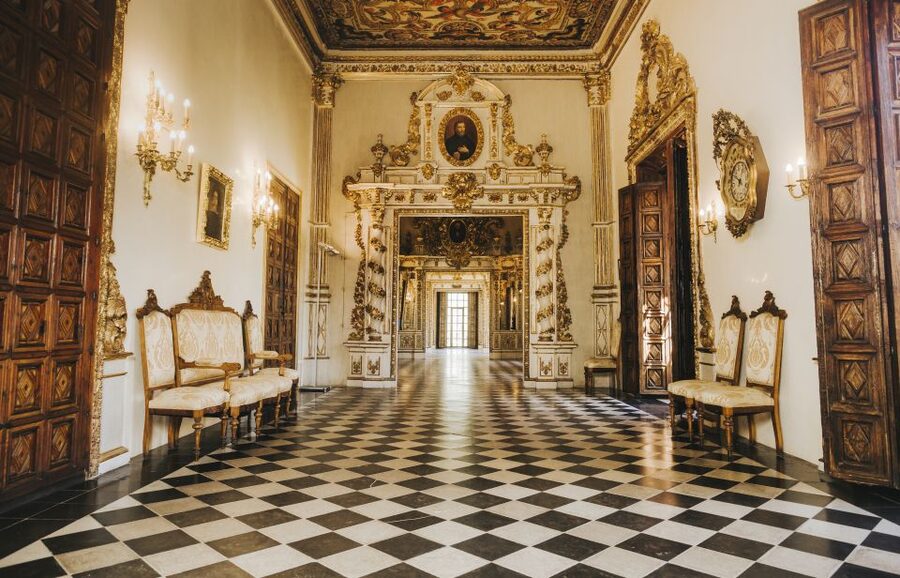
The most striking part of Gandia’s Ducal Palace is the way its rooms reveal several centuries of power in one walk. You move from 15th-century Valencian Gothic features to Renaissance changes and then into the richly decorated Baroque Golden Gallery. The palace once belonged to the powerful Borgia family, so the rooms are not just pretty interiors. They are a record of ambition, status, religion, and family politics.
I like two things here. First, the $9 price gives you both entry and a 45-minute audio guide, which is a sensible deal for a major historic sight. Second, the audio guide comes in six languages and helps explain details that are easy to miss, especially the painted ceilings in the Golden Gallery. The main consideration is that this is an audio-guided visit, not a live guided tour, so you need to set your own pace and listen carefully as you go.
Key points to know before you go
- The Golden Gallery has five rooms: Look up at the oil-painted ceilings and Baroque decoration, including work by Gaspar de la Huerta.
- The palace tells the Borgia family story: Learn about Duchess Maria Enriquez and San Francisco de Borgia as you move through the rooms.
- The audio guide lasts 45 minutes: Commentary is available in Spanish, English, French, Italian, German, and Russian.
- The architecture changes from room to room: Gothic, Renaissance, and Baroque elements reflect the palace’s long development.
- The visit is self-guided: You receive an entry ticket and audio guide rather than a live tour.
- The palace is wheelchair accessible: Food, drinks, pets, flash photography, weapons, and sharp objects are not allowed, with assistance dogs permitted.
Entering Gandia’s Ducal Palace
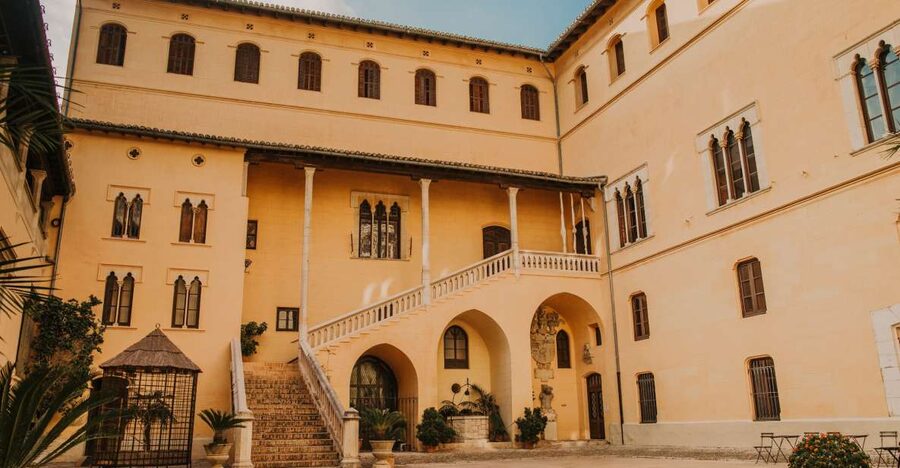
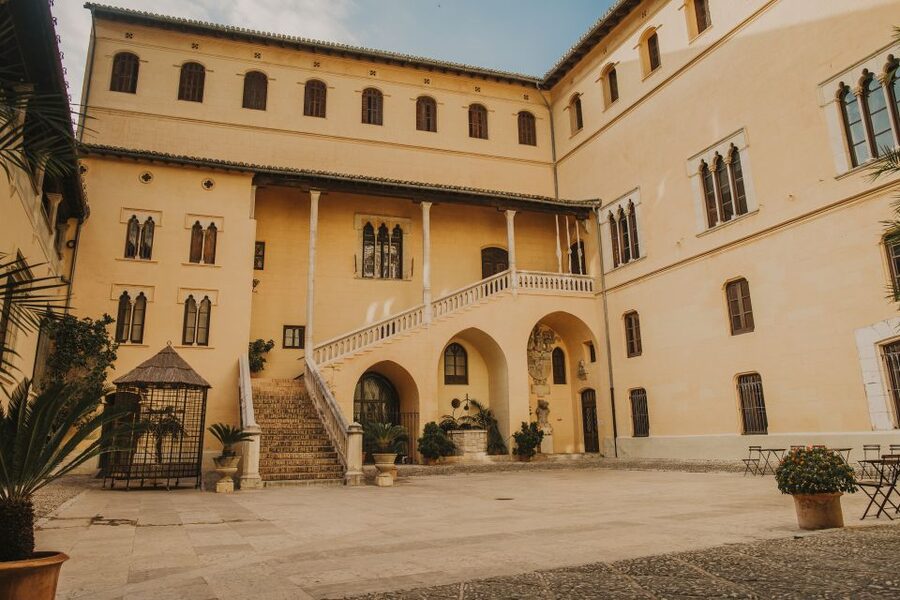
The Ducal Palace of Gandia is one of the Valencian Community’s most important civil buildings, and its appeal comes from more than grand decoration. This was a working seat of power for the Dukes of Gandia, including members of the Borgia family, one of Europe’s most famous and controversial dynasties.
As you move through the palace, you can see how each era left its mark. The oldest sections reflect Valencian Gothic design, while later owners and renovations introduced Renaissance and Baroque touches. That changing appearance gives the visit a useful sense of time. You are not looking at a building frozen in one period. You are watching a palace adapt as its owners, tastes, and public image changed.
The audio guide is especially useful at the start. Without context, a historic palace can become a procession of doors, ceilings, and corridors. The 45-minute commentary gives those spaces names and meaning, pointing you toward the people and events that shaped them.
The guide is available in Spanish, English, French, Italian, German, and Russian. If English is not your first language, the choice of six languages makes this a more comfortable visit than a palace with only printed labels. A German-language audio option has also been praised for its pleasant voice and clear delivery, and the English version is intended to explain the palace rather than simply identify each room.
More Castle and Palace Audio Tours in Spain
- Madrid: Royal Palace Entry with Audio Guide
★ 3.5 · 806 reviews - Alhambra and Nasrid Palaces Ticket with Audioguide
★ 4.0 · 762 reviews - Alhambra Experience – Explore Nasrid Palaces & Generalife Gardens
★ 3.5 · 363 reviews
The Golden Gallery and its five decorated rooms
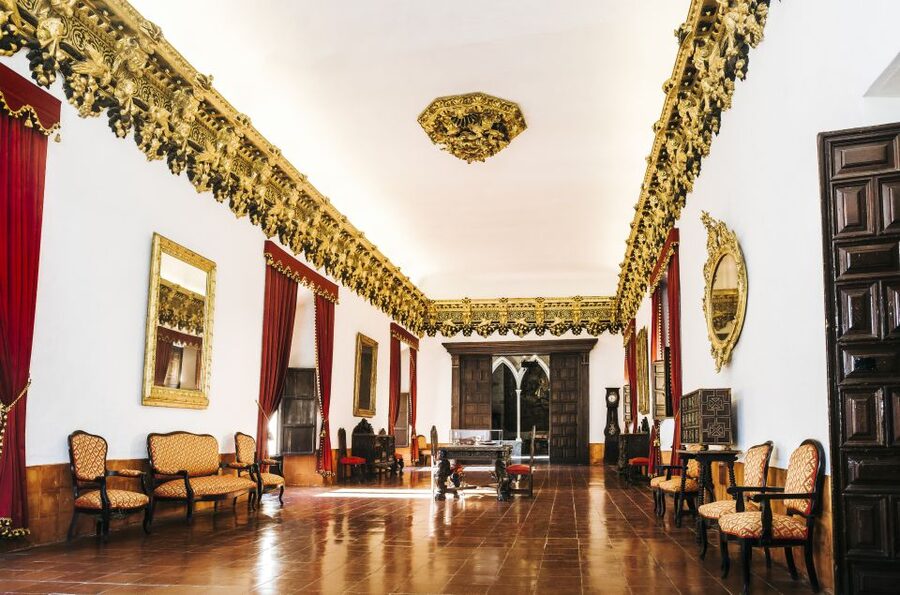
The Golden Gallery is the palace’s visual centerpiece. It is made up of five rooms, each contributing to a long sequence of Baroque decoration. The name is not just a marketing flourish. Gold-toned ornament, formal design, and painted ceilings give the gallery the polished appearance expected of a ducal residence.
Look up as soon as you enter. The ceilings are decorated with oil paintings, and the audio guide helps explain what you are seeing. Gaspar de la Huerta is associated with the paintings, giving the gallery an artistic connection that is easy to miss if you only focus on the walls and furniture.
I like this part of the visit because the audio commentary adds value without forcing you into a group timetable. You can stop to examine a ceiling, then continue when you are ready. The tradeoff is that you need to keep the audio guide in mind while also looking around. If you rush through the rooms, you may hear the explanation without giving yourself enough time to study the decoration.
The Golden Gallery is also a good reason to avoid treating the palace as a quick photo stop. The most interesting details are above eye level, and flash photography is not allowed. That restriction protects the interiors, but it also means your visit should be about looking closely rather than collecting a fast set of pictures.
Hall of Eagles, Hall of Crowns, and Holy Chapel
The palace visit includes several named spaces that give the building a more personal character. The Hall of Eagles and Hall of Crowns suggest ceremony, authority, and family identity. Their names alone tell you that the palace was designed to communicate rank as much as to provide a home.
The Holy Chapel shifts the mood. Religious life was closely tied to aristocratic life, and the chapel shows how faith formed part of the palace’s daily and ceremonial world. The contrast between formal halls and sacred space helps you understand that this was not simply an ornate residence. It was also a place where political status and religious duty met.
The audio guide gives you a useful framework for these rooms. You hear about the Royal Dukes of Gandia and key members of the Borgia family, including Duchess Maria Enriquez and San Francisco de Borgia. These names make the palace easier to remember because they connect the decoration to real figures and family decisions.
I would not expect every room to have the same visual impact. The Golden Gallery is the clear highlight for decoration, while the halls and chapel matter for the story they tell about power and belief. That balance is normal for a historic palace. Some rooms reward close study of art, while others are important because of the role they played.
The Borgias in Gandia
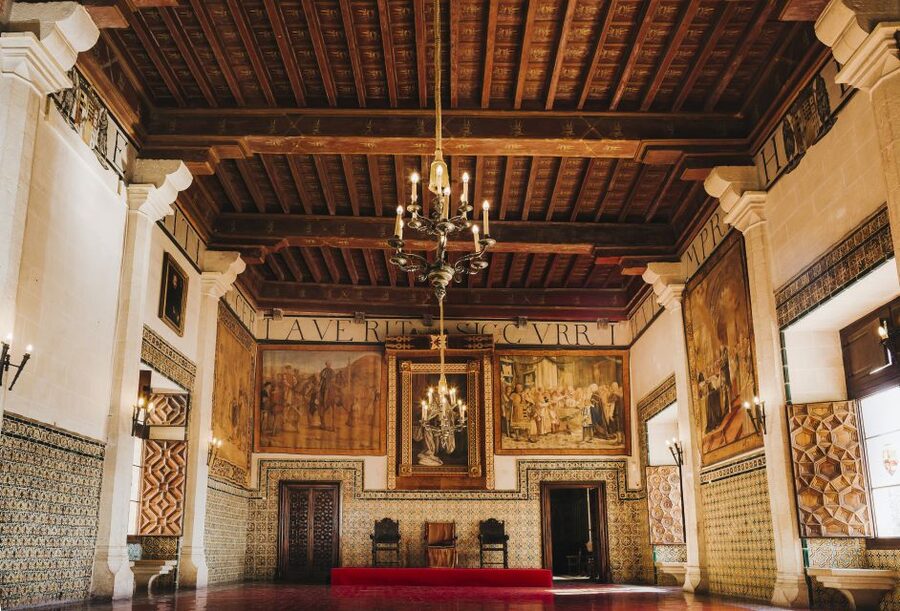
The Borgia connection gives the palace much of its character. The family became one of Europe’s most powerful Renaissance families, and Gandia was one of its important centers. Here, you are looking at the family through its Valencian home rather than only through the dramatic stories associated with its name.
The palace presents the Borgias through architecture, rooms, and family history. Duchess Maria Enriquez is one of the important figures covered by the audio guide. San Francisco de Borgia provides another angle on the family, linking the palace to a figure remembered for religious life as well as aristocratic birth.
This family background is valuable because it explains why the palace has such a strong mixture of display and restraint. The grand spaces show wealth and rank, but the chapel and historical commentary add a more private side. You begin to see the building as a place where public image, family loyalty, religion, and inheritance all mattered.
I recommend listening to the historical sections before focusing too much on individual decorative details. Once you know who lived here and why the palace mattered, the Hall of Crowns and Golden Gallery feel less like isolated sights. They become parts of a larger family story.
More Audio Tours in Spain
- Barcelona: Sagrada Familia Entry Ticket with Audio Guide
★ 4.6 · 105,312 reviews - Barcelona: Casa Batlló Entry with Self-Audioguide Tour
★ 4.7 · 25,359 reviews - Granada: Alhambra Entry Ticket with Audio Guide
★ 4.1 · 5,950 reviews - Casa Batllo Admission Ticket with Intelligent Audio Guide
★ 4.5 · 3,168 reviews
Gothic foundations and Baroque additions
The architecture is one of the best reasons to visit even if you are not a specialist in historic buildings. The palace shows Valencian Gothic design alongside Renaissance and Baroque changes, allowing you to compare different styles within one setting.
The Gothic elements give the building a strong medieval foundation. Later Renaissance work brings a more ordered and classical feel, while the Baroque interiors add theatrical decoration. The changes are not merely academic. They show how the palace was updated over the centuries to reflect current taste and the expectations of powerful owners.
You do not need to know architectural terms in advance. The audio guide is there to point out what changed and why the palace looks the way it does. I would pay attention to transitions between sections, since they make the building’s long development easier to understand than any single ornate room.
The palace is also a useful stop if you are exploring Gandia beyond the beach. It offers a direct look at Valencian civil heritage, with a focus on architecture and family history rather than a modern attraction built around spectacle. The experience is contained, calm, and focused on the building itself.
How the 45-minute audio guide shapes the visit
The audio guide lasts about 45 minutes, making it long enough to provide context without taking over your day. It is a good match for visitors who want information but do not want to join a scheduled live group.
You can pause at details that interest you and move on from spaces that hold less appeal. That freedom matters in a palace. One person may want to study the Golden Gallery’s ceilings, while another may care more about the Borgia family or the Holy Chapel.
The downside is the lack of personal interaction. A live guide can answer a question, adjust the pace, or point out an unexpected detail. With the audio guide, you receive a prepared route and commentary. For many people, that is a fair trade at this price, but you should choose this experience knowing that it is independent rather than social.
The audio guide has received particularly strong marks for clarity and ease of use. One German-language user found the voice pleasant and easy to understand, while another described the audio guide as working very well. Those details matter because poor audio can turn a historic palace into a frustrating visit. Here, the commentary appears to be one of the stronger parts of the experience.
Is $9 good value?
At $9 per person, this is an easy attraction to fit into a day in Gandia. You are paying for palace entry and a 45-minute audio guide, not just access to an empty building. The price is especially fair if you plan to listen to most of the commentary and take time with the Golden Gallery.
The value depends on your interest in historic interiors. If you prefer fast sightseeing and only want a few photographs, you may not use enough of the audio guide to get the full benefit. If you enjoy architecture, royal families, religious spaces, and decorative art, the combination of entry and commentary gives you a solid visit for a modest cost.
The single-day validity also gives you some flexibility around your schedule. Check the available starting times before booking, since the activity is valid for one day and the exact start options can vary. You can cancel up to 24 hours before the visit for a full refund, and a reserve-now, pay-later option is available for people who want to keep their plans flexible.
Practical details for a comfortable visit
The palace is wheelchair accessible, which makes this experience more suitable for a wider range of visitors. The supplied information does not describe every route detail, so if you need specific access assistance, it is sensible to confirm the arrangements before your visit.
Food and drinks are not allowed inside. Neither are alcohol, drugs, weapons, or sharp objects. Pets cannot enter, although assistance dogs are permitted.
Flash photography is prohibited. Bring your attention rather than expecting to document every ceiling and hallway. The ban is particularly relevant in the Golden Gallery, where the oil-painted ceilings are among the most delicate and important features.
Because the audio guide lasts 45 minutes but the ticket is valid for one day, you should allow enough time to look beyond the spoken commentary. The official audio portion gives you a useful backbone, but the palace rewards a slower glance at ceilings, halls, and changes in style.
Who should book this palace visit?
I would recommend this experience to anyone interested in Gandia’s history, the Borgia family, or Valencian architecture. It also suits independent visitors who prefer to explore without a live group or fixed walking tour.
Families with older children may find the named rooms and famous family members easier to follow than a purely architectural visit. The six-language audio option also makes it practical for international visitors who want information in a familiar language.
Art and architecture enthusiasts should make time for the Golden Gallery and its five rooms. Visitors with a strong interest in religious history will likely appreciate the Holy Chapel, while anyone curious about noble life can compare the ceremonial halls with the more devotional spaces.
I would think twice if your main goal is a live storyteller or a highly interactive tour. There is no live guided tour included, and the experience depends on your willingness to use the audio guide. You also need to follow the rules on food, drinks, photography, pets, and prohibited objects.
Should you book the Ducal Palace of Gandia?
Book it if you want a low-cost, well-explained look at one of Gandia’s most important historic buildings. The Golden Gallery, the Borgia family story, and the mix of Gothic, Renaissance, and Baroque design give the visit more depth than a quick palace walk-through.
The $9 price is the deciding advantage. You get entry plus a multilingual 45-minute audio guide, and the visit is wheelchair accessible. Choose it with realistic expectations: this is a self-guided palace experience, not a live tour with questions and conversation.
If your schedule includes Gandia and you care about architecture, family history, or beautiful interiors, I would make room for it. Listen to the guide, look up at the ceilings, and give the palace enough time to show how its style changed over the centuries.
FAQ
How much does entry to the Ducal Palace of Gandia cost?
The entry ticket costs $9 per person and includes the palace visit and audio guide.
How long is the audio guide?
The audio guide lasts approximately 45 minutes.
Which languages are available for the audio guide?
You can use the audio guide in Spanish, English, French, Italian, German, or Russian.
Is a live guided tour included?
No. The ticket includes palace entry and an audio guide, but not a live guided tour.
What are the main rooms and sights inside the palace?
The visit includes the five-room Golden Gallery, the Hall of Eagles, the Hall of Crowns, and the Holy Chapel.
What architectural styles can I see?
The palace includes Valencian Gothic, Renaissance, and Baroque architectural elements.
Is the Ducal Palace wheelchair accessible?
Yes. The activity is wheelchair accessible.
Can I cancel my booking?
Yes. You can cancel up to 24 hours in advance for a full refund. A reserve-now, pay-later option is also available.
Latest audio tours in Spain
- Seville Maestranza Bullring Tour with Audio Guide★ 3.5 · 6 reviews
- Seville Scavenger Hunt and Highlights Self Guided Audio Tour★ 5.0 · 5 reviews
- Royal Alcazar of Seville Entry Ticket with Audio Guide★ 4.0 · 42 reviews
- Seville Cathedral and La Giralda Entry Ticket with Audio Guide★ 3.0 · 9 reviews
- Seville Audio guided walking tour 3h20 and 28 audio commentaries★ 5.0 · 2 reviews
- Seville Cathedral and Giralda Entry Tickets with Audio Guide★ 4.0 · 56 reviews
- Essential Seville’s Ancient History: An Audio Tour★ 5.0 · 9 reviews
- Segovia from the Aqueduct to the Alcazar: A Self-Guided Audio Tour★ 4.5 · 10 reviews
Castle & Palace Audio Tours, compared.
Topkapi Palace and Harem Skip-the-Line-Tickets & Audio Guide
Read our review →
Sforza Castle Entry Ticket with Digital Audio Guide
Read our review →
Topkapi Palace and Harem Ticket with Audio Guide
Read our review →
Knossos Palace Entry Ticket with Optional Audio Guide
Read our review →

Dolmabahce Palace and Harem Fast-Track & Audio
Read our review →
Browse the lists this tour appears in