
Reviewed · SACRAMENTO
Historic Folsom: A Self-Guided Audio Tour
Folsom’s story unfolds along one very walkable route: from Gold Rush-era Sutter Street, past the old railroad and powerhouse, to the Rainbow Bridge beside Lake Natoma. This self-guided GPS audio tour lets you hear the story while you walk, stop for a look, or pause for a coffee without waiting for a group.
I like the freedom to set your own pace, and I like the practical offline access. Once you download the audio, maps, and route data, you do not need a cell signal. The main drawback is that the start instructions can feel muddled, and the route includes hills that are not clearly flagged in advance.
Key points to know before you go
- A 90-minute to two-hour walk: Plan enough time for the full route, photos, pauses, and any stops along the way.
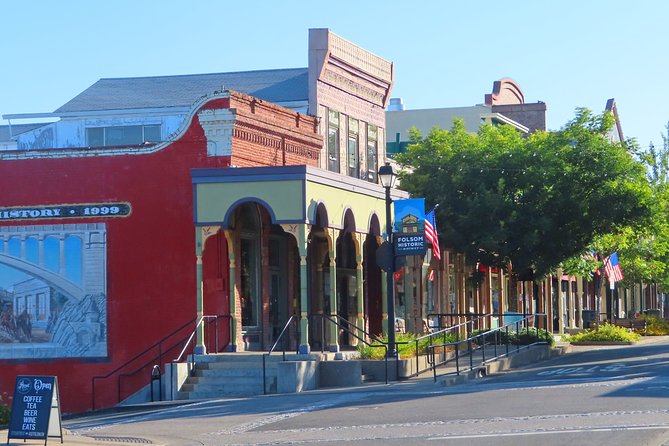
- Sutter Street is the historical backbone: The route connects Gold Rush stories with Folsom’s railroad, theater, and power history.
- The tour ends at Lake Natoma: You finish at the Folsom Historic Truss Bridge, also called Rainbow Bridge.
- Download before arriving: Offline audio, maps, and geodata are included, which helps in areas with weak reception.
- Bring your own equipment: A smartphone and headphones are not included, nor are food, drinks, transport, or admission fees.
- Check the first directions carefully: The stated meeting details and spoken instructions have caused confusion around the start.
What this Folsom walk actually offers
This is not a guided group outing with a person leading the way. It is a private audio walk for your own group, delivered through the VoiceMap app for Android and iOS. You follow the route on your phone while the narration plays as you move from point to point.
That format works well in Folsom. You can pause the story while you examine an old building, stop for a snack, or take a break on a warm day. You can also restart the tour, which is useful if you lose your place or decide to split the walk into shorter sections.
The route takes about an hour and a half to two hours, depending on your pace. The listed rating is 4 out of 5 from 10 ratings, which suggests a generally positive experience with some clear practical weak spots. The strongest part is the freedom to explore without a fixed departure time. The weakest part is the need to manage the app and directions yourself.
You should think of this as a walking framework rather than a full museum visit. It gives you context as you pass the sights, but admission to museums and other attractions is not included. If you want to go inside, you will pay separately and may need to adjust the timing.
More History Audio Tours in the USA
- Santa Fe Historic Downtown Smart Phone Audio App Self Guided GPS Walking Tour
★ 4.5 · 112 reviews - Savannah’s Historical District: A Self-Guided Audio Tour
★ 4.5 · 69 reviews - Self-Guided Walking Audio Tour of Historic Santa Fe
★ 4.5 · 43 reviews
Starting on Sutter Street
The walk takes you down Sutter Street, the natural place to begin understanding historic Folsom. This is where the tour’s Gold Rush theme comes into focus. The narration also covers local Native American history, giving you a broader view than a simple story about miners and merchants.
The official start is listed at 609 Leidesdorff Street in Folsom. At the same time, the audio directions and related instructions have been described as pointing to different nearby places, including the area around the Moose Lodge, the historic power station, and the corner of Riley and Scott Streets. That is an important detail, not a minor quibble.
I would download the tour well before you arrive and check the starting marker while you still have a reliable connection. Give yourself a few extra minutes to match the map, the street signs, and the first spoken instruction. The tour is meant to be easy to begin, but this is the point where you may need the most patience.
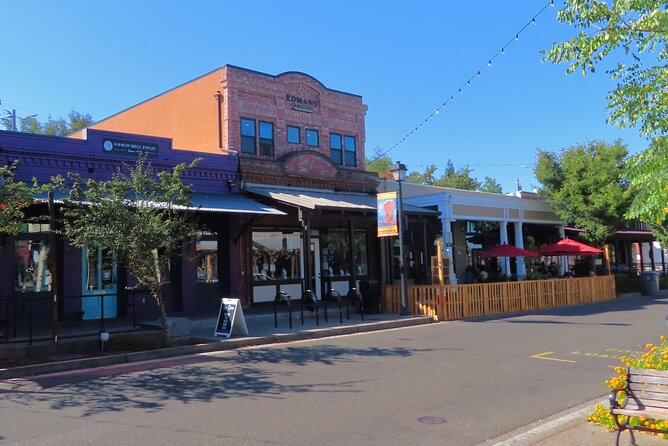
Once you are moving along Sutter Street, the format becomes more comfortable. The audio can tell you what to notice while you look around, and you are not tied to a guide’s walking speed. You can pause whenever a building or view deserves more time.
Gold Rush stories and Native American history
The historical subject matter is one of the best reasons to choose this walk. Folsom is often reduced to a Gold Rush stop, but the tour also brings in the Native American history of the area. That wider frame helps you see the town as more than a collection of old storefronts.
The audio format is useful here because it can connect individual places with larger events. You are not simply told that a building is old. You get a sense of how the town’s early development, trade, transport, and power systems fit together.
The supplied information does not identify the narrator by name, so I cannot tell you to expect a particular guide or voice. The tour is offered in English only. If you want a live exchange with a local guide, questions answered on the spot, or a discussion tailored to your interests, this will feel limited.
For independent visitors, though, the history is easy to fit into a day in Folsom. You can listen closely for a few minutes, look around, then pause the app when you want to read signs or take pictures. That control is worth a lot on a short town walk.
The Folsom Historical Museum stop
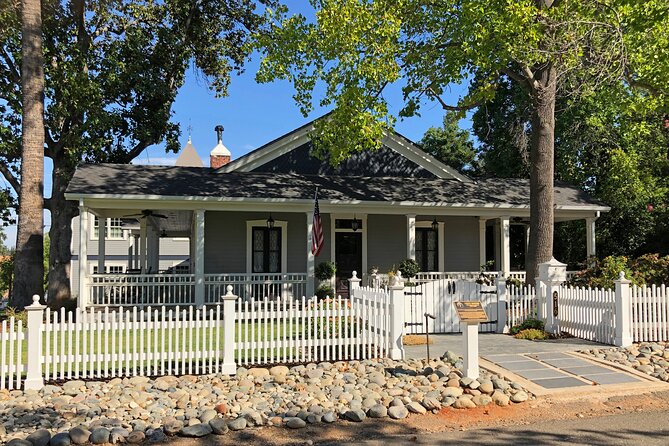
The route passes the Folsom Historical Museum, one of the key points for putting the town’s past into physical form. The audio can introduce the museum as part of the walk, but entrance is not included.
That distinction matters. You can make the museum an optional extra, but you should not assume the tour price covers it. If you decide to go inside, you will need to stop the audio and allow extra time. The tour’s advertised duration is an estimate for the walking route itself, not a promise that every attraction can be visited within two hours.
I like the way this setup lets you choose your level of detail. Some people want a brisk overview. Others want to spend time with exhibits and then continue. A self-guided route gives you that choice, though you must keep track of the schedule yourself.
The museum stop also gives the walk a useful anchor. After hearing about the early town and local history, you have a place where that material may become more concrete. The tour does not replace a museum visit, but it can help you decide if one is worth adding.
More Self-Guided Audio Tours in the USA
- Gettysburg Battlefield Self-Guided Driving Audio Tour
★ 4.5 · 910 reviews - Joshua Tree National Park Self-Guided Driving Audio Tour
★ 4.5 · 762 reviews - Ultimate Acadia National Park Self-Guided Driving Audio Tour
★ 4.0 · 521 reviews - Ultimate Lake Tahoe Self-Guided Driving Audio Tour
★ 4.5 · 435 reviews
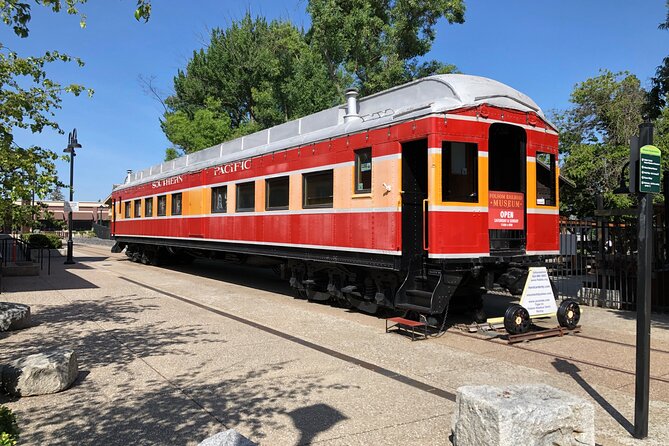
Railroad history beside the Sacramento Valley Railroad
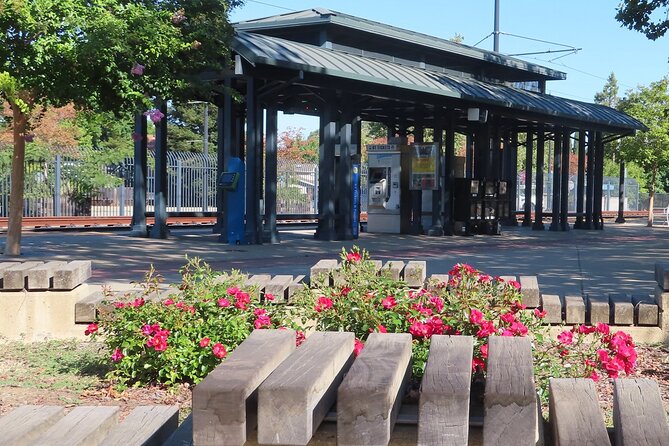
The route passes by the Sacramento Valley Railroad, an important part of Folsom’s story. The railroad link gives the walk a change of pace. You move from the human-scale storefronts of Sutter Street to the machinery and transport systems that helped connect the town with the wider region.
This is a good example of why the walk works better as a sequence than as a list of isolated sights. Gold brought people and money. The railroad helped move goods and people. The old commercial street shows where daily business happened. The narration connects those pieces as you walk.
You will want to keep your phone volume and headphones at a sensible level. The tour relies on the app to tell you when to move on, and one past user found the instructions unclear about exactly when to stop or continue. I would glance at the map instead of relying on spoken directions alone.
The route is not described as difficult in the booking information, but one user found much of it steeper and hillier than expected. Take that seriously if you prefer flat walks. The total distance may be manageable, yet hills can change how long the route feels.
Sutter Street Theatre and the changing town
The tour passes Sutter Street Theatre, adding a cultural stop to the history of commerce, transport, and industry. It is a reminder that historic Folsom is not only about old buildings and Gold Rush dates. The street still has a working community and entertainment life.
The practical benefit of an audio tour is that you can pause near this part of the route and look around without holding up anyone else. If a theater or nearby business catches your eye, you can take a break and resume later.
There is one caution about the age of the narration. Some business references may no longer match what you see. That can make the route feel dated, especially if the audio describes a shop or venue as though it is still operating.
I would treat current businesses as changeable details and focus on the historical information. The tour’s strongest material is the story of the town and its sites. Its weaker point is the possibility that commercial references have not all kept pace with changes on the street.
Folsom Powerhouse State Historic Park
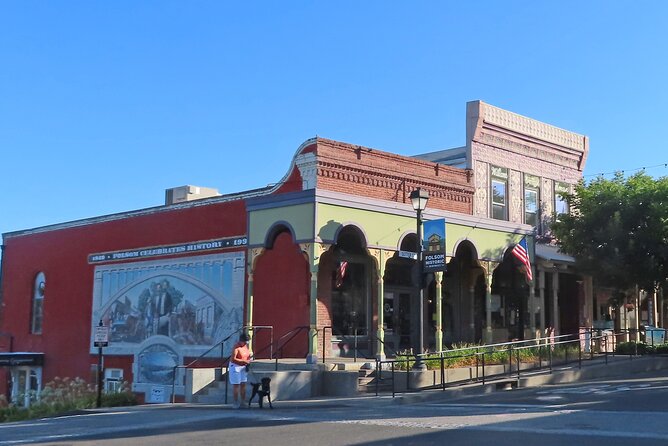
The route also passes Folsom Powerhouse State Historic Park. This is a major historical idea in the walk: Folsom was not only a Gold Rush settlement and railroad town, but also a place connected with early electrical power.
The power station gives the route a strong industrial chapter. After hearing about streets, merchants, and transport, you get a sense of the systems that helped modernize the town. You can view the site as part of the walk, but any entrance fee is separate.
This stop is another place where you need to decide how much time you want to spend. If you simply continue along the route, the audio walk can stay close to its 90-minute to two-hour estimate. If you enter attractions or linger at each stop, plan on a longer outing.
The directions around the power station deserve extra care. One set of instructions has reportedly pointed visitors near the historic power station while other directions have placed the start elsewhere. Do not assume that seeing the building means you have found the correct beginning. Use the app’s map and confirm the first location before setting off.
Finishing at Lake Natoma and Rainbow Bridge
The route ends at the Folsom Historic Truss Bridge, also called Rainbow Bridge, beside Lake Natoma. This gives the walk a clear finish rather than sending you back through the same streets.
Lake Natoma changes the mood of the outing. You begin with town history and end near open water, the bridge, and the final section of Folsom’s story. The ending is especially useful for people who want to combine history with a scenic pause, though the tour does not include transport back to the start.
That point matters for planning. You need to arrange your own way to and from the area, and the tour does not provide transportation. The start and end are both in Folsom, but they are not described as the same location. Check your parking and return plan before you begin.
The end point is also a good place to pause the app rather than rush off. Since you have lifetime access, you can revisit the audio later, though the standard experience is designed as a one-way walk.
App use, offline access, and the real trade-off
The VoiceMap app is included for Android and iOS, along with lifetime access to the English tour. You also receive offline access to the audio, maps, and geodata. Download everything before starting, especially if you do not want to depend on mobile reception.
This is one of the tour’s most useful features. Historic streets, parks, and waterfront areas are not always places where you want to keep checking a signal. Offline access lets you pay attention to the town instead of watching a loading screen.
The trade-off is that you become responsible for the technology. A previous experience with the tour involved the app closing during pauses and asking for the access code again. I cannot say this will happen to you, but it is sensible to keep your booking confirmation and access details available before you begin.
The narration also may not always tell you precisely where to stop. Keep the route map open, listen for location cues, and check your position at turns. This small habit can prevent the most common problem with self-guided audio walks: continuing too far before realizing you missed a point.
Bring your own smartphone and headphones. Neither is included. Food and drinks are also not included, so plan those separately if you want a break along Sutter Street.
Is $9.99 a good value?
At $9.99 per person, this is a low-cost way to add structure to a visit to historic Folsom. For the price of a casual snack, you receive lifetime access to the tour, offline maps, and audio in English. That is good value if you want historical context but do not need a live guide.
The value drops if you expect a polished, fully updated route with perfect directions. You may need to sort out the starting point, manage the app, and ignore business references that have changed. You also pay separately for museum or historic-site admission.
I would compare the price with what you want from the outing. If you already plan to walk Sutter Street and see the bridge, the tour adds a voice and a route for a small fee. If you want a guided conversation, detailed help with every turn, or included attraction tickets, spend your money elsewhere.
The tour is private in the sense that only your group participates. That does not mean a guide joins you. It means you have the route to yourself, with no fixed group and no departure time.
Who should book this Folsom audio walk?
I would choose this tour for independent visitors who enjoy walking, want local history in manageable portions, and like the ability to pause without asking permission. It also suits people with a spare hour and a half who want more than a quick look at Sutter Street.
It is a good fit for:
- Couples or friends who prefer exploring alone
- Visitors interested in Gold Rush, Native American, railroad, and industrial history
- People comfortable using a smartphone app
- Anyone who wants to stop, restart, or revisit the tour later
- Visitors who plan to see the Folsom Historical Museum or Powerhouse separately
I would be more cautious if you need flat terrain, precise spoken directions, or hands-on help. The hills may be more noticeable than expected, and the start instructions require careful checking.
Book only when your schedule is firm. The experience is non-refundable and cannot be changed after booking. With that restriction, download the route early, bring headphones, and allow time to find the correct start.
Should you book Historic Folsom: A Self-Guided Audio Tour?
Book it if you want an inexpensive, flexible introduction to Folsom that links Sutter Street with the railroad, theater, powerhouse, and Lake Natoma. The offline maps and lifetime access make the $9.99 price easy to justify for independent walkers.
Skip it if you want a live guide, completely current business information, or a route that requires no troubleshooting. The best approach is to treat the audio as a helpful historical companion, not as a substitute for your own map, timing, and common sense.
FAQ
How long does the Historic Folsom audio tour take?
The tour takes approximately one hour and 30 minutes to two hours.
What language is the tour offered in?
The tour is offered in English.
Where does the tour start?
The listed starting point is 609 Leidesdorff Street, Folsom, California 95630. The directions have also referred to nearby locations around Riley and Scott Streets, so check the app map carefully before beginning.
Where does the tour end?
The tour ends at the Folsom Historic Truss Bridge, also called Rainbow Bridge, beside Lake Natoma in Folsom.
Does the tour work without cell service?
Yes. After downloading it, you can use the audio, maps, and geodata offline.
What is included in the price?
The price includes lifetime access to the English self-guided GPS audio tour and use of the VoiceMap app for Android and iOS, with offline audio, maps, and geodata.
Are museum tickets or food included?
No. Food, drinks, transportation, smartphone use, headphones, and admission fees for museums or other attractions are not included.
Can I pause or restart the tour?
Yes. You can start, pause, and restart the tour at your own pace.
Latest audio tours in the USA
- Sequoia National Park Self-Guided Audio Tour★ 4.5 · 9 reviews
- Sequoia and Kings Canyon Audio Tour Self Guide National Park Tour★ 5.0 · 3 reviews
- Kings Canyon National Park Self-Guided Audio Tour★ 4.0 · 4 reviews
- Sedona, Arizona Self-Guided Audio Tour★ 4.0 · 36 reviews
- Sedona & Red Rock State Park Self-Guided Driving Audio Tour★ 3.0 · 30 reviews
- Haunted Savannah Self-Guided Walking Audio Tour★ 4.5 · 3 reviews
- Downtown Seattle Self-Guided Walking Audio Tour★ 4.5 · 6 reviews
- Uncover Seattle: Self-Guided Audio Tour★ 3.5 · 7 reviews
Self-Guided Audio Tours, compared.

Acropolis Ticket & Optional Self-Guided Audio Tours
Read our review →


Ultimate Acadia National Park Self-Guided Driving Audio Tour
Read our review →

Akrotiri Ticket with Optional Self-Guided Audios
Read our review →
Browse the lists this tour appears in