
Reviewed · PHILADELPHIA
The Road to Revolution: A Self-Guided Audio Tour in Philadelphia
Philadelphia’s Old City is easy to walk past too quickly. This tour slows you down and explains how ordinary streets, meeting halls, banks, homes, and churches helped shape the American Revolution and the new government. The most interesting angle is architectural: the narrator, an architect, connects building materials and design to the people and political struggles inside them.
I like the strong mix of architecture and personal stories, especially the way Benjamin Franklin, Alexander Hamilton, Robert Morris, and other major figures are presented as real people with flaws and difficult choices. I also like the freedom of a self-guided route, with lifetime access and offline maps and audio in the VoiceMap app.
The main drawback is technical rather than historical. One customer could not redeem the receipt code and was nearly charged twice, although the provider said support could have supplied the correct code. Download the tour and check your code before you arrive.
Key points to know before you go
- The route begins at Elfreth’s Alley, the oldest continuously inhabited street in the United States.
- The walk ends at Independence Hall, after passing the Liberty Bell and the President’s House Site.
- The architect narrator adds building history, not just familiar Revolutionary-era stories.
- You visit the outside of many attractions, but museum and site admission is not included.
- The walk takes about two to two-and-a-half hours, with no transportation, food, or drinks included.
- Offline access matters, since the VoiceMap app stores the audio, map, and geographic data on your phone.
Old City begins with Elfreth’s Alley
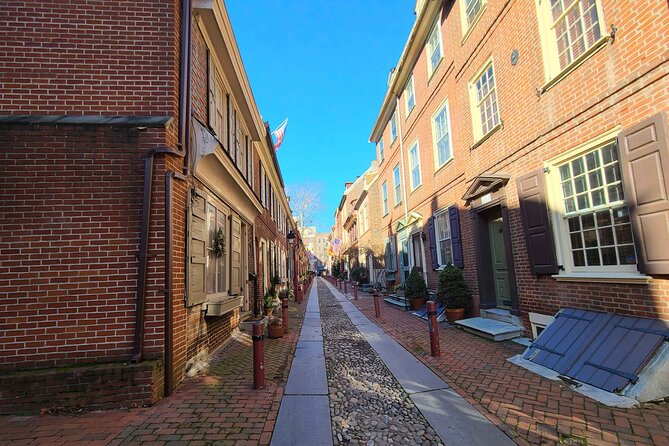
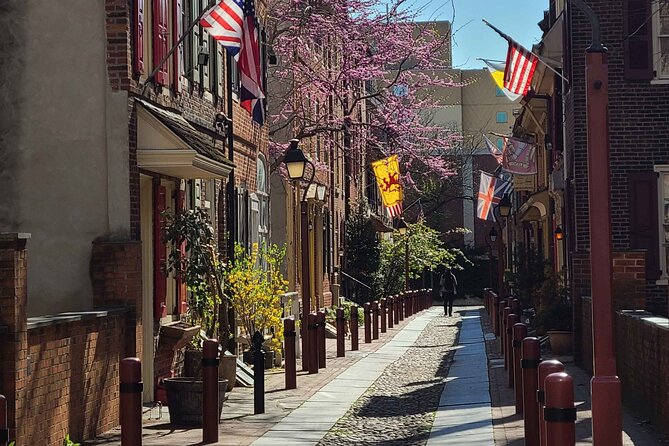
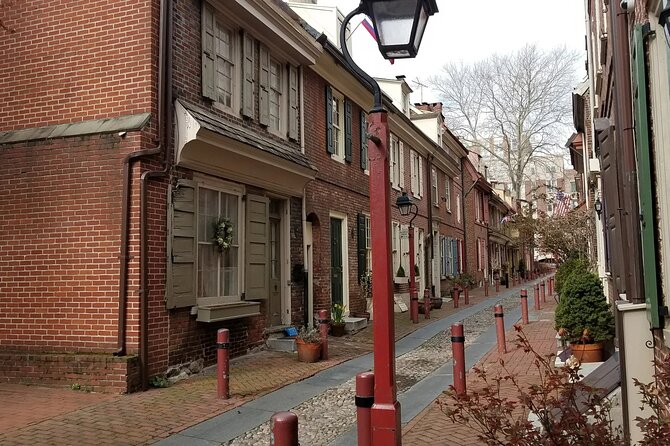
The route starts at the Elfreth’s Alley Museum, at 126 Elfreth’s Alley. This is a smart starting point because the narrow street gives you an immediate sense of early Philadelphia as a lived-in place, not only a collection of grand civic landmarks.
Elfreth’s Alley is described as the oldest continuously inhabited street in America. That detail gives the opening section a useful scale. Before the tour reaches famous names and national politics, you begin with the physical city and the people who lived in it.
I like that the introduction pays attention to construction. Buildings tell one story through their materials, technology, and style. The people who designed, built, lived, and worked in them tell another. That approach helps you read the street instead of simply checking off a historic address.
Because this is a self-guided audio walk, you can pause when you want to look at a doorway, brick wall, or narrow passage. You are not tied to a group pace. The tradeoff is that you need to keep an eye on the route and listen for directions yourself.
More Self-Guided Audio Tours in the USA
- Gettysburg Battlefield Self-Guided Driving Audio Tour
★ 4.5 · 910 reviews - Joshua Tree National Park Self-Guided Driving Audio Tour
★ 4.5 · 762 reviews - Ultimate Acadia National Park Self-Guided Driving Audio Tour
★ 4.0 · 521 reviews
Christ Church and the people behind the names
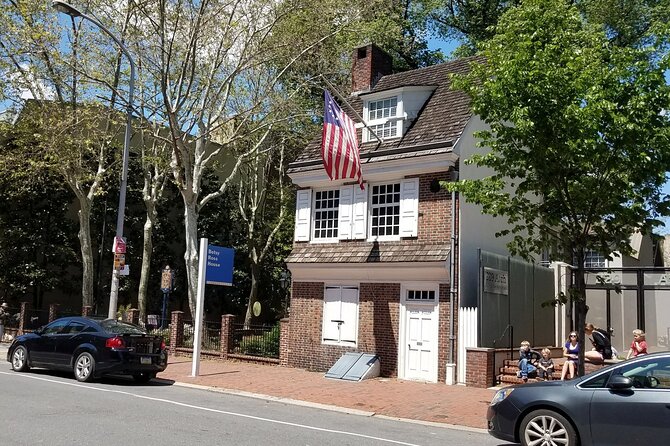
From Elfreth’s Alley, the walk continues through Old City toward Christ Church. The church is connected with George Washington, Betsy Ross, and Deborah Franklin, all of whom worshiped there at some point.
That list could easily become a quick parade of famous names. The tour aims for something more useful by placing those people within the city around them. You hear about the individuals who shaped Philadelphia from its early days through American independence, rather than treating the Revolution as a story created by a few generals and politicians.
This is one reason the audio format works well here. As you walk, the narration can point your attention toward a building while explaining who used it and why it mattered. You are free to look around instead of standing in one spot while a guide manages a whole group.
Christ Church is an active historic site with its own possible admission arrangements, but this tour does not guide you through its interior. If you want to go inside any attraction mentioned on the route, you pay separately.
Franklin Court and Benjamin Franklin’s final Philadelphia years
The walk then reaches fragments of Franklin Court, the area connected with Benjamin Franklin’s final years. The word fragments is important. You should not expect a fully intact historic house presented as a complete interior experience. Instead, the site offers a chance to consider Franklin’s place within the city and the built environment around him.
Franklin’s role runs through the tour. He was the only person to sign the Constitution of the United States, the Declaration of Independence, the Treaty of Alliance, and the Treaty of Paris. Those documents connect the Revolution, the war’s international alliances, the peace settlement, and the creation of the federal government.
The tour uses that unusual record to give Franklin more than a one-line biography. You hear how large his role was in both the Revolution and the founding of the government. The focus on the surrounding structures also keeps the story tied to Philadelphia, rather than turning it into a general biography.
You can visit Franklin-related sites independently if they are open and you choose to pay admission. The audio tour itself covers the exterior route and does not include museum entry.
Carpenters’ Hall and the First Continental Congress
Carpenters’ Hall brings the political story into sharper focus. It was the first craft guild in America and the meeting place of the First Continental Congress.
That combination tells you something important about early Philadelphia. Political power did not happen only in purpose-built government buildings. Guild halls, offices, churches, homes, and commercial buildings could all become part of the story.
The audio explains the building’s connection to the city’s beginnings and the events that unfolded around it. I find this kind of stop more rewarding than a simple list of dates because you can connect a specific room or structure with the formation of a national movement.
You will pass the site rather than receive a guided interior visit. If you want to enter, that is an additional decision and expense. For a visitor trying to cover Old City in one afternoon, the exterior narration gives useful context without requiring a full museum schedule.
Another self-paced route in the USA:
- Los Angeles: Hop-On Hop-Off Bus Tour with Audio Guide
★ 3.7 · 2,030 reviews - City Sightseeing Hop-On Hop-Off Bus Tour with Audio Guide
★ 3.0 · 1,083 reviews - Medieval Torture Museum Ticket with Audio Guide and Ghost Hunting
★ 5.0 · 962 reviews - San Francisco: Alcatraz, Ferry & Audio Tour w/ Night Option
★ 4.4 · 617 reviews
Hamilton, the First Bank, and an early political fight
The First Bank of the United States is one of the most revealing stops on the route. Created by Alexander Hamilton, it helped spark the beginning of the two-party system.
This is where the tour moves beyond the military version of the Revolution. The country was not finished when the fighting ended. Leaders still argued over money, federal power, and the shape of the new government. A bank building becomes a doorway into those disputes.
The route also covers Alexander Hamilton’s time in Philadelphia and a scandal involving him. That personal story gives you a less polished view of a famous founder. One strength of the narration is its effort to show historical figures as people facing challenges and making questionable choices, not as marble statues with perfect judgment.
The First Bank’s appearance also suits the tour’s architectural point of view. You are encouraged to think about what a major financial institution communicates through its design and setting. The walk links political ideas with the buildings that housed them.
The Merchants Exchange and Philadelphia’s commercial beginnings
You will pass the Merchants Exchange Building while learning about its connection to Philadelphia’s start. This stop broadens the route from political history to trade and commerce.
Philadelphia’s growth depended on more than debates in meeting halls. Merchants, craftsmen, bankers, and other workers gave the city its economic life. A commercial building helps explain how the city functioned day to day, and why Philadelphia became such an important place for the early United States.
The audio format is useful here because you can keep walking while the story fills in what the building cannot show at a glance. The route asks you to consider how business, politics, and city growth affected each other.
The Second Bank and a Grecian-style statement
The Second Bank of the United States looks Grecian in style, making it one of the clearest architectural talking points on the walk.
That appearance was not a minor decoration. Bank design could suggest order, strength, and permanence. The tour uses the building to connect visual style with the government and financial ideals of its era.
You do not need a background in architecture to get something from this stop. The narrator explains the building in plain historical terms, then ties it to the wider story of the early republic. This is a good example of how the tour differs from a standard founding-fathers walk. You are not only hearing who met where. You are also looking at why a structure was built to appear the way it does.
Robert Morris, public memory, and an uncomfortable statue
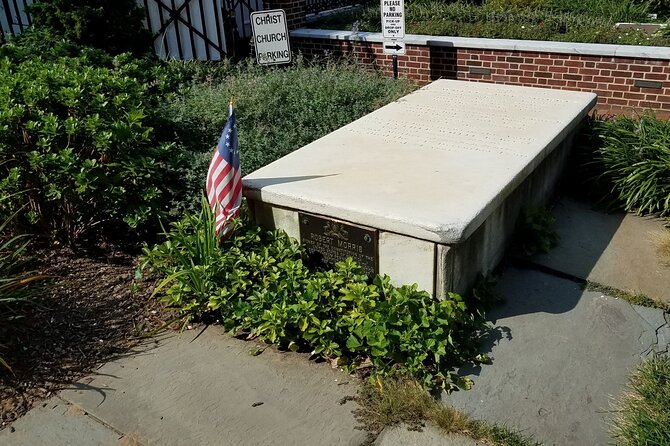
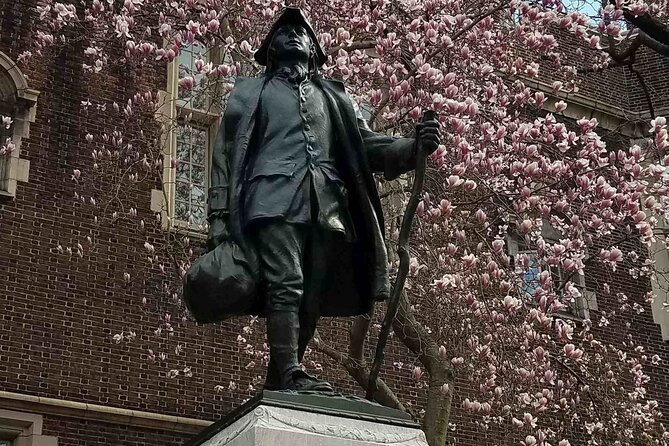
The route passes a statue of Robert Morris and discusses both his life and the controversy connected with the statue.
That is a welcome touch. Public monuments often simplify the people they honor, while the lives behind them can involve wealth, power, conflict, and moral questions. The tour does not treat a statue as the final word about its subject. Instead, it encourages you to consider why someone was honored and why that honor might be disputed.
This stop also fits the broader tone of the walk. You get the familiar patriotic story, but you also hear about the complications behind it. I especially value that balance because Philadelphia’s founding figures were not all alike, and their legacies do not fit neatly into a single heroic picture.
Library Hall, Old City Hall, and the creation of a government
The walk continues past Library Hall and explains its connection to Philadelphia’s beginnings. Like the Merchants Exchange, Library Hall helps show that the city’s early identity was built through institutions, not only through famous residences.
Old City Hall then brings the story back to government. Here, the American Revolution and the creation of the national government come together. Philadelphia was not merely the setting for a war for independence. It was also a working political center where people had to decide how a new country would operate.
The narration places Benjamin Franklin back at the center of that story. His role in several major agreements and founding documents makes him a useful thread through the route. You hear how the same city held revolutionary debate, practical government work, commerce, and daily life within a compact area.
Congress Hall and the final approach to Independence Hall
Congress Hall is another key stop before the route reaches Independence Hall. Its story connects directly with the early government and Philadelphia’s role in the country’s first political years.
By this point, the walk has moved from early settlement and craft guilds to banks, commerce, constitutional government, and public memory. That progression gives the route a clear shape. You are not simply wandering among unrelated landmarks. The stops build a story about how a city became a national center.
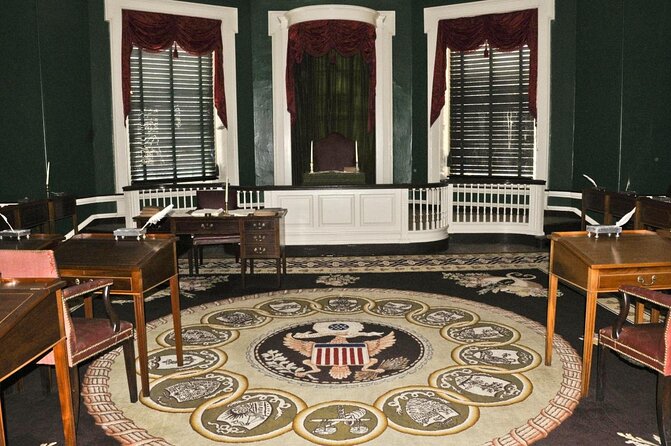
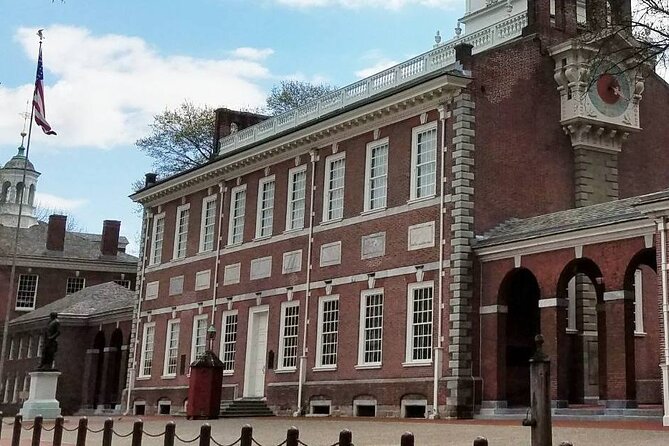
The route ends in front of Independence Hall at 520 Chestnut Street. The advertised timing is about two hours to two-and-a-half hours, but your actual pace can vary because you control the walking, listening, and stops. Allow extra time if you plan to enter attractions along the way.
The Liberty Bell and the President’s House Site
Near the end, you will hear about the Liberty Bell and what it commemorates. The tour wraps up at the President’s House Site, from which you can see several landmarks tied to the American Revolution.
This ending keeps the focus on public memory. The Liberty Bell is one of Philadelphia’s most recognizable symbols, but the audio gives you its story rather than asking you to treat it as a photo stop. You also walk streets associated with the founders and the founding generation on the way to Independence Hall.
The route does not guide you through the Liberty Bell site, the President’s House Site, or Independence Hall. It gives you the historical setting outside. If you want interior visits, plan those separately and check admission arrangements on your own.
What the $11.99 price really buys
At $11.99 per person, this is inexpensive for a two-hour-plus history walk, particularly if you use the lifetime access more than once. The price includes the VoiceMap app for Android and iOS, the audio, offline maps, and geographic data.
The best value comes from the combination of narration and freedom. You do not need to arrange a meeting with a live guide, and only your own group participates. You can pause, replay sections, and move at your own speed.
The price does not include a smartphone, headphones, food, drinks, transportation, or admission to museums and other attractions. If you want a full day of interiors, the additional admission costs could become much higher than the audio tour itself.
You should install the app and redeem the tour before setting out. The provider said a correct code was sent by email and text, and support is available by phone and email if technical trouble occurs. Still, it is better to solve access problems before you are standing on Elfreth’s Alley with a busy afternoon ahead.
Who will get the most from this walk
I would choose this tour if you like history but want more than a string of famous names. It suits independent visitors who enjoy walking, prefer a private experience, and want the option to pause for photos or additional visits.
It is also a good fit if architecture interests you. The narrator’s professional background brings attention to styles, materials, construction, and the way buildings reflect the period in which they were made.
Families and mixed-interest groups may appreciate the flexible pace, though each person needs access to the audio setup. People who want a live guide to answer questions on the spot should choose a different format.
The two reviews available for this experience are sharply divided. One describes an excellent, extensive, and informative walk with unusually strong architectural context and a more human view of historical figures. The other reports a serious redemption problem and no tour received. That makes the pre-tour app check especially important.
Should you book The Road to Revolution?
Book it if you want a low-cost, flexible introduction to Philadelphia’s Old City and you are happy to explore museum interiors separately. The route covers an impressive range of places, from Elfreth’s Alley and Christ Church to Carpenters’ Hall, the two United States banks, the Liberty Bell, and Independence Hall.
Skip it if you need a live guide, included admissions, or guaranteed help with every detail while walking. If you do book, download the VoiceMap app, confirm the code, bring headphones, and allow more than two-and-a-half hours if you plan to stop inside attractions.
For an independent visitor who wants the city’s buildings and political stories tied together, the $11.99 cost is reasonable. Just treat it as an audio walking guide, not a full museum tour.
FAQ
Where does the tour start?
The tour starts at the Elfreth’s Alley Museum, located at 126 Elfreth’s Alley, Philadelphia, Pennsylvania 19106.
Where does the tour end?
The tour ends in front of Independence Hall at 520 Chestnut Street, Philadelphia, Pennsylvania 19106.
How long does the tour take?
The estimated duration is two hours to two-and-a-half hours.
What language is available?
The tour is offered in English.
Is this a guided group tour?
No. It is a self-guided private activity, so only your group participates.
What app is used for the tour?
The tour uses the VoiceMap app, available for Android and iOS devices.
Can I use the tour offline?
Yes. Offline access includes the audio, maps, and geographic data.
Does the price include museum admission?
No. The tour does not guide you through museums or other attractions mentioned along the route. You must pay separately if you choose to enter them.
What does the $11.99 price include?
The price includes lifetime access to the English-language tour through the VoiceMap app, including offline audio, maps, and geographic data.
Are a phone and headphones provided?
No. You need to bring your own smartphone and headphones. Food, drinks, and transportation are also not included.
Latest audio tours in the USA
- Solvang City Personalized Self-Guided App Tour★ 3.0 · 6 reviews
- Essential Downtown SLO: A Self-Guided Audio Tour★ 4.5 · 27 reviews
- Silicon Valley Self-Guided Driving Audio Tour for Tech Lovers★ 4.0 · 24 reviews
- Self-Guided Audio Tour of the Golden Gate Bridge★ 3.5 · 3 reviews
- The Ghosts of San Francisco Haunted Audio App Walking Tour★ 5.0 · 2 reviews
- Point Reyes National Seashore Self Guided Driving Audio Tour★ 4.0 · 9 reviews
- San Francisco Self-Guided Audio Drive: Explore at Your Own Pace★ 4.0 · 9 reviews
- Explore Coronado Island on a Self Guided Audio Tour★ 5.0 · 2 reviews
Self-Guided Audio Tours, compared.
Acropolis Ticket & Optional Self-Guided Audio Tours
Read our review →


Ultimate Acadia National Park Self-Guided Driving Audio Tour
Read our review →
Akrotiri Ticket with Optional Self-Guided Audios
Read our review →
Browse the lists this tour appears in