
Reviewed · ERCOLANO
Ercolano: Herculaneum Entry Ticket with Optional Audio Guide
Herculaneum gives you something Pompeii often cannot: a close look at ordinary Roman life. Roofs still cover rooms, wooden doors and beds survived, and ancient food was found among the remains. The town feels compact enough to understand rather than simply cross off.
I like the exceptional preservation and the fact that you can enter homes, shops, baths, and public buildings without being rushed through a fixed group route. I also like the quieter scale. In about three hours, you can see the main site without the physical and mental slog of a much larger archaeological area.
The main drawback is the audio guide. It can be useful, but the smartphone app is not always easy to navigate, and mobile coverage at the site can be weak. Download it before arrival, bring headphones, and do not count on the app alone to explain every building.
Key points to know before you go
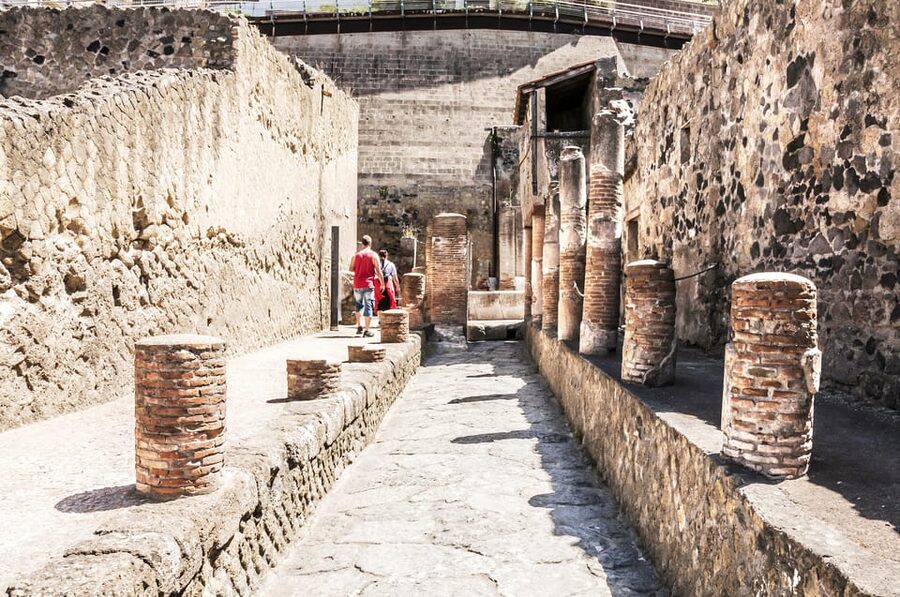
- Roofs and wooden details survive: Herculaneum’s volcanic burial preserved doors, beds, upper floors, food, and household objects unusually well.
- The site is smaller than Pompeii: Plan on roughly three hours for a solid visit, though you can spend much longer if you study the buildings and artifacts.
- The 300 skeletons are deeply moving: The remains near the ancient waterfront add a human dimension to the disaster.
- The audio guide is optional: It offers useful context, but its map and location tracking can be confusing.
- Summer visits need shade planning: Wear comfortable shoes, carry water, and bring an umbrella for sun protection.
- The $21 price is convenient, not always the cheapest: You pay for a ready-to-use booking, but some people find the on-site ticket price better value.
Why Herculaneum feels different from Pompeii

Herculaneum was buried by the eruption of Mount Vesuvius in 79 AD, the same disaster that destroyed Pompeii. Yet the two sites offer different experiences.
Pompeii is much larger. You can spend a full day there and still leave with more streets and buildings unseen. Herculaneum is more compact, which helps you understand the shape of the ancient town. You can walk from house to shop to bath without losing your sense of place.
The difference is also in what survived. Pompeii was covered mainly by ash and pumice, while Herculaneum was buried under hot volcanic material that hardened around buildings and objects. That helped preserve roofs, doors, beds, food, and wooden features that are rare at Pompeii.
I find Herculaneum especially rewarding if you care about daily life. The mosaics and frescoes matter, of course, but so do the small signs of routine: a doorway, a counter, a private room, a bath, or the layout of a home. You begin to picture where people slept, worked, washed, shopped, and gathered.
More Audio Tours in Italy
- Rome: Pantheon Fast-Track Ticket and Official Audioguide
★ 4.5 · 27,353 reviews - Rome: Colosseum & Forum with Audio Guide App -Optional Arena
★ 4.2 · 24,770 reviews - Florence: Timed Entry to Michelangelo’s David + Audio App
★ 4.6 · 19,496 reviews
Entering the ancient town with a one-day ticket
This is a self-guided entry experience, not a tour led by a historian. You redeem your mobile voucher at the online ticket desk on site, then explore independently.
The ticket is valid for one day. That gives you flexibility, but it does not mean you need a full day inside. Most people can make good use of about three hours, while anyone who likes archaeology, architecture, or photography may want longer.
The practical challenge is finding the redemption point. It is at the archaeological site, but it may not be obvious at first. Look for the on-site ticket area rather than assuming a separate office somewhere in town. One useful map can make the entrance much easier to locate.
The booking process is generally straightforward, but the QR code may not produce an instant scan-and-go entry. You might still spend time at admission while staff process the voucher. That matters if you arrive with a tight schedule or a train to catch.
The site is open from 9:30 AM to 7:30 PM from March 16 through October 14, with last admission at 6:00 PM. You must leave the archaeological area by 7:00 PM. From October 15 through March 15, it opens from 8:30 AM to 5:00 PM, last admission is at 3:30 PM, and the area closes to visitors at 4:40 PM.
Check the seasonal hours before setting out. Arriving late in the afternoon can leave you with too little time, especially if you want to use the audio guide.
Walking the cobbled streets

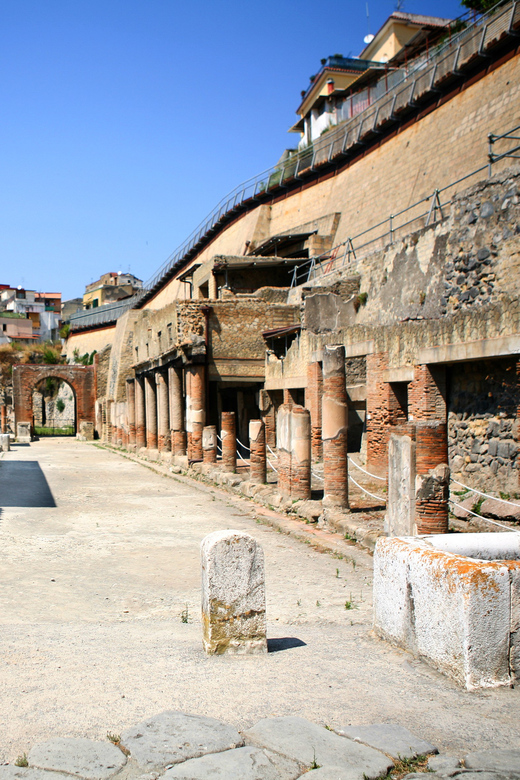
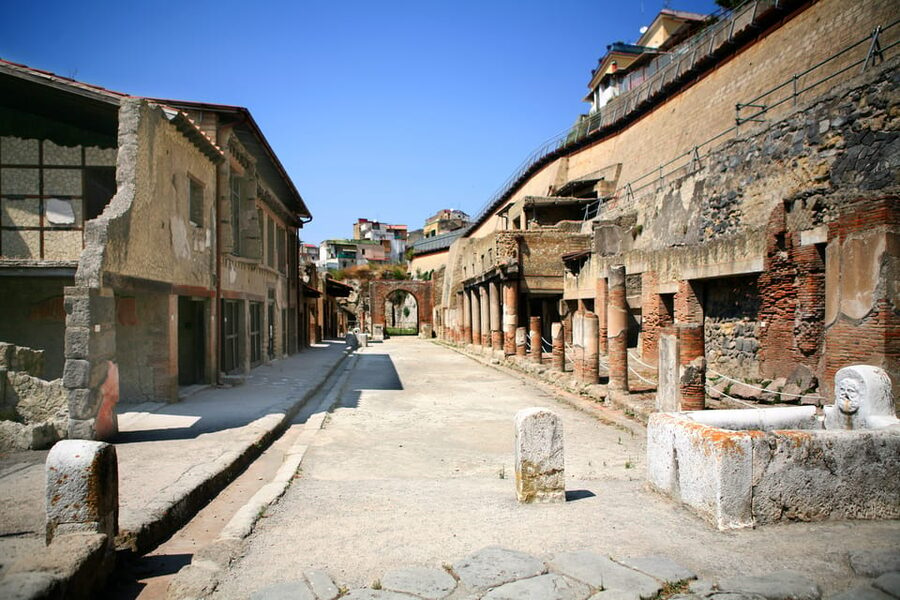
Once inside, you follow the ancient streets at your own pace. These are not polished museum corridors. You walk over old paving stones and between walls that once enclosed a working Roman town.
The scale is one of the site’s great strengths. You can pause without holding up a group, backtrack when a room catches your eye, and spend several minutes studying a fresco or mosaic. Herculaneum rewards slow looking.
Start by getting a general sense of the street plan. Then move into the buildings rather than simply walking along the main paths. The best moments often come when you step through a doorway and realize that the walls, floor decoration, and room arrangement are still visible.
The site includes shops, houses, a public gymnasium, and public swimming baths. These buildings help you connect grand Roman culture with ordinary habits. A bath complex is not just an architectural attraction. It shows how public life, hygiene, social contact, and leisure were linked.
Bring comfortable shoes. The ground is uneven in places, and you will spend much of the visit walking, standing, and looking down at paving, mosaics, and thresholds. Dress for the season, since parts of the site are exposed.
Homes, frescoes, and the details that survived
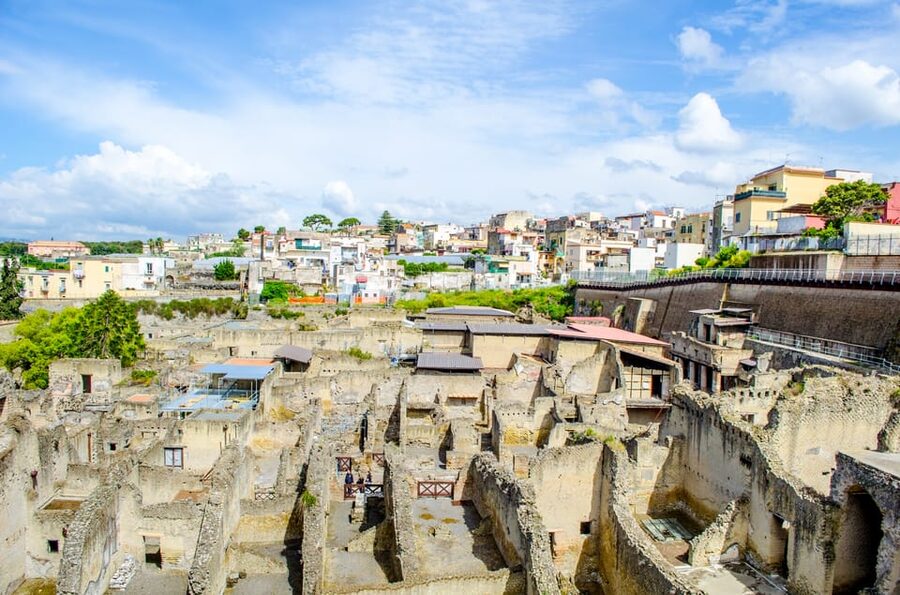
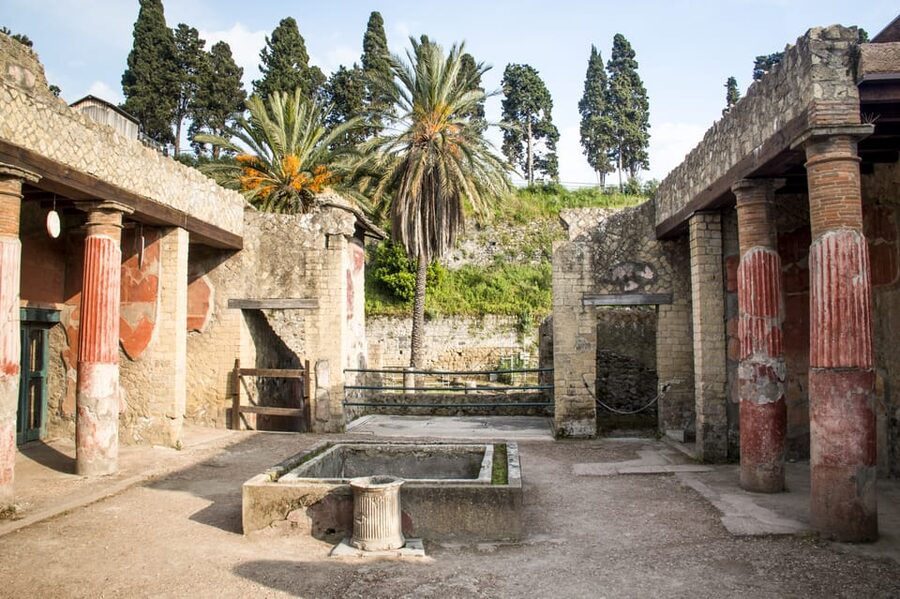
Herculaneum’s strongest feature is its domestic detail. The preserved homes let you see how rooms connected and how decoration was used in daily settings.
Look closely at the frescoes rather than treating them as background color. Their survival gives you a sense of how much visual decoration surrounded wealthy residents. Mosaics underfoot and painted walls overhead show that beauty was built into the home, not reserved for a distant museum.
The original forms of many artifacts are also important. You might notice objects that retain their shape after nearly two thousand years. Food remains and wooden items make the disaster feel less abstract. These are not only fragments of a civilization. They are traces of meals, furniture, storage, and household work.
The preserved doors and beds are particularly striking because they are so familiar. A column or statue tells you about public architecture. A bed or door suggests the person who used it. That is where Herculaneum can feel more personal than a larger ruin field.
The tradeoff is that there is not always enough written information beside each room. If you skip the audio guide, you may find yourself looking at a fascinating space without knowing its original purpose. A printed book or a proper guide can help fill that gap.
Another self-paced route in Italy:
- Rome: City Sightseeing Hop-on Hop-off Bus with Audioguide
★ 4.0 · 16,045 reviews - Pompeii: Entry Ticket with Audio Guide
★ 4.1 · 13,491 reviews - Venice: La Fenice Opera House Entry Ticket with Audio Guide
★ 4.6 · 11,742 reviews - Rome: Colosseum, Forum, Palatine Hill Entry & Audioguide App
★ 4.4 · 10,957 reviews
The waterfront and the human cost of the eruption
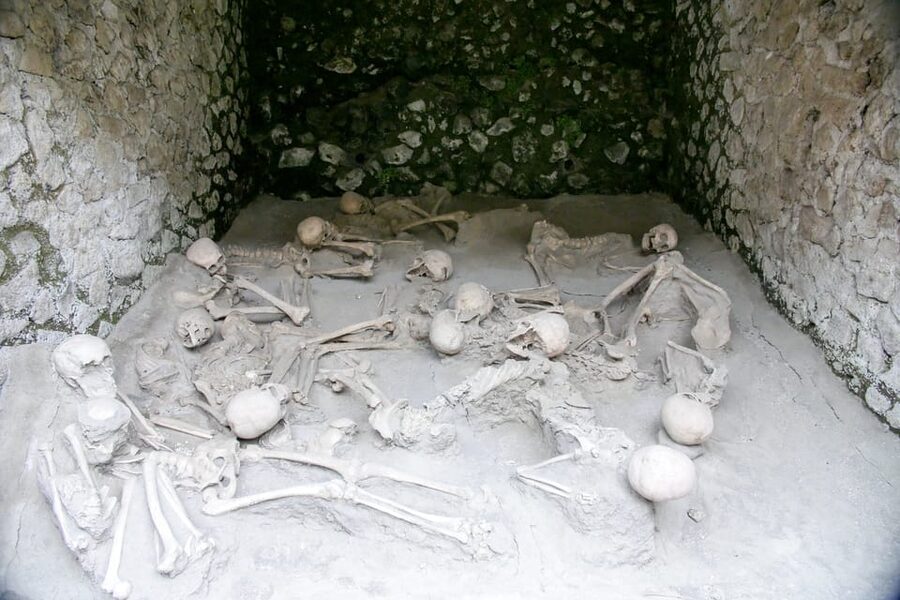
The ancient waterfront area is among the most sobering parts of the visit. The remains of around 300 people were found there, apparently gathered while attempting to escape or wait for rescue.
This is where the visit changes tone. The houses and frescoes invite curiosity, but the skeletons force you to think about the people who lived in this town. The eruption was not simply a dramatic event in ancient history. It ended the lives of families, workers, shopkeepers, and children.
You should allow a little time here rather than rushing past. The setting gives context to the catastrophe and helps explain why Herculaneum is more than a collection of attractive ruins.
The site can be beautiful and haunting at the same time. That combination is one reason I would not treat it as a quick stop between Naples and another attraction. You will get more from it if you are willing to pause and reflect.
Is the optional audio guide worth adding?
The audio guide is available as a digital app on your smartphone, with the listed language choices including English, French, Italian, and Spanish. The activity information also lists German among the available audio-guide languages, so check the exact option shown when you book.
A physical audio-guide device is offered with the relevant ticket choice. The audio content can add useful information about architecture, social structures, and everyday life. That wider context is valuable because Herculaneum does not always explain itself through large information panels.
The weakness is operation. The app may not be organized in a clear route, and it can be difficult to match the correct recording to the building in front of you. Location tracking and site maps may be unreliable. One person may find the commentary excellent, while another turns it off after a few minutes.
Download the app and its content before arriving. The site may have weak data coverage, and the app can use a lot of data. Bring headphones, since they make listening more comfortable and keep your phone free for the map.
I would choose the audio option if you want social and historical context but do not want to hire a private guide. I would skip it if you prefer to read a guidebook, if app navigation frustrates you, or if you want a tightly structured explanation from a person.
A live guide would offer better interpretation and an easier route, but this booking does not include one. You are paying for entry and optional audio support, not a guided tour.
Finding shade, food, and a comfortable pace
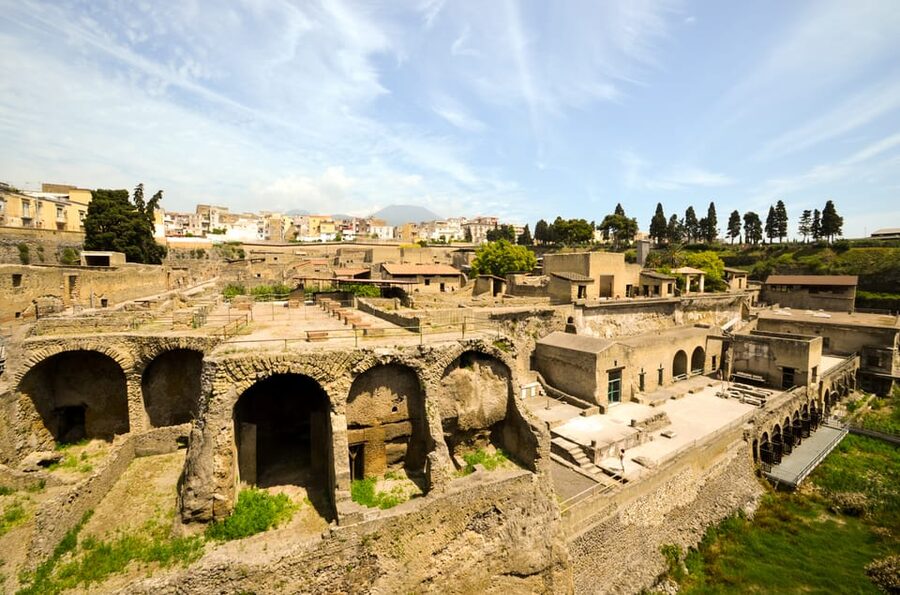
Summer can be hot. The site has some shade inside houses and beneath covered sections, but you should not expect constant protection from the sun. Carry water and consider bringing an umbrella for shade.
The archaeological area is large enough to tire you without being overwhelming. A steady three-hour visit works well for most people. If you want to inspect every room, read the audio material, and linger over artifacts, you could spend much longer.
Food facilities are basic, so do not build your day around a substantial café stop inside the site. Eat beforehand or plan accordingly. The focus here is the ancient town, not visitor services.
Early morning is a smart choice in warmer months. A quieter visit makes it easier to hear the audio and study rooms without a stream of people passing through. Winter can be particularly calm, with shorter opening hours but more time to appreciate the atmosphere.
How the $21 price compares with the experience
At $21 per person, this is a reasonable convenience price for a major UNESCO World Heritage archaeological site. The ticket saves you from sorting out entry on arrival and lets you reserve ahead while keeping plans flexible.
The value depends on what you receive. Entry to Herculaneum is the main product. The digital or physical audio guide is an extra layer, but it is not a substitute for a live guide and may not work perfectly for every phone or visitor.
Some people have found that buying directly at the site costs less than a pre-booked package. Others value the convenience of booking online, especially during a busy trip. Compare the direct admission price before paying if saving money matters more to you than advance arrangements.
The cancellation terms are useful: you can cancel up to 24 hours ahead for a full refund. A reserve-now-and-pay-later option is also available, which helps if your Naples plans are still shifting.
The most important value question is not simply ticket price. Ask how you like to visit ruins. If you want freedom, a smaller crowd, and the ability to spend time in individual buildings, Herculaneum offers a strong half-day experience. If you want a guide to explain every room, budget for a separate guided tour instead.
Who should book this Herculaneum experience?
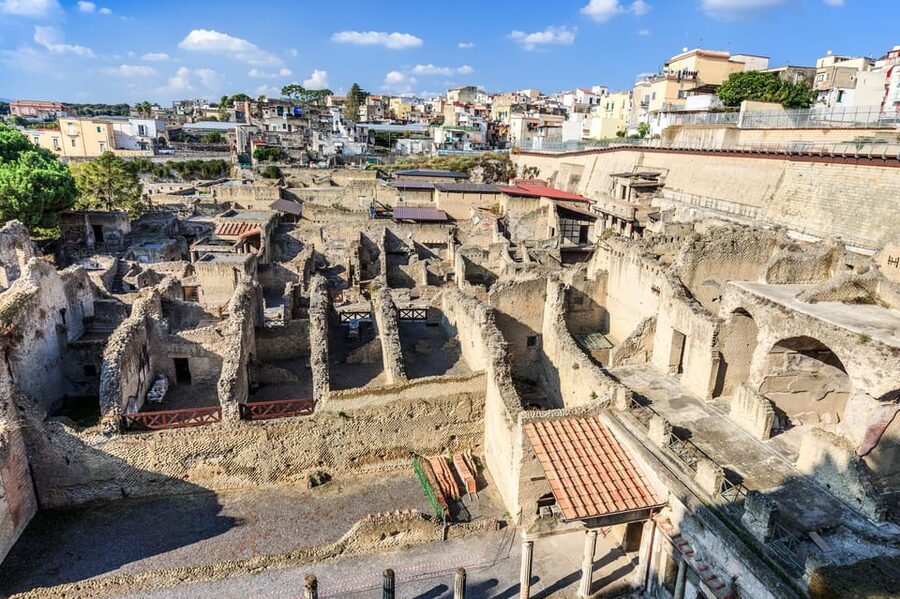
I would recommend it to anyone visiting Naples, the Bay of Naples, or the area around Mount Vesuvius who wants an ancient site that is easier to grasp than Pompeii.
It suits:
- History and archaeology fans who want preserved homes and public buildings
- First-time visitors who prefer a three-hour visit to a full-day ruin site
- Independent explorers who dislike fixed group schedules
- Families and mixed-age groups that need the freedom to stop and move on
- People who want to compare Herculaneum with Pompeii
- Visitors interested in household life, not only temples and monuments
It may be less suitable if you want a fully narrated tour, dislike uneven walking surfaces, or need extensive visitor facilities. The audio guide can help, but you should be comfortable managing an app on your own.
Final decision: book it or buy directly?
Book this option if you value advance planning, flexible cancellation, and a self-guided visit with optional audio. Herculaneum itself is the reason to go. The preserved wooden features, domestic rooms, baths, frescoes, and waterfront remains create a powerful visit in a manageable amount of time.
Before paying, compare the $21 package with direct admission at the site. If the price difference is small, the online booking may be worth the convenience. If the package costs much more, buy the entrance ticket directly and bring your own guidebook or research.
Choose the audio option only if you download it before arrival and bring headphones. If you want a human guide, this is not the right product. For an independent visit that gives you time to look closely, Herculaneum is an excellent choice and, for many people, more rewarding than the larger and busier Pompeii.
FAQ
How long does a visit to Herculaneum take?
Most people can see the main site in about three hours, but the ticket is valid for one day. You can stay longer if you want to study the buildings, artifacts, frescoes, and public facilities in detail.
What does the Herculaneum ticket include?
It includes entry to the Herculaneum archaeological site. Depending on the option selected, it also includes a digital audio guide app or a physical audio-guide device.
Is a guided tour included?
No. This is an independent visit with optional audio commentary. A live guided tour is not included.
What languages are available for the audio guide?
The booking information lists English, French, Italian, and Spanish for the digital app. It also lists German among the general audio-guide language options, so check the language choices for your selected ticket.
What are Herculaneum’s opening hours?
From March 16 to October 14, opening hours are 9:30 AM to 7:30 PM, with last admission at 6:00 PM. From October 15 to March 15, opening hours are 8:30 AM to 5:00 PM, with last admission at 3:30 PM. The archaeological area closes before the official end time.
Can I cancel the booking?
Yes. You can cancel up to 24 hours in advance for a full refund. A reserve-now-and-pay-later option is also available.
Latest audio tours in Italy
- Orgosolo Multilingual Audioguide★ 4.5 · 42 reviews
- Pantheon Skip the Line Entry Tickets with Digital Audio Guide★ 3.5 · 52 reviews
- St. Peter’s Basilica: Dome Climb with Lift & Audioguide★ 4.5 · 13 reviews
- Audio guide in Vatican Museums and Sistine Chapel★ 4.5 · 12 reviews
- The Roman Jewish Ghetto: A Self-Guided Audio Tour★ 4.0 · 8 reviews
- Experience: The Pantheon Audio Tour★ 4.5 · 4 reviews
- Trastevere: A Self-guided Audio Tour of Rome’s Medieval Village★ 4.5 · 3 reviews
- The Colosseum’s Attic with 3rd, 4th & 5th Levels with Audio Guide★ 4.5 · 20 reviews
Ercolano Audio Tours, compared.

Herculaneum: Skip The Line Entrance ticket + Audioguide
Read our review →
Vesuvio Skip The Line Ticket With Digital Audioguide
Read our review →

From Naples_ Vesuvius transfer+ticket and digital audioguide
Read our review →
Herculaneum: Skip-The-Line Entrance Tickets + Audioguide
Read our review →Browse the lists this tour appears in