Reviewed · USA
Yellowstone and Grand Teton Self-Guided Audio Tour Bundle
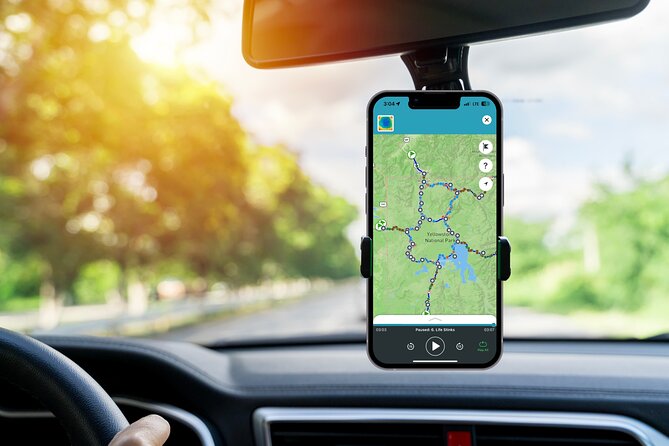
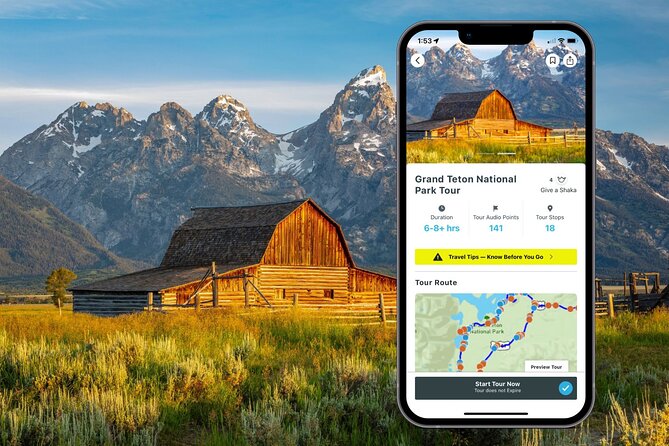
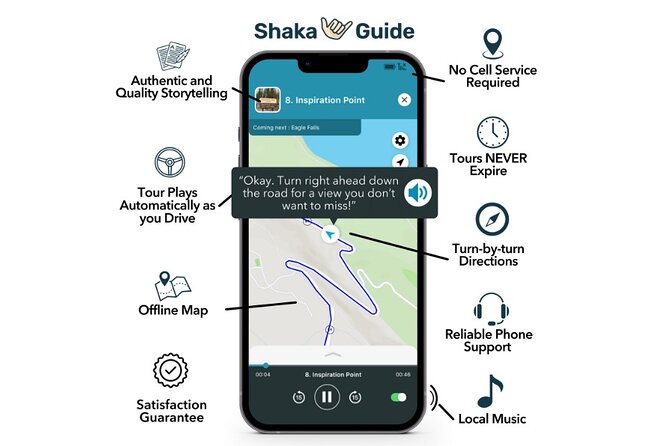
Yellowstone’s geysers, wildlife valleys, waterfalls, and canyon views are easier to enjoy when you know what you’re looking at. This GPS-guided audio tour turns your own car into a private touring vehicle, with stories and directions playing as you drive through Yellowstone and Grand Teton.
I especially like the low group price of $19.19 and the freedom to stop, skip, pause, and resume. I also like that the app works offline, a real help in parks where phone service can be unreliable. The main caution is the route’s ambition: fitting every listed stop into two days would make for long, tiring days.
Key points to know before you go
- One price covers up to 15 people: You pay by vehicle group, not by passenger.
- GPS triggers the narration: Stories, directions, and music play as you approach points of interest.
- Download before entering the parks: Maps and audio work offline after preparation on strong Wi-Fi.
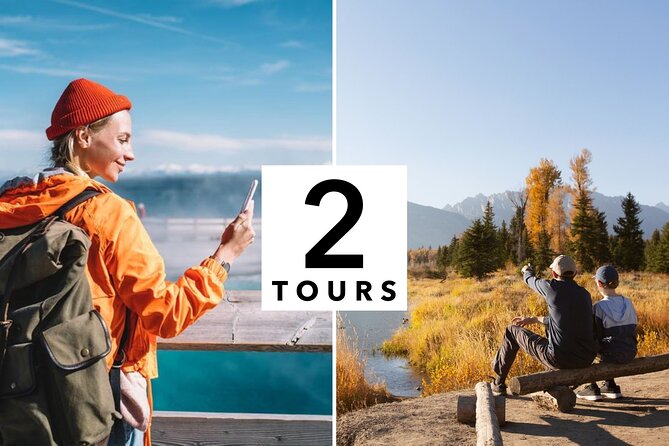
- Yellowstone takes the first day: Expect geysers, hot springs, waterfalls, wildlife areas, and the Grand Canyon of the Yellowstone.
- Grand Teton brings a gentler second day: Expect mountain views, historic homesteads, lakes, chapels, and short walks.
- The listed route is flexible: You can choose the stops that fit your time and leave the rest for another visit.
A private guide for less than the cost of lunch
At $19.19 per group, this is one of the least expensive ways to add structure to a national park road trip. If four people share a car, the per-person cost is tiny. Even a full group of 15 can use the same tour, though everyone will need to hear the audio comfortably.
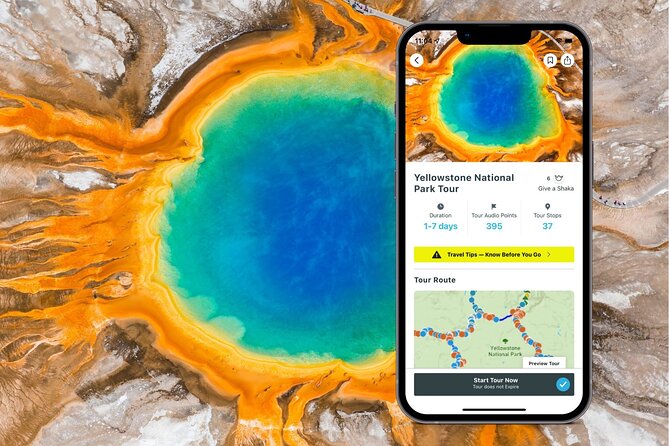
The value is not just the narration. The app gives you turn-by-turn GPS directions, an offline map, travel tips, suggested activities, and food recommendations. You do not need to keep checking a paper map to figure out which road comes next.
That said, the tour does not replace park planning. Yellowstone and Grand Teton are large, roads can take time, and the suggested route includes far more stops than most people can comfortably handle in a single day. Think of the itinerary as a menu, not a command.
You can start, pause, or resume the tour when it suits you. Since the tour does not expire, you can also spread it over more than two days if your trip allows. That flexibility is especially useful if weather, road conditions, wildlife sightings, or a favorite hot spring changes your plans.
More Self-Guided Audio Tours in the USA
- Gettysburg Battlefield Self-Guided Driving Audio Tour
★ 4.5 · 910 reviews - Joshua Tree National Park Self-Guided Driving Audio Tour
★ 4.5 · 762 reviews - Ultimate Acadia National Park Self-Guided Driving Audio Tour
★ 4.0 · 521 reviews
How the Shaka Guide app works in the car
After booking, you receive confirmation and instructions by email. Download the Shaka Guide app, redeem the code, and find the tour in the My Stuff section. Download the audio and map while you have strong Wi-Fi.
Once you choose a starting point, the app follows your position with GPS. The narration activates as you approach stops, and the system provides directions along the suggested route. You can still make your own choices, but following the recommended route and speed gives the app the best chance to trigger the right material at the right time.
The audio tour is offered in English. It includes stories, park background, driving guidance, music, and practical stop suggestions. You will want the driver focused on the road, so set up the app before pulling out and let a passenger handle changes when possible.
The private format is a major advantage. There is no bus schedule, no group leader rushing you away from a viewpoint, and no need to match someone else’s pace. You get a guide in the car without paying for a traditional private tour.
Day one: the Madison River and Yellowstone’s western geysers
The Yellowstone portion begins around the Madison River, a clear, well-known fly-fishing river and a designated Blue Ribbon Fishery. The drive gives you a calm introduction to the park, with views toward Talus Mountain, Mount Haynes, and National Park Mountain.
Madison Junction is a useful point to get oriented and take a restroom break before the loop grows more demanding. From there, the route leads toward the Firehole area, where Yellowstone’s hydrothermal activity begins to dominate the scenery.
Firehole Canyon Drive is a short 1.5-mile route with views of the Firehole River and nearby hot features. Fountain Flat Drive makes a quieter side trip through meadowland, with small hot springs and a look at Maiden’s Grave. These stops are brief, but they give you a break from the main road.
Firehole Lake Drive is another short loop, this time focused on roadside geysers. White Dome, Pink Dome, and Great Dome geysers can be viewed from pullouts and short boardwalks. This is a good example of why the audio guide helps: you can pass a feature that looks modest from the road without realizing what makes it notable.
At Midway Geyser Basin, the scale changes. The boardwalk circles Grand Prismatic Spring, a huge spring measuring about 370 feet across, along with smaller hot springs. The official stop takes about an hour, but you may need longer if you add the Grand Prismatic Overlook hike from Fairy Falls Trailhead.
That hike is 0.6 miles one way to the overlook. If you continue, Fairy Falls is another mile each way. You do not need to add the hike to enjoy Midway, but it is one of the most useful optional choices in the route if you want a broader view.
Old Faithful, Isa Lake, and West Thumb
Old Faithful is the park’s essential stop, but its fame does not make it a quick one. The geyser erupts roughly every 60 to 110 minutes, so you may need patience. Use the waiting time to visit the visitor center, explore nearby hydrothermal features on the Geyser Loop Trail, or stop at Old Faithful Lodge for a snack, coffee, restroom, or gift shop visit.
Kepler Cascades offers a short boardwalk and a very different kind of water display. The multi-tiered falls drop as much as 50 feet, and the stop takes about 30 minutes.
At the Continental Divide, Isa Lake is the unusual attraction. Water from the lake drains toward two different oceans, with the western end flowing toward the Atlantic and the eastern end toward the Pacific. It is a quick ten-minute stop with a memorable geographic story.
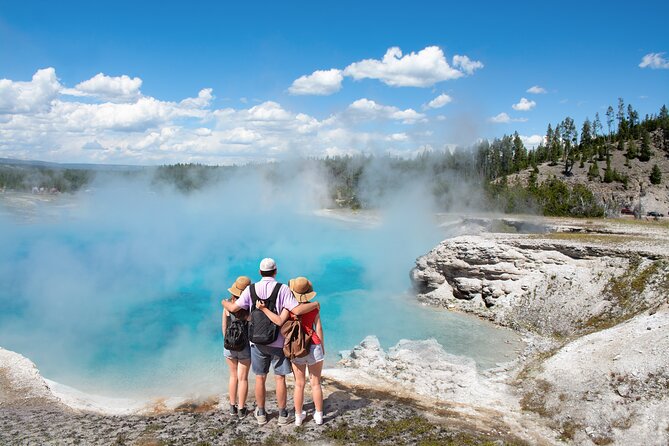
West Thumb Geyser Basin is one of the most rewarding places to slow down. The boardwalk sits beside Yellowstone Lake, so you get hydrothermal features and broad water views together. Look for Fishing Cone Geyser, and allow time for the 1.7-mile Yellowstone Lake Overlook Trail if you want a walk.
Gull Point works well as a picnic stop. Fishing Bridge adds practical facilities, including a ranger station, general store, and gas-related services. Walk onto the bridge and look for cutthroat trout below, then continue north.
Another self-paced route in the USA:
- Los Angeles: Hop-On Hop-Off Bus Tour with Audio Guide
★ 3.7 · 2,030 reviews - City Sightseeing Hop-On Hop-Off Bus Tour with Audio Guide
★ 3.0 · 1,083 reviews - Medieval Torture Museum Ticket with Audio Guide and Ghost Hunting
★ 5.0 · 962 reviews - San Francisco: Alcatraz, Ferry & Audio Tour w/ Night Option
★ 4.4 · 617 reviews
Hayden Valley and the Grand Canyon of the Yellowstone
Hayden Valley is one of the strongest wildlife sections of the drive. Its marshy setting attracts grazing animals, which in turn can attract predators. The audio tour can explain the area as you drive, but wildlife sightings are never guaranteed, so keep your eyes on the roadside and allow extra time if animals appear.
LeHardy Rapids is a short boardwalk stop beside the Yellowstone River. In early spring, spawning cutthroat trout can make the rapids especially interesting, though the stop remains worthwhile at other times.
Mud Volcano is a fine choice for anyone who enjoys Yellowstone’s stranger side. The area is highly acidic and full of unusual features, including Dragon’s Mouth Hot Spring, which bubbles and churns with surprising force.
The Grand Canyon of the Yellowstone deserves more than a rushed photo stop. Upper Falls View and Artist Point offer different perspectives, and Uncle Tom’s Trail is suggested as an optional walk. The canyon shows the power of the Yellowstone River in layers of colored rock, with waterfalls adding drama at several viewpoints.
At the brink of Upper Falls, an easy trail of just over a quarter mile leads to a close view of the water dropping over the edge. Canyon Village is a practical pause, with food, shops, lodging, and a visitor center whose displays explain the canyon and the Yellowstone caldera.
The northern loop to Mammoth Hot Springs
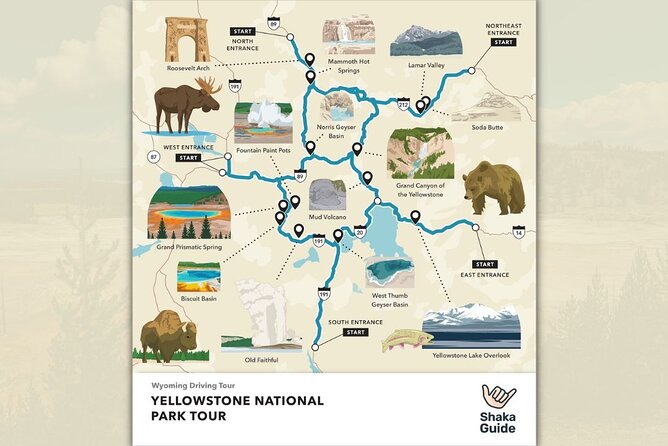
Washburn Hot Springs Overlook is a short leg-stretching stop with views toward the Yellowstone caldera and nearby restroom access. Mount Washburn and Tower Falls add mountain and waterfall scenery, though road conditions and access can affect how much of this section you can cover.
Soda Butte is a ten-minute stop at an inactive hot spring cone. Cliff swallows use the cone, adding a small wildlife detail to a quick roadside visit. Tower Junction offers another useful break, with fuel and access to the historic Roosevelt Lodge for food.
The Petrified Tree requires a short side trip and offers a glimpse of Yellowstone’s much older forest history. Blacktail Drive is an optional one-way gravel route with a quieter feel and better wildlife potential than the main road, but it can be slippery after rain and returns you to Tower Junction.
Undine Falls is easy to reach from the road, with a short set of wooden steps to the viewpoint. Further along, Mammoth Hot Springs brings the park’s white travertine terraces into view. The Lower Terraces include Minerva Terrace, Jupiter Terrace, Liberty Cap, and a 2.2-mile boardwalk if you have the time and energy.
Upper Terrace Drive is a 1.5-mile route through more mineral formations, including Orange Spring Mound, Angel Terrace, and Aphrodite Terrace. The Hoodoos are a quick loop of large boulders that resemble hoodoos but were formed differently. Rustic Falls and the Golden Gate viaduct provide more waterfall and road engineering views.
The return toward West Yellowstone includes Sheepeater Cliffs, a striking wall of hexagonal basalt columns named for the Sheepeater people, and Obsidian Cliff, where you can view black volcanic glass from a designated exhibit area. Roaring Mountain adds sound to the geothermal story with hissing fumaroles.
If time allows, the Museum of the National Park Ranger offers films and exhibits about the people who protect and interpret Yellowstone. Norris Geyser Basin is another major choice, with a 2.9-mile boardwalk and the park’s hottest and oldest geyser basin. Artists’ Paintpots offers a shorter 0.6-mile boardwalk through colorful mud pots.
Beryl Spring, Gibbon Falls, Tuff Cliffs, and West Yellowstone round out the western return. You will need to choose carefully. Trying to see every feature in this section can turn a scenic day into a race.
Day two: Grand Teton’s famous viewpoints
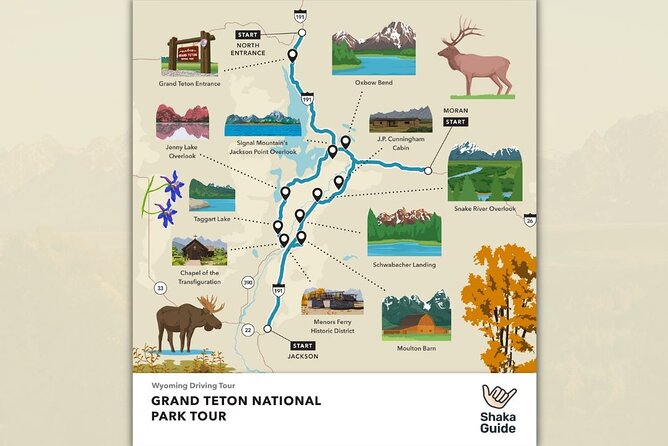
The Grand Teton portion begins at Jackson Lake Overlook, where the mountain range first rises above the water. Colter Bay Village is the main service stop in the north, with fuel, groceries, a general store, souvenirs, and access to activities such as kayaking, canoeing, motorboats, lake cruises, horseback riding, fishing, swimming, hiking, and beach time.
Oxbow Bend is one of the park’s four famous photographic locations. The Snake River curves through the foreground with the Tetons beyond it. Sunrise and sunset are popular here, so parking and space at the turnout may be tight during those periods.
Cunningham Cabin adds a human story to the mountain scenery. Schwabacher Landing offers reflections of the Tetons in the Snake River and can be useful for wildlife viewing. Snake River Overlook is the fourth famous viewpoint, known for its broad view of the river and the mountains and associated with Ansel Adams.
Mormon Row is another essential stop. The former community includes the Moulton Barns and Chambers Homestead, all reminders of early settlement in the valley. The Moulton Barn is especially photogenic, but the visit is about more than the picture. Walking among the buildings gives you a sense of how people once lived and worked here.
Moose, Jenny Lake, and Signal Mountain
The Craig Thomas Discovery and Visitor Center in Moose is worth an hour if you want context before hiking. Exhibits cover place, people, preservation, and mountaineering. You can also see Native American artifacts, a raised relief map, peak identifiers, a film, a bookstore, and information about permits and boating.
Murie Ranch tells the story of conservation leaders John and Murie. The nearby Chapel of the Transfiguration is a peaceful 1925 Episcopal chapel with mountain views through its windows.
Menors Ferry Historic District preserves buildings connected with William Menor, an early homesteader who operated a ferry across the Snake River. If you want to stretch your legs, Taggart Lake Trail is a 3.8-mile loop near Moose Junction, rated moderately easy and leading toward the base of the Teton range.
Cottonwood Creek Picnic Area is noted for wild burros in the field across the road. Keep your distance and do not treat the animals like pets, even if they seem comfortable near people.
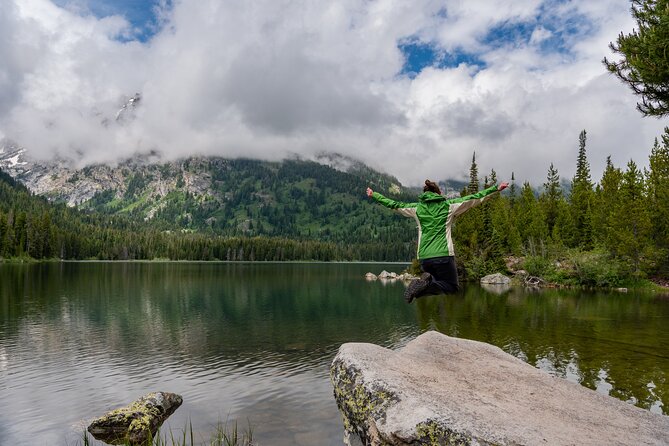
Jenny Lake is the day’s major recreation stop. The area supports hiking, biking, swimming, scenic drives, and other outdoor activities. Two hours can pass quickly here, so decide in advance if you want a short visit or a longer walk.
Signal Mountain Summit Road climbs seven miles and gains nearly 1,000 feet. The road is narrow, with sharp switchbacks and steep edges, but the summit provides wide views over Teton Valley. Signal Mountain Lodge is the final listed stop, with dining, lodging, shopping, and a marina.
What the $19.19 price does and does not cover
The price covers the audio tour for one group of up to 15 people. It does not cover the Yellowstone entrance fee of $35 per booking or the Grand Teton entrance fee of $35 per booking. Meals, drinks, and other personal costs are also extra.
The value is strongest when you are already driving yourself through both parks. A traditional guided tour may provide a person in the vehicle, but this option lets you control the route and costs far less. The tradeoff is that you must manage your own driving, timing, parking, meals, and safety.
The tour is a good fit for couples, families, and small groups who want background information without joining a fixed group. It is also useful for people who dislike crowded tour buses and want to spend extra time at only a few selected places.
Should you book this Yellowstone and Grand Teton tour?
I would book it if you are renting a car and want directions, stories, and park context at a very low cost. The strongest features are the accurate GPS guidance, offline operation, flexible pacing, and the ability to use one purchase for the whole car.
I would not treat the two-day schedule as a promise to see everything. Pick your priorities, download the tour before you leave Wi-Fi, and leave room for long drives and unplanned stops. Used that way, this audio bundle gives you a helpful voice on the road without taking away your independence.
FAQ
How much does the Yellowstone and Grand Teton audio tour cost?
The tour costs $19.19 per group, with up to 15 people included in one vehicle group.
Are Yellowstone and Grand Teton entrance fees included?
No. The listed Yellowstone entrance fee is $35 per booking, and the listed Grand Teton entrance fee is also $35 per booking.
Does the tour work without Wi-Fi or mobile data?
Yes. Download the audio and map over strong Wi-Fi before starting. The map and GPS work offline after downloading.
Is the tour available in English?
Yes. English is the listed language.
How long does the tour take?
The experience is listed as approximately two days, but the number of stops is large. You can choose fewer stops or use the tour over additional days because it does not expire.
Where does the tour start?
The starting point is customizable, with Jackson Hole, Wyoming listed as the start location.
Where does the tour end?
The final listed stop is Signal Mountain Lodge in Grand Teton National Park. From there, you can continue toward Jackson Hole or return toward West Yellowstone.
Can I cancel for a refund?
Yes. You can receive a full refund if you cancel at least 24 hours before the experience start time. Cancellations or changes within 24 hours are not refundable.
Latest audio tours in the USA
- Sequoia and Kings Canyon Audio Tour Self Guide National Park Tour★ 5.0 · 3 reviews
- Sequoia National Park Self-Guided Audio Tour★ 4.5 · 9 reviews
- Kings Canyon National Park Self-Guided Audio Tour★ 4.0 · 4 reviews
- Sedona, Arizona Self-Guided Audio Tour★ 4.0 · 36 reviews
- Sedona & Red Rock State Park Self-Guided Driving Audio Tour★ 3.0 · 30 reviews
- Haunted Savannah Self-Guided Walking Audio Tour★ 4.5 · 3 reviews
- Downtown Seattle Self-Guided Walking Audio Tour★ 4.5 · 6 reviews
- Uncover Seattle: Self-Guided Audio Tour★ 3.5 · 7 reviews
Self-Guided Audio Tours, compared.
Acropolis Ticket & Optional Self-Guided Audio Tours
Read our review →

Ultimate Acadia National Park Self-Guided Driving Audio Tour
Read our review →
Akrotiri Ticket with Optional Self-Guided Audios
Read our review →