

Reviewed · USA
Harpers Ferry Audio Tour History, Ruins and River Views
Harpers Ferry packs an astonishing amount of American history into a small, steep town. This self-guided audio tour links John Brown’s Fort, Storer College, and the Potomac-Shenandoah confluence, giving you context as you walk instead of asking you to read every roadside marker on your own.
I like the freedom to pause, take photos, and move at your own pace. I also like the GPS-triggered narration, which starts at certain locations and lets you connect the ruins, hills, rivers, and buildings to the stories behind them. The catch is the walking: some stops are spread out, and the Appalachian Trail staircase and uphill sections can be tiring.
Key points before you book
- GPS-triggered storytelling: The app begins audio at certain locations, so you can look around instead of constantly checking your phone.
- A serious walk: The route includes hills, stairs, and separated sites. Two hours may feel brisk if you stop often.
- History beyond John Brown: You’ll hear about Black education, Civil War strategy, industry, railroads, immigrant life, and the Appalachian Trail.
- Bring your own phone: The app, tour download, and audio guide are included, but a smartphone is not.
- Start at Lower Town Train Station: The tour begins and ends at 182 Potomac Street in Harpers Ferry.
- Best practical tip: Download everything before you arrive. Cell service is spotty at best.
Harpers Ferry in one compact walking tour
This experience is priced at $9.99 per person, with children 10 and under free. That is a modest fee for a private tour that only your group uses, especially if you want more than a quick stroll through Lower Town.
You are not paying for an in-person guide. You are paying for a prepared route, location-based audio, and the chance to explore without following a group schedule. That makes it a good match for couples, families with older children, and independent visitors who like to stop when a view catches their eye.
The route is advertised at about two hours, but treat that as a rough guide. The audio stops themselves are short, often five minutes, while the walking between them can take longer. Photos, museum time, reading historic signs, and uphill sections will add to the clock.
The tour is offered in English and is available daily from 8:00 a.m. to 8:00 p.m. during the listed operating period. It is usually booked about six days ahead, so booking early is sensible if your visit falls on a busy weekend.
More History Audio Tours in the USA
- Santa Fe Historic Downtown Smart Phone Audio App Self Guided GPS Walking Tour
★ 4.5 · 112 reviews - Savannah’s Historical District: A Self-Guided Audio Tour
★ 4.5 · 69 reviews - Self-Guided Walking Audio Tour of Historic Santa Fe
★ 4.5 · 43 reviews
Starting at the Appalachian Trail headquarters
The official starting point is Lower Town Train Station, but the first featured stop is the Appalachian Trail Conservancy Headquarters. This is a fitting introduction to Harpers Ferry because the town is closely tied to the 2,190-mile Appalachian Trail.
You’ll spend about 10 minutes here, learning why this spot matters to long-distance hikers and how the trail has become part of the town’s identity. The stop is free, and the audio gives you a useful sense of place before the tour turns toward older conflicts and ruins.
The route also includes the museum centered on African American life in Harpers Ferry. Its subject is essential: enslaved people, freed people, education, and resilience all belong in the town’s story. The museum is currently closed for renovations, so you should expect the building itself not to be available during this experience.
That closure does not erase the importance of the stop, but it does reduce the amount of indoor interpretation you’ll receive. If this part of the story matters especially to you, pay close attention to the outdoor narration and the Storer College stops later in the route.
Harper Cemetery and the view above town
Harper Cemetery is a quiet stop above the town. You’ll spend only about five minutes here, but the location does useful work: it shifts your attention from buildings and streets to the people connected with Harpers Ferry.
The cemetery includes soldiers, local citizens, and figures tied to the town’s development. From this higher position, you also get broad views over the town and surrounding rivers. The audio helps turn a short pause among headstones into a reminder that Harpers Ferry was shaped by ordinary residents as well as famous names.
This is one of the places where the tour’s format works well. You can listen, then take a moment without being hurried along by a live group.
The Armory Site and John Brown’s Fort

The US Armory Site is one of the central historical stops. Harpers Ferry was once home to a major weapons operation, and the remaining foundations give you a physical link to that industrial past.
Only ruins remain, so do not expect a complete factory complex. What you get instead is a chance to picture the scale and importance of the armory before hearing how the site became tied to John Brown’s 1859 raid.
Arsenal Square continues that story. The open space was once part of the larger arsenal, and the audio explains how the raid began here. The area may look calm now, but its role in the events leading toward the Civil War gives it unusual weight.
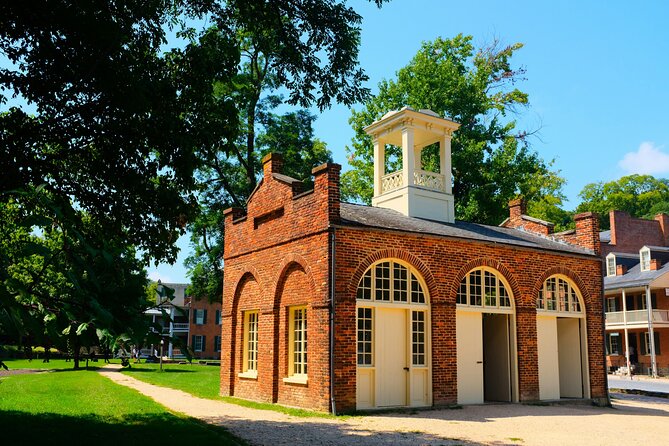
John Brown’s Fort is the emotional center of the route. The small brick building served as a fire engine house and became Brown’s final stronghold during the raid. It is a compact structure, but the story attached to it is far larger than its size.
The narration is particularly useful here because a quick look at the brick walls cannot explain why this building matters. You’ll hear how abolition, violence, federal power, and sectional tension collided in one small town.
Another self-paced route in the USA:
- Los Angeles: Hop-On Hop-Off Bus Tour with Audio Guide
★ 3.7 · 2,030 reviews - City Sightseeing Hop-On Hop-Off Bus Tour with Audio Guide
★ 3.0 · 1,083 reviews - Medieval Torture Museum Ticket with Audio Guide and Ghost Hunting
★ 5.0 · 962 reviews - Gettysburg Battlefield Self-Guided Driving Audio Tour
★ 4.5 · 910 reviews
Museums, Jefferson Rock, and the old Lower Town
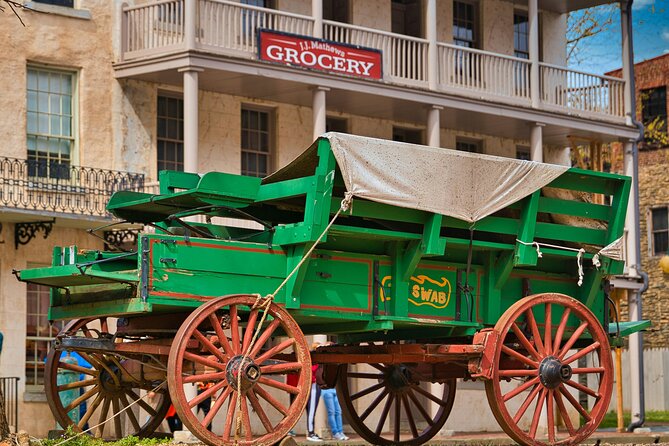
The Harpers Ferry Historical Museum occupies an old Lower Town building and offers hands-on exhibits and varied artifacts. The stop is planned for about 10 minutes, making it one of the longer pauses on the route.
This museum helps fill in the daily life that can get lost between major events. You’ll see material connected with work, home life, and the larger episodes that shaped the town. It is a useful counterweight to the dramatic John Brown material.
Jefferson Rock provides one of the tour’s best scenic pauses. Named for Thomas Jefferson, this cliffside viewpoint looks over the meeting of the rivers and the steep ground around town. The audio connects Jefferson’s visit and observations to the setting, but you’ll also want time simply to look.
The view is not just decorative. Harpers Ferry’s location explains its importance as a route for trade, transportation, industry, and war. From above, the narrow valleys and waterways make the town’s strategic position easier to understand.
Lockwood House, Storer College, and St. Peter’s Church

Lockwood House brings the tour into the period after the Civil War. The building was used by Union officers and later connected with Storer College, an institution that educated Black students after emancipation.
That connection gives the house more meaning than its architecture alone would provide. You are following the shift from wartime occupation to education and institution-building. The stop is short, about five minutes, so listen closely before moving on.
The Storer College Campus expands this story. Founded after the Civil War to educate formerly enslaved people, the college became an important center for Black education, leadership, and civil rights. This is one of the most valuable parts of the route because it shows Harpers Ferry as more than a battlefield or John Brown site.
St. Peter’s Roman Catholic Church adds another layer. The stone church served Irish immigrant families and survived the Civil War. Its hillside position gives you another strong view over town, while its story points to Harpers Ferry’s immigrant communities and religious life.
These stops work best as a group. Together, they show how the town changed across generations, from weapons production and war to schooling, faith, and community life.
The Point and the two rivers

At The Point, the Potomac and Shenandoah Rivers meet. This is one of the most memorable physical settings in Harpers Ferry, and the audio explains why geography mattered so much here.
The rivers shaped travel, trade, industry, and military planning. You’ll also get some of the strongest views on the tour, with water and steep hills framing the town.
The Original Site of the Shenandoah River Bridge takes you further back, to Robert Harper’s 18th-century ferry. That ferry helped begin the settlement that became Harpers Ferry. The stop makes a simple point clearly: before the factories, railways, and battles, the crossing itself gave the town its reason to exist.
The Lower Town Train Station connects the older ferry route with a later transportation network. The station remains active, so you can see a working piece of the railroad era rather than only a preserved ruin.
Because the tour starts here, the station also gives you an easy place to find the first audio point. Keep the app open and confirm the map before setting off.
Virginius Island’s industrial ruins
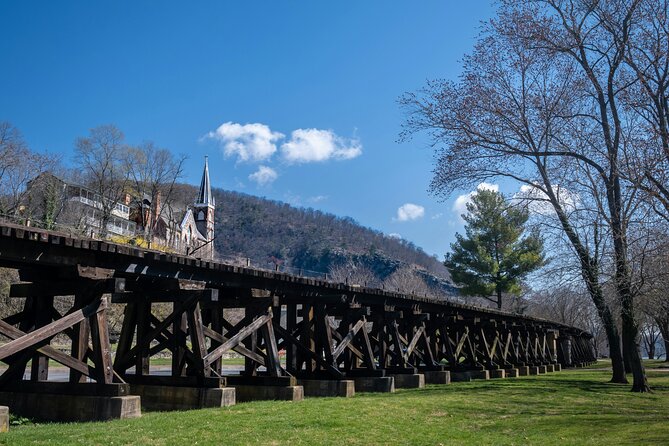
Virginius Island offers a different kind of experience. Today, it is a wooded area with trails and moss-covered ruins. In the 19th century, it was an industrial village powered by water.
You’ll hear about the rise and fall of Harpers Ferry’s water-powered economy while walking through the remains. The ruins are not presented as a polished museum complex, so you’ll need to use the narration and your imagination.
This is also a stop where pace matters. Five minutes is enough to trigger the story, but not necessarily enough to examine every trace of the former community. If you like old foundations, industrial archaeology, and quiet paths, you may want to linger longer than the suggested schedule.
White Hall Tavern and Public Square
White Hall Tavern recalls the social side of 19th-century Harpers Ferry. Travelers, local residents, and Union soldiers once gathered there, making it a useful stop for understanding how news, politics, and everyday conversation moved through town.
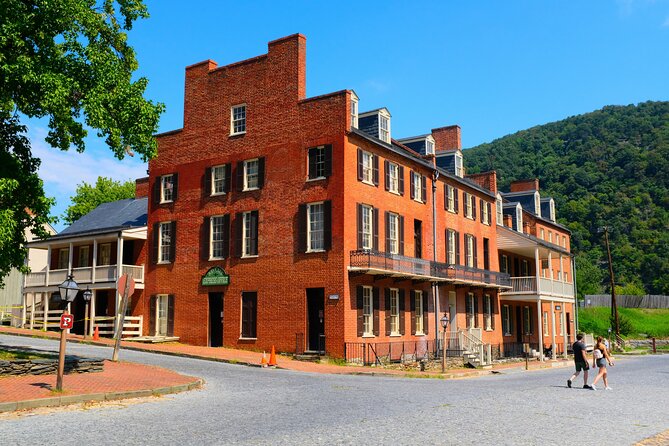
Harpers Ferry Public Square broadens that picture. Markets, militias, protests, and parades have all passed through this central space. It remains one of the clearest places to sense the town as a living community rather than a collection of historic structures.
Both stops are brief, around five minutes each. The audio gives you the main story, but you’ll get more from them if you pause to notice the scale of the streets and buildings around you.
Murphy Farm and Bolivar Heights
Murphy Farm combines peaceful scenery with serious history. It was once a battlefield and later a place where important Civil Rights speeches took place. The contrast is worth noting: the same ground carried military conflict in one era and public calls for equality in another.
Bolivar Heights is another major overlook. The ridge changed hands during the Civil War and helped control access to Harpers Ferry. From here, the broad view makes the town’s military importance much easier to grasp.
These are open-air stops, so conditions can affect your visit. The route data does not promise shelter, seating, or a flat path. Plan your footwear and timing with the hills in mind.
The staircase, hills, and app design
The Appalachian Trail Staircase is one of the route’s most demanding sections. It cuts into the hillside and connects Lower Town with the Appalachian Trail. The climb is scenic and symbolic, but it is still a climb.
One person who used the tour enjoyed the automatic audio triggers but stopped before finishing because the uphill walking became too much. That is useful advice, especially if you have limited stamina or prefer gentle walks. The tour is not just a flat stroll through Lower Town.
The app also has a learning curve. The map is available from a button at the bottom of each screen, but that may not be obvious at first. The route can technically be started from different locations, though the story is designed to flow in order from the suggested starting point.
You’ll want to download the tour before arriving. Cell service is described as spotty at best, and relying on a live connection could interrupt the audio or map. Once downloaded, the tour offers unlimited access, so you can pause and return to sections as needed.
What the $9.99 price really buys
At $9.99, the tour is a low-cost way to add structure to a day in Harpers Ferry. You receive the app, tour download, location-based audio, and flexible use for your private group. Admission to the listed stops is free, so the main value comes from the narration and route planning.
The price is less attractive if you expect a guided vehicle or a fully assisted sightseeing experience. One person found the sites too far apart to walk comfortably but also found driving impractical. That is the key limitation: the tour explains the route, but it does not solve the distance between stops.
You should also remember that the phone is not included. Bring your own charged smartphone and download the content in advance.
Cancellation is free up to 24 hours before the start time for a full refund. Changes or cancellations made within 24 hours are not refunded.
Who should book this Harpers Ferry audio tour?
I would choose this tour if you want to explore independently and care about the connections between separate sites. It suits people who like history in small portions, scenic pauses, and the ability to stop for photos without holding up a group.
It is especially useful for anyone curious about John Brown, the Appalachian Trail, Black education after the Civil War, industrial ruins, or the role of rivers and railroads in town development. The range of subjects is one of its strongest qualities.
I would think twice if you need a flat route, a ride between stops, or a live guide who can adjust the pace in person. The tour’s suggested two hours can also feel tight if you want to visit every indoor stop and spend time at each overlook.
Should you book it?
Book it if you want an affordable, self-guided introduction to Harpers Ferry and are comfortable walking uphill. The GPS narration adds useful context, and the route brings together major sites that can otherwise feel scattered.
Skip it if stairs or long walks are a serious concern, or if you want a trolley-style tour. For most independent visitors, the best plan is to download the audio before arrival, start at Lower Town Train Station, follow the route in order, and allow more than two hours if you want to stop often.
FAQ
How much does the Harpers Ferry audio tour cost?
The tour costs $9.99 per person. Children 10 and under are free.
How long does the tour take?
The approximate duration is two hours, though walking, photo stops, museum visits, and uphill sections may make it longer.
Where does the tour start?
The meeting point is Lower Town Train Station at 182 Potomac Street, Harpers Ferry, West Virginia 25425.
Where does the tour end?
The activity ends back at the meeting point.
Is the tour guided in person?
No. It is a private, self-guided mobile audio tour for your group.
What language is available?
The tour is offered in English.
Do I need to bring a smartphone?
Yes. A smartphone is not included. The app and audio tour download are included.
Should I download the tour before arriving?
Yes. Cell service is spotty at best, so downloading the tour before you go is strongly recommended.
Can I cancel for a refund?
Yes. You can cancel at least 24 hours before the start time for a full refund. Cancellations or changes made within 24 hours are not refunded.
Latest audio tours in the USA
- Sequoia National Park Self-Guided Audio Tour★ 4.5 · 9 reviews
- Sequoia and Kings Canyon Audio Tour Self Guide National Park Tour★ 5.0 · 3 reviews
- Kings Canyon National Park Self-Guided Audio Tour★ 4.0 · 4 reviews
- Sedona, Arizona Self-Guided Audio Tour★ 4.0 · 36 reviews
- Sedona & Red Rock State Park Self-Guided Driving Audio Tour★ 3.0 · 30 reviews
- Haunted Savannah Self-Guided Walking Audio Tour★ 4.5 · 3 reviews
- Downtown Seattle Self-Guided Walking Audio Tour★ 4.5 · 6 reviews
- Uncover Seattle: Self-Guided Audio Tour★ 3.5 · 7 reviews
History Audio Tours, compared.

Colosseum, Roman Forum & Palatine Hill with Audioguide App
Read our review →
St. Mark Basilica Ticket, Audioguide+History Gallery
Read our review →
Colosseum, Ancient Rome Tour or AudioGuided Tour
Read our review →
Colosseum, Roman Forum & Palatine Hill Entry and Audioguide
Read our review →
Taormina: Ancient Theater Skip-the-Line Ticket & Audio Guide
Read our review →
Colosseum, Roman Forum & Palatine Hill Visit + Audio Guide
Read our review →
National Archaeological Museum Ticket & Audio Guide
Read our review →
Roman Forum Super Pass Entry with Audio Guide App
Read our review →Browse the lists this tour appears in