
Reviewed · USA
Chicago’s Gold Coast Hidden History: A Self-Guided Audio Walk
Chicago’s Gold Coast hides its best stories in plain sight: a former public graveyard, a wood-plank street experiment, a mansion filled with medical artifacts, and a piano lounge tucked inside an apartment building. This self-guided walk connects those places with narration from a local historian, beginning at the Chicago History Museum and ending at the long-running Zebra Lounge.
I like the $7.99 price and the freedom to stop when you want. I also like the offline maps and lifetime access, which let you reuse the tour instead of treating it as a one-time purchase. The main catch is the app: GPS tracking and auto-play can be temperamental, so you may need to check the map and retrace a few steps.
Key points at a glance

- Start at Chicago’s frontier-to-city story: Begin beside the Chicago History Museum, with optional access to its exhibits, including restored dioramas, an elevated railway car, and Abraham Lincoln’s deathbed.
- Follow Gold Coast stories beyond grand houses: The walk includes the city’s former public graveyard, the Couch Mausoleum, and Astor Street’s unusual wood-plank paving experiment.
- Visit a mansion devoted to medicine: The International Museum of Surgical Science occupies a 1917 house modeled after the Petit Trianon at Versailles.
- Add your own stops: The Three Arts Building, now connected with Restoration Hardware, and the Chicago History Museum make natural additions.
- Finish with live piano history: Zebra Lounge has offered piano entertainment seven nights a week since 1929, though you should confirm current opening arrangements before planning your evening around it.
- Allow more than 50 minutes: The audio walk itself is estimated at about 50 minutes, but 90 minutes is more realistic if you stop to look around.
Why this Gold Coast walk is worth your time

The Gold Coast is easy to reduce to grand houses and expensive shops. This walk gives you a better reason to slow down. Its stories show how Chicago moved from a rough frontier outpost to a major city, then layered modern retail, museums, apartment buildings, and nightlife onto that earlier world.
I like that the route does not depend on a single grand attraction. The interest comes from the links between places. A graveyard that survived the Great Chicago Fire, a mausoleum tied to early Chicago power, and a street once paved with wood tell you more about the city than a quick look at handsome facades.
The format suits people who dislike fixed group schedules. You listen through the VoiceMap application, follow the GPS route, and pause whenever a building catches your eye. There is no guide waiting for you, and no small group to keep pace with. The tradeoff is that you must manage the technology yourself.
The tour is offered in English and is designed for a maximum of 10 people, though the self-guided format means you can use it privately. It is listed as available every day, all day, but individual museums and businesses along the route have their own hours and admission rules.
More History Audio Tours in the USA
- Santa Fe Historic Downtown Smart Phone Audio App Self Guided GPS Walking Tour
★ 4.5 · 112 reviews - Savannah’s Historical District: A Self-Guided Audio Tour
★ 4.5 · 69 reviews - Self-Guided Walking Audio Tour of Historic Santa Fe
★ 4.5 · 43 reviews
Starting beside the Chicago History Museum
The walk begins at 1601 North Clark Street, outside the Chicago History Museum. Even if you do not enter, the location gives the tour a fitting opening point. You are starting at an institution focused on the city’s past before walking into a neighborhood where that past is still visible in stone, brick, and old street plans.
If you have extra time, the museum itself adds useful context. Its restored dioramas show Chicago’s change from a remote frontier settlement into the city you see today. You can also view the South Side Elevated Railroad, an early elevated rapid transit line that carried fairgoers to the 1893 World’s Columbian Exposition.
Another unusual item is Abraham Lincoln’s deathbed. That detail alone may justify arriving early for a museum visit, especially if you want more than an outside look at Chicago history. Museum admission is not included in the $7.99 tour price, so treat it as an optional extra.
The audio walk does not require you to enter the museum. That makes the starting point practical for a budget day, but I would not rush away if you have an interest in Chicago’s civic story. The tour’s later stops make more sense when you have some idea of the city’s rapid growth and the people who shaped it.
From public graveyard to Gold Coast wealth
One of the most useful parts of the route is its attention to places that do not look important at first glance. The walk discusses Chicago’s former public graveyard and the Couch Mausoleum, which survived the Great Chicago Fire.
That story gives the neighborhood a sharper edge. Gold Coast architecture can seem polished and removed from ordinary life, but the history here includes burial grounds, fire, construction problems, and the practical challenges of a growing city. You are not simply looking at expensive homes. You are walking over older layers of the city.
The route also covers the monarchs who helped build Chicago during the 19th and 20th centuries. The word monarch refers to powerful local figures rather than crowned rulers, and the stories help explain how wealth became attached to this part of town.
Astor Street provides another memorable detail. The walk explains a wood-plank street experiment, an attempt to deal with the needs of a city still working out how to build and maintain its roads. It is a small piece of infrastructure history, but that is exactly why it works. You begin to notice the street itself rather than treating it as a space between buildings.
This section rewards a slow pace. Let the audio play, look around, and stop the route if you want to examine a facade or read a plaque. The experience is less successful if you treat it like a timed march.
The International Museum of Surgical Science
The International Museum of Surgical Science is the route’s most unusual stop. Its collections cover Eastern and Western medicine, and the subject matter can be unsettling. If medical displays make you uncomfortable, you will want to decide in advance whether you plan to enter or simply listen outside.
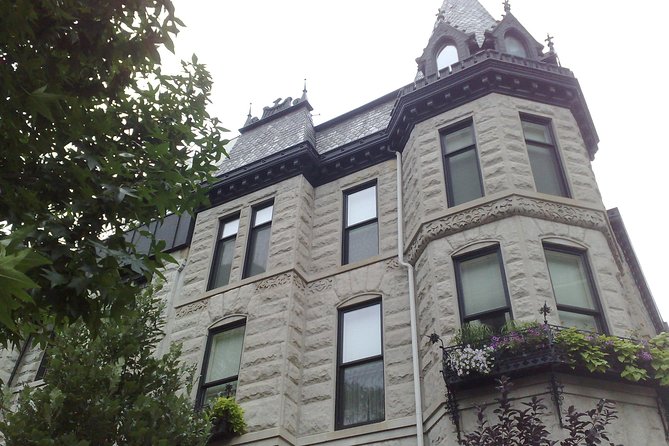
The building adds as much interest as the exhibits. It is a 1917 mansion designed as a Chicago interpretation of the Petit Trianon at Versailles. That combination is hard to ignore: formal European inspiration on the outside, medical history inside, and the Gold Coast around it.
Admission is not part of the audio tour, so you pay separately if you go in. I would allow extra time here rather than trying to squeeze it into the 50-minute estimate. The tour’s structure lets you pause, visit the museum, and resume later, which is one of the clearest benefits of the self-guided setup.
A past visitor used the walk alongside a Chicago History Museum visit and time at the medical museum. That is a sensible way to plan the day. The two museums offer different moods, and the audio tour provides the connecting thread between them.
More Self-Guided Audio Tours in the USA
- Gettysburg Battlefield Self-Guided Driving Audio Tour
★ 4.5 · 910 reviews - Joshua Tree National Park Self-Guided Driving Audio Tour
★ 4.5 · 762 reviews - Ultimate Acadia National Park Self-Guided Driving Audio Tour
★ 4.0 · 521 reviews - Ultimate Lake Tahoe Self-Guided Driving Audio Tour
★ 4.5 · 435 reviews
The Three Arts Building and the Restoration Hardware stop
The tour also points you toward the Three Arts Building, a notable Gold Coast stop that can be paired with the Restoration Hardware store. The building’s current presentation has been described as feeling more like a museum than a standard shop, so it can work as a short architectural and interior-design break.
This is where the route shows its age well. You move from formal residences and old civic stories into a modern commercial setting that still uses the character of the historic building. You do not have to shop to make the stop useful. Look at the space, listen to the narration, and decide how much time it deserves.
The audio walk is strongest when it gives you these optional additions. A fixed tour often has to keep moving. Here, you can stop for coffee, spend time inside a museum, or simply sit down before continuing. Food and drinks are not included, so any cafe or restaurant visit is your own expense.
Ending at Zebra Lounge
The official endpoint is Zebra Lounge, at Canterbury Court Apartments, 1220 North State Parkway. The lounge has operated with live piano players seven nights a week since 1929 and is located in the lobby of a vintage apartment building.
It is an entertaining finish because it shifts the tour from architecture and civic history to Chicago nightlife. The suggested picture is simple: sit near the piano, order a Lemondrop, and listen to the music. Food and drinks are not included, and the venue’s current arrangements may change, so check before making it the main event of your evening.
The end stop is also a reminder that old Chicago is not only found in museums. A long-running piano lounge inside an apartment building gives the walk a human, social ending. You can finish the route, continue into the Gold Coast, or skip the lounge if it does not suit your plans.
One past outing found the lounge closed and used a nearby outdoor dining area instead. That is useful advice even if conditions have changed: consider Zebra Lounge an intended endpoint, not a guarantee of your evening plans. The audio tour remains usable if the lounge is unavailable.
How the VoiceMap app works in practice
The tour includes the VoiceMap application, offline audio, offline maps, and geodata. Download what you need before setting out. Offline access matters in a city walk because you do not want to depend on a steady data connection while moving from stop to stop.
The GPS feature is meant to play the right audio as you reach each location. In practice, it may lose track of you. One person using the route had to zoom in on the map and turn around twice before the tracking resumed. That is not a serious problem, but it means you should keep an eye on your position.
I suggest three simple habits:
- Check the route before you start: Know the general direction from the Chicago History Museum to Zebra Lounge.
- Use the map when auto-play seems late: A quick look can prevent you from walking several blocks past a stop.
- Pause for real visits: Museums, shops, and drinks take time, so do not judge the tour by the 50-minute estimate alone.
The app issue is the main weakness of the experience. A live guide would notice when you stopped or took a wrong turn. With VoiceMap, you may need to help the system along. The upside is that you can restart the audio and repeat the route whenever you like because access is provided for life.
Is $7.99 a good value?
At $7.99 per person, this is a low-cost way to get structure and local context in an expensive city. The price is especially fair if you use the tour as a framework rather than a quick 50-minute walk. Add the Chicago History Museum or the International Museum of Surgical Science, and you have the outline of a half-day Gold Coast visit, though entrance fees are separate.
Lifetime access improves the value. You can use the walk on different days, replay sections, or return to the neighborhood after visiting one of the museums. It also works well for people who want to avoid paying for a private guide.
The price does not cover a smartphone, transport, museum admission, food, or drinks. You need your own phone, and you are responsible for keeping the tour moving in the right direction. The no-refund policy also matters: once booked, it cannot be canceled or changed for a refund.
The tour is often booked about 13 days ahead. That may help you plan, but the activity is not a small scheduled departure that requires you to meet a guide at a precise time. Its real value is flexibility, not a packed list of included admissions.
Who should choose this self-guided walk?
I would recommend it to independent visitors who enjoy history but do not want a group tour. It is also a good fit if you like stopping for photos, shopping, museums, or a drink without asking a guide to wait.
It works especially well for:
- People seeking a low-cost introduction to the Gold Coast
- Visitors who prefer audio narration to a live group
- Architecture fans interested in mansions, apartments, and unusual public spaces
- Museum lovers willing to pay separate admission
- Repeat visitors looking for stories beyond the main downtown sights
- Anyone who wants a route they can reuse
I would be more cautious if you expect flawless navigation or a fully guided experience. The GPS can lose its position, and the tour is only available in English. It is also not ideal if you want every stop to be open and operating, since the route includes businesses and museums with separate schedules.
The activity is near public transportation, and service animals are allowed. Most people can participate, but the provided information does not give a detailed accessibility description, so you should confirm specific mobility needs before booking.
Should you book Chicago’s Gold Coast Hidden History walk?
Book it if you want a cheap, flexible way to connect Gold Coast architecture with stranger and more revealing stories. The former graveyard, Couch Mausoleum, Astor Street paving experiment, medical museum, Three Arts Building, and Zebra Lounge give the walk more variety than a simple house-spotting stroll.
Plan for 90 minutes if you want to stop at the museums or look around properly. Download the VoiceMap material before leaving, keep the map handy, and treat the 50-minute figure as the audio route time rather than your total outing.
Skip it if you want a live guide, polished turn-by-turn navigation, or admission to the attractions included in the price. For everyone else, $7.99 buys a useful route, a local history lesson, and lifetime access to a distinctive part of Chicago.
FAQ
How long does the Gold Coast audio walk take?
The audio walk takes approximately 50 minutes. Allow about 1.5 hours if you plan to stop and look around at places along the route.
Where does the tour begin?
It begins at the Chicago History Museum, 1601 North Clark Street, Chicago, Illinois 60614.
Where does the tour end?
It ends at Zebra Lounge in Canterbury Court Apartments, 1220 North State Parkway, Chicago, Illinois 60610.
What language is the tour offered in?
The tour is offered in English.
Is a smartphone included?
No. You need to provide your own smartphone. The tour includes the VoiceMap application and offline access to the audio, maps, and geodata.
Are museum tickets included?
No. Admission to the Chicago History Museum, the International Museum of Surgical Science, and any other attractions along the route is not included.
Can I take the tour without an internet connection?
Yes. The tour includes offline access to the audio, maps, and geodata. Download the material before you begin.
Can I use the tour more than once?
Yes. The purchase includes lifetime access, so you can use the tour as often as you like. The experience is non-refundable and cannot be changed after booking.
Latest audio tours in the USA
- Sequoia and Kings Canyon Audio Tour Self Guide National Park Tour★ 5.0 · 3 reviews
- Sequoia National Park Self-Guided Audio Tour★ 4.5 · 9 reviews
- Kings Canyon National Park Self-Guided Audio Tour★ 4.0 · 4 reviews
- Sedona, Arizona Self-Guided Audio Tour★ 4.0 · 36 reviews
- Sedona & Red Rock State Park Self-Guided Driving Audio Tour★ 3.0 · 30 reviews
- Haunted Savannah Self-Guided Walking Audio Tour★ 4.5 · 3 reviews
- Downtown Seattle Self-Guided Walking Audio Tour★ 4.5 · 6 reviews
- Uncover Seattle: Self-Guided Audio Tour★ 3.5 · 7 reviews
Self-Guided Audio Tours, compared.

Acropolis Ticket & Optional Self-Guided Audio Tours
Read our review →


Ultimate Acadia National Park Self-Guided Driving Audio Tour
Read our review →

Akrotiri Ticket with Optional Self-Guided Audios
Read our review →
Browse the lists this tour appears in