Reviewed · ITALY
Audio guides to discover Lake Garda and the city of Brescia
Lake Garda is too large for a quick checklist, and this smartphone audio guide takes that pressure off. You can listen in Desenzano, Sirmione, Riva del Garda, Salò, and many smaller lakeside towns, then continue into Brescia for Roman remains, churches, and grand squares. It is a self-guided route, not a vehicle tour, so you decide what to visit and how long to stay.
I like the low price, about $4.84 per person, and the freedom to use the tracks when you want. I also like the range: one purchase reaches from Venetian fortifications and medieval castles to lemon houses, war memorials, and Brescia’s UNESCO sites. The catch is that transportation and paid admissions are not included, and the audio can feel brief at some stops.
Key points to know before you go
- One audio pass covers a very large area: Follow points around Lake Garda and continue into Brescia and Lonato.
- You use your own phone: No headphones or radio guide are supplied, and the tracks can be downloaded for offline listening.
- The route is flexible: The listed start is Desenzano del Garda and the listed end is Lonato, but you may begin and finish elsewhere.
- Brescia adds serious history: The city portion includes Piazza della Loggia, the Old Cathedral, Brescia Castle, and a Roman archaeological area.
- Paid attractions cost extra: The Vittoriale degli Italiani, museums, towers, and other ticketed sites are not covered.
- Plan for short audio segments: Many town introductions last one or two minutes, so the guide works best as a useful companion rather than a full lecture.
What this Lake Garda audio guide really provides
This experience is best understood as a large collection of location-based audio stops rather than a traditional tour. Once you redeem the minutes you purchased, you open the map on your phone and select a nearby point. The available tracks remain geolocated around you, so you can choose your own order.
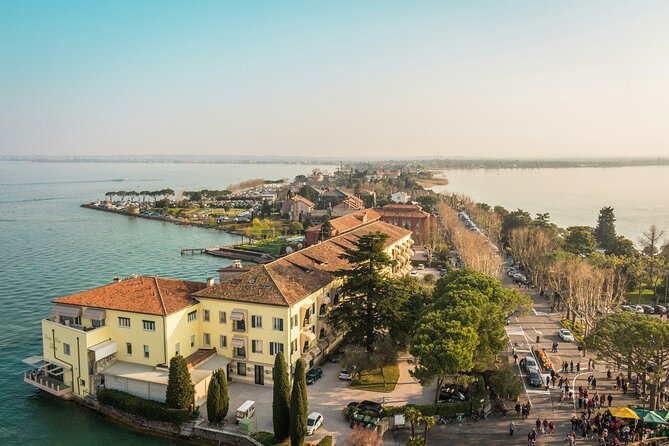
That matters on Lake Garda. The shoreline circles a large lake, and the towns have very different personalities. Desenzano feels like a transport hub with a polished promenade. Peschiera is a fortified town on the Mincio River. Sirmione is famous for its castle and Roman remains, while Riva del Garda has a strong Austro-Hungarian and military past.
You are not transported between these places. You must arrange your own car, train, bus, ferry, or other transportation, and parking is not included. The product gives you information at the places you reach. It does not replace a lake transport plan.
The audio is recorded by an advanced digital voice. That keeps the cost low and makes the delivery consistent. One useful point from the available feedback is that the audio was considered clear, well-paced, and easy to follow. At the same time, one customer expected more Brescia content and found only about two minutes. The provider responded that Brescia has more than 30 minutes across 15 major points, so make sure you redeem the minutes correctly and check the full map before assuming a section is missing.
More Audio Tours in Italy
- Rome: Pantheon Fast-Track Ticket and Official Audioguide
★ 4.5 · 27,353 reviews - Rome: Colosseum & Forum with Audio Guide App -Optional Arena
★ 4.2 · 24,770 reviews - Florence: Timed Entry to Michelangelo’s David + Audio App
★ 4.6 · 19,496 reviews
Desenzano, Peschiera, and Sirmione on the southern shore
Desenzano del Garda is the logical starting point. Its sloping streets reflect the town’s position near the morainic hills, while the lakeside promenade gives you an easy introduction to Garda. The audio points you toward the old port and Palazzo Todeschini, once the municipal seat and now a venue for conferences and exhibitions.
The old port has been tied to trade since the Middle Ages. During Venetian rule, grain was unloaded beneath the porticoes of Palazzo Todeschini. That small detail gives the waterfront more meaning than a simple photo stop.
In Piazza Matteotti, the Monumento agli Aviatori del Reparto Alta Velocità raises an enjoyable question: why does a monument to high-speed aviators belong in Desenzano? The audio guide promises the explanation, making this one of the more appealing short stops.
Desenzano also offers several longer visits, though they require separate admission. The local museum covers prehistoric finds, especially those from the Lavagnone pile-dwelling site, a UNESCO-listed site. A Roman villa, dating from the first half of the fourth century, was found by chance in 1921. Its owner is unknown, though the name Desenzano may relate to Flavius Magnus Decentius.
The audio also points to a tower with a spiral ramp more than 400 meters long, a Risorgimento museum, and an ossuary beyond the tree-lined avenue. These details are useful if you want more than a waterfront walk, but allow extra time and check opening arrangements yourself.
Peschiera del Garda follows naturally if you are traveling around the southern end. Its location at the mouth of the Mincio River helped make it a strategic town, and its railway and motorway connections still make it easy to reach. The Venetian fortress is the main attraction. The old center sits inside the fortified citadel, so the walls are not just a separate monument beside town. They shape the town itself.
Sirmione has the most instantly recognizable arrival of the southern shore. Its Scaliger Castle guards the entrance to the historic center, and the audio points you toward the 37-meter keep. Climbing it gives you a broad view over the peninsula and lake, though admission is separate.
At the far end of Sirmione are the so-called Caves of Catullus, the remains of a large Roman villa. The connection with the poet Catullus belongs more to tradition than firm proof, but Catullus did celebrate Sirmione in his poetry and is believed to have stayed there. This is a good example of how the guide can separate local legend from what is actually known.
Lazise, Bardolino, Garda, and Torri del Benaco
On the eastern shore, Lazise combines fortifications, beaches, and access to major family attractions such as Gardaland, Caneva Aquapark, and Parco Natura Viva. The audio stop is short, so treat it as a prompt to explore rather than a substitute for a full visit.
Bardolino brings a different focus. Its museums cover olive oil production and the fish and bird life of Lake Garda. At the end of town, a 30-meter Ferris wheel offers a simple way to view the shoreline from above. The guide is useful here if you want a little context before a walk or a museum visit.
Garda itself is linked to the lake’s Lombard past and to Punta San Vigilio, the peninsula that closes the gulf to the northwest. Baia delle Sirene, a natural park with a bathing beach, is one of the area’s main draws. The audio can help you understand why this particular point matters, but you still need to plan any beach time separately.
Torri del Benaco is known for its medieval defenses and its lakeside setting. Nearby Pai di Sopra has a 34-meter Tibetan bridge crossing a gorge 45 meters deep. The guide mentions the bridge plainly, including the warning that it is a poor choice for anyone with vertigo. That is the kind of practical note that makes a short track worthwhile.
Brenzone, Malcesine, Nago-Torbole, and Riva del Garda
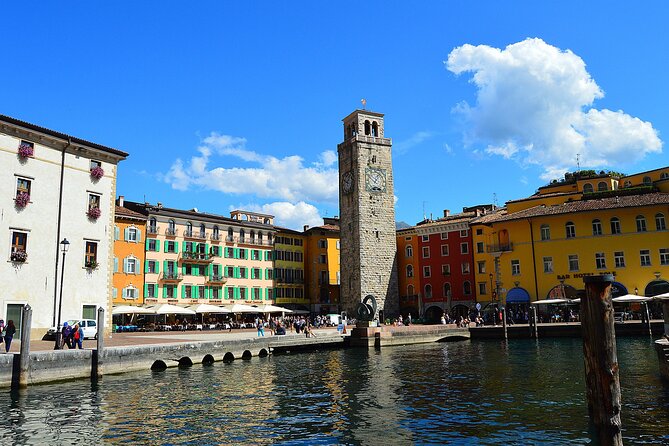
Brenzone sul Garda is quieter than several of its neighbors. Its free beaches attract people who practice water sports, and a cycle and pedestrian route reaches toward Malcesine. If you want a less crowded section of the lake, this stop provides a useful change of pace.
Malcesine combines old buildings, lake views, food, and outdoor sports. The supplied information does not give a long list of individual monuments, so expect a brief orientation rather than a guided walking tour. You will get the most from it if you already plan to wander through town.
Nago-Torbole is presented as a place where natural scenery and local history meet. The audio is short, but it helps connect the northern lake settlements into a larger route.
Riva del Garda brings stronger military and Central European context. Under Austro-Hungarian rule, Riva was home to a military flotilla, and the area was heavily fortified during the Great War. Many defensive structures remain and now serve as attractions. This is one of the more substantial historical themes along the lake, particularly if you are interested in borders, armies, and the changing control of northern Italy.
Another self-paced route in Italy:
- Rome: City Sightseeing Hop-on Hop-off Bus with Audioguide
★ 4.0 · 16,045 reviews - Pompeii: Entry Ticket with Audio Guide
★ 4.1 · 13,491 reviews - Venice: La Fenice Opera House Entry Ticket with Audio Guide
★ 4.6 · 11,742 reviews - Rome: Colosseum, Forum, Palatine Hill Entry & Audioguide App
★ 4.4 · 10,957 reviews
Limone, Tremosine, and the western shore
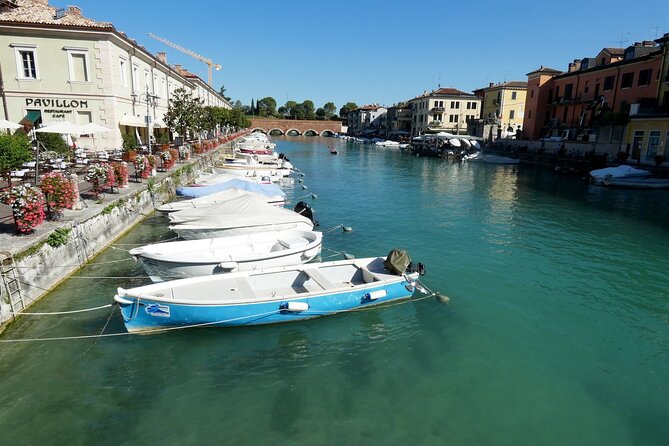
Limone sul Garda still centers on its small harbor, where the old fishing character is easier to picture. The guide highlights lemon groves and the lakefront cycle path, built above the water. You should allow more time than the one-minute audio segment if you plan to walk, cycle, or visit a lemon house.
Tremosine offers one of the strongest viewpoints in the collection. From the Terrazza del Brivido, you can look across Lake Garda toward Monte Baldo. The stop lasts only about a minute, but the view itself is the reason to pause.
Campione del Garda has a long connection with water sports and the San Michele stream, which reaches the lake here. The rebuilt Church of Sant’Ercolano, completed in a neoclassical style at the end of the nineteenth century, adds a small architectural point to the stop.
Tignale is worth considering for the Limonaia Pra dela Fam, one of the larger lemon houses on the lake, and the Sanctuary of Montecastello, perched on limestone above the water. Gargnano continues the lemon-growing theme with the Trevisani and Gandossi groves, both among the area’s older examples.
At Toscolano-Maderno, the Valle delle Cartiere offers a walk through the remains of old paper mills. The route is suitable for children, and the paper museum gives the valley an industrial story rather than just a scenic one.
Gardone Riviera is one of the most culturally important stops on this side of the lake. The Vittoriale degli Italiani is the former home and large park complex of writer Gabriele D’Annunzio, who bought the Cargnacco estate in 1921. The Heller botanical garden began with Austrian botanist Arthur Hruska and later took its present name after Austrian singer André Heller acquired it in 1988.
Both attractions require separate tickets. Here, the audio is best used to prepare you for a visit, not as a replacement for entering.
Salò and the southern-western villages
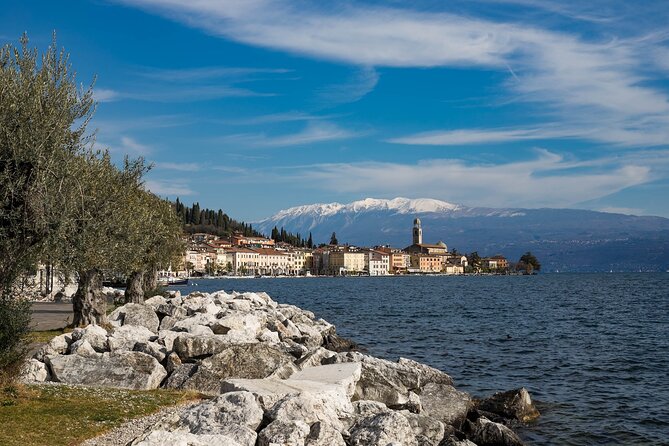
Salò sits around the gulf of the same name, with a lakeside promenade lined by historic buildings. It is a good stop for a walk, and the audio gives you a sense of why this shoreline is considered one of the most attractive on Garda.
Puegnago sul Garda is known for the three small lakes of Sovenigo, formed by glacial deposits. Lotus flowers bloom heavily in July and August, and the area is also used by riders on horseback. The timing note matters: outside the summer flowering period, the lakes may offer a quieter nature stop rather than a floral display.
San Felice del Benaco points you toward the promontory of San Fermo and views of Isola del Garda, the largest island in the lake. Manerba del Garda offers the Rocca di Manerba, inside a 114-hectare nature reserve protecting lake habitats, birds, and Mediterranean plants. The high ground gives you one of the better broad views over Garda.
Soiano del Lago has a well-preserved castle with walls, a keep, and a bell tower. Its open area still hosts summer events. Moniga del Garda is presented more as a place to slow down beside the water, while Padenghe is dominated by its twelfth-century castle.
Lonato del Garda closes the lake portion of the route and adds enough substance for a separate visit. The House of the Podestà began as a fifteenth-century residence for Venice’s representative. After falling into disrepair, it was restored by Ugo Da Como.
The Rocca di Lonato is an imposing defensive structure, about 180 meters long and 45 meters wide. You can also find the Mille Miglia museum in the former Benedictine monastery of Sant’Eufemia, with the famous race presented across nine time sections. An art gallery covers works from the Middle Ages through the nineteenth century, including pieces by Hayez, Canova, Romanino, Moretto, and Savoldo.
Brescia’s squares, churches, and Roman remains
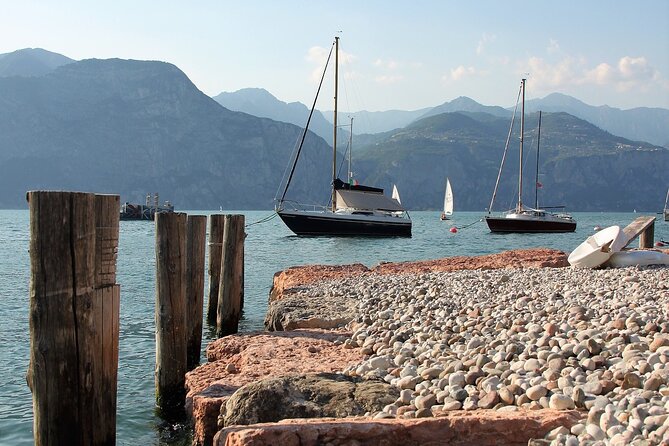
The Brescia portion changes the mood from lake towns to a compact city route. It includes Palazzo Tosio, a sixteenth-century building later given its neoclassical form, and Teatro Grande, a national monument and one of Italy’s theaters of tradition.
Piazza della Vittoria is the city’s major example of 1930s rationalist planning. It was designed as a single project between 1927 and 1932 by Marcello Piacentini. Piazza Paolo VI, the heart of the old center, is framed by the Old Cathedral and the New Cathedral.
The Duomo Vecchio is especially memorable for its circular form. Nearby, the Queriniana Library was commissioned by Bishop Angelo Maria Querini between 1746 and 1749 within the bishop’s palace complex.
Piazza della Loggia was created as a major public space, and the audio gives it a longer three-minute stop. San Francesco d’Assisi, built between 1254 and 1265, has survived with its adjoining convent largely intact. Santa Maria delle Grazie adds a strong Baroque interior, with later decoration giving the church its present appearance.
Brescia Castle occupies the top of Cidneo Hill and dominates the city. The final archaeological points reach the Roman area, described as the largest Roman archaeological zone in northern Italy. Together with the San Salvatore-Santa Giulia complex, it forms part of a UNESCO World Heritage site.
That last section is the strongest reason to add Brescia to the experience. You move from lake resorts and fortifications into Roman, medieval, Renaissance, Baroque, and modern Italian history within a relatively focused city area.
Price, phone use, and the practical tradeoffs
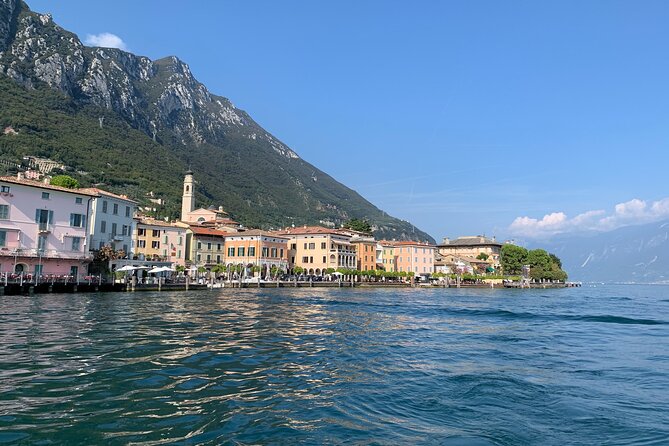
At about $4.84 per person, the price is excellent if you use several sections. Even a single day around two or three towns can make the cost worthwhile compared with a private guide. The value is less convincing if you expect long narration at every stop or if you visit only one place.
You receive a link within 24 hours of booking to redeem your purchased minutes. After redemption, you choose points on the navigation map. Download the tracks before leaving if you want to listen offline, and bring enough battery power for phone navigation and audio.
No headphones or radio guide are supplied. The tracks play directly from your smartphone, so use your own headphones if you want to hear the narration clearly in busy public areas.
The listed details say the experience is offered in English. A provider response also says the Brescia material exists in Italian, English, French, and German. If language choice is important, confirm it before booking.
The listed starting point is 25015 Desenzano del Garda and the listed end is 25017 Lonato del Garda, but both are indicative. You can finish wherever you prefer. The activity is private in the sense that only your group uses it, though it remains self-guided and does not include a human guide.
You need moderate physical fitness. Castles, towers, steep streets, long walks, and inclined ramps appear throughout the route. Churches require suitable clothing, and entry can be refused if you do not meet the dress code.
Free cancellation is available up to 24 hours before the start time. Paid attractions, transport, parking, food, and drinks remain your responsibility.
Who should book this experience?
I would choose this audio guide if you have your own transportation plan, enjoy moving at your own speed, and want basic context before exploring. It is particularly useful for a road trip, a flexible lake itinerary, or a visit split across several days.
It suits independent visitors who do not need a guide walking beside them. It is less suitable if you want detailed storytelling, guaranteed admission, or someone to solve transportation and timing for you.
The strongest use is selective. Pick Desenzano and Sirmione for the southern shore, Riva and Limone for the northern lake, Salò and Gardone for the western side, and Brescia for museums, churches, and Roman remains. You do not need to force every stop into one trip.
Book it for the low cost and broad coverage, but treat it as a helpful audio layer, not a complete guided tour. Download the tracks, check the map, budget for entrance fees, and let the towns themselves determine how long you stay.
FAQ
Where does the audio guide start?
The listed starting point is 25015 Desenzano del Garda in the Province of Brescia, Italy.
Where does the listed route end?
The listed end point is 25017 Lonato del Garda in the Province of Brescia, Italy. The meeting details are indicative, and you may finish elsewhere.
How much does the experience cost?
The stated price is about $4.84 per person.
How long does the experience last?
The approximate duration is 30 minutes to 1 hour and 40 minutes. The total time depends on which audio points you use.
Is transportation included?
No. Transportation and parking are not included, so you must arrange your own way between Lake Garda towns and Brescia.
Do I need headphones?
Headphones are not supplied. You can listen directly from your smartphone and use your own headphones if preferred.
Can I listen without an internet connection?
Yes. Download the audio tracks in advance if you want to listen offline later.
What language is available?
The booking information lists English. The provider has also stated that Brescia audio guides are available in Italian, English, French, and German, so confirm the language selection before booking.
Are attraction tickets included?
Only entry to free attractions is included. Tickets for paid places, including the Vittoriale degli Italiani, are not included.
Can I cancel the booking?
Yes. You can cancel for a full refund up to 24 hours before the experience start time. Changes or cancellations made less than 24 hours before the start are not accepted for a refund.
Latest audio tours in Italy
- Orgosolo Multilingual Audioguide★ 4.5 · 42 reviews
- Pantheon Skip the Line Entry Tickets with Digital Audio Guide★ 3.5 · 52 reviews
- St. Peter’s Basilica: Dome Climb with Lift & Audioguide★ 4.5 · 13 reviews
- Audio guide in Vatican Museums and Sistine Chapel★ 4.5 · 12 reviews
- The Roman Jewish Ghetto: A Self-Guided Audio Tour★ 4.0 · 8 reviews
- Experience: The Pantheon Audio Tour★ 4.5 · 4 reviews
- Trastevere: A Self-guided Audio Tour of Rome’s Medieval Village★ 4.5 · 3 reviews
- The Colosseum’s Attic with 3rd, 4th & 5th Levels with Audio Guide★ 4.5 · 20 reviews
Italy Audio Tours, compared.
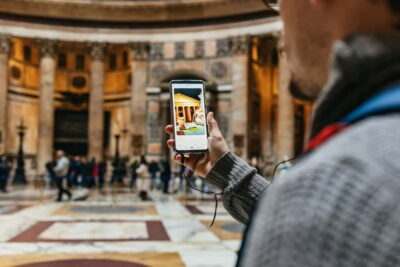
Pantheon Fast-Track Ticket and Official Audioguide
Read our review →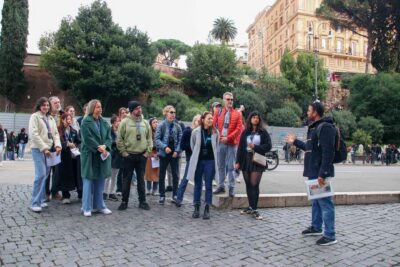
Colosseum & Forum with Audio Guide App -Optional Arena
Read our review →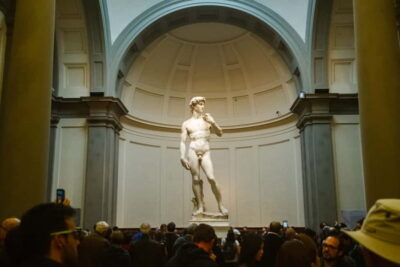
Timed Entry to Michelangelo’s David + Audio App
Read our review →
City Sightseeing Hop-on Hop-off Bus with Audioguide
Read our review →
La Fenice Opera House Entry Ticket with Audio Guide
Read our review →
Colosseum, Forum, Palatine Hill Entry & Audioguide App
Read our review →