
Reviewed · USA
Birmingham Civil Rights Walk of Freedom Smartphone Audio App Tour
Birmingham’s Civil Rights story comes into sharp focus on this short walk, beginning at the steps of 16th Street Baptist Church, where the 1963 bombing killed four girls and shook the nation. The GPS audio guides you from one nearby site to the next, adding the story of the Children’s Crusade, Project C, Jim Crow, local music, and the people who pushed Birmingham toward change.
I like the low price and flexible pace, especially if you have only an afternoon or are traveling with children. I also like the clear directions, location photos, and automatic audio cues. The main drawback is that the route is entirely outdoors, and nearby buildings may be closed, particularly on Sundays and Mondays, so this is not a substitute for visiting the church or museum interiors.
Key points to know before you walk
- Begin at 16th Street Baptist Church: The tour opens with one of Birmingham’s most painful and important Civil Rights sites.
- Let GPS advance the audio: The app usually moves forward when you reach the right place, with photos helping you confirm each stop.
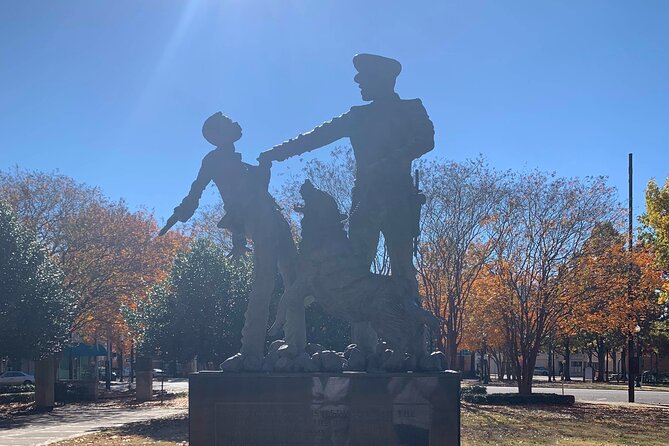
- Walk through Kelly Ingram Park: Statues and memorials here give the movement a physical setting, not just a timeline.
- Expect a private, self-guided experience: Only your group participates, and you can pause, stop, or resume as needed.
- Budget about one hour: The route is compact, with the remaining time used for walking between stops.
- Plan around opening hours: You hear about buildings such as the church, A.G. Gaston Motel, and theater, but the tour itself includes no admission.
Why this short Birmingham walk matters
This is not a general city stroll with a few Civil Rights references added at the end. The route stays focused on the streets, buildings, parks, churches, and businesses tied to Birmingham’s struggle for equal treatment.
That focus matters because the events of 1963 happened in ordinary places. You are not only hearing about famous leaders. You are also following the sidewalks where children marched, looking toward churches that organized resistance, and passing buildings connected to Black business and community life.
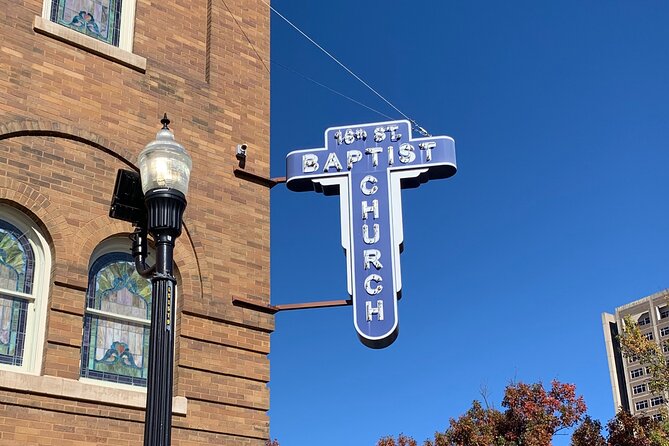
The experience begins at 16th Street Baptist Church, a fitting place for the story to start. The church was bombed on September 15, 1963, killing Addie Mae Collins, Denise McNair, Carole Robertson, and Cynthia Wesley. The audio explains the church’s role, the bombing, the people who gathered there, and Martin Luther King Jr.’s connection to the movement.
The tone is serious without making you sit through a long lecture. The complete walk lasts about an hour to an hour and ten minutes, which gives you enough context to understand the district without taking up an entire morning.
More Smartphone Audio Tours in the USA
- Self-Guided GPS Audio E-Bike Tour Hawaii Volcanoes National Park
★ 4.5 · 131 reviews - Santa Fe Historic Downtown Smart Phone Audio App Self Guided GPS Walking Tour
★ 4.5 · 112 reviews - Ultimate Portland Self-Guided Driving GPS Audio Tour
★ 4.0 · 56 reviews
Starting at 16th Street Baptist Church
Meet at 1530 6th Avenue North, at the steps of 16th Street Baptist Church. The location gives you an immediate sense of place. The church is not an abstract historical marker. It is the site of a violent attack and a gathering point for local organizing.
The first audio section covers the bombing and the people connected to it. It also sets up the broader story of Birmingham’s churches and the role they played in the Civil Rights movement. You hear about the church itself, the people who came there, and the way the attack affected the national struggle.
A second section remains outside the church and explains the Children’s Crusade of 1963. This is one of the most important parts of the walk because it places young people at the center of the story. Schoolchildren marched for desegregation and basic rights, facing police dogs, fire hoses, arrest, and national attention.
You should take your time here. The app may be ready to move on, but you can pause the audio and look closely at the church and surrounding area. The experience works best when you treat the route as a guided setting for reflection rather than a race from one GPS point to the next.
A.G. Gaston Motel and Project C
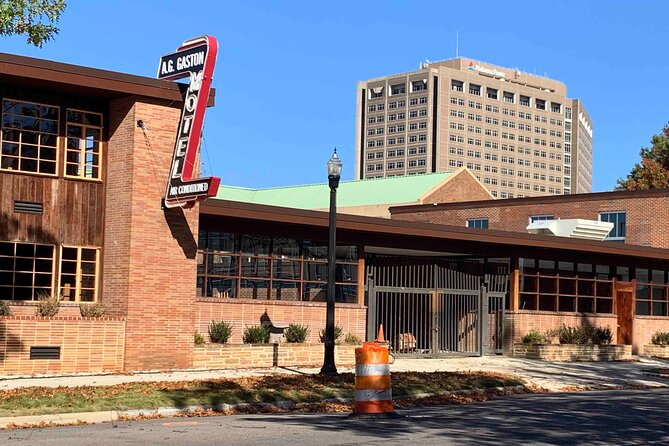
The walk then moves outside the historic A.G. Gaston Motel. The audio explains the motel’s role in Project C, the Birmingham campaign’s program of direct action and protest.
A.G. Gaston was a successful Black businessman, and his motel served as a meeting place during a crucial period. The location helped connect local organizers and national Civil Rights leaders. Hearing this story outside the building makes the site feel practical and human. Movements need places to meet, plan, rest, and make decisions, and this motel was one of those places.
The tour also covers Gaston’s life and his importance in Birmingham’s Black community. This section adds needed context to the better-known stories about King and the marches. You get a look at the business owners, organizers, churches, and local institutions that made the movement possible.
The motel portion is also where the route’s limits become clear. The walk stops outside, and the audio cannot give you the experience of entering the building. If seeing historic interiors is a major reason for your visit, you will want to pair this tour with other Birmingham attractions.
Churches, jazz, theaters, and life under segregation
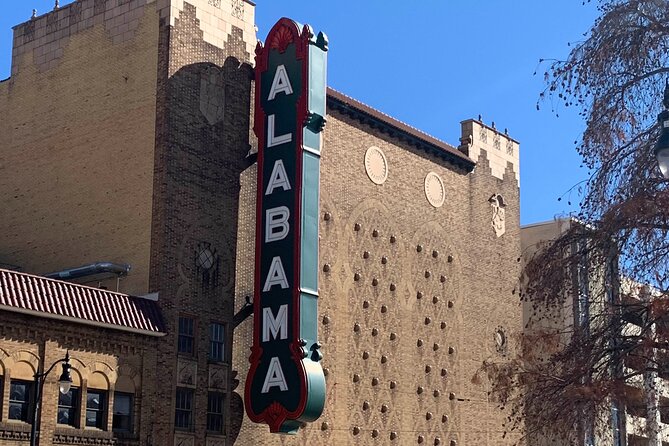
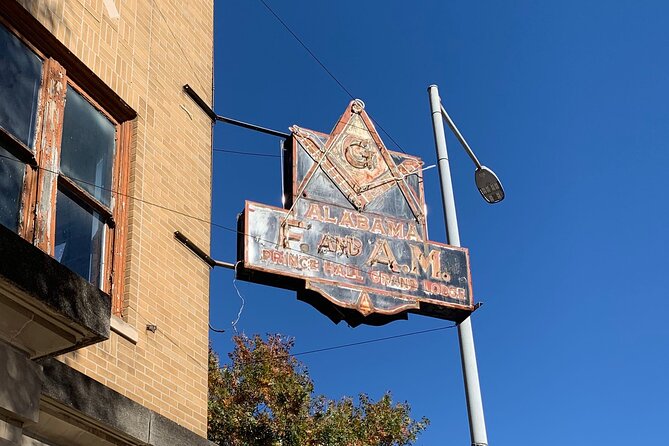
The route continues past churches connected to the movement. Here, the audio discusses the role of Movement churches, showing how worship spaces also served as places for organizing, communication, and support.
This is a useful shift in scale. You are not only hearing about major marches. You are learning how a campaign depended on local networks. Churches offered familiar meeting places and helped turn anger into organized action.
Other stops cover jazz and the history of theater during segregation. The subject may seem separate from the marches, but it helps explain daily life in Birmingham’s Black community. Music and performance offered work, expression, entertainment, and a way to build cultural identity under Jim Crow.
The tour then addresses segregation laws and their revival. You hear about the restrictions that shaped where people could go, what services they could use, and how public life was divided. These sections prevent the tour from becoming a narrow account of a few protest days. They show the system that the movement challenged.
Because the tour is delivered through an app, you can pause before moving on. That is useful if a particular subject needs more thought, or if you want to check the building in front of you before the next audio segment starts.
Another self-paced route in the USA:
- Los Angeles: Hop-On Hop-Off Bus Tour with Audio Guide
★ 3.7 · 2,030 reviews - City Sightseeing Hop-On Hop-Off Bus Tour with Audio Guide
★ 3.0 · 1,083 reviews - Medieval Torture Museum Ticket with Audio Guide and Ghost Hunting
★ 5.0 · 962 reviews - Gettysburg Battlefield Self-Guided Driving Audio Tour
★ 4.5 · 910 reviews
Eddie Kendrick Memorial Park and Birmingham music
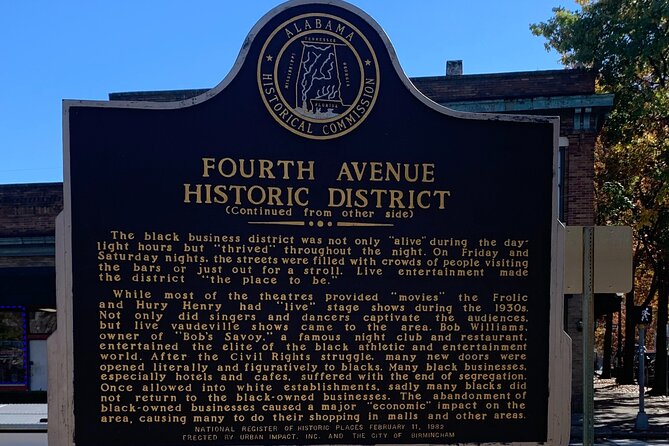
One stop takes you to Eddie Kendrick Memorial Park, where the audio tells the story of the Temptations singer and his music.
This is a welcome change of pace after the heavier material about violence, protest, and segregation. Kendrick’s story connects Birmingham to the wider history of American popular music. The stop also reminds you that the city’s cultural history is part of its Civil Rights story, not a separate subject.
The visit is brief, listed at about ten minutes, and admission is free. You do not need a ticket for the park. It works as an easy pause in the route, especially if you are walking with children or want a lighter subject before continuing to the next historic address.
1520 4th Avenue North and the Black Skyscraper
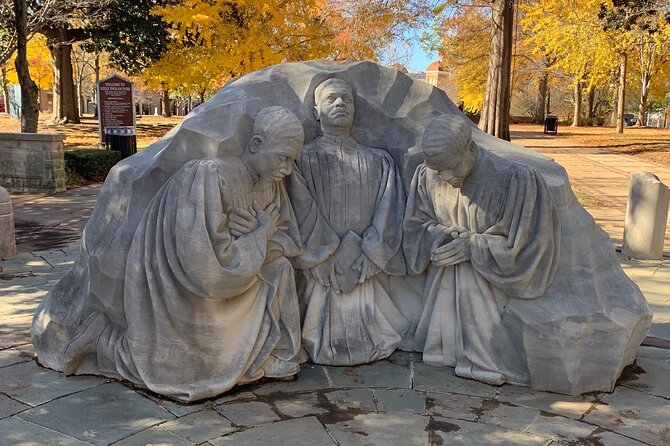
The route also stops outside 1520 4th Avenue North, known as the Black Skyscraper. The audio explains the people who lived there and the building’s place in Birmingham’s Black community.
This stop adds a residential and social dimension to the walk. Civil Rights history often gets told through famous speeches and court cases, but neighborhoods and apartment buildings reveal how people actually lived. The stories connected to this address help fill in that daily picture.
The stop takes about ten minutes, and there is no admission charge. As with the other locations, you hear the story from the sidewalk. That makes the tour easy to fit into a tight schedule, though you should not expect a building tour or indoor exhibits.
Kelly Ingram Park, the emotional center of the route
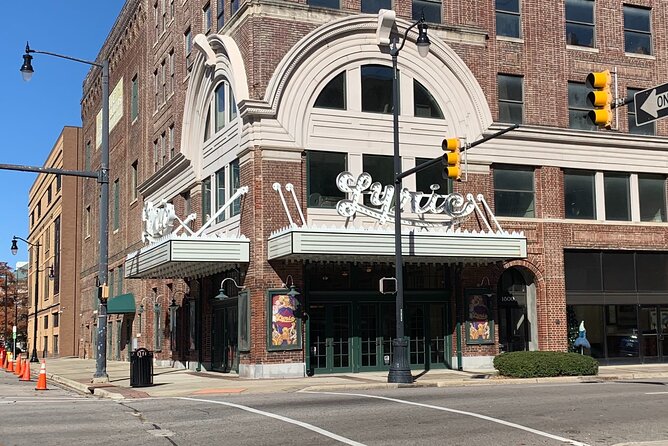
Kelly Ingram Park is the longest listed stop, at about fifteen minutes, and I would save extra time here if you can. The park contains statues and memorials connected to the marches, police violence, and the children who took part in the 1963 campaign.
The audio guides you through the park and points out the Civil Rights moments tied to this place. The statues give shape to scenes that can otherwise feel distant on a phone screen. You can look at the artwork while listening, then pause to read and think before continuing.
For many people, this will be the most powerful section of the walk. It combines the movement’s public story with a physical place where people gathered and confronted the city’s segregation system.
The park also shows why the walking format works. You move through the setting at street level, rather than viewing Birmingham only from a museum gallery. At the same time, the lack of a live guide means no one is there to answer a question or adjust the presentation to your group. If your children ask something the audio does not cover, you will need to discuss it together or research it later.
How the GPS audio app works
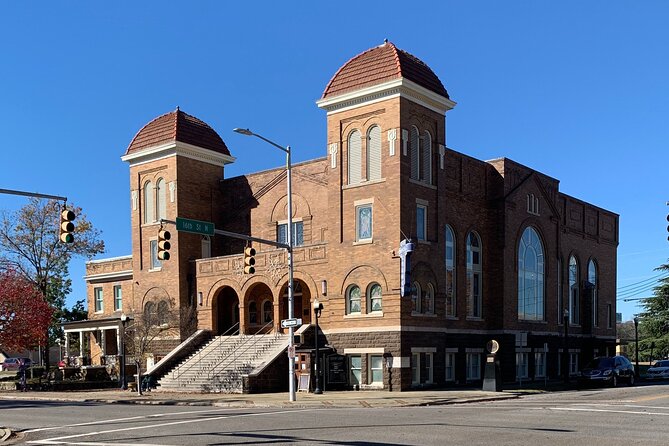
The app uses your location to advance the audio when you reach the correct point. The system has generally worked well for this route, and the walking directions are specific enough to keep you on track. Photos for each stop help you confirm that you are standing in the right place.
You should download or open the app before reaching the church and make sure your phone is ready. Confirmation arrives at booking, and the experience is offered in English. Bring headphones if you prefer private listening, or use your phone speaker when street noise is low.
The audio narrator is clear and engaging, with music used in parts of the presentation. A few pronunciation issues may occur, including names or words that sound phonetically correct but not fully polished. This is a small concern, but history-focused listeners may notice it.
The greatest strength is control. You can pause the tour to take pictures, read a marker, talk with your family, or step inside another attraction. Then resume when ready. You are not waiting for a group, following a guide’s fixed pace, or worrying about falling behind.
Timing, walking effort, and weather
The route takes about one hour to one hour and ten minutes. The sites are close together, and the walking is manageable for most people. The exact time depends on how often you pause and how much time you spend looking around.
The route is suitable for families, solo visitors, and anyone who wants a private outing. One family completed it with a young child, and the short format helped keep the experience manageable. If you are traveling with children, I would explain before starting that some material is difficult, especially the church bombing and the treatment of young marchers.
Everything is outdoors. That means weather matters. The route has been completed comfortably in cold conditions, but you will want water, comfortable shoes, and suitable clothing. Birmingham’s heat can make a short walk feel longer, and rain could reduce the pleasure of stopping at each site.
The route begins at 16th Street Baptist Church and ends near the Birmingham Civil Rights Institute at 520 16th Street North. Ending near the institute is useful because you can continue your learning there if it is open. The app tour itself does not include museum admission.
Price and what you get for $9.75
At $9.75 per person, this is an inexpensive way to get an organized introduction to Birmingham’s Civil Rights District. You are paying for a GPS walking app, not a live guide, food, drinks, transport, or admission tickets.
I think the price works best for a visitor who wants structure but not a full scheduled tour. The app points you toward specific places and supplies the background, while you keep control of the pace. A private group also gets the same basic experience without sharing the route with strangers.
The value drops if you expect access to interiors or personal conversation with a guide. The church, motel, theater, museum, and other buildings may have separate opening hours and ticket requirements. You should check those plans before starting, especially if you hope to enter 16th Street Baptist Church or visit the Birmingham Civil Rights Institute afterward.
The route is available every day according to its broad operating window, but that does not mean every nearby attraction is open every day. Sunday and Monday visits can leave you looking at closed doors. The app still works, but the day may feel incomplete if you planned to go inside.
Who should book this Birmingham audio walk?
I would choose this tour if you want:
- A one-hour introduction to Birmingham’s Civil Rights landmarks
- A private route for your family or travel group
- The freedom to pause, take photographs, and resume
- A low-cost activity near the Civil Rights District
- A short experience before a flight or another afternoon plan
- A way to orient yourself before spending more time in museums
I would look for a live guide or a longer museum visit if you want detailed discussion, spontaneous questions, or access to historic interiors. The app gives you a solid route and clear information, but it cannot replace a docent, an open church, or an extended museum visit.
Should you book the Birmingham Civil Rights Walk of Freedom?
Yes, if you want a flexible and affordable way to connect Birmingham’s key Civil Rights sites. The strongest parts are the opening at 16th Street Baptist Church, the section on the Children’s Crusade, the A.G. Gaston Motel, and the walk through Kelly Ingram Park.
Book it early enough to leave room for a separate church or museum visit, and avoid assuming that every building will be open. If you can spare the time, use the audio walk as your outdoor introduction, then continue at the Birmingham Civil Rights Institute.
You can cancel for a full refund up to 24 hours before the scheduled start time. Within 24 hours, refunds and changes are not accepted. At this price, with free cancellation on reasonable notice and a route that works for solo visitors or families, it is an easy choice for most first-time visitors to Birmingham.
FAQ
Where does the Birmingham Civil Rights Walk of Freedom begin?
It begins at the steps of 16th Street Baptist Church, 1530 6th Avenue North, Birmingham, Alabama 35203.
Where does the tour end?
The route ends near the Birmingham Civil Rights Institute at 520 16th Street North. You can continue learning there if it is open.
How long does the audio tour take?
The experience takes about one hour to one hour and ten minutes, including walking time. Your exact timing depends on how often you pause.
Is this a live guided tour?
No. It is a GPS walking tour app. Only your group participates, and you follow the English audio and directions at your own pace.
Are admission tickets included?
No. The tour takes place outdoors and does not include food, drinks, or admission tickets. Nearby attractions may require separate tickets.
Is the tour suitable for families?
Yes. Most people can participate, and the short route can work well for families. The subject includes difficult material about violence, segregation, and the bombing of 16th Street Baptist Church.
What is the cancellation policy?
You can cancel at least 24 hours before the experience for a full refund. Cancellations or changes made less than 24 hours before the start time are not accepted.
Latest audio tours in the USA
- Solvang City Personalized Self-Guided App Tour★ 3.0 · 6 reviews
- Essential Downtown SLO: A Self-Guided Audio Tour★ 4.5 · 27 reviews
- Silicon Valley Self-Guided Driving Audio Tour for Tech Lovers★ 4.0 · 24 reviews
- Self-Guided Audio Tour of the Golden Gate Bridge★ 3.5 · 3 reviews
- The Ghosts of San Francisco Haunted Audio App Walking Tour★ 5.0 · 2 reviews
- Point Reyes National Seashore Self Guided Driving Audio Tour★ 4.0 · 9 reviews
- San Francisco Self-Guided Audio Drive: Explore at Your Own Pace★ 4.0 · 9 reviews
- Explore Coronado Island on a Self Guided Audio Tour★ 5.0 · 2 reviews
Smartphone Audio Tours, compared.
Colosseum & Forum with Audio Guide App -Optional Arena
Read our review →
Timed Entry to Michelangelo’s David + Audio App
Read our review →
Cathedral & Brunelleschi’s Dome Ticket & Audio App
Read our review →
Michelangelo’s David Priority Ticket & Audio App
Read our review →
Uffizi Priority Ticket & Masterpieces Audio App
Read our review →
Castel Sant’Angelo Entry Ticket & Digital Audioguide
Read our review →
Pantheon Priority Entry Ticket & Audio Guide App
Read our review →Browse the lists this tour appears in