
Reviewed · BIG ISLAND
Self-Guided GPS Audio E-Bike Tour Hawaii Volcanoes National Park
A quiet bike trail near an active volcano is a fine way to see Hawaii Volcanoes National Park. You pedal through fern forest, past steaming vents and black volcanic fields, then stop when you want instead of trailing behind a bus. The electric assist keeps the ride manageable, while the GPS app adds stories about Pele, lava, and the island’s changing ground.
I especially like the freedom to linger and the access to viewpoints that are closed to cars. I also like the practical setup: secure parking, restrooms, a shaded staging area, helmets, locks, and live staff help. The main catch is that this is not a casual bicycle stroll. You need to steer, shift, and balance on both paved surfaces and gravel, and the app requires your own working smartphone.
Key points to know before booking
- Mostly downhill or level riding: The route is designed to reduce hard pedaling, though you still need basic cycling control.
- A different view of the park: Bike trails reach places where cars cannot go, including Keanakakoi Crater Overlook.
- Thurston Lava Tube included: A short loop walk leads through rainforest to this famous lava-formed cave.
- Weather changes quickly: Kīlauea sits around 4,000 feet, where rain, mist, wind, and chilly temperatures are common.
- Self-guided, not fully unattended: The GPS audio app leads the way, while live staff remain available for safety and park questions.
- Bring your own phone: A fully charged, functioning smartphone with internet access is required, and the audio app can drain its battery quickly.
Why an e-bike works so well at Kīlauea
Hawaii Volcanoes National Park covers far more ground than you can comfortably walk in half a day. Driving lets you move between major stops, but it also means dealing with crowded parking areas and viewing the park through a windshield.
The e-bike gives you a slower, more physical connection to the park without demanding a full day of hard cycling. You hear wind in the forest, feel the change in temperature near steam vents, and get a better sense of how quickly the terrain shifts from green rainforest to bare lava rock.
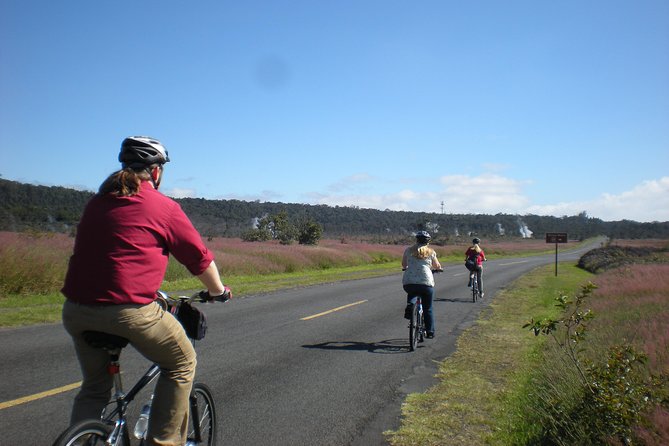
The route is described as running from the summit toward the sea, with nearly all riding on paved or level paths and downhill sections. In practical terms, you should still expect some effort. One experienced group described a few hills, and wet pavement or gravel requires extra care. Electric assistance helps, but it does not replace good balance and sensible speed.
The experience lasts about four and a half hours, including preparation, riding, short walks, and stops. Morning pickup is listed for 9:30 a.m. The afternoon option starts at 12:30 p.m. and requires at least four riders. The tour returns to the Bike Volcano meeting point on Old Volcano Road.
More Self-Guided Audio Tours in the USA
- Gettysburg Battlefield Self-Guided Driving Audio Tour
★ 4.5 · 910 reviews - Joshua Tree National Park Self-Guided Driving Audio Tour
★ 4.5 · 762 reviews - Ultimate Acadia National Park Self-Guided Driving Audio Tour
★ 4.0 · 521 reviews
Starting at Bike Volcano on Old Volcano Road
Arrive ready to ride rather than expecting a long orientation. Staff provide an electric comfort hybrid bicycle, helmet, lock, and a safety talk under a shaded canopy. You’ll also receive help with the GPS app and directions into the park.
The bikes have received strong marks for comfort and condition. If you are tall, give the operator your height in advance and ask for a larger frame. You must also provide your name, height, and a local Hawaii contact number when booking.
There is free customer parking and restroom access, which matters because services inside and around the park are limited. A $1,500 equipment deposit is pre-authorized per party, so bring identification and a credit card.
The app is the one part that deserves preparation. Download or set it up before arrival if instructed, charge your phone fully, and consider carrying a power bank. The map and audio can use battery at a fast rate, and the app’s audio sections may require separate taps from the map. That is manageable, but it is not as simple as pressing one button and forgetting about it.
Fern forest, crater rim, and the first park trails
After pickup, you ride less than a mile to the park trail entrance. From there, the route follows quieter paths along the rim of the erupting crater and through native Hawaiian fern forest.
This opening section gives you a useful sense of the park’s variety. The forest is cool and damp, with tall ferns and native plants, while nearby openings reveal volcanic ground and distant crater views. The GPS narration explains geology, local stories, and the cultural role of Pele, the volcano goddess.
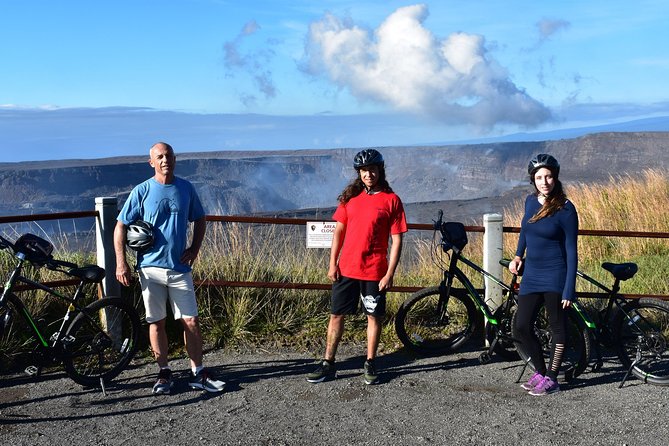
The self-guided format suits people who dislike fixed group pacing. You can stop for photos, wait for a slower member of your group, or spend more time at a viewpoint. The tradeoff is that you must pay attention to the map and park rules yourself. Stay on permitted bike routes. Bicycles are not allowed on walking trails, and park rangers may remind you of that firmly.
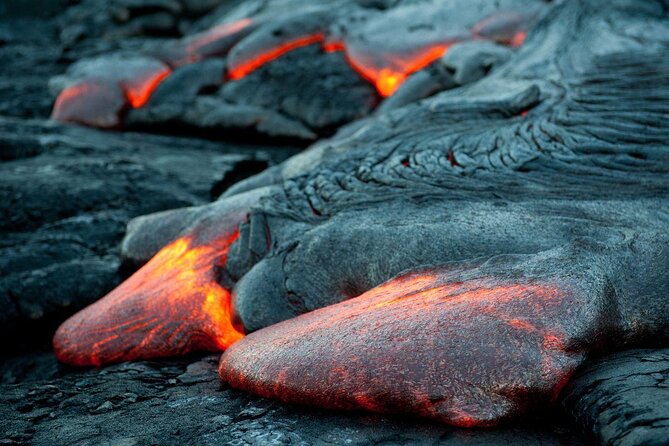
The tour description refers to an erupting crater and possible lava viewing, but volcanic activity changes. Active lava, fountains, or a visible lava lake are never guaranteed. If conditions allow, the views can be spectacular, with lava fountains described as reaching more than 1,000 feet. If not, the craters, steam, forest, and lava fields still provide plenty to see.
Thurston Lava Tube and the short rainforest walk
Nahuku, better known as Thurston Lava Tube, is one of the most memorable stops because it changes the pace. You leave the bike for a short 15-minute loop walk through native rainforest toward a roughly 500-year-old pit crater filled with tall hāpuʻu ferns.
The path is shaded and gives the audio guide a chance to explain endemic plants and the cultural meaning of the area. Then you enter the lava tube, a cave formed when the outside of a lava flow cooled while molten rock continued moving beneath it.
Inside, the passage feels cool and enclosed. The GPS narration explains how the tube formed, while the smooth walls and lava-shaped features make the geology easy to picture. The cave is a quick stop, not an extended hike, so it fits neatly into the half-day schedule.
Wear closed-toe shoes with a secure sole. You will be walking as well as cycling, and the forest path is not the place for loose sandals.
More Smartphone Audio Tours in the USA
- Santa Fe Historic Downtown Smart Phone Audio App Self Guided GPS Walking Tour
★ 4.5 · 112 reviews - Ultimate Portland Self-Guided Driving GPS Audio Tour
★ 4.0 · 56 reviews - Birmingham Civil Rights Walk of Freedom Smartphone Audio App Tour
★ 5.0 · 40 reviews - Self Guided GPS Audio Driving Tour Acadia NP From Hulls Cove VC
★ 4.0 · 25 reviews
Kīlauea Visitor Center for context and safety updates
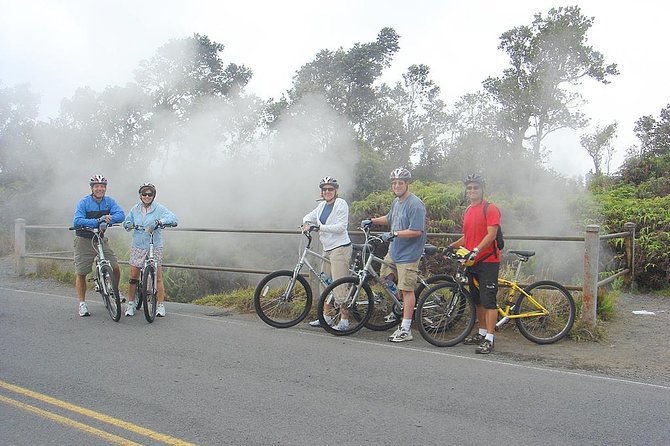
The Kīlauea Visitor Center is a useful pause between outdoor stops. Exhibits cover volcanic forces, native wildlife, Hawaiian culture, and the continuing changes around Kīlauea. Maps and displays can help you understand what you have already seen on the bike and what you may want to revisit later by car.
Park rangers can provide current safety information and explain which areas are open. This matters at a volcano, where road access, viewing areas, and activity can change. The center also has a bookstore and gift shop with educational material, souvenirs, and local crafts.
The stop is listed at about 15 minutes, so you should not expect a long museum visit. Still, it gives the day useful context. If you are planning to spend another day in the park, pay attention to ranger advice and note the places you want to explore on foot.
Keanakakoi Crater Overlook by bike or foot
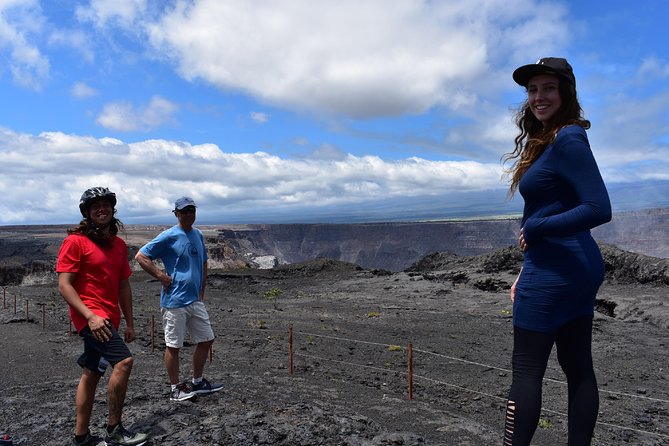
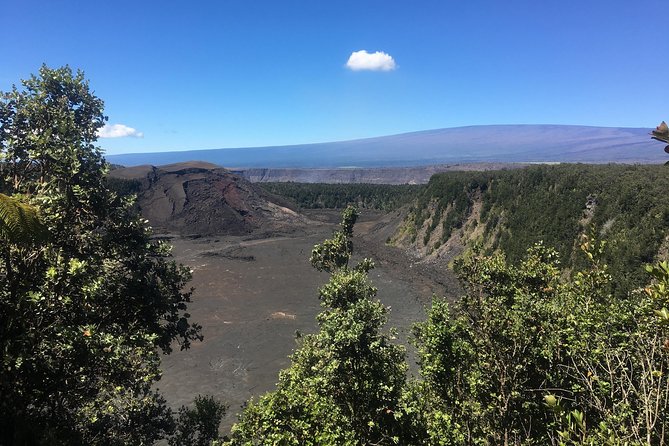
Keanakakoi Crater Overlook is one of the strongest reasons to choose this experience instead of simply driving through the park. The access route is limited to bikes or pedestrians, allowing you to reach a viewpoint that is not available from a regular car.
The two-mile bike trail passes through koa and ʻōhiʻa forest before opening toward volcanic terrain and views of Halemaʻumaʻu Crater. The audio narration explains the crater’s geology, ancient Hawaiian basalt quarrying, and the plants that survive in this difficult setting.
This is also the area described as providing some of the closest views of current volcanic activity when conditions permit. Again, treat lava viewing as a possibility, not a promise. Eruptions change, clouds can block the view, and park closures can affect access.
The overlook is a good place to slow down. You can lock the bike, take photographs, listen to the narration, and look across the crater without the pressure of a bus group waiting to leave. Binoculars are worth packing if you have room.
What the GPS audio guide does well, and where it needs patience
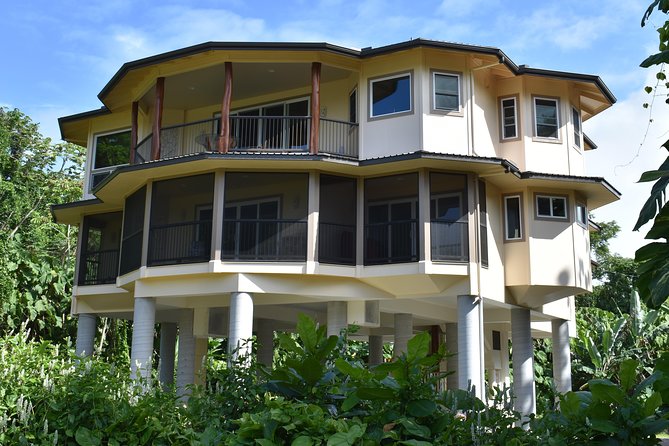
A GPS guide is a good match for this route because the stops are spread out and the terrain itself tells only part of the story. The narration covers volcanic formation, native plants, Hawaiian mythology, and the history of places such as the basalt quarry.
You can listen while moving or stop at a point of interest and let the explanation run. This gives you a more personal rhythm than a live group tour. You can also repeat a section or skip ahead if a subject does not interest you.
The technology is not perfect. Audio and map functions may be reached through separate links, and the setup can feel awkward at first. Give yourself enough time at the staging area to learn the app. A backup battery is a smart addition, since one phone problem can affect both navigation and narration.
Live operator assistance remains available for safety and park guidance, but this is not the same as having a guide beside you explaining every stop. If you want constant conversation, live interpretation, and someone setting the pace, choose a guided tour instead.
Weather, safety, and the physical demands
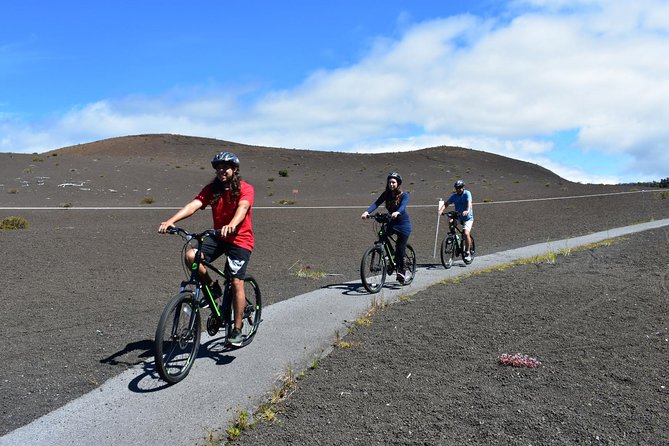
Kīlauea’s summit is cooler than the coast, often by 12 to 15 degrees. The supplied guidance notes temperatures that can range from the low 60s to upper 70s, with rain, mist, and wind possible at any time of year.
Dress in layers. Bring a light jacket, hat, sunglasses or prescription glasses, sunscreen, and closed-toe shoes. A rain jacket can be purchased at the Kīlauea General Store, but it is better not to count on finding the right size or style at the last minute.
Wet roads need respect. E-bikes can make downhill riding feel easy, but speed increases risk on slick pavement and around curves. Keep your pace controlled, leave room between riders, and follow staff instructions. The operator does not recommend the tour for beginner cyclists, and the minimum age is 15.
There is also a 270-pound maximum weight limit. The tour requires moderate physical fitness, though the electric assistance lets you choose how much effort to use. You still need to mount, steer, brake, shift, and manage the bike on gravel and paved paths.
Is $159 a fair price?
At $159 per person, this is not the cheapest way to see Hawaii Volcanoes National Park. You also pay the national park entrance fee separately, listed here as $15 per person. Food and bottled water are not included, and a backpack costs $5 to rent.
The value comes from what the price bundles together: a quality e-bike, helmet, lock, parking, restroom access, equipment orientation, GPS narration, and staff support. You avoid renting equipment on your own and gain access to bike-only areas without spending the day walking between widely separated sights.
The price makes more sense for a small private group that plans to use the full four hours. It is less appealing if you only want a short ride or prefer to spend most of your time inside visitor centers and on walking trails.
There is no included lunch in the self-guided details provided here, so plan ahead. Food and bottled water are available for purchase at the Kīlauea General Store. The tour leaves enough of the day free for another activity, which adds value if your Hawaii schedule is tight.
Who should book this bike tour?
I would choose this for confident recreational cyclists, couples, families with teenagers, and active visitors who want more freedom than a coach excursion provides. It is particularly useful if you want to cover a large part of the park without repeatedly searching for parking.
It also suits repeat park visitors who have already seen the main car-accessible stops and want a different route. The forest, steam vents, crater rim, lava tube, and bike-only viewpoints create a good mix.
I would hesitate if you are new to bicycles, uncomfortable riding downhill, unwilling to cycle in possible rain, or dependent on a phone that may not hold a charge. You should also reconsider if your main goal is guaranteed active lava. No operator can promise that.
Cancellations are free up to 24 hours before the start time. If poor weather forces cancellation, you can receive a different date or a full refund. Since weather is part of the experience, that policy is useful, but you still need to keep your plans flexible.
My verdict on the Hawaii Volcanoes e-bike tour
Book it if you want to feel the park under your own power, reach areas unavailable to cars, and set your own pace. The combination of electric assistance, quiet trails, Thurston Lava Tube, and Keanakakoi Crater Overlook gives you a fuller visit than a quick drive from viewpoint to viewpoint.
Skip it if you want a fully guided day, a strenuous mountain-bike challenge, or guaranteed lava fountains. Prepare your phone, bring layers and rain protection, and treat the weather as part of the deal. For the right cyclist, this is an efficient and memorable way to see Kīlauea without spending the entire day behind a steering wheel.
FAQ
Where does the e-bike tour start?
The meeting point is Bike Volcano at 19-3972 Old Volcano Road, Volcano, Hawaii 96785. The activity ends back at the same meeting point.
What time does the tour start?
The morning tour begins with e-bike pickup at 9:30 a.m. An afternoon tour is listed at 12:30 p.m., but the afternoon option requires a minimum of four riders.
How long does the experience last?
The tour takes approximately four hours and 30 minutes. The main park riding portion is listed at about three hours, with additional time for the lava tube, visitor center, and crater overlook.
Is park admission included?
No. National park admission is separate and is listed at $15 per person. It can be purchased online.
Is a smartphone required?
Yes. You need a fully functioning smartphone to use the GPS audio app. Internet access is also required, and the app may use a significant amount of battery.
What equipment is provided?
The operator provides an electric comfort hybrid bicycle, helmet, and lock. Secure parking, restroom access, a shaded staging area, equipment orientation, and live operator assistance are also included.
What should I wear?
Wear layered clothing, closed-toe shoes, sunglasses or prescription glasses, and sunscreen. A hat, camera, and rain protection are also recommended because summit weather can be wet, windy, and chilly.
Is this suitable for beginner cyclists?
No. The experience is not recommended for beginner cyclists. You should be able to steer, shift, and balance on gravel and paved terrain.
Is there an age or weight limit?
Riders must be at least 15 years old. The experience is not available to people weighing over 270 pounds.
What happens if the weather is poor?
The experience requires good weather. If the operator cancels because of poor conditions, you can choose another date or receive a full refund. You can cancel for a full refund up to 24 hours before the start time.
More bike tours in the USA
- Hawaii: Volcanoes National Park E-Bike Rental and GPS Audio
★ 4.8 · 16 reviews - Easy Stroll (or Bike) Through Downtown Key West Audio Tour
★ 4.5 · 6 reviews - Scenic Mackinac Island: A Self-Guided Cycling Audio Tour
★ 4.0 · 5 reviews - Brooklyn Bridge Self-guided Bike Tour App – Audio + Written
★ 3.0 · 3 reviews
More National Park Audio Tours in the USA
- Arches National Park Self-Guided Driving Audio Tour
★ 4.5 · 288 reviews - Yellowstone National Park Self-Guided Driving Audio Tour
★ 4.5 · 249 reviews - Shenandoah National Park Self-Guided Driving Audio Tour
★ 4.5 · 109 reviews - Self-Guided Audio Driving Tour in Glacier National Park
★ 4.5 · 101 reviews
Latest audio tours in the USA
- Sequoia National Park Self-Guided Audio Tour★ 4.5 · 9 reviews
- Sequoia and Kings Canyon Audio Tour Self Guide National Park Tour★ 5.0 · 3 reviews
- Kings Canyon National Park Self-Guided Audio Tour★ 4.0 · 4 reviews
- Sedona, Arizona Self-Guided Audio Tour★ 4.0 · 36 reviews
- Sedona & Red Rock State Park Self-Guided Driving Audio Tour★ 3.0 · 30 reviews
- Haunted Savannah Self-Guided Walking Audio Tour★ 4.5 · 3 reviews
- Downtown Seattle Self-Guided Walking Audio Tour★ 4.5 · 6 reviews
- Uncover Seattle: Self-Guided Audio Tour★ 3.5 · 7 reviews
National Park Audio Tours, compared.

Ultimate Acadia National Park Self-Guided Driving Audio Tour
Read our review →
Vesuvius National Park Skip-The-Line Ticket and Audio Guide
Read our review →

Rocky Mountain National Park Self-Guided Driving Audio Tour
Read our review →Browse the lists this tour appears in