

Reviewed · GREECE
Aigai: Polycentric Museum & Royal Graves E-ticket with Audio
Aigai, ancient Macedonia’s royal center, comes alive in two very different museums. One presents palace culture, sculpture, and royal art. The other places you beside the extraordinary tombs linked with Philip II, father of Alexander the Great. The Royal Graves Museum is the emotional high point, while the Polycentric Museum gives the wider setting.
I like the freedom to move at your own speed, and I like having both audio tours stored offline, so you are not relying on a mobile signal. The $35 price is fair if you want context rather than a simple admission ticket, but this is not a guided excursion. You need your own phone, headphones, transport, and enough time to manage the app.
Key points
- Two museums, one day ticket: Visit the Aigai Polycentric Museum and the Museum of the Royal Graves of Aigai.
- Royal treasures underground: See Philip II’s tomb, the Heroon, the golden chest, and lavish burial objects.
- Audio that works offline: Download English narration, maps, and text before arriving.
- A self-guided visit: There is no live guide, group meeting point, or hotel transfer.
- Excellent ancient art: Look for the bronze calyx krater, the figurine of Cybele, the Lady of Aigai, and Alexander the Great’s marble fragment.
- Plan your equipment: Bring a charged Android or iOS phone, headphones, comfortable shoes, a hat, and sunscreen.
Why Aigai Matters to Your Macedonia Trip

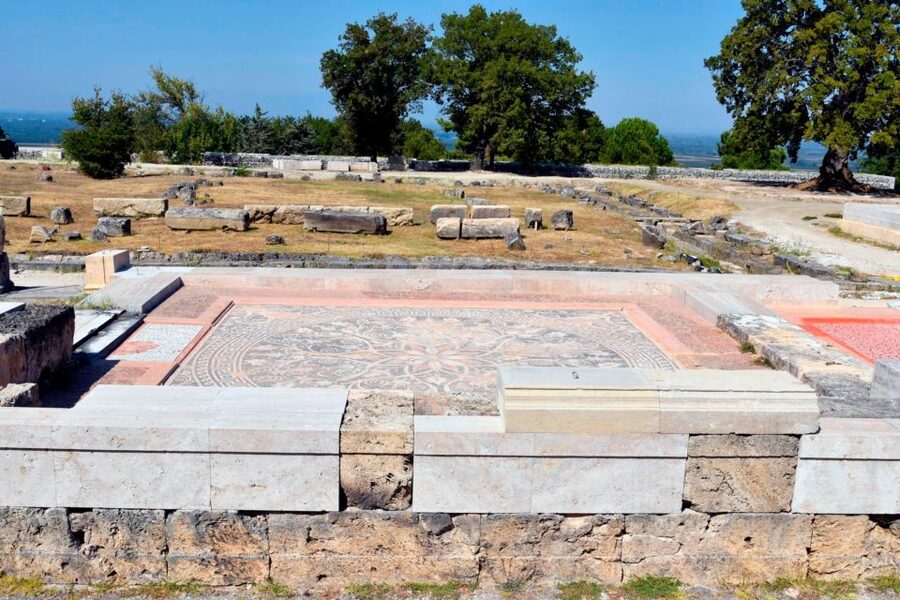
Aigai was the royal center of ancient Macedonia, and Vergina is the place to connect that political power with actual objects and monuments. This is not only a visit to a burial site. You are looking at the art, ceremony, architecture, and wealth of a ruling family whose world produced Alexander the Great.
The two museums work best as a pair. The Royal Graves Museum gives you a concentrated look at royal burial and treasure. The Polycentric Museum widens the picture with material connected to the palace and the ancient Macedonian court.
I would allow most of a day for both museums, especially if you listen to every audio stop and prefer not to rush. The ticket is valid for one day, but the material can also be replayed later. That is useful if you want to listen again at your accommodation or review a detail after the visit.
More Museum Audio Tours in Greece
- Athens: Acropolis Museum Ticket with optional Audio Guide
★ 4.4 · 2,652 reviews - Parthenon & Acropolis Museum with Audio or Live Tour Option
★ 4.1 · 2,446 reviews - Athens: National Archaeological Museum Ticket & Audio Guide
★ 4.3 · 1,330 reviews
Starting at the Aigai Polycentric Museum

The audio tour for the Polycentric Museum begins at the entrance on the provincial road between Veria and Kypseli, in Vergina. The easiest way to reach it is by car. There is no central meeting point, so you go directly to the museum and begin when you arrive.
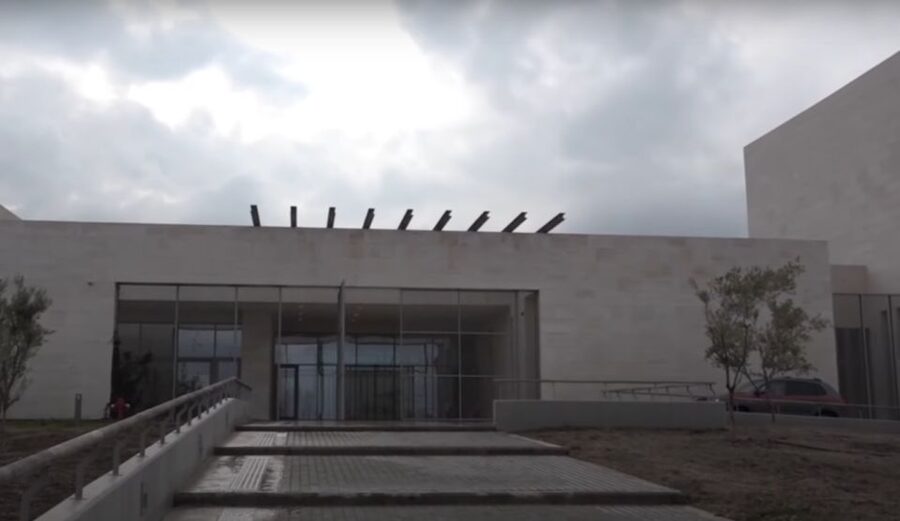
The museum is your introduction to the public and royal world of Aigai. Its displays include Alexander the Great’s marble fragment, the bronze calyx krater, the figurine of Cybele, and the Lady of Aigai. These objects give the audio narration useful anchors. Instead of hearing only broad facts about Macedonia, you can listen while looking closely at a specific object.
The bronze calyx krater is especially valuable for understanding the skill and taste behind elite Macedonian objects. The figurine of Cybele brings religious life into the visit, while the Lady of Aigai connects you with the people represented by the remains and treasures. The audio stops are designed to add short stories, historical details, and less familiar anecdotes without turning the visit into a long lecture.
The tour ends inside the museum. That matters if you are planning your day around both sites. You are not being led back to a bus or a meeting place, so you can continue looking at an exhibit, leave when you are ready, or make your own way to the Royal Graves Museum.
The Royal Graves Museum and Philip II’s Tomb
The second audio tour begins at the entrance to the Museum of the Royal Graves of Aigai in Vergina. Here, the focus shifts from the wider royal center to the tombs and the objects placed with the dead.
The tomb associated with Philip II is the major reason to make this visit. Philip was Alexander the Great’s father, and the tomb setting gives the Macedonian dynasty a human scale. The golden chest is another major object, with the kind of careful workmanship and symbolic importance that helps explain why these burials are so famous.
You will also encounter the Heroon area. It is part of the Royal Graves visit, but it has a practical accessibility restriction: the museum is wheelchair accessible except for this area. If mobility is a concern, plan around that limitation before you arrive.
The audio tour is useful here because the tombs can be quiet and visually intense, but not always self-explanatory. The narration helps you connect the burial architecture, grave goods, and royal ceremony. You can pause when you want, replay a section, and take in the displays without trying to keep up with a group.
The tour ends at the entrance again. That makes the second museum simple to handle on your own, but it also means you are responsible for deciding how long to stay and how to move between the two sites.
What the Audio Tours Add
The audio content is in English and is delivered through an app on your own smartphone. It includes narration, written information, and maps that can be used offline. You should download everything before you leave for the museums, not while standing at the entrance trying to solve a phone problem.
The scripts are built from research and arranged in short stories. That format suits museum visits. You can listen to one section, examine the object, and move on when you are ready. You do not need to follow a guide’s pace or wait for a scheduled group.
I like this setup for a site such as Aigai because the two museums ask different questions. At the Polycentric Museum, you are building a picture of royal life, art, and public culture. At the Royal Graves, you are thinking about death, memory, dynastic power, and the objects chosen to accompany a ruler. Two separate audio tours keep those themes from getting muddled.
The trade-off is simple: an app cannot respond to your questions. There is no live guide to explain a confusing term, point out something you missed, or change the pace for your group. If you want conversation and interpretation on the spot, this ticket will feel limited. If you prefer independence, the format is a strength.
More Smartphone Audio Tours in Greece
- Crete: Palace of Knossos E-Ticket and Audio Guide
★ 3.8 · 1,540 reviews - Athens: Ancient Agora E-Ticket and Audio Tour
★ 3.9 · 413 reviews - Olympia: Archaeological Site & Museum E-Ticket & Audio Guide
★ 4.3 · 272 reviews - Rhodes: Palace of the Grand Master E-Ticket & Audio Tour
★ 4.2 · 216 reviews
The Real Value of the $35 Ticket
At $35 per person, this is more expensive than buying only a basic admission ticket, but you are paying for two adult entries plus two audio tours. The offline maps and narration add practical value, especially if you are visiting independently and do not already have a guidebook or a guide arranged.
The price makes the most sense when you plan to visit both museums. Buying it for only one short stop would weaken the value. It also makes more sense if you intend to listen to the stories rather than treat the audio as an unused extra.
One detail deserves attention: the booking instruction says to book per device to be used, not per participant. You should read the access instructions carefully if several people are visiting together. The ticket and audio access are built around the phone or phones used for the visit, so do not assume the arrangement works like a standard group booking.
The ticket is non-refundable. That is another reason to confirm your date, transport plan, phone compatibility, and available time before paying. The activity is valid for one day, with starting times shown during availability checks.
Getting There and Preparing Your Phone
There is no pickup service, hotel transfer, or included transportation. The easiest way to reach both museums is by car. You will need to organize the route yourself and make sure you know which museum you are approaching first.
Before leaving, download the app and activate the tours using the link sent by email. Check your spam folder if the instructions do not appear in your main inbox. The app requires an Android phone version 5.0 or later or an iPhone. It does not work with Windows phones.
Allow about 200 to 300 MB of storage. Charge your phone fully, and bring headphones. The audio tour will be much easier to use if you are not holding the phone to your ear throughout the museum.
A small preparation list makes the day smoother:
- Download the app, maps, text, and audio before arrival.
- Bring headphones and a charged smartphone.
- Wear comfortable shoes.
- Pack a hat and sunscreen.
- Keep the activation email available until both tours open correctly.
Free and reduced admission tickets are available only at the on-site ticket booth. If you qualify for one, compare that option with the $35 adult package before purchasing.
Accessibility and Pace
The Polycentric Museum of Aigai is wheelchair accessible. The Museum of the Royal Graves is also wheelchair accessible, with the exception of the Heroon area. This is useful information for planning, but you may need to adjust your route if that section is important to your visit.
The self-guided structure gives you control over pace. You can pause the narration, skip ahead, and revisit sections. Families or mixed-interest groups may find this easier than a fixed guided tour, since each person can spend more time with the objects that matter most to them.
The drawback is that there is no staff member from the activity meeting you at the entrance. You must identify the correct museum, open the app, and begin the tour yourself. That is manageable for most independent visitors, but it rewards preparation.
Who Will Enjoy This Most
I would recommend this experience to you if you are staying in Thessaloniki or touring Central Macedonia and want to make the effort to reach Vergina. One verified booking described Vergina as wonderful and urged people visiting Thessaloniki to include it, a sensible suggestion if ancient Macedonia is part of your trip.
The package suits:
- Independent visitors who prefer to set their own pace.
- History and archaeology fans.
- People who want more explanation than a bare entry ticket provides.
- Couples or small groups comfortable sharing an audio-based visit.
- Visitors with a charged Android or iOS phone and headphones.
- Anyone planning both museums in the same day.
It is less suitable if you want a live guide, hotel pickup, a fixed group itinerary, or help with transportation. It is also a poor fit if you are not comfortable downloading an app or listening through your own device.
My Practical Verdict
I like this ticket because it combines the two essential Aigai sites with audio that can be used offline and replayed later. The Royal Graves provide the strongest single moment, while the Polycentric Museum gives you the wider setting needed to understand the royal court, its art, and its ceremonies.
The best way to use it is to treat the visit as a full day in Vergina, arrive with the app already working, and leave enough time for both museums. At $35, it is good value for an independent visit if you use the narration and see both sites. If you want personal interpretation or transport, spend your money on a live guided arrangement instead.
FAQ
What does the Aigai ticket include?
It includes adult entry to the Aigai Polycentric Museum and the Museum of the Royal Graves of Aigai, plus two self-guided English audio tours for Android or iOS smartphones.
Is there a live guide?
No. This is a self-guided experience with downloadable audio, text, and maps. There is no live guide or group meeting point.
Can I use the audio tours offline?
Yes. The content can be downloaded before your visit and used offline, which helps you avoid roaming charges.
What phone do I need?
You need an Android smartphone version 5.0 or later or an iOS smartphone. The app is not compatible with Windows phones, and you should allow 200 to 300 MB of storage.
How do I reach the museums?
There is no included transportation or hotel pickup. The easiest way to reach the museums is by car. The Polycentric Museum is on the provincial road between Veria and Kypseli, and both audio tours begin at their respective museum entrances.
Are the museums wheelchair accessible?
The Polycentric Museum is wheelchair accessible. The Museum of the Royal Graves is wheelchair accessible except for the Heroon area.
Latest audio tours in Greece
- E-Ticket to Akrotiri with Audio Tour on your Phone★ 5.0 · 2 reviews
- Authentic Santorini: A Self-Guided Audio Tour of Oia★ 4.5 · 3 reviews
- The Palace of the Grand Master E-Ticket with Audio Tour★ 4.0 · 9 reviews
- Explore Lindos Acropolis in 3D & Audio★ 4.0 · 4 reviews
- The Palace of the Grand Master. Self-guided Audio Tour★ 3.5 · 15 reviews
- Acropolis of Lindos E-Ticket with Audio Tour on your Phone★ 4.5 · 8 reviews
- Olympia Archaeological Site & Museum E-Ticket with Audio Tour★ 4.0 · 11 reviews
- Mykonos: Find your (queer) god Self-Guided Audio Tour★ 4.0 · 2 reviews
Museum Audio Tours, compared.

Uffizi Priority Ticket & Masterpieces Audio App
Read our review →
Louvre Museum Hosted Entry and Mona Lisa Audioguide
Read our review →
St. Mark Basilica Ticket, Audioguide+History Gallery
Read our review →
Borghese Gallery Skip-the-Line Ticket & Audioguide
Read our review →
Borghese Gallery Ticket + Audioguide or Guided Tour
Read our review →
Orsay Museum Entry Ticket and Digital Audio Guide App
Read our review →
Uffizi Gallery Timed Entry Ticket & Audio Guide
Read our review →
Acropolis Museum Ticket with optional Audio Guide
Read our review →Browse the lists this tour appears in