
Reviewed · SPAIN
San Cristobal de La Laguna : Cathedral ticket w/ audioguide
La Laguna Cathedral hides a striking contrast behind its neoclassical façade. The outside is the surviving piece of the older church, while the interior was rebuilt in a neo-Gothic style with high ribbed vaults and an ambulatory. That change gives the visit more to notice than a quick look at one historic building.
I like the five-language audioguide, which lets you set your own pace, and I like the location in the center of San Cristóbal de La Laguna, a UNESCO World Heritage Site since 1999. The main drawback is that the free church entrance does not include the audioguide, so you need the paid ticket for the full self-guided experience.
Key points
- The original neoclassical façade survives from the earlier church, while most of the present building comes from a major early 20th-century rebuild.
- The cathedral began as the Parroquia de los Remedios in the 16th century and became a cathedral only in 1819.
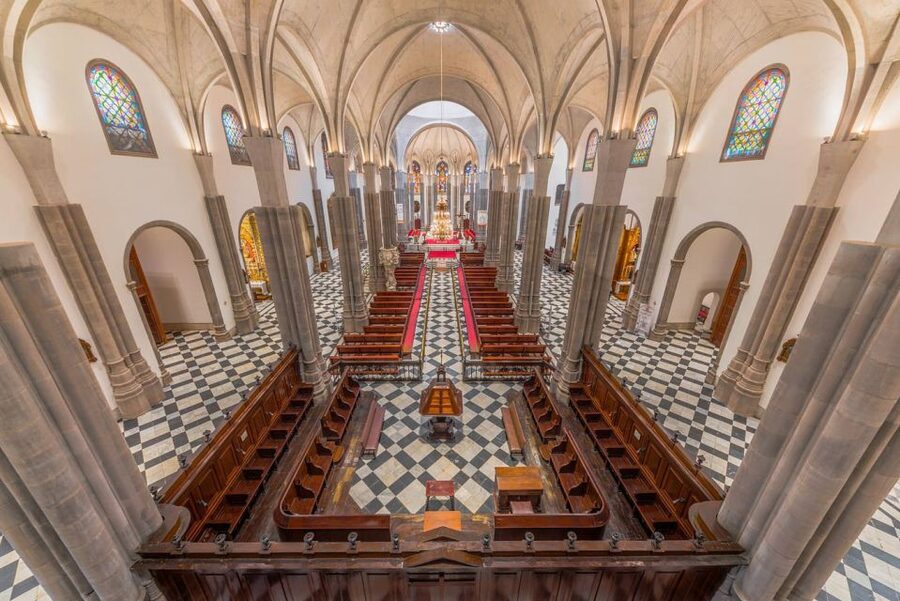
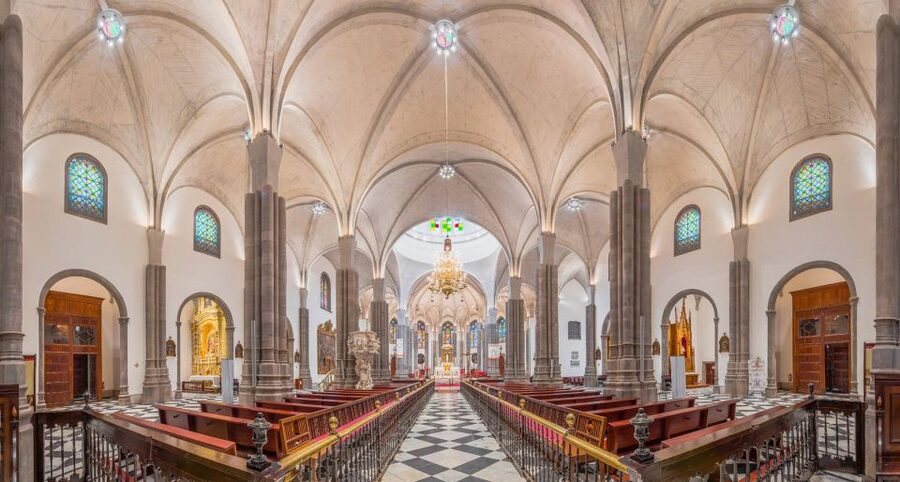
- The interior shifts to neo-Gothic design, with high ribbed vaults and an ambulatory.
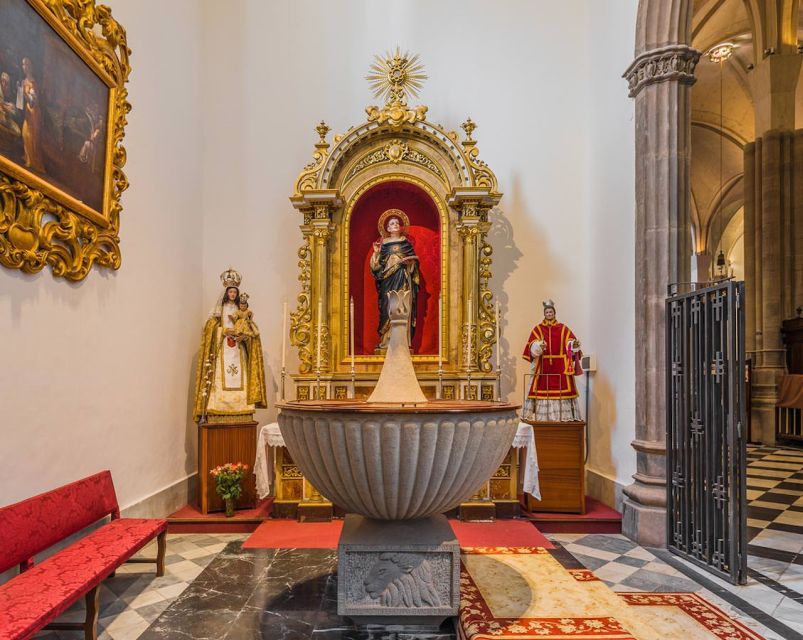
- The Baroque altarpiece of the Virgen de los Remedios is one of the main artistic highlights.
- The monumental Italian marble pulpit and Treasury add fine art and church objects to the architectural visit.
- The audioguide is available in English, Spanish, French, Italian, and German, with an English-speaking host at the entrance.
Starting at the Cathedral in La Laguna
You meet at the cathedral’s main entrance with your voucher. The church sits in the heart of San Cristóbal de La Laguna, so the setting matters as much as the building itself. You are not visiting an isolated monument. You are already inside the historic center of a city recognized by UNESCO in 1999.
The visit is valid for one day, but this is not described as a fixed-length tour with a timed sequence. You enter, collect or access the audioguide arrangements, and move through the cathedral at your own speed. That makes it easy to fit around a walk through La Laguna.
An English-speaking host is available at the meeting point. The host is not presented as a personal guide leading a group, so you should think of this as an independent visit with help at the entrance rather than a guided tour with live commentary.
The arrangement suits you if you prefer to stop for a few minutes at one artwork, move quickly past another, or pause in silence. It is less suitable if you want a historian beside you for questions throughout the visit.
More Church Audio Tours in Spain
- Cordoba: Mosque-Cathedral E-Ticket with Audio Guide
★ 4.1 · 2,895 reviews - Cathedral and Giralda Entry Ticket with Audio Guide
★ 4.1 · 505 reviews - Granada: Basilica of San Juan de Dios Ticket & Audio Guide
★ 4.6 · 336 reviews
Why the 16th-century origin matters
The cathedral’s story begins in the 16th century, when the building served as the Parroquia de los Remedios. That earlier identity explains the present name and gives the church a longer story than its current appearance suggests.
It did not become a cathedral until 1819. This detail helps put the building in context: the site had religious importance for centuries before it took on its cathedral role.
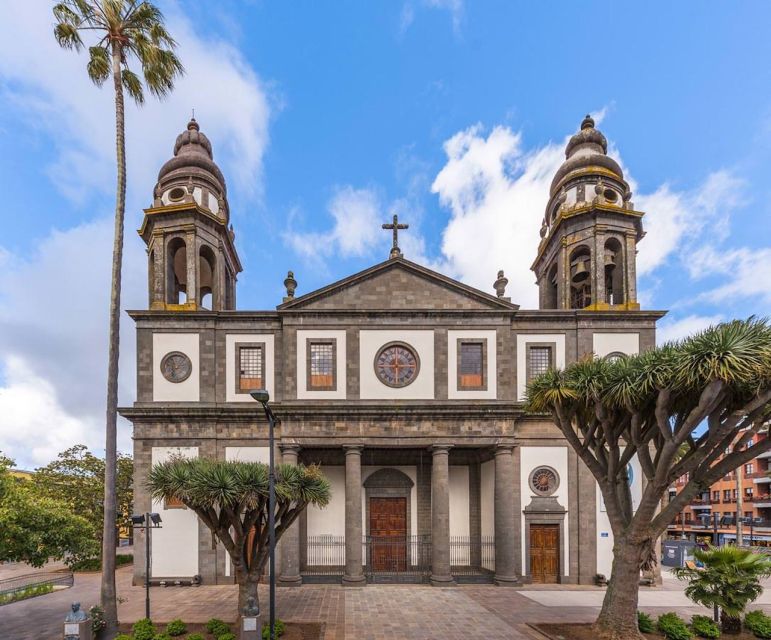
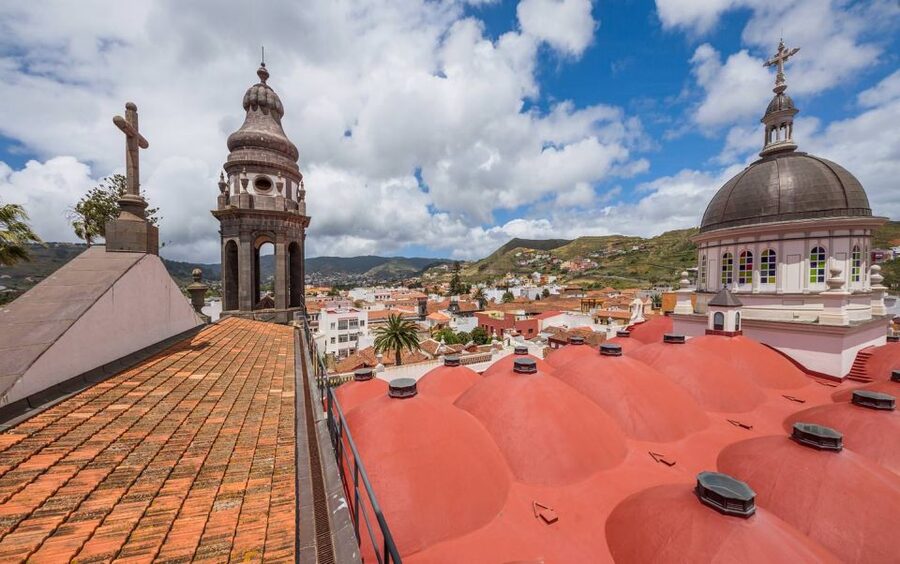
The structure you see today is not simply the original 16th-century church preserved intact. It was completely rebuilt at the beginning of the 20th century. The only original part that remains is the grand neoclassical façade, declared part of Spain’s cultural heritage in 1983.
I find that distinction useful when you arrive. Look closely at the exterior first, then notice how different the inside feels. The façade connects you to the older church, while the interior reflects the later rebuilding. The contrast is one of the most interesting features of the visit.
The neoclassical façade and the neo-Gothic interior
Start outside and give the façade more than a passing glance. It is the one major original section of the building, and its neoclassical design is the clearest physical link to the earlier church.
Inside, the mood changes. The main visual language is neo-Gothic, marked by high ribbed vaults and an ambulatory. The height of the vaults gives the interior a strong sense of space, while the ribs draw your eye upward and help you read the structure.
The ambulatory is important because it shapes how you move through the cathedral. Instead of seeing the church as one single open room, you can understand it as a series of areas connected around the central worship space.
The audioguide should help you make sense of that contrast. Without some explanation, a church can turn into a quick circuit of arches and paintings. Here, the building’s different periods give you a simple set of questions to keep in mind: what belongs to the older church, what came from the rebuild, and how does a cathedral serve as both an artwork and a working place of worship?
The Virgen de los Remedios altarpiece
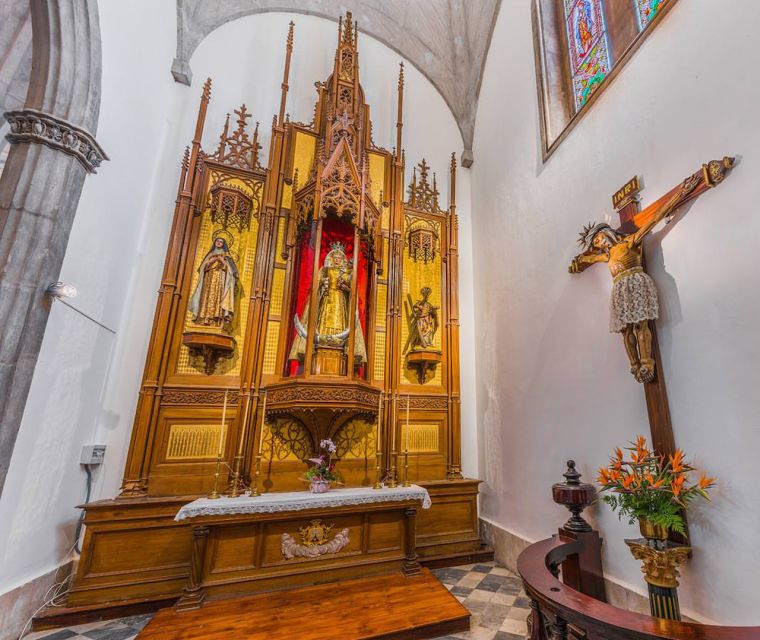
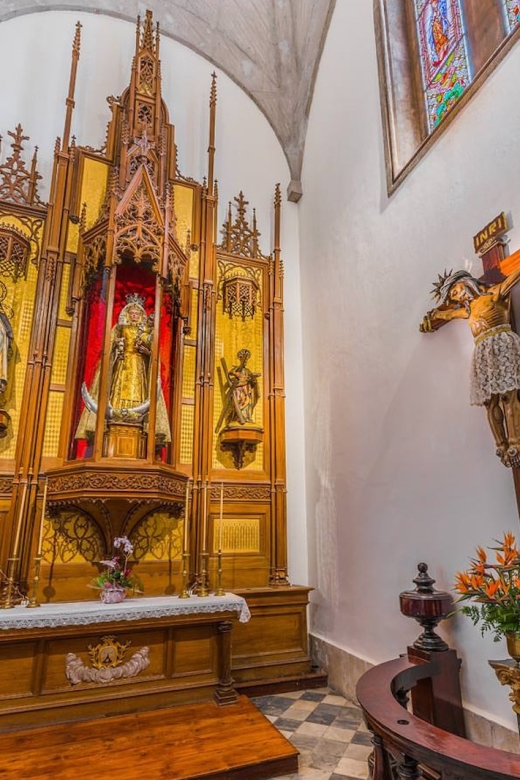
The Baroque altarpiece of the Virgen de los Remedios is one of the cathedral’s key sights. Its style differs from the neo-Gothic architecture around it, giving you another example of how several periods and artistic styles meet inside the building.
The connection to the earlier Parroquia de los Remedios also makes this altarpiece especially meaningful. The name is not just a label attached to the cathedral today. It reaches back to the church’s first identity.
Take time to compare the altarpiece with the surrounding architecture. The neo-Gothic vaults emphasize height and structure. The Baroque altarpiece draws your attention toward ornament, devotion, and the visual focus of the altar.
This is where the audioguide earns its price. A short description can help you understand why the altarpiece matters, rather than leaving you to identify it as simply another decorated church feature. The available languages are English, Spanish, French, Italian, and German, so you can listen in the language that lets you absorb the most.
Another self-paced route in Spain:
- Barcelona: Sagrada Familia Entry Ticket with Audio Guide
★ 4.6 · 105,312 reviews - Barcelona: Casa Batlló Entry with Self-Audioguide Tour
★ 4.7 · 25,359 reviews - Granada: Alhambra Entry Ticket with Audio Guide
★ 4.1 · 5,950 reviews - Casa Batllo Admission Ticket with Intelligent Audio Guide
★ 4.5 · 3,168 reviews
The Italian marble pulpit
The monumental pulpit, made from Italian marble, gives the visit a more tactile artistic detail. It is easy to focus only on grand spaces in a cathedral. A pulpit asks you to look at craftsmanship on a smaller, more human scale.
The material itself is part of the interest. Marble gives the pulpit weight and polish, while its scale explains why it is described as monumental rather than merely functional.
I would use the audioguide here instead of rushing on to the next stop. The pulpit is the sort of feature that can seem secondary when you first enter, especially beside the vaults and altarpiece. Its value comes from noticing how practical church furnishings can also be major works of art.
The supplied information does not give a precise route or listening time for each feature. Plan on moving at your own pace, and allow extra time if you tend to stop often for architectural details.
The Treasury and the cathedral’s artistic objects
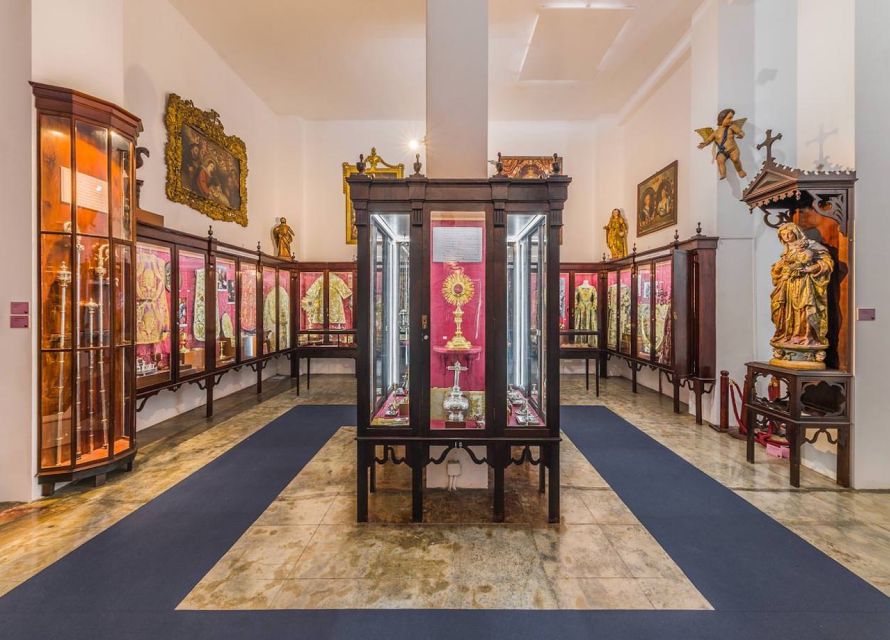
The cathedral’s Treasury contains a range of religious and artistic objects. This gives the visit a different rhythm from the main church interior. You move from large-scale architecture to smaller pieces that show the material side of the cathedral’s heritage.
The Treasury is particularly useful if you enjoy objects with a direct connection to worship. The building is not presented only as an old monument. It remains a religious place, and the Treasury helps explain the art and objects connected with that role.
The visit’s description calls the cathedral the house of God, not simply a historic monument. That idea affects how you should behave inside. Keep your voice low, dress respectfully, and remember that the building’s religious purpose comes before its role as a sight.
The Treasury also adds value to the $8 ticket. If you only wanted to see the façade and the main interior, you might feel that a free entrance was enough. The paid experience makes more sense when you use the audioguide and take time with the art, the pulpit, the altarpiece, and the Treasury.
How the audioguide changes the visit
The audioguide is the main reason to choose this ticket instead of relying on free entry. It is available in five languages: English, Spanish, French, Italian, and German. That range makes the experience practical for many international visitors.
You are not tied to a live guide’s pace. You can listen to the explanation of the façade, stop at the neo-Gothic vaults, and spend longer with the Virgen de los Remedios altarpiece if it interests you.
A German-speaking visitor who booked for January 4, 2026, gave the cathedral five out of five and specifically praised both the beauty of the building and the audioguide. The wider experience has a 4.2 rating from six ratings, so the overall picture is positive, though the sample is small.
The audioguide is described as modern and translated into five languages. Still, an audioguide is not the same as a personal guide. You cannot ask it to explain a detail that catches your eye, and the available information does not identify individual audio voices or a named guide.
Is $8 a fair price?
At $8 per person, the ticket is modest for a cathedral visit in a major historic center. The value depends on what you want from the stop.
If you only want to enter a church for a quick look, the free entrance may be enough. Keep in mind that free entry does not include the audioguide. You would lose the historical explanation that connects the 16th-century parish, the 1819 cathedral, the early 20th-century rebuild, and the surviving neoclassical façade.
If you enjoy architecture, sacred art, or self-guided sightseeing, I think the paid ticket is good value. You receive entry, a five-language audioguide, and access to a building with several distinct points of interest rather than one single viewing area.
The ticket also gives you flexibility. It is valid for one day, and availability determines the starting times. Since no fixed tour length is provided, you should not book it expecting a tightly timed one-hour program. Treat it as an independent cultural stop that can fit into your day in La Laguna.
Free cancellation is available up to 24 hours before the visit for a full refund. You can also reserve now and pay later, which helps if you are arranging several Canary Islands activities and want to keep your plans flexible.
Who should choose this cathedral visit?
I would recommend it to you if you like to explore historic buildings without being hurried. The visit works especially well for people who want commentary in English, Spanish, French, Italian, or German and prefer listening privately instead of joining a live group.
It also suits anyone already walking through San Cristóbal de La Laguna. The cathedral’s central location means you can pair it with the surrounding World Heritage Site without arranging separate transport for this activity.
Families and independent sightseers may appreciate the one-day validity, since you can fit the cathedral around your own schedule. Art lovers should pay attention to the Baroque altarpiece, marble pulpit, and Treasury rather than treating the visit as a quick architectural photo stop.
You may want to skip the paid option if you are satisfied with a brief church entrance and do not plan to listen to the audioguide. The ticket’s main extra value is the interpretation, not a special transport service, a live guide, or a long structured tour.
Should you book the La Laguna Cathedral ticket?
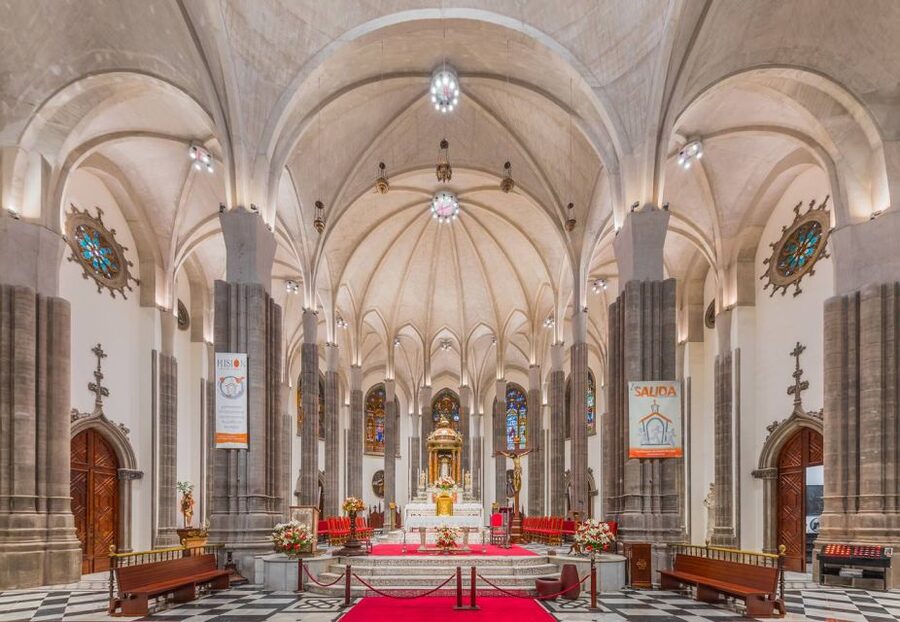
Book it if you want a low-cost, self-guided look at one of La Laguna’s most important religious buildings, especially if you value clear commentary in your own language. The surviving neoclassical façade, neo-Gothic interior, Baroque altarpiece, Italian marble pulpit, and Treasury give the visit enough variety to justify slowing down.
Skip it if you only want a fast glimpse inside and do not need an audioguide. For most independent visitors spending time in the UNESCO-listed center, though, $8 is a sensible price for a flexible cultural stop with real architectural and artistic detail.
FAQ
Where is the Cathedral of La Laguna?
The cathedral is in the heart of San Cristóbal de La Laguna in the Canary Islands, Spain.
Is San Cristóbal de La Laguna a UNESCO World Heritage Site?
Yes. The city was designated a UNESCO World Heritage Site in 1999.
What does the cathedral ticket include?
The ticket includes entry to the cathedral and an audioguide.
Which languages are available for the audioguide?
The audioguide is available in Spanish, English, French, Italian, and German.
Is the audioguide included with free entrance?
No. Free entrance does not include the audioguide.
Where do I meet for the visit?
Go to the cathedral’s main entrance with your voucher.
How long is the ticket valid?
The ticket is valid for one day. Check availability for the available starting times.
Can I cancel the booking?
Yes. You can cancel up to 24 hours in advance for a full refund.
Latest audio tours in Spain
- Seville Maestranza Bullring Tour with Audio Guide★ 3.5 · 6 reviews
- Seville Scavenger Hunt and Highlights Self Guided Audio Tour★ 5.0 · 5 reviews
- Seville Audio guided walking tour 3h20 and 28 audio commentaries★ 5.0 · 2 reviews
- Royal Alcazar of Seville Entry Ticket with Audio Guide★ 4.0 · 42 reviews
- Seville Cathedral and La Giralda Entry Ticket with Audio Guide★ 3.0 · 9 reviews
- Seville Cathedral and Giralda Entry Tickets with Audio Guide★ 4.0 · 56 reviews
- Essential Seville’s Ancient History: An Audio Tour★ 5.0 · 9 reviews
- Segovia from the Aqueduct to the Alcazar: A Self-Guided Audio Tour★ 4.5 · 10 reviews
Church & Cathedral Audio Tours, compared.
St. Peter’s Basilica & Dome Entry Ticket & Audio Tour
Read our review →
Basilica Cistern Fast-Track Entry and Audio Guide
Read our review →
Cathedral & Brunelleschi’s Dome Ticket & Audio App
Read our review →
Vatican & Sistine Chapel Ticket with Optional Audio Guide
Read our review →
St. Mark Basilica Ticket, Audioguide+History Gallery
Read our review →
Skip the Line: Vatican & Sistine Chapel Ticket with Audio Guide
Read our review →
St. Peter’s Basilica with Optional Dome Ticket & Audioguide
Read our review →
Browse the lists this tour appears in