

Reviewed · ROME
Rome: Castel Sant’Angelo Entry Ticket with Audio guide
Castel Sant’Angelo is not just another Roman ruin. It is a massive tomb, fortress, papal refuge, and viewpoint rolled into one. I like the chance to see Hadrian’s tomb and the papal corridors in the same visit, then climb to the terrace for clear views of St. Peter’s and the Tiber.
I also like the freedom of the smartphone audio guide, which lets you pause and wander at your own pace. Reserved entry can save real time on busy mornings, though the $31 price is much higher than the €16 basic admission fee, so the value depends on how useful you find the audio guide and queue-saving service.
Key points to know
- Nearly 2,000 years of history: Explore the former Mausoleum of Hadrian, later reshaped as a fortress and papal stronghold.
- Terrace views: Climb to the top for broad views of Rome, the River Tiber, St. Peter’s Basilica, and Ponte Sant’Angelo.
- Reserved entry: Show your ticket instead of joining the ordinary ticket line, although you still need to arrive on time and pass through entry checks.
- Audio at your own pace: The app-based guide is offered in English, Italian, French, Spanish, German, and Chinese.
- A physical visit, not a simple museum stop: Expect stairs, long corridors, fortress rooms, and uneven movement through the building.
- Bring your own headphones: The audio guide runs on your charged smartphone, and headphones are not supplied.
Why Castel Sant’Angelo deserves two hours
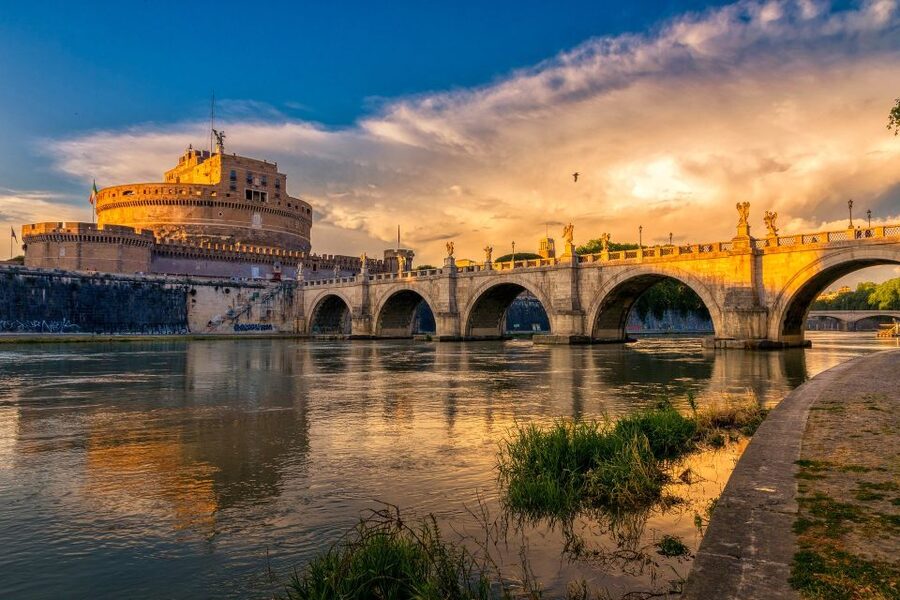
Castel Sant’Angelo occupies a useful spot between central Rome and Vatican City, on the right bank of the Tiber. Its round shape is easy to recognize from the river, but the inside is far more varied than the outside suggests.
The building began as the Mausoleum of Emperor Hadrian, also called Hadrian’s Mole. Over time, it became a defensive fortress and a refuge for popes. That change of purpose is the key to enjoying the visit. You are not walking through one neatly preserved ancient monument. You are moving through layers of Roman imperial, military, and papal history.
Two hours is a sensible planning time. You can move through the main rooms, listen to the audio guide, stop for views, and climb to the terrace without rushing. Some people stay closer to three or four hours, especially if they read the information panels or pause at the cafe. Others find that the main route fits comfortably into two hours.
I would not treat this as a quick photo stop. The outside is impressive, but the interior gives the building its meaning.
More Audio Tours in Rome
- Rome: Colosseum & Forum with Audio Guide App -Optional Arena
★ 4.2 · 24,770 reviews - Rome: City Sightseeing Hop-on Hop-off Bus with Audioguide
★ 4.0 · 16,045 reviews - Rome: St. Peter’s Basilica & Dome Entry Ticket & Audio Tour
★ 4.2 · 7,537 reviews
Starting with Hadrian’s massive tomb
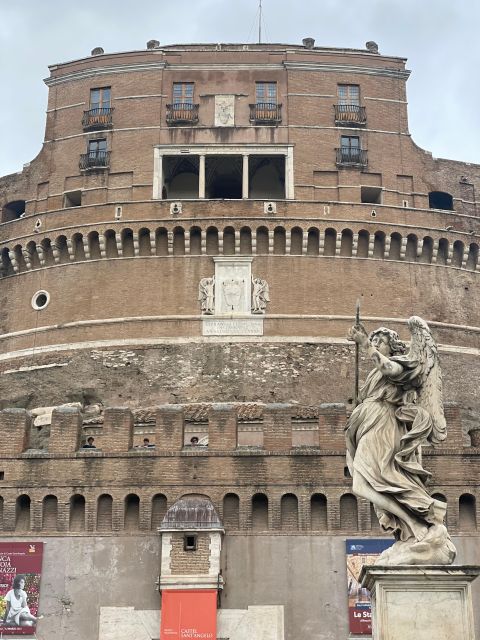
The earliest purpose of Castel Sant’Angelo was funerary. Hadrian commissioned the mausoleum as a burial place for himself and members of his family. The original tomb was designed as a grand imperial monument, not as a castle.
Inside, the ancient purpose can be hard to picture at first because later construction altered the building so much. This is where the audio guide can help. It gives you a thread to follow as you move through spaces that were reused and adapted over many centuries.
The monument’s heavy circular form also explains why it became useful as a fortress. Its thick structure and strong position beside the Tiber made it valuable for defense. You can feel that change as the visit moves away from the tomb and into the castle’s military and papal functions.
If you prefer to explore without a phone in your hand, the site also includes information to read, and clear signs help you follow the route. One visitor found the audio guide unnecessary because the written material and signs were enough. That is worth considering if you are trying to keep costs down.
Following the fortress route
The castle is a place for walking rather than simply looking. You will pass through interior spaces, corridors, and different levels as the route rises through the building. The experience has a physical quality that you do not get from viewing the castle from the bridge.
The route also helps explain why the building survived. It was not preserved as a single untouched Roman monument. It was repeatedly adapted because it remained useful. The result is a visit with changing moods: ancient burial monument, fortified stronghold, papal residence, and lookout over Rome.
The optional audio guide is delivered through an app on your phone. You should download and set it up before reaching the entrance, rather than waiting until you are standing in a crowded area. Keep your phone charged, bring headphones, and remember that headphones are not included.
The guide is available in six languages:
- English
- Italian
- French
- Spanish
- German
- Chinese
This format works best for independent visitors who want information without being tied to a group. You can stop the commentary while taking photographs, skip sections, or listen again. If you choose a live guide instead, the available languages are English and Spanish, and the guide may add more explanation as you go. Dimosthenis was specifically noted for his archaeology background and extra materials on one guided visit, though guide assignments can vary.
The Archangel Michael story
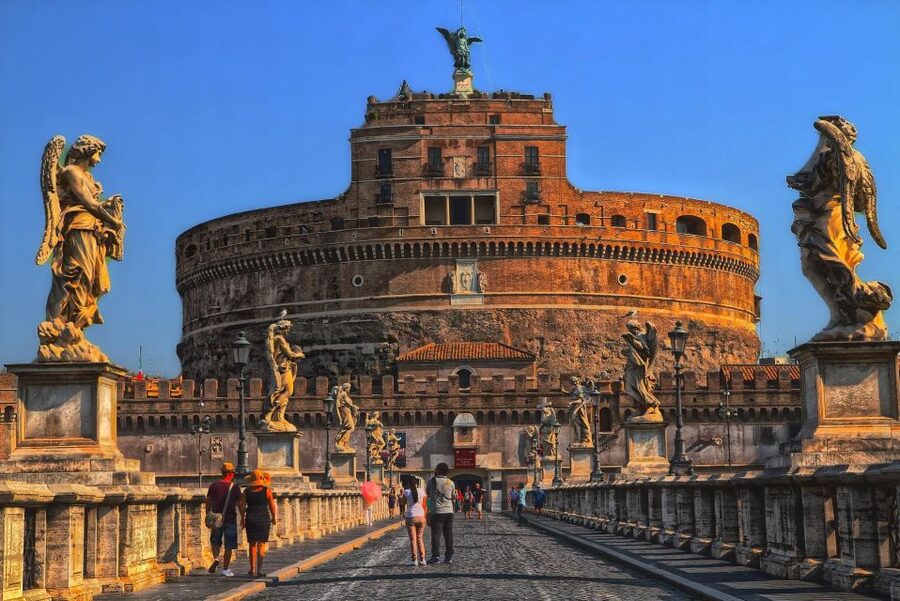
The castle’s current name comes from a sixth-century legend. In 590, Rome suffered a severe plague. According to the story, the Archangel Michael appeared above the mausoleum and sheathed his sword, signaling that the plague was ending.
A statue of the archangel on top of the building recalls this tale. You do not need to accept the legend literally to appreciate its importance. It explains how a Roman imperial tomb took on a new Christian identity and became known as Castel Sant’Angelo.
The story also gives the visit a useful turning point. You begin with Hadrian and the Roman Empire, then move through the building’s later military and papal roles, finally reaching the figure that gave the castle its name.
Another self-paced route in Rome:
- Colosseum, Roman Forum & Palatine Hill with Audioguide App
★ 4.4 · 6,291 reviews - Vatican & Sistine Chapel Ticket with Optional Audio Guide
★ 4.1 · 5,405 reviews - Rome: Castel Sant’Angelo Entry Ticket & Digital Audioguide
★ 4.7 · 5,347 reviews - Rome: Castel Sant’Angelo Entry Ticket & Audio App
★ 4.3 · 4,952 reviews
The papal passages and the castle’s later life
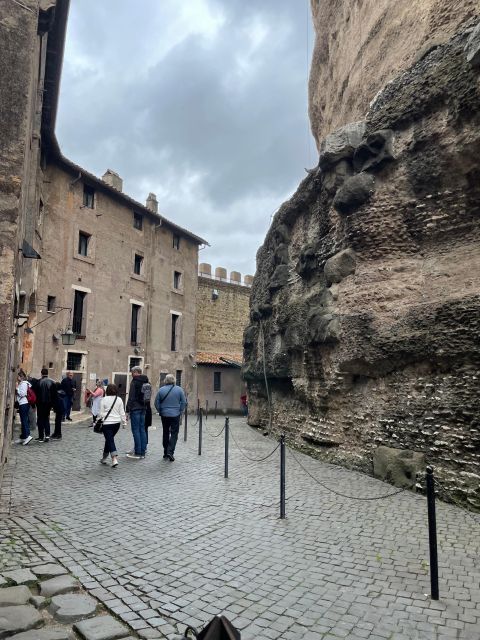
One of the more interesting parts of the visit is seeing how closely the castle was connected to the papacy. The papal corridors show that this was not only a defensive structure. It was also part of a protected route and refuge associated with the popes.
The castle’s position near Vatican City made it especially useful. The visit helps you understand the relationship between the two sites, even though Castel Sant’Angelo is a separate attraction with its own entrance and ticket.
Do not expect every space to look polished or richly furnished. The appeal is in the building’s survival and adaptation. Artwork, architecture, corridors, and defensive features appear together. Some rooms may feel spare, while others provide a stronger sense of ceremony or power.
That variety is part of the charm, but it means you should not arrive expecting a single style. The castle is best for people who enjoy seeing how a building changes with the needs of the people who control it.
Reaching the terrace above the Tiber
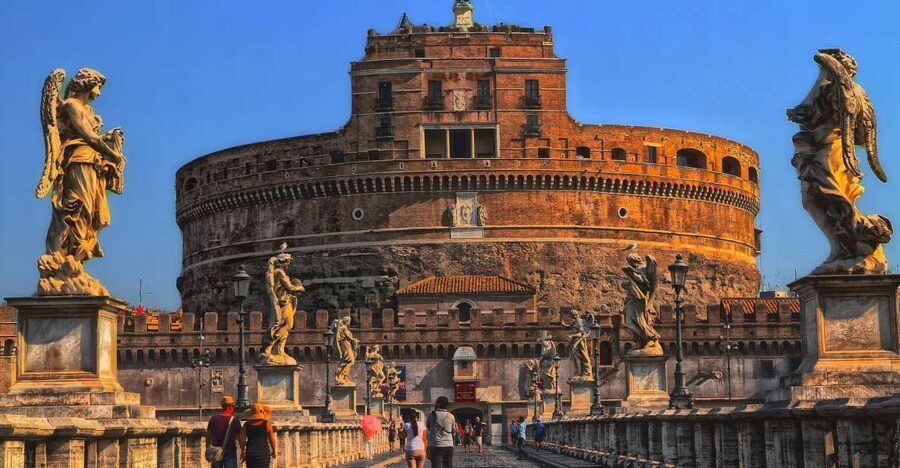
The top terrace is the payoff. You will need to climb stairs, so this is not an easy stop for anyone with significant mobility limitations. Wheelchair users and people with mobility impairments are advised not to book this experience.
From the terrace, you can look across Rome and the River Tiber. St. Peter’s is one of the main visual rewards, and the elevated position makes the relationship between the castle and Vatican City easy to see. You can also photograph Ponte Sant’Angelo, the bridge lined with angel sculptures.
The views are broad rather than limited to one famous landmark. You see rooftops, the river, church domes, and the city spreading out around the castle. The terrace is also a good place to pause after the darker interior route.
The view changes with the weather. On a clear day, Rome appears sharply defined. Even in rain, the stone interiors and city outlook can still be rewarding, though wet steps and slippery surfaces deserve care.
There is also a cafe inside the castle, with views toward Vatican City. It can be a pleasant place to stop, but prices are high. A 330-milliliter bottle of cola was reported at €5, so I would treat the cafe as a convenience rather than a bargain. If you want a drink, you may prefer to plan ahead.
Is the audio guide worth paying for?

The answer depends on how you normally visit historic sites. If you like a clear explanation but prefer to walk alone, the audio option is a good fit. It provides structure without forcing you to keep pace with a live group.
The app also avoids collecting and returning shared headsets. You simply use your own phone and headphones. Text is available with the app, which helps if you prefer reading or need to revisit a point.
The downside is that the audio guide adds to the price, and some people are perfectly happy with the signs inside. The experience cost is $31, while the official basic admission is €16. The difference pays for the audio guide option and operating costs such as ticket distribution, customer support, and platform fees.
That makes the ticket most appealing during a busy visit, when reserved entry saves time, or when you want a guided explanation in a language offered by the app. In a quiet winter period, the queue benefit may be small. One February visit had no meaningful line, while busy mornings have produced queues long enough to make reserved entry worthwhile.
When reserved entry matters
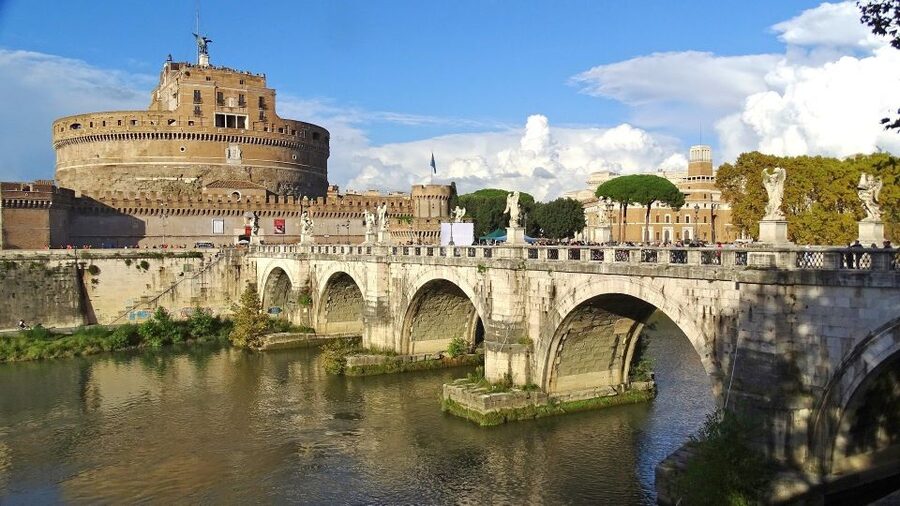
The phrase reserved entry is important. It does not mean you can ignore the time on your booking or walk through every security procedure. Punctuality is essential, and the meeting point can vary depending on the option selected.
Tickets are sent by WhatsApp or email, generally 24 hours before the activity. Keep checking your messages because access routes can change, especially during the Jubilee period when some monuments may be under restoration.
The biggest practical advantage is avoiding the ordinary ticket-buying queue. On hot mornings, that can make a noticeable difference. Several visits gained time by going directly to entry, while quieter seasons offered little or no queue to bypass.
Last entry is at 6:30 PM. Check the available start times before booking, and do not arrive at the last minute if you want time to find the meeting point and prepare the audio app.
Planning the visit around Rome
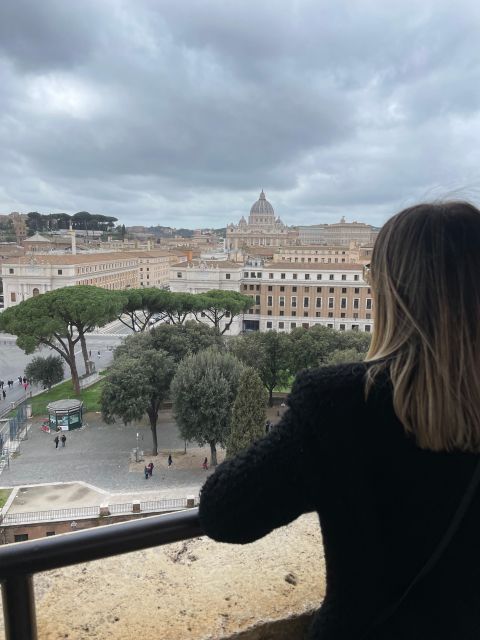
Castel Sant’Angelo pairs naturally with Vatican City because of its location, but do not assume you can combine both sites casually in the same two-hour slot. The castle itself has enough rooms, stairs, views, and information to fill the scheduled time.
I would plan the castle for a morning when you want to avoid heat and heavy crowds. Early visits have been especially calm, allowing more space inside before the building fills. Late afternoon can work well if you want changing light over the city, but you must watch the last entry time.
Wear comfortable shoes. You will climb stairs and walk through a large historic structure. Leave luggage, large bags, baby strollers, and baby carriages elsewhere, since they are not allowed. Pets, weapons, and sharp objects are also prohibited.
Bring:
- Your passport or ID card
- A charged smartphone
- Headphones
- Comfortable walking shoes
A passport or ID card is required, so do not leave it at the hotel. Your phone is part of the experience if you select the audio guide, and a dead battery can turn a useful feature into a wasted purchase.
Who will enjoy this experience most?
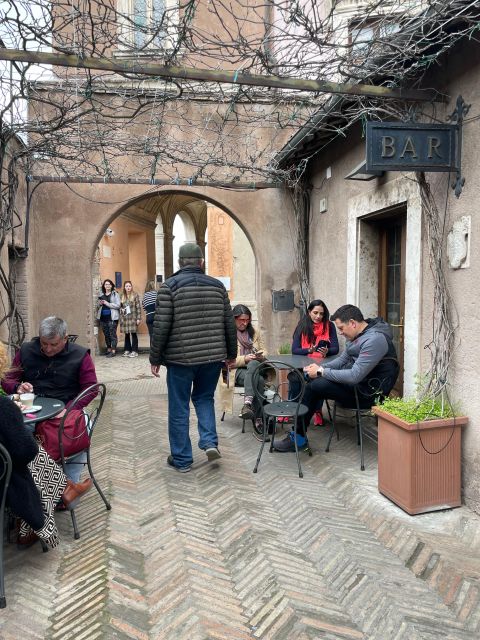
I would recommend Castel Sant’Angelo to anyone interested in Roman history beyond the usual forum and amphitheater circuit. It gives you a different kind of historical visit, with a building that changed purpose instead of remaining a single ancient ruin.
It suits independent visitors particularly well. You can wander, stop for photos, read the signs, and listen to the audio at your own pace. It also suits people who want one of Rome’s best high viewpoints without booking a separate observation tour.
Families with young children should think about the stairs, the no-stroller rule, and the need to keep everyone together in a large historic building. People with mobility impairments may find the route unsuitable.
The experience is less ideal if your main goal is a short, cheap admission to a monument. In that case, the €16 official ticket may make more sense if available to you directly. The $31 option earns its keep through reserved entry, app support, and optional interpretation, not through admission alone.
Should you book Castel Sant’Angelo with the audio guide?
Book it if you want a flexible visit with the main logistics handled, especially during a busy season or morning. The castle offers far more than its famous exterior: Hadrian’s tomb, papal passages, artwork, military spaces, the Archangel Michael legend, and a strong view of Rome from the terrace.
Choose the audio guide if you like context but do not want to follow a live group. Skip it if you prefer reading signs and exploring without technology. Either way, allow at least two hours, bring headphones if you use the app, and wear shoes suited to stairs.
The main caution is cost. At $31, this is not a basic admission ticket. It is most worthwhile when queue-saving matters to you and you know you will use the audio guide. If those features fit your plans, Castel Sant’Angelo can be one of the more rewarding stops near the Vatican.
FAQ
What is included in the Castel Sant’Angelo ticket?
The experience includes a reserved entry ticket. An app-based smartphone audio guide is included only if you select that option. A live guide in English or Spanish is available with the relevant option.
How long does the visit take?
The stated duration is two hours. Some people spend closer to three or four hours if they read the information, use the full audio guide, stop at the cafe, or take extra time on the terrace.
What languages are available for the audio guide?
The smartphone audio guide is available in English, Italian, French, Spanish, German, and Chinese.
Is a live guide available?
Yes. A live guided option is available in English or Spanish. The guide may vary by date and booking option.
Do I need to bring headphones?
Yes. Headphones are recommended for the smartphone audio guide, and they are not included.
Do I need a charged phone?
Yes. The audio guide is app-based, so bring a charged smartphone if you select that option.
What is the official admission price?
The official basic ticket price is €16. The $31 experience price also reflects the audio guide option and operational costs such as distribution, platform, and support fees.
Is Castel Sant’Angelo suitable for wheelchair users?
No. The experience is not considered suitable for wheelchair users or people with mobility impairments. You need to climb stairs to reach the panoramic terrace.
What items are not allowed?
Pets, weapons, sharp objects, luggage, large bags, baby strollers, and baby carriages are not allowed.
When is the last entry?
The last entry to Castel Sant’Angelo is at 6:30 PM. Check your assigned start time and arrive punctually, since the meeting point can vary by booking option.
Latest audio tours in Rome
- Pantheon Skip the Line Entry Tickets with Digital Audio Guide★ 3.5 · 52 reviews
- St. Peter’s Basilica: Dome Climb with Lift & Audioguide★ 4.5 · 13 reviews
- Audio guide in Vatican Museums and Sistine Chapel★ 4.5 · 12 reviews
- The Roman Jewish Ghetto: A Self-Guided Audio Tour★ 4.0 · 8 reviews
- Experience: The Pantheon Audio Tour★ 4.5 · 4 reviews
- Trastevere: A Self-guided Audio Tour of Rome’s Medieval Village★ 4.5 · 3 reviews
- The Colosseum’s Attic with 3rd, 4th & 5th Levels with Audio Guide★ 4.5 · 20 reviews
- Self-Guided Audio Tour – The gods of the Palatine★ 3.5 · 5 reviews
Rome Audio Tours, compared.
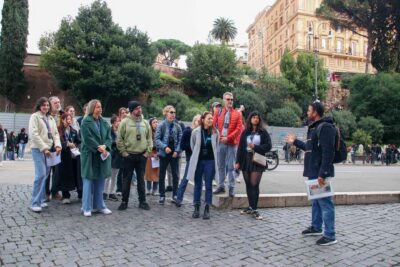
Colosseum & Forum with Audio Guide App -Optional Arena
Read our review →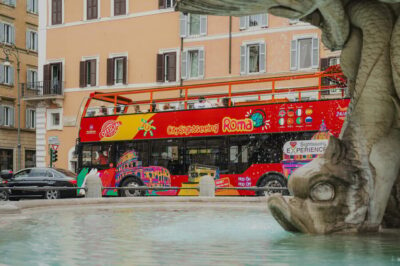
City Sightseeing Hop-on Hop-off Bus with Audioguide
Read our review →
St. Peter’s Basilica & Dome Entry Ticket & Audio Tour
Read our review →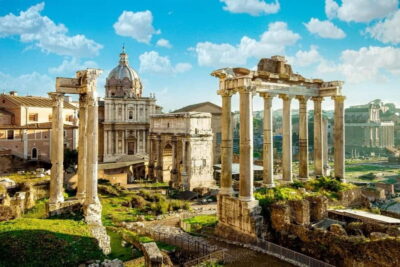
Colosseum, Roman Forum & Palatine Hill with Audioguide App
Read our review →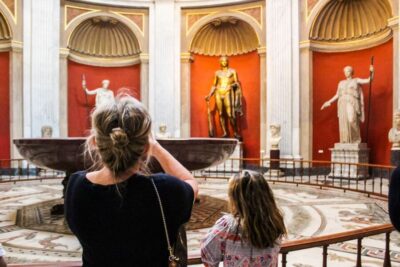
Vatican & Sistine Chapel Ticket with Optional Audio Guide
Read our review →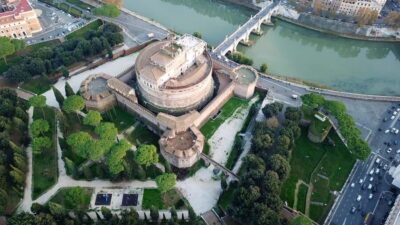
Castel Sant’Angelo Entry Ticket & Digital Audioguide
Read our review →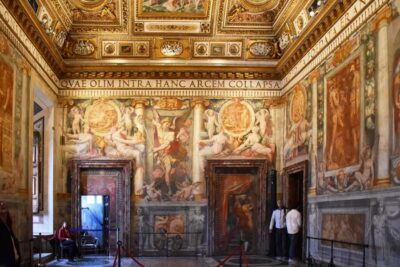
Colosseum, Forum, & Palatine Hill with Audio Guide
Read our review →Browse the lists this tour appears in