

Reviewed · POMPEII
Pompeii: Skip-the-Line Ticket with Audio Guide and Map
Pompeii is not a single monument you glance at and leave. It is a whole Roman city, with streets, homes, shops, baths, theaters, temples, and an amphitheater waiting behind the entrance. This ticket lets you enter during the day and set your own pace, with an audio guide and map to help make sense of the ruins.
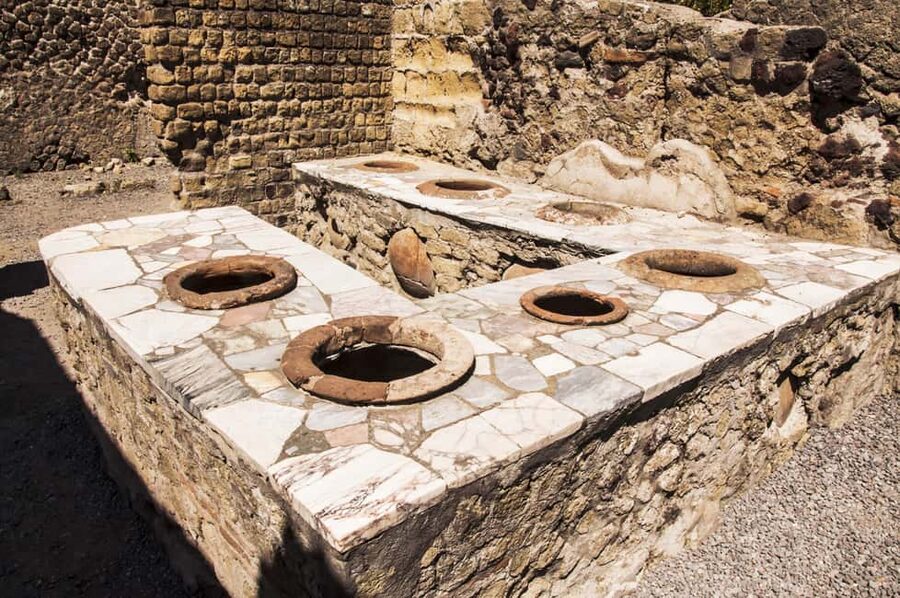
I like the freedom to arrive any time from 9:00 am to 3:00 pm, rather than being tied to a fixed walking tour. I also like the range of sights, from frescoed houses and thermopolia, the Roman version of a quick food counter, to the casts of victims and one of the best-preserved Roman amphitheaters.
The main caution is practical: Pompeii is huge, uneven, and exposed, and the audio guide may require a device pickup or a reliable internet connection. Bring valid identification, avoid large bags, and wear shoes you can walk in for hours.
Key points to know before you go

- Enter between 9:00 am and 3:00 pm: You have a full day of validity, but a late arrival leaves less time for this very large site.
- Meet beside Pasticceria De Vivo: Look for the team, usually wearing blue and yellow jackets, outside the nearby office.
- Use the map as your route planner: Pompeii has many streets and buildings, so the updated map helps you choose what matters most.
- Listen in your preferred language: Audio commentary is offered in English, Italian, French, German, Hebrew, Russian, Chinese, Portuguese, and Spanish.
- Bring valid ID for the audio device: This is especially important if you plan to use the rented audio player rather than an audio download.
- Leave large luggage behind: Oversize bags and large luggage are not allowed inside.
Entering Pompeii beside Pasticceria De Vivo
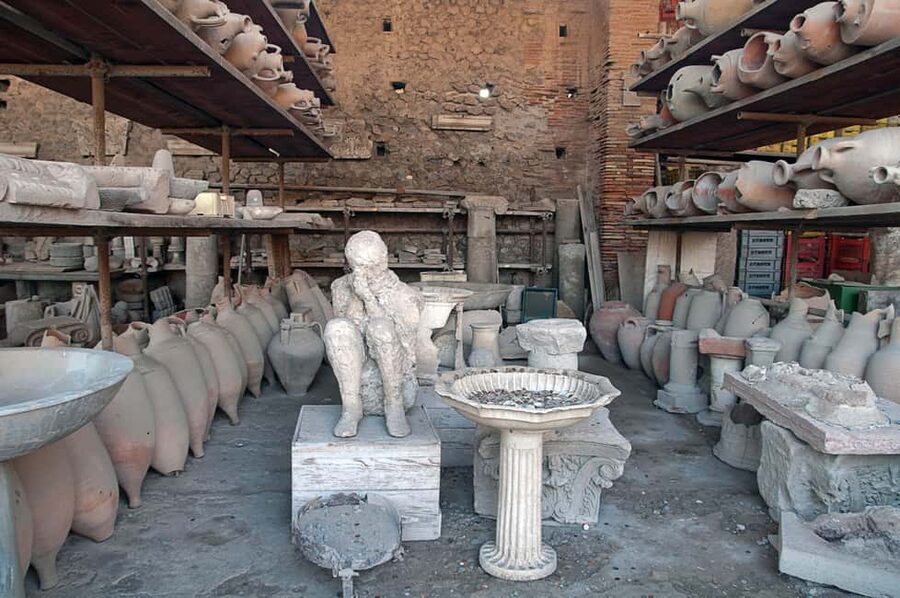
Your first task is finding the meeting point. The team meets outside its office directly next to Pasticceria De Vivo. Staff usually wear blue and yellow jackets, which should make them easier to spot.
This is not a guided group walk with a named expert leading you from one house to the next. Instead, you receive the entry ticket, map, and audio guide, then explore independently. The staff can assist with the handoff, but the day belongs to you.
The ticket allows entry from 9:00 am until 3:00 pm. That broad window is useful if Pompeii is part of a larger day in Campania, but I would still aim for the morning. An early start gives you more time before fatigue sets in, and it can mean quieter streets. One February visit began in the morning and found fewer people around, making it easier to stop and look closely.
Do not treat the entry window as a suggestion to arrive at 2:45 pm. Pompeii covers a wide area, and the supplied information does not promise a particular closing time or a set amount of exploration time after entry. A morning arrival is the safer choice if you want to see more than the highlights.
More Skip-the-Line Audio Tours in Pompei Campania
- Pompeii: Skip-the-line Entry Ticket with Audio Guide & Map
★ 3.9 · 3,153 reviews - Pompeii: Skip-the-Line Entry Ticket with Digital Guide App
★ 4.1 · 770 reviews - Pompeii: Skip-the-Line Entry & Audioguide
★ 3.8 · 225 reviews
What skip-the-line entry really saves
The included Pompeii ticket has a listed value of €20. The experience is priced at $44 per person, so you are paying more than the basic admission cost for the skip-the-line arrangement, audio guide, map, and booking service.
That extra cost can be worthwhile if you value a smoother start and want commentary without joining a fixed tour. It is less compelling if you only want a quick look at the ruins or already have another reliable guide. The best value comes from using the whole day well and listening as you move through several different parts of the city.
Skip-the-line does not mean you skip every possible check. You still need to meet the local team, collect or activate your materials, and follow the site’s bag rules. Still, avoiding the regular ticket queue can matter on a busy day, especially when you have other plans in the area.
Following Pompeii’s ancient streets with the map
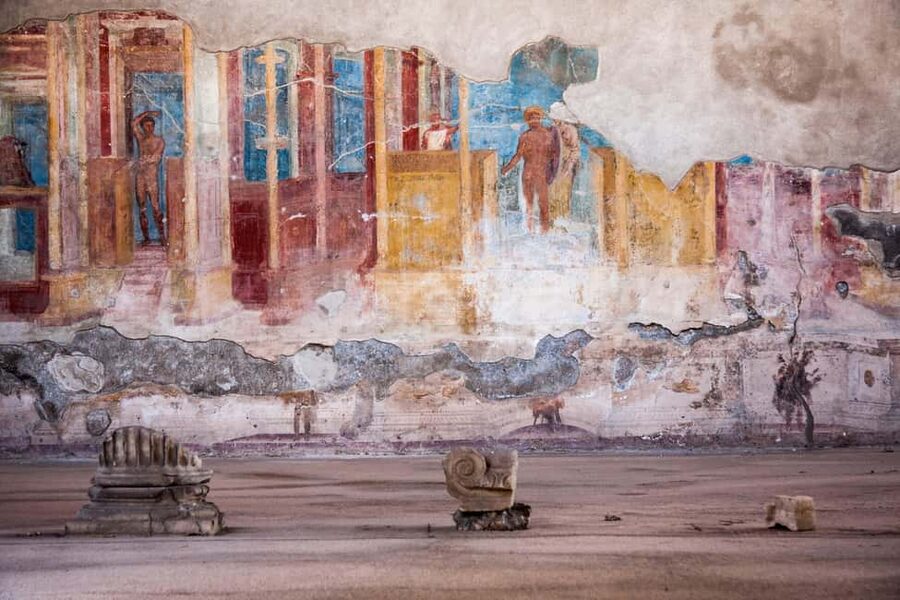
The map is more important than it may first sound. Pompeii is a street grid filled with buildings that can look similar at a glance. Without a plan, you may spend energy wandering between sites and miss places that interest you most.
Use the map at the beginning to mark a simple route. You might focus first on the amphitheater, then move through residential streets and public buildings before finishing with the theaters or the casts. The map is described as updated and designed to point out the most interesting areas, so it should help you make choices rather than simply show where you are.
I would avoid trying to see every corner. Pompeii rewards close attention, but not if you rush from doorway to doorway. Pick a few themes, such as Roman daily life, public entertainment, religion, or food, and let the map guide that plan.
The streets themselves are part of the experience. You are not viewing isolated ruins in a museum. You walk along the routes that connected homes, shops, public buildings, and places of entertainment. Even when a room is partly damaged, its position within the city helps you picture how people moved through Pompeii.
Frescoed houses and Roman daily life

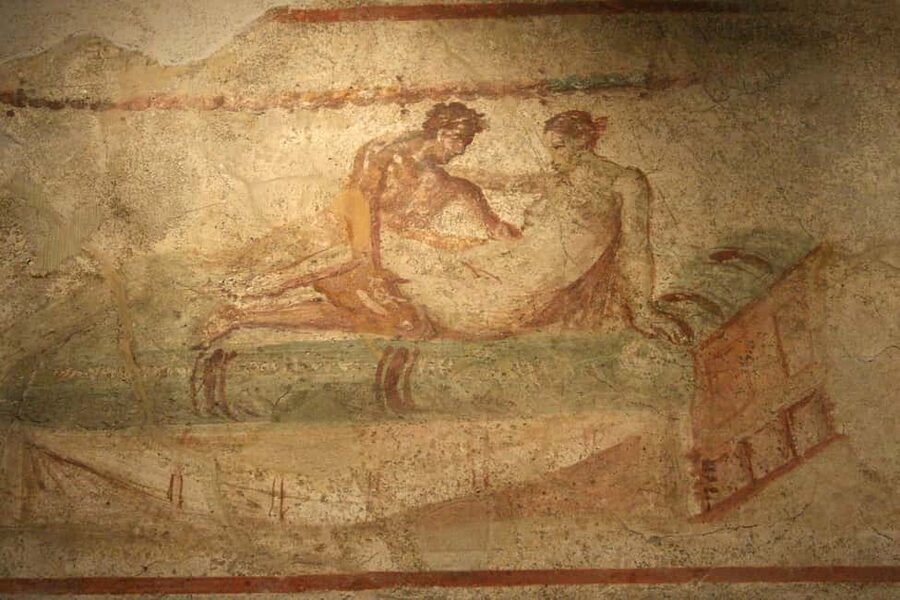
The frescoed homes are among the strongest reasons to use an audio guide. Paintings on walls can be beautiful, but their value grows when you understand how they fit into a Roman house and what they reveal about taste, status, and private life.
The exact houses open on your visit can vary, so use the map to see which are accessible. You might find rooms with painted decoration, courtyards, and details that are easy to overlook if you are moving quickly.
Pompeii also lets you see ordinary commercial life. Shops line the old streets, and the thermopolia are especially memorable. These were food and drink counters serving people on the go, a useful reminder that quick meals and street commerce are not modern inventions.
The audio guide should help connect these fragments. It can explain what a building was used for and place the remains within the story of the city. One useful caution is to test the audio before walking far from the meeting point. Internet service inside Pompeii can be unpredictable, and a downloaded guide may not work if the content was not saved beforehand.
More Audio Tours in Pompei Campania
- From Pompeii: Vesuvius Entry with Transfer and Audioguide
★ 4.2 · 74 reviews - Pompeii & Herculaneum: Skip-the-line & Digital Guide App
★ 4.0 · 35 reviews - Herculaneum and Pompeii in one day: Audioguides + Tkts (art)
★ 3.7 · 22 reviews - Pompeii Tour_Skip the line ticket + audioguide
★ 4.7 · 17 reviews
Baths, temples, theaters, and the amphitheater
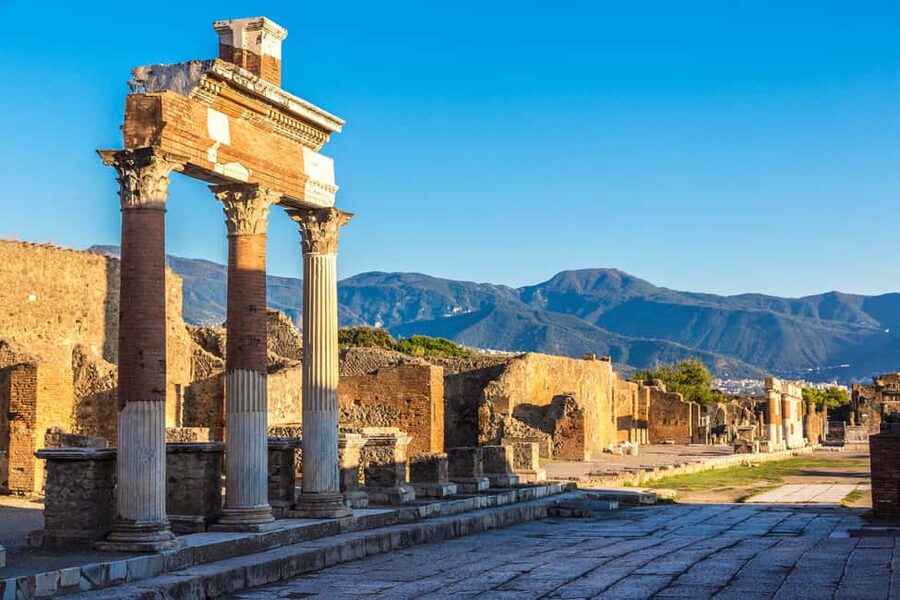
Pompeii’s public buildings show how much of Roman life took place outside the home. Spas, or baths, were not simply places to wash. They were part of public social life, and the remains help you see how Romans designed spaces for heat, water, movement, and gathering.
The temples add another layer. Even if you are not familiar with Roman religion, their position and structure show how closely worship was tied to city life. The audio commentary is useful here because bare columns and foundations do not always explain their own purpose.
The theaters reveal Pompeii’s taste for performance and public events. Their shape gives you a clearer idea of how crowds gathered and how entertainment fitted into the city. The amphitheater is a major stop and is described as one of the best-preserved Roman examples. Give it time rather than treating it as a quick photo stop.
These sites are spread among streets and smaller buildings, which is why the self-guided format works well for independent visitors. You can pause at a theater, skip a building that is closed, or return to a favorite area without waiting for a group.
The casts of the eruption victims
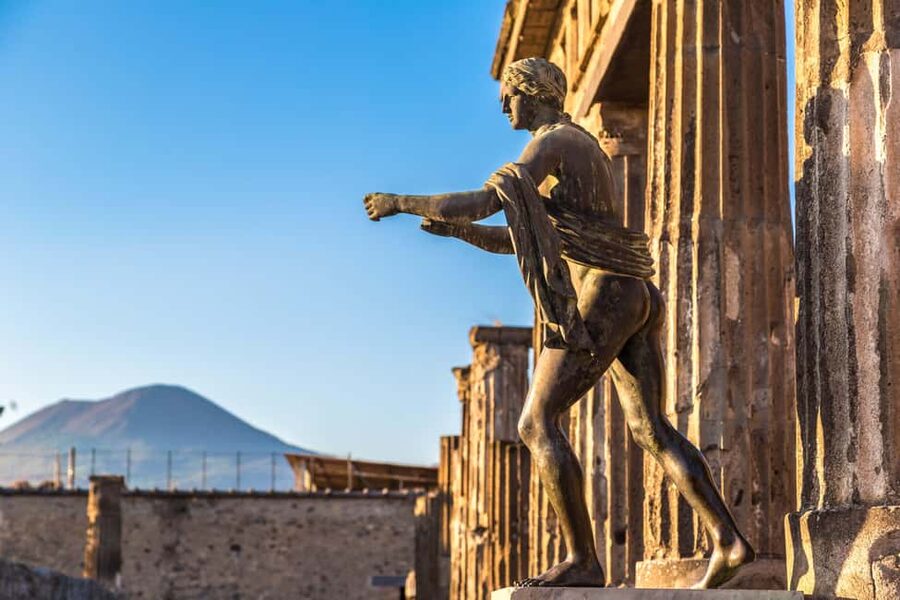
The casts are among Pompeii’s most difficult sights. They make the eruption personal in a way that walls, columns, and paving stones cannot. The forms preserve the final moments of people caught by the disaster, giving the ancient event a human scale.
Approach this area slowly and respectfully. The casts are not simply archaeological curiosities. They are a reminder that Pompeii was a living city, not a stage set abandoned for modern sightseeing.
The audio guide can provide context about Mount Vesuvius and the eruption, helping you understand how the city was buried and preserved. It is worth listening here even if you have already read about Vesuvius, because the setting links the general story to the streets around you.
The experience includes the casts, but it does not include a separate lecture or specialist explanation at this point. If you prefer detailed discussion, you will need to rely on the audio content and map, or do additional reading before you arrive.
Making the audio guide work
The audio guide is offered in nine languages: English, Italian, French, German, Hebrew, Russian, Chinese, Portuguese, and Spanish. The instructor or support languages listed for the activity are English, Italian, Spanish, and French.
Bring a valid ID document to rent the audio guide. This is not a minor suggestion. Without identification, you may not be able to collect the device.
There are two practical issues to plan around. Internet connectivity at Pompeii can be unpredictable, so do not assume you can download everything after entering. Also, one reported arrangement involved collecting the physical audio device and returning it at a location about a 20-minute walk from the train station. Confirm the exact handoff and return instructions when you meet the team, particularly if you are traveling by rail.
The commentary itself may not satisfy everyone. A February visit found the audio only okay, even though the person still valued the ruins and the quieter morning. That is a fair way to view this feature: it is a helpful layer of context, not a substitute for a specialist historian.
If the audio becomes awkward, keep exploring. The map and the buildings still carry the day, and you can choose a quieter corner rather than stopping every few minutes to fix a connection.
Comfort, walking, and what to leave behind

Wear comfortable shoes and comfortable clothing. Pompeii involves extended walking over ancient streets and uneven surfaces, and the site is not suited to people with mobility impairments.
The activity is also listed as unsuitable for people with heart problems or altitude sickness. Take those warnings seriously and consider your own limits before booking. The self-guided format lets you stop when needed, but it does not remove the physical demands of the site.
Oversize luggage, large bags, and other large items are not allowed. Pack lightly, and do not arrive expecting to carry a full suitcase around the ruins. A small day bag is the sensible approach, subject to the site’s current rules.
There is no transportation included in the experience details. You arrange your own way to the meeting point and the entrance area, so leave enough time to find Pasticceria De Vivo and locate the blue-and-yellow-jacketed team.
Who gets the best value from the $44 price
I see this as a good fit for independent visitors who want flexibility but do not want to arrive with no explanation at all. You choose your arrival time, route, and pauses, while the audio guide supplies background on the city and eruption.
It is also useful if your group speaks different languages, since the audio options are broad. Families and friends may appreciate being able to split briefly, move at different speeds, and regroup using the map.
The price is harder to justify for someone who wants a short visit or already owns a detailed guidebook and does not mind the standard entry process. Since the underlying admission is listed as €20, compare the $44 total with your priorities. The skip-the-line service and audio guide need to save you enough time and effort to make the difference worthwhile.
I would also be cautious if you dislike technology or depend on a strong phone connection. The physical device may solve that problem, but the collection and return process needs attention. Bring your ID and ask clear questions at the start.
Should you book this Pompeii experience?
Book it if you want to explore Pompeii at your own speed, arrive in the morning, and use a map and audio commentary to organize a large archaeological site. The amphitheater, frescoed homes, thermopolia, public baths, temples, theaters, and casts give you plenty to see beyond a quick walk through the main ruins.
Think twice if you need step-free access, carry large luggage, or want a live guide who can answer questions on the spot. The audio quality may feel basic, and internet problems can interfere with downloading content.
For most independent visitors, the strongest plan is simple: reserve an early entry, bring valid ID, wear sturdy shoes, carry only a small bag, and confirm the audio device instructions before you set off. Used that way, this ticket gives you a flexible day in one of Italy’s most powerful ancient cities without forcing you into someone else’s route.
FAQ
What does the Pompeii ticket include?
It includes skip-the-line entry to Pompeii, an audio guide, and an updated map. The listed admission ticket value is €20.
When can I enter Pompeii?
You can enter during the activity’s stated window from 9:00 am to 3:00 pm. Check the available starting times when booking.
Where is the meeting point?
Meet the team outside its office directly next to Pasticceria De Vivo. The staff usually wear blue and yellow jackets.
Do I need identification?
Yes. You must bring a valid ID document to rent the audio guide device.
Which languages are available for the audio guide?
The audio guide is available in English, Italian, French, German, Hebrew, Russian, Chinese, Portuguese, and Spanish.
Is a live guide included?
No live walking guide is listed as included. You explore independently with the audio guide and map.
Can I bring a large suitcase or oversized bag?
No. Oversize luggage and large bags are not allowed.
What should I wear?
Bring comfortable shoes and comfortable clothes. The activity involves walking through the archaeological site.
Can I cancel the booking?
You can cancel up to 24 hours in advance for a full refund. A reserve-now-and-pay-later option is also available.
Latest audio tours in Pompei Campania
- Pompeii: Skip-the-Line Ticket with Audio Guide and Map★ 3.9 · 5 reviews
- Pompeii: Pre-reserved ticket with audio guide★ 3.2 · 15 reviews
- Pompeii: Skip-the-Line Ticket with Audio Guide and Map★ 4.0 · 14 reviews
- Pompeii Tour_Skip the line ticket + audioguide★ 4.7 · 17 reviews
- Pompeii, skip-the-line ticket with smartphone audio guide on App★ 3.0 · 4 reviews
- Pompeii: Skip The Line Entrance Tickets + Audioguides★ 3.2 · 4 reviews
- Pompeii Skip-the-Line Ticket and Audioguide★ 4.2 · 7 reviews
- Pompeii: Skip the Line Ticket + Audioguide★ 3.3 · 13 reviews
Skip-the-Line Audio Tours, compared.

Topkapi Palace and Harem Skip-the-Line-Tickets & Audio Guide
Read our review →
Pantheon Reserved Entry Ticket with Audio Guide
Read our review →
Borghese Gallery Skip-the-Line Ticket & Audioguide
Read our review →
Skip the Line: Vatican & Sistine Chapel Ticket with Audio Guide
Read our review →
Skip-the-line Entry Ticket with Audio Guide & Map
Read our review →
Mount Vesuvius: Skip-the-Line Ticket and Smart Digital Guide
Read our review →
Borghese Gallery Skip-the-Line Tickets with Audioguide
Read our review →
Taormina: Ancient Theater Skip-the-Line Ticket & Audio Guide
Read our review →Browse the lists this tour appears in