

Reviewed · POMPEII
Pompeii & Herculaneum: Skip-the-line & Digital Guide App
Pompeii and Herculaneum give you two very different views of Roman life in a single day. Pompeii is huge and spread across ancient streets, temples, villas, and shops. Herculaneum is smaller, but its houses, mosaics, and everyday objects are often preserved in sharper detail.
I like the freedom to set your own pace and the practical pairing of skip-the-line entry with a digital guide app. I also like that the two sites show different sides of the same volcanic disaster. The main drawback is time: Pompeii can take nearly a full day on its own, so Herculaneum may feel rushed, especially if you prefer detailed explanations and plenty of stops.
Key points
- Two Roman towns in one day: Compare Pompeii’s broad streets and public buildings with Herculaneum’s compact homes and fine decoration.
- Digital guide on your own phone: Explore independently instead of following a fixed group or waiting for a live guide.
- Tickets collected in Pompeii: Pick them up at the provider’s office near the FS train station before walking roughly ten minutes to the ruins.
- Pompeii needs serious time: Plan for a long visit if you want more than a quick look at the main streets.
- Herculaneum is smaller but highly detailed: Its mosaics, houses, and preserved household items reward close attention.
- Bring your own listening gear: Headphones and a fully charged smartphone are essential for the app.
Two buried cities, two very different visits

This is a self-guided archaeological visit rather than a traditional guided tour. You receive entry tickets and use an app on your smartphone to learn about the sites as you go.
That distinction matters. You will not have a guide walking beside you, adjusting the story to your interests, or answering questions at each ruin. In return, you can stop when you like, skip sections that do not interest you, and spend extra time in places that catch your eye.
The two sites were both affected by the eruption of Mount Vesuvius in AD 79, but they do not feel alike. Pompeii spreads across a large area and offers a broad picture of urban Roman life. Herculaneum is more compact and is especially rewarding for its preserved domestic spaces.
The activity is rated 4 out of 5 from 35 bookings. The strongest practical lesson is simple: Pompeii is the main event for most people, while Herculaneum works best as a second site for anyone with enough energy and curiosity left in the day.
More Smartphone Audio Tours in Italy
- Pompeii: Skip-the-Line Entry Ticket with Digital Guide App
★ 4.1 · 770 reviews - Pompeii Audioguide – TravelMate app for your smartphone
★ 3.9 · 10 reviews - Pompeii, skip-the-line ticket with smartphone audio guide on App
★ 3.0 · 4 reviews
Picking up tickets near Pompeii’s train station

Your first task is finding the provider’s office at the FS train station in Pompei. The ticket collection is described as quick and uncomplicated, but do not confuse receiving information by WhatsApp with having the physical entry process finished.
The instructions say you receive tickets through WhatsApp the day before, while the important information also tells you to collect tickets from the office. Because those directions appear slightly mixed, confirm the exact procedure and office location before setting out. Give yourself enough time to find the office, collect what you need, and download the guide app.
The office is roughly a ten-minute walk from the Pompeii ruins. That short walk is useful because you can begin the visit soon after collecting your tickets, rather than making a separate trip across town.
You may receive assistance downloading the app at the office. Still, arrive with your phone charged and enough storage or connection available to install it. If you rely on the guide for the day, do not leave the download until you are standing at the entrance.
Entering Pompeii without the regular ticket queue
The Pompeii ticket includes skip-the-line entry. This means you avoid the standard ticket-purchase queue, which can be valuable at a major archaeological site. It does not mean the ruins will be empty, nor does it remove the need to follow entry procedures.
Once inside, Pompeii rewards a slow start. Ancient streets, temples, houses, and public spaces spread across a large area, and the scale can be surprising. You might begin with the most famous sights, but the real pleasure comes from noticing how the city fits together: streets leading to homes, public buildings placed near busy routes, and traces of ordinary life beside grander structures.
The app gives you background as you walk. That is helpful because many ruins look like bare walls at first glance. A short explanation can turn a doorway, courtyard, or mosaic into a clue about how the building was used.
The weakness is depth. A digital guide can tell you the basic story, but it cannot point out something you missed or answer a question about a particular painting or building. One piece of feedback asked for more anecdotes, which is a fair expectation to keep in mind. If you want a lively stream of stories and detailed interpretation, a live guide may suit you better.
Why Pompeii can take almost the whole day

Pompeii is not a small museum with a neat route from entrance to exit. It is a wide archaeological site, and seeing it properly takes time.
You will be walking through ancient streets and moving between different types of remains. Temples show the public and religious side of the city. Houses reveal room layouts, decoration, and domestic habits. The streets themselves help you understand the scale of daily movement through the town.
This is where the self-guided format helps. You can spend longer in a house with striking decoration, then move quickly through an area that interests you less. You are not tied to a group’s timetable.
At the same time, independent touring requires discipline. Pompeii offers more than you can absorb in a short visit. If you plan to see every corner, take detailed notes, and listen to every section of the app, the day can become tiring.
I suggest deciding in advance what kind of visit you want. If your priority is a broad sense of the city, keep moving and use the app for major sights. If you care about architecture and domestic life, accept that you will see less of the overall site.
The site’s size is also the reason the $72 price can make sense for some people. You are paying for entry to two important archaeological sites and a guide tool, not for a short attraction that lasts an hour or two. The value improves if you genuinely visit both places and use the app rather than treating it as a spare extra.
More Smartphone Audio Tours in Pompei Campania
- Rome: Colosseum & Forum with Audio Guide App -Optional Arena
★ 4.2 · 24,770 reviews - Florence: Timed Entry to Michelangelo’s David + Audio App
★ 4.6 · 19,496 reviews - Florence: Cathedral & Brunelleschi’s Dome Ticket & Audio App
★ 4.4 · 6,973 reviews - Florence: Michelangelo’s David Priority Ticket & Audio App
★ 4.4 · 6,812 reviews
Continuing to Herculaneum for finer domestic detail
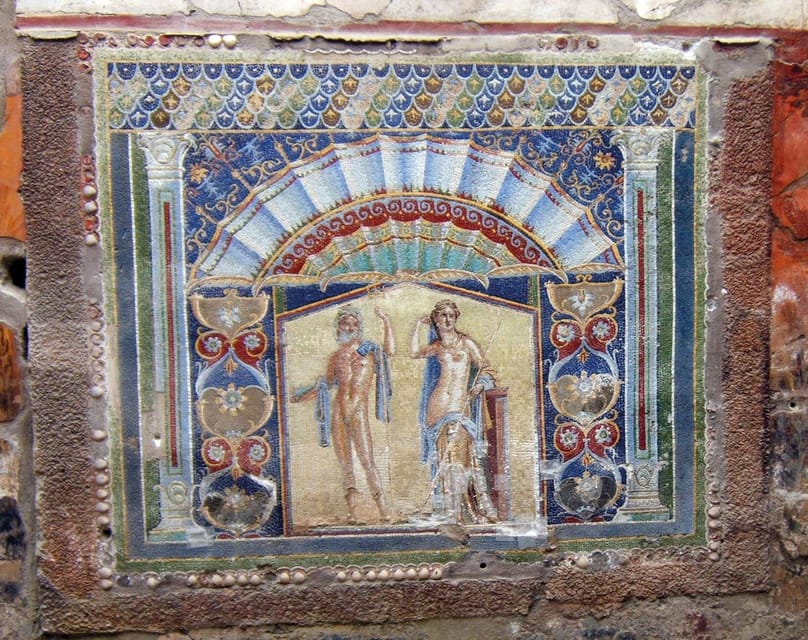
Herculaneum changes the mood. It is smaller than Pompeii, so you can cover more of the visible area without the same sense of distance. The focus here is especially strong on houses, mosaics, and everyday objects.
The preserved domestic details make Herculaneum a useful partner to Pompeii. Pompeii gives you the larger urban picture. Herculaneum lets you look more closely at how homes were decorated and furnished.
That does not mean Herculaneum will appeal equally to everyone. If your main interest is broad city planning, public buildings, and a large range of streets, Pompeii may hold your attention longer. One booking assessment specifically found Herculaneum less interesting than Pompeii and noted that parking could be difficult. If you plan to arrive by car, treat parking as a practical concern and check your arrangements before the day.
Herculaneum is likely to suit you if you enjoy preserved rooms and smaller details. Mosaics and household objects can make the ancient world feel more immediate, but only if you take time to examine them. Racing through Herculaneum after a long Pompeii visit defeats much of the point.
Using the digital guide without draining your phone

The app is the heart of this independent visit. You listen or read through your own smartphone as you move between sites, so bring headphones. Headphones are not included, and sharing one phone between two people may be awkward if you want to follow the explanations properly.
Charge your phone fully before leaving. You need it for the guide and may also use it for tickets or messages. A power bank is a sensible extra, although it is not listed as part of the activity.
The app gives you control, but it also puts the responsibility on you. Keep track of where you are, watch your battery, and do not assume every section will be obvious without looking at the map or route information in the app.
The host or greeter service is available in English, French, Italian, German, and Spanish. Since this is not a live guided visit, those languages relate to assistance and the digital service rather than a named guide accompanying you through the ruins. No individual guide is named for this activity.
The transport question you need to solve yourself

Train travel is not included. You also arrange your own movement between Pompeii and Herculaneum.
That is an important point when planning the day. The ticket package covers entry and the digital guide, but it does not provide a vehicle, escort, or train ticket. You need to check the local route and timing yourself, then leave enough room for the large Pompeii visit before continuing to the second site.
The office is near the FS train station in Pompeii, which may be convenient if you are already using the railway. Still, the activity does not promise a particular train connection or transfer time. Avoid building an overly tight schedule around the two entrances.
If you arrive by car, remember the specific warning about parking near Herculaneum. The visit is easier when your transport plan is settled before you collect the tickets.
Who will get the most from this Pompeii and Herculaneum visit
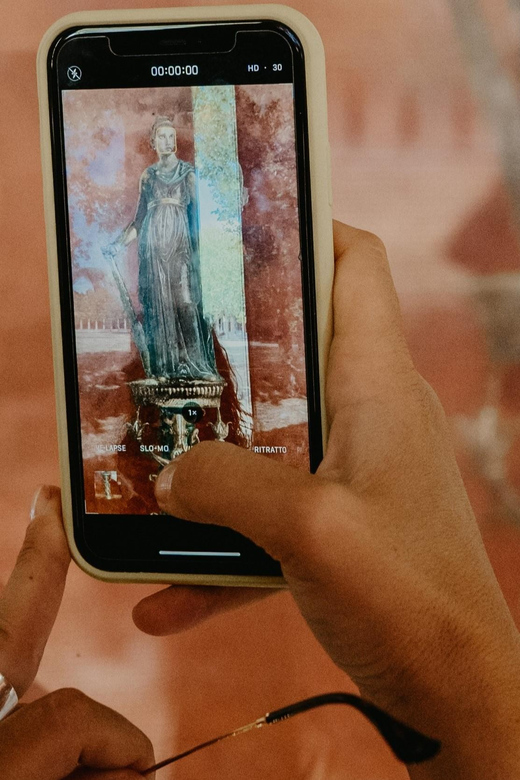
This suits independent sightseers who like choosing their own route and do not need a person beside them for every explanation. It is also a good fit if you want to see both archaeological sites and are comfortable handling your own transport.
You will probably appreciate it if you:
- Like stopping for photos and reading at your own speed
- Want entry to both Pompeii and Herculaneum
- Prefer an app to a fixed group schedule
- Have a charged smartphone and headphones
- Can manage a full day of walking and sightseeing
- Want basic historical context without booking a private guide
It is less suitable if you want a detailed lecture, personal questions answered on the spot, or a carefully paced route through the ruins. Families with different interests may like the freedom, but each person will need access to the guide if they want to listen independently.
The activity is wheelchair accessible, though the supplied information does not describe the condition of every route or section at both sites. If you need precise route details, ask the provider before booking.
Is the $72 price good value?

At $72 per person, this is not the cheapest way to enter Pompeii. The fair question is what you will actually use.
The price includes skip-the-line entry to Pompeii, skip-the-line entry to Herculaneum, and a digital guide app. It does not include lunch, train travel, headphones, or a live guide.
The value is strongest for someone who would otherwise buy entry to both sites and wants an audio-style guide without joining a group. The skip-the-line feature can also save useful time, especially when Pompeii is busy.
The value is weaker if you only want Pompeii. Since Pompeii can occupy nearly the entire day, you may not feel that Herculaneum adds enough to justify the extra cost and transport effort. It is also weaker if you want rich personal commentary, since the app cannot replace a good live guide.
Think of the price as payment for convenience and access, not luxury service. You get a flexible structure and two major sites, but you must organize the day and supply your own listening equipment.
Small practical details that make the day better
Collect the tickets before walking to the ruins, and confirm the WhatsApp instructions so you know exactly what must be done at the office. Download the app early rather than waiting until the entrance.
Bring:
- A fully charged smartphone
- Headphones
- Comfortable shoes
- Water and food for the day, since lunch is not included
- A charging solution if your phone battery is unreliable
The visit is valid for one day, with starting times based on availability. Check the available time before booking because the two-site plan needs room for transport and a long Pompeii visit.
Minors can obtain free tickets at the entrance ticket office, and European citizens aged 18 to 24 may qualify for reduced tickets. This provider does not offer those categories with skip-the-line service. If you qualify, you may choose to buy the relevant reduced or free ticket directly, but the included service described here is based on the full-price arrangement.
Cancellation is not available, so check your date, transport plan, and eligibility before paying.
Should you book this archaeological day?
Book it if you want two major Roman sites in one day, prefer independent touring, and are willing to manage the train or other transport yourself. Pompeii is the stronger reason to go, while Herculaneum adds a smaller, more detailed second chapter.
Skip it if your ideal visit depends on a live expert, personal storytelling, or a relaxed pace with no transport planning. You may also prefer a Pompeii-only visit if you want to spend the whole day studying the larger site.
For the right person, the package is practical: entry is arranged, the app supplies structure, and you remain in control. Just plan honestly. Pompeii deserves time, Herculaneum deserves attention, and fitting both into one day calls for energy and a sensible schedule.
FAQ
What does the activity include?
It includes a digital guide app, skip-the-line entry to Pompeii, and skip-the-line entry to Herculaneum.
Is transportation between Pompeii and Herculaneum included?
No. Train travel and other transport are not included, so you arrange the connection yourself.
Where do I collect the tickets?
You collect the tickets at the provider’s office near the FS train station in Pompei. The instructions also state that ticket information is sent by WhatsApp the day before, so confirm the exact collection procedure before your visit.
Do I meet a guide in person?
No personal meeting is scheduled. This is a self-guided visit using the digital app on your smartphone.
Which languages are available?
Assistance and the digital service are available in English, French, Italian, German, and Spanish.
What should I bring?
Bring headphones and a charged smartphone. Lunch and headphones are not included.
Can I use the activity if I use a wheelchair?
The activity is listed as wheelchair accessible. The supplied information does not give detailed route conditions for each section of both sites.
Can minors or young European citizens receive reduced admission?
The entrance ticket office allows free tickets for minors and reduced tickets for European citizens aged 18 to 24. These categories are not provided through the activity’s skip-the-line service, so eligible visitors may choose to obtain those tickets directly at the entrance.
More Skip-the-Line Audio Tours in Pompei Campania
- Pompeii: Skip-the-line Entry Ticket with Audio Guide & Map
★ 3.9 · 3,153 reviews - Pompeii: Skip-the-Line Entry & Audioguide
★ 3.8 · 225 reviews - Pompeii: Skip-the-Line Ticket with Audio Guide and Map
★ 4.0 · 117 reviews - Pompeii: Skip-the-Line Ticket with Audio Guide and Map
★ 4.0 · 14 reviews
Latest audio tours in Pompei Campania
- Pompeii: Skip-the-Line Ticket with Audio Guide and Map★ 3.9 · 5 reviews
- Pompeii: Pre-reserved ticket with audio guide★ 3.2 · 15 reviews
- Pompeii: Skip-the-Line Ticket with Audio Guide and Map★ 4.0 · 14 reviews
- Pompeii Tour_Skip the line ticket + audioguide★ 4.7 · 17 reviews
- Pompeii, skip-the-line ticket with smartphone audio guide on App★ 3.0 · 4 reviews
- Pompeii: Skip The Line Entrance Tickets + Audioguides★ 3.2 · 4 reviews
- Pompeii Skip-the-Line Ticket and Audioguide★ 4.2 · 7 reviews
- Pompeii: Skip the Line Ticket + Audioguide★ 3.3 · 13 reviews
Skip-the-Line Audio Tours, compared.

Topkapi Palace and Harem Skip-the-Line-Tickets & Audio Guide
Read our review →
Pantheon Reserved Entry Ticket with Audio Guide
Read our review →
Borghese Gallery Skip-the-Line Ticket & Audioguide
Read our review →
Skip the Line: Vatican & Sistine Chapel Ticket with Audio Guide
Read our review →
Skip-the-line Entry Ticket with Audio Guide & Map
Read our review →
Mount Vesuvius: Skip-the-Line Ticket and Smart Digital Guide
Read our review →
Borghese Gallery Skip-the-Line Tickets with Audioguide
Read our review →
Taormina: Ancient Theater Skip-the-Line Ticket & Audio Guide
Read our review →Browse the lists this tour appears in