
Reviewed · USA
300 Years of War and Peacetime in Charleston: A Self-Guided Audio Tour
Charleston’s past comes into focus one street at a time on this self-guided walk. You begin at City Market and finish near the Powder Magazine, passing sites tied to war, slavery, trade, religion, theater, and the city’s grand waterfront. The route gives you a useful first look at Charleston without locking you into a group schedule.
I like the freedom to pause for photos, food, or a closer look at a building, and I like that the audio and map can work offline. The main drawback is that this is an app-based tour, not a conversation with a local guide, so you need your own smartphone, headphones, and attention to the directions.
Key points at a glance

- City Market to the Powder Magazine: The route begins near Historic Charleston City Market and ends close to where it started.
- A broad sweep of Charleston history: Hear about the Revolutionary War, the Civil War era, slavery, commerce, religion, architecture, and popular culture.
- Pineapple symbolism explained: The stop at Pineapple Fountain connects a familiar Southern symbol with Charleston’s past.
- Important slavery history included: The walk passes the Old Slave Mart Museum and the Old Exchange and Provost Dungeon.
- A flexible VoiceMap format: Audio, maps, and geodata are available offline, with lifetime access in English.
- Good for independent walkers: You set the pace, but you also handle navigation and interpretation on your own.
Starting at City Market on Meeting Street
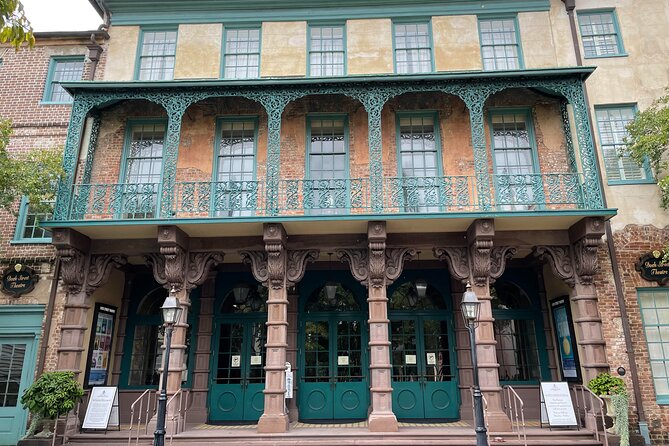
The tour starts outside the Museum at Market Hall, at 188 Meeting Street. This is a practical place to begin because the opening talk introduces Charleston, the market, and the VoiceMap app before sending you into the historic center.
You should allow roughly 90 minutes to two hours. The published time is an estimate, since your pace depends on how long you pause, take photos, or look inside places along the way. The route itself is designed as a walk, not a ride, and there is no transportation included.
I appreciate the opening orientation because app tours can feel confusing if you start without knowing where the audio begins. Here, you get a quick explanation of how to use the technology before moving on. Download the app, route, audio, and map before setting out, especially if you want to avoid using mobile data.
The tour is offered in English only. Your group listens privately through the app, so you do not have to keep up with strangers or worry about missing a sentence because someone nearby is talking. The tradeoff is simple: if your phone battery runs low or your headphones fail, there is no guide to fill the gap.
More Self-Guided Audio Tours in the USA
- Gettysburg Battlefield Self-Guided Driving Audio Tour
★ 4.5 · 910 reviews - Joshua Tree National Park Self-Guided Driving Audio Tour
★ 4.5 · 762 reviews - Ultimate Acadia National Park Self-Guided Driving Audio Tour
★ 4.0 · 521 reviews
The Custom House and Charleston’s commercial face
The route passes the United States Custom House. You hear about the building while walking rather than stopping for a formal presentation.
That format works well for a city like Charleston, where the streets themselves are the setting. Instead of treating every site as a separate attraction, the audio links buildings to the city’s work as a port and commercial center. You keep moving, and the story unfolds in the order the streets reveal it.
This is also a good point to remember that passing a building does not mean entrance is included. The tour price covers the audio experience, not tickets to museums or other attractions along the route. If you want to go inside a site, plan and pay for that separately.
High Cotton and a touch of movie history
Next, you pass High Cotton Charleston Restaurant. The audio points out the restaurant’s connection to the film The Notebook.
This is a small but useful change of pace. Charleston’s story is not only about battles, buildings, and old institutions. The city has also become a setting for modern film and popular culture. A movie reference can help younger members of your group connect with the streets around them, even if they are less interested in military or colonial history.
The stop is brief and observational. You are not being taken into the restaurant, and food and drink are not part of the experience. Still, the detail gives the walk some variety before the route moves toward the waterfront and Pineapple Fountain.
Pineapple Fountain and a Southern symbol
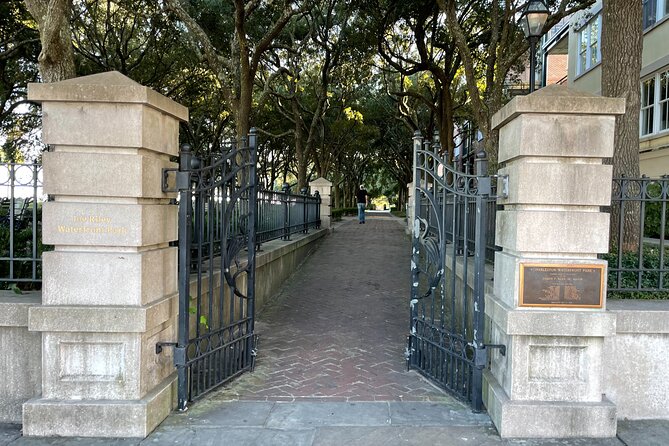
At Pineapple Fountain, the audio explains the fountain and why pineapples became such a familiar symbol in the South.
This is one of the tour’s most approachable stops. You get a clear photo opportunity, but the point is larger than the fountain itself. The pineapple has long been used as a sign of welcome, and its presence in Charleston connects public decoration with the city’s older social and commercial traditions.
The fountain also gives you a natural pause during the walk. If you are traveling with family or simply want a moment away from the audio, you can stop, look around, and restart when ready. That flexibility is one of the strongest reasons to choose a self-guided format.
The route does not promise extended time at every location. You hear the explanation as you walk, so you should not expect a formal lecture or a long discussion at the water. Think of this as a steady city walk with selected stories attached to visible places.
Another self-paced route in the USA:
- Los Angeles: Hop-On Hop-Off Bus Tour with Audio Guide
★ 3.7 · 2,030 reviews - City Sightseeing Hop-On Hop-Off Bus Tour with Audio Guide
★ 3.0 · 1,083 reviews - Medieval Torture Museum Ticket with Audio Guide and Ghost Hunting
★ 5.0 · 962 reviews - San Francisco: Alcatraz, Ferry & Audio Tour w/ Night Option
★ 4.4 · 617 reviews
The Old Slave Mart Museum and an essential chapter
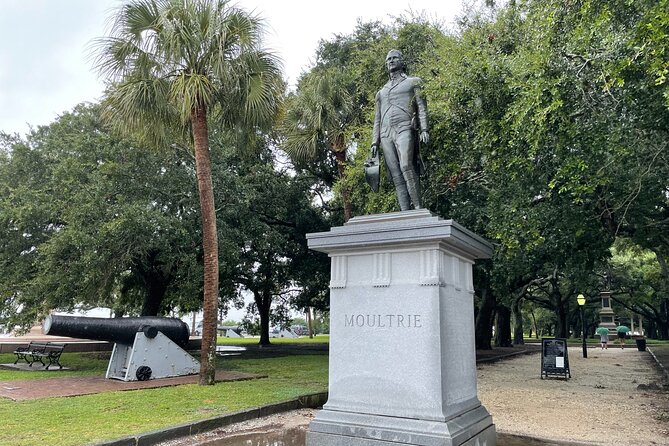
The tour passes the Old Slave Mart Museum and addresses Charleston’s connection to slavery. It also continues by the Old Exchange and Provost Dungeon, another major site in the city’s difficult past.
This is an important part of the route. A Charleston walk should not focus only on handsome facades, war stories, and pleasant waterfront views. The city’s wealth and growth were tied to slavery, and these stops place that fact in the route rather than leaving it out.
The Old Slave Mart Museum is a separate attraction, and admission is not included. If you want to visit it, check its opening arrangements independently. The audio tour gives you context from outside, but it cannot replace time inside a museum or a fuller examination of the subject.
The Old Exchange and Provost Dungeon adds another layer. You hear about the building while passing it, which helps you understand why this location matters without requiring you to commit to another admission fee. If you are especially interested in slavery, colonial politics, or wartime Charleston, you may want to set aside extra time beyond the audio route.
Rainbow Row and the city’s postcard view

The walk continues down Rainbow Row, one of Charleston’s most recognizable stretches of houses. The audio explains how it got started.
This is the portion many people will recognize from photographs, but the story gives the colorful buildings more meaning than a quick picture stop. The route helps you look at Rainbow Row as part of the city’s changing residential and commercial history, not just as a row of painted facades.
I like this kind of stop because it rewards close attention. You can listen while walking, then pause to study the fronts and take photos. The audio supplies the background, while the street supplies the visual detail.
Because the tour is self-paced, you can spend more time here than the suggested duration if the houses interest you. That freedom is useful, but it also means the two-hour estimate is not a hard limit.
The Battery and a built-in photo pause

The route reaches The Battery, where you hear about the waterfront area and get a good photo opportunity. The walk’s earlier subjects have dealt with markets, trade, slavery, and architecture. Here, Charleston’s public edge becomes the focus.
The Battery is a welcome place to slow down. It gives you a change of scenery from the denser streets and offers a chance to look across the water while the audio continues. One piece of user feedback specifically praised the photo opportunity here and found the Civil War material especially appealing. If military history is your main interest, pay close attention during this section.
The tour reaches back to the Revolutionary War as well as later conflicts, so the military story is not limited to one era. That broad time span makes the walk useful for getting acquainted with Charleston before choosing more specialized museums or historic sites.
Dubose Heyward and Charleston’s literary side
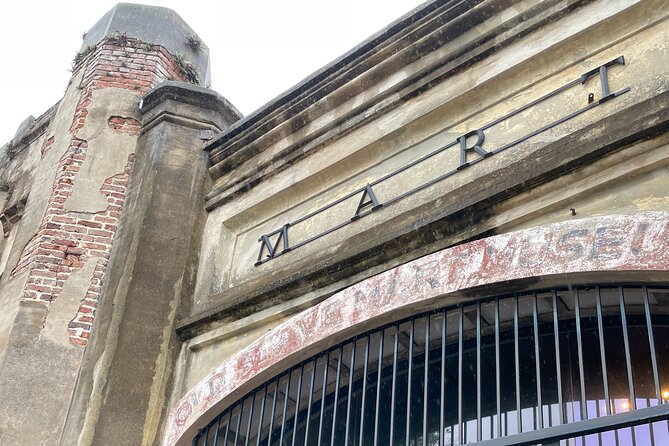
The tour passes the Dubose Heyward House and introduces Heyward’s connection to Charleston.
This stop widens the subject again. Charleston is presented not only as a place shaped by soldiers, merchants, and politicians, but also by writers and artists. The house becomes a marker for the city’s literary identity.
You will hear about the building while walking, so the treatment is relatively compact. That is fine if you want a general introduction, but readers looking for a detailed literary biography should not mistake this short stop for a full presentation on Heyward.
The mix of subjects keeps the route from feeling repetitive. You move from waterfront defense to literature, then toward theater and religion, with each site showing a different part of Charleston’s public life.
Dock Street Theatre and St. Philip’s Church
The route passes Dock Street Theatre and explains some of its history, along with the history of the building itself. It then continues past St. Philip’s Church, where the audio provides another brief introduction.
These two stops show how Charleston’s streets supported public entertainment and religious life. The theater gives the walk a cultural angle, while St. Philip’s Church adds an institutional and architectural point of reference.
Since you are hearing the information while moving, you may want to pause outside each building if you need time to match the audio with what you see. The app’s map and location-based audio are intended to guide you through the sequence, but you still need to watch your route and surroundings.
There is no promise of interior access. The attraction tickets are not part of the $14.99 price, so consider this tour primarily an outdoor orientation. That makes it a good value for a first walk through central Charleston, especially if you plan to select only one or two interiors afterward.
Ending at the Powder Magazine
The tour finishes outside the Powder Magazine Museum at 79 Cumberland Street. You hear about the historic building before the audio concludes.
This is a convenient ending because the Powder Magazine is close to the starting point. You do not finish in a distant part of the city and then face a long return trip. If you want to visit the museum, you will need a separate ticket, since entrance fees are not included.
Ending at a clearly defined historic building also makes the route easy to plan around. You can continue exploring, stop for a meal, or return toward City Market after the final recording. The walk does not provide food, drinks, or transportation, so arrange those independently.
Is $14.99 a good value?
At $14.99 per person, this is a reasonably priced introduction to Charleston’s historic center. You get about 90 minutes to two hours of audio, a mapped route, offline access, and lifetime access in English. That last point matters if you want to repeat the walk later or use it as a loose framework for a second visit.
The value depends on what you want from a tour. If you want a local guide who answers questions, adjusts the route, and points out small details in real time, this will feel limited. If you prefer to walk privately, pause whenever you like, and avoid a larger group, the price is easier to justify.
The tour also helps you avoid paying admission at every stop. You can hear an introduction from outside, then decide which museums or historic buildings deserve your separate time and money. For a first orientation, that can be more practical than committing to a full day of indoor visits.
The limited public rating and small amount of useful feedback mean you should book with reasonable expectations. The strongest positive points are the broad introduction to Charleston, the clear fit for history fans, and the flexibility of the self-guided format. One unrelated complaint about a Manitoba golf operation was incorrectly attached to this Charleston product, so it should not influence your decision.
Who should choose this walk?
I would recommend it to independent visitors who want a private introduction to central Charleston and who are comfortable using a phone for directions. It is especially suitable if you want to cover many major landmarks without joining a scheduled group.
History fans will find plenty to follow, from the Revolutionary War and Civil War material to slavery, commerce, religion, architecture, and literature. The route also works for first-time visitors who want a quick sense of how Charleston’s key places fit together.
You may want something else if you need wheelchair-specific route information, a fully narrated museum visit, or a guide who can answer questions on the spot. The supplied information says most people can participate, but it does not provide detailed accessibility notes for every street or stop, so contact the provider before booking if that matters to you.
Cancellation is flexible up to 24 hours before the start time for a full refund. Changes or cancellations inside 24 hours are not refunded, and the cut-off uses Charleston local time.
Should you book 300 Years of War and Peacetime in Charleston?
Book it if you want an affordable, private walking introduction with a strong mix of famous sights and serious history. The route covers enough ground to help you choose what to explore next, and the offline VoiceMap format is handy when you want to walk without relying on a guide or a signal.
Skip it if your ideal Charleston experience requires personal storytelling, detailed accessibility planning, or interior visits included in the price. For everyone else, this is a practical way to get your bearings, see Rainbow Row and The Battery, hear the city’s harder truths, and finish near the Powder Magazine without spending a full day on a formal tour.
FAQ
How long does the self-guided audio tour take?
The walk takes approximately one hour and 30 minutes to two hours, depending on your pace and how long you stop along the route.
Where does the tour begin?
It begins outside the Museum at Market Hall at 188 Meeting Street, Charleston, South Carolina 29401.
Where does the tour end?
The tour ends outside the Powder Magazine Museum at 79 Cumberland Street. The ending is close to the starting area.
Is the tour guided in person?
No. This is a private, self-guided audio tour that uses the VoiceMap app. Only your group participates.
What is included in the price?
The price includes lifetime access to the English-language tour, the VoiceMap app for Android and iOS, and offline access to the audio, map, and geodata.
Are museum tickets included?
No. Entrance fees for museums and other attractions along the route are not included.
Can I cancel for a full refund?
Yes. You can receive a full refund if you cancel at least 24 hours before the experience start time. Cancellations or changes made within 24 hours are not refunded or accepted.
Latest audio tours in the USA
- Sequoia National Park Self-Guided Audio Tour★ 4.5 · 9 reviews
- Sequoia and Kings Canyon Audio Tour Self Guide National Park Tour★ 5.0 · 3 reviews
- Kings Canyon National Park Self-Guided Audio Tour★ 4.0 · 4 reviews
- Sedona, Arizona Self-Guided Audio Tour★ 4.0 · 36 reviews
- Sedona & Red Rock State Park Self-Guided Driving Audio Tour★ 3.0 · 30 reviews
- Haunted Savannah Self-Guided Walking Audio Tour★ 4.5 · 3 reviews
- Downtown Seattle Self-Guided Walking Audio Tour★ 4.5 · 6 reviews
- Uncover Seattle: Self-Guided Audio Tour★ 3.5 · 7 reviews
Self-Guided Audio Tours, compared.

Acropolis Ticket & Optional Self-Guided Audio Tours
Read our review →


Ultimate Acadia National Park Self-Guided Driving Audio Tour
Read our review →

Akrotiri Ticket with Optional Self-Guided Audios
Read our review →