
Reviewed · USA
Theodore Roosevelt National Park Self-Guided Driving Audio Tour
The most memorable part of this self-guided drive is the way it turns a long stretch of North Dakota badlands into a moving story. You follow more than 29 miles of road while the app serves up 40-plus audio stops about bison, geology, Theodore Roosevelt, the Little Missouri River, and the oil boom.
I like the hands-free GPS playback, which lets you keep your eyes on the road, and the per-car price of $24.99 for up to four people. You can also pause for a trail, a picnic, or a wildlife sighting without waiting for a group.
The main catch is technical: you must download the tour in strong Wi-Fi or cellular service before entering the park. One customer had the audio stop after the first trailhead, so I would test the app before setting out and keep a backup plan for poor reception.
Key points to know before you drive

- More than 29 miles of touring: Plan on about two to three hours for the full route, not just the shorter one to two-hour estimate.
- 40-plus audio stories: The narration covers park scenery, Roosevelt, geology, bison, ranch history, and North Dakota’s oil industry.
- One price per car: Up to four people can share the $24.99 tour, making it cheaper than four individual admissions to a guided experience.
- Offline operation: Download the separate Action Tour Guide app and tour content before you reach the park.
- Plenty of optional walking: Little Mo Nature Trail, River Bend Overlook, Caprock Coulee, Buckhorn Trail, Elkhorn Ranch Site, and Oxbow Overlook give you room to stretch your legs.
- Park admission costs extra: Theodore Roosevelt National Park requires a $30 admission fee or valid park pass.
Why an audio drive works well here
Theodore Roosevelt National Park is made for a slow road trip. The road carries you past layered badlands, grassy plateaus, river bends, and open country where bison may appear without warning. A printed map can show you where to stop, but it cannot explain why the clay is blue-black, how Roosevelt’s ranch shaped his life, or why oil changed North Dakota.
This tour fills that gap without putting you into a bus or tying you to a guide’s timetable. After you download the Action Tour Guide app, stories begin when you reach their GPS points. The audio continues hands-free, so you can listen through your car stereo by Bluetooth, USB, or AUX.
I would treat the narration as a helpful companion, not a substitute for the park itself. You still need to read posted signs, watch the road, follow speed limits, and make your own choices about trails and wildlife. The best use of the app is simple: let it provide context, then stop when a view or trail deserves more time.
The route is advertised as lasting one to two hours in the basic tour details, while the full route information allows roughly two to three hours. That difference matters. If you drive steadily and skip most walks, you may finish faster. If you hike, take photos, or wait for bison to clear the road, plan on the longer estimate.
More Self-Guided Audio Tours in the USA
- Gettysburg Battlefield Self-Guided Driving Audio Tour
★ 4.5 · 910 reviews - Joshua Tree National Park Self-Guided Driving Audio Tour
★ 4.5 · 762 reviews - Ultimate Acadia National Park Self-Guided Driving Audio Tour
★ 4.0 · 521 reviews
Starting at Little Mo Nature Trail
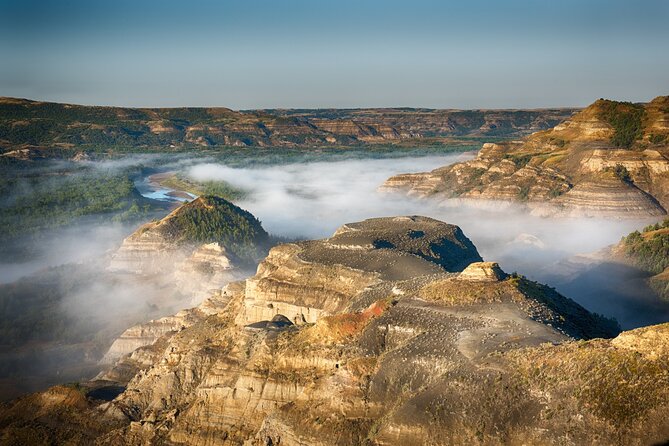
Little Mo Nature Trail, near Juniper Campground, is a good opening stop because it gets you out of the car quickly. This easy loop helps you get your bearings in the North Unit and gives you a first taste of the park on foot.
You do not need to make this a major hike. Ten minutes may be enough to stretch your legs, listen to the first story, and see how the terrain changes close to the road. If you have spent hours driving to the park, this small loop is a welcome reset.
The stop is free inside the park, but it is not free to enter the park itself. Keep that distinction in mind throughout the tour.
River Bend Overlook and the Little Missouri River
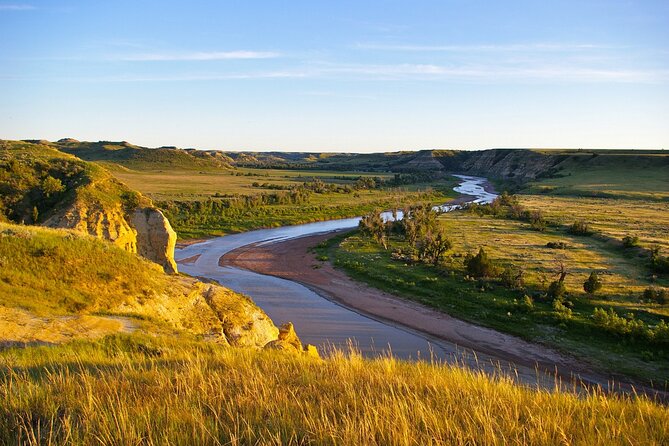
River Bend Overlook delivers the classic Theodore Roosevelt view. A short, easy path leads to a historic stone structure perched on a butte, with the Little Missouri River winding far below.
This is the kind of stop where the audio adds useful scale. From the overlook, the river’s broad curve and the surrounding badlands can seem almost still. The story helps you notice how water, sediment, and time shaped the forms around you.
The walk is short, but the view deserves more than a quick photograph. Give yourself time to stand at the overlook and study the contrast between the pale rock, dark clay, green grass, and river corridor. You may find this one of the most rewarding stops for visitors who want a strong view without a demanding hike.
Cannonball Concretions and bentonitic clay
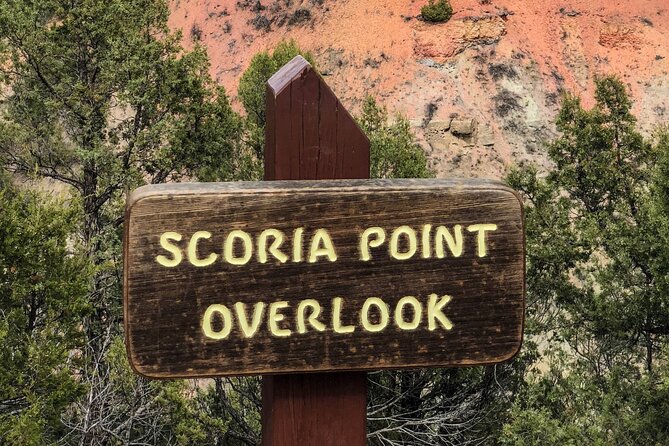
The Cannonball Concretions Pullout offers one of the park’s stranger sights. Large, round stones sit in the badlands like scattered stone balls. Mineral-rich water cemented sediment around them, creating these unusual geological forms.
The pullout is easy to reach, and the walk from the parking area is short. That makes it a smart stop for families, older visitors, or anyone who wants a quick break from the car without committing to a trail.
Bentonitic Clay Overlook provides a different lesson in geology. Blue-black clay layers formed from volcanic ash cap the plateau below. This stop gives the drive a scientific edge and helps explain why the park’s colors and textures change so sharply from one viewpoint to the next.
I like the pairing of these stops. Cannonball Concretions are easy to see and immediately odd, while Bentonitic Clay requires you to look across the wider terrain and think about how the ground formed.
More Driving Audio Tours in the USA
- Ultimate Lake Tahoe Self-Guided Driving Audio Tour
★ 4.5 · 435 reviews - Scenic Newport, RI Self-Guided Driving Audio Tour
★ 4.5 · 325 reviews - Arches National Park Self-Guided Driving Audio Tour
★ 4.5 · 288 reviews - Yellowstone National Park Self-Guided Driving Audio Tour
★ 4.5 · 249 reviews
The North Unit Visitor Center
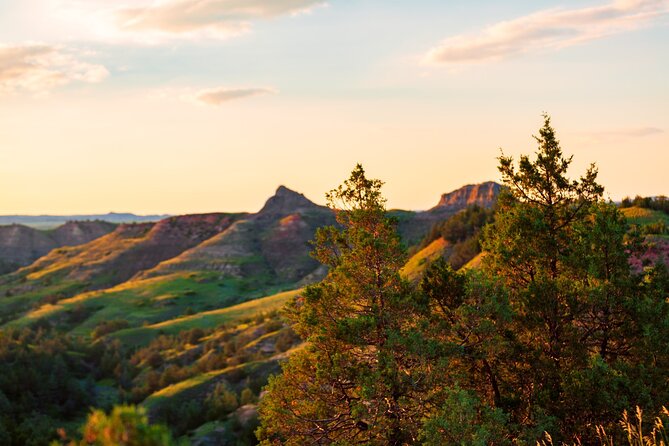
The North Unit Visitor Center is the practical heart of this portion of the park. Park rangers can help with trip planning and backcountry permits, and the building includes a bookstore and a film about the park’s history and natural features.
This is also the place to pause and check your plan. If the road, weather, or your energy level changes your schedule, ranger advice can help you decide what to keep. The visitor center gives you a human source of current information, something a prerecorded app cannot provide.
The supplied opening hours are 9:00 a.m. to 4:30 p.m., Monday through Sunday, for the stated operating period from April 23, 2024, through February 23, 2027. Check current park conditions before you go, since road closures can affect the route. One person enjoyed the South Unit scenery but encountered a closure near the end of that drive, a reminder that a beautiful route is still subject to changing conditions.
Caprock Coulee for a serious walk
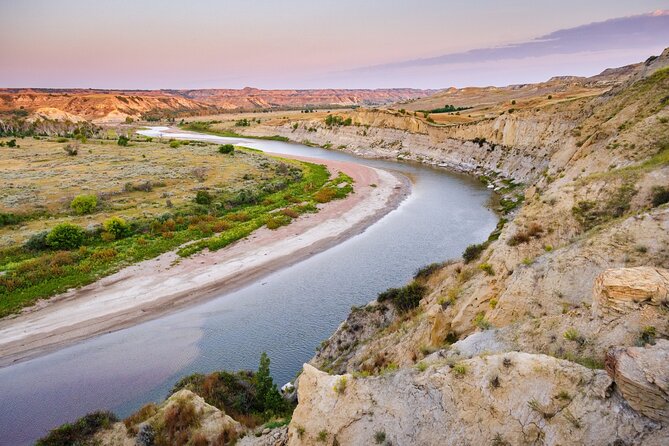
Caprock Coulee Loop is a moderate 4.4-mile trail through badlands and grassy buttes. It opens views toward the Little Missouri River Valley and gives you a much closer look at the park’s uneven ground than you get from the car.
This is not a quick leg-stretcher. Bring water and wear sturdy shoes. The tour can point you toward the trail, but it cannot make the hike easier or supply what you forgot in the vehicle.
For a visitor who wants more than overlooks, this is one of the strongest optional walks on the route. It adds real time to the outing, so do not try to squeeze it into a tight schedule built around the shorter one to two-hour estimate.
Buckhorn Trail and the chance of bison
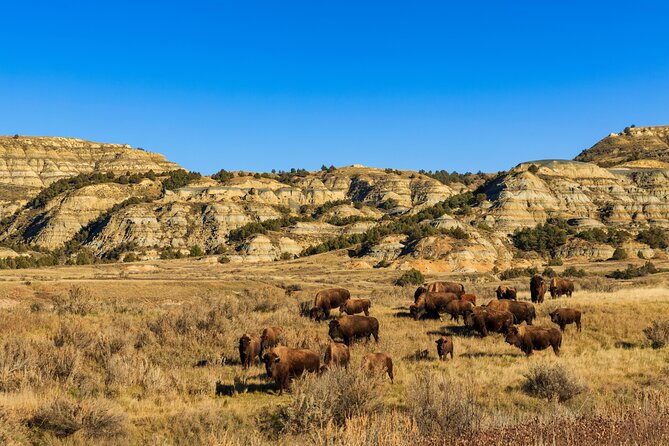
Buckhorn Trail is a moderately challenging 10.8-mile loop through grasslands, rock formations, and views of the Little Missouri River. It is the biggest hiking commitment mentioned in the route and should be treated as a separate half-day-style choice, not a casual stop during a short drive.
Bison may roam near the trail. Keep your distance and do not approach them. The chance to see these animals is part of the appeal, but wildlife sightings should never dictate unsafe behavior.
I would choose Buckhorn only if hiking is a central goal of your park visit. If you mainly want scenic driving, save the trail for another visit or skip it without feeling that you missed the purpose of the audio tour.
Badlands Overlook and the bison story
Badlands Overlook connects the scenery with the return of bison to the region. The audio explains how these animals, once close to extinction, now move through protected grasslands as part of the Great Plains ecosystem.
You might see bison from the road or at a viewpoint, but no sighting is promised. That uncertainty is part of visiting a large national park. Keep your camera ready, but do not plan the entire day around finding a herd.
This stop works best when you listen first and then scan the open grassland. Bison can blend into the broad views, especially when you are focused only on the rock formations.
Elkhorn Ranch Site and Theodore Roosevelt
The accessible 0.7-mile Elkhorn Ranch Site Trail leads to the foundation of Theodore Roosevelt’s ranch cabin. The cabin itself is gone, but the remaining foundation gives the site a physical link to Roosevelt’s time in the Dakota Territory.
The stop matters because it connects the grand scenery to a personal story. Roosevelt’s experience here influenced his views on conservation, and the ranch site makes that connection easier to grasp than a paragraph in a museum.
Download a GPS map before you arrive. Cellular service can be unreliable, and the park’s open spaces make it unwise to depend on a live connection. The short distance makes this a reasonable walk for many people, but you still need to allow time for the drive to the site and for the audio to guide you.
Oxbow Overlook closes the North Unit drive
Oxbow Overlook is the final stop on the North Unit Scenic Drive. Here, the Little Missouri River curves into a sweeping 180-degree bend through the badlands.
Informational signs explain how the river changes course over time. The broad view is a fitting endpoint because it gathers many of the park’s themes in one place: water, eroding rock, open grass, and the slow work of geology.
Do not rush this stop just because it comes at the end. It is a good place to pause the app, take photos, and let the scenery speak for itself. The tour’s story is useful, but silence is part of the experience too.
Oil Well Road and modern North Dakota
Oil Well Road shifts the subject from ancient rock to recent economic change. The Bakken Formation discovery in 2006 helped turn North Dakota from a quiet agricultural state into a major oil producer. Horizontal drilling and fracking opened large reserves, bringing jobs and revenue and leaving a clear mark on the state.
This is an unusual addition to a national park drive. Many park tours stay focused on wildlife and scenery, but this story explains the modern setting beyond the park boundaries. It also gives you a reason to think about how industry, energy, employment, and conservation meet in North Dakota.
The stop may be less visually dramatic than a river overlook, but it adds useful context. A good road tour should explain not only what you see, but also why the surrounding region has its present shape.
Price, technology, and practical value
The tour costs $24.99 per group of up to four people. That is the right price structure for a driving experience because you buy once for the car rather than paying separately for every passenger.
The park admission fee is separate and listed as $30 per booking. You also need a park pass or entrance payment. Add that cost before comparing this tour with a ranger program or another guided option.
The strongest value comes from flexibility. You can start at any time, pause for lunch or photos, skip a stop, listen to bonus content, and return to the tour on another day. The access is described as lifetime with no expiry, though one support response also referred to a one-year validity period. Because those statements conflict, confirm the current access terms when you book.
The app supports iPhones running iOS 15 or later, Android devices on version 9 or later, and iPads or tablets with GPS and cellular capability. Apple CarPlay is supported for audio playback, while Android Auto and added navigation features are described as still coming.
Who should choose this tour
I would choose this audio tour if you want to drive independently but still want background on the park. It suits couples, families, and small groups sharing one car, especially when everyone prefers a flexible schedule.
It is also a good match for repeat visitors. You can use the route for scenic driving on one visit, then return for the longer trails another time. The app does not force you to hear every story in one sitting.
I would be more cautious if your phone is old, your connection is limited, or you dislike troubleshooting technology. Download the tour before leaving strong service, enter the password sent by email and text, open the correct tour version, and test the first story. If audio fails, contact support, but do not assume you will have a reliable signal inside the park.
Should you book it?
Book it if you want park context without a fixed group schedule, and if your car has a working Bluetooth, USB, or AUX connection. The narration covers more than scenic viewpoints, and the per-car price makes sense for two to four people.
Skip it if you already plan to spend your time with ranger programs, prefer complete quiet, or do not want to prepare an app before arriving. For most self-directed visitors, though, the combination of flexible pacing, geology, wildlife stories, Roosevelt history, and offline audio makes this a useful guide for a North Dakota road day.
FAQ
How long does the Theodore Roosevelt National Park audio tour take?
The full route is more than 29 miles and takes about two to three hours, depending on your driving speed and how long you spend at overlooks and trails. The basic duration is also listed as one to two hours for a shorter visit.
How much does the audio tour cost?
The tour costs $24.99 per group of up to four people. Theodore Roosevelt National Park admission is separate and listed as $30 per booking.
Does the tour include park admission?
No. You need a park entrance pass or admission payment, and that cost is not included in the audio tour.
Does the audio guide work without cell service?
Yes, after you download the tour in strong Wi-Fi or cellular service. The audio and offline maps are designed to work without a later cellular or Wi-Fi connection.
How do I start the tour?
After booking, you receive setup instructions and a password by email and text. Download the separate Action Tour Guide app, enter the password, open the appropriate tour version onsite, and go to the first story point. The audio begins automatically by GPS.
Can I pause the tour or use it on another day?
Yes. You can start, pause, skip stops, take side trips, and continue later. The tour information describes lifetime access with no expiry, although one support message refers to one-year validity, so confirm the current access terms when booking.
More National Park Audio Tours in the USA
- Self-Guided GPS Audio E-Bike Tour Hawaii Volcanoes National Park
★ 4.5 · 131 reviews - Shenandoah National Park Self-Guided Driving Audio Tour
★ 4.5 · 109 reviews - Self-Guided Audio Driving Tour in Glacier National Park
★ 4.5 · 101 reviews - Rocky Mountain National Park Self-Guided Driving Audio Tour
★ 4.5 · 92 reviews
Latest audio tours in the USA
- Solvang City Personalized Self-Guided App Tour★ 3.0 · 6 reviews
- Essential Downtown SLO: A Self-Guided Audio Tour★ 4.5 · 27 reviews
- Silicon Valley Self-Guided Driving Audio Tour for Tech Lovers★ 4.0 · 24 reviews
- Self-Guided Audio Tour of the Golden Gate Bridge★ 3.5 · 3 reviews
- The Ghosts of San Francisco Haunted Audio App Walking Tour★ 5.0 · 2 reviews
- Point Reyes National Seashore Self Guided Driving Audio Tour★ 4.0 · 9 reviews
- San Francisco Self-Guided Audio Drive: Explore at Your Own Pace★ 4.0 · 9 reviews
- Explore Coronado Island on a Self Guided Audio Tour★ 5.0 · 2 reviews
Driving Audio Tours, compared.


Ultimate Acadia National Park Self-Guided Driving Audio Tour
Read our review →


Browse the lists this tour appears in