
Reviewed · CANADA
Smartphone Audio Driving Tour between Kamloops and Vancouver
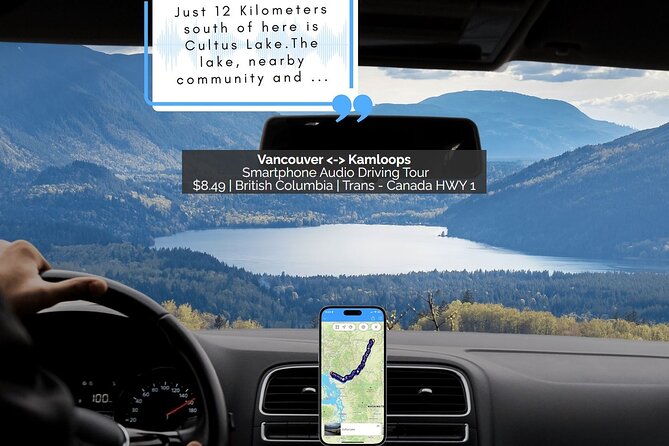
The best thing about this tour is that it gives a long highway trip some shape. Instead of passing through towns, rivers, and mountain country with only road signs for company, you get stories about the Fraser River, the Hope Slide, local wildlife, railways, lakes, and British Columbia culture.
I like the one-booking-per-vehicle price, especially at $8.22 for a group of up to 15. I also like the freedom to stop at places such as Harrison Hot Springs, Bridal Falls, Fort Langley, or Coquihalla Canyon Provincial Park without following a guide or fixed departure time.
The main caution is sound design. One user found the sudden sound effects, including a semi horn, startling on curving mountain roads. Keep the volume modest, and let the driver focus on the highway.
Key points to know before you go
- Works in either direction: Start in Kamloops or Vancouver and hear the same route-based content.
- Covers a wide stretch of British Columbia: Points include Coquitlam, Hope, the Coquihalla Highway, Merritt, and the Kamloops area.
- Good value for groups: One purchase covers a private vehicle with up to 15 people.
- Offline access matters: Download or prepare the tour before leaving areas with weak signal.
- Built for flexible stops: Pause at parks, waterfalls, historic sites, and lakes for as long as you like.
- Expect trivia and sound effects: The content is not just a dry list of place names, so adjust the volume before entering mountain roads.
A highway drive with a local voice

This is not a guided bus trip, and it is not a ticketed attraction. It is an audio companion for your own drive between Vancouver and Kamloops. The tour uses location-based points along the route, giving you short stories, facts, questions, and bits of local colour as you pass each area.
That format suits this road well. The trip crosses settled Fraser Valley farmland, major bridges, river country, steep mountain routes, high passes, old railway corridors, and the drier country around Kamloops. Much of the scenery moves past your window quickly. An audio stop gives you a reason to notice it.
You should think of the advertised one to two hours as the approximate listening experience, not the total time needed to drive between Vancouver and Kamloops. Your actual journey will take much longer, especially if you stop at parks or attractions. The tour can be paused, and you can spend as much time as you like at places along the route.
The content includes special guest characters, trivia, and sound effects. That can keep children interested and add a little fun to a familiar road. It also means the tone is lighter than a formal historical audio guide. If you prefer quiet narration with no theatrical touches, you may want to skip or lower the effects.
More Driving Audio Tours in Canada
- Cabot Trail: a Smartphone Audio Driving Tour
★ 4.5 · 118 reviews - Icefields Parkway: a Smartphone Audio Driving Tour
★ 4.0 · 118 reviews - Smartphone Audio Driving Tour between Banff and Calgary
★ 4.0 · 25 reviews
From Vancouver suburbs to Fort Langley
The western section begins around Coquitlam, where the narration introduces the Coast Salish people who lived in the area before modern urban development. That is a useful first note because the opening miles can feel built-up and busy. The audio reminds you that the region has a much older story than its roads, bridges, and shopping districts suggest.
You then cross Port Mann Bridge and hear about the bridge and Surrey. This is one of the most practical uses of the tour: a large piece of infrastructure becomes part of the trip rather than a stretch of traffic to endure. The route follows the Serpentine River, with facts about the waterway, then continues through Langley.
Fort Langley receives more than one mention. The audio explains the difference between the community of Fort Langley and Fort Langley National Historic Site. That distinction is worth knowing before you stop, since the town and the historic site are related but not the same place.
If you have time, Fort Langley National Historic Site is a natural add-on. The tour only passes near it and does not include admission, so treat the narration as a prompt for a possible detour, not as a substitute for visiting. Attraction hours and access can change, and the tour does not provide tickets.
Fraser Valley farms, lakes, and waterfalls
The route continues through Abbotsford, a major British Columbia community, then points south toward Mount Baker in Washington State. You do not cross into the United States, but the mountain can dominate the view from the Fraser Valley. The audio helps you connect that distant peak with the scenery around you.
Burnaby Village Museum also appears among the points of interest. The museum presents an early town setting from roughly 1890 to 1920, and the narration explains why it has been a local place for learning about earlier life. It is not part of the audio ticket, and you may need to plan a separate visit.
One of the more unusual stories concerns Sumas Lake. The audio explains what happened to the former lake, giving you a glimpse into how much the Fraser Valley has been changed by settlement and land use. Chilliwack follows, with an explanation of its name and place in the region.
The route then reaches the turnoff for Harrison Hot Springs. The audio explains why the springs are popular and may persuade you to make a stop. This is a good example of how the tour works best: it does not force you off the highway, but it gives you enough context to decide if a detour fits your day.
Bridal Falls, or Bridal Veil Falls, is another suggested stop. You pass through the small community of Bridal Falls, while the actual waterfall is nearby rather than directly on the road. Check conditions before setting out, since recommended attractions can be closed or hard to reach at some times of year.
The Fraser River and the road to Hope
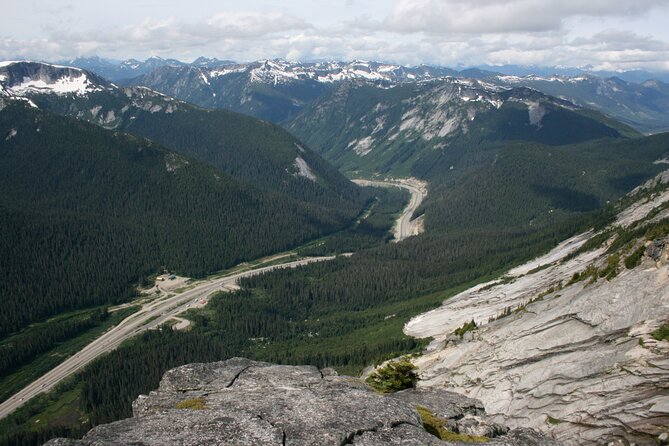
For a stretch, you travel beside the Fraser River. The audio explains the river itself and connects it with historic salmon runs, including sockeye salmon. This is one of the stronger sections for anyone who wants more than scenic commentary. The river is not just a pretty view here. It has shaped transport, settlement, fishing, and the identity of the region.
The narration also points out Sasquatch Provincial Park, with a playful reference to the famous furry creature. The tone is light, but the stop gives you a reason to look toward the park and consider a longer break.
Near Hope, the story changes sharply. The Hope Slide was one of the area’s worst natural disasters, and the audio explains why the name is not a cheerful attraction. This is a useful reminder that mountain roads carry real risks and that the scenery has a powerful, sometimes dangerous force behind it.
The town of Hope gets its own explanation, including the reason for its optimistic name. You also hear about Cultus Lake, a popular recreation area that may deserve a separate visit if you have extra time.
There are several local-person trivia points along this part of the route. You are given clues and asked to guess the British Columbians being described. It is a simple device, but it breaks up the longer stretches of highway and works well for families or groups with mixed interests.
More Smartphone Audio Tours in Canada
- Halifax Churches, Gardens & Graveyards: a Smartphone Audio Walking Tour
★ 4.5 · 25 reviews - Halifax Boardwalk & Seaport: a Smartphone Audio Walking Tour
★ 4.0 · 19 reviews - Explore Halifax with 3 Unique Smartphone Audio Walking Tours
★ 4.0 · 16 reviews - Smartphone Audio Driving Tour between Lake Louise and Calgary
★ 4.0 · 15 reviews
Coquihalla Canyon and the high mountain road
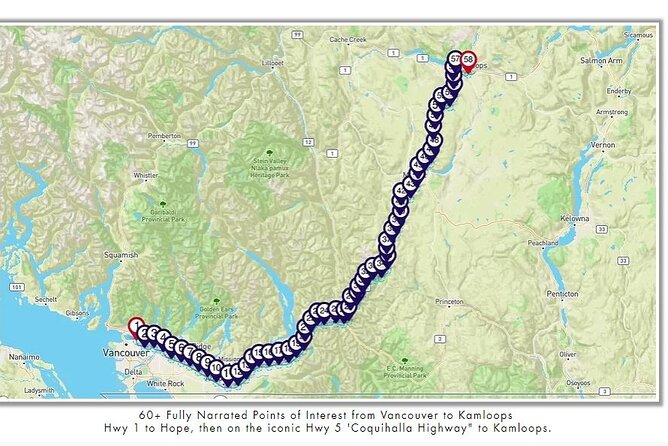
After Hope, the route turns toward the Coquihalla region. Coquihalla River Provincial Park and the Ladner Creek Bridge are among the points highlighted. The old trestle bridge is presented as a possible quick detour, but you should not treat every point as a safe place to pull over. Find a legal, suitable stopping area before using your phone or looking for an access road.
The audio then gives background on the Coquihalla Highway, including how it was created. That context makes the road easier to appreciate. You are not simply climbing a mountain route; you are following a major connection through difficult terrain.
At the Coquihalla Summit Recreation Area, the narration points out why the area matters and what you can do there. Weather can change quickly in mountain country, so the tour is most useful when paired with sensible driving. The driver should keep eyes on the road, especially around curves, heavy trucks, and changing conditions.
Britton Creek brings a story connected with gold. Coldwater River Provincial Park follows, along with facts about steelhead fish. These details may seem small, but they add variety. One stop deals with transport and engineering, another with mining, and another with fish habitat.
Murray Lake is presented as a fishing spot, while Brookmere gets a brief historical introduction even though the route passes a few kilometres away. The audio is often pointing you toward places rather than taking you directly inside them. That is both a strength and a limitation. You gain ideas for future stops, but you still need to plan and pay for any attraction visit yourself.
Railways, trails, and the Merritt area

The Kettle Valley Railway Trail is one of the more useful suggestions for active visitors. The audio explains why hikers come here, then adds context about the Kettle Valley Steam Railway, which operated along the wider railway corridor before the trail took its present form.
Coquihalla Canyon Provincial Park receives a separate mention, with information about activities in the park. This is a strong place to pause the audio and give yourself time to explore, provided conditions and access allow. The point of a self-guided tour is that the stop does not have to last five minutes. You can put the narration on hold and return later.
Near Merritt, a cougar call adds another sound effect to the trip. You also hear about Godey Creek Trail and mountain biking in the area. Merritt itself is linked with music, giving the town a cultural identity beyond its role as a highway stop.
Nicola Lake is several kilometres from the main route, but the narration points it out as a place worth considering. Monck Provincial Park is another nearby park reference. These are best treated as planning notes. You may not have time for every detour on the same drive.
Thompson Plateau and the approach to Kamloops
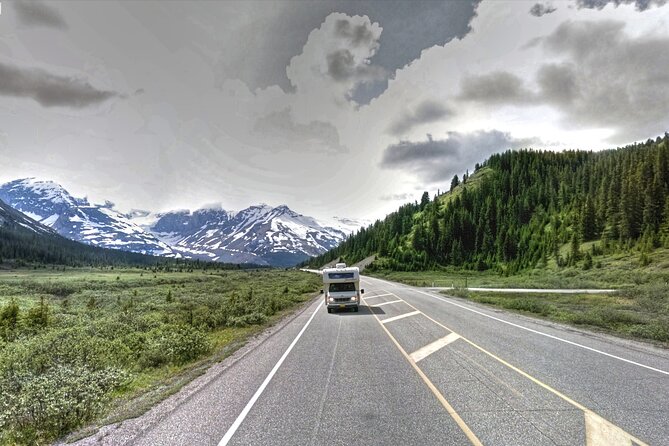
The final section moves through the Thompson Plateau and past the Cascade Range. The audio explains the geography, helping you read the broad mountain country rather than seeing it as one continuous stretch of rock and forest.
Timber Lake brings another local-person guessing game. Inks Lake Road introduces yellow-bellied marmots, an animal with a memorable name and a useful connection to the local setting. The narration also discusses the Thompson River, although the route runs a few kilometres south of it just west of Kamloops.
Walloper Lake Provincial Park marks another late stop, with information about three nearby parks as well. By this point, the audio has covered bridges, rivers, railway routes, wildlife, recreation areas, towns, and mountain passes. It gives the drive a clear sense of progression from city edge to interior British Columbia.
You will not stop at every point. Some places are simply passed on the highway, and many require a separate detour. That is normal for this kind of product. Its value comes from helping you notice and remember the route, not from replacing a full sightseeing itinerary.
What the $8.22 price really buys you
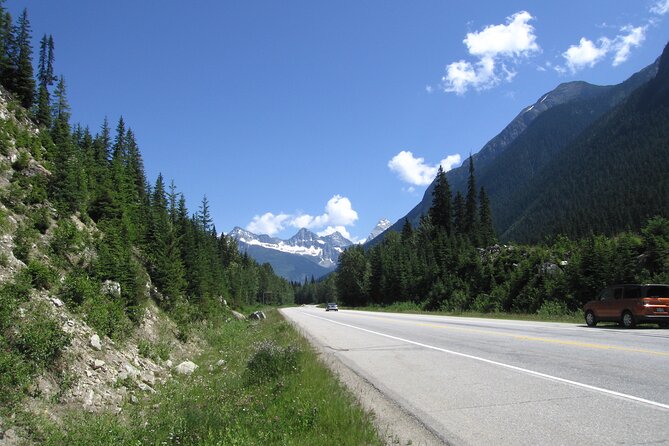
At $8.22 per group, this is inexpensive if you have several people in one car. A group of two pays very little per person, and a full vehicle of up to 15 people gets especially strong value. You do need your own vehicle and smartphone or tablet, and attraction admission is extra.
The offline function is important. Mountain routes and rural stretches can have weak service, so access without a signal or mobile data removes one common problem. Prepare the tour before departure rather than waiting until you are already in a dead zone.
Lifetime access also changes the value. You can use the tour on the drive in one direction and return to it later, since it works from Vancouver to Kamloops or from Kamloops to Vancouver. You can also pause it at a park or town and continue when you are ready.
The experience is private because only your group takes part. There is no departure time, no shared bus, and no need to match someone else’s pace. That flexibility is worth more than a few dollars if you want to stop for lunch, stretch your legs, or make an unplanned detour.
Sound, driving safety, and practical use
Set up the audio before moving. The driver should not be handling the phone while driving, and passengers should manage pauses, volume, and navigation. Keep the phone secured and let the road remain the priority.
The sound effects are the one clear feature that may not suit everyone. A sudden horn effect was startling enough for one user to turn the tour off, especially on mountain roads with real semis nearby. I would begin with a low volume and test the narration on an easier stretch.
The audio is in English only. Service animals are allowed, and most people can take part because the experience happens in your own vehicle. The activity is offered daily from midnight to 11:30 p.m., which reflects its self-guided format rather than a scheduled departure.
Free cancellation is available if you cancel at least 24 hours before the start time. Cancellations or changes made inside that window are not refunded.
Who should book this audio tour?
I would choose this for a self-drive holiday, a family road trip, or a group that wants some structure without joining a formal tour. It is especially useful if you enjoy small facts, local names, wildlife, railway stories, and trivia rather than hours of uninterrupted music.
It is less suitable if you want a live guide, detailed walking tours at each stop, or a carefully timed sightseeing schedule. The audio can point out Fort Langley, Harrison Hot Springs, the Hope Slide, Coquihalla Canyon, Merritt, and many other places, but it does not include transport, admission, or guided visits.
Should you book it?
Book it if you already plan to drive between Kamloops and Vancouver and want a low-cost way to pay attention to the route. The offline access, flexible direction, and group pricing make it a practical add-on, and the local stories give the highway more character.
Skip it if sudden sound effects would bother you, or if you prefer to plan every stop with a full guidebook. For most self-drivers, though, the price is modest enough to make the experiment worthwhile. Set the volume low, download it before leaving, and use the audio as a companion rather than a substitute for safe driving and your own stop planning.
FAQ
How much does the driving tour cost?
The price is $8.22 per group, with up to 15 people included in one booking.
Can I take the tour from Vancouver to Kamloops?
Yes. The audio works in either direction, so you can begin in Vancouver or Kamloops.
How long does the audio tour last?
The approximate duration is one to two hours. Your full drive will take longer, and you can pause for as long as you like at stops.
Do I need my own transportation?
Yes. Transportation is not included, and you use your own vehicle.
Does the tour require mobile data or a signal?
No. Offline functionality is included, so you do not need a signal or data while using the tour.
Are attraction tickets included?
No. The tour does not include admission tickets for places such as Fort Langley National Historic Site, museums, parks, or other recommended attractions.
What is the cancellation policy?
You can cancel for a full refund up to 24 hours before the experience start time. Cancellations or changes made less than 24 hours before the start time are not refunded.
Latest audio tours in Canada
- Fruit alcohol tasting + Velvet Orchards audio tour★ 5.0 · 2 reviews
- APP Self-Guided Tours Quebec with Audioguide★ 3.0 · 2 reviews
- Quebec City Self-Guided Driving Audio Tour★ 4.0 · 7 reviews
- Layers of Natural History: Picton Nature Self-Guided Audio Tour★ 5.0 · 4 reviews
- Smartphone Audio Driving Tour between Wasaga Beach and Toronto★ 4.5 · 3 reviews
- Niagara: Behind The Falls, Skylon Tower Ticket & Tesla Audio Tour★ 3.5 · 69 reviews
- Niagara Falls Pass: 5 Iconic Attractions, WEGO Bus & Audio Guide★ 5.0 · 7 reviews
- Niagara Peninsula: a Smartphone Audio Driving Tour★ 4.0 · 10 reviews
Driving Audio Tours, compared.

Ultimate Acadia National Park Self-Guided Driving Audio Tour
Read our review →

Browse the lists this tour appears in