
Reviewed · CANADA
Layers of Natural History: Picton Nature Self-Guided Audio Tour
Picton’s natural story is hiding in plain sight. This self-guided walk links limestone, a fault line, wildflowers, wetlands, fish, flooding, and even a former garbage dump that became a thriving wetland. The route ends among the trees and rolling ground of Glenwood Cemetery, where local history takes a quieter turn.
I like the way Ewa’s warm narration joins ecology with the story of European settlement. I also like the freedom: you can pause, look around, and move at your own speed instead of keeping up with a group.
The main consideration is that this is an audio walk, not a live guided tour. You need your own smartphone and headphones, and the route takes about 75 to 105 minutes, with outdoor conditions and walking pace affecting the total time.
Key points at a glance
- Start in Queen Elizabeth Park: Begin above Picton Harbour, with directions that trigger the tour when you reach the correct place.
- Follow Picton’s natural clues: Learn how limestone, wildflowers, water, forests, and a local fault line shape the town.
- Hear Ewa’s gentle humour: Her narration mixes ecological facts with stories in a calm, easy-to-follow style.
- Walk through several contrasting settings: The route includes town streets, harbour edges, peaceful parks, wetlands, and a cemetery.
- Use your own schedule: GPS audio, maps, and route data work offline, so you can pause without losing your place.
- Pay $9.99 for a private walk: That price is good value if you want an independent introduction rather than a scheduled group tour.
A nature walk with Picton under the surface
This is not a standard sightseeing stroll that simply points out old buildings. It asks you to notice how Picton works as a place: what lies under your feet, where water collects, how wildlife uses the harbour, and how people have changed the land over time.
That makes the tour a good fit if you have already seen Picton’s main streets and want another way to understand the town. You still pass familiar civic and waterfront places, but the focus stays on connections. A limestone town is not just a town with pretty stone. Its rock affects soil, water, plants, building materials, and the way the community developed.
Ewa’s narration gives the walk its personality. The tone is soothing rather than theatrical, with gentle humour and plenty of facts. You may hear about the minimum forest cover needed to help protect biodiversity, the word solastalgia, or the surprising fact that Picton sits on a fault line. Those details give the route a wider frame without turning it into a classroom lecture.
I would plan this as a relaxed morning or afternoon activity. The shortest stated time is about one hour and 15 minutes, but allowing up to one hour and 45 minutes makes more sense if you stop to look around, pause the audio, or walk slowly.
More Self-Guided Audio Tours in Canada
- Self Guided Audio Driving Tour of the North Shore of PEI
★ 4.0 · 24 reviews - Self-Guided Audio Driving Tour in Icefields Parkway
★ 5.0 · 24 reviews - Self-Guided Audio Tours for the Canadian Rockies
★ 5.0 · 18 reviews
Starting above Picton Harbour at Queen Elizabeth Park
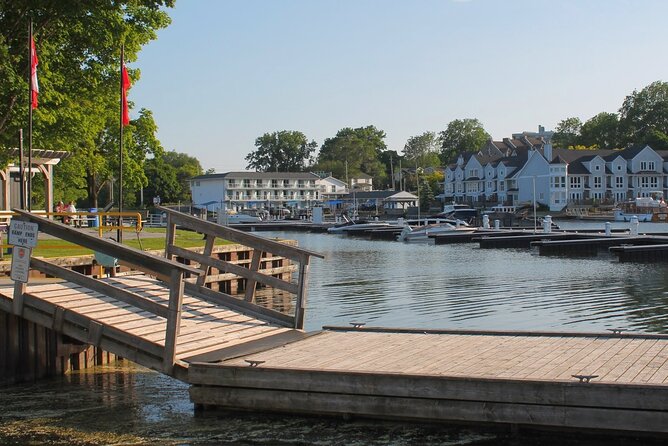
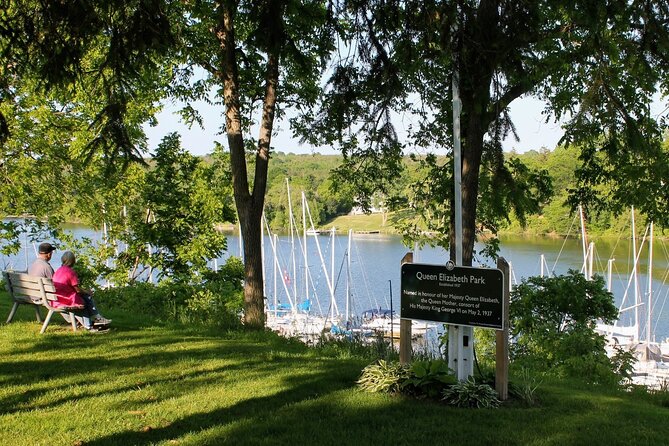
The tour begins at Queen Elizabeth Park, at 17 Hill Street. This gives you a calm opening rather than dropping you straight into traffic or a crowded commercial area. From the park, you look toward the harbour and start with a sense of Picton’s setting.
The opening matters because the tour is built around observation. You are not only listening to information. You are being placed in a spot where the town, harbour, and natural features can begin to fit together.
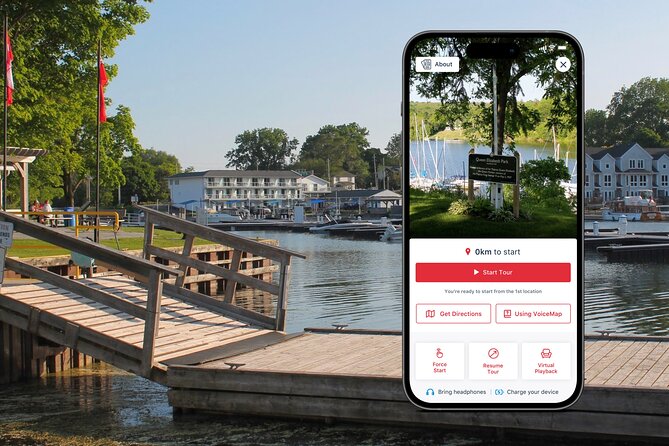
Your phone’s GPS starts the audio when you arrive at the correct location, and directions are provided to help you get there. Once the tour is downloaded, the maps, audio, and route data are available offline. That is useful in a small-town setting where you may not want to depend on a continuous mobile connection.
Take a moment here before walking on. Check that your audio is working, set a comfortable volume, and keep enough battery for the full route. Since the tour is self-guided, a rushed start is unnecessary. You can begin when you are ready.
Town Hall, limestone, and the plants of Picton
From the opening park, the route passes Picton’s Town Hall and turns your attention to the town’s natural foundations. This section connects civic Picton with the rock and plant life around it.
Limestone may sound like a dry geology topic, but it becomes more useful when tied to what you can see in town. The audio helps you think about the relationship between stone, soil, and wildflowers rather than treating nature as something found only outside built areas.
This is one of the tour’s strengths. You do not need to travel far from the centre to find a natural story. A walk past a public building can become a lesson in geology and plant life, and the route keeps the subject tied to the places around you.
You may also hear facts that widen the subject beyond Picton. The point about forest coverage and biodiversity, for example, gives you a practical way to think about why trees matter. It is the kind of information that stays useful after the tour, especially when you notice how much tree cover a community has.
Walking through settlement-era Picton

The next part adds the human story. You walk through areas connected with Picton’s development and hear about European settlement in the 1700s.
This section does not treat local history as a separate subject from nature. Settlement changed how land was used, how water moved, and how people related to the harbour. Hearing those subjects together gives the route a clearer shape than a simple list of dates and buildings.
I appreciate that the walk does not stay locked in the past. The historical material is part of a larger question: how did Picton become the place you see today, and what natural conditions helped make that possible?
The route is private in the practical sense that only your group participates. You are not tied to a scheduled departure or a guide’s fixed pace. That works especially well here, because you can pause the history portion, look at the surrounding streets, and continue when you are ready.
More History Audio Tours in Canada
- Colosseum, Roman Forum & Palatine Hill with Audioguide App
★ 4.4 · 6,291 reviews - Venice: St. Mark Basilica Ticket, Audioguide+History Gallery
★ 3.9 · 4,780 reviews - Rome: Colosseum, Ancient Rome Tour or AudioGuided Tour
★ 4.4 · 2,879 reviews - Colosseum, Roman Forum & Palatine Hill Entry and Audioguide
★ 4.1 · 2,475 reviews
Picton Harbour, wetlands, birds, and fish
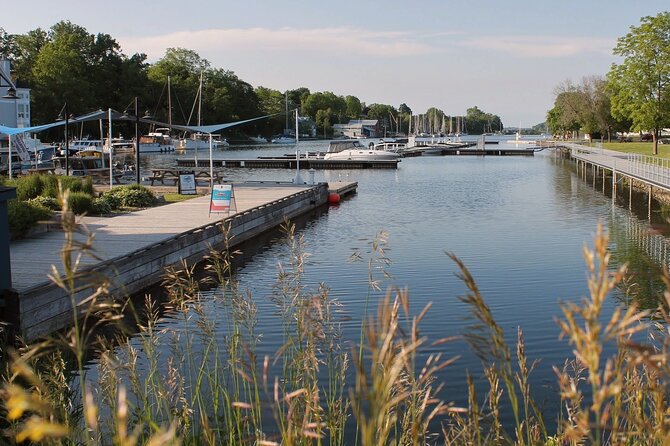
The harbour section shifts the walk toward water. As you stroll beside this historic waterfront, the narration covers Picton wetlands along with fish and bird species.
This is where the tour’s natural focus becomes especially clear. A harbour is more than a scenic edge for photos. It is a working water system, and wetlands can affect the conditions around it. The audio gives you a way to think about the relationship between open water, marshy ground, wildlife, and the town beside them.
The subject also rewards patience. You may want to pause when the narration discusses birds or fish and look toward the water. The tour cannot guarantee that you will spot a particular species, so you should treat the information as a guide to observation rather than a wildlife checklist.
Because this is a GPS walk, the timing of each section depends on your position. If you stop for a photo or want to listen again, pause the audio rather than letting it run ahead. That simple feature makes the experience more personal than a recording that plays from start to finish.
A peaceful park, flooding, and big fish
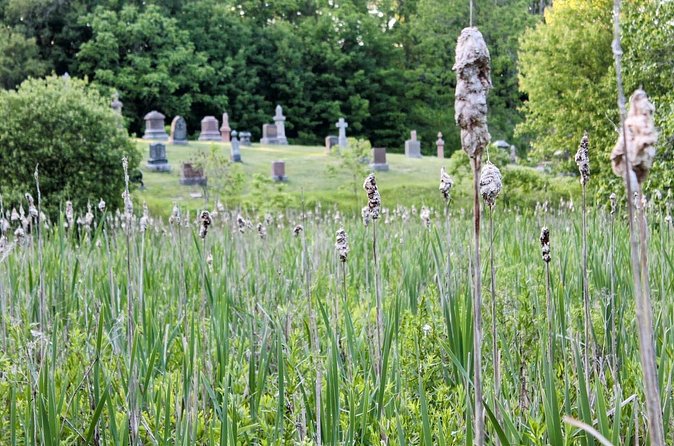
The next park section looks at flooding, water conditions, and big fish. These subjects bring a useful practical edge to the walk.
Flooding is not an abstract idea when you are standing in a place shaped by water. The tour encourages you to consider what happens when water levels change and how conditions affect both people and wildlife. The discussion of big fish adds a little surprise and keeps the tone from becoming too serious.
This is also a good example of Ewa’s approach. The narration can move from an environmental concern to an unusual local detail without losing its thread. That mix of serious information and gentle humour appears to be one of the experience’s strongest features.
If you are walking with children or people who do not normally choose a nature talk, this variety may help hold their attention. There are facts about geology and water, but also memorable details that make the information easier to recall.
Delhi Park, from garbage dump to wetland
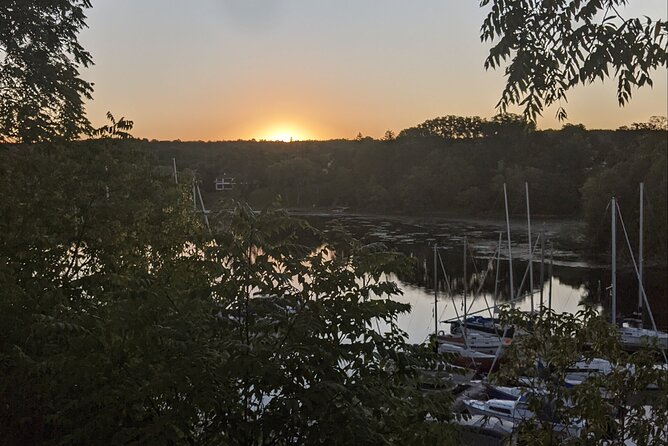
Delhi Park provides one of the most striking transformations on the route. The tour explains how this peaceful park was once a garbage dump and later became a functioning wetland.
That change gives you a concrete example of damaged land being put to better use. It also shows why the tour is more than a pleasant walk between parks. You hear about the decisions and conditions that shaped the ground beneath you, including the possibility that a place with an unpromising past can support wildlife and improve the local environment.
I would give this stop time rather than treating it as a quick passage. The value is in comparing what the place is now with what it used to be. The audio supplies the background, while the park gives you the physical setting to consider that change.
The stop also reinforces the tour’s larger idea: Picton’s natural history is layered. Rock, water, settlement, waste, restoration, plants, fish, and birds all belong to the same story.
Ending among the trees at Glenwood Cemetery
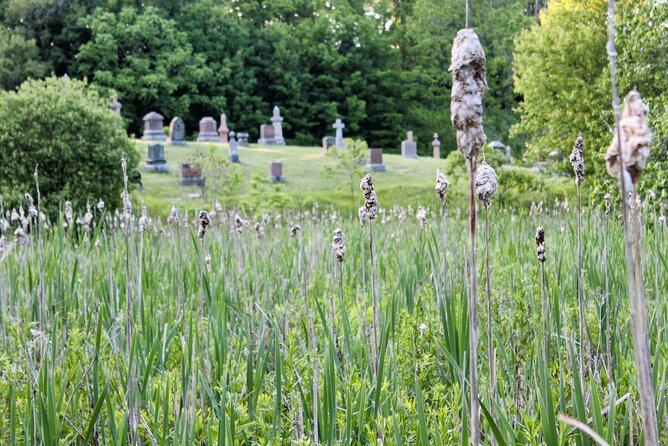
The route ends at Glenwood Cemetery, 47 Ferguson Street. A cemetery might seem like an unexpected finish for a nature walk, but it brings together several threads from the tour.
You pass through a park-like setting with mature trees, rolling ground, and many burial sites. The cemetery offers a quieter pace at the end and adds another form of local history, one tied to names, families, and the people who shaped the community.
The setting is also a good reminder that nature in a town is not limited to official parks or wetlands. Trees, slopes, paths, and open ground can create habitat and a sense of place in areas designed for other purposes.
Since the tour ends here, plan your onward arrangements before starting. The experience does not include transportation, so you will need to handle your own return or continuation from Glenwood Cemetery. The supplied route information lists the cemetery as open around the clock from June 18, 2025, through February 16, 2027, which gives you plenty of flexibility in choosing a start time.
What $9.99 gets you
At $9.99 per person, the tour is priced below many live walking experiences, but the real value depends on how you like to explore.
You receive lifetime access to the English tour before and after your booking date, along with the app, GPS route, maps, audio, and offline data. That means you are paying for a reusable digital experience rather than a single fixed departure. You can replay sections, pause for longer stops, or use the tour at a time that suits your plans.
The price does not include a phone, headphones, food, drinks, transportation, or personal spending at attractions. There are no listed admissions along the route, but you should still treat this as a walking activity and bring what you need for your own comfort.
I see the best value for solo visitors, couples, and small groups who want a private introduction to Picton without paying for a live guide. If you prefer conversation, spontaneous questions, or a person who adjusts the route in real time, a live tour may suit you better.
Practical details before you set off
The tour is offered in English. You need an Android or iOS phone and your own headphones. Downloading the audio and route information in advance is sensible, especially if you want the offline feature to do its job without fuss.
The stated duration is approximately 75 to 105 minutes. Your pace, pauses, and interest in the stops will affect the total. I would avoid scheduling another activity immediately afterward, particularly because the end point is different from the start.
The tour is open to most participants, but the supplied information does not give detailed route notes about surfaces, slopes, or accessibility. If those details matter to you, contact the provider before booking rather than assuming every section will suit your needs.
Free cancellation is available if you cancel at least 24 hours before the local start time. Within 24 hours, the payment is not refunded, and changes are not accepted.
Who should book the Picton audio walk?
I would choose this experience if you enjoy learning through place. It suits people who want more than a harbour photo and a quick walk through town, especially if geology, birds, wetlands, local settlement, or environmental change interest you.
It also works well for repeat visitors and residents. The route reaches ordinary-looking places and gives them extra meaning. You may walk through a familiar neighbourhood and suddenly notice its water conditions, tree cover, or connection to the harbour.
The tour is less suitable if you want a fast highlights walk, a food-focused outing, or a live guide who can answer questions. It also requires you to manage your own technology and timing.
Should you book it?
Book it if you want a low-cost, flexible way to connect Picton’s natural systems with its human past. The strongest reasons are Ewa’s calm and lightly humorous narration, the surprising facts about biodiversity and the local fault line, and the route’s range from harbour to wetland to cemetery.
Skip it if you dislike listening through headphones or need detailed accessibility information before setting out. For everyone else, $9.99 is a fair price for a thoughtful private walk that shows how much local character can be found a few blocks beyond the main street.
FAQ
Where does the Picton audio tour start?
It starts at Queen Elizabeth Park, 17 Hill Street, Picton, Ontario, K0K 2T0.
Where does the tour end?
The tour ends at Glenwood Cemetery, 47 Ferguson Street, Picton, Ontario, K0K 2T0.
How long does the self-guided tour take?
The approximate duration is one hour and 15 minutes to one hour and 45 minutes. The total includes walking the route and passing by the attractions.
What language is the audio tour offered in?
The tour is offered in English.
Do I need my own phone and headphones?
Yes. A smartphone and headphones are not included. The experience provides an Android and iOS app with offline access to the audio, maps, and route data.
Can I cancel for a full refund?
Yes, if you cancel at least 24 hours before the experience start time. Cancellations or changes made within 24 hours are not accepted, and the payment is not refunded.
Latest audio tours in Canada
- Fruit alcohol tasting + Velvet Orchards audio tour★ 5.0 · 2 reviews
- APP Self-Guided Tours Quebec with Audioguide★ 3.0 · 2 reviews
- Quebec City Self-Guided Driving Audio Tour★ 4.0 · 7 reviews
- Smartphone Audio Driving Tour between Wasaga Beach and Toronto★ 4.5 · 3 reviews
- Niagara: Behind The Falls, Skylon Tower Ticket & Tesla Audio Tour★ 3.5 · 69 reviews
- Niagara Falls Pass: 5 Iconic Attractions, WEGO Bus & Audio Guide★ 5.0 · 7 reviews
- Niagara Peninsula: a Smartphone Audio Driving Tour★ 4.0 · 10 reviews
- Kelowna E-Bike Bee Tour, Tastings, Organic Lunch & Audio Guide★ 5.0 · 9 reviews
Self-Guided Audio Tours, compared.

Acropolis Ticket & Optional Self-Guided Audio Tours
Read our review →


Ultimate Acadia National Park Self-Guided Driving Audio Tour
Read our review →

Akrotiri Ticket with Optional Self-Guided Audios
Read our review →
Browse the lists this tour appears in