
Reviewed · NAPLES
Pompeii: Skip-the-Line Entry Ticket with Audio Guide or Tour
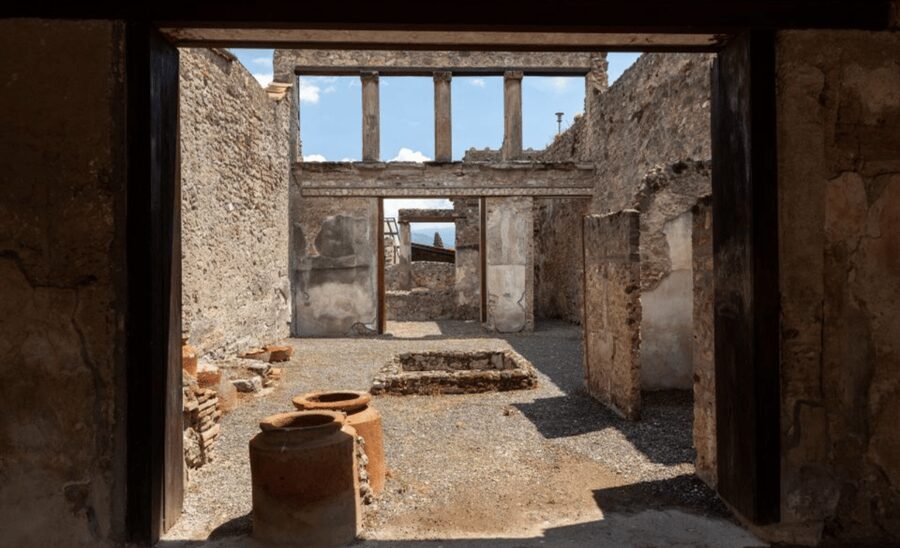
Pompeii is far larger than most people expect. This is not a quick ruin with a few broken columns, but a whole Roman city, with houses, shops, theaters, fountains, baths, temples, and streets still laid out beneath Mount Vesuvius. The skip-the-line entry saves you from the main ticket queue, while the audio guide gives you a way to explore without being tied to a group.
I like two things here: the convenient ticket pickup at Piazza Esedra, right by the entrance, and the freedom to stay inside after a two-hour guided tour ends. I also like that the phone audio guide lets you move at your own pace. The main drawback is that the app can be awkward, and the GPS autoplay feature does not always work as promised. Bring a charged phone, headphones, and a map.
Key points
- Fast entry at Piazza Esedra: Exchange your voucher at the Vox City point in front of Hotel Vittoria, then head to the nearby entrance.
- Two ways to explore: Choose a self-guided audio visit or a live English, Spanish, or Italian tour with an art historian.
- A huge archaeological site: The excavated area covers about 44 to 50 square hectares, so two hours only covers the essentials.
- Useful but imperfect audio app: It offers information on many buildings, but some users find the map and location system hard to follow.
- Guided tour advantage: A live guide can point out the best sights, manage crowds, and give the site a clear shape.
- No suburban villas: Villa of the Mysteries, Villa of Diomedes, and Villa Regina are not included.
What the $37 Pompeii ticket actually gives you

At $37 per person, this experience costs more than Pompeii’s basic admission. You are paying for convenience, a fast-track entry arrangement, booking support, and either a phone audio guide or a live tour, depending on the option you select.
That extra cost makes the most sense during busy periods, when avoiding the ticket queue can save valuable time. It also helps if you want a ready-made way to understand what you are seeing. Pompeii can feel confusing without a map or plan, since several streets lead to large blocks of ruins with similar-looking walls and doorways.
The value is less clear on a quiet winter day. In February, the site can be calm enough that buying a ticket at the entrance may be possible without much delay. Still, prebooking removes one worry, and the free cancellation up to 24 hours before the visit gives you some flexibility.
The ticket does not include the suburban villas, and it is worth understanding that before you book. Villa of the Mysteries, Villa of Diomedes, and Villa Regina are separate parts of the Pompeii archaeological area and are not covered by this admission.
More Skip-the-Line Audio Tours in Naples
- Mount Vesuvius: Skip-the-Line Ticket and Smart Digital Guide
★ 4.2 · 2,780 reviews - Herculaneum: Skip-the-Line Entry Ticket with Audio Guide
★ 4.3 · 870 reviews - Vesuvius National Park Skip-The-Line Ticket and Audio Guide
★ 3.4 · 141 reviews
Picking up your ticket beside the excavations

Your voucher is exchanged at the Vox City information point in Piazza Esedra, in front of Hotel Vittoria. The location is close to the archaeological entrance, and the process is generally quick. Show the booking information, collect the official entry ticket, and follow the staff’s directions to the fast-track gate.
This is not a ticket you simply scan from your phone at the entrance. You need to exchange the voucher first, so allow a little extra time. Arriving five minutes before a guided departure is especially important, since live tours leave at their booked time.
The nearby meeting point is one of the strongest practical features of the experience. You are not sent to a distant office or an unclear street corner. Staff can also help with the audio app, and support is available through WhatsApp if you have trouble downloading it.
You should still prepare before you arrive. Scan the QR code on your voucher and try to download the audio guide in advance. Internet service around the entrance may be slow, and the app can take time to install or open. If you are visiting with a group, do this for every phone before reaching the site.
The first streets of Pompeii and Mount Vesuvius
Once inside, you begin walking through a city frozen by the eruption of Mount Vesuvius in 79 C.E. The drama is not limited to one grand monument. It comes from seeing ordinary streets, houses, fountains, shops, and public buildings in the same place where daily life stopped.
The Forum is a natural place to begin if you want the broadest view. With Vesuvius behind it, this open civic center gives you a sense of Pompeii as a working city rather than a collection of isolated ruins. Temples dedicated to Venus, Apollo, and Jupiter show the religious side of Roman public life.
The audio guide can point you toward many individual sites, but it does not always create a clear route between them. You may need to use the map yourself and decide what matters most. The app includes a large number of points of interest, which sounds useful but can be overwhelming if you have only two hours.
I recommend choosing a short list before entering. The Forum, House of the Faun, public baths, one theater, and the plaster casts make a sensible first visit. If you have more time, add the temples, markets, aqueducts, and fountains.
Houses, mosaics, and the House of the Faun
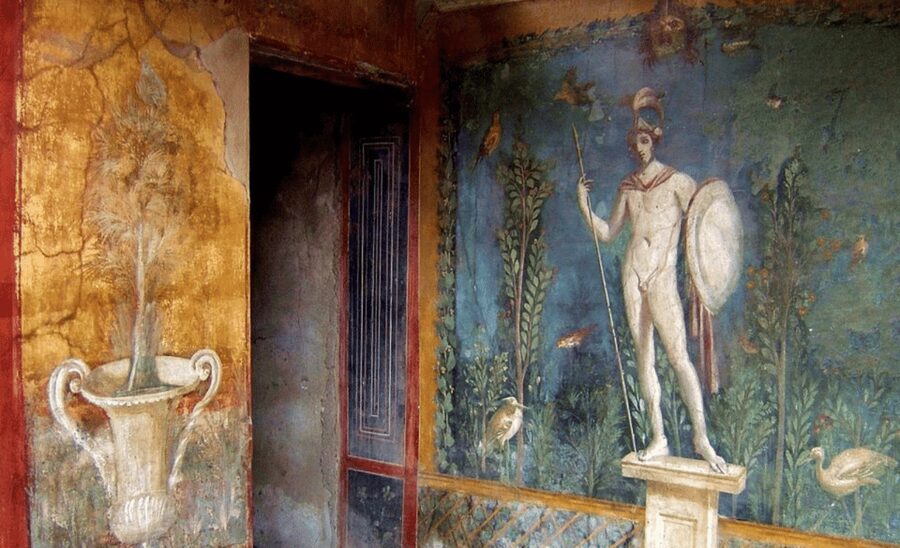
Pompeii is at its most revealing inside the private homes. The House of the Faun is among the major residences you can encounter, with the scale and decoration of a wealthy Roman household. Opulent villas, painted surfaces, courtyards, and mosaic floors show how much attention could be given to domestic space.
The public baths offer another close look at Roman life. Intricate mosaics and the remains of bathing rooms help you picture a place that was social as well as practical. Pompeii becomes more interesting when you stop treating the ruins as monuments and start noticing the systems behind them, such as water, commerce, worship, and household work.
Small details can be as memorable as the famous houses. At Sirico’s house, an inscription welcoming profit gives a glimpse of a business-minded owner. Wine jars marked Vesuvinum connect the local volcano with wine in a neat piece of Roman wordplay.
A live guide is useful in this part of the visit because these details are easy to miss. A good guide can explain why a doorway, inscription, or floor matters instead of leaving you to guess. Guides named Grace, Maria, and Mario have received strong praise for clear explanations, warm delivery, and good command of the site. One guide with decades of experience at Pompeii was especially valued for fitting a great deal into two hours.
More Audio Tours in Naples
- From Naples: Caserta Palace Ticket and Train with Audioguide
★ 4.3 · 348 reviews - Naples: Pompeii Self Guided Audio Tour
★ 3.9 · 211 reviews - Naples: National Archaeological Museum Tour & Digital Guide
★ 4.2 · 177 reviews - Naples: National Archaeological Museum audio guide
★ 4.0 · 155 reviews
Theaters, aqueducts, and the city’s working life
The theaters provide a change of pace from the houses and temples. They show Pompeii as a place of public entertainment, with large spaces built for crowds. You can pause near the grand theater, then continue through streets where the remains of fountains and aqueducts reveal how the city managed water.
The markets are also important, even when only fragments survive. They help you picture a city where people bought food, wine, and everyday goods rather than simply prayed in temples or lived in elegant villas.
This is where the two-hour duration becomes a real limit. The advertised visit is two hours, but Pompeii itself can occupy two to four hours or much longer. One person spent about four hours after joining a tour and still found more to see. Another spent six hours inside using the ticket.
A live tour normally gives you a focused route through the main sights, then lets you continue on your own after the guided portion. That arrangement is a good compromise. You get context at the start, but you are not forced to leave when the guide finishes.
The plaster casts and the human cost of the eruption
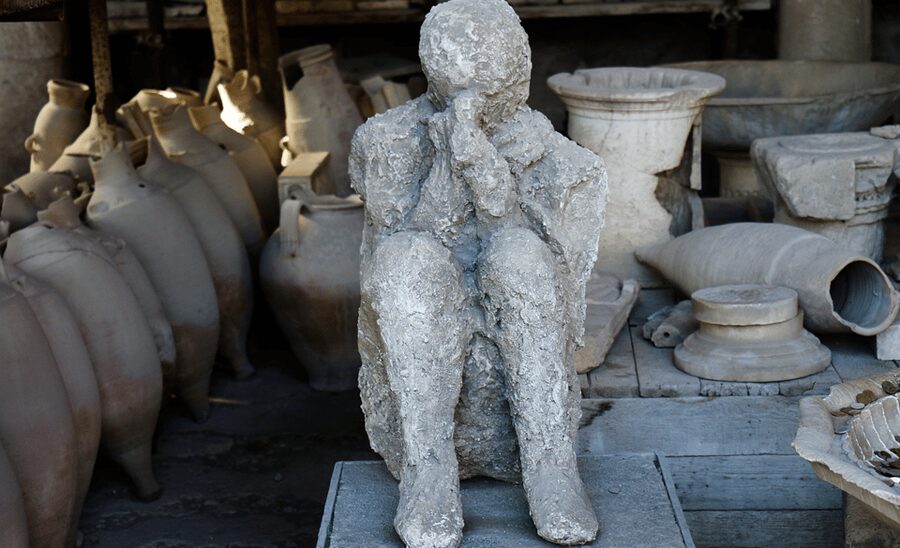
The plaster casts are among the most haunting things at Pompeii. They preserve the forms of people caught by the eruption, turning a visit that can feel architectural into something deeply human.
It is easy to focus on pretty mosaics and dramatic views, but these casts remind you that Pompeii was not preserved by a harmless accident. The eruption destroyed homes, businesses, and lives while burying the city under ash and volcanic material.
A guide can handle this subject with care and give the casts their proper setting. With an audio guide, you have more privacy and can pause as long as you like. That freedom may suit you if you prefer a quiet visit, but the audio commentary may not provide as much background as a live explanation.
Choosing the audio guide or the live tour
The self-guided option is best for independent visitors who want control over the pace. The phone app includes a digital map and commentary in English, French, Spanish, German, and Italian. You can select a building on the map and hear a short explanation, then move on when you are ready.
Some of the commentary is concise and easy for families to follow. It can work well for younger visitors who may not want a long lecture at every stop. The written information is also useful if the sound is hard to hear.
The weak point is navigation. The audio guide is not the official Pompeii guide, so its numbers and site names may not match signs inside the ruins. The map can feel manual, and the autoplay function may fail to start when you reach a location. You may need to select each point yourself.
A few practical fixes help:
- Download the app before arrival.
- Bring your own headphones.
- Keep a paper or official site map if you can get one.
- Carry a power bank, since many points of interest can drain your phone.
- Do not assume the app will tell you the best order.
The live tour costs more in terms of structure, but it is the safer choice if you want the site explained clearly. A guide can direct you through crowded areas, point out details you might walk past, and decide what deserves your limited time. The guided languages are English, Spanish, and Italian.
Crowds, weather, and walking time
Pompeii is an outdoor archaeological site, and conditions matter. Summer heat can make it difficult to see everything, especially when you are walking over uneven ancient streets with little shade. Bring water, even if the forecast looks mild.
Rain can also change the visit. Wet weather has not prevented people from enjoying the site, but it may shorten your stay and make some paths less comfortable. Check the forecast and dress for several hours outside.
Crowds vary. The fast-track ticket is most useful when the entrance queue is long, but it does not make the archaeological area itself empty. Busy sections can still have people waiting near major buildings or moving through narrow streets.
Wear practical shoes and plan for more walking than the two-hour label suggests. If you take the guided option, you can remain in Pompeii afterward and continue exploring. That is one of the best features of the arrangement, since the tour gives you an introduction without limiting the rest of your day.
Who should book this Pompeii experience
I would choose this for a first visit when you want entry handled in advance and do not want to build your own history lesson from scratch. Families and independent adults may prefer the audio option, especially if everyone wants to move at a different speed.
The live tour is better for you if Pompeii feels intimidating, if you have only two hours, or if you want the main sights placed in a sensible order. It is also the better choice if your phone is old, your data connection is uncertain, or you do not want to manage an app while walking.
I would be cautious about paying the full price for the audio option if you are visiting in a quiet season and already have a good plan. The entry process is easy, but the app is not always smooth, and the official ticket price is lower than this combined product.
Should you book it?

Book this experience if fast entry and ready-made guidance matter more to you than getting the lowest possible admission price. The ticket pickup is close to the gate, the guided option can make a huge site manageable, and you can stay inside after the tour.
Choose the live guide if you want a focused introduction. Choose the audio guide only if you are comfortable downloading apps, carrying a charged phone, and navigating with a map. For many first-time visitors, the guided option is the better value at Pompeii, while independent explorers may find the ticket and free-roaming format sufficient.
FAQ
Where do I pick up the Pompeii ticket?
Exchange your voucher at the Vox City information point in Piazza Esedra, in front of Hotel Vittoria. The point is close to the archaeological entrance.
Does the ticket include skip-the-line entry?
Yes. It lets you skip the ticket purchase line and use the fast-track entry arrangement after exchanging your voucher.
How long does the experience last?
The booked activity lasts two hours. You can typically spend two to four hours inside Pompeii, and guided-tour participants can remain in the ruins after the tour ends.
What languages are available for the live tour?
The live guided tour is available in English, Spanish, or Italian. You select the language when booking.
What languages are available for the audio guide?
The audio commentary is available in English, French, Spanish, German, and Italian.
Do I need my own phone and headphones?
Yes. Headphones and a mobile device are not included. Bring a charged smartphone and headphones, and download the audio guide before arrival if possible.
Are the suburban villas included?
No. The ticket does not include the Villa of the Mysteries, Villa of Diomedes, or Villa Regina.
Latest audio tours in Naples
- Mount Vesuvius Skip the Line Ticket + Multilingual Audio Guide★ 4.0 · 32 reviews
- From Naples Explore Pompeii Freely with Your Personal Audioguide★ 3.5 · 3 reviews
- Pompeii from Naples: Smart Audio Guide with Travel Instructions★ 5.0 · 4 reviews
- Naples from Above: Castel Sant’Elmo Access & Audio Guide★ 3.0 · 2 reviews
- Naples: Herculaneum Entry Ticket with Digital Audio Tour★ 3.5 · 6 reviews
- Naples: Royal Palace Entry Ticket with Digital Audio Guide★ 4.0 · 3 reviews
- Skip the Line Ticket to Herculaneum with Audio Guide★ 4.0 · 20 reviews
- Interactive audio guide for the historic center of Naples★ 5.0 · 43 reviews
Skip-the-Line Audio Tours, compared.

Topkapi Palace and Harem Skip-the-Line-Tickets & Audio Guide
Read our review →
Pantheon Reserved Entry Ticket with Audio Guide
Read our review →
Borghese Gallery Skip-the-Line Ticket & Audioguide
Read our review →
Skip the Line: Vatican & Sistine Chapel Ticket with Audio Guide
Read our review →
Skip-the-line Entry Ticket with Audio Guide & Map
Read our review →
Mount Vesuvius: Skip-the-Line Ticket and Smart Digital Guide
Read our review →
Borghese Gallery Skip-the-Line Tickets with Audioguide
Read our review →
Taormina: Ancient Theater Skip-the-Line Ticket & Audio Guide
Read our review →Browse the lists this tour appears in