

Reviewed · POMPEII
Pompeii Archaeological Park Skip-the-line Entry and Audio Guide
Pompeii gives you something no museum can quite match: an entire Roman city laid open under the shadow of Mount Vesuvius. With reserved entry and a smartphone audio guide, you can follow stone streets past temples, homes, shops, mosaics, and the Forum without being tied to a group schedule.
I like the 130-plus audio stops, which let you choose how much context you want, and the freedom to set your own pace across Pompeii’s huge 44-hectare site. I also like that the guide comes with a digital map, since this is not a small ruin you can understand in one quick circuit.
The main catch is practical: you must exchange your voucher for the actual entry ticket at Piazza Esedra before entering, and the map and audio do not always make it easy to match the right commentary to the right building. Bring comfortable walking shoes, a charged phone, and your own headphones.
Key points to know before you go

- More than 130 audio stops: You can hear commentary on major temples, villas, mosaics, streets, and public spaces.
- The Forum is the center of the visit: This former political, commercial, and civic hub helps you understand how Pompeii worked.
- The House of the Faun adds detail: Its grand scale and intricate mosaics show how wealthy Roman residents lived.
- Reserved entry saves time, but requires a voucher exchange: Collect the official ticket at Piazza Esedra, 1, in front of Hotel Vittoria.
- The suburban villas are not included: Villa dei Misteri, Villa di Diomedes, and Villa Regina require an additional €8.
- You need your own equipment: The phone, headphones, and transportation to Pompeii are not provided.
What this Pompeii visit is really like

This is an independent visit rather than a traditional guided walk. You receive reserved admission, a digital map, and an audio guide that you download to your smartphone by scanning the QR code on your voucher.
Once inside, you decide where to go and how long to stay. You might follow the suggested route, move directly toward the Forum, or pause whenever a painted wall or mosaic catches your eye. That freedom is valuable at Pompeii, where one house can take five minutes and another can hold your attention for half an hour.
The advertised visit takes about two to three hours. The park information says people commonly spend two to four hours inside. That difference matters. Two hours gives you a brisk look at the major sights, while four hours allows more time for residential streets, temples, and the many smaller details between the famous stops.
Pompeii covers about 44 square hectares, so you are not simply walking from one building to the next. You are crossing a substantial ancient city. The stone paths can be uneven, and you will spend a lot of time on your feet. Good walking shoes are not optional if you want to enjoy the place rather than think about your feet.
More History Audio Tours in Italy
- Pompei Archaeological Park Skip The Line ticket With audio Guide
★ 3.0 · 10 reviews - Colosseum, Roman Forum & Palatine Hill with Audioguide App
★ 4.4 · 6,291 reviews - Venice: St. Mark Basilica Ticket, Audioguide+History Gallery
★ 3.9 · 4,780 reviews
Picking up the ticket at Piazza Esedra
Before entering the archaeological park, exchange your voucher for the official entry ticket at the information point at Piazza Esedra, 1, 80045 Pompei NA. The point is in front of Hotel Vittoria.
This is the detail most likely to surprise you. Reserved entry does not mean you can always walk straight from your phone to the gate. Allow time to find the information point, collect the entry ticket, and then proceed to the park entrance.
The ticket is essential. Entry to Pompeii strictly requires the official ticket issued at the information point. Keep the voucher and the ticket handy until you are inside.
The experience includes no transportation. You need to make your own way to the meeting point and archaeological park. Pompeii is near public transportation, but the supplied information does not include a transfer, pickup, or drop-off.
Following the ancient stone streets
Inside, you can use the digital map to plan your route. The audio guide gives you access to more than 130 points of interest in English, French, Spanish, German, and Italian.
That number is both a strength and a challenge. You get far more than a short introduction to the best-known ruins, but you also have many choices to manage. A large site with dozens of audio points can become tiring if you try to hear every single stop.
I suggest treating the guide as a menu rather than a command. Use the map to identify the major areas, then listen to the commentary for buildings that interest you. If you stop at every point, you may spend the whole day looking down at your phone instead of looking around at Pompeii.
The audio format suits independent visitors who like control. You can pause, replay, and skip material. Families and mixed-interest groups may also appreciate it because one person can continue while another spends more time in a house or temple.
The drawback is that matching audio to location can take effort. The digital map and commentary do not always make the correct stop immediately obvious. Before setting off, download the guide, check that it opens properly, and bring headphones that let you hear the narration without blocking your awareness of the people and surroundings around you.
The Pompeii Forum and the city’s public life
Make the Pompeii Forum one of your first major stops. This broad civic space was the center of trade, politics, and public activity.
The Forum helps you read the rest of Pompeii. After seeing it, the temples, shops, residences, and streets feel less like scattered ruins and more like parts of a working city. It is the place to pause and consider how public life was organized around a central meeting area.
The audio commentary can add useful context here, especially if you are not already familiar with Roman civic design. Listen before moving on, then look across the open space and connect the buildings around it to the city’s larger pattern.
Because the Forum is such a central sight, it is also a good place to regain your bearings if the map starts to confuse you. Use it as a reference point before branching into side streets and residential areas.
More Skip-the-Line Audio Tours in Pompeii
- Pompeii: Skip-the-line Entry Ticket with Audio Guide & Map
★ 3.9 · 3,153 reviews - Pompeii: Skip-the-Line Entry Ticket with Digital Guide App
★ 4.1 · 770 reviews - Pompeii: Skip-the-Line Entry & Audioguide
★ 3.8 · 225 reviews - Pompeii: Skip the line ticket (art) + audioguide + map
★ 3.5 · 155 reviews
Temples dedicated to Venus, Apollo, and Jupiter
The route includes temples dedicated to Venus, Apollo, and Jupiter. Each gives you a different reason to slow down and look closely.
The Temple of Venus is especially important to Pompeii’s civic identity, while the Temple of Apollo brings you into one of the city’s older religious spaces. The Temple of Jupiter faces the Forum and helps show how worship and public power were closely connected.
You do not need a background in Roman religion to appreciate these stops. The audio guide is useful because it can explain who each deity was and why these buildings mattered to the city.
Look beyond the largest columns. The value of Pompeii often lies in how these structures relate to the streets and nearby public buildings. You are seeing religious sites in their original urban setting, not isolated fragments in a gallery.
The House of the Faun and Pompeii’s private homes

The House of the Faun is one of the main residential highlights. Its name comes from a small faun statue, and its scale points to the wealth of the people who once lived there.
This is where the visit shifts from public Pompeii to private life. You can see how a large Roman residence was arranged around interior spaces, with decorative details designed to impress visitors and reflect the owner’s status.
The house is also known for its intricate mosaics. Take your time with them. The patterns and scenes give you a more personal sense of Roman taste than a broad civic monument can provide.
A useful way to visit the House of the Faun is to listen to the audio before wandering through the rooms. Then examine the walls, floors, and open spaces with the explanation in mind. The audio guide is at its best when it helps you notice details you might otherwise walk past.
Pompeii contains many other historic residences, and the guide covers them among its 130-plus points. Do not assume the most famous house is the only one worth seeing. Smaller homes can offer a clearer view of ordinary domestic spaces, even if they lack the grand mosaics.
Mosaics, homes, and the human scale of Pompeii
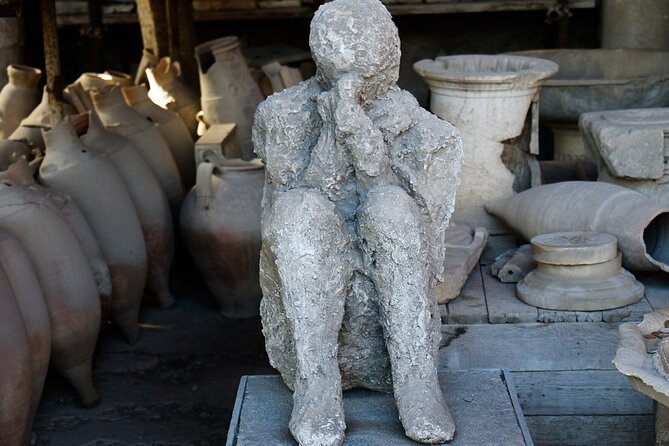
Pompeii can feel grand when you stand in the Forum, but its most affecting details often appear at street level. You may notice thresholds, painted walls, room layouts, and mosaics that make the city feel connected to daily routines.
The audio guide gives these details a voice. It can help explain what you are looking at without requiring you to read long panels at every stop. That makes the visit easier for anyone who wants information but does not want to carry a guidebook.
Still, keep your phone use under control. The point of an audio guide is to support what you see, not replace it. Listen in short sections, put the phone away, and give yourself time to study the buildings.
The plaster casts of eruption victims are among the most haunting sights in the park. They show the human cost of the disaster and change the mood of the visit. You may want to approach these areas slowly, especially if you are visiting with children.
The casts are not simply another archaeological display. They remind you that Pompeii was a living city, with people caught in an event that transformed the site into the remarkable record you see today.
The dramatic view toward Mount Vesuvius
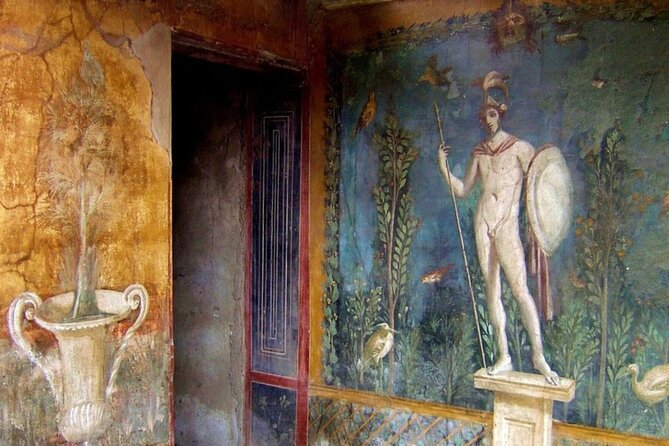
Mount Vesuvius forms the backdrop to the entire visit. Its presence gives Pompeii a strong sense of place and makes the eruption feel less like a distant historical event.
The view is part of the experience even when you are focused on the ruins. From within the ancient streets, you can connect the city’s preserved buildings with the volcano that buried them.
Do not expect a separate viewpoint activity or a climb of Vesuvius with this booking. The experience takes place at Pompeii Archaeological Park, and transportation is not included. The volcano is the setting, not an additional stop.
Why the smartphone audio guide can be worth it
At $35.32 per person, this experience is best judged as a self-guided visit with reserved admission, not as a full private tour. The price includes the entry ticket, digital map, and audio commentary in five languages.
That can be good value if you want structure without paying for a live guide. You receive information for more than 130 locations and can choose which parts deserve your time.
The value is weaker if you already have a detailed guidebook or prefer to wander with no commentary. It is also less convenient if you do not like using your phone while sightseeing.
Remember that the price does not include headphones or a mobile device. You must bring both. You also need enough battery power for the audio guide and map, so charge your phone before leaving.
The additional €8 for the suburban villas is another cost to consider. Villa dei Misteri, Villa di Diomedes, and Villa Regina are outside the included access. If the Villa of the Mysteries is important to you, confirm the extra fee and access arrangements before your visit.
How to plan two, three, or four hours
For about two hours, focus on the Forum, the temples of Venus, Apollo, and Jupiter, the House of the Faun, major mosaics, and the plaster casts. Use the map to avoid wandering too far into side areas.
With three hours, add more residences and allow time for the audio explanations. This is a good target if you want a substantial visit without turning Pompeii into an all-day project.
With four hours, you can move at a calmer pace and explore more of the 130-plus points. You will still need to make choices, since the park is large and the audio guide offers more content than most people can absorb quickly.
Build in time for pauses. Pompeii is not a place to race through while checking boxes. A short break can help you reset your route and make the next section easier to follow.
Who will like this experience most
I would choose this option if you want to explore independently, prefer a flexible schedule, and like having historical context available when you need it. It suits visitors who want more than an entry ticket but do not need a live guide walking beside them.
It can also work well for couples or families with different interests. One person can listen to a full explanation while another looks around or moves ahead.
I would be more cautious if you want a perfectly clear route with no navigation decisions. The large site and many audio stops require some patience. A live guide may be easier for anyone who wants the route and explanations handled for them.
The experience is also a poor fit if you dislike walking on uneven ancient streets. Most travelers can participate, and service animals are allowed, but the supplied information does not promise easy surfaces throughout the park.
Booking, cancellation, and practical details
Confirmation is provided at the time of booking. You can cancel for a full refund up to 24 hours before the experience start time. Changes or cancellations made less than 24 hours ahead are not accepted and are not refunded.
Download the audio guide before arriving by scanning the QR code on your voucher. Do not wait until you are standing at the entrance, where phone signal, battery level, or crowded conditions could make the setup less pleasant.
Bring:
- Your voucher and the official ticket after collection
- A charged smartphone
- Headphones
- Comfortable walking shoes
- Enough time for the ticket exchange and the visit itself
The park is open daily. The stated visit time is about two to three hours, while many people spend two to four hours inside. The extra time is useful if you want to hear more commentary and see more than the central monuments.
Should you book this Pompeii audio visit?
Book it if you want reserved admission, a large amount of optional commentary, and the freedom to explore at your own speed. The Forum, major temples, House of the Faun, mosaics, plaster casts, and Vesuvius backdrop give you plenty to see, while the audio guide adds useful structure.
Think twice if you expect a live guide, included headphones, transportation, or access to the suburban villas. You must collect the entry ticket at Piazza Esedra, manage the smartphone map, and pay an extra €8 for the villas.
For an independent visitor who prepares properly, this is a practical way to see Pompeii. Bring the right equipment, allow at least three hours if possible, and use the audio guide selectively rather than trying to hear every stop.
FAQ
How long does the Pompeii visit take?
The experience is advertised as lasting about two to three hours. Visitors commonly spend two to four hours inside the archaeological park.
What does the audio guide include?
The digital audio guide includes commentary for more than 130 points of interest, along with a digital map. Commentary is available in English, French, Spanish, German, and Italian.
Do I need to bring my own headphones?
Yes. Headphones and a mobile device are not included, so you need to bring your own phone and headphones.
Where do I exchange the voucher for the entry ticket?
Exchange your voucher at the information point at Piazza Esedra, 1, 80045 Pompei NA, in front of Hotel Vittoria. Pompeii requires the official entry ticket for admission.
Are the suburban villas included?
No. Access to Villa dei Misteri, Villa di Diomedes, and Villa Regina is not included. The additional access fee is €8.
Is transportation included?
No. Transportation to and from Pompeii is not included. The park is near public transportation, but you must arrange your own journey.
More History Audio Tours in Pompeii
- Rome: Colosseum, Ancient Rome Tour or AudioGuided Tour
★ 4.4 · 2,879 reviews - Colosseum, Roman Forum & Palatine Hill Entry and Audioguide
★ 4.1 · 2,475 reviews - Taormina: Ancient Theater Skip-the-Line Ticket & Audio Guide
★ 4.5 · 2,412 reviews - Rome: Colosseum, Roman Forum & Palatine Hill Visit + Audio Guide
★ 3.5 · 1,522 reviews
Latest audio tours in Pompeii
- Pompeii Fast Track Entry with Audio Guide★ 3.0 · 2 reviews
- Private Audio Guided Walking Tour in Pompei★ 3.0 · 2 reviews
- Pompei Archaeological Park Skip The Line ticket With audio Guide★ 3.0 · 10 reviews
- Pompeii: Skip-the-Line Ticket with Audio Guide and Map★ 3.9 · 5 reviews
- Pompeii: Pre-reserved ticket with audio guide★ 3.2 · 15 reviews
- Pompeii: Skip-the-Line Ticket with Audio Guide and Map★ 4.0 · 14 reviews
- Pompeii Tour_Skip the line ticket + audioguide★ 4.7 · 17 reviews
- Pompeii, skip-the-line ticket with smartphone audio guide on App★ 3.0 · 4 reviews
Skip-the-Line Audio Tours, compared.

Topkapi Palace and Harem Skip-the-Line-Tickets & Audio Guide
Read our review →
Pantheon Reserved Entry Ticket with Audio Guide
Read our review →
Borghese Gallery Skip-the-Line Ticket & Audioguide
Read our review →
Skip the Line: Vatican & Sistine Chapel Ticket with Audio Guide
Read our review →
Skip-the-line Entry Ticket with Audio Guide & Map
Read our review →
Mount Vesuvius: Skip-the-Line Ticket and Smart Digital Guide
Read our review →
Borghese Gallery Skip-the-Line Tickets with Audioguide
Read our review →
Taormina: Ancient Theater Skip-the-Line Ticket & Audio Guide
Read our review →Browse the lists this tour appears in