
Reviewed · USA
Olympic National Park Self-Guided Audio Tour
Olympic National Park is too large for a quick checklist, but this self-guided drive gives you a practical way to connect its mountains, rainforests, lakes, waterfalls, and coast. The audio starts stories and directions as you drive, so you can keep your eyes on the road and stop when a view or trail catches your attention. I especially like the one-price-per-car setup and the freedom to pause, skip, or spread the route over several days. The main drawback is the sheer size of the itinerary: you cannot properly walk every trail and still finish in 10 to 11 hours.
I also like the GPS tracking, which helps you know exactly where you are, and the mix of big sights with quieter stops such as the Big Cedar Tree and July Creek. The narration is in English only, and you must bring your own car, pay the park entrance fee, and plan for meals and extra attractions.
Key points to know before you drive
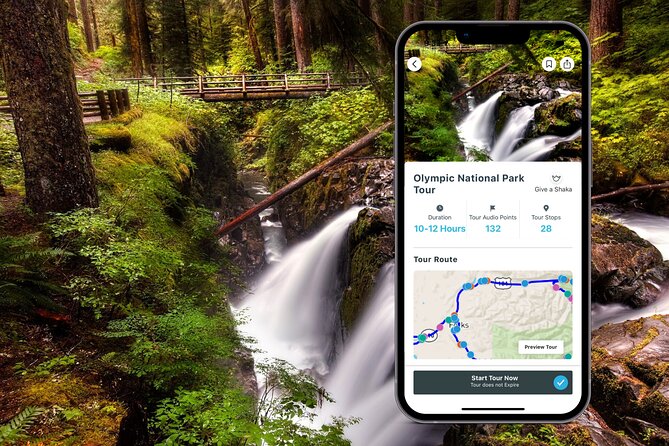
- One tour covers your whole vehicle: The $15.19 price applies to a group of up to 15 people, rather than charging each person.
- Start in Port Angeles: The route begins at the Olympic National Park Visitor Center and can be launched at a time that suits your day.
- Four very different park experiences: You get mountain scenery at Hurricane Ridge, old-growth forest around Lake Crescent, rainforest at Hoh and Quinault, and rugged beaches along the Pacific.
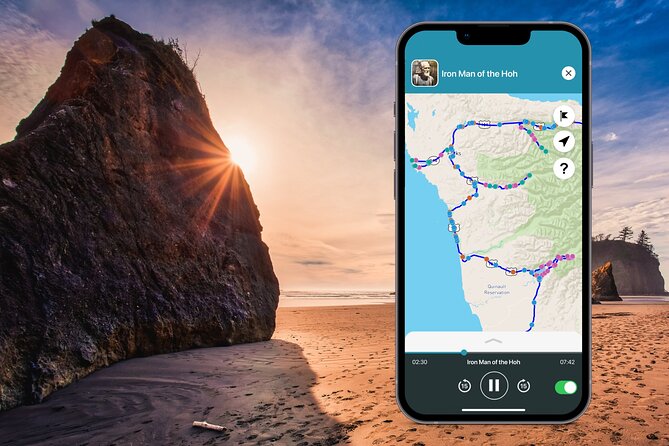
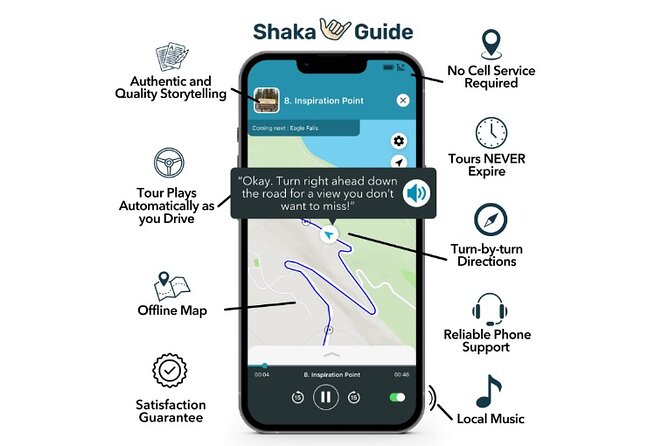
- GPS-triggered storytelling: Directions, narration, travel tips, and music play automatically as you follow the suggested route.
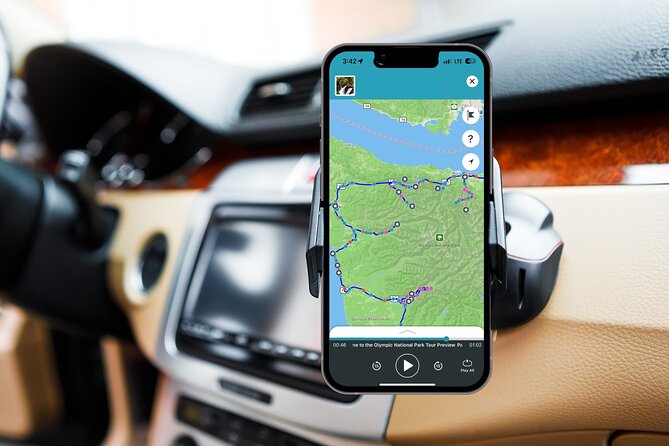
- Download before you go: The map and audio work offline after downloading over strong Wi-Fi.
- Pick and choose your hikes: The route includes many stops, but you can skip longer walks and focus on the sights that fit your time and energy.
How the Olympic route works from Port Angeles
This is a private, self-guided driving tour rather than a bus excursion or a walk with a live guide. You receive an email with a redemption code, download the Shaka Guide app, and load the tour into the My Stuff section. Once the route is downloaded, you select the starting point and follow the GPS directions.
The tour is designed to take about 10 to 11 hours, but that figure only makes sense if you treat many stops as brief photo breaks. The full route includes 27 points across the Olympic Peninsula. Add the Hurricane Hill walk, Marymere Falls, Sol Duc Falls, Second Beach, Hole in the Wall, or several rainforest trails, and you will need more time.
I would use this as a flexible framework, not a race. You can start at any point, pause the audio, and resume later. The tour does not expire, so you can also split the route over multiple days. That matters here because Olympic National Park covers a large area, and the best parts often happen on foot.
The audio uses GPS activation, meaning the app plays relevant narration as you approach different places. One user specifically appreciated knowing exactly where they were throughout the drive. That is useful on a long rural route where printed directions alone would not give much context.
More Self-Guided Audio Tours in the USA
- Gettysburg Battlefield Self-Guided Driving Audio Tour
★ 4.5 · 910 reviews - Joshua Tree National Park Self-Guided Driving Audio Tour
★ 4.5 · 762 reviews - Ultimate Acadia National Park Self-Guided Driving Audio Tour
★ 4.0 · 521 reviews
Starting with park information in Port Angeles
The Olympic National Park Visitor Center is a smart first stop. You can ask rangers or volunteers about road conditions, trail conditions, and tide charts before committing to the day. The center also has park exhibits, a film, an NPS bookshop, restrooms, and a Discovery Room for children.
Outside are two short nature trails. I would allow more than the suggested 15 minutes if you need to gather information, use the facilities, or let children explore. The center is also where you can adjust your plan. If Hurricane Ridge weather looks poor, you may want to focus on Lake Crescent, the rainforests, or the coast instead.
From there, the Heart of the Forest Trail offers an early taste of Olympic’s old-growth woods. The trail begins at Heart O the Hills campground, Loop E, with parking near the amphitheater. The full walk is more than four miles round trip, but the first mile gives you a good look at towering trees, moss, and small forest life such as banana slugs, rough-skinned newts, and Pacific tree frogs.
The Strait of Juan de Fuca Scenic Byway adds a short roadside viewpoint. Give it five minutes for a broad view toward Victoria, Canada, and, on a clear day, the Cascade Mountains. Interpretive signs help identify what you are seeing. This is a quick stop, but weather controls the payoff.
Hurricane Ridge and the Olympic mountain views
Hurricane Ridge is one of the strongest parts of the route. From the visitor center area, you can look across the Olympic Mountains, walk easy paved meadow loops, and search for summer wildflowers and Olympic marmots. Snow-capped peaks may frame the view, though mountain weather can change quickly.
If you want a more active walk, Hurricane Hill is a moderate three-mile hike. The trailhead sits about 1.5 miles beyond the visitor center, with overflow parking below near picnic areas. The suggested stop time is only an hour, so you will want to decide in advance if this is a quick outing or one of the main hikes of your day.
I would not try to force Hurricane Ridge into the schedule simply because it is famous. Its value depends heavily on visibility, and the visitor center staff can help you make a sensible call. The self-guided format works well here because you can shorten the stop, skip it, or return on another day without waiting for a group.
Lake Crescent, Marymere Falls, and the Elwha Valley
Madison Creek Falls is an easy roadside pause. The 45-foot waterfall is a short walk from the parking area, and the nearby Elwha River adds a quiet place to look at Olympic’s changing ecology. Two dams were removed from the Elwha River, and the river is gradually returning to a more natural condition.
The Sweet Family Homestead is nearby, where the park’s horses and donkeys are kept. These pack animals help carry supplies for trail maintenance. It is a small detail, but it gives you a better sense of the work needed to care for a park this large.
Lake Crescent is one of the route’s most attractive stops. It is Washington’s second-deepest lake, and its clear water can be visible down to about 70 feet. In the right light, the lake can take on a bright blue glow. You can stop at Lake Crescent Lodge, Log Cabin Resort, or Fairholme Campground, depending on your plan.
The lake area supports boating, swimming, lodging, and hiking. Give yourself an hour if you want time at the shore rather than a quick look from the road. The route also points you toward Marymere Falls, one of the park’s most worthwhile short hikes.
The Marymere Falls trail is less than two miles round trip and moderately easy. It follows Barnes Creek, crosses Highway 101, and then enters old-growth forest filled with tall evergreens and maples. Log bridges add interest along the way, and two viewing platforms look toward the 90-foot waterfall.
The trail is short enough for many people to manage, but you still need proper shoes and enough time for the walk. The app’s one-hour estimate is reasonable for a focused stop, though the lakeshore and trailhead area can add time.
More National Park Audio Tours in the USA
- Arches National Park Self-Guided Driving Audio Tour
★ 4.5 · 288 reviews - Yellowstone National Park Self-Guided Driving Audio Tour
★ 4.5 · 249 reviews - Self-Guided GPS Audio E-Bike Tour Hawaii Volcanoes National Park
★ 4.5 · 131 reviews - Shenandoah National Park Self-Guided Driving Audio Tour
★ 4.5 · 109 reviews
Sol Duc’s waterfalls, salmon, and hot springs
Salmon Cascades is a quick stop beside the Sol Duc River. During salmon migration, you may see Chinook, coho, sockeye, and steelhead moving upstream. The lookout is close to the parking area, and interpretive signs explain the salmon life cycle. Even without jumping fish, the river view is worth a short pause.
The Ancient Groves Trail is another low-effort forest walk. Its half-mile loop passes through dense old growth covered in moss and ferns, with glimpses toward the Sol Duc River canyon. This is a good choice if you want a forest experience but do not have time for a longer hike.
At Sol Duc Hot Springs Resort, three mineral pools and a freshwater pool are fed by natural hot springs. The Springs Restaurant provides a place to eat, but soaking sessions require paid reservations and are first-come, first-served. I would not build your entire day around the pools unless you check availability and are willing to adjust the rest of the route.
Sol Duc Falls is the major stop in this section. The moderately easy trail runs 1.6 miles through old-growth forest, across wooden bridges and beside small creeks. The waterfall splits into three cascades as it drops over the rock, with viewing platforms across from and above the falls.
The suggested 45 minutes is enough for a quick walk and photographs, but not a leisurely outing. If waterfalls and forest trails are your priority, this is a place where you should spend extra time and drop a less important stop.
The Pacific coast at Second Beach and Rialto Beach
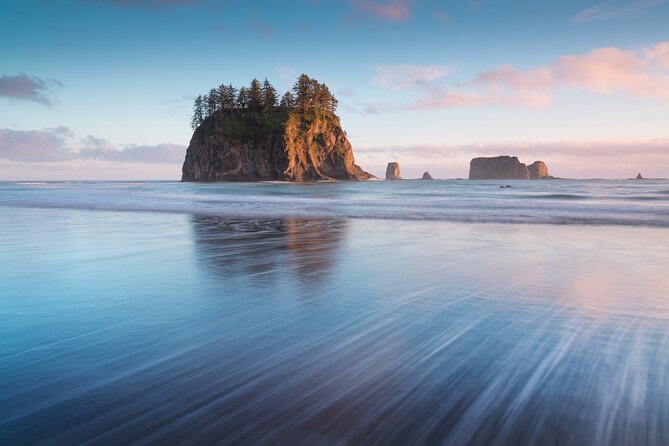
Second Beach near La Push requires a two-mile round-trip walk through mossy forest, ferns, and fallen nurse logs. The route down is fairly easy, but the return includes a climb. At the shore, you get tide pools, sea stacks, and a broad sandy beach.
Check tide charts before setting out. The experience changes with the tide, and the route is not simply a roadside viewpoint. If the main parking lot is full, overflow parking is available in a gravel lot farther uphill.
Rialto Beach offers easier access, parking, and vault toilets. Expect driftwood logs, rough surf, and views of James Island. The shoreline is pebbly, and the beach can feel more exposed than Second Beach.
The main goal here is Hole in the Wall, about 3.4 miles round trip along the beach. The walk is moderate and leads to tide pools and sea stacks, but you must pay attention to tides and footing. The tour’s 15-minute stop estimate only works for a brief look at Rialto Beach, not for the full hike.
Forks makes a practical town stop between coastal sights and the Hoh Rain Forest. The town receives about 120 inches of rain each year, and its logging past remains part of its identity. It is also known for its connection to the Twilight books and films.
At the Forks Chamber of Commerce and Visitor Center, you can pick up information about trails, restaurants, local attractions, and a self-guided Twilight driving tour. The Forks Timber Museum next door covers the area’s timber industry and costs $5 per person.
The Hoh Rain Forest and Ruby Beach
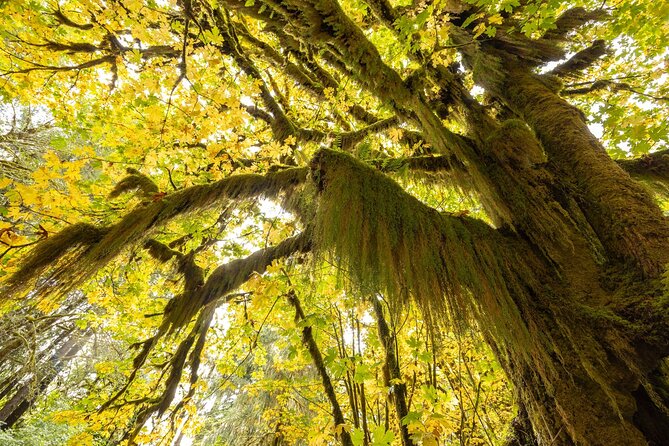
The Hoh Rain Forest is one of the park’s defining experiences. Moss hangs from old trees, ferns cover the ground, and Roosevelt elk and banana slugs may appear along the way. The Hoh Visitor Center has trail information, restrooms, interactive displays, and two easy walks.
The Trail of Mosses is less than a mile and passes beneath bigleaf maples coated in thick moss. The Spruce Nature Trail is slightly longer, with red alder and cottonwood trees and views near the Hoh River. If you only have time for one forest walk, I would choose based on the trail conditions and how much time remains.
Ruby Beach is a short walk from its parking area, about a quarter mile to the shore. The beach includes sea stacks, tide pools, driftwood, a creek, and a broad pebbly shoreline. You will need to walk through or over large driftwood logs at the bottom, so this is not a smooth, paved beach visit.
The beach can be busy on weekends and holidays. Its name comes from tiny red garnet crystals that sometimes wash ashore and give the beach a pink tint. Allow more than 15 minutes if you want to reach the water, explore the tide pools, and take in the sea stacks.
Kalaloch’s giant trees and changing shoreline
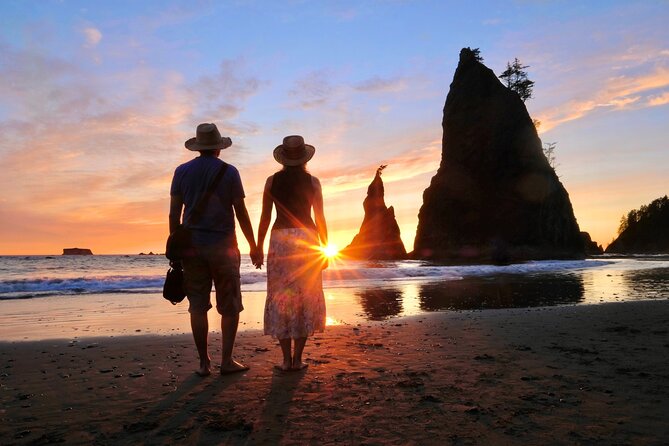
The Big Cedar Tree is a short walk from the highway and makes an easy stop. A storm split the trunk of this estimated 1,000-year-old western red cedar, but the remaining structure still shows the scale of Olympic’s older forests. The trail continues beyond the tree if you want to see more large specimens.
Kalaloch Beach 4 is a better choice for a quieter beach outing and tide pools. The trail is short but steep, with an interpretive section, a driftwood bridge, and a final rock scramble using a rope. That last section may be difficult if you have mobility limits.
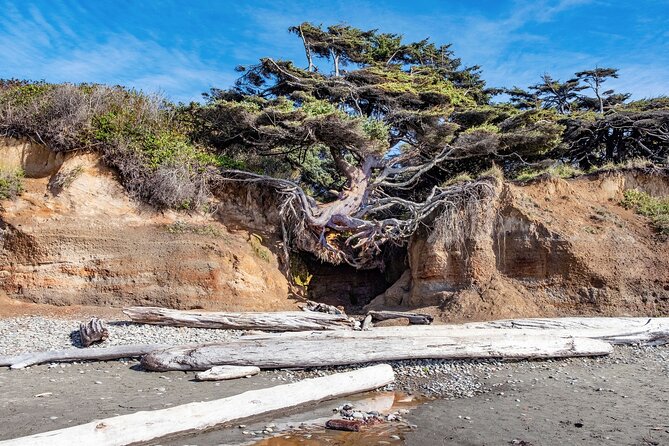
The Tree of Life is another memorable coastal sight. A Sitka spruce stretches between two eroded cliffs, with exposed roots over a cave-like hollow. Erosion continues to threaten it, so keep your distance and do not climb or hang from the roots.
At Kalaloch Lodge, you can stop for a meal with an ocean view or pick up ice cream at the nearby Kalaloch Mercantile. It is one of the few places on this long coastal stretch where you can sit down for food, so check your fuel and meal plan before leaving town.
Lake Quinault and the final forest stops
The Quinault Rain Forest Nature Trail is an easy half-mile loop near the start of the Lake Quinault South Shore Road. It includes creeks, waterfalls, moss-covered trees, interpretive signs, and restrooms at the trailhead. This is a useful final forest walk because it offers a lot without requiring a long hike.
Lake Quinault Lodge sits on the south shore. The Roosevelt Dining Room overlooks the lake, and the back lawn leads toward the water. The two-story lodge was built in 1926 in just 53 days, with crews working around the clock before the rains arrived.
The World’s Largest Sitka Spruce is reached by an easy quarter-mile walk. The tree measures more than 18 feet across and reaches 191 feet high. It is one of the Quinault Rain Forest’s champion trees and a good stop for anyone who likes large, unusual specimens.
Merriman Falls is almost effortless. The 40-foot cascade sits beside the road, so you can see it from the car or pull over for a photo.
The Kestner Homestead offers a look at early settlement in the Quinault Valley. You can walk a short distance from the homestead gate or use the scenic trail from the Quinault Rain Forest Ranger Station. Nearby, the half-mile Maple Glade Rain Forest Trail offers another short forest walk.
July Creek Picnic Area finishes the route with a lakeshore view, restrooms, picnic tables, and a short path through giant trees. It is a sensible place to pause before ending the drive, especially if you have food with you.
What the $15.19 price really gets you
At $15.19 per group of up to 15, the tour is inexpensive if you have several people in one car. Even for two people, it costs less than many guided activities, and you are not paying a separate fee for every stop or every passenger.
The value is strongest in the directions and context. You get hours of narration, music, GPS-triggered stories, suggested activities, restaurant ideas, and an offline map. The app can also be paused and reused, so the price makes more sense if you divide the route across two or more days.
You still need to budget for the $30 Olympic National Park entrance fee per booking, food, fuel, and paid attractions. The Forks Timber Museum costs $5 per person. The Sol Duc Hot Springs require separate paid reservations for soaking.
This is not the right purchase if you want a live guide handling every decision, or if you plan to spend a full day at only one trail. It is a good buy if you want privacy, a clear route, and the ability to shape the day around weather, tides, and your own pace.
Who should book this self-guided drive?
I would recommend it to couples, families, and small groups with a car who want a broad introduction to Olympic National Park. It suits independent drivers who enjoy hearing stories while moving between stops, but still want control over when to stop.
Families may find the Discovery Room, waterfalls, animals, beaches, and short walks useful. Hikers should see it as a route planner rather than a hiking tour, since the suggested schedule leaves little time for all the longer trails.
Download everything over strong Wi-Fi before leaving. Bring food and water, check road conditions and tide charts at the visitor center, and decide which three or four hikes matter most to you. If you make that choice early, the audio tour becomes a helpful guide instead of a checklist that rushes you past the park’s best moments.
Should you book it?
Book this tour if you want a low-cost, private way to connect Port Angeles, Hurricane Ridge, Lake Crescent, Sol Duc, the Hoh Rain Forest, the Pacific coast, and Lake Quinault. Its strongest features are the accurate GPS positioning, practical route guidance, and freedom to pause or reuse the tour.
Skip it if you need a live guide, want a tightly timed one-site visit, or prefer not to drive long distances. For most independent visitors with a vehicle, it is a useful companion, especially when treated as a flexible two-day plan rather than a one-day race.
FAQ
How much does the Olympic National Park self-guided audio tour cost?
The tour costs $15.19 per group of up to 15 people. The Olympic National Park entrance fee of $30 per booking is separate.
How long does the tour take?
The suggested driving experience takes about 10 to 11 hours. Hiking several of the included trails will require additional time.
Where does the tour begin?
The tour begins at the Olympic National Park Visitor Center in Port Angeles, though the starting point is customizable in the app.
Is the tour available in languages other than English?
The tour is offered in English. The supplied information does not list other language options.
Does the audio work without mobile data?
Yes. You should download the tour, audio, and offline map over strong Wi-Fi before starting. The tour does not require continuous Wi-Fi or data after that.
Do I need my own transportation?
Yes. Private transportation is not included, so you need your own vehicle for the driving route.
Can I pause or split the tour across multiple days?
Yes. You can start, pause, and resume the tour on your schedule. The tour does not expire.
Are meals included?
No. Meals and refreshments are not included. Food is available at places such as the Springs Restaurant, Kalaloch Lodge, and Lake Quinault Lodge, but you pay separately.
Can I cancel for a full refund?
You can cancel at least 24 hours before the local start time for a full refund. Cancellations or changes made within 24 hours are not refunded or accepted.
Latest audio tours in the USA
- Solvang City Personalized Self-Guided App Tour★ 3.0 · 6 reviews
- Essential Downtown SLO: A Self-Guided Audio Tour★ 4.5 · 27 reviews
- Silicon Valley Self-Guided Driving Audio Tour for Tech Lovers★ 4.0 · 24 reviews
- Self-Guided Audio Tour of the Golden Gate Bridge★ 3.5 · 3 reviews
- The Ghosts of San Francisco Haunted Audio App Walking Tour★ 5.0 · 2 reviews
- Point Reyes National Seashore Self Guided Driving Audio Tour★ 4.0 · 9 reviews
- San Francisco Self-Guided Audio Drive: Explore at Your Own Pace★ 4.0 · 9 reviews
- Explore Coronado Island on a Self Guided Audio Tour★ 5.0 · 2 reviews
National Park Audio Tours, compared.

Ultimate Acadia National Park Self-Guided Driving Audio Tour
Read our review →
Vesuvius National Park Skip-The-Line Ticket and Audio Guide
Read our review →
Self-Guided GPS Audio E-Bike Tour Hawaii Volcanoes National Park
Read our review →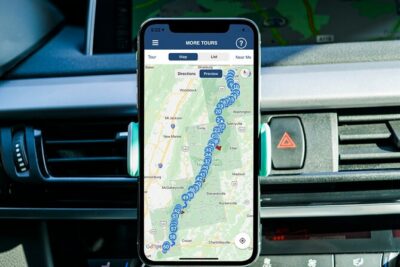
Browse the lists this tour appears in